Walpole Library Awards Announced
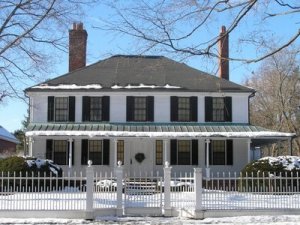
The house that now houses the Walpole Library, in Farmington, Connecticut, dates to the 1780s.
The Lewis Walpole Library recently announced its 2009-2010 Fellowship and Travel Grant Recipients. The Library awarded six Post-doctoral Fellows, five Pre-doctoral Fellows, and one Travel Grant. The deadline for applications typically falls in January. For additional information see the Library’s website. (The photo at the right comes from a blog on historic buildings of Connecticut).
This year’s Fellows: (more…)
CFPs — AAH 2010 in Glasgow
15 – 17 April 2010

University of Glasgow
The 36th annual conference of the Association of Art Historians takes place next spring in Glasgow. Paper proposals should be submitted by 9 November 2009. For details and a full listing of panels, see the AAH website. Topics include
- Objects, Art History and Display
- Exhibitions as Research: Theory, Practice, Problems
- Picturing the Sensorium in Art from Antiquity to 1800
- Reading to Attention
- Imperial Tensions: Visual Cultures of Coercion, Silence and Display
- Hogarth and the Vernacular Renaissance in Eighteenth-Century Britain
- Mapping the Practice and Profession of Sculpture: The Influence of Context and Collaboration in Sculptural Practice from the 18th Century to the Present
Versailles in the 18th Century
In a recent issue of the TLS (17 June 2009), John Rogister – author of Louis XV and the Parlement of Paris, 1737–1755 – reviews two new books on Versailles: Tony Spawforth, Versailles: A Biography of a Palace (St Martin’s Press, 2008); and William Ritchey Newton, Derrière la Façade: Vivre au château de Versailles au XVIIIe siècle (Librairie Académique Perrin, 2008) – along with a new printing of the 1886 English translation of Madam Campan’s memoirs (the original French edition appeared in 1822).


‘the heart an undescribable feud’
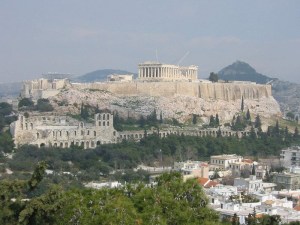 Whatever poetic resonances Keats might have had in mind with this phrase from his 1806 poem “On Seeing the Elgin Marbles for the First Time,” he wasn’t describing the present debate between those who argue the Parthenon marbles now in the British Museum should be returned to Athens and those who believe they should remain in London. Still, the conflict — stretching back to the early nineteenth century — certainly counts as a feud, and it’s one that’s likely to receive renewed attention with the opening of the new Acropolis Museum in Athens.
A long-time advocate for returning the marbles, Christopher Hitchens weighs in with praise for the new museum in “The Lovely Stones,” Vanity Fair (July 2009).
In “Elgin Marble Argument in a New Light,” New York Times (23 June 2009), Michael Kimmelman resists taking sides but evinces historical awareness and a thoughtful appreciation of the difficulties each camp faces in making its case: “So both sides, in different ways, stand on shaky ground. Ownership remains the main stumbling block.”
The new $200-million building by Bernard Tschumi is itself front and center in Anthee Carassava’s article, “In Athens, Museum Is an Olympian Feat,” New York Times (19 June 2009).
The New York Times has also assembled a fine slide show of fifteen photographs of the new museum and its installations.
The classicist Mary Beard provides a response to some of the opening ceremonies in a posting from her own (often fascinating) blog, A Don’s Life.
Meanwhile, James Cuno continues to argue for the legitimacy of museum ownership over and against claims of national patrimony. His two books on the subject (one an edited collection of essays) are reviewed by Hugh Eakin in, “Who Should Own the World’s Antiquities?,” New York Review of Books 56 (14 May 2009).
Baroque at the V&A

Massimiliano Soldani Benzi (1656-1740), Ewer Depicting the Triumph of Neptune Vase, Florence, ca. 1721, bronze (London: V&A Museum no. A.18-1959)

Catalogue edited by Michael Snodin and Nigel Llewellyn
BAROQUE 1620-1800: Style in the Age of Magnificence
Victoria and Albert Museum, London
April 4 – July 19
Robert Oresko’s review from Apollo (June 2009)
“Ever since Heinrich Wölfflin, the successor in Basel of Jacob Burckhardt, published his Renaissance und Barock (1888) and fixed the word ‘baroque’ into intellectual consciousness and discourse, its meaning has been a focal point of debate. The new and visually sumptuous exhibition at the Victoria & Albert Museum attempts a presentation attuned to concerns in the early 21st century.”
Robin Blake’s review from The Financial Times
“Baroque is certainly a conundrum, both superficial and profound, beautiful and ugly, ordered and chaotic, sexy and sacred. But for true devotees that is the essence of baroque charm – and they will find plenty to be charmed by in this show.”
Tom Lubbock’s review from The Independent
“Baroque 1620-1800: Style in the Age of Magnificence is the Victoria & Albert Museum’s spring blockbuster. . . And even before going through the door, you can see that it’s not going to narrow down the definition. Check that title: a movement generally set in the 17th century is extended through the whole of the following century, too.
What’s more, the show takes the Baroque out of Europe and across the world. Colonisation took it to Peru and to Indonesia. It was the first global style. And the exhibits go beyond art and artefacts – there’s every sort of luxury object, from an ornamental sled to an ornamental ostrich, an entire and huge Mexican altarpiece, and (on film) an authentic period firework display.
It does everything it can to imitate itself a Baroque spectacle. You proceed through galleries devoted to various places of display – the theatre, the public square, the church, the palace, the garden. Baroque music accompanies you. . . . There’s an obvious practical problem. The bigger the subject, the harder it is to exhibit it in a museum. . . .”
Introducing . . .
As the newsletter editor for HECAA, I hope to make this forum as useful as possible. When consulting a sampling of members about what kinds of information they hoped the newsletter might supply, I repeatedly encountered enthusiastic assertions that the newsletter could fill a vital niche. I heard overwhelming consensus that it would ideally not simply report upon members’ scholarly activities but also serve as a clearing house for information about eighteenth-century studies, that it would not simply mark past events but look even more diligently to the future. I envision entries on upcoming exhibitions, conferences and calls for papers, reviews, and notes on pertinent books and articles. I also hope that the forum will create a space for musings and observations from members that just don’t quite fit anywhere else in the world of scholarly expression. All of these functions should be served quite well by a blog, which can be easily updated and conveniently accessed. I am especially grateful to our former editor, Susan Dixon, who was especially helpful with the transition.
Finally, I should stress that Enfilade is very much a work in progress. I welcome your comments and suggestions.
-Craig Hanson
A Note on the Name
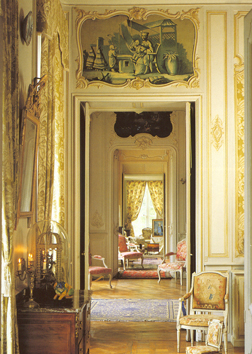
Jacques-François Blondel, Château de Vendeuvre (Normandy), 1750s. Wikimedia Commons.
Enfilade is intended to encapsulate the sense in which various entries are threaded together along a central axis (in this case the order of the postings).Throughout the eighteenth century — in the realm of the ideal plan as well as often enough in life itself — the enfilade served to organize space and vision.










 Enfilade
1 comment