New Titles
Selected books from a recent Michael Shamansky catalogue (15 February 2010)
◊ ◊ ◊ ◊ ◊
 Anthony Gerbino, François Blondel: Architecture, Erudition, and the Scientific Revolution (London: Routledge, 2009), ISBN: 9780415491990, 344 pages, $135.
First director of the Académie royale d’architecture, François Blondel established a lasting model for architectural education that helped transform a still largely medieval profession into the one we recognize today. Most well known for his 1676 urban plan of Paris, Blondel is also celebrated as a mathematician, scientist, and scholar. Few figures are more representative of the close affinity between architecture and the “new science” of the seventeenth century. The first full-length study in English to appear on this polymath, this book adds to the scholarship on early modern architectural history and particularly on French classicism under Louis XIV and his minister Jean-Baptiste Colbert. It studies early modern science and technology, Baroque court culture, and the development of the discipline of
architecture.
◊ ◊ ◊ ◊ ◊
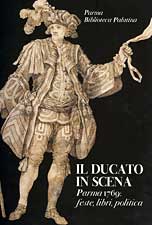 Andrea De Pasquale and Giovanni Godi, eds., Il Ducato in Scena, Parma 1769: Feste, libri, politica (Parma, Step, 2009), 241 pages, ISBN: 887898048X, $115.
Exhibition held at Biblioteca Palatina, Parma. Includes:
- Parma laboratorio di matrimoni tra Borbone e Asburgo per garantire trenta anni di pace all’Europa
- Arti a corte nel primo periodo ferdinandeo 1765-1771
- La nascita della Biblioteca Parmense
- Gli esordi della Stamperia Reale
- Le ricerche archeologiche a Parma negli anni ’70 del XVIII secolo
- Teatro e spettacolo all’epoca di Du Tillot.
◊ ◊ ◊ ◊ ◊
 Liliana Barroero, ed., Intorno a Batoni: Convegno internazionale, Roma, 3 e 4 marzo 2009, Atti (Lucca: Edizioni Fondazione Ragghianti Studi sull’arte, 2009. 270 pages, ISBN: 9788889324233, $38.50.
- G. Fusari “Pompeo Batoni e il cardinale Angelo Maria Querini”
- C. Parretti “Batoni tra Orsini e Ludovisi: Il ritratto della duchessa d’Arce e i restauri del Guercino”
- S. Benedetti “Pier Leone Ghezzi, il giovane Reynolds e i primi ‘milordi’ di Pompeo Batoni”
- C. Hornsby “Serving ‘lovers of the Virtu’ – Barazzi, Batoni and the British Dealers”
- J. Seydl “Contesting the Sacred Heart of Jesus in Late 18th-Century Rome”
- J. Collins “Know Thy Time: Batoni and Pius VI”
- Etc.
◊ ◊ ◊ ◊ ◊
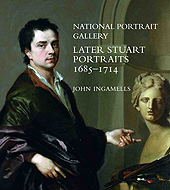 John Ingamells, National Portrait Gallery: Later Stuart Portraits, 1685–1714 (London: National Portrait Gallery, Lund Humphries, 2010), 432 pages, ISBN: 9781855144101, $250.
Sitters who are featured in this comprehensive catalogue of portraits from the premier collections of the National Portrait Gallery, London, include the Duke of Marlborough, Admirals Benbow and Shovell, Archbishop Sancroft (who led the Seven Bishops against James II), John Locke, Isaac Newton, John Vanbrugh and Christopher Wren. Also catalogued are the fearsome Judge Jeffreys, the composer Henry Purcell and diarists Samuel Pepys and John Evelyn. The writers include John Dryden, Mathew Prior, Joseph Addison and Richard Steele and the painters Godfrey Kneller and Michael Dahl. This volume completely revises the second half of David Piper’s Catalogue of the Seventeenth Century Portraits in the National Portrait Gallery, published in 1963. Academic research since then has resulted in both several changes of identity and attribution. It has also facilitated more comprehensive surveys of each sitter’s portraiture. In presenting this research, the author John Ingamells offers new discoveries, insights and observations to create an invaluable historical resource.
◊ ◊ ◊ ◊ ◊
 Marcia Pointon, Brilliant Effects: A Cultural History of Gem Stones and Jewellery (New Haven and London: Yale University Press, 2009), 426 pages, ISBN: 9780300142785, $85.
In a broad-ranging and exceptional work of cultural and art history, Marcia Pointon explores what owning, wearing, distributing, and circulating gems and jewelry has meant in the post-Renaissance history of Europe. She examines the capacity of jewels not only to fascinate but also to create disorder and controversy throughout history and across cultures. Pointon argues that what is materially precious is invariably contentious. When what is precious is a finely crafted artifact made from hard-won imported materials, the stakes become particularly high—evidenced, for example, by the political fallout from Marie-Antoinette’s implication in the affair of the stolen diamond necklace. Prodigiously rich in its range of reference and truly interdisciplinary in its approach, this book challenges the reader to reassess the importance of material things as powerful agents in human relations and in visual and verbal representation.










 Enfilade
leave a comment