Call for Papers: Sensibility Conference in Brisbane
In conjunction with the Australasian Society of Continental Philosophy Conference, The Centre for the History of European Discourses at the University of Queensland will be sponsoring a specialist stream:
Sensibilité: The Knowing Body in the Enlightenment
University of Queensland, Brisbane, 3-5 December 2010
Proposals due by 31 August 2010
In mid- to late- eighteenth century thought, particularly in France and in the thought of the philosophes, materialism and atheism were seriously considered both publicly in the writings of, for example, d’Holbach, and privately by others such as Diderot. The 1743 treatise Le Philosophe presented the philosopher in materialistic and mechanistic terms as a human thinking machine that reflected on its own motion. In the context of vitalist medicine however, this was far from a mechanistic description in the modern sense and only some philosophes were in fact materialists.
The vitalism of the médecines philosophes from the Montpellier faculty of medicine held the attention of the philosophes in a period in which medicine constituted the master discourse. It was Montpellier theorists who made sensibility a key concept of eighteenth century: sensibility was the basis of a holistic vision of the body, one in which individual organs had their own “tastes” or “lives,” and in which unity came not from a “higher” organizing seat (the soul, brain or noumenal subject) but, rather, from the harmonious interaction of the physical parts. Bordeu, Lacaze, and their disciples (1750s-80s) saw sensibility as a diffuse property conveyed not just through the nerves but also reciprocally through the three main spheres or departments of vital action: the head, the “phrenic” region, and the external organ (roughly, the skin). That the physical and the moral could not be separated was a broadly accepted proposition: the idea of diffuse embodied sensibility is critical for the period’s understanding of affect, the emotions, and of mental functioning. This is evidenced in the highly contested work of La Mettrie but also in Roussel, Tissot and Rousseau.
Central to the wide-spread rejection of innate ideas, sensationism was the highly idiosyncratic epistemology of the period. Formalised and systematised by Condillac, the sensationist presuppositions were widely shared across the French and Scottish Enlightenments and it was arguably the most significant unifying feature of the period allowing thinkers as diverse as Rousseau, Diderot, Voltaire, and Sade to share common ground. In Rousseau and Adam Smith, sensationism as a theory of physical sensation became a theory of moral sentiments: sensibility as a theory of knowledge was expressly conceived of as a theory of moral knowing. Rousseau was a dualist, a sensationist, a theorist of virtue and purity of heart. For him the violence of passion was itself an enemy, the unnatural product of modernising society. Sade was a materialist, a sensationist and a theorist of vice, cruelty and lust. For him the purity of the heart was an impediment to pleasure. Here the philosophical novel’s power to affect made it the philosophical genre of choice.
Sensibility, then, was an embodied epistemology which briefly flourished in a period before “the theory of knowledge” was taken as a discrete field of philosophical inquiry. Hence sensationism was heavily influenced by the philosophical anthropologies of the day and by medical science: the Enlightenment notion of sensibility provides a paradigm that integrates such diverse fields as physiology, medicine, philosophy, ethics, anthropology, aesthetics and literature. Yet neither sensationism nor sensibility are key Kantian themes and the nineteenth century’s construction of the Aufklärung as leading to an apotheosis in the three Critiques has worked to occlude this feature. This stream seeks then to retrieve a major component of Enlightenment thought from the shadow the Kantian edifice.
Call for Papers
If you would like to submit an abstract, or if you have any queries about the specialist stream, please contact Martyn Lloyd (m.lloyd@uq.edu.au). Abstracts should be no longer than 250 words and include a list of five keywords. Papers will be 30 minutes long. Please include a short biography (100 words) including institutional affiliation. The stream will be run with a view to the publication of an edited collection of papers on the theme. Closing date for abstracts: August 31, 2010.
Keynote: Anne Vila
Anne Vila is Chair of the Department of French and Italian at the University of Wisconsin-Madison. She specialises in the eighteenth-century French novel, theatre, and intellectual history; the body in literature and medicine; the culture and philosophy of the Enlightenment. Her book Enlightenment and Pathology: Sensibility in the Literature and Medicine of Eighteenth-Century France (Johns Hopkins University Press, 1998) focused on the conjunction between scientific and literary/philosophical writings during the French Enlightenment, working against the tendencies of nineteenth and twentieth century notions of epistemology to obscure that which preceded them. She has also published “Penser par le ventre: The Gastric Embodiment of Thought and Feeling in Eighteenth-Century France,” and “Sex and Sensibility: Pierre Roussel’s Système physique et moral de la femme,” as well as papers on Tissot, Rousseau, and Diderot. She is currently working on a manuscript provisionally entitled Singular Beings: Passions and Pathologies of the Scholar in France, 1720–1840.
Looking for Clocks from ‘Peter Stretch’s Corner’
As noted by Cynthia Drayton at The Magazine Antiques (29 July 2010) . . .

Tall clock. works by Peter Stretch, Philadelphia, 1735-1746 (Winterthur)
The early Philadelphia clockmaker Peter Stretch (1670–1746) and his two clockmaking sons, Thomas (1697-1765) and William (1701-1748), are the subject of a forthcoming catalogue raisonné to be published by the Winterthur Museum and Country Estate in Delaware.
Peter Stretch was born in Leek in Staffordshire, England, and apprenticed with his older brother Samuel, a clockmaker who specialized in lantern clocks there. A Quaker, Peter Stretch and his wife and three sons left England for Philadelphia in 1703. He set up his shop on the southwest corner of Second and Chestnut Streets known as “Peter Stretch’s Corner,” where he made and sold clocks and imported wares. He joined the Common Council of Philadelphia in 1708, and nine years later received a commission from the council to work on the town clock. . . .
Readers with clocks made by Peter, William, or Thomas Stretch or bills, personal correspondence, account books, letter books, diaries, advertisements, or business records are asked to contact Donald L. Fennimore, Curator Emeritus, by mail at Winterthur Museum and Country Estate, Winterthur, Delaware, 19735; telephone 302-888-4598; or e-mail dfennimore@winterthur.org.
The notice at The Magazine Antiques is available here»
Exhibition: Gainsborough and the Modern Woman
From Art Daily (19 July 2010) . . .
Thomas Gainsborough and the Modern Woman
Cincinnati Art Museum, 18 September 2010 — 2 January 2011
San Diego Museum of Art, 29 January — 1 May 2011
Curated by Benedict Leca
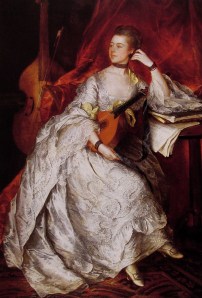
Thomas Gainsborough, "Portrait of Ann Ford" (later Mrs. Philip Thicknesse), 1760 (Cincinnati Art Museum)
The portraits of Thomas Gainsborough (1727-1788) made him perhaps the most famous British artist of the late eighteenth century. Nobles, statesmen, musicians and the range of men and women of the period’s merchant class all sat for him. But it is his portraits of notorious society women—widely considered among the greatest of the Western tradition—which attracted the most attention.
Eighteenth-century viewers appreciated these paintings differently than we do today. In his own time, Gainsborough’s portraits of actresses, performers and courtesans were seen as unconventional, if not radical, not only because of the type of woman they portrayed but also because of the unconventional way they were painted. “These stunning portraits not only give us a perspective on the history of portrait painting and celebrity, but also on the history of women’s progressive self-fashioning, which equally deserves art historical recognition. These are provocative women provocatively painted,” explains exhibition curator Benedict Leca.
Organized by the Cincinnati Art Museum in association with the San Diego Museum of Art, Thomas Gainsborough and the Modern Woman is the first exhibition devoted to Thomas Gainsborough’s feminine portraiture, and the first to focus specifically on modernity and femininity in Georgian England from the perspective of Gainsborough’s groundbreaking portraits of women. Coinciding with the comprehensive cleaning and restoration of the Cincinnati Art Museum’s iconic Ann Ford (Mrs. Thicknesse), this exhibition unites a choice selection of thirteen paintings from renowned museum collections in the United States and Britain to illuminate the role that Gainsborough ’s extraordinary portraiture played in defining new, progressive feminine identities. Among others on view at the Cincinnati Art Museum, September 18, 2010 – January 2, 2011 will be Mrs. Siddons (National Gallery, London), Mrs Richard Brinsley Sheridan (National Gallery, Washington), Giovanna Baccelli (Tate Britain), Grace Dalrymple (Metropolitan Museum of Art), Viscountess Ligonier (Huntington Library, Art Collections and Botanical Gardens). The exhibition will also feature a small selection of period dresses from the Cincinnati Art Museum’s rich fashion arts and textile collection, thereby further contextualizing Gainsborough’s portraits while affording visitors a view of the material accessories of the “modern woman.” . . .
The Art Daily article is available here»
◊ ◊ ◊ ◊ ◊
Exhibition catalogue: Benedict Leca, Aileen Ribeiro, and Amber Ludwig, Thomas Gainsborough and the Modern Woman (London: Giles, 2010), ISBN: 9781904832850, $49.95.
 This beautifully illustrated volume focuses specifically on Thomas Gainsborough’s portraits of well-known, “liberated,” society women, and the way in which the artist executed these special commissions. Thomas Gainsborough and the Modern Woman draws us away from his predominant reputation as a landscape painter, and shows how such portraits were both an affirmation by Gainsborough of his own position in the artistic world of Georgian England, and of the desire of his sitters (including leading artists, musicians, actresses and intellectuals) to be seen as self-assured progressive women.
Author Benedict Leca takes as his starting point the Cincinnati Art Museum’s famous and newly restored portrait of Ann Ford (1760), widely considered the finest of the masterpiece portraits created by Gainsborough at Bath in the early 1760s. He addresses this early portrait as typifying Gainsborough’s comparatively permissive attitude with regard to how notorious women should be presented, and offers a compelling view of Gainsborough’s peculiar manner of painting, one that established the artist as the foremost portraitist of modern life. Featuring portraits from international collections, including Tate Britain, the Metropolitan Museum of Art, the J Paul Getty Museum and the National Gallery, London, this ground-breaking new volume also includes an essay by Aileen Ribeiro examining the portrait of Ann Ford in detail, and by Amber Ludwig discussing the role of feminine identity in 18th-century London.
Call for Papers: Society for French Historical Studies
57th Annual Meeting of The Society for French Historical Studies
The Citadel, Charleston, SC, 10-12 February 2011
Proposals due by 1 September 2010
The 57th Annual Society for French Historical Studies conference will be held at the Francis Marion Hotel in Charleston, South Carolina from Thursday, February 10, through Saturday, February 12, 2011 and will be hosted by The Citadel. Featured speakers include Dena Goodman (University of Michigan) and Sylvain Venayre (Université de Paris I). Featured events include a plenary session and reception Friday evening at The Citadel and a banquet on Saturday evening. Additional outings on Sunday morning February 13 to Fort Sumter and Drayton Hall Plantation, will be organized.
The program committee will make every effort to combine single papers into coherent panels, but we encourage individuals to organize complete panels composed of two or (preferably) three papers, with a chair and commentator. Roundtables and other formats will also be considered. Please do not send proposals for papers that have already been presented or that are scheduled for presentation at other conferences, or that have already been published. All conference participants must be members in good standing of SFHS at the time of the conference. (more…)
Thinking Digitally in the Museum
Recently added to caa.reviews:
Ross Parry, ed., Museums in a Digital Age (New York: Routledge, 2009), 496 pages, ISBN: 9780415402620, $52.95.
Reviewed by Craig Saper, Texts and Technology Doctoral Program and Department of English, University of Central Florida; posted 5 August 2010.
This useful collection of previously published essays appears in a series of course readers in museum studies edited by Simon Knell. The goal of this particular anthology is to illuminate the impact of digital media on museum exhibitions and on the conserving of digital artifacts in museums. Knell’s explanation of the general goals of the series ends with a citation from Michel Foucault as a guide to each volume’s efforts to update museum studies curricula. With that directive, it is inevitable that the series will have to navigate between the most mundane practical concerns, in this case how to run a museum’s digital collections and exhibitions, and more theoretical issues involving the implications of conserving an ephemeral digital heritage and putting exhibitions online. The two overlapping conflicts, or contradictions, of museum studies (i.e., practical versus theoretical and the virtual versus actual objects) challenge Museums in a Digital Age to get these concerns to address each other or at least to speak the same language.
Ross Parry, who edited the anthology, organizes the chapters into seven sections (prefaced by his useful introductions) that loosely correspond to the history and management of information, the real and virtual spaces of exhibitions, access and usability, interpretive and educational services, the status of museum artifacts (including digital), sustainability and technical production issues, and speculations on the future of museums. That organization certainly fits neatly with courses in museum studies, but, in following Parry’s description of the volume as a collage, one might also cross-index the chapters into four categories: history of practices, new gadgets and practices, usability of technological resources, and appealing to a wider (and different) audience. . .
For the full review, click here» (CAA membership required)
Exhibition: Italian Prints in Adelaide
Press release from the Art Gallery of South Australia:
A Beautiful Line: Italian Prints from Mantegna to Piranesi
Art Gallery of South Australia, Adelaide, 20 August — 31 October 2010
Curated by Maria Zagala, Associate Curator of Prints, Drawings, and Photographs
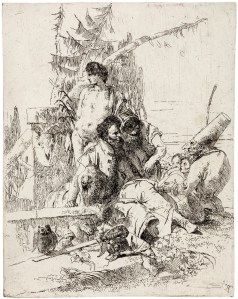
Tiepolo, "Punchinello Talking to Two Magicians" from the series "Scherzi di Fantasia," ca.1743–57, published 1775, Venice, etching on paper 23.3 x 18.3 cm (plate & sheet) A.R. Ragless Bequest Fund 1975, Art Gallery of South Australia
Some of the masterpieces of Italian printmaking go on rare display in the Art Gallery of South Australia’s new exhibition, A Beautiful Line, which includes 135 prints dating from the mid-fifteenth to the eighteenth centuries by masters such as Andrea Mantegna, Titian, Tiepolo, Canaletto, and Piranesi. There are around 2000 Italian prints in the Art Gallery of South Australia’s collection but due to their fragility and sensitivity to light, they can be displayed only rarely. A Beautiful Line presents a once-in-a-generation opportunity to see the most outstanding works from this collection including many new acquisitions, showcased together for the first time, to tell the story of Italian printmaking from the Renaissance to the Rococo.
The exhibition offers an insight into the rich visual culture of Italy during this time by showcasing etchings, engravings and woodcut prints which emerged from the major printmaking centres of Venice and Rome, as well as Florence, Verona and Bologna. Among the highlights, at almost three metres long, is Stefano Della Bella’s commanding sixpart work, The Entrance of the Polish Ambassador into Rome, 1633. This important new acquisition is revealed publicly for the first time in this exhibition and is believed to be the only one of its kind in Australia. Other attractions include Andrea Mantegna’s Renaissance masterpiece The Entombment, woodcuts by Titian and his contemporaries, and G.B. Piranesi’s dark and evocative prints of imaginary prisons from the eighteenth century. Subjects range from scenes of the commedia dell’arte, Biblical stories, Roman Emperors, gods and goddesses, to views of cities and architectural landmarks, such as Rome’s Colosseum. (more…)
Call for Papers: Emerging Scholars of British Art at CAA
Historians of British Art: Emerging Scholars Session at CAA, 2011
New York, 9-12 February 2011
Proposals due 1 October 2010
The Historians of British Art, a CAA-affiliated society, seeks papers for an upcoming mini-session of work by emerging scholars to be held during the HBA Business Meeting at CAA in New York, Feb. 9-12, 2011. Current or recent graduate students (if a Ph.D. recipient, the degree must have been earned within the past three years) are invited to submit proposals for consideration. The papers may address any topic related to British art, architecture, and visual culture. Presentations or “works in progress” should be limited to fifteen minutes to allow for ample discussion. This is an opportunity for informal presentations of new or ongoing research followed by open discussion.
To submit a paper for consideration, send the following items to Colette Crossman, HBA 2nd Vice President, at colettecrossman@yahoo.com : (1) a one page abstract; (2) a C.V. (limited to two pages).; and (3) a brief cover letter explaining interest in the field. The deadline for submission is October 1, 2010. Decisions will be made by November 1. Upon selection, presenters are requested to join HBA if not currently a member.
New Home for Chicago’s Seminary Co-Op Bookstore
From the Editor
I have put in a plug before for Chicago’s Seminary Co-Op Bookstore, but at a time when independent bookstores face an increasingly uncertain future, this Hyde Park gem is worth singling out again. On the eve of its 50th anniversary, plans were announced last month by the University of Chicago for the store to move toward the end of 2011 to a new location, less than a block away (even closer, incidentally, to Frank Lloyd Wright’s Robie House).
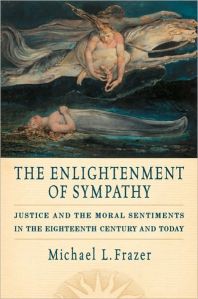
If you never get around to visiting the present (or future) store (and that really would be a shame), you can still take advantage of the Sem Co-Op’s resources through its website — good for browsing and buying. “The Front Table,” which provides a virtual display of new titles, is updated each week, and the eighteenth century is often well represented. Take, for example, the selection for 8 August 2010:
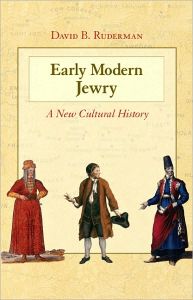


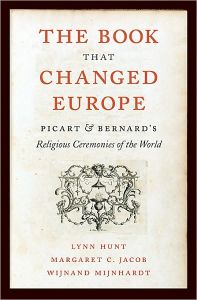

The July Issue of ‘The Burlington Magazine’
The Burlington Magazine 152 (July 2010); the issue concentrates on the eighteenth century with the following:
Articles
- Todd Longstaffe-Gowan, “Mignard, the Marquise and Martinique: A West Indian Setting for a Masterpiece of ‘Grand Epoque’ Portraiture,” pp. 448-51.
- Alden R. Gorden, “Sets and Pendants by J.-B.-M. Pierre and François Boucher in the Collections of Madame de Pompadour and the Marquis de Marigny,” pp. 452-60.
- Deborah Gage, “The Chatsworth Vases: A Gift from Louis XV in 1768 to Henry Léonard Jean-Baptise Bertin,” pp. 461-63.
- Wendy W. Erich, “Did Benjamin Franklin Invent Transferware?,” pp. 464-69.
- Rosalind Savill, “A New Catalogue of French Porcelain in the Royal Collection,” pp. 470-73.
Reviews
- Christoph Martin Vogtherr, Review of Jean-Baptiste Deshays, 1729-1765 by A. Bancel, pp. 479-80.
- Jonathan Scott, Review of Digging and Dealing in Eighteenth-Century Rome by I. Bignamini and C. Hornsby, p. 480.
- Christopher M. S. Johns, Review of The Borghese Collections and the Display of Art in the Age of the Grand Tour by C. Paul, pp. 480-81.
- Richard Rand, Review of Watteau to Degas: French Drawings from the Frits Lugt Collection by C. B. Bailey, S. Grace, and M. van Berge-Gerbaud, p. 482.
- Chris Miele, Review of The Judicious Eye: Architecture against the Other Arts by J. Rykwert, p. 482.
Reviewed: Surveying British Art
Recently added to caa.reviews:
David Bindman, ed., The History of British Art, Volume 2: 1600–1870 (New Haven and London: Yale Center for British Art and Tate Britain, 2008), 248 pages, ISBN: 9780300116717, $50.
Reviewed by Brian Lukacher, Department of Art, Vassar College; posted 21 July 2010
In his magisterial survey of British art, commissioned for the gold standard Pelican History of Art and first published in 1953, Ellis Waterhouse paused in his discussion of Thomas Gainsborough and made the following admission: “Unpleasant as it still is for some of us to introduce the shade of Marx into the history of art, it may contribute to the understanding of Gainsborough” (261). This passage attests to the anxiety of the art historian in introducing even the most innocuous hint of social analysis into the study of art during the post-war period. Waterhouse’s colleague and contemporary Anthony Blunt would find another, more furtive, way around this problem. This squeamishness over allowing “the shade of Marx” to haunt so fleetingly the pages of his survey book itself shows Waterhouse’s sensitivity to one of the most powerful and renowned images in Marxist political discourse—the “specter of communism” with which the Communist Manifesto opened and that would later be exorcised through the deconstructive logic of Derrida’s “specters of Marx.”
A couple of generations later and the history of British art finds itself still contending with “the shade of Marx.” But this shade has become considerably more tangible and omnipresent—in fact, it has now become mainstreamed. This is surely evident in the second volume from the recent three-volume survey entitled “The History of British Art.” Under the capable and expert editorial direction of David Bindman, who is also a contributor to this volume, which covers the Restoration period to the Victorian age, the series seeks to incorporate recent currents in art-historical academic research and cultural theory in its sweeping overview of large swathes of British art and society. Co-sponsored by the Yale Center for British Art and Tate Britain (not exactly cultural bastions of revolutionary discontent), this new survey wants to shake off the dusty tedium associated with older forms of British art history that were structured around the chronology of royal patronage, the tyranny of genre, and the evolution of artistic style. The challenge, which is not without peril and contradiction, is to present a more theoretically complex and politically engaged art history of the kind that has been flourishing in academic circles for the last two decades in a manner that would be accessible to the museum-going public visiting the Yale Center and the Tate.
It is a difficult balancing act, but one carried off with admirable success in volume two of this series. . . .
For the full review, click here» (CAA membership required)










 Enfilade
leave a comment