Conference on the Pamphilj in October
The Pamphilj and the Arts: Patronage and Consumption in Baroque Rome
Boston College, 15-16 October 2010
In September 1644, the election of Pope Innocent X Pamphilj catapulted his family to the height of Roman society. From that moment on, the Pamphilj became active patrons of the arts, which were harnessed as the visual expression of the family’s new identity. Set within the social, religious and cultural context of Rome, the papers will examine the contributions of three generations of patrons: Innocent X; Prince Camillo Pamphilj (the pope’s nephew) and his wife, Princess Olimpia Aldobrandini; and their son, Cardinal Benedetto Pamphilj. In particular, this interdisciplinary conference will consider the influential role of the heretofore obscure patron, Benedetto Pamphilj, in shaping the visual arts, music and literature of late Baroque Rome, from his elevation as cardinal in 1681 until his death in 1730.
The conference is free and open to the public but registration is required. In addition the schedule provided below, full details are available here»
◊ ◊ ◊ ◊ ◊
Conference Schedule (more…)
Innovative Course Design
How nice it would be to see an art history course included among this year’s three winners — and it comes with $500! So submit. . .
ASECS Innovative Course Design Competition
Proposals due by 1 October 2010
To encourage excellence in undergraduate teaching of the eighteenth century, the Society invites proposals from members in any of its constituent disciplines. Proposals should be for a new approach to teaching a unit within a course on the eighteenth century, covering perhaps one to four weeks of instruction, or for an entire new course. For example, participants may offer a new approach to a specific work or theme, a comparison of two related works from different fields (music and history, art and theology), an interdisciplinary approach to a particular social or historical event, new uses of instructional technology (e.g., web sites, internet resources and activities), or a new course that has never been taught or has been taught only very recently for the first time. Participants are encourage to include why books and topics were selected and how they worked. Applicants should submit five (5) copies of a 3-5 page proposal (double-spaced) and should focus sharply on the leading ideas distinguishing the unit to be developed. Where relevant, a syllabus draft of the course should also be provided. (more…)
At the Louvre this Winter: ‘Antiquity Rediscovered’
From the Louvre:
L’Antiquité rêvée – Innovations et résistances au XVIIIe siècle /
Antiquity Rediscovered: European Art between the Antique and Reinvention, 1720-1790
Musée du Louvre, Paris, 3 December 2010 — 14 February 2011
Museum of Fine Arts Houston, 20 March — 30 May 2011
Curated by Marc Fumaroli (Paris) and Edgar Peters Bowron (Houston)

Pierre Julien, "Dying Gladiator," 1779 © 2007 Musée du Louvre / Pierre Philibert
The “neoclassical” trend emerged in the 18th century not only as a result of the processes of innovation and emulation, but also in response to Europe’s rediscovery of its ancient heritage. The exhibition will shed light on the origins of the movement and illustrate the diverse manifestations of the new aesthetic. Sculptures, paintings, decorative objects and graphic arts bear witness to the work of artists during this period. All neoclassicism’s protagonists will thus be represented, the exhibition showing both their individual styles and their reactions against their contemporaries’experiments. Two hundred works in all will be on view, curated by Marc Fumaroli of the French Academy.
◊ ◊ ◊ ◊ ◊
For anyone struck by the difference between the French and English titles of the exhibition, the contrast between the full descriptions is even more striking (the French summary is certainly more informative and generally characteristic of the scholarship of Fumaroli, whose contributions are here praised as “exceptionnelle”) . . .
Le courant « néoclassique » est né au XVIIIe siècle dans les processus d’innovation, d’émulation, mais aussi de résistance liés à la redécouverte du patrimoine antique. L’exposition fait découvrir les origines du mouvement et illustre les diverses manifestations d’une nouvelle esthétique. Sculptures, peintures, objets d’art et arts graphiques témoignent du travail des artistes de cette période. Tous les grands créateurs de l’époque sont ainsi représentés à la fois dans leur propre démarche et en réaction aux expérimentations de leurs contemporains : de Bouchardon à Houdon, de Piranèse à Boullée, de Batoni à Mengs, de Sergel à Flaxman, de Füssli à Blake et de David à Canova… (et aussi Pajou, Nollekens, Banks, Greuze, Goya, Cades, Adams, Soufflot, Ledoux, Wright of Derby, les vases de Wegdwood …). L’exposition est constituée d’une sélection de deux cents oeuvres, et bénéficie de la contribution exceptionnelle de Marc Fumaroli de l’Académie française.
Dissertations beyond North America
Looking for a dissertation? In addition to the guide provided by the College Art Association of theses completed and in process (now found at caa.reviews), arthistoricum.net covers not only German programs but also (as noted below) “in ausgewählten weiteren Ländern.” I’m not sure how comprehensive such a description is intended to be, but there are titles included from the United States, the UK, and France. The arthistoricum site also suggests checking the database at INHA. Other recommendations for Enfilade readers are most welcome.
◊ ◊ ◊ ◊ ◊
Informationen zur Forschungsdatenbank
Die Datengrundlage der Forschungsdatenbank bilden die in der Zeitschrift Kunstchronik jährlich in den August- und September/Oktober-Heften publizierten Meldungen über abgeschlossene Magister-, Master- und Diplomarbeiten sowie über begonnene und abgeschlossene Dissertationen in Deutschland und in ausgewählten weiteren Ländern. Die seit 1985 veröffentlichten Daten wurden bis Anfang 2009 auf der Website vom Bildarchiv Foto Marburg in einer Datenbank präsentiert. Diese Datenbank wird nicht mehr angeboten, sondern hat nun unter dem Namen ‘Forschungsdatenbank’ mit veränderter Funktionalität hier auf arthistoricum.net ihren Platz gefunden. Die jahrgangsweise geordneten Übersichten auf der Homepage des Zentralinstituts für Kunstgeschichte (1996-2007) werden künftig ebenfalls durch die Forschungsdatenbank auf arthistoricum.net ersetzt werden. Recherchierbar sind die Datensätze der Jahrgänge 1985 bis 2009. Die Datensätze sind komplett thematisch erschlossen (Systematik, Geographica, Künstler und andere behandelte Personen). In einer weiteren Ausbaustufe soll es den meldenden Institutionen ermöglicht werden, ihre Datensätze direkt im System einzutragen. Die gedruckte Veröffentlichung in der Kunstchronik wird dann aus der Datenbank generiert werden. Weitere Verzeichnisse und Datenbanken von kunsthistorischen Forschungsarbeiten:
Call for Papers: The Five Senses of the City
The Five Senses of the City: From the Middle Ages to the Contemporary Period
Tours, 19-20 May 2011
Proposals due by 30 November 2010
The conference The Five Senses and the City aims to explore the urban sensorial landscape (Alain Corbin), starting from the individual and collective experience of city dwellers and users, an experience which can be understood as a resource for sensible expression and action (Arlette Farge), in association with the study of the objects of sensorial perception. Our ambition is to historicize the link between urban space and the senses, as a central tool for the construction of the city as a body of significations (Jean François Augoyard). Urban reality is elaborated through “spatial practices” (Michel de Certeau), among which sensorial experiences are essential: our reflection on the urban aspects of the history of sensibility will thus concentrate on the figure of the urban dweller as a privileged observer, as well as the urban landscape and the people who live in it. The city shall furthermore be considered as the generator and amplifier of sensorial experience; it can thus appear in turn attractive or repellent to groups that approach and occupy it.
The history of sensorial experience is not linear: the hierarchy of the senses is in permanent flux, depending on the historical, geographical and cultural context. Discourses on senses and their representations are shaped by science, religion, politics, art and literature: for instance, how come the 19th century city is so often pictured in rural settings? We should also take into account and analyse the role of ethics and medicine, which are central in the shaping of socio-political distinctions: let’s consider, for instance, the perception of poor neighbourhoods since 18th century, or that of a faraway city by an amateur traveller or a scientist or again, that of inner cities today. The posture and position of the body in motion are crucial in our perceptions. Medieval and modern conceptions of the human “body” governed by humours, as well as penetrated by natural and supernatural forces, will help us to think differently about the nature and hierarchy of sensations. Furthermore, the increasingly important role of technical and urban changes since the XVIIIth century has to be taken into account, since they play a major part in the history of urban sensibility: let’s think about city lighting, means of transportation (horses, cars, trains…), infrastructures (water, gas, electricity, sewage system…). Furthermore, sensorial experience is structured by gender identities, through a series of prohibitions and possibilities. How does gender, combined with other social categories, organize the hierarchy of perceptions? How do sensations – shaped by representations – infere in the perception of a urban space (e.g. the link “Paris, the city of pleasure” – “Paris, the city of the woman”)? In other words, what does it mean to “feel at home”, to be “touched” by another person? How can we register the urban experience of the Other?
In addition to history, the history of urban sensibility calls for the cooperation of many disciplines, such as sociology, geography, ethnology, philosophy, cognition, as well as literary or theatre studies, linguistics, musicology, art and architecture history, urban planning and urbanism. (more…)
Piermarini Exhibition
Most famous for his Teatro alla Scala in Milan, Giuseppe Piermarini (1734-1808) is the subject of this exhibition that comes on the heels of the the bicentenary of his death. Also, see the website of the Piermarini Foundation (all pages are available only in Italian). The following description comes from the site of the European Architectural History Network (EAHN) . . .
Giuseppe Piermarini tra Barocco e Neoclassicismo — Rome, Naples, Caserta, Foligno
Palazzo Trinci di Foligno, 5 June — 2 October 2010
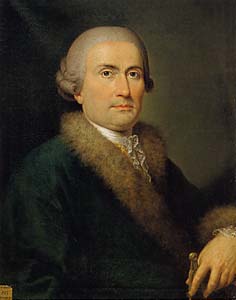 Curated by Marcello Fagiolo and Marisa Tabarrini
Giuseppe Piermarini, one of the most famous neoclassical figures in Italy, is best known as the architect of the Theatre alla Scala in Milan and refounder of good taste in Lombardy during the second half of eighteenth century. The exhibition is divided into chronological and thematic sections, beginning with a panorama of eighteenth-century Rome, the place of Piermarini’s apprenticeship, between the end of the pontificate of Benedict XIV (1740-1758) and the reign of Clement XIII (1758-1769). It then follows the architect to Naples in the studio of Vanvitelli, his time in Milan from 1769 and, finally, his return to his native Foligno in the early nineteenth century.
Note (added 5 August 2010) — The exhibition catalogue, Giuseppe Piermarini tra barocco e neoclassico. Roma, Napoli, Caserta, Foligno, edited by Marcello Fagiolo and Marisa Tabarrini (Perugia, 2010), ISBN: 9788896591277, is available through artbooks.com.










 Enfilade
leave a comment