Fashioning the Early Modern: Creativity and Innovation
◊ ◊ ◊ ◊ ◊
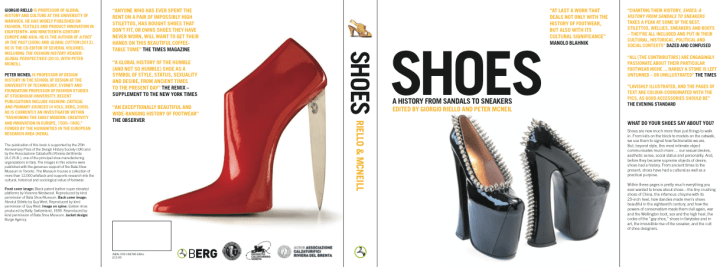
To judge from reactions to the Enfilade posting on the eighteenth-century shoe workshop, I would guess a number of you are quite keen on the topic. If so, you may be interested in this essay by Peter McNeil and Giorgio Riello, “Walking the Streets of London and Paris: Shoes in the Enlightenment,” in Shoes: A History from Sandals to Sneakers, edited by Giorgio Riello and Peter McNeil (London: Berg, 2006), which has just been released in paperback (448 pages for $30).
I learned of the book while perusing the ‘News’ section of the website, Fashioning the Early Modern: Creativity and Innovation in Europe, 1500-1800. The site is the public face of a multi-stage scholarly project. Workshops #3 and #4 are taking place in October and November in Copenhagen and Stockholm with a symposium to be held next year in London. -CH
◊ ◊ ◊ ◊ ◊
The following summary comes from the site:
Why did men from Spain to Sweden start to shave their heads and wear someone else’s hair in the mid-seventeenth century? Why did women decide that it was necessary to wear masks and other full-face coverings in public towards the end of the century? What was the economic and social impact of the sudden proliferation of ribbon-making machines?
Funded by the Humanities in the European Research Area (HERA), this project takes fashion seriously, asking the simple question: how and why did certain goods such as wigs, new textiles, ribbons, ruffs and lace become successful in early modern Europe while others failed? How far did these goods travel and how were they transmitted across linguistic, social and geographic borders? These are questions that remain relevant and our project demonstrates how a study of creativity and innovation as an economic and cultural force in the past can help our understanding of the same issues today.










 Enfilade
leave a comment