Exhibition | Renaissance and Baroque Bronzes from the Hill Collection
From The Frick:
Renaissance and Baroque Bronzes from the Hill Collection
The Frick Collection, New York, 28 January — 15 June 2014
Curated by Denise Allen
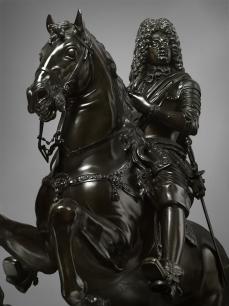
Giuseppe Piamontini, Prince Ferdinando di Cosimo III on Horseback, ca. 1695, bronze, 25 inches (62.5 cm), The Collection of Mr. and Mrs. J. Tomilson Hill
The Frick Collection will be the only venue for the first public exhibition of this private collection devoted to the bronze figurative statuette. The nearly forty sculptures included in the show are of exceptional quality and span the fifteenth through the eighteenth century, exemplifying the genre from its beginnings in Renaissance Italy to its dissemination across the artistic centers of Europe.
The Hill Collection is distinguished by rare, autograph masterpieces by Italian sculptors such as Andrea Riccio, Giambologna, and Giuseppe Piamontini. Its holding of works by the Giambologna school evokes the splendor of the late Renaissance courts, while the richness of the international Baroque is represented by Alessandro Algardi’s religious sculptures and by a remarkable assemblage of seventeenth- and eighteenth-century French bronzes in the classical mode. The Hill Collection reveals the range of artistry, invention, and technical refinement characteristic of sculptures created when the tradition of the European statuette was at its height. The exhibition is accompanied by an illustrated scholarly catalogue edited by Patricia Wengraf with
contributions by Claudia Kryza-Gersch, Dimitrios Zikos, and Denise Allen,
organizing curator of the exhibition at The Frick Collection.
◊ ◊ ◊ ◊ ◊
Patricia Wengraf, ed., Renaissance and Baroque Bronzes from the Hill Collection (London: Paul Holberton Publishing, 2014), 384 pages, ISBN: 978-1907372636, $125.
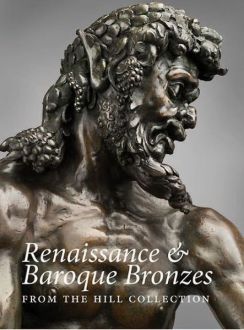 This richly illustrated and beautifully produced scholarly catalog of the superlative collection of Renaissance and Baroque bronze figurative statuettes from the Hill Collection, accompanies an exhibition of the collection at The Frick Collection, New York opening late January 2014. Spanning the 15th through the 18th century, the sculptures presented are of exceptional quality and exemplify the bronze statue or statuette from its beginnings in Renaissance Italy to its dissemination across the artistic centers of Europe.
The Hill Collection is distinguished by rare, autograph masterpieces by Italian sculptors such as Andrea Riccio and Giambologna, and has the most important collection of Baroque bronzes by Giuseppe Piamontini in the world. Its holding of works by the Giambologna school – the strongest found in any single collection, with the sole exception of the Museo Nazionale del Bargello, Florence – evokes the splendor of the late Renaissance courts, while the richness of the international Baroque is represented by religious sculptures by Alessandro Algardi, northern bronzes by Adriaen de Vries and Hubert Gerhard, and a remarkable assemblage of French 17th- and early 18th-century bronzes in the classical mode, by Barthelemy Prieur and from the circle of Ponce Jacquiot. The Hill Collection reveals the range of artistry, invention and technical refinement characteristic of sculptures created when the tradition of the European statuette was at its height.The catalog includes detailed biographies of each of the artists represented and is introduced with essays by the distinguished authors.
Patricia Wengraf is one of the world’s leading dealers in bronzes, sculpture and works of art, and in her particular specialty, bronzes of the 15th-18th centuries, her knowledge and connoisseurship are of world repute. Denise Allen is Curator of Renaissance Paintings and Sculpture at The Frick Collection. Claudia Kryza-Gersch is Curator of Renaissance Sculpture at the Kunsthistorisches Museum, Vienna. Dimitrios Zikos is Curator at the Museo Nazionale del Bargello in Florence. Rupert Harris is the leading conservator of metalwork and sculpture in the UK.
Fashioning Identities: Types, Customs, and Dress in a Global Context
From the conference website:
Fashioning Identities: Types, Customs, and Dress in a Global Context
Hunter College, City University of New York, 17–19 October 2013
 Pictorial imagery of local types, traditions, and dress has a long history. From costume books and street criers to travel albums and Hispanic costumbrismo, such representations captured people and daily life in a purportedly realistic manner, often emphasizing specificity over universal themes. Popular types, customs, and dress served as both sources of national pride and exotic spectacles of regional traditions. These depictions of local color often valued certain practices, regions, or types over others and were directed to native and foreign audiences alike. They came to have a global reach, serving as authoritative vehicles to disseminate values and beliefs about an individual place or people and cementing imperial ambitions, political ties, and economic networks. This symposium will explore the nuanced and complex ways in which such representations of peoples, places, and cultures—sometimes viewed as portraying a static or conservative vision—simultaneously engaged with the increasingly industrialized and global world.
T H U R S D A Y , 1 7 O C T O B E R 2 0 1 3
7:00 pm, Kossack Lecture Hall, Hunter North 1527
Keynote Address: Natalia Majluf (Director of the Museo de Arte de Lima), Materiality: José Gil de Castro and the Portraiture of Things
F R I D A Y , 1 8 O C T O B E R 2 0 1 3
Ida K. Lang Recital Hall, Hunter North 424
9:30–11:15 Ethnographies
Heather A. Hughes (University of Pennsylvania), Good Habits, Bad Habits: The Global Order in Robert Vaughan’s Months
Mariana Françozo (Leiden University and the National Museum of Ethnology, The Netherlands), Early Modern Comparative Ethnography: The ‘Locke Drawings’ Collection and the Representation of Indigenous Peoples in Global Perspective, c. 1680–1750
Deborah Dorotinsky (Instituto de Investigaciones Estéticas, UNAM, Mexico City), It Is Written in Their Faces: Seri Women and Facial Painting in Photography
11:15 Coffee
11:30–1:00 Intersections of Tradition & Modernity
Vanesa Rodríguez-Galindo (UNED, Madrid), Contemporary Customs in Late Nineteenth-Century Madrid: Points of Convergence between the Popular and the Modern in the Illustrated and Comical Press
Lynda Klich (Hunter College, CUNY), Circulating Indigenism in Mauricio Yáñez’s Postcards from Mexico
Denise Birkhofer (Allen Memorial Art Museum, Oberlin College), Enrique Díaz’s Parade of Progress: Fashioning a Streamlined Mexican Future
1:00–3:00 Lunch
3:00–5:00 Exoticism & Empire
Matthew Keagle (Bard Graduate Center), Uniform Schemas: The Abstraction of Dress and The Unity of Uniforms
Elisabeth Fraser (University of South Florida), The Ottoman Costume Album and Inclusive Empire: Louis Dupré in Ottoman Greece
Victoria L. Rovine (University of Florida), Fashion at the Intersection of French and African Colonial Cultures
S A T U R D A Y , 1 9 O C T O B E R 20 1 3
Ida K. Lang Recital Hall, Hunter North 424
9:30–11:00 Gender Anxieties
Ann Jones (Smith College), Merchandising Gender: Women’s Dress and Women’s Duties in Two Sixteenth-Century Costume Books, Jost Amman’s Frauenzimmer/Gynaeceum and Cesare Vecellio’s Habiti antichi et moderni (1590 and 1598)
Leyla Belkaïd (University of Lyon), A Stylistic Change and Its Pictorial Representation: The Algiers Dress in Western Imagery
Maya Jiménez (Kingsborough Community College, CUNY), The Myth of the Bahiana in Nineteenth-Century Photography
11:00 Coffee
11:30–1:00 Social & Civic Life
Eugenia Paulicelli (Queens College and The Graduate Center, CUNY), Performing Dress: Love, Politics and “venezianità” in Giacomo Franco’s Habiti d’huomini et donne venetiane
Sarah Buck (Florida State University), Les Costumes grotesques (c. 1695): Prints and Professional Habits in the ancien régime
Emily Morgan (Iowa State University), ‘True Types of the London Poor’: Street Life in London‘s Transitional Typology
1:00–3:00 Lunch
3:00–5:00 Masquerade & Appropriation
Ashley Bruckbauer (University of North Carolina at Chapel Hill), Playing the Ambassador and the ‘Other’: Cultural Cross-dressing and French Foreign Policy in the Eighteenth and Early-Nineteenth Centuries
Tara Zanardi (Hunter College, CUNY), The Mantón de Manila at the Crossroads of Identity
Teresa Eckmann (University of Texas at San Antonio), Playing the Devil’s Advocate with a Twist: Julio Galán and Lo mexicano
Charlene Lau (York University), Sartorial Remembrance: Bernhard Willhelm and Tirolean Folk Dress
New Book | From Still Life to the Screen
From Yale UP:
Joseph Monteyne, From Still Life to the Screen: Print Culture, Display, and the Materiality of the Image in Eighteenth-Century London (London: Paul Mellon Centre for Studies in British Art, 2013), 292 pages, ISBN: 978-0300196351, $85.
 From Still Life to the Screen explores the print culture of 18th-century London, focusing on the correspondences between images and consumer objects. In his lively and insightful text, Joseph Monteyne considers such themes as the display of objects in still lifes and markets, the connoisseur’s fetishistic gaze, and the fusion of body and ornament in satires of fashion. The desire for goods emerged in tandem with modern notions of identity, in which things were seen to mirror and symbolize the self. Prints, particularly graphic satires by such artists as Matthew and Mary Darly, James Gillray, William Hogarth, Thomas Rowlandson, and Paul Sandby, were actively involved in this shift. Many of these images play with the boundaries between the animate and the inanimate, self and thing. They also reveal the recurring motif of image display, whether on screens, by magic lanterns, or in “raree-shows” and print-shop windows. The author links this motif to new conceptions of the self, specifically through the penetration of spectacle into
everyday experience.
Joseph Monteyne is associate professor in the history
of art at the University of British Columbia.
Fellowships | Winterthur Museum Research Fellowship Program
Winterthur Museum Research Fellowship Program, 2014–15
Applications due by 15 January 2014
Winterthur Museum, Garden & Library announces its Research Fellowship Program for 2014–15, consisting of short- and long-term fellowships open to academic, independent, and museum scholars, to support advanced study of American art, culture, and history.
Fellowships include NEH, dissertation, and short-term fellowships. Fellows have full access to library collections of more than 87,000 volumes and one-half million manuscripts and images, searchable online at winterthur.org. Fellows may conduct object-based research in the museum’s collections of 90,000 artifacts and artworks made or used in America to 1860.
Applications are due January 15, 2014. For more details and to apply, visit the website or e-mail Rosemary Krill at rkrill@winterthur.org.
Call for Articles | Constructions of the Exotic
Constructions of the Exotic in Europe and North America, 18th–21st Centuries
Special Issue of Material Culture Review
Manuscripts due by 15 December 2013
Material Culture Review solicits articles for a special issue on the theme of constructing the exotic. We are looking for articles that examine the question of how a person, an object or a work of art comes to be seen as exotic. How is ‘foreignness’ constructed? How is one culture appropriated and domesticated by another?
The goal here is not to show the constructed nature of the concept of the exotic. Rather, papers should emphasize the processes by which something is made exotic, including the stories that surround an object, the ways in which an object is exhibited, and how the representation of an object affects whether or not it is perceived as foreign. We invite papers that examine exoticization and domestication in relation to territory and place, agency and identity – papers that examine not only what is exoticized but also who does the exoticizing and how they do it. We are particularly interested in analyses of the exotic in Europe and North America that are grounded in social and political contexts.
Proposed Research Topics
1. Representation
The first topic has to do with representations that blur the border between documentation and fiction, realism and exoticism. How do certain items construct certain identities? For example, how do Indian clothing, Chinese dishes, and tobacco accessories contribute to the identity of those who wear or use them? How are these objects used in the art world, in the theatre, or in people’s homes? How do 18th-century engravings used to illustrate stories of voyages, as well as more ‘scientific’ representations (photographs, museums, etc.) produced at the beginning of the 19th century, construct the exotic? Papers on this topic will look at what actually makes something appear exotic, what increases or decreases the ‘foreign’ quality in the eyes of the maker and consumer.
2. Display
The second topic pays attention to the material culture, words, and gestures surrounding objects – to displays that make them look exotic or, on the contrary, domestic. Here, it is important to examine how the objects are displayed in their place of purchase, in people’s homes, and in museums. How are they exhibited? What physical context (furniture, frames, light) is used to present them? What words are used to describe them? Do these things qualify the objects as exotic or, rather, do they underemphasize their ‘foreign’ quality?
3. Materiality
Once the things are acquired, how are they repaired, reformed, or recomposed? What kind of material trans-formations do these imported, re-territorialized objects undergo? It may be through a process of hybridization with other artifacts. Exoticization can also happen through a process of integration: a fragment inserted into a piece of furniture can alter the entire object. However, exoticism is reinforced, for example, in the bronze or silver rings on an Asian vase. We encourage papers that study the process of fragmentation, extension, and the use of specific materials (precious and tropical wood, stone, metal, etc.) in the creation of ‘exotic’ objects.
Articles should be 20–30 double-spaced pages, including endnotes. In addition, we encourage the submission of
· research reports (10–20 pages, including endnotes)
· exhibition reviews (10–15 pages, including endnotes)
· research notes (5–10 pages)
· book reviews (notes and comments less than 5 pages) on this theme
Articles are expected in English or French. Please submit manuscripts by December 15, 2013 to Noémie Etienne at ne477@nyu.edu.










 Enfilade
leave a comment