Caveat Scriptor
Public Service Announcement
HECAA member Alden Gordon (Trinity College, Hartford, CT) notes that he recently received an email from ‘David Publishing’ with specifics mined from this year’s ASECS conference in Pittsburgh. The scam involves an invitation to publish (in this case with the Journal of Literature and Art Studies, JLAS) that apparently then results in a bill for hundreds of dollars for ‘editing’ or the like. The subject line of the email appears remarkably personal with the recipient’s name included.
Predatory publishing is not a new scam (more information is available here and here), but it is alive and well. So bear in mind that the upside of having your news (including conference presentations) posted at sites like Enfilade is that colleagues know what you’re up to. The downside is that spammers and scammers do, too. Though annoying, it need not be a serious problem—so long as you hit delete.
–Craig Hanson
Exhibition | The Lacquerwork of Gérard Dagly
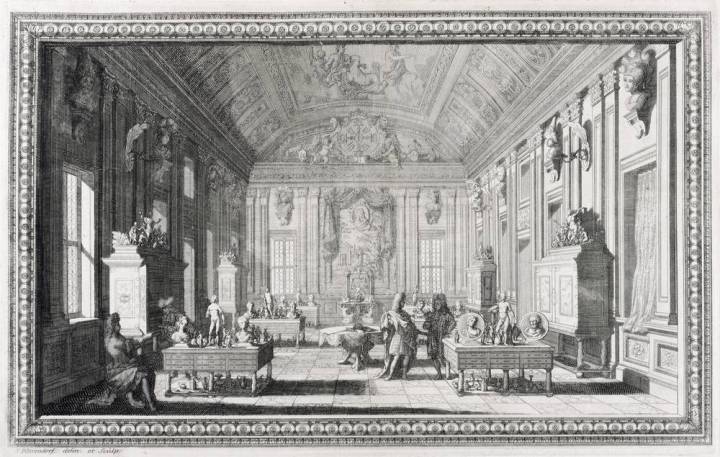
Idealized View of the Coin and Antiques Cabinet, Berliner Schloss, ca. 1695, Samuel Blesendorf, Thesaurus Brandenburgicus selectus, volume 1 (Berlin 1696).
◊ ◊ ◊ ◊ ◊
From the Staatliche Museen zu Berlin (with thanks to Tobias Locker for noting it). . .
In Praise of Good Rule: The Lacquerwork of Gérard Dagly in the Berlin Palace
Lob der Guten Herrschaft: Die Lackkunst des Gérard Dagly im Berliner Schloss
Kunstgewerbemuseum (Museum of Decorative Arts), Köpenick Palace, Berlin, 8 July — 9 October 2016
Gérard Dagly (c. 1660–1715) was a master of Baroque lacquerwork. His most important work is the coin cabinet from the cabinet of antiquities of the Prussian royal art collection, now preserved in the Berlin Kunstgewerbemuseum. The dramatic composition in gold on black lacquer on the cabinet’s decorative panels is unusual for Europe, and provides early evidence of a serious artistic interaction with East Asian models. In this piece Dagly unites East Asian and European visual traditions in a homage to Frederick III, Elector of Brandenburg.

Gérard Dagly, Medal Cabinet for the Cabinet of Antiquities of the Brandenburg-Preußischen Kunstkammer, 1690–95 (Berlin: Kunstgewerbemuseum; photo by Tomasz Samek).
As ‘Director of Ornaments’, Gerard Dagly was responsible for all the furnishings of the cabinet of antiquities in the Berlin Palace. These included an ensemble of four coin and medal cabinets and six tables, as well as the interior decorations of the room, including paintings and gilded sculptures. A monumental catalogue, the Thesaurus Brandenburgicus selectus compiled by Lorenz Berger, accompanied the presentation of the collection. All these elements served Baroque prestige, forming an accolade praising the Elector Frederick III, later King Frederick I as a preserver of antiquity, and using this connection to the past to legitimize his claim to power.
This exhibition presents the coin cabinet in its context, for which the Kopenick Palace, built for Frederick III, forms the ideal location. Historic images of the cabinet of antiquities accompany a rich display of the works of art they depict. These include ancient gold and silver coins, sculptures, and gems, an Egyptian death mask, Etruscan beaked jugs, as well as the Thesaurus Brandenburgicus, Chinese and Japanese porcelain and lacquerwork, and other examples of Dagly’s work, such as the lost Chinese cabinet from the Berlin Palace.
Lenders to the exhibition include: the Brandenburgisches Landesamt für Denkmalpflege und Archäologisches Landeszentrum, the Humboldt-Universität zu Berlin, the Museum für Lackkunst Münster, the Stiftung Preußische Schlösser und Gärten Berlin-Brandenburg, the Staatsbibliothek zu Berlin Preußischer Kulturbesitz, as well as other collections within the Staatliche Museen zu Berlin, specifically: the Ägyptisches Museum, Antikensammlung, Kunstbibliothek, Münzkabinett, the Museum für Asiatische Kunst, and Skulpturensammlung.
Exhibition | Giambattista and Domenico Tiepolo: Master Drawings

Domenico Tiepolo, A Centaur Playing with Punchinellos, ca. 1770 (Bloominton Indiana: The Anthony Moravec Collection of Old Master Drawings, Eskenazi Museum of Art)
◊ ◊ ◊ ◊ ◊
From the Eskenazi Museum of Art at Indiana University:
Giambattista and Domenico Tiepolo: Master Drawings from the Anthony J. Moravec Collection
Eskenazi Museum of Art, Indiana University, Bloomington, 1 October 2016 — 5 February 2017
Crocker Art Museum, Sacramento, California, 29 October 2017 — 4 February 2018
Curated by Adeheld Gealt
This fall, the Eskenazi Museum of Art at Indiana University will showcase a series of Italian master drawings, in an exhibition that highlights a major gift of art in the museum’s 75-year history. Giambattista and Domenico Tiepolo: Master Drawings from the Anthony J. Moravec Collection will present a collection of works on paper by the Venetian masters Giambattista and Domenico Tiepolo—a father and son who are widely considered two of the most notable Italian draftsmen of their era—along with works by contemporaries Ubaldo Gandolfi and Giuseppe Bernardino Bison, as well as their predecessor Jacopo Palma il Giovane. Giambattista and Domenico Tiepolo marks the first time that the Eskenazi Museum has comprehensively exhibited the collection of Anthony J. Moravec, an Indiana philanthropist and civic leader who spent five years building the collection in concert with Dr. Adelheid Gealt, the museum’s director emeritus, before donating his holdings to the Eskenazi Museum in 2010.

Domenico Tiepolo, Jesus in the Garden of Gethsemane: The Second Prayer, ca. 1785, pen and brown ink wash over black chalk on paper (The Anthony Moravec Collection of Old Master Drawings, Eskenazi Museum of Art, 2010.118).
On view from October 1, 2016 through February 5, 2017, the exhibition and its accompanying catalogue will provide new scholarship and curatorial insight on Giambattista and Domenico Tiepolo, two of the most important artists in the Old Masters canon. The exhibition will center on a set of 12 New Testament drawings by Domenico Tiepolo, part of a now-scattered cycle of 320 drawings that is regarded as the most exhaustive and sustained visual exploration of the subject by any artist in history. Domenico’s large pen, brush, and ink drawings were dispersed after his death in 1804, and entered many public and private collections where they were prized as outstanding drawings. However, the actual series to which these individual drawings belonged was not known until two scholars— Adelheid Gealt and George Knox, professor emeritus of the University of British Columbia, Vancouver—spent 10 years piecing the series back together and publishing it as a newly discovered New Testament cycle in 2006. Following Moravec’s 2010 gift, which was the largest private collection of New Testament drawings to enter a public collection in recent history, the Eskenazi Museum has become the world’s third-largest repository of works from Tiepolo’s New Testament series, after the Museé du Louvre and the Morgan Library and Museum.
In addition to works from Domenico’s New Testament series, the Moravec collection also includes important works on paper by his father, Giambattista Tiepolo, who is widely regarded as one of the greatest draftsmen of the 18th century. Works by Ubaldo Gandolfi and Giuseppe Bernardino Bison round out the collection, along with a drawing by Jacopo Palma il Giovane—a previously unidentified study for his painting St. John the Baptist Preaching, which was acquired by the museum in 1964. In total, 24 works on paper will be displayed in Giambattista and Domenico Tiepolo, which will be a major highlight of the Eskenazi Museum’s 75th-anniversary season.
◊ ◊ ◊ ◊ ◊
The catalogue will be available in October from Indiana University Press:
Adeheld Gealt, with George Knox, Giambattista and Domenico Tiepolo (Bloomington: Indiana University Press, 2016), 136 pages, ISBN: 978-0253022905, $50.
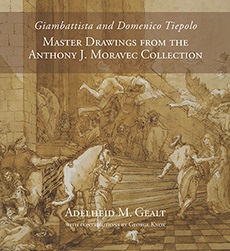 Giambattista and Domenico Tiepolo documents an important collection of master drawings donated by an individual to the Sidney and Lois Eskenazi Museum of Art at Indiana University, including five drawings by the celebrated Venetian genius Giambattista Tiepolo and sixteen drawings by his most famous son, Domenico Tiepolo. Twelve of the sixteen form part of Domenico’s most important drawing series—his exhaustive visual exploration of the New Testament. Also included are two drawings discovered after the 2006 publication of Domenico Tiepolo: A New Testament and seen here for the first time. Gealt and Knox are world-renowned experts on the Tiepolos and this book will serve as a useful reference to understanding their work as draftsmen. This beautiful illustrated volume will appeal to art lovers, biblical scholars, and those who value the unique work of the Tiepolos.
Adeheld M. Gealt is Director Emerita of the Eskenazi Museum of Art. Her research has concentrated on reconstructing the lost serial narratives of the Venetian draftsman Domenico Tiepolo (1727–1804). She is editor (with George Knox) of Domenico Tiepolo: Master Draftsman (1997) and Domenico Tiepolo: A New Testament (2006).
◊ ◊ ◊ ◊ ◊
C O N T E N T S
Foreword, David Brenneman
Preface and Acknowledgments
Structure of the Catalogue
An Interview with the Collector, Anthony J. Moravec and Adelheid M. Gealt
A Brief History of Venetian Drawing
Giambattista Tiepolo, a Brief Biography
Development as a Draftsman
Flight into Egypt
Holy Family
Caricatures
Domenico Tiepolo, a Brief Biography
St. Anthony of Padua
Satyrs and Centaurs
Punchinello
New Testament
Palma Giovane
Ubaldo Gandolfi
Giuseppe Bernardino Bison
Notes
Bibliography
Index
◊ ◊ ◊ ◊ ◊
Note (added 29 October 2017) — The posting was updated to include the Crocker Art Museum as a venue.
Reynolds’s Portrait Accepted in Lieu of £4.7m Inheritance Tax
Press release (10 August 2016) from Arts Council England:

Sir Joshua Reynolds, Portrait of Frederick, 5th Earl of Carlisle, 1769, oil on canvas, 241.4 × 150 cm (Tate Britain)
A major full-length portrait by Sir Joshua Reynolds (1723–1792) of the 5th Earl of Carlisle (1748–1825), aged 20, has been accepted in lieu of inheritance tax for the nation. This important painting has been allocated to Tate and will remain on public display in its original setting at Castle Howard in North Yorkshire and in the future will be shown elsewhere around the country including Tate Britain.
The portrait, which has long been recognised as one of Reynolds’s masterpieces, was commissioned by the sitter and completed in 1769 when Reynolds was at the height of his powers, having just been elected the first President of the Royal Academy. The painting has always been central to the collection at Castle Howard and has hung there for over 200 years.
The 5th Earl was a key patron and collector of the arts in the North of England in the 18th century. Dressed in formal robes surrounded by classical architecture and his beloved dog Rover at his feet, Carlisle was captured by Reynolds in a lively and highly skilled manner, marking his entry into society following his Grand Tour and his position as head of this important family dynasty. The complex composition, paintwork and use of colour illustrates perfectly why Reynolds was the leading British portrait painter of the 18th century. Reynolds’s composition alludes to the architecture of Castle Howard, designed by Sir John Vanbrugh (1664–1726). The building of Castle Howard was completed under the supervision of the 5th Earl who filled the great house with his fine collection of Old Masters.
Edward Harley, Chairman of the AIL Panel, said: “The Acceptance in Lieu scheme has been enriching our heritage for over a century; I am delighted that this masterpiece by Reynolds, one of the most important painters of the day, has entered our national collection under the scheme.”
Alex Farquharson, Director, Tate Britain said: “The magnificent painting of Frederick Howard, 5th Earl of Carlisle 1769 is the first full-length male portrait by Joshua Reynolds to join the Tate collection. A glamorous portrait in oil of the earl and his beloved dog Rover, it is an outstanding example of the type of painting for which Reynolds is most highly acclaimed. I am delighted that this work will now enter the national collection, the greatest collection of British art in the world, and that it will be shown both in its original setting in Castle Howard and, in future, at Tate Britain and elsewhere.”
◊ ◊ ◊ ◊ ◊
As Mark Brown reports for The Guardian (10 August 2016).
An important 18th-century portrait of the 5th Earl of Carlisle by Sir Joshua Reynolds has been accepted for the nation in lieu of £4.7m inheritance tax. . .
The Reynolds painting has been passed down through the family and its offer to the acceptance in lieu scheme (AIL) follows the sale last year of art works and furniture by the castle’s present custodians to help secure the estate’s long-term future [Sotheby’s, July 2015]. The sale raised £12m.
The acceptance in lieu scheme was created in David Lloyd George’s people’s budget of 1910, with hundreds of outstanding objects and collections given as a way of settling tax bills.
The Fitzwilliam Acquires Pair of Pietre Dure Roman Cabinets

Pair of ebony and rosewood cabinets, inlaid with pietre dure, and mounted with gilt-bronze; made in Rome, ca. 1625, likely for a member of the powerful Borghese family. The gilt-wood stands were made in England, ca. 1800, probably to the designs of the influential Regency designer, Charles Heathcote Tatham, in order to display the cabinets in the spectacular Long Gallery at Castle Howard, Yorkshire (Cambridge: The Fitzwilliam Museum).
◊ ◊ ◊ ◊ ◊
Press release from The Fitzwilliam:
The Fitzwilliam Museum announced today (Monday, 8 August 2016) its successful bid to raise the £1.2 million needed to save an important pair of pietre dure Roman cabinets for the nation. No other pair of Roman hardstone cabinets exist in a public collection in Britain.
The Fitzwilliam is grateful for the support of The National Heritage Memorial Fund (NHMF) for their generous grant of £700,000 and to the Art Fund for their early adoption of this project with a £200,000 grant. The Fitzwilliam also received generous support from numerous other benefactors, including the Pilgrim Trust, to prevent these treasures from leaving the UK.
These unique and highly prized cabinets have been part of the private collection at Castle Howard, Yorkshire, since their purchase by Henry Howard, the 4th Earl of Carlisle, most likely in Rome during his second ‘Grand Tour’ of Italy (1738–39). They were offered for auction at Sotheby’s London, last summer by the Trustees of Castle Howard and sold to a foreign buyer for £1.2 million.
A member of the Reviewing Committee on the Export of Works of Art, (RCEWA), Christopher Rowell, stated that the cabinets, represent “the high watermark of the British taste for Italian princely furniture” and that “with the exception of the National Trust’s cabinet at Stourhead, made in Rome around 1585 for Pope Sixtus V, these are the most significant cabinets of this type in Britain.”
Their historic and cultural value was such that the then Culture Minister Ed Vaizey placed a temporary export bar on the 400-year-old Italian cabinets to provide an opportunity to save them for the nation.

One of the cabinets as installed at Castle Howard.
The cabinets were made in Rome in the first quarter of the 17th century almost certainly for a member of the papal Borghese dynasty, one of the most powerful and wealthy families of their day, and represent the highest quality of furniture-making in 17th century Italy. Veneered with ebony and rosewood, they have been further embellished with inlays of expensive, exotic and vividly coloured semi-precious hardstones (such as lapis lazuli and jasper) and with gilt-bronze statuettes and escutcheons. They are among the most significant cabinets of this type left in Britain, dating back to 1625.
Each cabinet sits on a Neo-classical stand, probably made ca. 1800 to the designs of the influential Regency designer, Charles Heathcote Tatham, for display in the just-completed spectacular Long Gallery at Castle Howard, Yorkshire. Fashioned from mahogany, they boast gilded caryatid supports and other classical ornaments. Showpiece cabinets, like these, were the most prestigious display furniture in 17th-century Europe and were lavishly decorated to reflect the status and taste of their owners and have been eagerly collected ever since.
Tim Knox, Director of the Fitzwilliam Museum, remarked “Splendid hardstone mounted cabinets such as these were the ultimate trophy of British Grand Tour collectors in the 18th century. With their lavish inlay of electric blue lapis lazuli, and glowing jaspers, and later English stands with gilded caryatids (supports in the form of antique maidens), they are a perfect combination of Italian pomp and English splendour. Nowhere in the UK is it possible to see a pair of Roman cabinets of quite this swagger and splendour. I am thrilled that we have saved these remarkable objects from export and that they can take their place amidst the Fitzwilliam’s world-class collections. They are a fitting acquisition to celebrate the 200th birthday of our founder, Lord Fitzwilliam.”
Sir Peter Luff, Chair of NHMF, said: “Exquisitely beautiful and exceptionally rare, it is when you consider these cabinets in their original context at Castle Howard, one of our finest country house interiors, that they become very important to the UK’s heritage.”
Stephen Deuchar, Art Fund Director, said: “We are very happy to support the Fitzwilliam in acquiring this captivating pair of cabinets, a fantastic addition to the permanent collection in its bicentenary year.”
Sir Mark Jones, Chair, The Pilgrim Trust said “It is great news that these spectacular cabinets, so important for understanding the history of taste in Britain, are to stay in the country.”
The pair of cabinets will go on display at the Museum on Wednesday 10th August, when they will be unveiled as part of the celebrations in honour of the Founder’s Birthday.
Exhibition | An Amateur’s Passion: Lord Fitzwilliam’s Print Collection
Now on view at The Fitzwilliam:
An Amateur’s Passion: Lord Fitzwilliam’s Print Collection
The Fitzwilliam Museum, Cambridge, 9 August 2016 — 29 January 2017
Curated by Elenor Ling
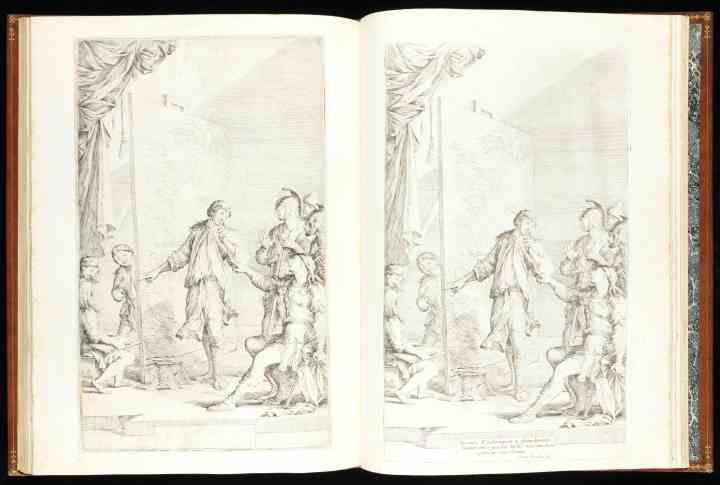
To mark the bicentenary of the founding of The Fitzwilliam Museum and celebrate its collection, this exhibition looks at one of the passions of its founder, Richard 7th Viscount Fitzwilliam of Merrion (1745–1816). Lord Fitzwilliam embodies both our present idea of the amateur print collector, as a non-professional enthusiast, and in the way the word amateur was understood in his day—a ‘lover of the arts’. The 198 albums that were housed in his library at the time of his death and transferred to the University of Cambridge under the terms of his bequest are testament to his love of prints. Despite his other all-consuming passions—the plight of the French monarchy in exile and the activities for the Concerts of Ancient Music—he managed to find time to boast of his collection to the exiled French court and to the Earl of Sandwich. The fact that some 40,000 prints are contained within the 198 albums gives a sense of the time and effort he expended on his collection. This small exhibition, comprising thirty-one prints and seven albums, gives a sense of the content and scope of Fitzwilliam’s print collection.
The first significant fact about Fitzwilliam’s albums is that they are arranged according to printmaker—that is to the person who made the print, rather than the artist who designed it or the work in another medium it represents. The names on the spines of the albums, therefore, usually correspond to the work of the person, or a family of engravers, regardless of whether a print was designed by the printmaker or someone else. The display begins with a small selection of Fitzwilliam’s Rembrandt prints, known at the time of his death as one of the strengths of his collection and evidently one of his earliest preoccupations. Following Rembrandt is a mixture of old masters, including Ishrael van Meckenem (c.1445–1503) and Albrecht Dürer (1471–1528), as well as work by contemporary artists, such as Jean-Jacques de Boissieu (1736–1810) and Johann Christian Reinhart (1761–1847).
Fitzwilliam’s albums fall into two main categories: those he acquired complete from other sources and those containing mounted, individual prints arranged entirely by Fitzwilliam himself. The latter is the focus of this exhibition, although the first category is represented. In terms of construction, evidence suggests that Fitzwilliam assembled the work of each printmaker in turn. In general Fitzwilliam tried to acquire prints in good condition and of good quality, and paid great attention to the decorative effect of the finished sheets. Neatness, symmetry and elegance are characteristic qualities across all his albums. Large prints were usually folded, rather than cut and pasted on separate sheets (in contrast to some albums acquired from other collections).
The examples of prints from his monographic albums serve to highlight the anomalies in his collection: the outsized albums that housed his mezzotints (the chief strength of his collection of British prints) and two albums arranged by subject, ‘Imitations of Drawings’, which comprises a mixture of sixteenth and seventeenth-century Italian woodcuts and eighteenth-century prints produced as facsimiles of drawings. Most bizarrely of all is the strange large album called simply ‘Jesuites’, a testament to another of his admirations: St Ignatius of Loyola and the Jesuit Order.
The exhibition presents what little can be gleaned about Fitzwilliam’s method of acquisition, including the single-surviving draft letter, written by Fitzwilliam just after the turn of the nineteenth century to someone who was to buy prints for him in Paris, and the names of print sellers and publishers written by Fitzwilliam as notes in a small number of the albums. The lack of documentation concerning the acquisition of prints highlights how importance it is that the majority of his albums has survived intact to this day.
New Book | The Rise and Fall of the Fine Art Print
From the University of Toronto Press:
W. McAllister Johnson, The Rise and Fall of the Fine Art Print in Eighteenth-Century France (Toronto: University of Toronto Press, 2016), 472 pages, ISBN: 978-1442637122 , $85.
 Sanctioned by France’s Royal Academy of Painting and Sculpture and struck primarily in order to disseminate the works of the Academy’s members, the eighteenth-century fine art print flourished only briefly. Yet it set into motion the interdependence of graphic and pictorial media. Here, W. McAllister Johnson distills a lifetime of research into an essential study of this seminal phenomenon and chronicles the issues, decisions, and practicalities inherent in making copperplate engravings as articles of art and commerce. His exceptional erudition makes this an unparalleled resource for the study of visual culture and of all aspects of printmaking before the French Revolution.
W. McAllister Johnson is a professor emeritus in the Department of Art at the University of Toronto. His most recent book is Versified Prints: A Literary and Cultural Phenomenon.
◊ ◊ ◊ ◊ ◊
C O N T E N T S
Preface
1 The Full Statement of the Question
2 Orienting Concepts
3 Prints as Information
4 The Fine Art Print Defined
5 Pendant Prints
6 The Académie as Catalyst and Regulator
7 The Académie and the Artist
8 Creative Issues
9 Response Time
10 Career Calculus
11 Reputation and Reflected Glory
12 Commercial Ploys and the Art of the Annonce
13 Prints and Paintings on Exhibition
14 Engraved, Not Engraved
15 Criticism, Controversy and Censure
16 Greuze Prints, including the Salon
17 The Clash of Genres
18 Conclusion
Appendix A: The Mercure’s Editorial Policy regarding Prints (1728)
Appendix B: Problems of Engraving and Collecting Prints (1754)
Appendix C: Wille’s Appreciation of Jean Daullé (1763)
Appendix D: An Oudry Portrait for the Book Trade (1767)
Appendix E: A Greuze ‘Lost to France’ multiplied by a Print (1767)
Appendix F: The Art Market : Paintings, Pendants and Petits Sujets (1780)
New Book | The Piranesi Effect
From New South Books:
Kerrianne Stone and Gerard Vaughan, eds., The Piranesi Effect (Sydney: University of New South Wales Press, 2015), 336 pages, ISBN: 978-1742234267, $60.
 This book publishes a conference convened in February 2014 on the global impact of Piranesi: Piranesi and the Impact of the Late Baroque, presented in collaboration with the State Library and the Baillieu Library.
The work of Italian printmaker Giovanni Battista Piranesi (1720–1778) has captivated artists, architects and designers for centuries. Although contemporary Australia is a long way from eighteenth-century Rome, it is home to substantial collections of his works, the largest being at the State Library of Victoria and the University of Melbourne.
The Piranesi Effect is a collection of exquisitely illustrated essays on the impact of Piranesi’s work throughout the years. The book brings together Australian and international experts who investigate Piranesi’s world and its connections to the study of art and the practice of artists today. From curators and art historians, to contemporary artists like Bill Henson and Ron McBurnie, the contributors each bring their own passion and insight into the work of Piranesi, illuminating what it is about his work that still inspires such wonder.
Kerrianne Stone is the Curator, Prints, at the Baillieu Library, University of Melbourne repository of the first Paris edition of Piranesi’s work. She has worked with several collections across museums and galleries in Melbourne. Gerard Vaughan is Director of the National Gallery of Australia. For 13 years he was director of the National Gallery of Victoria, before retiring to take up a research professorship in The Australian Institute of Art History at Melbourne University. He has a special interest in the rise of neoclassicism in late eighteenth-century Europe.
New Book | Republic of Taste: Art, Politics, and Everyday Life
From the University of Pennsylvania Press:
Catherine Kelly, Republic of Taste: Art, Politics, and Everyday Life in Early America (Philadelphia: University of Pennsylvania Press, 2016), 352 pages, ISBN: 978-0812248234, $50.
 Since the early decades of the eighteenth century, European, and especially British, thinkers were preoccupied with questions of taste. Whether Americans believed that taste was innate—and therefore a marker of breeding and station—or acquired—and thus the product of application and study—all could appreciate that taste was grounded in, demonstrated through, and confirmed by reading, writing, and looking. It was widely believed that shared aesthetic sensibilities connected like-minded individuals and that shared affinities advanced the public good and held great promise for the American republic.
Exploring the intersection of the early republic’s material, visual, literary, and political cultures, Catherine Kelly demonstrates how American thinkers acknowledged the similarities between aesthetics and politics in order to wrestle with questions about power and authority. Judgments about art, architecture, literature, poetry, and the theater became an arena for considering political issues ranging from government structures and legislative representation to qualifications for citizenship and the meaning of liberty itself. Additionally, if taste prompted political debate, it also encouraged affinity grounded in a shared national identity. In the years following independence, ordinary women and men reassured themselves that taste revealed larger truths about an individual’s character and potential for republican citizenship.
Did an early national vocabulary of taste, then, with its privileged visuality, register beyond the debates over the ratification of the Constitution? Did it truly extend beyond political and politicized discourse to inform the imaginative structures and material forms of everyday life? Republic of Taste affirms that it did, although not in ways that anyone could have predicted at the conclusion of the American Revolution.
Catherine E. Kelly is Associate Professor and L. R. Brammer Jr. Presidential Professor of History at the University of Oklahoma. She is author of In the New England Fashion: Reshaping Women’s Lives in the Nineteenth Century.
◊ ◊ ◊ ◊ ◊
C O N T E N T S
Introduction: The American Republic of Taste
1 Learning Taste
2 Aesthetic Entrepreneurs
3 Picturing Race
4 Looking Past Loyalism
5 Waxing Political
6 Political Personae
Epilogue: The Nation’s Guest in the Republic of Taste
Notes
Index
Acknowledgments
2015 Dissertation Listings from CAA
From caa.news (1 August 2016) . . .
caa.reviews has published the authors and titles of doctoral dissertations in art history and visual studies—both completed and in progress—from American and Canadian institutions for calendar year 2015. You may browse by listing date or by subject matter. Each entry identifies the student’s name, dissertation title, school, and advisor. Once a year, each institution granting the PhD in art history and/or visual studies submits dissertation titles to CAA for publication.
◊ ◊ ◊ ◊ ◊
The index for 2015 lists ten ‘eighteenth-century art’ dissertations completed, including:
• Katherine Arpen, “Pleasure and the Body: The Bath in Eighteenth-Century French Art and Architecture” (UNC Chapel Hill, M. Sheriff)
• Julie Boivin, “Horrid Beauty: Rococo Ornament and Contemporary Visual Culture” (Toronto, M. Cheetham)
• John Cooper, “Imperial Balls: The Arts of Sex, War, and Dancing in India, England, and the Caribbean, 1780–1870” (Yale, T. Barringer; R. Thompson)
• Meredith Gamer, “‘The Sheriff’s Picture Frame’: Art and Execution in Eighteenth-Century Britain” (Yale, T. Barringer)
• Elizabeth Lee Oliver, “Mercantile Aesthetics: Art, Science, and Diplomacy in French India (1664–1761)” (Northwestern, S. H. Clayson)
◊ ◊ ◊ ◊ ◊
and forty-four ‘eighteenth-century art’ dissertations in progress, including:
• Franny Brock, “Drawing the Amateur: Draftsmanship and the Amateur in Eighteenth-Century France” (UNC Chapel Hill, M. Sheriff)
• Ashley Bruckbauer, “Dangerous Liaisons: Ambassadors and Embassies in Eighteenth-Century French Art” (UNC Chapel Hill, M. Sheriff)
• Emily Casey, “Waterscapes: Representing the Sea in the American Imagination, 1760–1815” (Delaware, W. Bellion)
• Bernard Cesarone, “Redeeming Virgins and Heterodox Images in Enlightenment New Spain” (UIUC, O.Vázquez)
• Kathryn Desplanque, “Art, Commerce, and Caricature: Satirical Images of Artistic Life in Paris, 1750–1850” (Duke, N. McWilliam)
• Monica Hahn, “Go-Between Portraits and the Imperial Imagination, circa 1800” (Temple, T. Cooper)
• Joshua Hainy, “John Flaxman: Beyond the Line” (Iowa, D. Johnson)
• Alexandra Morrison, “Copying at the Louvre” (Yale, C. Armstrong)
• Sarah Sylvester Williams, “Dining Scenes by Nicolas Lancret” (Missouri, Columbia, M. Yonan)










 Enfilade
leave a comment