New Book | Women Artists in Early Modern Italy
From Brepols:
Sheila Barker, ed., Women Artists in Early Modern Italy: Careers, Fame, and Collectors (Turnhout: Harvey Miller, 2016), 181 pages, ISBN: 978-1909400351, $125.
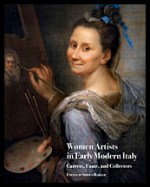 Enhancing our understanding of early Italian female painters including Sofonisba Anguissola and introducing new ones such as Costanza Francini and Lucrezia Quistelli, this volume studies women artists, their patrons, and their collectors, in order to trace the rise of the social phenomenon of the woman artist.
In ten chapters spanning two centuries, this collection of essays examines the relationships between women artists and their publics, both in early modern Italy and across Europe. Drawing upon archival evidence, these essays afford abundant documentary evidence about the diverse strategies that women utilized in order to carry out artistic careers, from Sofonisba Anguissola’s role as a lady-in-waiting at the court of Philip II of Spain, to Lucrezia Quistelli’s avoidance of the Florentine market in favor of upholding the prestige of her family, to Costanza Francini’s preference for the steady but humble work of candle painting for a Florentine confraternity. Their unusual life stories along with their outstanding talents brought fame to a number of women artists even in their own lifetimes—so much fame, in fact, that Giorgio Vasari included several women artists in his 1568 edition of artists’ biographies. Notably, this visibility also subjected women artists to moral scrutiny, with consequences for their patronage opportunities. Because of their fame and their extraordinary (and often exemplary) lives, works made by women artists held a special allure for early generations of Italian collectors, including Grand Duke Cosimo III de’ Medici (1642–1723), who made a point of collecting women’s self-portraits. In the eighteenth century, British collectors wishing to model themselves after the Italian virtuosi exhibited an undeniable penchant for the Italian women artists of a bygone era, even though they largely ignored the contemporary women artists in their midst.
Sheila Barker directs the Jane Fortune Research Program on Women Artists at the Medici Archive Project, the first archival program of its kind. Her publications of documentation on women artists have shed light on Lucrezia Quistelli, Artemisia Gentileschi, Irene Parenti Duclos, and the phenomenon of female copyists.
◊ ◊ ◊ ◊ ◊
C O N T E N T S
1 Editor’s Preface, Sheila Barker (The Medici Archive Project)
2 ‘Piu che famose’: Some Thoughts on Women Artists in Early Modern Europe, Sheila ffolliott (George Mason University, emerita)
3 Sofonisba Anguissola at the Court of Philip II, Cecilia Gamberini (Universidad Autonoma de Madrid Felsina Cattòlica)
4 Sofonisba Anguissola, ‘Pittora de Natura’: A Page from Van Dyck’s Italian Sketchbook, Barbara Tramelli (Max Planck Institute, Berlin)
5 Lucrezia Quistelli (1541–1594): A Noblewoman and Artist in Vasari’s Florence, Sheila Barker (The Medici Archive Project)
6 Arcangela Paladini and the Medici, Lisa Goldenberg Stoppato (Independent Scholar)
7 Costanza Francini. A Painter in the Shadow of Artemisia Gentileschi, Julia Vicioso (Archivio Storico dell’Arciconfraternita dei Fiorentini)
8 A Newly Discovered Late Work by Artemisia Gentileschi: Susanna and the Elders of 1652, Adelina Modesti (La Trobe University)
9 The Medici’s First Woman Court Artist: The Life and Career of Camilla Guerrieri Nati, Eve Straussman-Pflanzer (The Davis Museum, Wellesley College)
10 Female Painters and Cosimo III de’ Medici’s Art Collecting Project, Roberta Piccinelli (Univerity of Teramo)
11 The English Collectors of Italy’s Female Old Masters, 1700–1824, Nicole Escobedo (Independent Scholar)
Exhibition | The Artist
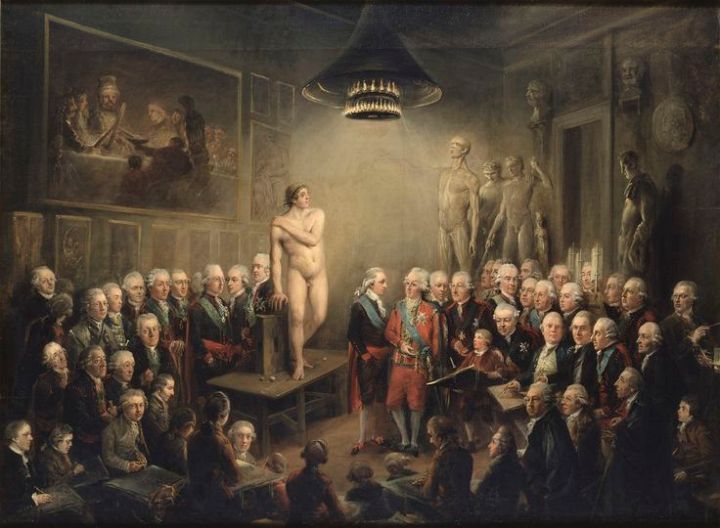
Elias Martin, King Gustav III Visits the Academy of Fine Arts in 1780, 1782, oil on canvas, 99 × 135 cm
(Stockholm: Nationalmuseum)
◊ ◊ ◊ ◊ ◊
Now on view at the Moderna Museet in Malmo:
The Artist / Konstnären
Konstakademien (Royal Academy of Fine Arts), Stockholm, 11 February — 11 September 2016
Moderna Museet, Malmö, 24 September 2016 — 19 February 2017
Throughout history, artists have played a wide variety of different roles. It’s a huge leap from the courtly painter who works on commission to the bohemian who refuses to rely on the approval of high society. This exhibition explores a number of different roles for artists, and also uncovers some of the myths that surround them.
How independent was the bohemian really? What kinds of new standards and rules have emerged within the avant-garde of modern art? And where did the idea of the free, creative, male genius come from? Women artists have often been portrayed as ‘exceptional anomalies’ in the history of art, but this exhibition shows just how numerous and how influential they have been, and how in the 1870s and 80s they shook up the preconception of the artist as a role for men.

Alexander Roslin, The Artist and His Wife Marie Suzanne Giroust Painting the Portrait of Wilhelm Peill, 1767, oil on canvas 131 × 98.5 cm (Stockholm: Nationalmuseum).
In more recent times, many artists have played the role of entrepreneur. Jeff Koons and Ernst Billgren work as modern businessmen in a commercial market economy. But the entrepreneurial artist has historical roots. Rosa Bonheur and Anders Zorn were both skilled painters as well as extremely competent when it came to building up their own personal brands, which helped them achieve great success in the international art market at the end of the nineteenth century. Entrepreneurial artists played an important role in seventeenth-century Holland as well.
During the eighteenth and nineteenth centuries, it was the values of the art academies of Europe that set the standard in the art world. Artists in these academies were trained in reproducing the classical ideals. Today the research conducted in university art schools is an example of a new form of academic work for artists.
This exhibition illuminates how artists relate to travel and to encounters with other cultures. In some cases an artist’s view of foreign cultures may be full of clichés and stereotypes. But there are also plenty of examples of artists who have worked to expose underlying power structures and standards in their encounters with other cultures.
Many artists throughout history have seen themselves as visionaries or prophets. Feminist artists such as Siri Derkert and Gittan Jönsson have worked both with criticism of contemporary society and with politically charged visions of the future. Other artists have been preoccupied with visions of a more spiritual nature, including Hilma af Klint and Vassilij Kandinskij.
This exhibition is a collaboration between Moderna Museet, the Royal Academy of Fine Arts, and the National Museum of Fine Arts. We want to show how powerful it is when we allow our collections from different eras to meet, and then complement that mix with a number of key works on loan.
Anne Dahlström, Margareta Gynning, Per Hedström, Carl-Johan Olsson, Andreas Nilsson, John Peter Nilsson, and Eva-Lena Bengtsson, Konstnären / The Artist (Stockholm: Nationalmuseum, 2016), 130 pages, ISBN: 978–9171008626, SEK149.
Exhibition | Portrait of the Artist

Press release (6 September 2016) from the Royal Collection Trust:
Portrait of the Artist
The Queen’s Gallery, Buckingham Palace, London, 4 November 2016 — 17 April 2017
The Queen’s Gallery, Palace of Holyroodhouse, Edinburgh, TBA
The first-ever exhibition of portraits of artists in the Royal Collection examines the changing image of the creative genius through more than 150 paintings, drawings, prints, photographs and decorative arts. Portrait of the Artist explores themes such as the cult of the artistic personality, the artist at work, and artists’ self-portraits.
From the 16th century, artists rose from the ranks of skilled artisans to a more elevated social status, a change in part influenced by royal patronage. The medieval tradesmen’s guilds were replaced first by workshops run by a master and subsequently by the first art academies. The lives of the most successful artists were recorded for posterity in the new literary genre of artists’ biographies. One of the most important collections of biographies from this period was Giorgio Vasari’s Delle vite de’ piu eccellenti pittori, scultori et architettori (1568), which described the lives of over 150 artists including that of the author. As artists became more prominent in society, a market developed for images of those deemed to be exceptional by virtue of their artistic talent. At the same time, artists increasingly saw self-portraiture as a way of demonstrating their skills to potential collectors and asserting their new standing in the world.
Images of artists became a valuable commodity, keenly acquired by monarchs and other influential patrons. The inventory compiled by Charles I’s Surveyor of Pictures in the late 1630s shows that three of the most important artists’ portraits owned by the monarch, including self-portraits by Daniel Mytens (c.1630) and Sir Peter Paul Rubens (1623), hung outside the King’s Withdrawing Room at Whitehall Palace. The 1666 inventory of Charles II’s collection lists 24 portraits of artists in “the Pafsage betweene ye Greene Roome and ye Clofet.” In this most intimate part of the royal apartments, accessible only to the King’s closest acquaintances and family, were Artemisia Gentileschi’s Self-portrait as the Allegory of Painting (La Pittura) (c.1638–39), Rubens’s self-portrait (1623) and portrait of his former assistant Anthony van Dyck (c.1627–28).
During the 17th century, general advancements in optics and practical developments in the production of mirrors enabled artists to be increasingly experimental and ambitious in their self-portraits. Artemisia Gentileschi used two mirrors to capture herself from an unusual angle for her powerful self-portrait as the personification of Painting, a remarkably unorthodox representation of a woman at this early date.
Artists frequently incorporated their own image into their works, as major players in historical and mythological narratives or through more subtle means. In Judith with the Head of Holofernes (1613), the painter Cristofano Allori appears as the decapitated Holofernes, his former lover Maria di Giovanni Mazzafiri is the murderous Judith, and her mother is Judith’s maidservant. Jan de Bray’s The Banquet of Cleopatra (1652) is a thinly disguised family portrait in which the artist casts his father Salomon de Bray, also a successful painter, in the role of Mark Antony.

Jean-Étienne Liotard, Self-Portrait, ca. 1753, enamel (London: Royal Collection Trust, RCIN 421436).
Through the choice of costume, gesture, props and setting, a self-portrait enabled an artist to take on a variety of roles. After visiting the Levant in 1738–43, the painter Jean-Étienne Liotard adopted a style of clothing for which he was to become known as ‘Le Peintre Turc’. His unconventional appearance—the Moldavian fur headdress and long beard seen in his self-portrait miniature of 1753—was thought by some to have contributed to his commercial success.
For young artists without the funds to pay a professional model, self-portraiture was a convenient way to practice their drawing skills. Annibale and Agostino Carracci’s self-portraits of c.1575–80 were probably produced by the teenage artists to hone their talents in this way. Some self-portraits appear to have been produced solely for the purpose of self-scrutiny. In a chalk drawing, possibly executed at the age of 80 in the final year of his life, Gianlorenzo Bernini records his hooded eyes and sunken cheeks with unflinching honesty.
The relationship between contemporaries in the art world is explored in the exhibition through representations of artists by their friends, admirers and pupils. Francesco Melzi’s chalk drawing of the aged Leonardo da Vinci (c.1515) is thought to be the most reliable surviving likeness of his teacher. Rubens’s portrait of his former assistant and lifelong friend Van Dyck shows the artist in three-quarter profile, his gaze averted to make him appear reflective, in contrast to the confident figure presented in Van Dyck’s self-portraits. The friendship between the engraver Francesco Bartolozzi and the painter Giovanni Battista Cipriani, Italian artists working in London, is recorded in charming pencil sketches that the pair made of each other in 1770—one painting, the other dozing in a chair.
In the 19th century, romanticised episodes from the lives of famous artists from the past were popular subject-matter. Johann Michael Wittmer’s Raphael’s First Sketch of the ‘Madonna della Sedia’ (c.1853) depicts the fable of how the Renaissance master came to create one of his best-known works on the base of a wine barrel. Frederick Leighton’s monumental work Cimabue’s Madonna Carried in Procession (1855) encapsulates the Victorian artist’s belief that, during the Renaissance, great art was appreciated at all levels of society and artists were held in high esteem, their genius widely acknowledged.
◊ ◊ ◊ ◊ ◊
In the US and Canada, the catalogue is distributed by The University of Chicago Press:
Anna Reynolds, Lucy Peter, and Martin Clayton, Portrait of the Artist (London: Royal Collection Trust, 2016), 240 pages, ISBN: 978-1909741324, $48.
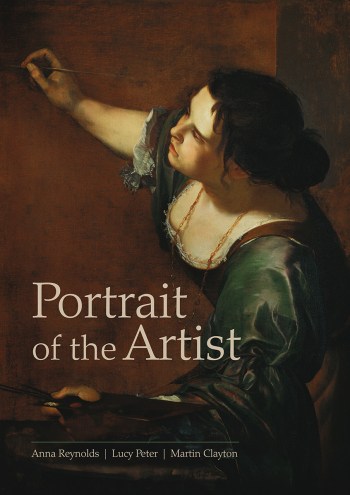 Dürer’s Self-Portrait at Age Twenty-Eight. Hockney’s Self-Portrait with Cigarette. Melzi’s drawing of Leonardo da Vinci, widely regarded as the most reliable surviving likeness of this most famous Old Master. Throughout history, many of the world’s most renowned artists have made portraits to represent themselves and others.
The first book to focus on images of artists from within the Royal Collection, Portrait of the Artist brings together paintings, drawings, prints, and photographs by artists from across the centuries, including works by Rembrandt van Rijn, Peter Paul Rubens, David Hockney, and Lucian Freud. While some of the portraits included in this book were created to showcase the artist’s talent, others were motivated by more personal reasons, to preserve the images of cherished friends. Anna Reynolds, Lucy Peter, and Martin Clayton explore the miscellany of themes running throughout the discipline of portraiture, from the rich symbolism found in images of the artist’s studio to the transformation of styles with which artists depicted themselves, changing their portrayals to align with their changing status. They also explore the relationships between artists and patrons, including the important role of the monarchy in commissioning and collecting portraits of artists.
New Book | Chinese and Japanese Works of Art in the Royal Collection
Published by the Royal Collection Trust and distributed in the U.S. and Canada by Chicago:
John Ayers, Chinese and Japanese Works of Art in the Collection of Her Majesty The Queen, 3 volumes (London: Royal Collection Trust, 2016), 1296 pages, ISBN: 978-1905686490, £150 / $250.
 The Royal Collection includes some of the most important examples of Eastern applied art in the Western world, reflecting the West’s long-standing appetite for rarities from distant lands. With more than 2,000 objects distributed across the royal residences in England and Scotland, the collection represents a rich cross-section of Chinese and Japanese porcelains, jades, lacquers, and other works of art.
This three-volume catalogue raisonné covers this substantial and important collection in comprehensive detail. It includes for the first time the many eighteenth- and nineteenth-century bronze mounts that are such a striking feature of the collection. Made in French and British workshops to enhance the objects they display, the mounts themselves are often of superb quality and of great historical importance.
More than 2,400 colour images are used to illustrate the collection, including intricate decorative details and makers’ marks. Introductory essays cover the history and development of the collection and the ways in which these works of art have been displayed in the royal palaces and adapted according to the fashions of the day.
Volume One presents the Chinese ceramics of the Ming and Qing dynasties in chronological order (continued in Volume Two). In addition, due to their unique historical significance, the contents of the collection at Hampton Court Palace are presented here separately. Volume Two continues the works of the Qing dynasty, and ends with the Japanese works; the volume also contains a special focus on the European mounts that were added to works of Chinese and Japanese porcelain during the eighteenth and early nineteenth centuries. Volume Three contains non-porcelain works, namely lacquer, jade and other hardstones, carved ivories, textiles and metalwork. Many of these works came into the Royal Collection as Imperial gifts, to George III, Queen Victoria, King Edward VII, and Queen Alexandra, with the exception of the Japanese lacquer wares, which were acquired for George IV to furnish the Royal Pavilion at Brighton. Although not much studied, these pieces were admired by the royal family, and Chinese rooms were created at Windsor and Sandringham House, decorated with an eclectic mixture of European chinoiserie and authentic works of Asian art.
Buckingham Palace Slated for £369Million Renovation

Buckingham Palace, London. The East Front, originally constructed by Edward Blore and completed in 1850, acquired its present appearance following a remodeling in 1913 by Sir Aston Webb (Photo by David Iliff, April 2009, License: CC-BY-SA 3.0, Wikimedia Commons).
◊ ◊ ◊ ◊ ◊
As reported by Stephen Castle for The New York Times (19 November 2016) . . .
The boilers are shot, the water pipes sag, and the 60-year-old cabling is a fire hazard. Buckingham Palace, home to Queen Elizabeth II, may not exactly be falling down, but it badly needs refurbishing, the British government said on Friday, citing “a serious risk of fire, flood and damage.” Renovations on the building will start in April and will take a decade to complete, at a cost of £369 million ($456 million). The announcement adds to the list of prestigious structures in Britain that need work, including the crumbling Palace of Westminster, home of the British Parliament.
The building that would become Buckingham Palace was built in the early 1700s and became a royal residence when George III bought it in 1761. The queen carries out most of her official ceremonial and diplomatic duties as head of state in the palace. She would not have to move out while the work was in progress, officials said. . . .
The full article is available here»
Writing for The Guardian, Caroline Davies addresses in more detail the financial arrangements, including the controversies around spending £369 million in a time of austerity.
The Morgan Launches Refreshed Website

Press release (17 November 2016) from The Morgan:
The Morgan Library & Museum today announced the launch of a refreshed website. The updated look for themorgan.org offers a sleek, contemporary design, and also introduces features that make the site more compatible across platforms: mobile, tablet, and desktop computers. The unveiling of the new design coincides with the ten-year anniversary of the Morgan’s 2006 expansion, and is the first major makeover since then.
Digital initiatives at the Morgan are part of a larger strategic undertaking to expand access to the institution’s holdings. The upgrades to the Morgan’s website represent a significant development for scholars, students, and members of the general public interested in accessing the Morgan’s vast collections. Prior to undertaking digitization initiatives, the Morgan’s collection had been available on a select basis onsite at the museum’s New York headquarters, while some of the works have been published in various museum catalogs. Digitization efforts enable access to the collection from anywhere in the world and includes a zoom feature to study individual works in detail.
In recent years, almost 700 music manuscripts from its extraordinary collection—represented by such masters as Mozart, Beethoven, Bach, and Handel—have been digitized and made available on its website. The museum’s most ambitious undertaking—the digitization of its collection of over 14,500 drawings —began in Fall 2013, and as of today over 95% of this undertaking is complete, including a cache of over 500 Rembrandt prints and etchings. Additionally, the Morgan offers online access to illuminations from 823 Medieval and Renaissance manuscripts (including over 20,000 illuminations) and thousands of highlights from literary and historical manuscripts, rare books, and ancient near eastern seals and tablets, which can be rotated and zoomed. In the past six months, highlights that have been added include the entire collection of the Morgan’s Coptic bindings and the Lindau Gospels.
Looking ahead, the Morgan plans to continue sharing more objects from its vast collections through the website. Collections ranging from early Mesopotamian and Egyptian through Greco-Roman culture, the Middle Ages, the Renaissance, and beyond, will be further represented on the website. The music manuscripts pages will also be upgraded to provide more download options and improved navigation.
◊ ◊ ◊ ◊ ◊

Luigi Valadier, Drawing of an inkstand in Rococo Style, 1764, pen and brown ink, with brown and red wash, over graphite, on paper, 37.5 × 52.4 cm (New York: The Morgan Library & Museum, 1991.15, purchased on the Sunny Crawford von Bülow Fund 1978). Multiple filters (including ‘centuries’) accommodate collection searches.
New Book | The Learned Draftsman: Edme Bouchardon
From The Getty:
Édouard Kopp, The Learned Draftsman: Edme Bouchardon (Los Angeles: J. Paul Getty Museum, 2017), 336 pages, ISBN: 978-1606065044 , $65.
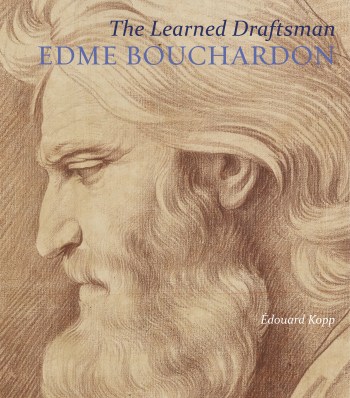 The celebrated French artist Edme Bouchardon (1698–1762) is primarily known as a sculptor today, but his contemporaries widely lauded him as a draftsman as well. Talented, highly innovative, and deeply invested in the medium, Bouchardon made an important contribution to the European art and culture of his time, and in particular to the history of drawing. Around two thousand of his drawings survive—most of which bear no relation, conceptual or practical, to his sculpture—yet, remarkably, little scholarly attention has been paid to this aspect of his oeuvre. This is the first book-length work devoted to the artist’s draftsmanship since 1910.
Ambitious in scope, this volume offers a compelling narrative that effectively covers four decades of Bouchardon’s activity as a draftsman—from his departure for Rome in 1723 as an aspiring student to his death in Paris in 1762, by which time he was one of the most renowned artists in Europe. His accomplished and dynamic style is analyzed and copiously illustrated in a series of five interrelated chapters that serve as case studies, each of which focuses on a coherent group of drawings from a particular period of Bouchardon’s career.
Edouard Kopp is the Maida and George Abrams Associate Curator of Drawings, Harvard Art Museums. He is the coauthor, with Scott Allan, of Unruly Nature: The Landscapes of Théodore Rousseau (Getty Publications, 2016) and the author of Capturing Nature’s Beauty: Three Centuries of French Landscapes (Getty Publications, 2009).
New Book | Les Rothschild: Une Dynastie de Mécènes en France
From Somogy:
Pauline Prévost-Marcilhacy, ed., Les Rothschild: Une Dynastie de Mécènes en France, 3 volumes (Paris: Somogy éditions d’Art, 2016), 1112 pages, ISBN: 978-2757202128, 290€.
 Grands collectionneurs et mécènes d’exception selon une tradition familiale « qui veut qu’à chaque génération, nous nous efforcions d’enrichir de notre mieux le patrimoine de notre pays », les Rothschild ont joué un rôle essentiel dans le domaine culturel depuis le dernier quart du XIXe siècle. L’ampleur de leur générosité à l’égard des musées et des collections publiques françaises—près de cent vingt mille œuvres d’art données à plus de deux cents institutions—est pour la première fois l’objet d’une publication d’envergure. De l’Antiquité à nos jours, toutes les périodes de l’histoire de l’art y sont représentées, ainsi que tous les continents et les domaines de création.
Pour mener à bien cet ambitieux projet, Pauline Prevost-Marcilhacy a réuni cinquante-trois spécialistes, conservateurs et universitaires, français et étrangers, qui explorent ici tous les aspects de ce mécénat exceptionnel.
Auteurs: Sous la direction de Pauline Prevost-Marcilhacy, Historienne de l’art – avec les textes de Mathilde Avisseau-Broustet (BNF), François Avril (BNF), François Baratte (Universitaire), Marc Bascou (Louvre), Blaise Ducos (Louvre), Gwenaëlle Fellinger (Louvre), Anne Forray-Carlier (Musée des Arts décoratifs), Pascale Gorguet-Ballesteros (Musée Galliéra), Dominique Hollard (BNF), Philippe Malgouyres (Louvre), Julie Olivier (BNF), Alain Pasquier (Louvre), Evelyne Possémé (Musée des Arts décoratifs), Marie-Hélène Tesnière (BNF), Dominique Thiébaut (Louvre), Dimitrios Zikos (Universitaire).
◊ ◊ ◊ ◊ ◊
V O L U M E 1 : 1 8 7 3 – 1 9 2 2
Les Rothschild: Une Dynastie de Mécènes en France
Edmond James de Rothschild (1845–1934)
• Edmond James de Rothschild
• Edmond James et Gustave de Rothschild, mécènes de l’archéologue et donateurs au musée du Louvre, 1873
• Le trésor de Boscoreale au musée du Louvre, 1895
• Dons de la baronne James Édouard et du baron Edmond James de Rothschild au département des Manuscrits de la Bibliothèque nationale, 1902–08
• Dons de costumes rares du baron et de la baronne Edmond James de Rothschild au musée Carnavalet et au musée des Arts décoratifs, 1906–08
• Le mécénat envers les artistes vivants, 1906–20
• Un ensemble de moucharabiehs au musée du Louvre et au musée des Arts décoratifs, 1920
Alphonse de Rothschild (1827–1905)
• Alphonse de Rothschild
• Le mécénat envers les artistes vivants en faveur des musées de région, 1895–1905
Charlotte de Rothschild (1825–1899) et Nathaniel de Rothschild (1812–1870)
• Charlotte et Nathaniel de Rothschild
• Dons et legs de la baronne Nathaniel de Rothschild, 1885–99
• Le goût pour la Renaissance italienne, musée du Louvre, 1899
• Un ensemble de coffrets en cuir au musée des Arts décoratifs, 1899
• Une collection de bijoux au musée des Arts décoratifs, 1899
Adolphe de Rothschild (1823–1900) et Julie de Rothschild (1830–1907)
• Adolphe et Julie de Rothschild
• L’art médiéval au musée du Louvre et au musée de Cluny, 1901
• Les objets de la Renaissance, musée du Louvre, 1901
James Édouard de Rothschild (1844–1881) et Thérèse de Rothschild (1847–1931)
• James Édouard et Thérèse de Rothschild
• Les manuscrits de la première rédaction des œuvres de Brantôme à la Bibliothèque nationale, 1903
• Monnaies et pierres gravées au Cabinet des médailles de la Bibliothèque nationale, 1903–04
Arthur de Rothschild (1851–1903)
• Arthur de Rothschild
• Une collection de bagues au musée de Cluny, 1904
• Peintures flamandes, hollandaises et françaises au musée du Louvre, 1904
V O L U M E 2 : 1 9 2 2 – 1 9 3 5
Salomon de Rothschild (1838–1864) et Adèle de Rothschild Pauline (1843–1922)
• Salomon et Adèle de Rothschild Pauline
• Peintures, dessins et sculpture, 1922
• Un ensemble exceptionnel d’orfèvrerie et de bijoux, 1922
• Ivoires et Bronzes, 1922
• Arts du feu de la Renaissance, 1922
• Armes occidentales, 1922
• Objets d’art islamique, 1922
• Porcelaines du XVIIIe siècle, 1922
• Tabatières du XVIIIe siècle, 1922
• Montres et écailles piquées, 1922
• Meubles et tapisseries du XVIIIe siècle, 1922
• Objets d’art d’Extrême-Orient, 1922
• Manuscrits, 1922
• Livres et estampes, 1922
• Albums de photographies, 1922
• Monnaies, 1922
Robert de Rothschild (1880–1946)
• Robert de Rothschild
• Dons au musée des Arts décoratifs
Henri de Rothschild (1872–1946)
• Henri de Rothschild
• Le mécénat envers les artistes vivants en faveur des musées de régions, 1906–194
• Têtes de mort au musée des Arts décoratifs, 1926
• Autographes à la Bibliothèque nationale, 1933
Alice de Rothschild (1847–1922)
• Pipes et boîtes d’allumettes
• Don d’Alice de Rothschild à la bibliothèque de Grasse, 1927
Béatrice Ephrussi de Rothschild (1864–1934)
• Béatrice Ephrussi de Rothschild
• Sculptures, 1933
• Peintures italiennes et espagnoles, 1933
• Le XVIIIe siècle à la villa Ephrussi de Rothschild, 1933
• Porcelaines françaises, 1933
• Porcelaines étrangères, 1933
• Biscuits, 1933
• Textiles, 1933
• Arts d’Extrême-Orient, 1933
• Peintures et dessins du XIXe siècle, 1933
V O L U M E 3 : 1 9 3 5 – 2 0 1 6
La Donation Edmond de Rothschild au Département des Arts Graphiques du Musée du Louvre, 1935
• Histoire de la constitution d’un « Musée de la gravure »
• Les nielles
• Les débuts de la gravure en Allemagne, dans les anciens Pays-Bas et en Italie
• Dürer et Rembrandt
• Les estampes allemandes du XVIe siècle
• La gravure flamande au XVIe siècle
• Les estampes italiennes du XVIe siècle
• Les estampes françaises du XVIe siècle
• Les estampes du XVIIe siècle
• Les estampes du XVIIIe siècle
• Les gravures d’architecture, d’ornements et d’arts décoratifs du XVIIIe siècle
• Les dessins du XVe siècle au XVIIIe siècle
• Les livres illustrés
• La fortune critique
• Historique et installation au musée du Louvre
Dons de la Baronne Edmond James et de James Armand de Rothschild, 1934–36
• La collection de dentelles de la baronne Edmond James de Rothschild au musée des Arts décoratifs, 1935
• Monnaies et médailles à la Bibliothèque nationale, 1935
• Objets de fouilles en Palestine, 1936
Les Rothschild et La Bibliothèque Nationale Après-Guerre
Le Legs Henri de Rothschild en 1947
• La bibliothèque de James Édouard de Rothschild (1844–1881)
• Les manuscrits enluminés de la collection de James Édouard, Thérèse et Henri de Rothschild
• Théâtre et poésie entre Moyen Âge et Renaissance
• La collection théâtrale d’Henri de Rothschild
Deux Manuscrits d’Edmond James et Adolphe de Rothschild
• Deux livres d’heures royaux : les Heures de Jeanne de Navarre, 1972; et les Très Belles Heures de Jean de Berry, 1956
Les Rothschild et les Musées Après-Guerre: Dons et Dations
• La récupération et la restitution des collections spoliées, 1945–53
• Les héritiers du baron Édouard de Rothschild
• Le château de Ferrières
• Les héritiers du baron Robert de Rothschild
• Mobilier Art déco au musée des Arts décoratifs
• Dons de Maurice et Miriam Alexandrine de Rothschild, 1935–37
• Dons d’Edmond de Rothschild à Versailles, 1966–88
• Don d’Edmond de Rothschild au musée du Louvre, 1990
• Objets antiques, peintures, dessins et objets d’art du XVIIIe siècle. Dation de 1990
Donations et Mécénat, 1955–2016
• Alix de Rothschild (1911–1987)
• Dons d’Alix de Rothschild au musée national des Arts et Traditions populaires et au musée de l’Homme
• Dons d’Alix de Rothschild au musée de l’Homme
• Dons de la baronne Élie de Rothschild aux musées français
• Dons du baron Élie de Rothschild au Centre Pompidou – Musée national d’Art moderne
• Dons de Béatrice Rosenberg au musée d’Orsay et au musée des Arts décoratifs, 2005–06
Mécénat au Bénéfice des Musées, 1963–2016
• Mécénat au bénéfice des musées
Annexes
• Historique et installation au musée du Louvre, 1935 ; textes cités en annexes
• Le don de la baronne Edmond James de Rothschild au Cabinet des médailles de la Bibliothèque nationale
• Liste des livres légués par le baron James de Rothschild (1792–1868) à son petit-fils James (1844–1881)
• Bibliographie
• Index des lieux de conservation
• Index des noms de personnes
UK Export Bar Placed on Hogarth’s ‘The Christening’

William Hogarth, The Christening, ca. 1728.
◊ ◊ ◊ ◊ ◊
Press release (16 November 2016) from Gov.UK’s Department for Culture, Media & Sport:
Culture Minister Matt Hancock has placed a temporary export bar on a satirical painting by William Hogarth to provide an opportunity to keep it in the country. The Christening by William Hogarth is at risk of being exported from the UK unless a buyer can be found to match the asking price of £1,223,100.
William Hogarth is considered to be one of the most important figures in eighteenth-century British art and culture. He was known for his satirical artwork, and The Christening was his first painted comical scene. It shows a christening taking place in a wealthy but disorderly home. From the little girl about to knock over the christening bowl, to the dog about to rip apart the hat on the ground, the painting is a satirical scene of contemporary life in the eighteenth century. The painting marks Hogarth’s beginning as a satirical artist and demonstrates his development into comical artwork.
Culture Minister Matt Hancock said: “Hogarth is known as one of our greatest ever satirists, and this is a significant early example of his work. The painting provides a valuable insight into eighteenth-century life. Satire is an important part of our cultural heritage, and as a fan of Hogarth’s work I hope it can remain in the UK for the public to enjoy.”
The decision to defer the export licence follows a recommendation by the Reviewing Committee on the Export of Works of Art and Objects of Cultural Interest (RCEWA), administered by The Arts Council. The RCEWA made its recommendation on the grounds of its outstanding significance for the study of William Hogarth, as well as for the study of the cultural, literary, and historical life of the eighteenth century.
RCEWA member Lowell Libson said: “Hogarth’s importance in imbuing art and artists with a sense of a national character at a time when England was consolidating its international position as the dominant economic and political power cannot be underestimated. This important painting demonstrates Hogarth’s concern with the effects that this new affluence had on all sectors of society. Hogarth himself noted that “my picture was my stage,” and The Christening, a small, beautifully executed painting, is a deceptively charming and significant early precursor of the great cycles of modern moral paintings and their related engravings. Its retention in this country would considerably add to the story we can tell of a painter who helped define our national identity.”
The decision on the export licence application for the painting will be deferred until February 15, 2017. This may be extended until May 15, 2017, if a serious intention to raise funds to purchase it is made at the recommended price of £1,223,100. Offers from public bodies for less than the recommended price through the private treaty sale arrangements, where appropriate, may also be considered by Matt Hancock. Such purchases frequently offer substantial financial benefit to a public institution wishing to acquire the item.
Exhibition | The Culture of Wine: Masters of Printmaking

Jan Popels, after Peter Paul Rubens, The Triumph of Bacchus, etching.
◊ ◊ ◊ ◊ ◊
Now on view at the Bilbao Fine Arts Museum:
Ardoaren Kultura / La Cultura del vino
The Culture of Wine: Masters of Printmaking from the Vivanco Collection
Bilboko Arte Ederren Museoa / Museo de Bellas Artes de Bilbao, 8 November 2016 — 6 February 2017
The Bilbao Fine Arts Museum is joining forces with the 5th edition of the International Festival of Printmaking and Art on Paper (FIG Bilbao), presenting a selection of prints from the collection of the Fundación Vivanco [cultural arm of the Vivanco family winery] based on the theme of the world of wine. The Culture of Wine: Masters of Printmaking from the Vivanco Collection brings together 76 works from the 15th century to the present day by artists of the stature of Andrea Mantegna, Albrecht Dürer, Hendrick Goltzius, Giulio Bonasone, José de Ribera, Lucas van Leyden, Pablo Picasso, Joán Miró, Marc Chagall, Roy Lichtenstein, Antoni Tàpies, Andy Warhol, Paula Rego, Antonio Saura, Eduardo Chillida, Manolo Valdés, Eduardo Arroyo and Miquel Barceló, among others: all classic masters whose works are part of the holdings not normally on display at the Museo Vivanco de la Cultura del Vino. The exhibition is organised as a comprehensive survey of the evolution of the print from the perspective of the culture of wine as perceived by each of the selected artists. As such, it constitutes a reflection on the importance of wine within the history of humanity and on a recurring iconographic motif in works of art of all periods.
The International Festival of Printmaking and Art on Paper (FIG Bilbao) has been working with the Bilbao Fine Arts Museum since 2012, programming an exhibition in its galleries to coincide with the fair. Over the past four years the public has been able to see Giovanni Battista Piranesi: Visionary Memory (2012), Deciphering Sardinia: The Engraved Symbol (2013), Mimmo Paladino: Prints (2014), and The Long Shadow of the Burin: Lucas van Leyden in the Mariano Moret Collection (2015). This year The Culture of Wine: Masters of Printmaking from the Vivanco Collection is part of the 5th edition. The FIG’s art fair will be taking place from 17 to 20 November in the Palacio Euskalduna.
The exhibition is structured into two clearly differentiated sections. The first focuses on historical prints and is sub-divided into three parts: mythology, scenes of everyday life and customs, and Christianity. The second, which centres on the modern print, is a more varied section determined by the artistic personality of each of the artists represented.
Mythology
The presence of wine in classical mythology is exemplified in the figure of Bacchus, Roman god of excess, madness, theatre and wine, whose Greek counterpart was Dionysus. With his colourful story, Bacchus was a notably ambiguous figure who could arouse passions but was simultaneously ingenuous. This dual nature brought his emotions close to those of human beings, for which reason he has attracted numerous artists over the course of the centuries. Subject since birth to the wrath of the goddess Hera, he was a homeless god who travelled around Egypt, Syria and India, from where he returned triumphant, giving rise to the splendid iconography known as ‘The Triumph of Bacchus’, which inspired various prints in this collection. These works depict the elements characteristic of the god’s retinue: fauns, maenads, panthers, Bacchus’s companion Silenus (almost always shown drunk), myrtle, vine tendrils, and the recurring presence of music and dance.
As a result, a number of printmakers, including Andrea Mantegna (1430/1431–1506), Giulio di Antonio Bonasone (1510–1576), Johannes Sadeler (1550–1600), Annibale Carracci (1560–1609), Jan Saenredam (1565–1607), Jacob Matham (1571–1631), Theodor Galle (1571–1633), José de Ribera (1591–1652), Johannes Popels (ca. 1600–1663), Pierre Lombart (1612/1613–1681), Gerard de Lairesse (1641–1711), Bernard Picart (1673–1733), Francesco Bartolozzi (1727–1815), Nicolas de Launay (1739–1792), Francesco Piranesi (ca. 1785–1810), and Johann Adam Klein (1794–1875), depicted episodes from the life of the god of wine.
Bacchus thus appears in the series of twelve prints by Jacob Matham, notable for their technical virtuosity despite the small scale of the compositions, or the splendid print by José de Ribera based on one of his own paintings of 1626 in which Silenus yields to excess and inebriation in a setting in which the narrative details set this story in a human context. The same worldly air is evident in the engraving by Annibale Carracci, which reproduces his design for the background of a silver goblet made for Cardinal Odoardo Farnese. Among works relating to classical antiquity is the print by Andrea Mantegna inspired by Bacchic sarcophagi and by the celebrated Apollo Belvedere. The same classical source is also evident in three engravings by Jan Saenredam after drawings by Hendrick Goltzius—an erudite allegory on the pleasures of the table and love, which would re-emerge with force during the Renaissance and Baroque periods as a metaphor of fertility and prosperity.
Scenes of Everyday Life and Customs
This group includes scenes of taverns, banquets, and figures drinking, in addition to images of labours associated with the cultivation of vines and with winemaking and its related trades, such as barrel-making, as seen in the print by Johannes van Vliet (ca.1610—?). Also notable is the engraving by William Hogarth (1697—1764), a moralistic work in a satirical mode typical of this artist.
Christianity
In the classical world wine was one of the most appreciated products in the Mediterranean region, seen as a civilising element and above all associated with a spiritual dimension through the myths and rituals of numerous societies. The symbolic value of wine and the vine and wine’s intoxicating effect encouraged encounters between man and the sacred realm of a universal type. The colour of wine, easily identifiable with that of blood, was a symbol shared by different beliefs which related it to the mortal and divine realms, from ancient libations to Christian Transubstantiation in which it was transformed into the blood of Christ.
Artists thus depicted numerous biblical episodes using grapes and wine as the principal symbolic element in the narrative. This is the case with Lot and his Daughters, brilliantly depicted in prints by Lucas van Ledyen, Jan Saenredam, and Johann Gotthard von Müller; The Supper at Emmaus by Albrecht Dürer; and Noah’s Vineyards by Francesco Bartolozzi.
Modern Prints
The modern section of works from the Vivanco Collection presents the world of wine through the multiplicity of styles of the principal artistic movements of the 20th century and their offshoots. This section opens with works from the 1920s, notably the unique narrative style of Marc Chagall (1887—1985) and a Cubist still-life by Juan Gris (1887—1927). In the 1930s Pablo Picasso (1881—1973) focused with particular interest on mythology, evident in images such as the Minotauromachie and in the print series entitled The Metamorphoses of Ovid and the Suite Vollard. In works from the Vivanco Collection from the 1950s and 1960s the Bacchic universe is also a recurring theme as an expression of human passions. Represented here by an etching from the 1960s and another from the 1970s, Joan Miró (1893—1983) expressed his work in a graphic style that reveals the influence of Japanese art at this period.
The mid-20th-century Spanish avant-garde, represented by the El Paso and Dau al Set groups, is present in the exhibition with unique works by Antoni Tàpies (1923—2012) and Antonio Saura (1930—1998). The Basque sculptor Eduardo Chillida (1924—2002) is present with a print that reflects his style of compact forms and ‘imprecise geometry’. Its title Zapatu (‘to press’) subtly relates it to the overall theme of this exhibition.
Roy Lichtenstein (1923—1997) and Andy Warhol (1928—1987), both represented in the exhibition, were two of the leading exponents of American Pop Art of the late 1950s and early 1960s. Their influence and a reinterpretation of their artistic principles is to be found in the work of Spanish artists such as Eduardo Arroyo (b. 1937), with his subtly ironic figuration, and Manolo Valdés (b. 1942), who offers his particular vision of the Cubist still-life.
Finally, this section includes some strikingly unique works such as the mezzotints by Yozo Hamaguchi (1909—2000) and the lithographs by Paula Rego (b. 1935) and Miquel Barceló (b. 1957).










 Enfilade
leave a comment