Call for Articles | Transatlantic Literary and Cultural Relations
Transatlantic Literary and Cultural Relations, 1776 to the Present
Special Issue of The Wenshan Review of Literature and Culture 11.2 (June 2018)
Guest Editors: Li-hsin Hsu and Andrew Taylor
Articles due by 30 June 2017
This special issue The Wenshan Review of Literature and Culture seeks essays of 6,000 to 10,000 words engaged in debate around historical, cultural, and literary issues in the Atlantic World. Whilst national narratives have often sought to assert the truth of universal values, a more self-conscious focus upon the methodological framework of the transnational Atlantic world concerns itself explicitly with ways in which diverse and competing local or national paradigms might contest the kinds of ideological assumptions that underwrite narratives of progress, civilisation and modernity. The editors are keen to receive submissions that explore what happens when the assumptions of a nationalistic model of doing literary and cultural criticism, in which geography is allegorised as the autonomous locus of all possible meaning, are challenged by forms of encounter and contagion that disrupt and expand our frames of interpretation. How might the Atlantic space map a series of textual disruptions and contagions during the period? In what ways does transatlanticism open up possibilities for thinking about literary comparison as a critical practice? How do the crossings of people, objects and ideas complicate our sense of literary and intellectual inheritance? What kinds of relationship does the Atlantic world have with other spatial paradigms—the Pacific, the Orient, Australasia? The essays in this special issue seek to explore the meshed networks of interaction—aesthetic, ideological, material—that constitute the space of Atlantic exchange. This, we hope, will result in a wide-ranging, geographically diverse collection that displays much of the best research being undertaken in this exciting and vibrant field.
Possible areas of interest may include, but are not limited to:
• ecology and landscape
• migration and travel
• nature and nation
• Asia/Orientalism and transatlanticism
• social reform
• class and conflict
• gender and sexuality
• art and aesthetics
• slavery and empire
• science and technology
• nationalism and cosmopolitanism
The Wenshan Review of Literature and Culture (www.wreview.org) is a Scopus-indexed journal of interdisciplinary nature based in the Department of English, National Chengchi University, Taipei, Taiwan. Please follow the submission guidelines to submit articles online by 30 June 2017.
Li-hsin Hsu is Assistant Professor of English at National Chengchi University, Taipei, Taiwan. She holds a PhD in Transatlantic Romanticism from the University of Edinburgh and specialises in transatlantic studies, ecocriticism, and Orientalism. She received the 2014 Emily Dickinson International Society (EDIS) Scholar in Amherst Award and has published in journals such as Symbiosis: A Transatlantic Journal and The Emily Dickinson Journal.
Andrew Taylor is Senior Lecturer and Head of English Literature at the University of Edinburgh. He specialises in 19th- and 20th-century North American literature and intellectual history and has an interest in the intersection of historiography and contemporary American fiction. He’s the author of Henry James and the Father Question (Cambridge UP, 2002), Thinking America: New England Intellectuals and the Varieties of American Experience (U of New Hampshire P, 2010), and co-author of Thomas Pynchon (Manchester UP, 2013). He’s the co-editor of several books including Transatlantic Literary Studies: A Reader (Johns Hopkins UP, 2007), Stanley Cavell: Literature, Philosophy, Criticism (Manchester UP, 2012), and Stanley Cavell, Literature and Film: The Idea of America (Routledge, 2013). An awardee of the Leverhulme Trust Project Grant, Dr Taylor is a series editor of the Edinburgh Critical Studies in Atlantic Literatures and Cultures, published by Edinburgh UP.
New Book | French Art of the Eighteenth Century
Distributed by Yale UP:
Heather MacDonald, ed., French Art of the Eighteenth Century: The Michael L. Rosenberg Lecture Series at the Dallas Museum of Art (New Haven: Yale University Press, 2016), 192 pages, ISBN: 978-0300220179, $25.
 This beautiful book brings together ten years of research on a superb collection of 18th-century French masterworks, which was formed by the late Michael L. Rosenberg and is now on deposit at the Dallas Museum of Art. This research, originally presented in lectures at the museum by an impressive roster of scholars and curators of European art, combines close studies of individual paintings by such artists as François Boucher, Jean-Baptiste Greuze, and Louis Léopold Boilly with rich accounts of the historical, cultural, and political climates of their time. The works, many of which have not yet been widely published, span elegant portraits, intimate genre paintings, erotic canvases depicting mythological themes, and bloody images of the hunt. Through careful reconstructions of the lives of these artworks—from their first audiences to their contexts of display—the essays in this book unfold the history of a century of French art.
Heather MacDonald is program officer at the Getty Foundation.
◊ ◊ ◊ ◊ ◊
C O N T E N T S
• Walter Elcok, Foreword
• Lawrence Barzune, Dedication to Michael L. Rosenberg
• Philip Conisbee, Michael L. Rosenberg’s Eighteenth Century
• Kathleen Nicholson, Beguiling Deception: Allegorical Portraiture in Eighteenth-Century France
• Mary D. Sheriff, Love Hurts: On the Pleasures and Perils of Love in Eighteenth-Century French Art
• Mary Tavener Holmes, Nicolas Lancret and Tale of Three Collectors
• Amy Freund, Good Dog! Jean-Baptiste Oudry and the Politics of Animal Painting
• Christoph Martin Vogtherr, Moving on from Watteau: Jean-Baptiste Pater and the Transformation of the Fête Galante
• Alastair Laing, Artist in a Garret: The Young Boucher in Rome
• Deborah Gage, Fired by Passion: Michael L. Rosenberg’s Sèvres Tableau and the French Royal Prerogatives of Ceramics and Stag Hunting
• Eik Kahng, Greuze’s The Dreamer: Portrait, Tronie, or Fantasy Figure?
• Aileen Ribeiro, The Mirror of History: The Art of Dress in Late Eighteenth-Century France
• Susan L. Siegfried, Louis-Leopold Boilly: Between Genre and Portraiture
• Anne L. Poulet, On the Run: Clodion’s Bacchanalian Figures
Bibliography
Index
Photography and Copyright Credits
◊ ◊ ◊ ◊ ◊
The DMA celebrates the book with a lively evening of events on Thursday, October 27, from 5:00 to 9:00pm . . .
Annual Fête: Celebrating French Art of the 18th Century
Dallas Museum of Art, 27 October 2016
Step back in time to 18th-century France at the inaugural Annual Fête celebrating French painting and sculpture from the Michael L. Rosenberg Collection. Arrive in style with an 18th-century–inspired costume for a chance to win a copy of French Art of the Eighteenth Century: The Michael L. Rosenberg Lecture Series at the Dallas Museum of Art and two tickets to the upcoming exhibition Art and Nature in the Middle Ages.
Performance
18th-century music from members of the Dallas Symphony Orchestra.
Self-Guided Tour
Depart on a grand tour of art from our global collection made during the 18th century.
Talk — Greuze’s The Dreamer: Portrait, Tronie, or Fantasy Figure?
7:00pm Heather MacDonald shares a brief history of the Michael L. Rosenberg Foundation before introducing Eik Kahng, contributor to the new Michael L. Rosenberg Collection catalogue.
Curator Q&A in the Galleries
8:00pm Heather MacDonald, Nicole Myers, and Eik Kahng answer questions about the Rosenberg Collection.
Lecture | Mr. Boswell Goes to Corsica

◊ ◊ ◊ ◊ ◊
From The Lewis Walpole Library:
David A. Bell | Mr. Boswell Goes to Corsica: Charismatic
Authority in the Age of Democratic Revolutions
22nd Lewis Walpole Library Lecture
Yale Center for British Art, New Haven, 6 October 2016
David Bell’s lecture examines how new ways of imagining political leadership emerged during the Enlightenment, across the Atlantic world, using as a case study the way the Corsican independence leader Pasquale Paoli become an unexpected hero in Britain and its American colonies. He then speculates on how these ways of imagining political leadership helped shape the character of the great Atlantic revolutions of the century’s end. The lecture (held in the Yale Center for British Art Lecture Hall and starting at 5:30pm on Thursday, October 6) is free and open to the public.
David A. Bell, Sidney and Ruth Lapidus Professor in the Department of History at Princeton University, is a historian of early modern France with a particular interest in the political culture of the Old Regime and the French Revolution. He earned a Ph.D. from Princeton University in 1991. Prior to joining Princeton’s faculty in 2010, he taught at Yale University (1990–96) and at Johns Hopkins University, where he held the Andrew W. Mellon chair in the Humanities and served as dean of faculty in the School of Arts and Sciences. He is the author of five books including, most recently, Shadows of Revolution: Reflections on France, Past and Present (Oxford University Press, 2016). He is currently working on a comparative and transnational history provisionally entitled “Men on Horseback: Charismatic Authority in the Age of Democratic Revolutions.” He is also a frequent contributor to general-interest publications on a variety of subjects ranging from modern warfare to the impact of digital technology on learning and scholarship.
New Book | Visual Culture and the Revolutionary and Napoleonic Wars
From Routledge:
Satish Padiyar, Philip Shaw, Philippa Simpson, eds., Visual Culture and the Revolutionary and Napoleonic Wars (New York: Routledge, 2016), 252 pages, ISBN: 978-1472447111, $150.
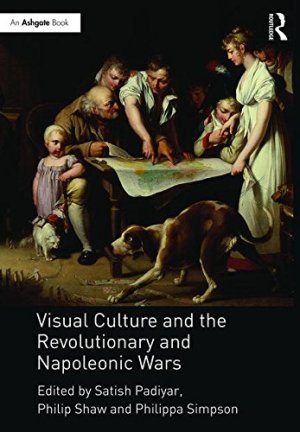 Individually and collectively, the essays in this cross-disciplinary collection explore the impact of the revolutionary and Napoleonic Wars on European visual culture, from the outbreak of the pan-European conflict with France in 1792 to the aftermath of the Battle of Waterloo in 1815. Through consideration of a range of media, from academic painting to prints, drawings and printed ephemera, this book offers fresh understanding of the rich variety of ways in which warfare was mediated in visual cultures in Britain and continental Europe.
The fourteen essays in the collection are grouped thematically into three sections, each focusing on a specific type of visual communication. Thus, Part One engages with historically specific ways of transmitting messages about war and conflict, including maps, prints, silhouette imagery and war games produced in France and Germany. Part Two considers popular and elite imagining of war between 1793 and 1815, encompassing readings of paintings by Turner, Girodet and Goya, Portuguese anti-French drawings and British satirical book illustrations. Part Three concentrates on visual cultures of commemoration, addressing British theatrical reenactments and museum collections, and British and Dutch paintings of the Battle of Waterloo. As such, the volume uncovers fascinating new visual material and throws fresh light on some of the more canonical visual representations of conflict during the first ‘Total War’.
Satish Padiyar is Senior Lecturer in Nineteenth-Century European Art at The Courtauld Institute of Art. He is author of Chains: David, Canova and the Fall of the Public Hero in Postrevolutionary France (2007) and editor of Modernist Games: Cézanne and His Card Players (2013). He is currently preparing a monograph on Jean-Honoré Fragonard.
Philip Shaw is Professor of Romantic Studies at the University of Leicester. He is author of Waterloo and the Romantic Imagination (2002), The Sublime (2006) and Suffering and Sentiment in Romantic Military Art (2013), and editor of Romantic Wars: Studies in Culture and Conflict, 1793–1822 (2000). He has written essays on military art in the Romantic period for Soldiering in Britain and Ireland, 1750–1850: Men of Arms (2013) and Tracing War in British Enlightenment and Romantic Culture (2015).
Philippa Simpson is Client Project Manager at the Victoria and Albert Museum. She was co-curator and catalogue author of Turner and the Masters (Tate Britain, Musée du Louvre, Museo del Prado) and Blake and British Visionary Art (Pushkin Museum) and has contributed essays to Turner Inspired: In the Light of Claude (2012), Blake 2.0: William Blake in Twentieth-Century, Art, Music and Culture (2012) and Sexy Blake (2013).
◊ ◊ ◊ ◊ ◊
C O N T E N T S
Introduction—Contested Views: The Image in the First Total War, Satish Padiyar, Philip Shaw, and Philippa Simpson
Part One: Cultures of Participation
1 The Territorial Imaginary of the Revolutionary and Napoleonic War, Katie Hornstein
2 Beholder, Beheaded: Theatrics of the Guillotine and the Spectacle of Rupture, Stephanie O’Rourke
3 Smuggled Silhouettes: Opacity and Transparency as Visual Strategies for Negotiating Royal Sovereignty during the Revolutionary and Napoleonic Wars, Allison Goudie
4 Wargaming: Visualizing Conflict in French Printed Boardgames, Richard Taws
5 Battle Lines: Drawing, Lithography and the Casualties of War, Sue Walker
Part Two: War and the Image
6 From the Nore: Turner at the Mouth of the Thames, Richard Johns
7 Ghosts and Heroes: Girodet and the Ossianic Mode in Post-Revolutionary French Art, Emma Barker
8 King Ferdinand’s Veto: Goya’s 2nd and 3rd May 1808 as Patriotic Failures, Simon Lee
9 “The most atrocious [acts] one may imagine”: The So-called Series of the French Invasions and Anti-French Propaganda during the Peninsular War, Foteini Vlachou
10 The Comic View of Johnny Newcome’s Military Adventures, Neil Ramsey
Part Three: Cultures of Commemoration
11 Reality Effects: War, Theatre and Re-enactment around 1800, Gillian Russell
12 Ephemeral Histories: Social Commemoration of the Revolutionary and Napoleonic Wars in the Paper Collections of Sarah Sophia Banks, Arlene Leis
13 Exhibiting the Nation’s Navy: The Foundation of the National Gallery of Naval Art, 1795– 1845, Cicely Robinson
14 Picturing the Battlefield of Victory: Document, Drama, Image, Susan L. Siegfried
Exhibition | Sylvester Schedrin and the Posillipo School
On view at Saint Michael’s Castle:
Sylvester Schedrin and School of Posillipo: To the 225th Anniversary of the Artist
Mikhailovsky Castle, Saint Petersburg, 11 August — 1 November 2016

Sylvester Schedrin, New Rome, Castle St.Angelo, c. 1823, oil on canvas, 47 x 60, the State Russian Museum.
Silvester Schedrin (1791–1830) is a prominent master of Russian landscape of romanticism epoch. He was one of the first masters who started making landscapes directly from nature, reflecting the vision of the air and light and the idea of the unity of man and nature. His works were highly praised by the contemporaries and heirs, becoming the classics of the Russian school of landscape painting.
From 1818 until his death, Schedrin lived in Italy and sent the works he made there to the motherland. While working in Rome and Naples and their environs Schedrin communicated with local artists and influenced the southern-Italian landscape school— the so-called Posillipo school—that united various artists from Italy, Germany and Holland (Antonis Pitloo, Giacinto Gigante, and others).
The exhibition will comprise around 100 pieces of art by Schedrin and painters of the Posillipo school from the Russian Museum and other museum collections. The exhibition will present the oeuvre of this brilliant representative of Russian landscape school together with paintings of his European contemporaries.
Exhibition | Feeding the 400
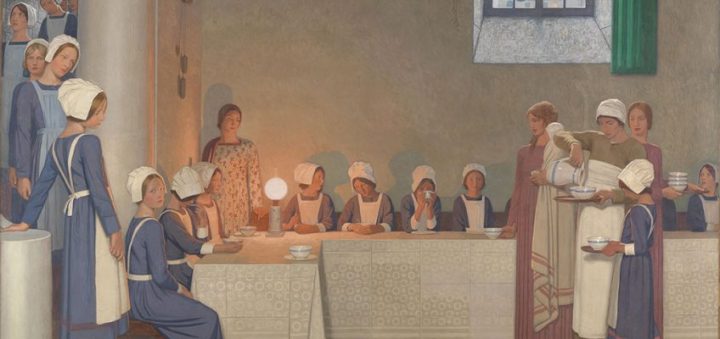
Frederick Cayley Robinson, Orphan Girls Entering the Refectory of a Hospital, 1915, oil on canvas (London: Wellcome Library). According to Art UK (the operating name of the Public Catalogue Foundation), the picture is one “in a set of four allegorical paintings on the theme of the ‘Acts of mercy’ commissioned from F. Cayley Robinson for the Middlesex Hospital in 1912. The hospital was demolished in 2008 and the paintings were acquired from the health authority in 2009.”
◊ ◊ ◊ ◊ ◊
From The Foundling Museum:
Feeding the 400
The Foundling Museum, London, 23 September 2016 — 8 January 2017
Curated by Jane Levi
Based on new research, guest curator Jane Levi presents the multi-faceted impact that food and eating regimes had on children at the Hospital from 1740 to 1950. This fascinating story is explored through art, archival material, photographs and the voices of former pupils, whose memories of food are captured in the Museum’s extensive sound archive.
Feeding the 400 explodes myths and misconceptions around eating at the Hospital, demonstrating how the institution’s food choices were far more than just questions of economy, nutrition and health. Working with historians, scientists and cultural practitioners, the exhibition brings alive the connections between what, when, where and why the foundlings ate what they ate; the beliefs and science that underpinned these decisions; and their physiological and psychological effects. Alongside archival material, paintings and objects including tableware from the Foundling Museum collection, a newly commissioned sound work evokes the experience of communal eating, conjuring sounds common to the Hospital’s dining rooms. Feeding the 400 is supported by a Wellcome Trust People Award.
Display | So That They May Be Usefull to Themselves
Opening in November at The Foundling Museum:
So That They May Be Usefull to Themselves
The Foundling Museum, London, 15 November 2016 — 7 May 2017
This display in the Introductory Gallery explores the Foundling Hospital’s work with disabled children. The Foundling Hospital was ground-breaking in its approach to access, as shown by the education and care it gave to disabled children in its custody. In some cases this led to lifelong support, even into old age. Curated by the Museum’s volunteers, this in-focus display explores their treatment of disability at the Foundling Hospital in the eighteenth and nineteenth centuries, alongside stories of former pupils.
Lieke van Deinsen on the ‘Panpoëticon Batavûm’
From the September 2016 Newsletter on Academic Activities at the Rijksmuseum:
As a Johan Huizinga Fellow, Lieke van Deinsen conducted research into a remarkable collection of eighteenth-century portraits of authors, better known as the Panpoëticon Batavûm. Her findings will be published as the first volume in the new book series Rijksmuseum Studies in History, which will be launched 13 October 2016.
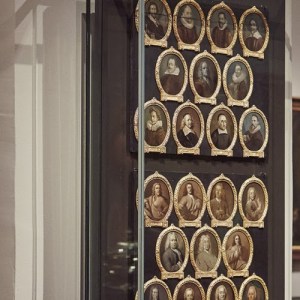 Collecting was extremely fashionable in the eighteenth-century Dutch Republic. Wooden trays and cabinets, made specifically for the purpose, would be filled with collections of coins, stones and shells. The Amsterdam painter, engraver and amateur poet Arnoud van Halen assembled a collection of a different and unique kind. In 1719, he commissioned a cabinet that eventually served as the repository of over three hundred little portraits of Dutch poets past and present. The formal enshrinement of this remarkable collection did not, however, mark its beginning—or its end. Van Halen had started accumulating his Panpoeticon Batavum at the turn of the eighteenth century, and after his death the cabinet and its contents changed hands several times as lovers of literature and literary societies sought to acquire the Panpoëticon. The collection also inspired dozens of poets to articulate their highly emotional reactions on seeing this ground-breaking image of Dutch literary history. The wooden cabinet became the tangible monument to the Dutch literary canon at a time when Dutch culture was primarily described in terms of decline, Frenchification and the waning of the Golden Age.
The history of the Panpoëticon Batavûm literally ended with a bang. The wooden cabinet was severely damaged when a ship filled with gunpowder exploded in the centre of Leiden. In the aftermath of the disaster, the remaining portraits were sold separately and ended up all over Europe. Nowadays, eighty-three of the original portraits can be found in the Rijksmuseum’s collection.
Read more here»
Exhibition | In Pursuit of Pleasure: The Polite and Impolite

Now on view at Fairfax House:
In Pursuit of Pleasure: The Polite and Impolite World of Georgian Entertainment
Fairfax House, York, 29 July — 31 December 2016
From exotica to erotica, In Pursuit of Pleasure opens a window onto the outrageous and sometimes shocking behaviour of ‘polite society’—conducted in the name of entertainment.
Fairfax House’s major summer exhibition will look at the social scene in English towns and cities including London, delving into the tempting array of decadent activities and pleasurable pursuits catering for all tastes and predilections, sometimes challenging the notions of what ‘polite’ entertainment encompassed in the eighteenth century. In Pursuit of Pleasure also specifically uncovers the richness of Georgian York’s offerings as the social capital of the North and the place to see and be seen. With Burlington’s exquisite new Assembly Rooms, the excitement of the races, as well as the city’s renowned Theatre Royal, the city enjoyed a social and cultural renaissance. The explosion of luxury retail experiences combined to make York the destination of choice for those in pursuit of refined amusement. As well as exploring its lively winter season with rounds of dinners, balls, assemblies and parties, the exhibition delves into the city’s debauched diversions, including ‘polite’ society’s taste for notorious trials, visiting prisons and public hangings, the wanton pleasures available in the city’s brothels, as well as raucous activities such as cockfighting, bear baiting and street boxing. In exploring the full gamut of York’s lively social and cultural life In Pursuit of Pleasure reveals a fascinating world of the city’s exuberant, and often times murky, past.
The Fairfax House website includes images of objects in the exhibition, including a remarkable ivory dildo (more information on that here).
◊ ◊ ◊ ◊ ◊
2016 Georgian Studies Symposium
Polite and Impolite Pleasures: Entertaining the Georgian City
York Hilton Hotel and Fairfax House, York, 21 October 2016
Early registration ends 30 September 2016
The Georgian era saw a huge increase in the range and variety of entertainments available to an expanding and urbanising population. In the towns and cities of Georgian Britain, urban life offered a dazzling and constantly changing kaleidoscope of pleasures that could be enjoyed for a price. The lowest and the highest forms of entertainment were catered for along with everything in between, from the cultivated recreations of the nobility through the gentility of middle-class leisure to the earthier enjoyments of the ‘common folk’.
New cultures of entertainment reflected changing patterns of work, mobility and social relations, and reflected developments in class, gender and the dynamics of personal and collective identity. The urban environment itself was affected by these changing cultures of entertainment. From London to provincial centres, industrial cities to market towns, new promenades, parks, streets and squares were developed, new theatres, assembly rooms and concert halls were built and embellished. And paralleling this brightly-lit and orderly world of polite pleasure was another, darker urban realm of more dubious diversions: prostitution and prize fights, the gambling stew and the drinking den.
From theatrical performances and musical recitals, assemblies and dances, to race meetings, boxing matches, cock fights and hangings, the fourth Fairfax House Symposium in Georgian Studies explores the theme of Georgian entertainment and the ‘polite and impolite pleasures’ of the long eighteenth century (c.1680–1830).
Keynote Speakers
• Ivan Day (British and European culinary historian, scholar, broadcaster and writer)
‘Crocants, Collops, and Codsounds: Fashions in Dining and Food in Georgian Provincial Towns and Cities’
• Murray Pittock (Bradley Professor of English Literature, University of Glasgow)
‘Music, Theatre, Innovation, and Resistance: Edinburgh in the First Age of Enlightenment’
New Book | Neo-Georgian Architecture, 1880–1970
Distributed in North America by The University of Chicago Press:
Julian Holder and Elizabeth McKellar, eds., Neo-Georgian Architecture, 1880–1970 (London: Historic England, 2016), 256 pages, ISBN: 978-1848022355, $100.
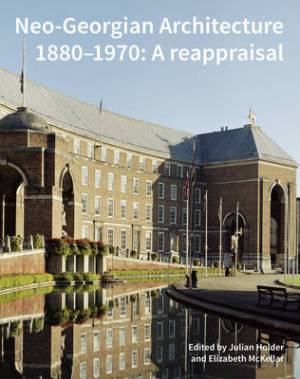 Neo-Georgian design, which began with a revival of the Georgian ideals of symmetry and classical proportion in the late nineteenth century, has exerted a powerful and enduring influence on English-language cultures around the world. Neo-Georgian Architecture, 1880–1970 assesses the impact of this movement through a consideration of the buildings, objects, institutions, and actors involved, contending that Neo-Georgianism was not simply another dying gasp of Revivalism but a complex assertion of national image and identity with a complicated, and at times fraught, relationship to modernism.
Julian Holder is Lecturer in the History and Theory of Architecture department at the University of Salford. Elizabeth McKellar is Professor of Architectural and Design History at the Open University.
◊ ◊ ◊ ◊ ◊
C O N T E N T S
Notes on Contributors
Acknowledgements
Foreword by Louise Campbell
1 Introduction: Reappraising the Neo-Georgian, Julian Holder and Elizabeth McKellar
I: Origins of the Neo-Georgian
2 Quality in Quality Street: Neo-Georgian and Its Place in Architectural History, Alan Powers
3 The Call to Order: Neo-Georgian and the Liverpool School of Architecture, Peter Richmond
4 Georgian London before Georgian London: Beresford Chancellor Rasmussen and ‘The true and sad story of the Regent’s Street’, Elizabeth McKellar
II: Developing the Neo-Georgian Language
5 Edwin Lutyens: Wrenaissance to Neo-Georgian, Margaret Richardson
6 Emanuel Vincent Harris: Civic, Civil and Sane, Julian Holder and Nick Holmes
7 Giles Gilbert Scott and Classical Architecture, Gavin Stamp
8 C. H. James: Neo-Georgian: From the Small House to the Town Hall, Nick Chapple
III: Establishing a New Tradition: Typologies of the Neo-Georgian
9 Banker’s Georgian, Neil Burton
10 A State of Approval: Neo-Georgian Architecture and His Majesty’s Office of Works, 1914–1939, Julian Holder
11 Neo-Georgian: The Other Style in Britain’s 20th-century University Architecture?, William Whyte
IV: Neo-Georgian: A Prelude to Modernism?
12 ‘Modern Swedish Rococo’: The Neo-Georgian Interior in Britain, c. 1920–1945, Clare Taylor
13 ‘A Live Universal Language’: The Georgian as Motif in interwar English Architectural Modernism, Elizabeth Darling
V: Global Neo-Georgian
14 The Neo-Georgian in New Zealand, 1918– 1939: Architectural Revivalism at the End of Empire, Ian Lochhead
15 ‘Phony Coloney’: The Reception of the Georgian and the Construction of 20th-Century America, Stephen Hague
Index










 Enfilade
leave a comment