Inaugural Getty Rothschild Fellowship Goes to David Saunders
Press release (11 July 2016) from The Getty:
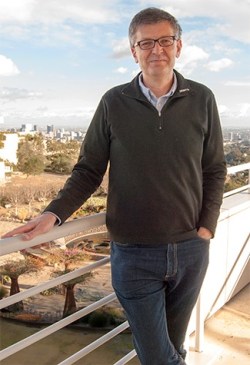 The Getty and the Rothschild Foundation today announced the creation of the Getty Rothschild Fellowship, which will support innovative scholarship in the history of art, collecting, and conservation, using the collection and resources of both institutions. The fellowship offers art historians, museum professionals, or conservators the opportunity to research and study at both the Getty in Los Angeles and Waddesdon Manor in Buckinghamshire, England. The inaugural fellow is Dr. David Saunders, a foremost expert in the area of conservation science who will work on museum and gallery lighting during the fellowship.
“The Getty and the Rothschild Foundation hold similar values regarding the understanding and conservation of visual art around the world, and it is only appropriate that we would work together to support individuals who demonstrate these values through their research,” says Jim Cuno, president and CEO of the J. Paul Getty Trust. “We are pleased to award the inaugural Getty Rothschild Fellowship to Dr. Saunders, whose work in museum lighting has been of long-standing interest to the Getty Conservation Institute and the Getty Museum.”
Dr. Saunders is a former principal scientist at The National Gallery and keeper of conservation, documentation, and research at the British Museum. Now an independent researcher, Saunders is writing what will be a seminal book about museum and gallery lighting. Waddesdon is an ideal place to advance his research, as it will serve as a case study for the upcoming publication. The Flint House, the RIBA award-winning Rothschild Foundation property, will provide an exceptional environment in which the fellow will stay while working at Waddesdon.
“The Rothschild Foundation and Waddesdon Manor are delighted to be collaborating with the Getty on this Fellowship, which will nurture high-level scholarship on subjects which are close to the hearts of both institutions, whether in the fields of art and art history, collecting, conservation or the application of new technologies to the museum and heritage worlds. I am particularly pleased that our first Fellow will be David Saunders, whose work is of the greatest possible relevance to Waddesdon, as a historic house seeking to present itself in innovative ways,” says Lord Rothschild, OM GBE.
The selection process for the Getty Rothschild fellowship includes a number of criteria, including whether the applicant’s work would benefit from proximity to the Getty and Rothschild collections. Fellowships will be for up to eight months, with the time split equally between the Getty and Waddesdon Manor. Dr. Saunders will be at the Getty from January to March 2017 and at Waddesdon Manor from April to June 2017. Fellows will also receive a stipend during their time at both locations. The fellowship is administered by the Getty Foundation.
In 2014, Lord Jacob Rothschild received the Getty Medal for his contributions to the practice, understanding, and support of the arts.
AAMC Foundation Engagement Program for International Curators
From The Association of Art Museum Curators:
AAMC Foundation Engagement Program for International Curators
Applications due by 15 October 2016
Applications are now open for the inaugural term of the AAMC Foundation Engagement Program for International Curators, made possible with major support from the Terra Foundation for American Art. The two-year Program will accept three non-US based curators and three US Liaisons working on or having worked within exhibitions and projects that explore historic American Art (c. 1500–1980), including painting; sculpture; works on paper, including prints, drawing and photography; decorative arts; and excluding architecture; design; and performance. Applications are now open for International Awardees and US Liaisons, and are due by October 15, 2016.
Through fostering international relationships between curators, the Program aims to not only provide opportunities for professional development and exchange within our field, but also to expand and strengthen the international curatorial community and give primacy to the curatorial voice in the international dialogue between museum professionals. The Program will be an active part of building international partnerships, leading cross-border conversations, and spearheading international representation within AAMC’s membership & AAMC Foundation’s efforts.
The first year of the Program pairs an International Awardee with a US Liaison for a direct partnership, during which time the pair will conduct ongoing discussions on the area sought by the International Awardee. The Liaison will offer insight into the International Awardee’s desired focus of advancement, which could include leadership, research, creating cross-border exhibitions, loan development, understanding US fundraising models, marketing initiatives, navigating galleries in the US, and so on. The International Awardee will also be part of AAMC’s Curator’s Circle donor group, allowing for interaction with leaders at this level and bringing their voice and experience to our supporters.
The second year of the Program provides the International Awardee with a travel stipend and complimentary registration for AAMC & AAMC Foundation’s Annual Conference & Meeting. Gathering together on average 350 curators from around the country, AAMC’s largest annual event provides attendees with a unique opportunity to network across borders, fields and institution type, while attending panels and sessions on leading issues facing the profession. Year two also includes placement on an AAMC Committee to add another international voice within our leadership base, and to assist in advancing AAMC’s initiatives. The Program will conclude with an International Awardee-led webinar presented to the full AAMC membership on a topic relevant to the Program or a current project of the individual International Awardee.
Follow-up beyond the two years would continue with access to the virtual chat space for current, past and incoming classes, an alumni reception every other year and review of initial Program goals.
Visit the program page to learn more about the program’s components, and to download US Liaison and International Awardee application forms.
Exhibition | Versailles: Treasures from the Palace

Hall of Mirrors (Galerie des Glaces), 1678–84
(Château de Versailles)
◊ ◊ ◊ ◊ ◊
Press release (18 July 2016) from the NGA:
Versailles: Treasures from the Palace
National Gallery of Australia, Canberra, 9 December 2016 — 17 April 2017
The NGA has revealed details of the sumptuous treasures from the Palace of Versailles, which will be on show in Canberra this December. Versailles: Treasures from the Palace is a once-in-a-lifetime chance to see and experience a mesmerising period in French history in Australia. For the first time ever, the treasures will travel from France to entice visitors into a world of power, passion and luxury through this epic exhibition. More than 130 paintings, intricate tapestries, gilded furniture, monumental statues and other objects from the Royal gardens, and personal items from Louis XIV to Marie-Antoinette, will bring to life the reigns of three kings, their queens and mistresses in a fascinating and tumultuous period of French history. The exhibition will celebrate the lives, loves, and passions of the people of Versailles through a full program of activities including music performances, children’s programs, and public events.

François Hubert Drouais, The Sourches Family (‘Le Concert Champêtre’), 1756, oil on canvas (Château de Versailles, Dist. RMN-Grand Palais / Christophe Fouin)
“We are delighted to bring the grandeur of the culture of Versailles exclusively to Canberra and make it possible for all Australians to access and appreciate the social, political and cultural aspects of this unique phenomenon. If ever absolute power can be expressed through unbridled opulence, this is it,” said Gerard Vaughan, NGA Director.
“Along with astonishing treasures, like the marble bust of Louis XIV, or the glamorous formal portrait of Marie- Antoinette, we are bringing to Australia the entire 1.5 tonne statue of Latona and Her Children from one of the main fountains of the Palace of Versailles,” said Dr Vaughan. “The authenticity of this cultural experience will leave a lasting imprint on all our visitors.”
The exhibition contrasts small personal items, such as the precious golden reliquary which belonged to Louis XIV’s mother, or Marie-Antoinette’s hand-crafted chair and harp, with huge works including six-metre tapestries from the most important Gobelins series ever produced for Louis XIV, and a monumental conversation piece of the Sourches family which requires individual freight.
“Versailles is at the heart of French cultural expression as much as the NGA is the heart of Australian visual expression and we are very excited to bring this historic exhibition to Australia,” said Catherine Pégard, President of the Public Establishment of the Palace, Museum and National Estate of Versailles.
“The opportunity to send such important French treasures has been made possible because of the major restoration program at Versailles, and we are thrilled to see that the outcome of the work will be the enjoyment of thousands of Australians,” said Christophe Lecourtier, Ambassador of France to Australia.
“The NGA is bringing to Canberra yet another spectacular show, which will attract people from all over the country and the world this summer,” said Andrew Barr, ACT Chief Minister. “These shows are important to the local tourism sector and I’m confident that this show will be another success for the Gallery.”
Exhibition | The Artistry of Outlander: Costumes and Set Designs
From The Paley Center:
The Artistry of Outlander: Costumes and Set Designs
The Paley Center for Media, Los Angeles, 8 June — 14 August 2016
 The Artistry of Outlander takes visitors into the world of the critically acclaimed STARZ and Sony Pictures Television series Outlander, showcasing many iconic costumes designed by Emmy-winning costume designer Terry Dresbach. Fans can step into 18th-century Parisian society, where they will be able to view actual set pieces from Outlander production designer Jon Gary Steele, life-size episodic photography, and behind-the-scenes video segments.
An extended description, with photographs, is provided by Amy Ratcliffe, writing for Nerdist (8 June 2016).
During a panel after the exhibit preview, Dresbach and Steele revealed they’ve been wanting to tackle 18th-century Paris for practically their entire careers. In fact, they longed to specifically work on Outlander. “Gary and I have been planning to do this show for about 25 years,” Dresbach said. She joked that she had to marry somebody (Outlander executive producer Ronald D. Moore) to make it happen, “It was all to get to Outlander.” Dresbach introduced Steele to Gabaldon’s book in the early ’90s, and they’ve been dreaming about it since. . . .
The sets in 18th-century France were so opulent and vivid, you’d think they were shot on location. That wasn’t the case. Most sets were built in a stage—including Claire and Jamie’s apartment, Master Raymond’s apothecary, and King Louis’ star chamber. They shot some exteriors in Prague, but for the most part, Steele got to dream the world into creation. “As designers, we want to build. It’s all from the ground-up. You create the whole thing. You control the color, the floor, the walls, the ceiling. That is so much more fun. It’s on stage, so it’s better in many ways for all of production,” Steele said. . .
Ratcliffe’s full piece is available here»
New Book | Hogarth’s Legacy
Distributed by Yale UP:
Cynthia Roman, ed., Hogarth’s Legacy (New Haven: Yale University Press, 2016), 272 pages, ISBN: 978-0300215618, $80.
 The legacy of graphic artist William Hogarth (1697–1764) remains so emphatic that even his last name has evolved into a common vernacular term referring to his characteristically scathing form of satire. Featuring rarely seen images and written contributions from leading scholars, this book showcases a collection of the artist’s works gathered from the Lewis Walpole Library at Yale University and other repositories. It attests to the idiosyncratic nature of his style and its international influence, which continues to incite aesthetic and moral debate among critics. The eight essays by eminent Hogarth experts help to further contextualize the artist’s unique narrative strategies, embedding the work within German philosophical debates and the moral confusion of the Victorian period and emphasizing the social and political dimensions that are part and parcel of its profound impact. Endlessly parodied and emulated, Hogarth’s distinctive satire persists in its influence throughout the centuries and this publication provides the necessary lens through which to view it.
Cynthia Roman is curator of prints, drawings, and paintings at the Lewis Walpole Library.
New Book | Artistes, savants et amateurs: Art et sociabilité
A collection of essays that emerged from the conference Art et Sociabilité au XVIIIe siècle
(Paris, 23–25 June 2011) is now available from Mare et Martin:
Jessica Fripp, Amandine Gorse, Nathalie Manceau, and Nina Struckmeyer, eds., Artistes, savants et amateurs: Art et sociabilité au XVIIIe siècle (1715–1815) (Paris: Les Éditions Mare et Martin, 2016), 296 pages, ISBN: 979-1092054422, 35€.
 La notion de sociabilité a fait l’objet, depuis quelques années, d’un renouvellement historiographique important. La complexité de cette notion impose pour son étude une approche pluridisciplinaire qui fasse appel aussi bien à la sociologie qu’à la philosophie, à l’anthropologie qu’à l’histoire de l’art.
Ce volume rassemble des études de spécialistes internationaux et explore la diversité des échanges sociaux dans le monde artistique du XVIIIe siècle. En examinant la sociabilité des divers acteurs de la création artistique, ces textes analysent les réseaux formés par le commerce des objets matériels, à travers l’étude des collections, du marché de l’art ou des expositions, et par le commerce des idées, à travers l’étude des écrits sur l’art et de l’art de la conversation. Le rôle des pratiques sociales au sein de la sphère publique dans l’évolution de la production artistique et des échanges matériels, économiques et intellectuels constitue donc l’objet de cet ouvrage collectif.
◊ ◊ ◊ ◊ ◊
T A B L E D E S M A T I È R E S
Préface, Étienne Jollet
Introduction: La sociabilité, une notion équivoque, Jessica L. Fripp, Amandine Gorse, Nathalie Manceau et Nina Struckmeyer
I. LA SOCIÉTÉ DES ARTISTES
• Le peintre-gentleman : un modèle de sociabilité et ses variations dans l’Angleterre du dix-huitième siècle, Elisabeth Martichou
• Entre hommage et parodie : une conversation graphique entre Watteau et Oppenord, Jean-François Bédard
• Behind Closed Doors: Charles-Antoine Coypel and le théâtre de société, Esther Bell
II. LA COMMUNAUTÉ PROFESSIONNELLE
• A case study in sociabilité: Bachelier’s École royale gratuite de dessin, Reed Benhamou
• La sociabilité à l’Académie de France à Rome sous le directorat de Charles-Joseph Natoire (1752–1775), Susanna Caviglia
• Les cercles des artistes allemands à Paris autour de 1800, Frauke Josenhans / Nina Struckmeyer
• Painters and Parish Life in Eighteenth-Century Paris: Art, Religion, and Sociability, Hannah Williams
III. LES REPRÉSENTATIONS DE LA SOCIABILITÉ
• Friendship at the Salon, Jessica L. Fripp
• Fêting the Hunt in Eighteenth-Century Painting, Julie Anne Plax
• Le tableau de mode et Hogarth – la peinture de genre dans la première moitié du XVIIIe siècle : entre autodérision et critique sociale, Jörg Ebeling
IV. LES LIEUX DE LA SOCIABILITÉ
• Les chimères de la République des Arts. Fonction et expérimentation du fac-similé scientifique dans la première moitié du XVIIIe siècle, Valérie Kobi
• Les dictionnaires des Beaux-Arts au XVIIIe siècle : pour qui et pourquoi ?, Gaëtane Maës
• Le commerce de la peinture dans les Salons de Diderot, Stéphane Lojkine
• L’œil du spectateur : incarnation d’une nouvelle sociabilité, Isabelle Pichet
• Des hommes et des œuvres : sociabilités et associations dans le musée parisien autour de 1800, Noémie Étienne
V. LES MODÈLES DE LA SOCIABILITÉ
• Paris/Provinces : une sociabilité savante et artistique au XVIIIe siècle vue au travers des correspondances privées, ou les échanges épistolaires comme instruments de la sociabilité, Patrick Michel
• Les classiques de Weimar en dialogue avec la culture parisienne, Boris Roman Gibhardt
• Les Souvenirs d’Élisabeth Vigée Le Brun : distinction et sociabilité dans une Vie d’artiste, Bernadette Fort
Illustrations
Bibliographie générale
Auteurs Remerciements
Index
Call for Papers | Art and the Environment in Britain, 1700–Today

From the conference website:
Art and the Environment in Britain, 1700–Today
Université Rennes 2 Haute Bretagne, 2–3 March 2017
Proposals due by 3 September 2016
The concern of artists for the fate of their environment—understood as the natural world in which they breathe, live, and create—is often thought to be a relatively recent phenomenon. The term ‘environmental art’ was indeed coined in the 1960s, while more recently eco-art has been used to refer to the rise of ecological awareness and pressing concerns for sustainability, with a more specifically political and activist take on environmental art. Recent exhibitions in Britain, such as Radical Nature: Art and Architecture for a Changing Planet, 1969–2009 at the Barbican and Earth: Art of a Changing World at the Royal Academy, both held in 2009, or Art and Climate Change presented in 2006 and 2007 in London and Liverpool, along with the Art & Environment conference held at Tate Britain in 2010, testify to this recent interest in environmentally-conscious practices. Contemporary artistic practices directly engage with the environment, thus displaying multi-faceted relationships between British visual arts and the surrounding world of trees, plants, animals, and even sounds.
However, the contemporary focus on preservation and political activism should not obfuscate the fact that the interaction between Britons and their environment has a much older history. Visual artists from earlier periods also had something to say, both in pictures and in related writings, about their place as humans cohabiting with non-humans, both animate and inanimate, in a physical world whose boundaries were relentlessly pushed back and transformed. As explorers and scientists uncovered new areas—from the far reaches of the earth to that of human ancestry—these artists reacted to an expanding environment that elicited all kinds of emotions, from excitement and wonder to, all too quickly, anxiety and a sense of loss. The British countryside, largely mediated by the visual representations of eighteenth-century landscape painters, has now become artistic heritage, part of a national identity defined by an osmotic relationship with exceptionally hospitable surroundings. The way eighteenth- and nineteenth-century artists represented—and, in the case of landscape gardeners, actively refashioned—a natural world on which cities impinged at a quickening pace in fact often bore the mark of an awareness that what they contemplated and plundered for ideas and ideals was in constant flux. The advent of the Industrial Revolution was to be one of the most decisive illustrations of the transformative power of man over a land so far presented as a timeless Eden. Brought up with the Enlightenment notion that emotional engagement was mandatory for any self-regarding man of feeling, British artists were the prime observers of and witnesses to the alterations that humankind imposed on the natural substrate that ensured its maintenance. Just as their productions betrayed the preoccupations of their times, their personal takes on the relationship between humans and their environment, disseminated through visual representations, contributed to shaping contemporary debates.
The word environment as in ‘nature, or conditions in which a person or thing live’ did not appear until 1827, at which time it was used by the reformer Thomas Carlyle to translate the German Umgebung. The much older verb ‘to environ’, in use in the English language since the late fourteenth century, had come from the French environner and conjured up the image of a circle with a centre around which other elements turned, or veered. For centuries, the centre of this circle was firmly believed to be humankind. Yet, as Keith Thomas has made it quite clear in Man and the Natural World: Changing Attitudes in England 1500–1800 (1983), man’s theologically grounded belief in his total dominion over nature was gradually, over the course of the three centuries spanned by the British historian’s study, dented by “new arguments,” “new conditions,” and “new sensibilities.” As what Thomas called the “dethronement of man” had started a century earlier at the very least, Charles Darwin’s 1859 Origin of Species was to provide the final nail with which to close the coffin of a certain human uniqueness tightly shut. Closer to us, the momentous post-human turn in the humanities—an umbrella term that encompasses an amazing variety of paradigm shifts—currently contributes to reinforcing the idea that humans live in a symbiotic environment characterised by a porous line with non-human animals and machines, and where New Materialist theories such as Jane Bennett’s go as far as claiming agency for ‘things’ such as food, commodities, electricity, and minerals. Part of our scientific committee, T. J. Demos advocates the definition of a post-anthropocentric political ecology. His very latest book, Decolonizing Nature, Contemporary Art and the Politics of Ecology, published in 2016, posits that creativity, and more specifically contemporary art, are instrumental in developing this less possessive relationship to nature.
Whether one thinks of environment as context, setting, climate change, green spaces or sounds, today’s epistemology invites us to rethink man’s relation to the external world to the extent that the ‘inside’ and ‘outside’ coalesce, nature and culture merge, man and animal are reconfigured. How have British artists responded to these shifting perceptions of the world around them, of this great swirling circle of life and non life in which they found—or imagined—themselves diversely positioned, for a long time at the centre, then in a more undefined place—at the margin even? How has art itself positioned itself in this newly defined environment? A precursor to such interrogations, environmental art was early on intended as a decidedly extensive term, which, due to the American influence of Robert Smithson, came to encompass both sites and non-sites, both the pastoral and the urban. With the introduction of Environmental art departments in British art schools in the 1980s, the environment has been understood by artists as all the different contexts available to them outside of the gallery. We see this conference as an ideal opportunity to highlight these tensions between different definitions and to look into terminologies, as well as historical variations; to explore the links between representation and preservation; the way British artists have represented animals, natural elements, and the climate, and their preoccupation with environmental aesthetics and the altered positioning of humankind in the world, in a British context. Abstracts of about 400 words should be uploaded, along with a short biographical note, to the conference webpage.
Organizers
Laurent Châtel (csti-HDEA EA 4086, Paris Sorbonne), Charlotte Gould (Prismes, Sorbonne Nouvelle), and Sophie Mesplède (ACE EA 1796, Université Rennes 2)
Scientific Committee
Laurent Châtel, Sophie Mesplède, and Charlotte Gould
T. J. Demos, Professor of History of Art and Visual Culture, and Director of the Centre for Creative Ecologies, UC Santa Cruz
Anne Helmreich, Dean of the TCU College of Fine Arts, Fort Worth, Texas
Marie-Madeleine Martinet, Emeritus Professor of British Visual Culture, Sorbonne, Paris
Corinne Silva, Artist and Associate Lecturer at London College of Communication, UCL
Anne Goarzin, Professor of Irish Literature and Visual Culture, Rennes II University
Exhibition | In the Light of Naples: The Art of Francesco de Mura

Francesco de Mura, The Visitation, ca. 1750, oil on canvas, 37 × 46 1/2 inches
(Winter Park: Cornell Fine Arts Museum, Rollins College)
◊ ◊ ◊ ◊ ◊
Opening in September at the Cornell Fine Arts Museum:
In the Light of Naples: The Art of Francesco de Mura
Cornell Fine Arts Museum, Rollins College, Winter Park, Florida, 17 September — 18 December 2016
Chazen Museum, University of Wisconsin-Madison, 20 January — 2 April 2017
The Frances Lehman Loeb Art Center, Vassar College, Poughkeepsie, New York, 21 April — 2 July 2017
Curated by Arthur Blumenthal
In the Light of Naples: The Art of Francesco de Mura will be the first-ever exhibition of the art of Francesco de Mura (1696–1782), arguably the greatest painter of the Golden Age of Naples. The Cornell Museum owns a major painting by De Mura, The Visitation, which is the impetus for this show.
Francesco de Mura, the indisputable leader in his day of the Neapolitan School and the favorite of the reigning Bourbon King Charles VII, was the chief painter of decorative cycles to emerge from the studio of Francesco Solimena (1657–1747), the celebrated Baroque artist. De Mura’s refined and elegant compositions, with their exquisite, light, and airy colors, heralded the rococo in Naples, and his later classicistic style led to Neo-Classicism. De Mura’s ceiling frescoes rivaled those of his celebrated Venetian contemporary, Giambattista Tiepolo (1696–1770). Yet, today, he lacks his proper place in the history of art. This show seeks to answer why this is so: If he was so celebrated and admired in his lifetime, why is De Mura so little known today?
The exhibition—which, in 2017, will travel to the Chazen Museum at the University of Wisconsin-Madison and the Loeb Art Center at Vassar College—will feature more than 40 works by De Mura from such collections as Boston’s Museum of Fine Arts, the Metropolitan Museum in New York, the Art Institute of Chicago, the Minneapolis Art Institute, the National Gallery of Art in Washington, and other public and private collections. In addition, there will be loans from Naples, Paris, and London.
Included will be the Cornell Museum’s recently acquired Solimena painting, as well as the Cornell’s newly identified oil by a follower of Solimena. Dr. Arthur Blumenthal, Director Emeritus of the Cornell, is the Guest Curator of the show, which will have a scholarly catalogue with essays by such art historians as Nicola Spinosa, former Superintendent of the National Museums in Naples and foremost expert on De Mura. Through De Mura’s original creations in the exhibition, the Cornell will finally be giving this richly deserving Neapolitan artist—the last Baroque artist—his due.
◊ ◊ ◊ ◊ ◊
Catalogue available in September from Artbooks.com:
Arthur Blumenthal, ed., In the Light of Naples: The Art of Francesco de Mura, (London: Giles, 2016), 208 pages, ISBN: 978-1907804854, $50.
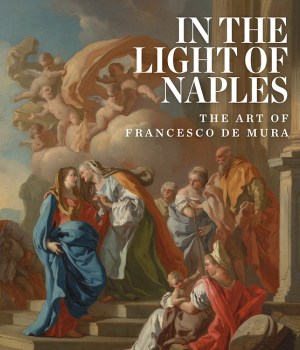 Francesco de Mura (1696–1782), one of the greatest painters of the Golden Age of Naples, at last gains the attention he deserves in this first-ever scholarly publication. De Mura’s refined and elegant compositions, with their exquisite light and color, heralded the Rococo in Naples, while his later classicistic style led to the simplicity and sculptural quality of Neoclassicism. In the Light of Naples: The Art of Francesco de Mura reveals the power of his work through more than 200 colour illustrations, including details from his great frescoes, as well as images of many of his key paintings—published here for the first time. The indisputable leader in his day of the Neapolitan School and the favorite of the reigning Bourbon King Charles VII (1735–59), Francesco de Mura was the chief painter of decorative cycles to emerge from the studio of Francesco Solimena (1657–1747), the great Baroque artist. Outstanding works in Naples include the enormous oil painting of The Adoration of the Magi (ca.1728) for the church of Santa Maria Donnaromita, and the stunning frescoes of The Adoration of the Magi (1732) in the apsidal dome of the church of the Nunziatella and, on the ceiling of the nave of the same church, The Assumption of the Virgin (1751). Nearly a third of De Mura’s works were destroyed in the American and British bombing of Naples during World War II, including, most tragically, his series of frescoes at the abbey of Monte Cassino.
Arthur Blumenthal is Director Emeritus of Cornell Fine Arts Museum at Rollins College.
◊ ◊ ◊ ◊ ◊
Note (added 21 December 2016) — Malcolm Bull reviews the exhibition for The Burlington Magazine 158 (December 2016), pp. 1006–07:
In the mid-eighteenth century, Francesco de Mura (1696–1782) was universally acknowledged to be the leading artist in Naples . . . But his fortune since then has been less favourable . . . Most of De Mura’s work remains in situ, making it hard to mount a representative exhibition. In these circumstances it is not surprising that this, the first-ever exhibition of the artist’s work, In the Light of Naples: The Art of Francesco de Mura at Cornell Fine Arts Museum, Rollins College, Winter Park, FL (to 18th December), where this reviewer saw the show, required a decade of planning by its curator, Arthur Blumenthal. The result is, however, a triumph. . . Although this is a small exhibition, there is enough to convince even the most skeptical viewer that De Mura is an artist of the first rank (1006).
New Book | A Potted History
From ACC Distribution:
Stella Beddoe, A Potted History: Henry Willett’s Ceramic Chronicle of Britain (Woodbridge: Antique Collectors Club, 2015), 352 pages, ISBN: 978-1851498116, £45 / $90.
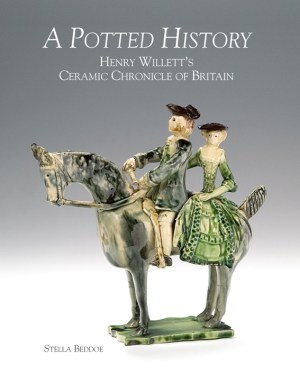 The Willett Collection at the Brighton Museum & Art Gallery is the only collection formed to illustrate what 19th-century businessman Henry Willett called ‘popular British history’. The collection of nearly 2,000 items is arranged here in chapters corresponding to Willett’s own cataloguing system. Many of the groupings commemorate historical events and personalities, such as ‘Royalty and Loyalty’, its content running from the Tudors through to Queen Victoria, and ‘Statesmen’, with its ceramic representations of Disraeli and Gladstone. Other chapters focus on social history, from the grisly murder in the Red Barn to bull baiting, pugilism, animal husbandry and teetotalism.
Stella Beddoe’s engaging, informative text places each item in context, exploring the maker and the subject matter depicted. The introduction on Henry Willett the man reveals the life that spawned such a diverse, irreplaceable collection of ceramics. The items, depicted in more than 800 colour illustrations, comprise hollow ware and flat ware, ornamental busts and figures, dating from the late sixteenth to the late nineteenth centuries. They represent a complete range of ceramic bodies and manufacturing technology.
Stella Beddoe worked at Brighton Royal Pavilion & Museums as Keeper of Decorative Art (including the Willett Collection) and, later, Senior Keeper, from 1978 to 2012.
◊ ◊ ◊ ◊ ◊
C O N T E N T S
1 Henry Willett, The Man and The Collection
2 Royalty and Loyalty
3 Military Heroes
4 Naval Heroes
5 Soldiers and Sailors
6 England and France
7 England and America
8 Statesmen
9 Clubs and Societies, and Professions and Trades
10 Philanthropy
11 Crime
12 Architecture
13 Scripture History and Religion
14 Music and Drama
15 Poetry Science and Literature
16 Sporting and Field Sports
17 Pastimes and Amusements
18 Agriculture
19 Conviviality and Teetotalism
20 Domestic Incidents
Call for Papers | Private Collecting and Public Display
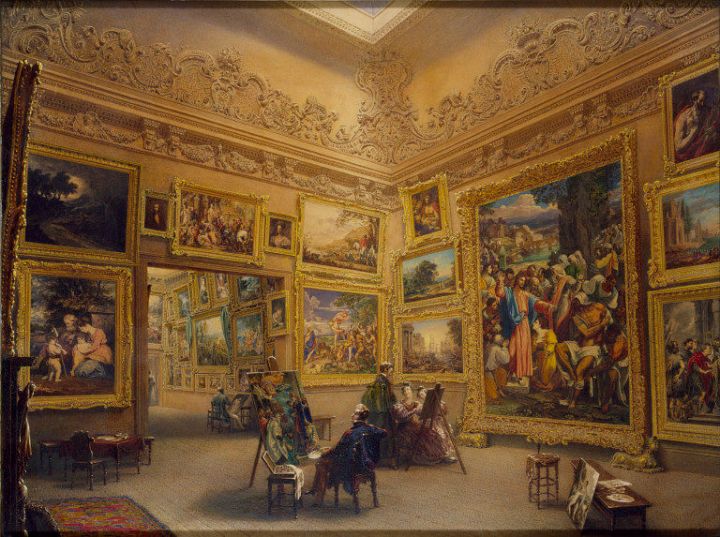
Frederick MacKenzie, The National Gallery When at Mr J. J. Angerstein’s House, Pall Mall, 1824–34, watercolour
(London: V&A, 40-1887)
◊ ◊ ◊ ◊ ◊
Private Collecting and Public Display: Art Markets and Museums
University of Leeds, 30–31 March 2017
Proposals due by 1 November 2016
Keynote Speaker: Susanna Avery-Quash
This two-day conference investigates the relationships between ‘private’ collections of art (fine art, decorative art, and antiquities) and the changing dynamics of their display in ‘public’ exhibitions and museums. This shift from ‘private’ to ‘public’ involves a complex dialectic of socio-cultural forces, together with an increasing engagement with the art market. The conference aims to explore the relationship between the ‘private’ and ‘public’ spheres of the home and the museum and to situate this within the scholarship of the histories of the art market and collecting.
Art collections occupy a cultural space which can represent the individual identity of a collector—often as a manifestation of self-expression and social class. Many museums today arose from ‘private’ collections including The Wallace Collection, Musée Nissim de Camondo, The Frick Collection, and the Isabella Stewart Gardner Museum. Whilst they now exist as ‘public’ spaces, many still signify the residues of the ‘private’ home of a collector. What processes do collections undergo when they move from a ‘private’ sphere to a ‘public’ exhibition space? In what ways are collections viewed differently in these environments?
How and when do ‘private’ collections move into the ‘public’ domain, and what does this tell us about the increasingly porous nature of these boundaries? Whilst the relationship between ‘private’ and ‘public’ art collecting takes on particular forms from the early modern period onwards, it emerged particularly in the latter half of the nineteenth century, with the creation of temporary exhibitions and permanent displays in museums that relied on donations from collectors. Many national museums are indebted to loans made by private individuals. The Waddesdon Bequest at The British Museum, the Wrightsman Galleries at The Metropolitan Museum, and the John Jones Collection at the Victoria and Albert Museum are key examples of the continuity of the private in the public. What are the ‘private’ to ‘public’ dynamics of these exchanges? How have museums negotiated the restrictions proposed by the collector for the display, containment, expansion or reinterpretation of their collection? What is the implication for the status and value of an object when ‘public’ works are sold and re-enter the art market? What meanings are attached to ‘public’ art objects when they begin, once again, to circulate in the art market?
The PGR subcommittee of the Centre for the Study of the Art and Antiques Market welcomes proposals for 20-minute papers which explore these themes or which address any other aspect of the private collecting and public display of collections, from the Early Modern period until the 21st century. We are delighted to confirm Dr. Susanna Avery-Quash, Senior Research Curator (History of Collecting) at the National Gallery, London as our keynote speaker.
Topics can include but are not limited to
• The relationships between ‘private’ and ‘public’ spheres
• The role and impact of the art market in the ‘public’ and ‘private’ realms
• The history and role of temporary loan exhibitions
• The role played by gender in collecting practices and bequests
• Collecting and loaning objects by minority groups
• Legacies of the collector
• Philanthropy vs self-promotion
• Deaccessioning- public museums selling art back into art market/into private collections
• The dynamic of contemporary art collecting and public art galleries
To propose a paper, please send a Word document with your contact information, paper title, an abstract of 300-500 words, and a short biographical note. Full session proposals for a panel of three papers are also welcomed. Some travel bursaries will be available for accepted speakers. Proposals should be sent to csaa@leeds.ac.uk by 1st November 2016.










 Enfilade
leave a comment