Odes on a Cat Drowned in a Goldfish Bowl
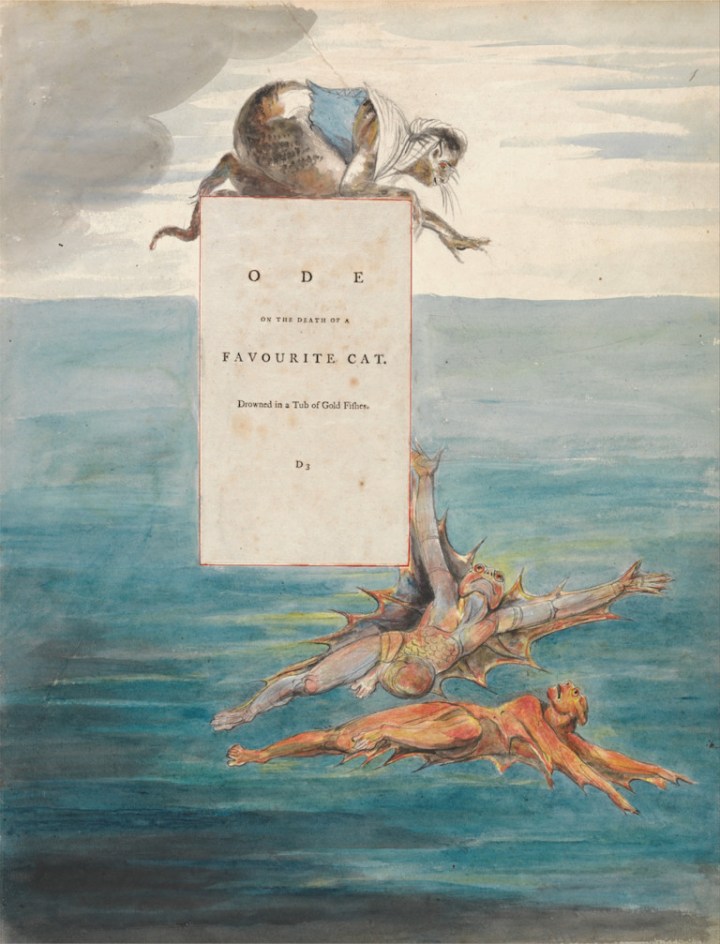 William Blake, illustration for “Ode on the Death of a Favourite Cat,” in ‘The Poems of Thomas Gray (1797-98), watercolor with pen and black ink and graphite on paper with inlaid letterpress page (New Haven: Yale Center for British Art, Paul Mellon Collection)
◊ ◊ ◊ ◊ ◊
Taking as a point of departure a painting at auction this week at Bonhams, Allison Meier highlights for Hyperallergic readers some of the artistic responses to Horace Walpole’s cat, which drowned in 1747, including William Blake’s extraordinary watercolors.

Attributed to Martin Ferdinand Quadal (Nietschitz 1736–1811 St. Petersburg), Ode on the Death of a Favourite Cat Drowned in a Tub of Goldfishes (Estimate: £1000–1500 / US$1400–2200)
Allison Meier, “18th-Century Odes to a Cat that Drowned in a Goldfish Bowl,” Hyperallergic (8 April 2016).
A cat that fell into a goldfish bowl in 1747 and subsequently drowned from her pyrrhic hunt inspired an unlikely series of artworks in the 18th century. Selima, as the unfortunate feline was called, was the companion of art historian and author Horace Walpole, and like any eccentric aristocrat worth his earldom, he asked friend and poet Thomas Gray to pen a tribute. Gray went beyond a simple epitaph and scribed a whole mock elegy for the cat, called “Ode on the Death of a Favourite Cat Drowned in a Tub of Goldfishes.” . . .
The painting is included in Bonhams Old Master Sale this Wednesday (27 April 2016, Auction 23252, Lot 200).
New Book | Poetical Dust: Poets’ Corner and the Making of Britain
Happy Bard Day!—on the 400th anniversary of the death of William Shakespeare (died on 23 April 1616). Global programming details are available at Shakespeare400. From Penn Press:
Thomas A. Prendergast, Poetical Dust: Poets’ Corner and the Making of Britain (Philadelphia: University of Pennsylvania Press, 2015), 256 pages, ISBN: 978-0812247503 (cloth), ISBN: 978-0812291902 (ebook), $60 / £39.
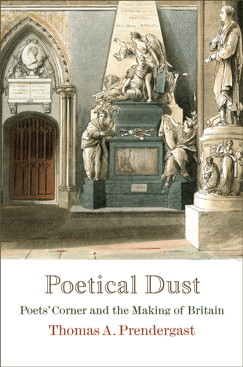 In the South Transept of Westminster Abbey in London, the bodies of more than seventy men and women, primarily writers, poets, and playwrights, are interred, with many more memorialized. From the time of the reburial of Geoffrey Chaucer in 1556, the space has become a sanctuary where some of the most revered figures of English letters are celebrated and remembered. Poets’ Corner is now an attraction visited by thousands of tourists each year, but for much of its history it was also the staging ground for an ongoing debate on the nature of British cultural identity and the place of poetry in the larger political landscape.
Thomas Prendergast’s Poetical Dust offers a provocative, far-reaching, and witty analysis of Poets’ Corner. Covering nearly a thousand years of political and literary history, the book examines the chaotic, sometimes fitful process through which Britain has consecrated its poetry and poets. Whether exploring the several burials of Chaucer, the politicking of Alexander Pope, or the absence of William Shakespeare, Prendergast asks us to consider how these relics attest to the vexed, melancholy ties between the literary corpse and corpus. His thoughtful, sophisticated discussion reveals Poets’ Corner to be not simply a centuries-old destination for pilgrims and tourists alike but a monument to literary fame and the inevitable decay of the bodies it has both rejected and celebrated.
Thomas Prendergast is Professor of English at The College of Wooster and author of Chaucer’s Dead Body: From Corpse to Corpus.
C O N T E N T S
Preface
Introduction
1 Westminster Abbey and the Incorporation of Poets’ Corner
2 Melancholia, Monumental Resistance, and the Invention of Poets’ Corner
3 Love, Literary Publicity, and the Naming of Poets’ Corner
4 Absence and the Public Poetics of Regret
5 Poetic Exhumation and the Anxiety of Absence
Coda: Necromancy and the American Poets’ Corner
Poets’ Corner Graveplan
Poets’ Corner Alphabetical Burial and Monument List
Chronological List of Stones and Monuments in the South Transept
Notes
Bibliography
Index
Acknowledgments
Exhibition | Heavy Metal: Arms and Armour

From the National Museum of Finland (Kansallismuseo) . . .
Heavy Metal: Arms and Armour (Aseita ja haarniskoja) from the 16th to 18th Century
Häme Castle, Hämeenlinna, Finland, 22 April — 23 October 2016
In the end of April 2016 an armour exhibition of international stature will be opened in Häme Castle. Originally from Graz Austria the exhibition demonstrates large collection of arms and armour from the 16th to 18th centuries. The exhibition will also include one of the few whole preserved horse armour and weapons. The infantry half armours on display are related to Finnish history, since similar armour was used by the Finnish light cavalrymen in the service of King Gustavus Adolphus of Sweden during the Thirty Years’ War in the 17th century.
Medieval Häme Castle provides a unique and authentic setting for the exhibits. During the exhibition there will be plenty of additional activities such as a medieval feast, market and jousting. The seventeen pieces of armour in the exhibition are from the Styrian Armoury of the Universaalmuseum of Joanneum in Austria, which has the world’s largest and oldest collection of armour. They are on display for the first time in Northern Europe. The exhibition gives a unique opportunity to explore armour from the 16th to 18th century. Five of the pieces featured are whole breastplate armours (Maximilian and Italian type); twelve are infantry half armours. Also on display will be helmets, halberds, boar spears, swords, muskets, and wheel-lock pistols.
Display | Spotlight on French Royal Furniture by Riesener

Installation view of A Closer Look: Spotlight on French Royal Furniture by Jean-Henri Riesener (1734–1806) in the White Drawing Room at Waddesdon Manor, The Rothschild Collection (The National Trust), 23 March – 23 October 2016. © The National Trust, Waddesdon Manor.
◊ ◊ ◊ ◊ ◊
Press release for the display now on view at Waddesdon:
A Closer Look: Spotlight on French Royal Furniture by Jean-Henri Riesener (1734–1806)
Waddesdon Manor, Buckinghamshire, 23 March — 23 October 2016
Curated by Ulrich Leben and Emily Roy
Waddesdon is unique in the world for having three extraordinary chests of drawers by Jean- Henri Riesener (1734–1806), two of which belonged to members of the French royal family. They are displayed in the White Drawing Room at Waddesdon for this special exhibition. The display allows visitors to look closely at these magnificent pieces and to learn about their design, technical construction, and fascinating history. It provides a rare opportunity to look in 360° at objects normally placed against walls.
You can see the magnificent chest of drawers commissioned by the Comtesse de Provence, sister-in- law of Louis XVI, magnificently veneered in purple heart, with marquetry of tulipwood, mahogany, sycamore, ebony, boxwood, casuarina, holly and burl wood with gilt-bronze mounts and marble top. She ordered this chest of drawers from Riesener on 8 February 1776 and it was delivered to her apartment in Versailles the following month. This was astonishingly fast for such a complex piece of furniture. Also in the collection is a chest of drawers for Louis XVI youngest sister Madame Elisabeth (1764–1794) for her coming of age at just 14 years old!
The exhibition includes a specially commissioned digital animation showing the construction of Madame Elisabeth’s chest of drawers and two films, produced by the J. Paul Getty Museum, showing the making of intricate marquetry and gilt-bronze mounts. The display marks the beginning of a research project—in collaboration with The Wallace Collection and The Royal Collection—which aims to learn more about Riesener, the techniques and materials he used, and the world of buying and making furniture in 18th-century France.
The curators would like to thank the following for their help with the preparation, design and installation of the exhibition: Colin Bailey, Vincent Bastien, Alexis Borde, Max Coppoletta, Fréderic D’Arras, Mike Fear, the J. Paul Getty Museum, Jürgen Huber, Helen Jacobson, Lindsay Macnaughton, David Mlinaric, Miriam Schefzyk, Christoph Vogtherr, and the Collections, Facilities, IT and Marketing Departments.
◊ ◊ ◊ ◊ ◊
Additional images are available here»
Study Session | French Royal Furniture by Jean-Henri Riesener
◊ ◊ ◊ ◊ ◊
Study day opportunities at Waddeson Manor in connection with the Riesener exhibition:
Study Session: Spotlight on French Royal Furniture by Jean-Henri Riesener
Waddesdon Manor, Buckinghamshire, 25 May, 28 July, and and 23 September 2016
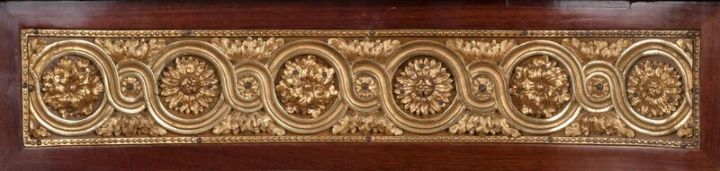
Waddesdon Manor houses three extraordinary chests of drawers by court cabinet-maker Jean-Henri Riesener, two of which belonged to members of the French royal family. They are among twelve pieces of furniture now at Waddesdon that were originally at the Palace of Versailles. Riesener was perhaps the most celebrated cabinet-maker of the 18th century, the official cabinet-maker to King Louis XVI, and the favourite of Queen Marie Antoinette. Each of these chests of drawers is richly decorated with colourful marquetry (designs made with wood veneers) depicting flowers and trophies and geometric patterns, and mounted with finely chased and gilded bronzes. Learn about their design, technical construction, and fascinating history. £25 (includes grounds admission), £15 National Trust/Art Fund members, £10 students. Wednesday 25 May, Thursday 28 July, and Friday 23 September 2016. Coffee on arrival at 10.15; session 10.45–12.15.
Display | Persuading the King: A MS Petition by Gabriel de Saint-Aubin
Now on view at Waddesdon:
Persuading the King: A Manuscript Petition by Gabriel de Saint-Aubin (1724–1780)
Waddesdon Manor, Buckinghamshire, 23 March — 23 October 2016
Curated by Rachel Jacobs
 This display highlights a new addition to the collection at Waddesdon: Gabriel de Saint-Aubin’s volume, Placets de l’officier Desbans (1775). This elaborate manuscript petition (placet) was submitted to Louis XVI and Marie-Antoinette by a soldier, Edme Louis Desbans, asking for a long-promised promotion. Gabriel de Saint-Aubin was one of the greatest draughtsman of 18th-century France, and the drawings with which he brought this document to life were designed to glorify the royal couple while appealing to their artistic tastes and sensibilities. This unique work offers a glimpse into the politics of promotion and favour at the French court near the end of the Old Regime—in which the fortune of an individual depended upon the arts of persuasion. It has all sorts of resonances today, from patronage to the mysterious world of the political lobbyist.
A pdf file of the text panels is available at the Waddesdon website.
Study Session | Persuading the King
Study day opportunity at Waddeson Manor in connection with the exhibition:
Study Session Persuading the King: Gabriel de Saint-Aubin’s Placets
de l’officier Desbans and Other Books by the Saint-Aubin Brothers
Waddesdon Manor, Buckinghamshire, 24 June 2016
A rare opportunity to study Waddesdon’s newly acquired royal petition by Gabriel de Saint-Aubin, alongside other manuscript volumes, drawings, and prints by the artist and his brothers Charles-Germain and Augustin. Senior Curator Dr Juliet Carey and Curator Rachel Jacobs will offer a glimpse into the politics of promotion and favour near the end of the Old Regime. Works will include Gabriel de Saint-Aubin’s Memoire sur la reformation de la police de France (1749) and a special copy of Du Perron’s Discours sur la peinture et sur l’architecture (1757), made for the book’s dedicatee Madame de Pompadour. Charles-Germain de Aubin’s famous Livre de caricatures will provide a subversive counterpoint to the arts of flattery and persuasion that lay at the heart of court culture. £25 (includes grounds admission), £15 National Trust/Art Fund members, £10 students. Friday, 24 June 2016. Coffee on arrival at 10.15; study session 10.45–12.15. Book early to avoid disappointment.
Study Session | Books and Bindings at Waddesdon Manor
From Waddesdon:
Study Session: Books and Bindings
Waddesdon Manor, Buckinghamshire, 12 May and 15 September 2016
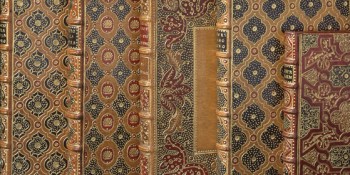 Come and explore the treasures of the Waddesdon collection of 17th- and 18th-century books and bindings. These include unique manuscripts and luxuriously illustrated printed volumes. Many of the books in the collection have illustrious provenances including great bibliophiles and members of the French Royal Family. The session will provide an opportunity to view some of the treasures of the Waddesdon Collection and to learn about book history through some of its finest examples. £25 (includes grounds admission), £15 National Trust/Art Fund members, £10 students. Thursday 12 May and 15 September 2016. Coffee on arrival at 10.15; study session 10.45–12.15.
Paul Mellon Centre Rome Fellowship, 2017

From the Paul Mellon Centre for Studies in British Art:
Paul Mellon Centre Rome Fellowship
The British School at Rome, April — June 2017
Applications due by 23 May 2016
One Rome Fellowship is offered annually to allow a Senior or Mid-Career scholar three months at the British School at Rome to work on an Anglo-Italian art-historical topic of any period from the medieval era onwards.
The Paul Mellon Centre for Studies in British Art offers a variety of Fellowships (for individuals) and Grants (for institutions and individuals) twice a year in a strictly timetabled schedule. The programme supports scholarship, academic research and the dissemination of knowledge in the field of British art and architectural history from the medieval period to the present, although all supported topics must have an historical perspective. We do not offer fellowships and grants in the fields of archaeology, the current practice of architecture or the performing arts. We have no discretionary funds outside our stated programme.
The Rome Fellowship is for the three months April to June 2017. The Fellowship cannot be deferred to a later academic year nor can it run concurrently with a Fellowship awarded by another institution.
This three-month full-time Rome Fellowship will be awarded by the Paul Mellon Centre for Studies in British Art, in conjunction with the British School at Rome. The Fellowship is for an individual employed at a University, Institution of Higher Education, Museum, Gallery or Archive, or for an independent scholar. The award is intended for individuals who have already published a significant body of scholarly work and/or are internationally recognised in their field of expertise. The Paul Mellon Centre will make allowance for applicants who have had a career break or who are established scholars without doctorates.
This award allows a senior or mid-career scholar three months at the British School at Rome to work on an Anglo-Italian artistic or architectural topic. Applicants are expected to provide details of the proposed outcomes of their research in Rome in their application.
The Rome Fellowship is offered for the period April to June 2017.
More information is available from the Paul Mellon Centre.
Call for Papers | Warburg Postgraduate Symposium: Cultural Encounters
From the conference website:
Warburg Institute Postgraduate Symposium
Cultural Encounters: Tensions and Polarities of Transmission
from the Late Middle Ages to the Enlightenment
The Warburg Institute, London, 17 November 2016
Proposals due by 31 May 2016
The Warburg Institute will host its first postgraduate symposium on 17 November 2016. It will explore the concept of cultural encounters and focus particularly on their productive outcomes. We are interested, above all, in the dynamics of cultural change across time and space. The symposium will be multidisciplinary and will cover topics that fall into the unique classification system of the Warburg Library: Image, Word, Orientation and Action.
The aim of the symposium will be to map the diverse and intricate forces which have driven cultural encounters in the past and which also help define contemporary societies. Amongst the questions that we hope to address are: the degree to which productive outcomes can be seen as a conscious reception and reformulation of external ideas and models; resistances to exchange and in what form; the long-term implications of such encounters and their outcomes.
The symposium is intended for postgraduate students and early career researchers. It will bring together speakers from different backgrounds in the humanities and draw on a variety of disciplinary tools and methodologies. Submissions are invited across a wide range of topics represented by the global cultural interests of the Warburg Institute, including but not limited to:
• Artistic creations: forms, models, styles
• Literary productions and transmission of texts: translations, adaptations, copies
• Philosophy, rhetoric and transmission of ideas
• Personal encounters: Academies, universities and epistolary exchanges
• Encounters with the ancient past: reception, interpretation, visualisation
• Religious encounters, propaganda and politics
• Geographical discoveries: new continents, new cultures and animal species, etc.
• Scientific innovation: findings, theories, inner contradictions, etc.
Proposals for papers should be sent to warburg.postgrad@gmail.com by 31 May 2016:
• Maximum 300-word abstract, in English, for a 20-minute paper, in PDF or Word format
• One-page CV, including full name, affiliation, contact information
All candidates will be notified by 31 July 2016. Limited funding to help cover travel expenses is available. Attendance is free of charge.
Organized by Desirée Cappa, Maria Teresa Chicote Pompanin, James Christie, Lorenza Gay, Hanna Gentili, Federica Gigante, and Finn Schulze-Feldmann










 Enfilade
leave a comment