Attingham Offerings for 2019

Giovanni Paolo Panini, Modern Rome, 1757, 68 × 92 inches
(New York: The Metropolitan Museum of Art, 52.63.2)
◊ ◊ ◊ ◊ ◊
Next year’s Attingham offerings:
The 68th Attingham Summer School, 4–21 July 2019
Applications due by 29 January 2019
The 68th Attingham Summer School, an 18-day residential course directed by David Adshead and Tessa Wild, will visit country houses in Sussex, Oxfordshire, Derbyshire, Nottinghamshire, Bedfordshire, Buckinghamshire, and Cambridgeshire.
Royal Collection Studies, 1–10 September 2019
Applications due by 12 February 2019
Based near Windsor, the course provides an overview of the patronage and collecting of the Kings and Queens of England/United Kingdom, from the 15th century onwards. Teaching includes lectures and tutorials, as well as visits to both the occupied and unoccupied palaces in and around London. The course is organised on broadly chronological principles, developing an understanding of the changing function and character of the British Royal Collection through a study of the monarchs responsible for its creation and the objects collected. Group discussion and exchange is an important part of the course, and content includes architecture and interiors, decorative arts, paintings, sculpture, and works on paper. The course is held when the Royal Family is not in residence and Windsor Castle is the central focus. Several visits are made before or after opening hours. Regular visits are also made to other palaces and there are several object-focused study sessions.
The Attingham Study Programme: Palaces and Villas of Rome and Naples, 16–24 September 2019
Applications due by 12 February 2019
Conceived from the perspective of the British, European, and American travellers who visited Italy to experience antique, renaissance and baroque Rome during the period c.1650–1950, this intensive study programme will begin with a visit to the British School at Rome. This is a fine example of the work of Edwin Lutyens, built in 1911 in the Valle Giulia, Rome’s ‘Valley of the Academies’ and now a centre for research in archaeology, the arts and the humanities. The programme will consider palaces and villas with their collections in the light of papal patronage and focus upon some of the key Roman families and their influence upon their contemporaries. The choice of properties encompasses those that inspired travellers to collect sculpture, books, paintings, and works of art, their taste informed by the desire to furnish and sometimes rebuild their town and country houses back home.
The London House Course, 1–7 October 2019
Applications due by 19 February 2019
The 7-day London House course, directed by David Adshead, studies the development of the London house from the Renaissance to the present. It combines numerous visits to houses, many of them private, with a series of lectures by leading authorities. Progressing chronologically and exploring all over London, the course takes members inside grand aristocratic buildings, smaller domestic houses, artists’ studios and the garden suburb.
New Book | Telling Objects
In addition to Telling Objects, the latest output from the Marrying Cultures project, previous publications include:
• Helen Watanabe-O’Kelly and Adam Morton, eds., Queens Consort, Cultural Transfer, and European Politics, 1500–1800 (New York: Routledge, 2016), 274 pages, ISBN: 978-1472458384, $160. With more information here»
• Almut Bues, ed., Frictions and Failures: Cultural Encounters in Crisis (Wiesbaden: Harrassowitz Verlag, 2017), ISBN 978-3447107365, $75. With more information here»
• Elise Dermineur, Queen Luise Ulrike: Gender and Politics in Eighteenth-Century Sweden (New York: Routledge, 2017), 254 pages, ISBN: 978-1472476661, $150. With more information here»
From Harrassowitz Verlag:
Jill Bepler and Svante Norrhem, eds., Telling Objects: Contextualizing the Role of the Consort in Early Modern Europe (Wiesbaden: Harrassowitz Verlag, 2018), 272 pages, ISBN: 978-3447109352, 68€.
 The idea for this volume originated from discussions at the first international conference of the HERA project Marrying Cultures. Colleagues from museums, galleries, and university contexts were asked to focus not on the figure of the early modern consort herself but on specific objects or genres of objects associated with her. When a royal bride moved from one territory to another, she transported quantities of furniture, books, paintings, clothes, or jewelry to her new home. In later life, she often continued to acquire things from her native country or via her dynastic networks or she could serve as a conduit through which objects were ‘exported’.
Two introductory essays look at patterns of exchange and inheritance. The case studies of objects that follow reveal general patterns of cultural exchange set in motion by royal consorts, in several cases focusing on relatively under-studied courts and dynasties. East and west, north and south were interconnected by objects and people through physical travel and via letters and in print. Gifts, trade, or inheritance played a part in moving objects over space and time. These essays give examples of how objects on the move could transfer value (symbolic, dynastic, or financial) and how the perception of these objects, many of which have become part of contemporary national heritage, changed across generations along with the impact they had, both culturally and politically.
C O N T E N T S
Jill Bepler and Svante Norrhem, Introduction
Cultural Transfer and Exchange
• Volker Bauer, Connecting Courts, Castles, Capitals: Cultural Exchange in the Early Modern Society of Princes
• Almut Bues, Inventories and the Movement of Objects
Genres and Materials
• Catharine MacLeod, Facing Europe: The Portraiture of Anne of Denmark (1574–1619)
• Margherita Palumbo, ‘I was much courted by the entire English nation’: The English Books Owned by Sophie of the Palatinate, Electress of Hanover
• Adelina Modesti, ‘Nelle mode le più novelle’: The Latest Fashion Trends (Textiles, Clothing and Luxury Fabrics) at the Court of Grand Duchess Vittoria della Rovere de’ Medici of Tuscany
Individual Objects Transformed
• Ewa Kociszewska, Devotion and Unbelief of the Gonzaga Sisters: The Relic of the True Cross in Poland and France
• Mara Wade, Princess Magdalena Sibylle’s Golden Horn: Dynastic Women and Cultural Transfer between Denmark and Saxony
Gift Culture
• Katrin Keller, Tulips, Tobacco, and Parrots: Consorts and Their Role in the Transfer of Animals and Plants in the Second Half of the Sixteenth Century
• Maureen Cassidy-Geiger, Gender, Dynasty and the Politics of Porcelain: The Fact and Impact of Meissen Gifts to Royal Women, ca. 1714–50
• MarÍlia dos Santos Lopes, A Personal Gift – A Part of Cultural Heritage: The Coach Brought to Lisbon by Maria Anna of Austria
• Joanna Marschner, The Ivory Egg: Elisabeth Charlotte, Princess Palatine’s Gift to Caroline of Ansbach
About the Authors
Index
New Book | The Agency of Display
The essays in this edited volume originated from the conference Collections, Displays and the Agency of Objects (Cambridge University, 20–22 September 2017), which was part of the project ‘Parerga and Paratexts – How Things Enter Language: Practices and Forms of Presentation in Goethe’s Collections’. From Sandstein Verlag:
Johannes Grave, Christiane Holm, Valérie Kobi, and Caroline van Eck, eds., The Agency of Display: Objects, Framings, and Parerga (Dresden: Sandstein Verlag, 2018), 192 pages, ISBN: 978-3954984169, 38€.
 The display of artefacts always implies an external mediation that influences, and often codifies, the reception of the exhibits. Objects are manipulated, restored, appropriated, staged, in short displayed, through various representational strategies that include pedestals, labels, and showcases. These elements, which we could define as parerga, are often ignored because of their utilitarian function. Yet, they play an important role in the history of the artefacts and define the setting in which the objects can exert their agency. They not only shape their meaning, but also determine the effect that these artefacts have on their viewers. Framing devices create the conditions for interactions between the individual and the object to take place. This publication aims to explore the relation between artefacts and viewers as they are manifested in framing devices, and to develop a new theoretical framework for thinking about the power of objects on display.
C O N T E N T S
Acknowledgments
Johannes Grave, Christiane Holm, Valérie Kobi, and Caroline van Eck, The Agency of Display: Objects, Framings, and Parerga—Introductory Thoughts
1 Display Situations
• Ivan Gaskell, Display Displayed
• Elsie Van Kessel, The Street as Frame: Corpus Christi Processions in Lisbon prior to João V
• Hannah Williams, Staging Belief: Immersive Encounters and the Agency of Religious Art in Eighteenth-Century Paris
• Mechthild Fend, Order and Affect: The Museum of Dermatological Wax Moulages at the Hôpital Saint-Louis in Paris
• Cindy Kang, The Barnes Ensembles, Again
2 Parergonal Operations
• Dario Gamboni, Ready-Made Eye-Opener: Models, Functions, and Meanings of the Ironwork in Albert C. Barnes’s Displays
• Peter Schade The Reframing of Lazarus
• Diana Stört, Displaying Knowledge: Goethe’s Cabinets as Epistemic Furniture
• Angela Matyssek, Death by / Life by Wall Label
• Noémie Étienne, When Things Do Talk (in Storage): Materiality and Agency between Contact and Conflict Zones
Contributors
Picture Credits
Imprint
Conference | Public and Private Commissions in the Northern Adriatic
From H-ArtHist:
Public and Private Commissions: Donors and Works of Art in the Northern Adriatic
University of Rijeka, Croatia, 25–26 October 2018
T H U R S D A Y , 2 5 O C T O B E R 2 0 1 8
10:00 Welcoming Addresses
• Ines Srdoč Konestra, Dean of the Faculty of Humanities and Social Sciences
• Barbara Španjol-Pandelo, Head of the Department of Art History
• Nina Kudiš, Project leader ET TIBI DABO: Commissions and Donors in Istria, Croatian Littoral, and North Dalmatia from 1300 to 1800
10:30 Session 1
Chair: Renata Novak Klemenčič
• Nina Kudiš, Il pittore Giovanni Pietro de Pomis e il Capitano di Fiume Stefano della Rovere: Contesto di una commissione
• Simone Guerriero, Non solo Le Court: Melchior Barthel, tra committenza pubblica e collezionismo nella Venezia barocca
11:10 Coffee break
11:40 Session 2
Chair: Nina Kudiš
• Massimo Favilla, Ruggero Rugolo, Venezia, i pregi di una famiglia: Gli Zane di San Stin fra arte e storia
• Damir Tulić, Between Private and Public: Three Cases of Art Commissions in Venice and Istria around 1700
13.00 Lunch break
15:00 Session 3
Chair: Massimo Favilla
• Maichol Clemente, Tommaso Rues tra Udine e Venezia: Un’opera, qualche documento e altri appunti di scultura veneta
• Monica De Vincenti, Dalla Serenissima all’Europa: Commissioni pubbliche e private per i Marinali ‘illustri Scultori nella città di Venezia’
15:40 Coffee break
16:10 Session 4
Chair: Damir Tulić
• Katra Meke, Making Business for Eternal Glory: The Merchant Jakob Schell von Schellenburg as Patron and Collector
• Massimo Favilla, Ruggero Rugolo, Venezia – San Marino: Francesco Zugno e la Madonna della misericordia nella chiesa di Montegiardino
• Matej Klemenčič, Antonio Corradini and Public Presentations of Sculpture in Early 18th-Century Venice
17:10 Discussion
F R I D A Y , 2 6 O C T O B E R 2 0 1 8
10:00 Session 5
Chair: Nina Kudiš
• Renata Novak Klemenčič, Progetti edilizi della Repubblica di Ragusa nella prima metà del Quattrocento
• Ivan Braut, Krasnka Majer Jurišić, Nobilis sir Petrus de Zaro, et viri Arbi, Donor of the Franciscan Church of St. Bernardin in Kampor
• Željko Bistrović, The Pićan Bishops and Their Role in the Public and Cultural Life of Carniola and Its Provinces
• Josip Višnjić, Early Modern Transformation of the Pazin Fort during the Administration of Mosconi and Swetkovitch Families
12:00 Coffee Break
12:20 Session 6
Chair: Ruggero Rugolo
• Danijel Ciković, Iva Jazbec Tomaić, Tutti li sudetti paramenti hanno l’arma de Sua Signoria Illustrissima et Reverendissima…: Donazioni pubbliche e private del vescovo di Veglia, Giovanni della Torre
• Mateja Jerman, The Silver Sculpture of Our Lady of Sorrows from the Church of St. Vitus in Rijeka: Authors and Donors
13.30 Lunch break
15.30 Session 7
Chair: Danijel Ciković
• Petar Puhmajer, Introduction to the History of Baroque Gardens in Rijeka: Investors, Origins, and Design
• Ana Šitina, Đenis Torić, Commissions of Urban Fenzi and Lorenzo Fondra for the Church of St. Lawrence in Šibenik
16:10 Coffee break
16.40 Session 8
Chair: Katra Meke
• Mario Pintarić, Giuseppe Minolli: The Donor of the Monumental High Altar in the Former Augustinian Church of St. Jerome in Rijeka
• Marin Bolić, Collecting Paintings in the 18th-Century Rijeka: The Case of Francesco Saverio de Marburg
17:20 Discussion and concluding remarks
S A T U R D A Y , 2 7 O C T O B E R 2 0 1 8
Field trip to Zagreb (for speakers only).
Please direct any questions about the conference to Nina Kudiš, nina.kudis@gmail.com.
Exhibition | William Hunter and the Anatomy of the Modern Museum

Press release (12 September 2018) for the exhibition:
William Hunter and the Anatomy of the Modern Museum
The Hunterian, Glasgow, 28 September 2018 — 6 January 2019
Yale Center for British Art, New Haven, 14 February — 20 May 2019
Curated by Mungo Campbell with Nathan Flis and Lola Sánchez-Jáuregui
A major new exhibition at The Hunterian, University of Glasgow, will mark an important anniversary in the history of Scotland’s oldest public museum. William Hunter and the Anatomy of the Modern Museum opens on 28 September 2018 and marks the William Hunter Tercentenary—300 years since the birth of Hunterian founder, Dr William Hunter (1718–1783). The exhibition not only offers a critical examination of Hunter—a man of exceptional vision who saw no boundaries between art and science, but explores his life, character, and career as well as his research, collection, and links to Glasgow.
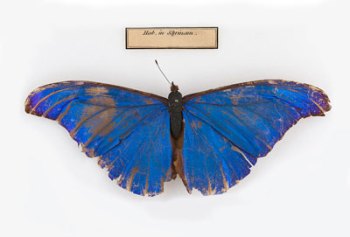
Rhetenor blue morpho butterfly (Morpho rhetenor Cramer), 1775, Suriname (Hunterian, University of Glasgow).
Hunter’s original Enlightenment collection is a rare example which has survived largely intact and these objects and artworks are the foundation of The Hunterian collections today. William Hunter and the Anatomy of the Modern Museum showcases this truly unique collection, encyclopaedic in nature and with its heart in the Scottish Enlightenment. The exhibition also offers a balanced account of the circumstances that made a collection like Hunter’s possible and examines the means by which it was amassed. Visitors will have the opportunity to see key items from Hunter’s collection, reunited for the first time in over 150 years and displayed to highlight the connections between them.
More than 400 items will be on display including: fossils; anatomical specimens and preparations; paintings, drawings and prints; rare books and manuscripts; ethnographical objects; rocks and mineral specimens; coins and medals; shells, corals, beetles, butterflies and examples of taxidermy. The majority come from The Hunterian, and Archives and Special Collections at the University of Glasgow Library, where Hunter’s collection of books and manuscripts is kept.
Key loans include a life size écorché figure from the Royal Academy of Arts in London and Johan Zoffany’s painting William Hunter Lecturing that shows William Hunter delivering an anatomy class, on loan from the Royal College of Physicians in London.
Important conservation work has been carried out on a number of items from Hunter’s collection including paintings, frames, sculptures, textiles, books, works on paper and objects of decorative art.
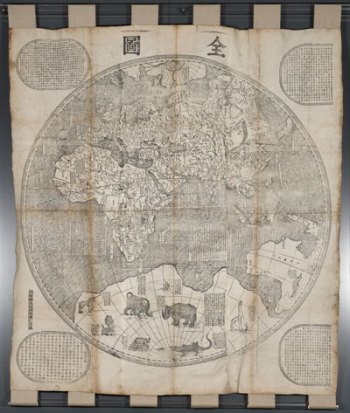
Ferdinand Verbiest, Kunyu Quantu 坤輿全圖 (A Map of the Whole World),1674, woodblock print on paper laid down on cloth, in four parts (Hunterian, University of Glasgow).
Must see items include:
• Four of Hunter’s plaster cast models, now fully restored, which were used in preparation for his great publication Anatomia Uteri Humani Gravidi Tabulis Illustrate (Anatomy of the Gravid Uterus Exhibited in Figures, 1774). A selection of related drawings, prints, and proofs are included, many of which have not been on display before. The casts show the various stages of the pregnant human womb in progressive states of dissection in graphic and stunning naturalistic detail.
• Our unique 17th-century Chinese map of the world, displayed in its entirety for the first time.
• Hunter’s complete collection of 88 gold Roman coins, issued by every Roman Emperor from 27BCE to 491CE. The Hunterian is one of only three places in the world where such a complete series can be seen.
• Hunter’s will — on loan from the National Archives of Scotland and on public display for the first time.
• The life-size écorché figure on loan from the Royal Academy of Arts in London.
• An exceptional and fully restored 18th-century Maori cloak from New Zealand made of flax and feathers.
• The Hunterian Psalter — usually housed in Archives and Special Collections at the University of Glasgow Library, this lavishly illuminated bound English manuscript is dated to 1170 and is considered the greatest treasure of William Hunter’s library.
William Hunter and the Anatomy of the Modern Museum also reveals the contribution made by Hunter to the development of modern museums as we know them today, exploring the interplay between the arts and sciences in the pursuit of knowledge over the course of the 18th century.

Jean-Siméon Chardin, A Lady Taking Tea, 1735, oil on canvas (Hunterian Art Gallery, University of Glasgow).
The exhibition and publication William Hunter and the Anatomy of the Modern Museum are the result of a five-year collaborative research project between The Hunterian and the Yale Center for British Art and showcase new research undertaken by an international team of scholars. The lead curator is Mungo Campbell, Deputy Director of The Hunterian; and the organizing curator at the Yale Center for British Art is Nathan Flis, Head of Exhibitions and Publications, and Assistant Curator of Seventeenth-Century Paintings. They are assisted by Lola Sanchez-Jauregui, William Hunter Tercentenary Curator at The Hunterian. A fully illustrated exhibition catalogue will be published by The Hunterian and the Center in association with Yale University Press.
Running in parallel with William Hunter and the Anatomy of the Modern Museum are two exhibitions offering 21st-century responses to Hunter’s collections, life, and work. Strange Foreign Bodies and Rosengarten showcase the work of leading contemporary artists and writers including Claire Barclay, Christine Borland, Anne Bevan, and Janice Galloway.
Strange Foreign Bodies is a group exhibition of films, prints, and sculptural works by artists including Claire Barclay, Christine Borland, Sarah Browne, Alex Impey, and Phillip Warnell. Taking William Hunter’s Tercentenary as its point of departure, the exhibition offers a 21st-century perspective on Hunter’s Enlightenment project, with processes of mutation, metamorphosis, and technological transformation central to many of the works. We encounter the story of a woman who has turned into an octopus, the philosophical reflections of a heart transplant patient, and the simulated breathing of an animatronic medical mannequin. These ‘strange foreign bodies’ reflect the complexity of all human embodiment today.
Rosengarten is a unique installation that brings together the sculpture of Anne Bevan and the words of Janice Galloway, two of Scotland’s foremost artists in their fields. Inspired by obstetric implements and important historic medical collections, Rosengarten looks at the tools of birthing and powerfully reflects the human and tender emotions of mother and baby that run parallel to the hard and frequently interventive experiences associated with modern childbirth.
William Hunter and the Anatomy of the Modern Museum is at the Hunterian Art Gallery from 28 September 2018 until 6 January 2019 then at the Yale Center for British Art (Yale University, New Haven, Connecticut, USA) from 14 February until 20 May 2019. The project has been generously supported by The Royal Society of Edinburgh, the Paul Mellon Centre for Studies in British Art, Museums Galleries Scotland, and the Rev. Dr Donald McKellar Leitch Urie Bequest. Strange Foreign Bodies, also at the Hunterian Art Gallery, runs from 28 September 2018 until 13 January 2019. Rosengarten is now open at the Hunterian Art Gallery and runs until 20 January 2019. Purchased with funds from the National Collecting Scheme for Scotland and a grant from the Art Fund. Admission to all three exhibitions is free.
S E L E C T E D P R O G R A M M I N G
3 October 2018 — Mungo Campbell (The Hunterian), William Hunter and the Anatomy of the Modern Museum: Curator’s Introduction
10 October 2018 — Christine Whyte (Lecturer in Global History, University of Glasgow), A Triangular Trade of Medical Knowledge: William Hunter, Enslaved Women, and Scottish Medical Expertise
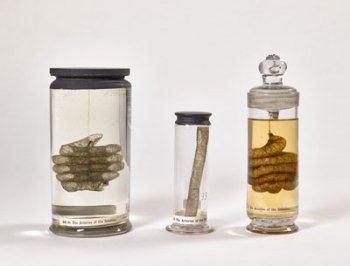
William Hunter and Assistants, Anatomical Specimens: Arteries of the Intestine, 1746–83, portion of human gut with mesentery, turpentine and glass jar; portion of human gut and glass jar; portion of human gut with mesentery, turpentine and glass jar (Hunterian, University of Glasgow).
17 October 2018 — Paul Rea (Senior Lecturer in Human Life Sciences, University of Glasgow), Anatomy in the Digital Age
24 October 2018 — Dominic Paterson (The Hunterian), Strange Foreign Bodies
31 October 2018 — Jeanne Robinson (The Hunterian), ‘Mr Termite’: An Agent of Entomology and the Empire in 18th-Century Sierra Leone
7 November 2018 — Alicia Hughes (University of Glasgow), Title to be confirmed
14 November 2018 — Anne Dulau Beveridge (The Hunterian), The Curious Collector: What William Hunter’s Portraits Tell Us about the Man
21 November 2018 — Maggie Reilly (The Hunterian), Title to be confirmed
28 November 2018 — Michelle Craig (Leverhulme Trust Doctoral Scholar, University of Glasgow), The Curious Collector: Provenance in William Hunter’s Library
5 December 2018 — Matthew Sangster (Lecturer in 18th-Century Literature and Material Culture, University of Glasgow), Conceptions of Knowledge in William Hunter’s Library
12 December 2018 — Jesper Ericsson (The Hunterian), Title to be confirmed
19 December 2018 — Frances Osis (University of Glasgow), Title to be confirmed
◊ ◊ ◊ ◊ ◊
The catalogue is published by the Yale Center for British Art:
Edited by Mungo Campbell and Nathan Flis, with the assistance of María Dolores Sánchez-Jáuregui, William Hunter and the Anatomy of the Modern Museum (New Haven: Yale Center for British Art in association with The Hunterian, 2018), 440 pages, ISBN: 978-0300236651, $65.
 Accompanying a groundbreaking exhibition, this publication is the first in 150 years to assess the contribution made by Hunter, the Scottish-born obstetrician, anatomist, and collector, to the development of the modern museum as a public institution. Essays examine how Hunter gathered his collection to be used as a source of knowledge and instruction, encompassing outstanding paintings and works on paper, coins and medals, and anatomical and zoological specimens. Hunter also possessed ethnographic artifacts from Spain, the Middle East, China, and the South Pacific, and was an avid collector of medieval manuscripts and incunabula; these were all located within one of the most important ‘working’ libraries of eighteenth-century London.
C O N T E N T S
Amy Meyers and Steph Scholten, Directors’ Foreword
Mungo Campbell and Nathan Flis, Acknowledgments
Contributors’ Biographies
Seren Nolan, William Hunter: A Chronology
Part I Physician, Anatomist, Collector
• Mungo Campbell, William Hunter and the Anatomy of the Modern Museum: An Introduction
• Nathan Flis, Skeletons in Hunter’s Closet: James Douglas and the Fashioning of William Hunter
• Craig Ashley Hanson, A Motto for a Museum: William Hunter’s Inheritance from Richard Mead
• Matthew Sangster, Conceptions of Knowledge in William Hunter’s Library
• Meredith Gamer, Scalpel to Burin: A Material History of William Hunter’s Anatomy of the Human Gravid Uterus
• Dominik Hünniger, ‘Extolled by Foreigners’: William Hunter’s Collection and the Development of Science and Medicine in Eighteenth-Century Europe
• Nicholas Thomas, ‘A Great Collection of Curiosities from the South Sea Islands’: William Hunter’s Ethnography
• María Dolores Sánchez-Jáuregui, Anatomical Jars and Butterflies: Curating Knowledge in William Hunter’s Museum
Part II Catalogue of the Exhibition
• Mungo Campbell, Portraits and Papers
• Mungo Campbell, Pedagogy and Professional Practice
• Peter Black, Anatomical Illustration and the Practice of Anatomy
• Maggie Reilly and Stuart McDonald, Anatomical Preparations
• Mungo Campbell, The Anatomy of the Human Gravid Uterus
• Peter Black and Anne Dulau Beveridge, Pictures
• Michelle Craig, The Library
• Donal Bateson, Coins and Medals
• Mungo Campbell, Pacific and Other ‘Curiosities’
• Maggie Reilly and Jeanne Robinson, Shells, Corals, Birds, Insects, and Other Preserved Animals
• John Faithfull and Neil Clark, Ores and Fossils
Appendices
1 Letter from William Hunter to William Cullen, 2–20 April 1765
2 Sale Catalogue of William Hunter’s Personal Effects, 1783
Selected Bibliography
Index
Photography Credits
Desmond Guinness Scholarship 2018
From the Irish Georgian Society:
Desmond Guinness Scholarship 2018
Applications due by 28 October 2018
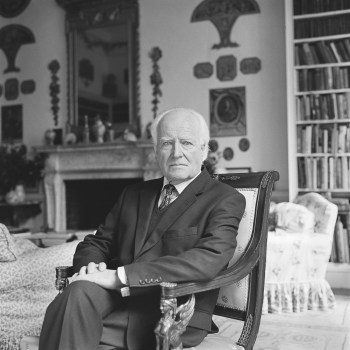 The Desmond Guinness Scholarship is awarded annually by the Irish Georgian Society to an applicant or applicants engaged in research on the visual arts of Ireland including the work of Irish architects, artists, and craftsmen at home and abroad, 1600–1900. Preference will be given to work based on original documentary research. The Scholarship is intended primarily for applicants who are not yet established at an advanced professional level in research or publication of the visual arts. From 2015, the Scholarship has been supported by members of the Society’s London Chapter. The Scholarship does not have to be awarded in any one year, and the decision of the assessors, appointed by the Irish Georgian Society, is final. The total value of the scholarship fund available for distribution is in the region of €1,000.
Application forms must be submitted online by 2.00pm, Monday 29 October 2018. Please note the following:
• Applications must be made online through this this form.
• No additional information or any other accompanying material will be accepted.
• All questions must be answered and incomplete applications will not be considered.
• The Scholarship will not cover tuition fees.
• A confidential reference supporting the application must be sent separately by post by the closing date to the following address: Desmond Guinness Scholarship, Irish Georgian Society, City Assembly House, 58 South William Street, Dublin 2.
• Completed applications must be submitted online, late applications will not be accepted.
Call for Papers | Social Technologies and Global Knowledge Economies
From Lichtenberg-Kolleg, the Göttingen Institute for Advanced Study:
Social Technologies and Global Knowledge Economies, 1750–1850
Lichtenberg-Kolleg, Göttingen, 4–6 April 2019
Proposals due by 15 November 2018
The remarkable density of connections that characterized knowledge production between 1750 and 1850 has long figured in definitions of the ‘rise of modernity’. The commerce of ideas through correspondence networks and print as well as manuscript circulation in salons, learned societies, and other institutions has been celebrated as foundational to modernity’s more conspicuous highlights, from the Scientific Revolution and the Enlightenment to the political articulation of universal human rights. Indeed, the circulation of ‘useful knowledge’—or, in today’s phraseology, the ‘knowledge economy’—remains integral to the modern concept of progress, formulated and adopted during the brief period between 1750 and 1850.
This interdisciplinary workshop, organized by Lichtenberg-Kolleg, the Göttingen Institute for Advanced Study, will focus on interrogating these narratives of modernity in the context of the emergence of an array of ‘social technologies’ that enhanced networks of knowledge production and circulation at the turn of the nineteenth century. From communication, transmission, and circulation, to innovations that enabled, impinged upon, or otherwise shaped social relations, we welcome papers on all aspects of socio-technological change and their relation to the development of global economies of knowledge production and circulation from 1750 to 1850.
Topics of interest include (but are not restricted to) the role of media (including paper, ink), technologies (including manuscript, print, electric impulses), and practices (including translation and taxonomy) in knowledge production; the role of collaboration and infrastructure in the circulation of knowledge; the changing roles of institutions (including schools, hospitals, prisons, universities, libraries, collections and gardens) in the wider knowledge economy; social environments and their relation to bodily technologies; and the development of revolutionary technology and radical media in this period.
We invite proposals for 20-minute presentations in English. To apply please email a title and abstract (no more than 300 words) along with a one-page CV in either MS Word or PDF format to the conference organizers (lichtenbergkolleg@zvw.uni-goettingen.de). Please include ‘Social Technologies’ in the subject line. Applications are due 15 November 2018. Applicants will be notified by 15 December 2018. Accommodation and travel will be provided to all confirmed participants. Please contact the conference organizer with any questions.
New Book | Local Antiquities, Local Identities
From Manchester UP:
Kathleen Christian and Bianca de Divitiis, eds., Local Antiquities, Local Identities: Art, Literature, and Antiquarianism in Europe, c. 1400–1700 (Manchester: Manchester University Press, 2018), 352 pages, ISBN: 978-1526117045, £80.
 This collection investigates the wide array of local antiquarian practices that developed across Europe in the early modern era. Breaking new ground, it explores local concepts of antiquity in a period that has been defined as a uniform ‘Renaissance’. Contributors take a novel approach to the revival of the antique in different parts of Italy, as well as examining other, less widely studied antiquarian traditions in France, the Netherlands, Spain, Portugal, Britain and Poland. They consider how real or fictive ruins, inscriptions and literary works were used to demonstrate a particular idea of local origins, to rewrite history or to vaunt civic pride. In doing so, they tackle such varied subjects as municipal antiquities collections in Southern Italy and France, the antiquarian response to the pagan, Christian and Islamic past on the Iberian Peninsula, and Netherlandish interest in megalithic ruins thought to be traces of a prehistoric race of Giants.
Kathleen Christian is Senior Lecturer in Art History at The Open University. Bianca de Divitiis is Associate Professor in the History of Modern Art at the University of Naples Federico II.
C O N T E N T S
Kathleen Christian and Bianca de Divitiis, Introduction
1 Richard Schofield, A Local Renaissance: Florentine Quattrocento Palaces and all’antica Styles
2 Francesco Benelli, The Arch of Trajan in Ancona and Civic Identity in the Italian Quattrocento from Ciriaco d’Ancona to the Death of Matthias Corvinus
3 Kathleen Christian, Roma Caput Mundi: Rome’s Local Antiquities as Symbol and Source
4 Bianca de Divitiis, A Local Sense of the Past: Spolia, Re-Use, and all’antica Building in Southern Italy, 1400–1600
5 Oren Margolis, The Gaulish Past of Milan and the French Invasion of Italy
6 William Stenhouse, Reusing and Redisplaying Antiquities in Early Modern France
7 Fernando Marías, Local Antiquities in Spain: From Tarragona to Córdoba
8 Katrina Olds, Local Antiquaries and the Expansive Sense of the Past: A Case Study from Counter-Reformation Spain
9 João Figueiredo, Luís de Camões’s The Lusiads and the Paradoxes of Expansion
10 Edward Wouk, Semini and His Progeny: The Construction of Antwerp’s Antique Past
11 Krista De Jonge, Resurrecting Belgica Romana: Peter Ernst von Mansfeld’s Garden of Antiquities in Clausen, Luxemburg, 1563–90
12 Konrad Ottenheym, On Romans, Batavians, and Giants: The Quest for the True Origin of Architecture in the Dutch Republic
13 Barbara Arciszewska, The Role of Ancient Remains in the Sarmatian Culture of Early Modern Poland
14 Jenna Schultz, Inventing England: English Identity and the Scottish ‘Other’, 1586–1625
Index
Call for Articles | Printing Things, 1400–1900
From the Abstract Submission Form:
Printing Things: Blocks, Plates, and Stones, 1400–1900
Edited by Giles Bergel and Elizabeth Savage
Abstracts due by 1 November 2018 (extended from 15 October); completed chapters due by 15 May 2019
In all fields based on historical printed material, research conventionally focuses on the text, images, and other information that was printed. The objects used to produce that information (including cut woodblocks, engraved metal plates, and cast metal sorts) have been neglected. Many hundreds of thousands of these historical printing surfaces survive today. The vast majority are inaccessible to researchers because they are uncatalogued and often considered ‘uncatalogue-able’. However, as individual objects and as an untapped category of cultural heritage, these artefacts of printing offer a great deal of information that the finished prints, books, fabrics, and other printed materials do not.
As relics of historical crafts and industry, these objects fall outside the modern disciplines. This edited volume will respond to the need for a multidisciplinary introduction to what image-based fields calls ‘print matrices’ and text-based fields call ‘printing surfaces’. Following from the conference Blocks Plates Stones (London, 2017), the first facilitated discussion of the use of such objects in research, Printing Things will represent the state of research in this new and developing field. It will bring together object-based research, collection-level surveys, historical printing practices, ethical considerations of their storage and use (or non-use) today, methods for multiplying the originals (e.g. dabs, stereos, electros), and methodological studies. By doing so, it will offer frameworks for describing, conserving, curating, presenting and understanding these objects using new and existing paradigms. It aims to facilitate their introduction into historical research across the disciplines.
Contributions are sought from art historians, book historians, cultural historians, musicologists, science and medicine historians, typographers, and researchers in other fields based on historical printed material; material scientists and conservators; historically informed printers and printmakers; curators, cataloguers, librarians, and printing museum managers who care for these objects; and digital humanities specialists who are creating a new generation of tools for culling information from these objects. The book will focus on handpress work.
In addition to object- and collection-based case studies, theoretical perspectives might include:
• What can print matrices/printing surfaces teach us that printed materials cannot, and vice versa?
• How should they be regarded: as artists’ tools, intermediary states of works of art, or works of art in themselves?
• Is there a value in considering woodblocks, metal plates, and litho stones together as a single category?
• What lies behind the sudden and recent increase in interest in these objects, and how can these objects inform those emerging research trends?
• How are they to be conserved, curated, presented, and understood?
• Does the recent turn to object-centered cultural criticism (‘thing theory’) provide useful paradigms for their study?
• What are the ethical and critical issues around bringing them back into use as printing surfaces?
• What is their place within the systems of digital remediation and knowledge within which art and book history is increasingly practiced?
Abstracts must be submitted by 15 October 2018. Chapters of 4,000–5,000 words (*including notes and captions*) with up to 10 illustrations will be due 15 May 2019 for publication in mid-2020. The book will be peer-reviewed and published in full colour. Contributors will be responsible for sourcing images and copyright for their contributions, but they will qualify for fee waivers from many heritage collections because the publisher is a charitable academic press. Please send queries to Gemma Cornetti at printingcolourproject@gmail.com.
Editors
Giles Bergel (Oxford), Elizabeth Savage (Institute of English Studies)
Advisory Board
Sven Dupré (Utrecht), Caroline Duroselle-Melish (Folger), Maria Goldoni (‘Xilografie modenesi’), Paul Nash (Printing Historical Society), Marco Mozzo (Polo museale della Toscana)
New Book | Painter of Pedigree: Thomas Weaver of Shrewsbury
Published by Unicorn and distributed in the US and Canada by The University of Chicago Press:
Lawrence Trevelyan Weaver, Painter of Pedigree: Thomas Weaver of Shrewsbury, Animal Artist of the Agricultural Revolution (London: Unicorn Publishing Group, 2018), 300 pages, ISBN: 978-1910787670, $45.
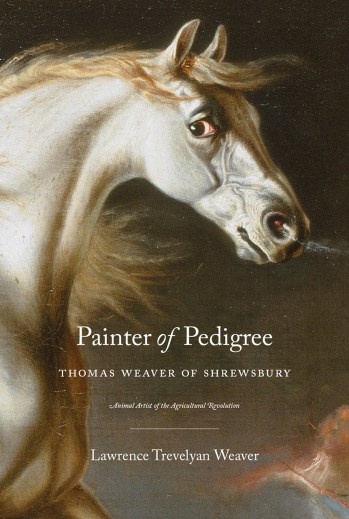 Thomas Weaver of Shrewsbury (1775–1844) is known for his wonderful paintings of animals—prize bulls, pedigreed sheep, and thoroughbred stallions—set against the backdrop of the ever-changing English landscape as the Industrial Revolution gathered steam. Traveling from country house to country house, Weaver with his journeys mapped the networks of kinship, patronage, and aspiration that undergirded the social life of the landed families and gentry of Georgian England.
Drawing on a previously unexamined collection of Weaver’s papers and pictures, including personal and professional correspondence, diaries, contemporary newspaper cuttings, verse, and portraits of his family, Painter of Pedigree brings to life the work of an animal artist in the age of agricultural improvement, revealing the art, artistry, and artifice that went into portraying and promoting these new breeds.










 Enfilade
leave a comment