Exhibition | Art of Native America: The Diker Collection
Press release for the exhibition:
Art of Native America: The Charles and Valerie Diker Collection
The Met Fifth Avenue, New York, 4 October 2018 — 6 October 2019
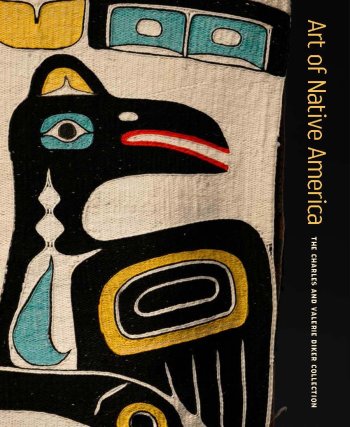 Opening October 4 at The Metropolitan Museum of Art, Art of Native America: The Charles and Valerie Diker Collection will feature 116 artworks from more than 50 cultures across North America. Ranging in date from the 2nd to the early 20th century, the diverse objects are promised gifts (first announced in spring 2017), donations, and loans to The Met from the pioneering collectors Charles and Valerie Diker. The collection has particular strengths in sculpture from British Columbia and Alaska, California baskets, pottery from southwestern pueblos, Plains drawings and regalia, and rare accessories from the eastern Woodlands.
Max Hollein, the Museum’s Director, commented: “The presentation in the American Wing of these exceptional works by Indigenous artists marks a critical moment in which conventional narratives of history are being expanded to acknowledge and celebrate the contributions of cultures that have long been marginalized. The extraordinary gift of the Diker Collection has forever transformed The Met’s ability to more fully display the development of American art, enabling an important shift in thinking.”
The exhibition is made possible by The Peter Jay Sharp Foundation, the Diane W. and James E. Burke Fund, the Enterprise Holdings Endowment, and the Walton Family Foundation.
A ceremonial opening of the exhibition involving contemporary Native American artists will be accompanied by a robust series of public programs.

Shoulder bag, ca. 1780; Anishinaabe, probably Ojibwa; possibly made in Minnesota, Wisconsin, or Ontario; native-tanned leather, porcupine quills, dye, metal cones, deer hair, vegetal fiber, and wool yarn (New York: The Metropolitan Museum of Art, Promised Gift of Charles and Valerie Diker, L.2018.35.70).
Art of Native America will be the first exhibition of Indigenous American art to be presented in the American Wing since it was established in 1924. Originally focused on Colonial and early Federal decorative arts and architecture, the Wing’s collecting areas have continued to evolve.
Sylvia Yount, the Lawrence A. Fleischman Curator in Charge of the American Wing, said: “We are committed to exploring thoughtfully and sensitively the entangled histories of contact and colonization from both Native and Euro-American perspectives. The Met takes seriously its curatorial responsibility to share with our broad audiences—in a variety of displays and contexts—the cultural endurance and creative continuity of Indigenous American artists.”
Art of Native America will highlight production from seven distinct regions: Woodlands, Plains, Plateau, California and Great Basin, Southwest, Northwest Coast, and Arctic. Featured works cover all of the major artistic forms by both identified and unrecorded Native Americans: paintings, drawings, sculpture, textiles, quill and bead embroidery, basketry, and ceramics. Highlights include a ca. 1800 shoulder bag made from finely tanned and dyed deerskin hide embellished with porcupine quills by an Anishinaabe woman, possibly from Ontario, Canada; a striking ca. 1895–1900 ceramic jar depicting the Butterfly Maiden spirit being (Palhik Mana) by renowned Hopi-Tewa potter Nampeyo from Hano Village, Arizona; a monumental 1907 woven basket by Washoe artist Louisa Keyser from Carson City, Nevada; a masterfully carved 1820–40 Tsimshian headdress frontlet with abalone shell inlays from British Columbia; and an elaborate ca. 1900 dance mask by a Yup’ik artist from Hooper Bay, Alaska.
A core group of works from the Diker Collection will remain on view in the American Wing’s Erving and Joyce Wolf Gallery, while light-sensitive works will be rotated annually. Displays of Native and non-Native art—historical and contemporary—will also be organized in response to the Diker Collection.
The Met is collaborating with a range of advisors on the exhibition, including: Kathleen Ash-Milby (Diné/Navajo), Associate Curator, Smithsonian National Museum of the American Indian, New York; Bruce Bernstein, Executive Director, Ralph T. Coe Center for the Arts, Santa Fe, New Mexico; Ned Blackhawk (Western Shoshone), Professor of History and American Studies, Yale University, New Haven, Connecticut; Steven C. Brown, independent scholar, Olympic Peninsula, Washington; Elizabeth Hutchinson, Associate Professor, Art History, Barnard College and Columbia University, New York; and Brian Vallo (Acoma), Director, Indian Arts Research Center, School for Advanced Research, Santa Fe, New Mexico.
Gaylord Torrence, with contributions by Ned Blackhawk and Sylvia Yount, Art of Native America: The Charles and Valerie Diker Collection (New York: The Metropolitan Museum of Art, 2018), 232 pages, ISBN: 978-1588396624, $50.
Exhibition | Artistic Encounters with Indigenous America
From The Met:
Artistic Encounters with Indigenous America
The Met Fifth Avenue, New York, 3 December 2018 — 13 May 2019
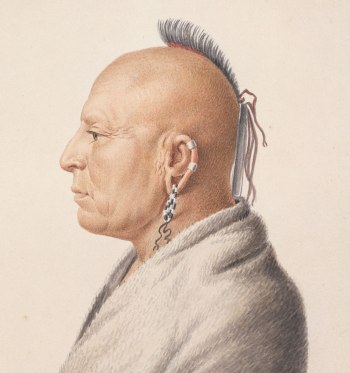
Charles Balthazar Julien Févret de Saint-Mémin, Osage Warrior (detail), 1805–07, watercolor and graphite on off-white wove paper, 18 × 16 cm (New York: The Metropolitan Museum of Art, 54.82).
This exhibition will explore how European and American artists represented Indigenous North Americans in drawings, prints, watercolors, photographs, and popular ephemera from the seventeenth to the early twentieth century. Through forty-five examples from The Met collection, the display will trace the evolution of this complex imagery over time, highlighting the ways in which it contributed to the creation and dissemination of myths and misconceptions about Native peoples, often justifying their dispossession, cultural destruction, and genocide. From formulaic depictions of so-called savage warriors and Indian princesses to romanticized representations of a ‘vanishing race’, these works reveal the pervasive influence of Indigenous America on the Euro-American imagination.
Artistic Encounters with Indigenous America complements the exhibition Art of Native America: The Charles and Valerie Diker Collection, on view at The Met Fifth Avenue from 4 October 2018 through 6 October 2019.
Research Fellowships at the Warburg Institute, 2019–20
From H-ArtHist:
Research Fellowships at the Warburg Institute, 2019–20
Warburg Institute, London
Applications due by 10 December 2018
The Warburg Institute is offering four long-term Fellowships for the 2019/20 academic year for either nine or twelve month periods and ten short-term Fellowships available for two, three or four month periods. These awards enable scholars to undertake a period of research in intellectual, cultural or art history at the Warburg Institute. Applicants must already have a PhD in hand at the time of applying in order to be eligible.
The Warburg Institute is one of the world’s leading centers for studying the interaction of ideas, images and society. It is dedicated to the survival and transmission of culture across time and space, with special emphasis on the afterlife of antiquity. Fellows are given a space to work and access to the Institutes open-stack Library, Photographic Collection and Archive as well as being paid a stipend to assist with the cost of living in London whilst they undertake their research. Further information and the links to apply can be found on our website. The deadline to apply for both the long and the short-term Fellowships is Midnight, Monday, 10 December 2018.
Exhibition | Magnificent Venice!
Now on view at the Grand Palais (and also worth noting that the Royal Collection exhibition on Canaletto opens in Dublin in December) . . .
Magnificent Venice! Europe and the Arts in the 18th Century
Grand Palais, Paris, 26 September 2018 — 21 January 2019
Fondazione Musei Civici di Venezia, Palazzo Ducale, Venice, 23 February — 9 June 2019
Curated by Catherine Loisel
 Venice fascinated Europe in the 18th century. Its site, on islands transformed into a monumental city, its political regime, its artistic and musical traditions, and its carnival made it attractive and unique. At the time, the Republic of Venice, with its rich history, was among the key powers in Europe. But throughout the century, the city also suffered a series of crises, both economic and social, which led to its decline and precipitated its fall in 1797 at the hands of Bonaparte’s armies. Despite this difficult context, the city’s arts scene still displayed an exuberant vitality. Painters, sculptors, decorators, and designers were among the most illustrious on the Italian stage. Composers, playwrights, instrumentalists and singers were famous throughout Europe. It is this last golden age that the exhibition aims to recount, with an emphasis on the influence of Venetian artists in England, France, Germany, and Spain. It also evokes the power of the myth reflected in their works inspired by the joyful and decadent Serenissima. In addition to fine art, the exhibition also seeks to recreate the atmosphere of these last flames of a civilisation. To this end, the scenography has been entrusted to Macha Makeïeff, a set designer renowned for her lively inventiveness.
Catherine Loisel, Éblouissante Venise! Les arts et l’Europe au XVIIIe siècle (Paris: Les éditions Rmn-Grand Palais, 2018), 256 pages, ISBN: 978-2711870714, €45.
The exhibition booklet, in English, is available as a PDF file here»
New Book | The Gardens of Villa Rufina Falconieri
Published by Gangemi and available from Artbooks.com:
Marina Cogotti, Villa Rufina Falconieri a Frascati: Il Giardino (Rome: Gangemi, 2018), 224 page, ISBN: 978-8849236415, 40€ / $69.
 Da sempre oggetto di ammirazione e di studio, lo straordinario sistema di residenze nobiliari note come Ville Tuscolane non sono state mai indagate dalla particolare prospettiva dei loro giardini. Eppure, proprio nell’armonia compositiva tra volumetrie edificate e contesto ambientale, frutto di una sapiente rimodellazione del paesaggio naturale, risiede il fascino più evidente di questi complessi, ammirati ed imitati fin dall’epoca della loro costruzione. Il volume ripercorre la lunga vicenda della Villa Rufina Falconieri, prima ad essere edificata nell’ambito della ricostruzione di Frascati promossa da Paolo III, seguendone le fasi costruttive e il lungo periodo di appartenenza alla famiglia Falconieri, fino agli anni più recenti. La narrazione si dipana con lo sguardo rivolto al giardino, creazione quanto mai fragile e dinamica, la prima a subire gli esiti delle fortune e delle difficoltà legate ai proprietari avvicendatisi nel tempo, mettendone in risalto anche la funzione di tenuta agricola sempre presente, e con pari dignità, rispetto al ruolo di villa di delizia. Il volume si avvale di un ampio corredo iconografico, arricchito dal rilievo e dalla campagna fotografica originale che completano il ritratto di questo giardino tuscolano; sfogliando le pagine si potrà cogliere l’eco del fascino che, ancora oggi, alcuni angoli del giardino come il misterioso laghetto dei cipressi hanno esercitato su schiere di disegnatori e artisti. Un interesse che, contribuendo a mantenere alta la notorietà di questa villa, continua a rappresentare il primo presidio per la tutela e la conservazione di questa meraviglia.
Marina Cogotti, architetto MiBAC, vanta una consolidata esperienza in materia di tutela, conservazione e valorizzazione dei beni culturali, svolta come funzionario di Soprintendenza e negli ultimi anni come direttore di museo. Responsabile per un lungo periodo delle Ville Tuscolane, dal 2008 al 2016 ha diretto Villa d’Este a Tivoli, ambiti nei quali ha promosso un’intensa attività di studio e valorizzazione; attualmente è direttore del Museo archeologico nazionale e Santuario della Fortuna Primigenia di Palestrina. La sua attività di ricerca si è concentrata negli ultimi anni sui temi della cultura rinascimentale, dei giardini e ville storiche e sul paesaggio, con approfondimenti sui Castelli Romani e sul territorio tiburtino. Ha curato, sola o in collaborazione, monografie, mostre, convegni; è autore di numerosi saggi e contributi scientifici.
• Il giardino rinascimentale — Il sito e le preesistenze, Familiari dei Farnese, La Rufina e il giardino
• Il giardino della maturita, Il primo Seicento — Di mano in mano, Il giardino Sforza, L’agricoltura
• Il primo giardino Falconieri — I Falconieri, La continuita 1628–1879, Le innovazioni seicentesche e la ‘questione borrominana’, Fiori, che passione?, La stanza giardino della primavera, La villa rustica, Tra otia e utilitas, Il portale dei Villani
• Il giardino di Alessandro Falconieri tra arcadia e preromanticismo — Il rinnovamento settecentesco e I suoi protagonisti, Il giardino del cardinale, Il sistema di percorsi, passeiggate, stradoni, cancelli, Il giardino del bosco, Il giardino piano, Il pomario
• L’ultima stagione — Gli ultimi Falconieri, Il giardino ‘rustico’ ottocentesco, Da residenza nobiliare a istituto pubblico, Quel che resta del giardino
• Il parco odierno
• Appendice documentaria
Conference | Discovering Dalmatia IV
From H-ArtHist, with lots more information available from the conference programme:
Discovering Dalmatia IV
Institute of Art History – The Cvito Fisković Centre, Split, Croatia, 22–24 November 2018
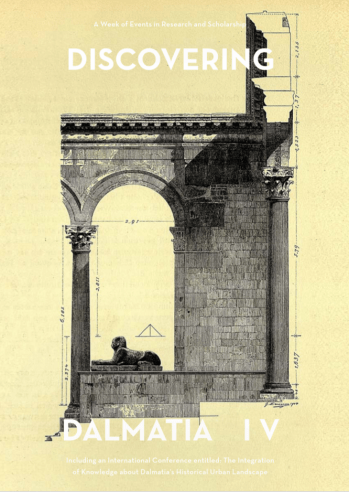 The Discovering Dalmatia conference, to be held from 22 to 24 November 2018 at the Institute of Art History – The Cvito Fiskovic Centre in Split, is the fourth installment related to our interdisciplinary project Dalmatia: A Destination of the European Grand Tour in the 18th and the 19th Century. This year, alongside the traditional papers dedicated to the integration of knowledge about Dalmatia’s historical urban landscape, based on the travel writing of artists and scientists who visited it over the course of their travels, we would like to open the conference to another group of themes.
We have been inspired by the Institute’s new project, The Vocabulary of Classical Architecture, which is supported by the Croatian Science Foundation and conducted in collaboration with the Institute of Croatian Language and Linguistics, to dedicate a part of the conference to researching variations in terminology relating to historical architectural forms in Dalmatia. In addition, this year’s programme includes the presentation of two extensive garden-related projects focused on two incredibly important Croatian sites. One is dedicated to the gardens of the Benedictine Monastery and Maximilian’s summer residence on the island of Lokrum, across from Dubrovnik. These gardens form part of the city of Dubrovnik, which is itself on UNESCO’s list of World Heritage Sites. The second study, meanwhile, gave rise to the extraordinary restoration project of the classicist garden of the Garagnin-Fanfogna family, on the mainland side of Trogir, right beside the historical walls of this Romanesque-Gothic town, which is also on UNESCO’s World Heritage List.
Scientific Committee
Josko Belamaric (Institute of Art History – Cvito Fisković Centre Split)
Katrina O’Loughlin (ARC Centre of Excellence for the History of Emotions UWA)
Ana Sverko (Institute of Art History – Cvito Fisković Centre Split)
Colin Thom (The Bartlett School of Architecture, London)
Elke Katharina Wittich (Fresenius University of Applied Sciences, AMD Hamburg)
T H U R S D A Y , 2 2 N O V E M B E R 2 0 1 8
9.30 Registration and introduction
10.00 Morning Session
Moderators: Josko Belamaric and Sinisa Runjaic
• Antonia Tomic, The Adoption and Transformation of the Meaning of Ancient Architectural Terminology during the Expansion of Christianity
• Antonia Vodanovic, The Pentagram in the Context of the Traditional Architecture of the Makarska Coast
• Jasenka Gudelj and Petar Strunje, The Eastern Adriatic Coast and the Architectural Vocabulary of the Renaissance
• Croatian Glossary of Classical Architecture (KLAS)
12.00 Internal KLAS workshop / Visit to the Ethnographic Museum
14.30 Break
17.00 Afternoon Session
• Mara Maric, Gardens of the island Lokrum during the Habsburgs
• Ivan Vigjen, An Overview of the Current Research on the Benedictine Monastery and Maximilian’s Residences on Lokrum, 1986–2018
• Igor Belamaric and Ana Sverko, The Restoration of the Garagnin-Fanfogna Park in Trogir
F R I D A Y , 2 3 N O V E M B E R 2 0 1 8
10.00 Morning Session
Moderators: Danko Zelic and Sanja Zaja Vrbica
• Sarah Rengel, Writing the ‘Inner Lives’ of the East: Encounters between Women in the Work of Female Travel Writers
• Elke Katharina Wittich, Stones and Costumes: Subjects of Interest in Alberto Fortis‘s Viaggio in Dalmazia
• Colin Thom, ‘This Knotty Business’: The Making of Robert Adam’s Spalatro (1764) Revealed in the Adam Brothers’ Grand Tour Letters
11.45 Break
14.00 Afternoon Session
Moderators: Ana Sverko and Colin Thom
• Sanja Zaja Vrbica, Highlands and Islands of the Adriatic: Dubrovnik in Andrew Archibald Paton’s 1849 Text
• Josip Belamaric, Jean Baptiste Van Moer (1819–1884), Images of the Peristyle of Diocletian’s Palace
• Hrvoje Grzina, 19th-Century Dalmatia Inverted in Camera: Photographic Glass Plate Negatives by Franz Thiard de Laforest
16.00 Tour of Diocletian’s Palace
S A T U R D A Y , 2 4 N O V E M B E R 2 0 1 8
10.00 Visit to the Museum of Fine Arts
12.00 Closing Reception
New Book | Matteo Bottigliero: La produzione scultorea
Published by Nuova Cultura and available from Artbooks.com:
Manuela D’Angelo, Matteo Bottigliero: La produzione scultorea tra fonti e documenti (1680–1757) (Roma: Nuova Cultura, 2018), 446 pages, ISBN: 978-8833650906, $75.
 Il volume ripercorre le tappe della carriera artistica di Matteo Bottigliero, protagonista della scultura napoletana del Settecento, contribuendo a precisare gli sviluppi delle relazioni maturate con i maggiori artisti della scena partenopea. La ricostruzione del catalogo delle opere è stata condotta attraverso una rigorosa indagine documentaria, una revisione delle fonti e degli studi sui protagonisti del panorama scultoreo napoletano del ’700, da Lorenzo Vaccaro a Francesco Solimena, da Ferdinando Sanfelice a Domenico Antonio Vaccaro. L’itinerario dell’artista è riemerso pertanto all’attenzione degli studi, sia in relazione al complesso intreccio dei rapporti tra centro e periferia, che all’ambiente romano.
Manuela D’Angelo, dottore di ricerca in Metodi e Metodologie della Ricerca Archeologica, Storico-Artistica e dei Sistemi Territoriali (Università degli Studi di Salerno), ha al suo attivo saggi sulla scultura napoletana del Settecento, rivolti ad analizzare, su base documentaria, le strette relazioni tra le botteghe dei maggiori artisti attivi in ambito partenopeo. Ha collaborato al volume Il collezionismo del cardinale Tommaso Ruffo tra Ferrara e Roma (2013) e al catalogo della mostra Ritorno al Cilento (2017). Ha acquisito esperienze presso il distretto ad Alta Tecnologia dei Beni Culturali – DATABENC in merito al progetto Cultural Heritage Information System (CHIS) e di catalogazione all’interno del Consorzio Glossa di Napoli.
New Book | Music and Power in the Baroque Era
From Brepols:
Rudolf Rasch, ed., Music and Power in the Baroque Era (Turnhout: Brepols, 2018), 463 pages, ISBN: 978-2503580715, $150.
 Music always functions in a specific environment and, viewed from the other side, environments use music to confirm and strengthen their identities. Institutions of power have in all times employed music to present themselves to the outside world, alongside other means such as architecture, fine arts, design and fashion. The present volume brings together a number of studies that all deal, in one way or another, with the question of how power was implemented in music in what is called the Baroque Era, roughly the seventeenth century and the first half of the eighteenth. The essays can be grouped under four main headings: court opera, ceremonial music, ‘musicians’, and miscellaneous studies. Several essays discuss court opera, one of the most conspicuous musical forms with which a monarch could display his power. Music could also accompany festivities and ceremonies of all sorts, of very different kinds of institutions, courtly, civil, or ecclesiastical. Not only sovereign rulers could employ music to confirm their power, also lower-ranking powers such as nobility often invested in music in order to gain prestige. Various studies highlight this aspect of ‘music and power’. Finally, there are studies that deal with more general questions, such as the representation of power in Baroque opera, dedications of musical works to royals and other patrons, and the social status of musicians as they are positioned between patrons and public.
Rudolf Rasch taught theory and the history of music at the Department of Musicology of Utrecht University for many years. Among his interests are tuning and temperament, the musical history of the Netherlands, the history of music printing and publishing, and the works of composers such as Corelli, Vivaldi, Geminiani and Boccherini. He is the general editor of the Complete Edition of the Works of Francesco Geminiani (Bologna: Ut Orpheus Edizioni).
C O N T E N TS
R. Strohm, Emblems and Problems of Rulership in Early Modern Opera
A. De Feo, I libretti encomiastici di Giovanni Andrea Moniglia: Dalle corti di Firenze e Vienna ai teatri veneziani
M. Klaper, ‘La piu bella festa, che in teatro serrato, si sia veduta in Firenze’: Francesco Cavalli compone per la corte medicea
O. Jesurum, I soggiorni romani di Francesco Galli Bibiena
R. Erkens, Accounting for Opera: Financing Theatre Seasons on Roman Stages in the 1720s
D. Blichmann, The Stuart-Sobieska Opera Patronage in Rome: Political Propaganda in the Teatro Alibert, 1720–1823
A. Giust, Dalla corte al teatro: l’opera italiana in Russia al tempo di Elisabetta Petrovna (1741–1762) con uno sguardo al regno di Caterina II
A. Robinson, Music and Politics in the Entry of Maria de’ Medici into Avignon, 19 November 1600
S. Ciofli, Music and Splendour in Roman Graduation Ceremonies
R. Rawson, Suffering and Supplication as Emblems of Power in Music Relating to the 1683 Ottoman Siege of Vienna
C. Palliccia, Le cantage natalizie per il Palazzo Apostolico fra tradizione musicale e politiche pontificie: Uno sguardo ai topoi della pace
A. Fiore, Musica, potere e devozione: Le celebrazioni del Corpus Domini a Napoli fra XVII e XVIII secolo
A. Palidda, Redivia sub optimo principe hilaritas publica: Music, Consensus, and Celebration in Habsburg Milan
N. Matsumoto, Pio Enea degli Obizzi, 1592–1674: Power and Authorship
J. Frankova, Wenzel Anton von Kaunitz-Rietberg and His Grand Tour: Inspiration for His Future Musical Patronage?
B. Gleason, Mounted Cavalry and Court Kettledrummers and Trumpeters, 1600–1750
B. Saglietti, Il potere della parola: Le prime autobiografie di musicisti germanofoni nella Grundlage einer Ehren-Pforte di Johann Mattheson (1740)
V. Anzani, In the Service of Elector Palatine Johann Wilhelm, 1690–1716: Castrati as Secret Agents and a Controversial Case of Diplomatic Immunity
G. Viverit, Giuseppe Tartini e l’aristocrazia: La formazione dei violinisti per le corti europee e per i mecenati privati
R. Rasch, Composers, Patrons and Dedications: From Arcangelo Corelli to Pietro Antonio Locatelli
Abstracts
Conference | The Roman Art World in the 18th Century
From the conference flyer:
The Roman Art World in the 18th Century and the Birth of the Art Academy in Britain
British School at Rome and the Accademia di San Luca, Rome, 10–11 December 2018
Organized by Adriano Aymonino, Carolina Brook, Gian Paolo Consoli, and Thomas Leo-True
 This two-day conference focuses on the role of the Roman pedagogical model in the formation of British art and institutions in the long 18th century.
Even as Paris progressively dominated the modern art world during the 18th century, Rome retained its status as the ‘academy’ of Europe, attracting a vibrant international community of artists and architects. Their exposure to the Antique and the Renaissance masters was supported by a complex pedagogical system. The network of the Accademia di San Luca, the Académie de France à Rome, the Capitoline Accademia del Nudo, the Concorsi Clementini, and numerous studios and offices, provided a complete theoretical and educational model for a British art world still striving to create its own modern system for the arts. Reverberations from the Roman academy were felt back in Britain through a series of initiatives culminating in the foundation of the Royal Academy of Arts in London in 1768, which officially sanctioned and affirmed the Roman model.
This conference addresses the process of intellectual migration, adaptation and reinterpretation of academic, theoretical and pedagogical principles from Rome to 18th-century Britain. It responds to the rise of intellectual history, building on prevalent trends in the genealogy of knowledge and the history of disciplines, as well as the exchange of ideas translated across cultural borders. The conference concludes a series of events celebrating the 250th anniversary of the 1768 foundation of London’s Royal Academy of Arts.
It is also part of a series of conferences and exhibitions focusing on the role of the Accademia di San Luca in the spread of the academic ideal in Europe and beyond, inaugurated in 2016 with an exhibition and conference on the relationship between Rome and the French academies, held at the Accademia di San Luca and at the Académie de France à Rome.
For additional information, please write to adriano.aymonino@buckingham.ac.uk or events@bsrome.it.
M O N D A Y , 1 0 D E C E M B E R 2 0 1 8
British School at Rome, Before the Royal Academy of Arts
9:45 Registration
10:00 Welcome: Stephen Milner (Director, BSR), Adriano Aymonino, Carolina Brook
10:35 Eleonora Pistis (Columbia University, New York), Visible and invisible Rome: British architectural education in the early eighteenth century and the Oxford Circle
11:10 Coffee break
11:45 Barbara Tetti (Sapienza Università di Roma), Roman influence on the development of the British academies: James Gibbs’ contribution
12:20 Ilaria Renna (Sapienza Università di Roma), La collezione di disegni dei Clerk of Penicuik e la School of St Luke di Edinburgo: Modelli classicisti romani in Scozia
13:00 Lunch break
14:30 Jason M. Kelly (Indiana University), The Dilettanti, art pedagogy, and Roman models for an art academy in London
15:05 Clare Hornsby (Independent Scholar, London), The role of the Society of Antiquaries as an ‘academy of classical taste’ in mid eighteenth-century London
15:45 Tea break
16:15 Alessandro Spila (Sapienza Università di Roma), L’Accademia delle Romane Antichità di Benedetto XIV e la Society of Antiquaries. Antiquaria istituzionale e dibattito architettonico fra Roma e Londra alla metà del XVIII secolo
16:50 Helen McCormak (University of Glasgow), Northern Italian painting and naturalism: Robert Strange, William Hunter, and the Royal Academy of Arts
17:25 Keynote by Robin Simon (University College London), Before the Royal Academy of Arts: The long search for an academy of arts in Britain
T U E S D A Y , 1 1 D E C E M B E R 2 0 1 8
Accademia di San Luca, The Royal Academy of Arts and Beyond
9:30 Registration
9:45 Welcome by Francesco Moschini (Segretario Generale, Accademia Nazionale di San Luca)
10:00 Katherine McHale (University of St Andrews), ‘The Truest Model of Grace’: Giovanni Battista Cipriani in London academies
10:35 Flaminia Conti (Sapienza Università di Roma), Giovanni Battista Cipriani e Agostino Carlini: Classicismo e tradizione accademica italiana presso la Royal Academy of Arts
11:10 Coffee break
11:45 Donato Esposito (Independent Scholar, London), Building a canon: Roman Baroque art, Sir Joshua Reynolds, and the Royal Academy of Arts
12:20 Elena Carrelli (Biblioteca Nazionale Vittorio Emanuele III, Naples), British painters in Italy and the Royal Academy of Arts: Landscape painting between academic practice and scientific empiricism
13:00 Lunch break
14:30 Martin Postle (Paul Mellon Centre for Studies in British Art, London), Assembling the Antique: The role of the classical cast in the pedagogy of the Royal Academy of Arts, 1769 to 1780
15:05 Susanna Pasquali (Sapienza Università di Roma), Crosscurrents: Exchanges between British and Italian architects, 1757–1796
15:45 Final discussion
16:15 Tea break
16:50 Tour of the exhibition Roma-Londra: Scambi, modelli e temi tra l’Accademia di San Luca e la cultura artistica britannica tra XVIII e XIX secolo at the Accademia Nazionale di San Luca
18:00 Concert, ContempoArtEnsemble in quartetto plays Sir Peter Maxwell Davies, Naxos Quartet No. 7, Metafore sul Borromini for String Quartet
New Book | Burlington House
Available from Distributed Art Publishers (DAP) . . .
Nicholas Savage, Burlington House: The Architectural History of the Home of the Royal Academy of Arts (London: Royal Academy of Arts, 2018), 368 pages, ISBN: 978-1910350805, £60 / $75.
 On Charles II’s restoration to the throne in 1660, four of his supporters were provided with plots of land in a leafy suburb of London, on which to build their extravagant town palaces. The only one to survive—built for the poet and courtier Sir John Denham (1615–1669) and now situated in the heart of Piccadilly—became the home of the Royal Academy of Arts, its exhibitions and its Schools.
This significant study charts the history of the estate through its many owners, including the 3rd Earl of Burlington (1694–1753), who gave the house not only its name but also its influential character and distinctive architecture, which remains an unparalleled example of the Palladian style in England. Nicholas Savage’s thorough research studies 350 years of social and architectural history, as well as revealing the next phase in the life of the estate, with the joining up of Burlington House and James Pennethorne’s nineteenth-century neo-classical building that was constructed in its garden. This link opens up Burlington House as never before in a breath-taking redevelopment led by Sir David Chipperfield to celebrate the institution’s 250th anniversary.
The architectural historian Nicholas Savage is former Head of Collections at the Royal Academy of Arts and co-author of Genius and Ambition: The Royal Academy of Arts, London, 1768–1918 (RA Publications, 2015).
C O N T E N T S
Preface
1 Sir John Denham
2 The Earls of Burlington and Cork
3 The Cavendish Family
4 Her Majesty’s Office of Works
5 Royal Academy of Arts
Notes
Selected Bibliography and Further Reading
Photographic Acknowledgments
Index










 Enfilade
leave a comment