Write with Aphra: A Summer Writing Community
From ABO: Journal on Twitter:
Write with Aphra: A Summer Writing Community
22 June — August 2020
New research has made clear that accommodations for the covid-19 pandemic have had a negative impact on women scholars and their research productivity. With the added imperative to participate in protests demanding justice for black lives, for many the emotional and intellectual energy to write and research has been understandably low. Despite this reality, many universities have not extended tenure clocks or graduate student funding and contingent scholars continue to receive no additional support. For many of us, publishing is a necessity for career advancement.
As a feminist journal, we want to create a space to allow scholars who are struggling to find the support they need to publish so their careers are not further damaged by the many, many challenges of 2020. In a recent statement, the journal recommitted to its mission of publishing work that “interrogates and reveals the causes, histories, and narratives of the harmful intersections of patriarchy, sexism, racism, slavery, colonialism, and gender discrimination.” As a material way of engaging with this mission, we are committing editorial time to help foster scholarship in progress and a structure to improve its chances of timely publication.
Toward that end, this summer we invite you to a writing community called Write with Aphra that is focused on starting, progressing, or finishing a scholarly article. For eight weeks, we will send weekly emails with tips and accountability measures and offer the guidance and feedback of our editorial board with weekly drop-in ‘office hours’. These will be themed around certain kinds of drafts (scholarly article, pedagogy, digital humanities, etc.) and sessions for discussing different experiences (contingency, early career scholar, etc.).
Participants are asked to commit to the following minimum goals:
• Commit to writing about 500 words a week from June 22 to August 14 with the overall goal of 4,000 words
• Share your progress using the hashtag #writewithaphra on Twitter (if you use Twitter) or via our email list with weekly check-ins
• Attend, if able, a Zoom meeting on Tuesday, June 23 at 2.00pm EST where we will answer your questions and set goals together; there will be a midway meeting and a wrap-up meeting as well
• Attend, if able, at least one office hours session with an editor in the area you are working with and seek feedback on your work in progress; for a current list of section editors, see here.
All participants will be invited to submit to the journal, but you are not required to do so. ABO: Interactive Journal for Women in the Arts, 1640–1830 (ISSN 2157-7129) is an online open-access journal that serves as a forum for interactive scholarly discussion on all aspects of women in arts between 1640 and 1830, especially literature, visual arts, music, performance art, film criticism, and production arts. The journal features peer-reviewed articles encompassing subjects on a global range, with a global readership, and is intended for scholars and students. The journal comprises five departments: Scholarship; Pedagogy; Digital Humanities; Reviews; Notes and Discussions. Our editorial policies cultivate responsive, supportive academic work, highlighted by an open review process.
To join, sign up here»
Venice Virtual Summer Camp on Digital and Public Humanities
From ArtHist.net:
Venice Virtual Summer Camp on Digital and Public Humanities
Online, 6–10 July 2020
It was with great disappointment that we had to cancel the first Venice Summer School in Digital and Public Humanities due to the coronavirus emergency. All the more, we are now happy to announce the first Venice Virtual Summer Camp on Digital and Public Humanities to take place 6–10 July 2020. It is a condensed version of the original training programme, transformed and adapted to the online modality and the circumstances of the Covid-19 pandemic. As a positive side effect, a large number of seminars and presentations can now be offered without registration and free of charge as open events. Other training sessions are restricted to a number of participants and places have been reserved for the successful applicants of the originally planned Summer School in Venice.
The virtual summer camp is organised by the Venice Centre for Digital and Public Humanities 1 and includes four different thematic strands:
1 Digital Textual Scholarship
2 Digital and Public History
3 Digital and Public Art History
4 Digital Archaeology and its Public
Classes will be delivered by the colleagues from the centre and other expert scholars from internationally renowned institutions. We are most grateful to everyone being actively involved in the realisation of an outstanding programme, and especially to our keynote speakers Elena Pierazzo (University of Tours) and Fabio Vitali (University of Bologna). For more information, see the Virtual Summer Camp website, or contact vedph@unive.it.
Dr. Barbara Tramelli
Digital Art Historian
Venice Centre for Digital and Public Humanities
Ca’ Foscari University, Venice
Call for Papers | Hidden Gems
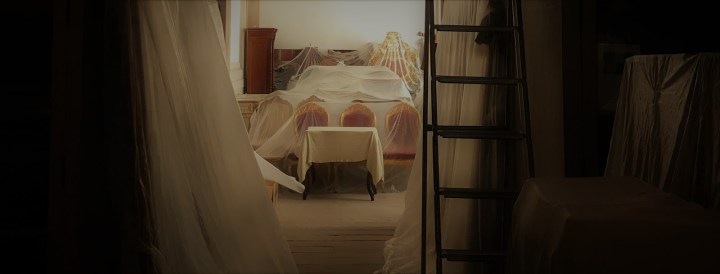
Storeroom, National Palace of Ajuda, Lisbon
◊ ◊ ◊ ◊ ◊
From ArtHist.net:
Hidden Gems: ICDAD Virtual Conference
ICOM International Committee for Museums and Collections of Decorative Arts and Design, 15–16 October 2020
Proposals due by 1 July 2020
The 2020 Annual Conference and General Assembly of ICOM International Committee for Museums and Collections of Decorative Arts and Design was meant to take place in Lisbon, Portugal, in October of 2020. Due to the COVID-19 pandemic, the ICDAD board has elected to postpone the previously selected theme of ‘Revivals’ to 2021, when we hope to meet in Lisbon in person. All proposals already submitted for the ‘Revivals’ meeting will be eligible for the 2021 meeting, and the CFP will re-open for new proposals at a future date. In October of 2020, ICDAD will instead host an online meeting centered around the theme of ‘Hidden Gems’.
Every public decorative arts and design collection has hidden corners and unplumbed depths, and many private collections are difficult for outsiders to access during the best of times, much less during a pandemic. As institutions and individuals face the possibility that we might not be able to visit each other’s museums and discuss with colleagues in person for some time, ICDAD is thrilled to host a two-day virtual conference and general assembly exploring these hidden holdings in decorative arts and design collections around the world.
Does your collection have objects that you wish scholars and visitors knew more about? What is the subject on which you have always wanted to present an exhibition or essay, or a small yet significant story that has not yet been highlighted at your institution? If you work with a private collection, what in your holdings would you most like to see made accessible to the wider design community? We welcome presentations that address any of these questions, as well as issues related to:
• Challenging collections that require special treatment, both physically and intellectually
• Stories of ‘hidden’ or underrepresented collectors, or unexpected ways that a collection may have come together
• Works by designers and makers who were previously unknown or under-explored
• Collection access and display, physical and digital, their challenges and best practice examples
Please send an abstract of 250–300 words including your name, job position, institution, short CV, photo (headshot), ICOM number and ICDAD membership confirmation (1), to Shoshana Resnikoff at editor@icom-icdad.org by 1 July 2020. Notification of acceptance: 31 July 2020.
The conference will be held digitally 15–16 October 2020. Presentations should not exceed 20 minutes in length and should be accompanied by a PowerPoint slide show. The official language of the conference is English. The annual general assembly will take place online during these dates as well. Please contact Shoshana Resnikoff at editor@icom-icdad.org with any questions, and we look forward to seeing you (online!) in October.
(1) Please note: ICDAD welcomes abstracts from museum professionals worldwide, members and non-members alike. However, all participants must be members of ICDAD and ICOM at the moment of the conference. If accepted to present at the meeting, please get in contact with your national ICOM committee for membership registration. See icom.museum/en/get-involved/become-a-member/.
Exhibition | Royal Blue: William and Mary’s Finest Delftware
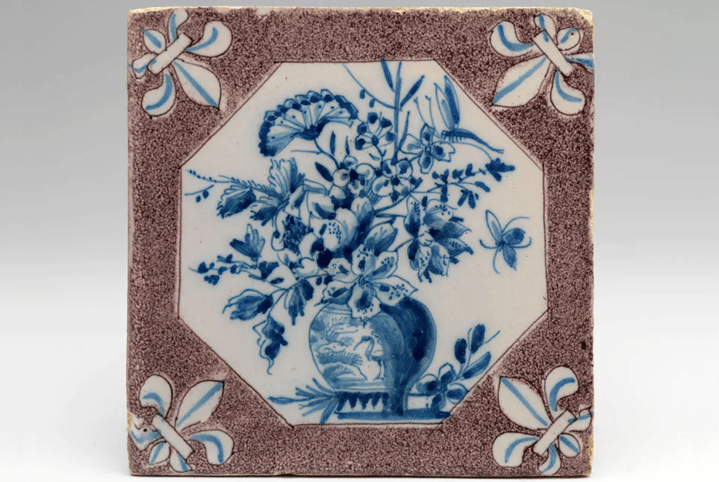
Tile from Princess Mary’s kitchen apartment in Palace Het Loo, ca. 1685
(Paleis Het Loo)
◊ ◊ ◊ ◊ ◊
Now on view at The Hague (with details on the related online lecture below). . .
Royal Blue: William and Mary’s Finest Delftware / Koninklijk Blauw: Het mooiste Delfts aardewerk van Willem en Mary
Kunstmuseum den Haag, 1 June — 22 November 2020
Curated by Suzanne Lambooy
Delft Blue, the iconic Dutch earthenware, is known all over the world. It remains popular to this day, and although we think we know its history, we continue to discover new things about it. Many of the greatest masterpieces of Delftware are in collections abroad, and so are seldom, if ever, seen in the Netherlands. That is all about to change this spring, however, as Kunstmuseum Den Haag brings many of them together for the first time in an exhibition that will include top items from Hampton Court Palace and the V&A in London. The public will be able to discover some of the finest Delftware ever commissioned: the Royal Blue made for William and Mary. To celebrate the 400th anniversary of Delftware, and as an ode to the friendship between Britain and the Netherlands, this spring Kunstmuseum Den Haag will present a story of Orange in blue and white, a tale of fragile diplomacy and breathtaking grandeur. Royal Blue will show how a 17th-century English queen continues to colour the Netherlands’ identity today.
British-Dutch Ties
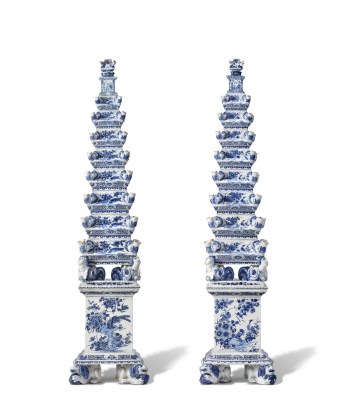
Pyramid-shaped Flower Vases, ca. 1690, Delft (Kunstmuseum den Haag).
From tall flower pyramids to garden vases and preserve dishes: in the late seventeenth century the potteries of Delft made the most beautiful tin-glazed earthenware in Europe. The heyday of Delftware coincided with the reign of William III (1650–1702) and Mary II Stuart (1662–1695). They collected both Chinese porcelain and the attractive, refined ceramic ware from Delft. Indeed, they were leading champions of the earthenware made in Delft. Mary, in particular, was a true ambassador for Delftware, and she commissioned special pieces from De Grieksche A pottery for her own collection. The exhibition will focus on the period 1689–1702, when stadtholder William III and Mary II Stuart were also king and queen of England, Scotland, and Ireland. Royal Blue will introduce visitors to the rich cultural heritage that grew out of the ties between the Netherlands and Britain in the seventeenth century.
Popular Collector’s Item
Chinese porcelain was occasionally seen in Europe from the fifteenth century onwards, but it was rare and costly. The United East India Company’s trade with Asia in the seventeenth century increased imports to the Netherlands, and ‘China’ became popular with collectors. Mary’s grandmother, Amalia van Solms, had a lot of porcelain on display in her residences. Mary, too, was an avid collector, and there were porcelain objects in every one of her eight palaces in the Dutch Republic. But she also collected Delftware. She admired the imitations of Chinese blue-and-white porcelain made by the potteries in Delft, which had succeeded in producing fine imitations of the shapes, colours, and decorations of porcelain. Fragments of the earliest blue-and-white ceramics collected by Mary have survived at Het Loo Palace.
Het Loo Palace
The exhibition has come about thanks to a unique collaboration with Het Loo Palace, which William and Mary had built in Apeldoorn in 1685–86 for use on hunting trips. The decorative arts, including ceramics, played an important role in the interior design of the palace. No complete Delftware objects have survived there, but the many fragments dug up in the gardens of Het Loo, and the similar items purchased on this basis, give a unique glimpse of the kind of Delftware that once graced the halls and chambers of the palace. These archaeological finds are quite extraordinary as they are the only surviving examples of Delftware owned by William and Mary anywhere in the world, and the earliest examples of royal Delftware in the Netherlands. Het Loo Palace is currently undergoing renovations and alterations, so its unique collection of Delftware is temporarily in The Hague. The baroque gardens of Het Loo will be open again from 31 March 2020, and the Delftware garden vases based on the seventeenth-century ones owned by the royal couple will be displayed there in their original setting from 1 June.
English Grandeur
Mary probably had a role in the creation and development of some exceptional pieces of Delftware. Decorations featuring crowns, the Orange-Nassau family coat of arms, and the monograms of William and Mary lend royal allure to the Delftware produced after they were crowned King and Queen of England, Scotland and Ireland. The influence of court-appointed designer Daniel Marot (1660/61–1752) can clearly be seen in this ‘Royal Blue’. Many other European monarchs followed Mary’s example in ordering personalised earthenware items from Delft.
Several of Mary’s flower pyramids from England are now kept at Hampton Court Palace. Mary had a pavilion in the garden there, known as the Water Gallery, which was decorated with Delftware. Besides highlights from Hampton Court Palace, the exhibition will also reunite the Delftware wall tiles from the Water Gallery which are currently in the collections of five different museums. Loans from Het Loo Palace, the Rijksmuseum, Museum Prinsenhof Delft, and many international museums will bring William and Mary’s Delftware together again for the first time.
Royal Symbol
Two magnificent pieces from Kunstmuseum Den Haag’s own collection—Delft Blue vases in the shape of William and Mary—will form the centrepiece of the exhibition. They were separated for 40 years in two different private collections until the museum reunited them in 2015. In Royal Blue they symbolise the important role the couple played in popularising Delft Blue. The commissions that De Grieksche A is known to have produced for Mary as queen are part of the Netherlands’ internationally renowned cultural heritage. They are still imitated in contemporary royal commissions, like the new state banquet dinner service Blossom Panache made in 2017, the design sketches and several pieces of which will be included in the exhibition, and also in an installation inspired by the wall coverings made for the Blue Drawing Room at Huis ten Bosch Palace in 2019.
◊ ◊ ◊ ◊ ◊
Suzanne Lambooy, Royal Blue: William and Mary’s Finest Delftware
French Porcelain Society Online Lecture, Saturday, 20 June 2020, 19.00 (BST)
The French Porcelain Society continues its series of weekly online lectures with Suzanne Lambooy, who will walk us through her exciting new exhibition Royal Blue: William and Mary’s finest Delftware, which opened on 1 June 2020 at the Kunstmuseum, in the Hague (formerly known as the Gemeentemuseum) and runs until 22 November 2020. It was one of the first museum exhibitions to open following lockdown! We hope that you can all join us. Members will receive an email invitation with instructions on how to join the online lecture. If you want to join, please contact us for more details on FPSenquiries@gmail.com.
Award Winning Exhibition | Spaces of Wonder, Wonder of Spaces
Recently announced by the Association of College and Research Libraries, with a full list of winners here. Congratulations, Christina Smylitopoulos! More information on the Bachinski / Chu Print Study Collection is available here.
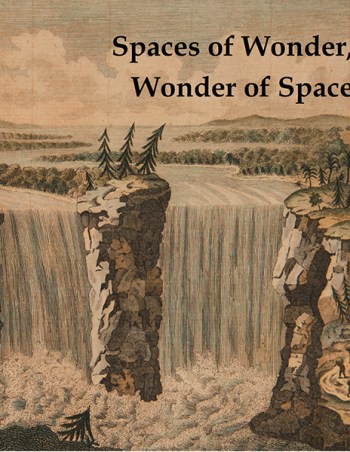
The exhibition catalogue Spaces of Wonder, Wonder of Space: Encountering the Eighteenth Century in Image, Object, and Text, edited by Christina Smylitopoulos, has been selected as a winner of the Katharine Kyes Leab & Daniel J. Leab Exhibition Award (Division Three) by the Association of College and Research Libraries (ACRL), Rare Books and Manuscripts Section (RBMS). This collaborative, multi-venue show was developed in conjunction with the 2018 Société canadienne d’étude du dix-huitième siècle / Canadian Society for Eighteenth-Century Studies conference held in Niagara Falls, Ontario, which was organized jointly by Mount Allison University (MAU; Sackville, New Brunswick) and the University of Guelph (Guelph, Ontario).
The show, which featured works from the Bachinski / Chu Print Study Collection and objects from the McLaughlin Library’s Archival & Special Collections and the Barker Museum of Veterinary History (October 2018 – April 2019) was funded by the Social Science and Humanities Research Council of Canada project Wonder in the Eighteenth Century (Christina Ionescu / Christina Smylitopoulos) and reflects the work of undergraduate students pursuing experiential learning opportunities, graduate students in Art/History, and faculty and curatorial colleagues from Mount Allison University the UofG’s College of Arts.
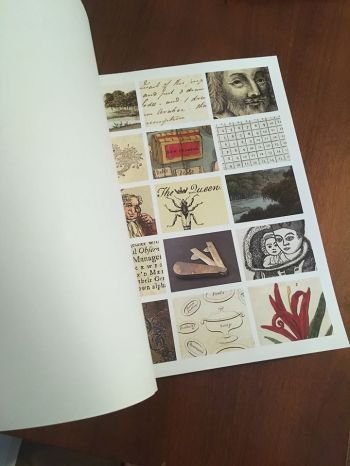 “The content and conceit of this publication is commendable. The central thesis concatenating the objects was compelling and original, offering a discussion not just of objects but also how they are perceived. The committee appreciated the collaborative approach to this topic, which gave space to a wide range of voices and approaches from students to faculty.” –Leab Awards Committee
Online Lecture | Amelia Rauser, Black Bodies and Neoclassical Whiteness
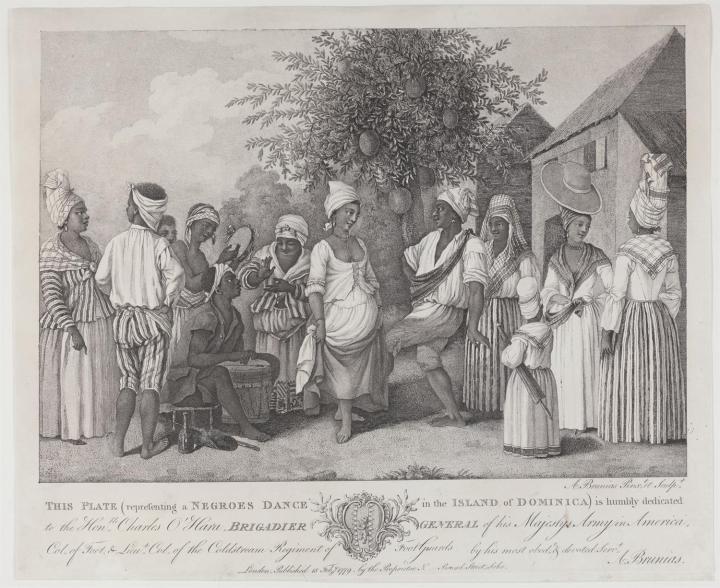
Agostino Brunias, ‘A Negroes Dance in the Island of Dominica’, 1779, engraving on laid paper
(Lewis Walpole Library, 779.02.15.01)
◊ ◊ ◊ ◊ ◊
From the Lewis Walpole Library:
Amelia Rauser, Black Bodies and Neoclassical Whiteness in the Age of Undress
Online lecture organized by the Lewis Walpole Library, 24 June 2020
Registration due by 22 June 2020
Women who wore the high-waisted, white muslin dress fashionable in the 1790s strove to participate in the elevated aesthetics of neoclassicism and to construe themselves as living statues, Pygmalions to their own Galatea. The dress articulated an anti-fashion stance that created space for women’s artistic expression. But neoclassical dress was also enmeshed with emergent concepts of race in the 1790s—not via a simple mapping of whiteness onto classicism, but rather, and perhaps unexpectedly, by invoking the plantation culture of the West Indies. In this talk, Dr. Amelia Rauser, Professor of Art History at Franklin & Marshall College, will argue that several elements of the neoclassical ensemble, including gold earrings, madras-cloth accessories, headwraps, and especially the materiality of muslin itself, specifically articulated the wearer’s racialized whiteness. Yet at the same time, the idea of metamorphosis inherent in the living statue undermined racial binaries and provided space to explore a spectrum of embodiment.
Dr. Rauser will be introduced by Joseph Roach, Sterling Professor Emeritus of Theater, Professor Emeritus of English, Yale University. Panel discussants Dr. Carolyn Day, Associate Professor of History, Furman University, and Dr. Jennifer Germann, Associate Professor and Department Chair, Art History, Ithaca College, will lead a Q&A. Registered attendees will be invited to submit questions and comments through chat.
The lecture is scheduled for Wednesday, 24 June 2020, at 1.00pm EDT; registration is required by Monday, 22 June 2020.
The talk presented in connection with the exhibition Artful Nature: Fashion and Theatricality, 1770–1830, which was co-curated by Laura Engel, Professor of English, Duquesne University, and Amelia Rauser. Other related online content includes:
• Artful Nature exhibition
• Keynote Lecture “Fashionable Friends: Glamour as Argument, 1770–1830,” delivered by Joseph Roach on 6 February 2020
• Exhibition video tour with the curators
Dr. Rauser’s new book, The Age of Undress: Art, Fashion, and the Classical Ideal in the 1790s, is now available from Yale University Press.
Call for Papers | Watteau and His Universe: Networks and Influences
From the Call for Papers (with the French version here) . . .
L’univers de Watteau: Réseaux et influences autour d’Antoine Watteau (1684–1721)
Musée de l’Armée – Hôtel National des Invalides, Paris, 17–18 November 2021
Proposals due by 15 October 2020
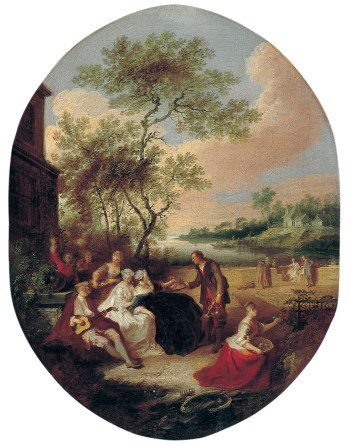
Pierre Antoine Quillard, The Four Seasons: Spring, ca. 1725–29, oil on canvas, 42.5 × 33.5 cm (Madrid: Colección Carmen Thyssen-Bornemisza en depósito en el Museo Nacional Thyssen-Bornemisza, inv. CTB.1930.90).
To commemorate the tricentenary of the death of Antoine Watteau (Valenciennes, 1684–1721, Nogent-sur-Marne), a two-day symposium will be held in Paris, at the Musée de l’Armée – Hôtel National des Invalides, in partnership with the Fine Arts Paris fair, 17–18 November 2021.
Since the major retrospective of 1984, several important publications have been produced. In 1996, Pierre Rosenberg and Louis-Antoine Prat co-signed the catalogue raisonné of Watteau’s drawings.1 In 2010, Christoph Martin Vogtherr conducted an extensive survey (historical and material) of French paintings by Watteau and his entourage in the collections of Prussian palaces,2 continued by an exhibition in the musée Jacquemart-André.3 Since 2014, Martin Eidelberg has been developing the Watteau and His Circle project, alongside the catalogue raisonné of his paintings: A Watteau Abecedario.
Eidelberg’s Watteau and His Circle project is the inspiration for this symposium. His research on artists who gravitated around Watteau, such as Pierre Antoine Quillard4 or Nicolas Lancret,5 together with the work of other scholars on those and other artists in the orbit of Watteau, have called into question the tradition of the solitary work of the artist. In 1932, Robert Rey was the first to consider Watteau’s followers as satellites, situating the artist as a central figure who set in motion an entire system around him.6 This term of satellites implies a notion of attraction and of concentric circles revolving around a central figure and occasionally crossing each other. However, within the framework of this symposium, this conception does not necessarily imply a hierarchy among the elements, but sees them interacting independently of their perceived importance. Masters, contemporaries, followers, friends, merchants, and collectors all took part in Watteau’s universe.
This symposium, Watteau and His Universe: Networks and Influences of Antoine Watteau (1684–1721), aims to study the figures gravitating around the painter who made him a central figure in eighteenth-century century French art.7 Close investigation of fellow painters, printmakers, merchants, collectors, amateurs, and friends is necessary in order to further our knowledge of Watteau. Communications will be expected to draw upon the works of art (drawings, paintings, etchings), so that they are exploited for their intrinsic value; the same goes for archival elements offering direct insight into the careers and interactions between Watteau and his universe.
The symposium will be divided into three parts:
1. Artists around Watteau
2. Watteau’s Social Milieu
3. Watteau on the Art Market: Collectors, Amateurs, Merchants
The symposium is organized in partnership with the international Fine Arts Paris fair (16–23 November 2021) and will be held in the auditorium of the Musée de l’Armée – Hôtel National des Invalides. Twenty-minute papers will be given in French and English (without translation). Since the organization of this symposium is a private initiative without public funding, please include at the end of your proposal your partner institution(s), your city of residence (in November 2021) and your ability or not to finance your trip. Requests for travel subventions will be studied on a case by case basis in order not to disadvantage students and independent researchers.
Publication of the symposium proceedings is planned within 12 months of the event. In order to speed up the publication process of the proceedings, upon notification of their acceptance, symposium participants will be asked to write their papers according to the established editorial standards. These will be forwarded with the approval notices.
Formatting
• Last name, first name, home institution
• Proposed title of the communication
• Summary of the proposal in 500 words (±10%, the count must appear at the end of the document)
• Illustrations (5 maximum, optional) – .word or .pdf document
• Proposals must be sent to watteau2021@gmail.com with the subject ‘NAME + Watteau 2021 Symposium’
For any questions, contact: Axel Moulinier (Doctoral student in History of Art, École du Louvre, University of Burgundy) via watteau2021@gmail.com.
Steering Committee
• Martin Eidelberg (Professor Emeritus, Rutgers University, New Jersey)
• Guillaume Faroult (Curator of 18th-century French paintings and British and American paintings, Paris, Louvre Museum)
• Margaret Morgan Grasselli (Visiting Lecturer, Department of History of Art and Architecture, Harvard University, and Visiting Senior Scholar for Drawings, Harvard Art Museums)
• Axel Moulinier (Doctoral student in History of Art, École du Louvre, Paris; University of Burgundy, Dijon)
• Louis-Antoine Prat (Art historian)
• Pierre Rosenberg, president (Member of the French Academy)
• Christoph Martin Vogtherr (Director General of the Foundation for Prussian Castles and Gardens Berlin-Brandenburg)
Notes
1 Rosenberg P. et L.-A. Prat, Antoine Watteau, 1684–1721: Catalogue raisonné des dessins (Paris and Milan: Gallimard-Electa, Leonardo Arte, 1996), 3 volumes.
2 Vogtherr C.M., Französische Gemälde, I: Watteau, Pater, Lancret, Lajoüe (Berlin: Akademie Verlag, coll.« Bestandskataloge der Kunstsammlungen », 2011).
3 Vogtherr C.M. and M. Tavener Holmes, De Watteau à Fragonard: Les fêtes galantes, exhibition catalogue, Paris, musée Jacquemart-André, 2014 (Paris, Culture Espaces, Fonds Mercator, 2014).
4 Eidelberg M., “P. A. Quillard, An Assistant to Watteau,” The Art Quarterly (1970): 39–70.
5 Eidelberg M., “The Young Lancret and Watteau,” in Watteau and His Circle, http://208.106.158.90/younglancret.htm.
6 Rey R., Quelques Satellites de Watteau: Antoine Pesne et Philippe Mercier, François Octavien, Bonaventure de Bar, François-Jérôme Chantereau, thèse complémentaire pour le doctorat ès lettres (Paris: Librairie de France, 1932).
7 Huyghe R., “L’Univers de Watteau,” (préface) in Adhémar H., Watteau sa vie, son oeuvre (Paris: P. Tisné, 1950).
Selective Bibliography
• Dacier É., A. Vuaflart, and J. Hérold, Jean de Jullienne et les graveurs de Watteau au XVIIIe siècle (Paris: Rousseau, 1922).
• Eidelberg M., “P. A. Quillard, An Assistant to Watteau,” The Art Quarterly (1970): 39–70.
• Eidelberg M., “Autour du nom de Quillard,” Bulletin de la Société de l’Histoire de l’Art Français (1979): 129–140.
• Eidelberg M., “Jean-Jacques Spoëde: Watteau’s ‘Special Friend’,” Gazette des beaux-arts (2000): 179–196.
• Eidelberg M., Watteau et la fête galante, exhibition catalogue, Musée des Beaux Arts de Valenciennes, 2004 (Paris and Valenciennes: Réunion des musées nationaux, Musée des beaux-arts de Valenciennes, 2004).
• Eidelberg M., Rêveries italiennes: Watteau et les paysagistes français au XVIIIe siècle, exhibition catalogue, Musée des Beaux Arts de Valenciennes, 2015-2016 (Gand: Snoeck, 2015).
• Glorieux G., A l’enseigne de Gersaint: Edme-François Gersaint, marchand d’art sur le pont Notre-Dame (1694–1750) (Paris: Champ Vallon, 2002).
• Glorieux G., “Michel-Joseph Ducreux (vers 1665–1715), marchand de masques de théâtre et d’habits de carnaval au temps de Watteau,” Bulletin de la Société de l’Histoire de l’Art Français de l’année (2007): 119–129.
• Moulinier A., “Les Satellites de Watteau,” Cahiers du dessin français (Paris: Galerie de Bayser, 2020).
• Moureau F. and M.M. Grasselli (dir.), Antoine Watteau (1684–1721): Le peintre, son temps et sa légende [colloque international, Paris, October 1984] (Paris and Genève: Champion, Slatkine, 1987).
• Rosenberg P., Watteau et son cercle dans les collections de l’Institut de France, exhibition catalogue, Chantilly, Musée Condé, 1996–1997 (Chantilly, Musée Condé, 1996).
• Sheriff M.D., ed., Antoine Watteau: Perspectives on the Artist and the Culture of His Time (Newark: University of Delaware, 2006).
• Vogtherr C.M., Französische Gemälde, I: Watteau, Pater, Lancret, Lajoüe (Berlin: Akademie Verlag, coll.« Bestandskataloge der Kunstsammlungen », 2011).
• Vogtherr C.M. and M. Tavener Holmes, De Watteau à Fragonard: Les fêtes galantes, exhibition catalogue, Paris, musée Jacquemart-André, 2014 (Paris, Culture Espaces, Fonds Mercator, 2014).
• Vogtherr C.M. and J. Tonkovich, Jean de Jullienne: Collector and Connoisseur (London: Wallace Collection, 2011).
• Wintermute A., Watteau and His World: French Drawing from 1700 to 1750, exhibition catalogue New York, Frick Collection, 1999–2000; Ottawa, National Gallery of Canada, 2000 (London and New York: Merrell Holberton Publishers, American Federation of Arts, 1999).
Call for Papers | Bodily Realities: Engaging the Discourse of Dis/Ability
From ArtHist.net:
Bodily Realities: Engaging the Discourse of Dis/Ability
46th Annual Cleveland Symposium for Graduate Students
Case Western Reserve University and the Cleveland Museum of Art, 30 October 2020
Proposals due by 17 July 2020 (extended from 26 June 2020)
The physical body is often a contested space for artists and art audiences, but one that offers abundant possibilities for exploring and expressing identity. Physical ability or disability is a key component of identity and can have a profound impact on artistic production, subject matter, and reception. Art can play a significant role in shaping the often problematic discourse surrounding this topic. Bodily Realities: Engaging the Discourse of Dis/Ability seeks to generate a dialogue about the relationship between ability and disability in the visual arts and art museums in an effort to understand the role of bodily differences in artistic practice, representation, and viewership. This symposium will address the ways in which the visual arts and artists either confirm or challenge the perceived dichotomy of the normative and non-normative physical body.
The Department of Art History and Art at Case Western Reserve University invites graduate students to submit abstracts for its 2020 Annual Symposium Bodily Realities: Engaging the Discourse of Dis/Ability. The Cleveland Symposium is one of the longest-running annual art history graduate symposia in the United States, organized by students in the joint graduate program with the Cleveland Museum of Art.
Petra Kuppers will provide the keynote address. Dr. Kuppers is a disability culture activist, a community artist, and a Professor of English, Women’s Studies, Theatre and Dance, and Art and Design at the University of Michigan. She also teaches on the low-residency MFA in Interdisciplinary Arts at Goddard College and leads The Olimpias, a performance research collective (www.olimpias.org). Thematically, her work encompasses disability studies, performance studies, critical theory and poetics, medical humanities, and the general fields of arts and expression, arts and health, and arts and community building. Her Disability Culture and Community Performance: Find a Strange and Twisted Shape (2011) explores arts-based research methods, and her most recent academic monograph is Theatre & Disability (2017). Her Studying Disability Arts and Culture: An Introduction (2014) is full of practical exercises for classrooms and studios. Her other academic books include Disability and Contemporary Performance: Bodies on Edge (2003), The Scar of Visibility: Medical Performance and Contemporary Art (2007), Community Performance: An Introduction (2007, second edition 2019), Somatic Engagement (2011), and Disability Arts and Culture: Methods and Approaches (2019).
This year’s symposium welcomes innovative research papers that explore the issues of ability and disability in and around the creation, reception, and circulation of the visual arts. Submissions may explore aspects of this theme as manifested in any medium as well as in any historical period and geographical location. Different methodological perspectives are welcomed.
Potential topics may include, but are not limited to:
• The role of physical disability in the construction of identities
• How the body relates to notions of normativity, abnormality, and hybridity
• Disability as a physical reality, but a social construct
• Stigmatization and stereotypes of the disabled body
• The fragmented, altered, disfigured, or modified body
• The body as a site of trauma, violence, pain, and/or effort
• The body’s relationship to health, illness, and recovery
• Clinical uses of art and artistic practice for disabled and non-disabled bodies
• The intersections of body and mind in the discourse of disability
• The power dynamics of ability and disability
• Accessibility in the art museum and cultural sites
• Interactions with disabled bodies through performance
• The body as subject and/or medium in performance art and body art
• The bias of ableism in art historical discourse
• The in/visibility of disability
• The Disability Arts and Culture Movement
Current and recent graduate students in art history and related disciplines are invited to submit a 350-word abstract and a CV to clevelandsymposium@gmail.com by Friday, 26 June 2020. Selected participants will be notified by the end of July. Paper presentations will be 20 minutes in length and should be accompanied by a PowerPoint presentation. Three papers will be awarded prizes.
Please note: Planning for this year’s symposium is already underway, but given the current situation with the COVID-19 pandemic, we understand that plans may need to be amended. Alternative arrangements are being made to transition to an online platform should an in-person symposium be infeasible.
Please direct all questions to Katie DiDomenico and Mackenzie Clark at clevelandsymposium@gmail.com.
New Book | The English Folly: The Edifice Complex
From Historic England and Liverpool UP:
Gwyn Headley and Wim Meulenkamp, The English Folly: The Edifice Complex (Historic England, 2020), 260 pages, ISBN: 978-1789621976 (hardcover), £60 / ISBN: 978-1789622126 (paperback), £30.
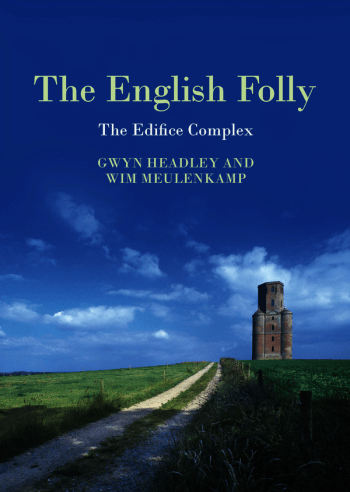 If this were a novel, the tales of astounding wealth, sexual perversion, murder, munificence, rape, insanity, brutality, slavery, religious mania, selfishness, snobbery, charity, suicide, generosity, theft, madness, wickedness, failure, and eccentricity which unfold in these pages would be too concentrated to allow for the willing suspension of disbelief. All these sins and virtues, and more, are displayed by the characters in this book, some exhibiting several of them simultaneously. Folly builders were not as we are. They never built what we now call follies. They built for beauty, utility, improvement; it is only we, struggling after them with our imperfect understanding, who dismiss their prodigious constructions as follies. Follies can be found around the world, but England is their spiritual home. Having written the definitive books on follies in Great Britain, Benelux, and the USA, Headley and Meulenkamp have turned their attention to the folly builders themselves, people so blinded by fashion or driven by some nameless ideology that they expended great fortunes on making their point in brick, stone and flint. Most follies are simply misunderstood buildings, and this book studies the motives, characters, decisions and delusions of their builders. If there was madness in their building, fortunately there was no method in it.
Gwyn Headley is Publisher at Heritage Ebooks, Managing Director at fotoLibra and Co-founder of The Folly Fellowship. Wim Meulenkamp is President of The DonderbergGroup: Foundation for Follies, Garden Ornaments and the Architecture of Amusement.
Online Lecture | Wolf Burchard on The Met’s New British Galleries
From The Furniture History Society’s Instagram account:
Wolf Burchard, The Metropolitan Museum of Art’s New British Galleries
Online Lecture, 14 June 2020
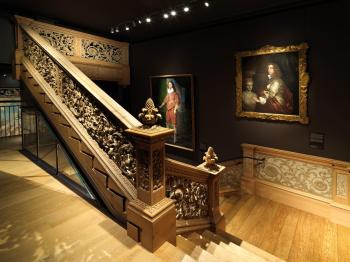
Installation view of the Met’s new British Galleries, featuring the 17th-century Cassiobury Staircase (Photo by Joseph Coscia, February 2020).
Please join us for the free-of-charge inaugural FHS online lecture via Zoom on Sunday, 14 June 2020, at 19.00 British Summer Time (14.00 Eastern Standard Time) with Dr. Wolf Burchard of the Metropolitan Museum of Art, entitled, “The Metropolitan Museum of Art’s New British Galleries.”
The Met’s renovated British Galleries, which opened earlier this year (for the museum’s 150th anniversary) now tell a nuanced story about Britain’s imperial past and its dealings with the rest of the world. Ten galleries, including three historic interiors, devoted to decorative arts and sculpture from the 16th to the 19th century have been completely reimagined. They present British art and design from a fresh perspective, exploring Britain’s creativity and entrepreneurship. The lecture is open to all; for links and passwords, please contact events@furniturehistorysociety.org. Information about joining the FHS is available here.
Wolf Burchard is responsible for British furniture and decorative works of art, with the exception of ceramics and textiles. Prior to joining The Met in 2019, he was furniture research curator at the National Trust of England, Wales, and Northern Ireland (2015–18) and curatorial assistant at the Royal Collection Trust (2009–14), where he co-curated the exhibition The First Georgians: Art & Monarchy, 1714–1760 at The Queen’s Gallery, Buckingham Palace (2014). He studied history of art and architecture at the universities of Tübingen, Vienna, and The Courtauld Institute of Art in London, from which he holds an MA and PhD. He is the author of The Sovereign Artist: Charles Le Brun and the Image of Louis XIV (2016), and sat on the executive committees of the Georgian Group (2014–19) and the Society for Court Studies (2011–17); he is a member of the council and editorial panel of the Furniture History Society.










 Enfilade
leave a comment