New Collection of Essays | The Classical Vase Transformed
From Oxford University Press:
Alexia Petsalis-Diomidis with Edith Hall, eds., The Classical Vase Transformed: Consumption, Reproduction, and Class in Eighteenth- and Nineteenth-Century Britain, special issue of Bulletin of the Institute of Classical Studies 63.1 (June 2020).
The Classical Vase Transformed: Consumption, Reproduction, and Class in Eighteenth- and Nineteenth-Century Britain explores hitherto marginalized working-class and middle-class engagements with ancient Greek vases. Its origins lie in a symposium which took place in May 2016 at King’s College London, Ancient Greek Pots and Class in Britain, 1798–1939. This themed issue of BICS has three principal aims. First, to sharpen our awareness of the range of engagements with classical culture experienced at the lower end of the social spectrum, in the context of a scholarly focus on elites. Second, to help redress the balance within Classical Reception Studies, which is heavily skewed towards receptions of classical literature rather than classical material culture. And third, to increase the prominence of humble ceramics as compared to grand monumental sculpture, which remains the focus of studies on the reception of classical material culture. . . .
While a small but vocal minority of classicists remain unconvinced of the value of Classical Reception Studies, seeing ‘reception’ as an extraneous layer that needs to be ‘peeled off’ in order to access the ancient world ‘directly’, the theoretical basis of Classical Reception Studies continues to be a subject of scholarly debate (4). . . .
The reception of classical sculpture has fared relatively well within the disciplines of Art History, Eighteenth-Century Studies, and even Classical Archaeology. Areas of particular interest are collecting and the Grand Tour, and the nationalist use of sculptural archaeological remains in the nineteenth and twentieth centuries (9). But the reception of Greek vases, including the history of scholarship, collecting, creative responses, and influence on the production of later painting, has only recently started to be explored in depth. This state of affairs gives rise to the third aim of the issue: to put the reception of Greek vases in the spotlight in the context of the dominance of monumental stone sculpture in studies of receptions of classical material culture. . . .
The full introduction (including notes) is available here»
C O N T E N T S
 Acknowledgements
Contributors
List of Figures
• Alexia Petsalis-Diomidis, “Introduction,” pp. 8–14.
The Classical Vase Produced and Consumed in New Ceramic Forms
• Edith Hall, “How Much Did Pottery Workers Know about Classical Art and Civilisation?,” pp. 17–33.
• Alexia Petsalis-Diomidis, “Pottery Workers, ‘the Ladies’, and ‘the Middling Class of People’: Production and Marketing of ‘Etruscan and Grecian Vases’ at Wedgwood c.1760–1820,” pp. 34–53.
• Janett Morgan, “A Greek Tragedy? Why ‘Dillwyn’s Etruscan Ware’ Failed,” pp. 54–71.
• Paul Lewis, “Archaeology in the Home: Neoclassical Ceramics for New Audiences in Mid-Nineteenth-Century Britain,” pp. 72–88.
The Classical Vase Constrained in the Museum Cabinet and Transfigured in the Body
• Caspar Meyer, “Ancient Vases in Modern Vitrines: The Sensory Dynamics and Social Implications of Museum Display,” pp. 91–109.
• Helen Slaney, “Pots in Performance: Emma Hamilton’s Attitudes,” pp. 110–22.
• Abigail Baker, Myths of the Odyssey in the British Museum (and beyond): Jane Ellen Harrison’s Museum Talks and Their Audience,” pp. 123–37.
Response
• Katherine Harloe, “Classics Transformed? Ancient Figured Vases as a Test-Case for the Preoccupations of Classical Reception Studies,” pp. 138–42.
New Book | Classical Caledonia
From Edinburgh UP:
Alan Montgomery, Classical Caledonia: Roman History and Myth in Eighteenth-Century Scotland (Edinburgh: Edinburgh University Press, 2020), 232 pages, ISBN: 978-1474445641, £75 / $100 (also available in ebook and PDF formats).
 Explores early modern interpretations of Roman Scotland
• Examines an important aspect of the development of Scottish identity, a subject being brought to the fore again in recent debates surrounding Scottish independence
• Offers an in-depth study of a largely overlooked aspect of Scottish historiography
• Makes extensive use of archival and manuscript material, much of it previously unpublished
• Takes a broad, multidisciplinary approach
• Examines the influence of the Scottish Enlightenment, James Macpherson’s Ossianic poems, and the rise of Romanticism
This book focuses on early modern attitudes towards Scotland’s ancient past and looks in particular at the ways in which this past was not only misunderstood, but also manipulated in attempts to create a patriotic history for the nation. Adding a new perspective on the formation of Scotland’s national identity, the book documents a century-long, often heated debate regarding the extent of Roman influence north of Hadrian’s Wall. By exploring the lives and writings of antiquarians, poets, and Enlightenment thinkers, it aims to uncover the political, patriotic, and intellectual influences which fuelled this debate. Classical Caledonia casts light on a rarely discussed aspect of Scotland’s historiography, one which played a vital role in establishing early modern notions of ‘Scottishness’ at a time when Scotland was coming to terms with radical and traumatic changes to its position within Britain and the wider world.
Alan Montgomery received his PhD at the Birkbeck, University of London in 2016 and published several papers in key journals, including The Journal of British Identities and The Proceedings of the Society of Antiquaries of Scotland. Montgomery was elected a Fellow of the Society of Antiquaries of Scotland in 2019.
C O N T E N T S
Introduction
1 Imagining a Classical Caledonia: Sir Robert Sibbald’s Vision of Scotland’s Roman Past
2 Walled Out of Humanity: Sir John Clerk and his Circle
3 Resisting the ‘Conquerors of the Universe’: Celebrating the Caledonian Rejection of Rome
4 ‘Beyond the Vallum’: English Interpretations of Scottish History
5 ‘Monuments and Delights of the Arts’: Rediscovering the Material Remains of Rome in Scotland
6 Reconquering the Highlands: Hanoverian Interpretations of Roman Scotland
7 The Age of ‘Agricolamania’: Early Modern Uses and Abuses of Tacitus’ Agricola
8 Forging a Nation: The Spurious Histories of Charles Bertram and James Macpherson
9 After Ossian: Changing Interpretations of Roman Scotland
Conclusion
New Book | The Architecture of Scotland, 1660–1750
From Edinburgh UP:
Louisa Humm, John Lowrey, Aonghus MacKechnie, eds., The Architecture of Scotland, 1660–1750 (Edinburgh: Edinburgh University Press, 2020), 672 pages, ISBN: 978-1474455268, £150 / $195 (also available in ebook and PDF formats).
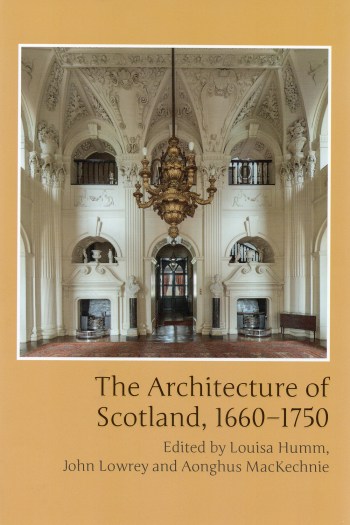 A rich, revisionist overview of Scotland’s early classical architecture
• Steps decisively away from the ‘Scottish castle’ genre of architecture
• Contextualises the work of Scotland’s first well-documented grouping of major architects—including Sir William Bruce, Mr James Smith, James Gibbs, and the Adam dynasty
• Documents the architectural developments of a transformational period in Scottish history
• Beautifully illustrated throughout with 300 colour illustrations
This architectural survey covers one of Scotland’s most important periods of political and architectural change when mainstream European classicism became embedded as the cultural norm. Interposed between the decline of ‘the Scottish castle’ and its revival as Scotch Baronial architecture, the contributors consider both private and public/civic architecture. They showcase the architectural reflections of a Scotland finding its new elites by providing new research, analysing paradigms such as Holyrood and Hamilton Palace, as well as external reference points such as Paris tenements, Roman precedents, and English parallels. Typologically, the book is broad in scope, covering the architecture and design of country estate and also the urban scene in the era before Edinburgh New Town.
Louisa Humm works at Historic Environment Scotland as Senior Casework Officer responsible for listed building consent work in Glasgow and other parts of South-West Scotland. Her interests include early eighteenth century gardens and designed landscapes, railway station architecture, and waterworks (particularly the Loch Katrine Scheme).
John Lowrey is a senior lecturer in architectural history in the School of Architecture and Landscape Architecture at Edinburgh University. He is also Dean of Undergraduate Studies in the College of Humanities and Social Science. His research interests are mainly Scottish and mainly in the long eighteenth century, with a special interest and wide range of publications in the architecture and urban design of the Enlightenment period, the early classical country house of the late seventeenth and early eighteenth century, and the designed landscape of Scotland.
Aonghus MacKechnie is Professor of Architecture at the University of Strathclyde, Glasgow; he also teaches at the Scottish Centre for Conservation Studies at the University of Edinburgh. He has researched and published on Renaissance-early modern architecture, culture, and Romanticism in Scotland, and also on the history and culture of the Highlands, in particular as author of Carragh-chuimhne, Two Islay Monuments and Two Islay People: Hector Maclean and John Francis Campbell (Ileach, 2004). His most recent book is his co-authored Scotch Baronial: Architecture and National Identity (Bloomsbury, 2019). Currently, he is a contributor to the forthcoming The Buildings of Scotland: Lothian (Yale University Press).
C O N T E N T S
Setting the Scene
Introduction — Aonghus MacKechnie
1 Political Economy and the Shaping of Early Modern Scotland — Allan Macinnes
Classicism and the Castle
2 The Paired Columned Entrance of Holyroodhouse as a Solomonic Signifier — Ian Campbell
3 Exiting Europe? The Royal Works in the Age of 1689 Revolution and 1707 Union — Aonghus MacKechnie
4 Sir William Bruce: Classicism and the Castle — John Lowrey
5 A Classic Looks at the Gothic: Sir John Clerk, Ruins, and Romance — Iain Gordon Brown
The Business of Building: Trades, Materials, and Pattern Books
6 Scottish Ironwork, 1660–1730 — Ali Davey and Aonghus MacKechnie
7 The Roof Structure of George Heriot’s Hospital Chapel and Roof Design in Scotland during the Seventeenth and Eighteenth Centuries — Anna Serafini and Cristina González-Longo
8 Thomas Albourn, William Bruce’s Plasterer: An Englishman and the Best Plaisterer That Was Ever Yet in Scotland — William Napier
9 Colen Campbell, James Gibbs and Sir John Vanbrugh: Rethinking the Origins of the British Architectural Plate Book — James Legard
The Country House
10 The Architectural Innovations of Mr James Smith of Whitehill (c. 1645–1731) within the European Context — Cristina González-Longo
11 From England to Scotland in 1701: The Duchess of Buccleuch Returns to Dalkeith Palace — Sally Jeffery
12 Women Patrons and Designers in Early Eighteenth-Century Scotland: Lady Panmure and Lady Nairne — Clarisse Godard Desmarest
13 Architectural Works by Andrew Fletcher of Saltoun — Rory Lamb
14 Mannerism in the Work of John Douglas in Eighteenth-Century Scotland — Dimitris Theodossopoulos
Gardens
15 ‘The Inexpressible Need of Enclosing and Planting’: Country House Policies in Scotland, 1660–1750 — Christopher Dingwall
16 The Terraced Garden in Scotland in the Seventeenth Century — Marilyn Brown
17 Alexander Edward’s European Tour — John Lowrey
18 William Adam and Formal Landscape Design in Scotland, 1720–1745 — Louisa Humm
19 Adam and Antiquity: An Arcadian Retreat at Arniston? — Nick Haynes
Urban Architecture
20 Town Housing and Planning: McGill, Gibbs, and Dreghorn in Early Georgian Glasgow — Anthony Lewis
21 Interpretation of European Classicism: Three Eighteenth-Century University Libraries — Deborah Mays
22 Edinburgh and Venice: Comparing the Evolution in Communal Living in Geographically Challenged Mercantile Communities — Giovanna Guidicini
23 Living Horizontally: The Origin of the Tenement in Paris and Edinburgh — Clarisse Godard Desmarest
24 William Adam’s Public Buildings — David W. Walker
Conclusion
25 Was Scotland a ‘Narrow Place’? — Ranald MacInnes
Abbreviations
End Notes
Index
Exhibition | American Weathervanes
This summer at the American Folk Art Museum (with the catalogue already available from Rizzoli). . .
American Weathervanes: The Art of the Winds
American Folk Art Museum, New York, 23 June 2021 — 2 January 2022
Organized by Robert Shaw and Emelie Gevalt
 American Weathervanes: The Art of the Winds is the first exhibition in more than four decades to highlight the beauty, historical significance, and technical virtuosity of American vanes fashioned between the late seventeenth and early twentieth centuries. The exhibition includes the graceful figure of Fame blowing a trumpet and standing en pointe like a celestial ballerina, attributed to well-known manufactory E.G. Washburne & Co. in New York City; a Dove of Peace designed by George Washington for his home in Mount Vernon; and an eagle possibly made in the foundry of revolutionary patrior Paul Revere. In addition to weathervanes, the exhibition will also include beautifully articulated wood sculptures by Harry Leach that functioned as patterns for weathevane molds for the Cushing & White and L.W. & Sons manufactories in Waltham, MA., watercolors of historic weathervanes painted for the Index of American Design, and rare archival materials that illuminate the development of the weathervane in the United States of America.
Robert Shaw is a critically acclaimed author, curator, and art historian who has written and lectured extensively on many aspects of American folk art. He has curated exhibitions at the Dallas Museum of Natural History, the Fenimore Art Museum, the National Gallery of Art, and the Shelburne Museum, where he served as curator from 1981 to 1994.
Robert Shaw, American Weathervanes: The Art of the Winds (New York: Rizzoli Electa, 2021), 256 pages, ISBN: 978-0847863907, $75.
New Book | Enlightened Animals in Eighteenth-Century Art
From Bloomsbury:
Sarah Cohen, Enlightened Animals in Eighteenth-Century Art: Sensation, Matter, and Knowledge (London: Bloomsbury Visual Arts, 2021), 264 pages, ISBN: 978-1350203587, $170 (also available in ebook and PDF formats).
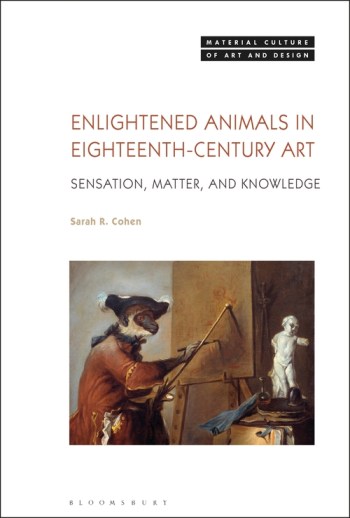 How do our senses help us to understand the world? This question, which preoccupied Enlightenment thinkers, also emerged as a key theme in depictions of animals in eighteenth-century art. This book examines the ways in which painters such as Chardin, as well as sculptors, porcelain modelers, and other decorative designers portrayed animals as sensing subjects who physically confirmed the value of material experience.
The sensual style known today as the Rococo encouraged the proliferation of animals as exemplars of empirical inquiry, ranging from the popular subject of the monkey artist to the alchemical wonders of the life-sized porcelain animals created for the Saxon court. Examining writings on sensory knowledge by La Mettrie, Condillac, Diderot and other philosophers side by side with depictions of the animal in art, Cohen argues that artists promoted the animal as a sensory subject while also validating the material basis of their own professional practice.
Sarah Cohen is Professor of Art History and Women’s Studies at the University at Albany, SUNY, USA. She has published extensively on representations of the body, both human and animal. Her first book Art, Dance and the Body in French Culture the Ancien Régime was published in 2000.
C O N T E N T S
Introduction
1 The Social Animal
2 The Sensitive Animal
3 Monkey Artists
4 The Language of Brutes
5 Animating Porcelain
6 The Soul of Matter
Conclusion
Bibliography
Index
Online Talks | HECAA Emerging Scholars Showcase
HECAA Emerging Scholars Showcase
Online, Saturday, 17 April 2021, 2:00–3:30pm (EST)
Our next HECAA Emerging Scholars Showcase is on Saturday, April 17, 2–3:30pm EST. Please join us via zoom to hear our final seven emerging scholars present their research. Each participant will present for 3–5 minutes, and after the presentations, we will host a question-and-answer session. If you have any questions or concerns, please contact Dani Ezor (dezor@smu.edu).
Best regards,
HECAA Board
◊ ◊ ◊ ◊ ◊
Zoom: https://smu.zoom.us/j/96125021098
• Carla Hermann (Rio de Janeiro State University), Robert Barker’s Panoramas and Virtual Images of Places
• Chih-En Chen (SOAS, University of London), Trompe l’Oeil Porcelain and Feminine Space in High Qing China
• Jed Surio (Tulane University), A Kingdom of Curious Beasts: Charles Le Brun’s Drawings from the Royal Menagerie
• Megan Baker (University of Delaware), Crayon Rebellion: The Politics of Pastel Portraits in Colonial North America
• Tori Champion (University of Washington), Pinceau à la main: The Intertwined Lives and Careers of Madeleine Françoise Basseporte and Marie-Thérèse Reboul Vien
• Kaitlin Grimes (University of Missouri-Columbia), The Material Politics of Ivory in Early Modern Europe
• Aleksander Musiał (Princeton University), Immersion: Classical Reception and Eastern-European Transformations of Hygiene Architecture, 1680–1830
Exhibition | À Table!
This summer at the National Museum of Ceramics at Sèvres, with an online version available here:
À Table! Le repas, tout un art / The Meal, a Whole Art
Sèvres — Manufacture et Musée Nationaux, 18 November 2020 — 16 May 2021 [original dates to be extended]
Organized by Anaïs Boucher and Viviane Mesqui
 The exhibition À Table! Le repas, tout un art explores the historical and cultural aspects of the art of the table and the art of French gastronomy. It reveals how the opulent and elegant banquets of the Ancien Régime became part of French culture by constituting an ideal of happiness and by transforming everyday lunches and dinners into extraordinary social occasions.
With a chronological approach, the exhibition explains the origins of popular French delicacies and how dining etiquette has evolved from antiquity to today. The selection of a variety of plates, forks, and other objects—functional or of pure fantasy—narrates the amazing stories behind familiar food customs. Sèvres porcelain is in the spotlight as it plays an important role in setting exquisite tables. This feast of Sèvres cups, plates, and glacières is our way to celebrate the 280th anniversary of the Sèvres Manufacture.
Anaïs Boucher and Viviane Mesqui, À Table! Le repas, tout un art (Montreuil: Gourcuff Gradenigo, 2020), 240 pages, ISBN: 978-2353403257, €39.
Online Talk | Juliet Carey on Baron Edmond’s Boxes
Next month from Waddesdon Manor, from the programme flyer:
Juliet Carey, Storing and Staging: Baron Edmond’s Boxes
Online, Monday, 10 May 2021, 6pm
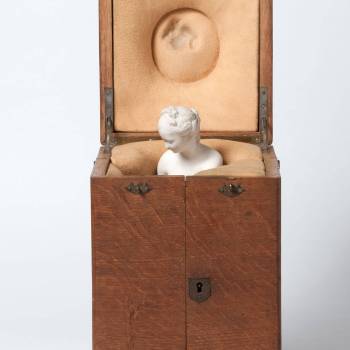 Join Senior Curator Juliet Carey to explore the surprising, beautiful boxes in which some of Waddesdon’s most precious objects live when out of the public eye.
We still use the boxes that Baron Edmond de Rothschild (1845–1934) commissioned for the storage of Sèvres porcelain and small sculptures and antiquities. Their unusually sophisticated fabrication relates to bookbinding, the covers of scientific instruments, etuis for princely treasures, and longstanding Parisian expertise in the protection and transportation of precious things. Far from being neutral or invisible spaces, Edmond’s boxes construct new ways of experiencing their contents—from those that help one to study and categorise vases, Roman glass, and even furniture, to a box that transforms into a stage, creating a private drama of enclosure and revelation around a little marble nymph.
For all their aesthetic and tactile appeal, the protective role of these boxes is underlined by the turbulence of the times that they survived, from revolutions and siege in 19th- century Paris to the Nazi occupation. A recent work by Edmund de Waal responds to this history and provides an intriguing postscript.
Standard registration is £10. Students, please email enquiries@waddesdon.org.uk from your academic email to register for a free place. A zoom link will be emailed to participants 24 hours before the event.
New Book | Culloden: Battle & Aftermath
Friday is the 275th anniversary of the battle of Culloden (fought on 16 April 1746). To mark the anniversary, the National Trust for Scotland will present a series of online events on Saturday, 17 April, entitled Culloden: A Place Worth Protecting. Paul O’Keeffe’s book is the latest to tackle the subject; from Penguin Press:
Paul O’Keeffe, Culloden: Battle & Aftermath (London: Bodley Head, 2021), 432 pages, ISBN: 978-1847924124, £25.
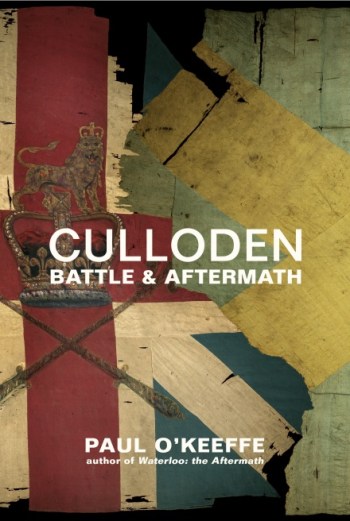 Charles Edward Stuart’s campaign to seize the British throne on behalf of his exiled father ended with one of the quickest defeats in history: on 16 April 1746, at Culloden, his 5,000-strong Jacobite army was decisively overpowered in under forty minutes. Its brutal repercussions, however, endured for months and years, its legacy for centuries.
Paul O’Keeffe follows the Jacobite army, from its initial victories over Hanoverian troops at Prestonpans, Clifton and Falkirk to their calamitous defeat on the field of Culloden. He explores the battle’s aftermath which claimed the lives, not only of helpless wounded summarily executed and fugitives cut down by pursuing dragoons, but also of civilians slaughtered by vengeful government patrols as they ‘pacified’ the Highlands. He chronicles the wild, nationwide celebration greeting news of the government victory, the London stage catering to patriotic fervour with new songs like ‘God Save the King’, popular musical theatre, and operas by Gluck and Handel. Meanwhile, the public was also treated to the grimmer spectacle of Jacobite prisoners, tried for high treason, paying for their participation on block and gibbet throughout the country. Many others—granted ‘the King’s mercy’—suffered the lingering fate of forced labour on fever-ridden plantations in the West Indies and Virginia.
O’Keeffe reveals the unexpected consequences of the rising—mapping the Scottish Highlands to aid military subjugation would eventually lead to the foundation of the Ordnance Survey—and traces the later careers of the battle’s protagonists: the Duke of Cumberland’s transformation from idolised national hero to discredited ‘butcher’ and Charles Edward Stuart’s from ‘Bonny Prince’ to embittered alcoholic invalid.
While in the long term the doomed Stuart cause acquired an aura of romanticism, the Jacobite Rising of 1745–46 remains one of the most bloody and divisive conflicts in British domestic history, which resonates to this day.
Paul O’Keeffe is a freelance lecturer and writer based in Liverpool. He gained his PhD with a scholarly edition of Wyndham Lewis’s Tarr, and won critical acclaim with his 2000 study of Lewis, Some Sort of Genius.
Exhibition | Joshua Johnson: Portraitist of Early American Baltimore

The exhibition opens this Saturday; from the press release:
Joshua Johnson: Portraitist of Early American Baltimore
Washington County Museum of Fine Arts, Hagerstown, Maryland, 17 April 2021 — 23 January 2022
Curated by Daniel Fulco
This exciting exhibition, organized by the Washington County Museum of Fine Arts and curated by Daniel Fulco, Agnita M. Stine Schreiber Curator, is the first monographic look at the work of the enigmatic and compelling African American artist Joshua Johnson (ca. 1763–1824) since 1988. Often considered the first professional Black artist in America, Johnson was a freed slave who achieved a remarkable degree of success as a portraitist in his lifetime by painting affluent patrons in his native Baltimore. Johnson’s subjects consisted of politicians, doctors, clergymen, merchants, and sea captains.
Joshua Johnson: Portraitist of Early American Baltimore contextualizes Johnson both historically and culturally and explores further the key forms of natural symbolism represented in his paintings. Featuring works by Johnson and his contemporaries, key loans come from the Maryland Center for History & Culture, the Baltimore Museum of Art, the Archdiocese of Baltimore, and the Bowdoin College Museum of Art. This exhibition also will include a fully illustrated scholarly interpretive catalogue and a diverse range of related educational programs. Museum Director Sarah J. Hall says, “This exhibition has been in planning for three years, and has ended up being a particularly timely investigation of both art history and Black history. Additionally, it adds to our understanding of regional history in terms of both the practice of portraiture and our understanding of those who made and commissioned portraits. Happily, the exhibition will be on view for a full six months in order to allow as many people as possible to enjoy Johnson’s work and the wide variety of related public programs scheduled.”
An artist whose ancestry was both African and European, Johnson was primarily a self-taught painter. He was especially adept at capturing his sitters’ features and the details of their clothing, which offered subtle insights into their personalities. Johnson’s attention to detail and extensive inclusion of moths, fruits, and flowers in his paintings indicate that he carefully absorbed techniques and motifs from traditional European portraiture to create symbolic meaning. Furthermore, Johnson combined these elements with the latest trends in his genre, responding closely to work of the Peales, Charles Peale Polk, and Mid-Atlantic limners such as Frederick Kemmelmeyer and Caleb Boyle.
Given his background and the era in which he lived, Johnson was impelled to overcome many racial and social hurdles in pursuing his profession and he persevered remarkably in that endeavor. As described in an advertisement in the Baltimore Intelligencer from 1798, Johnson referred to himself in the third person as “A self-taught genius, deriving from nature and industry his knowledge of the Art; and having experienced many insuperable obstacles in the pursuit of his studies, it is highly gratifying to him to make assurances of his ability to execute all commands with an effect, and in a style, which must give satisfaction.”
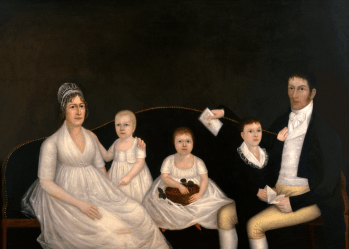
Joshua Johnson, Portrait of the James McCormick Family, 1804–05, oil on canvas, 51 × 69 inches (Collection of Maryland Center for History and Culture, Baltimore, gift of Dr. Thomas C. McCormick, 1920.6.1).
Such issues of race in Early American society still remain relevant and while a compelling and important theme to consider in relation to Johnson’s life and work, the exhibition also examines how his work engages with key developments in Maryland’s artistic heritage from approximately 1760 until 1840. Joshua Johnson: Portraitist of Early American Baltimore also explores issues related to politics, slavery, abolitionism, and society in antebellum Maryland.
As a complement to the Joshua Johnson: Portraitist of Early American Baltimore, the Museum will be installing a companion exhibition. Face to Face: Portraits from the 18th and 19th Centuries (April–October 2021), featuring European and American portraits from the permanent collection. These works expand the context of the Johnson exhibition and allow for a deeper understanding of the artist’s portraiture both before and during his lifetime.
Joshua Johnson: Portraitist of Early American Baltimore is organized by the Washington County Museum of Fine Arts. This exhibition is generously supported by grants from the National Endowment for the Arts, the Art Dealers Association of America Foundation, Heart of the Civil War Heritage Area, Maryland Marketing Partnership, and Community Foundation of Washington County Maryland, Inc. This exhibition also is made possible with the support of an anonymous donor, Mr. and Mrs. James N. Holzapfel, Dr. & Mrs. George E. Manger, Dr. and Mrs. Robert S. Strauch, and Mr. & Mrs. Thomas B. Riford.
Daniel Fulco, ed., with David Taft Terry and Mark B. Letzer, Joshua Johnson: Portraitist of Early American Baltimore (Hagerstown, MD: Washington County Museum of Fine Arts, 2021), 106 pages, ISBN: 978-09144950301 (paperback), $25 / ISBN: 978-09144950408 (ebook), $10.
Daniel Fulco is Agnita M. Stine Schreiber Curator at the Washington County Museum of Fine Arts. David Taft Terry is Associate Professor in the Department of History and Geography and Coordinator, Museum Studies & Historical Preservation Program at Morgan State University. Mark B. Letzer is President & CEO of the Maryland Center for History and Culture.
A variety of engaging complementary on-line programs are scheduled to enhance enjoyment of the exhibition, including discussions, lectures, and lesson-plans for use in classroom or at home. Check wcmfa.org, or the Museum’s social media pages for more information on registration and access.
About the Museum
Located in beautiful City Park, Hagerstown, Maryland, the Washington County Museum of Fine Arts was founded in 1931, the legacy of Hagerstown native Anna Brugh Singer and her husband, Pittsburgh-born artist William Henry Singer, Jr. Featuring a collection of more than 6,000 objects, the Museum has important holdings of American painting, Old Masters, decorative arts, and sculpture. The Museum schedules an ambitious program of exhibitions, lectures, concerts, tours, and talks featuring national and international artists, and annually organizes and hosts the Cumberland Valley Artists and Cumberland Valley Photographers exhibitions, as well as a yearly showcase of the art of K-12 students in Washington County Public Schools. Its free youth art education programs have served four generations of local families. The Washington County Museum of Fine Arts has been free to the public since 1931.
◊ ◊ ◊ ◊ ◊
Note (added 7 January 2022) — The posting was updated with the extended date; the exhibition was originally scheduled to close 24 October 2021.










 Enfilade
leave a comment