New Book | Living as an Author in the Romantic Period
From Palgrave Macmillan:
Matthew Sangster, Living as an Author in the Romantic Period (London: Palgrave Macmillan, 2021), 384 pages, ISBN: 978-3030370466, £90 / $120.
 This book explores how authors profited from their writings in the late eighteenth and early nineteenth centuries, contending that the most tangible benefits were social, rather than financial or aesthetic. Using previously-underutilised archives, Matthew Sangster shows that during the Romantic period authorship operated principally as a relatively restricted social system, rather than a profession or mode of artistic practice. He discusses the careers of a diverse range of writers, including Robert Southey, Thomas Moore, Felicia Hemans, Robert Heron, Eliza Parsons, Robert Bloomfield, Hannah More, Walter Scott, and Lord Byron—establishing the crucial mediating roles played by larger assemblages, including the publishing industry, political coteries, periodical culture, and privileged families, along with regional, national, and global networks.
Matthew Sangster is Lecturer in Eighteenth-Century Literature and Material Culture at the University of Glasgow. He has published widely on Enlightenment libraries, literary institutions, Romantic metropolitanism, media culture, and the affordances of Fantasy.
C O N T E N T S
Preface: The Life of the Author
Introduction: What Was an Author in the Romantic Period?
1 Publishers, Book Production, and Profits
2 Sociable Alignments
3 Succeeding in ‘the Worst Trade’
4 The Working Writer
5 The Oligarchs of Literature: Authority and the Quarterly Reviews
6 Refashioning Authorship’s Purview
Coda: Print Proliferation and the Invention of the Artist
Online Series | 2021 Wallace Seminars on Collections and Collecting
From The Wallace Collection:
2021 Wallace Collection Seminars on the History of Collections and Collecting
Online, The Wallace Collection, London, last Monday of the Month, 17.30
This seminar series was established in 2006 as part of the Wallace Collection’s commitment to the research and study of the history of collections and collecting, especially in the eighteenth and nineteenth centuries in Paris and London. The seminars—normally held on the last Monday of every month during the calendar year, excluding August and December—act as a forum for the presentation and discussion of new research into the history of collecting. Seminars are open to curators, academics, historians, archivists, and all those with an interest in the subject. Papers are generally 45–60 minutes long.
Please note that the seminars will take place on Zoom and will not be held at the Wallace Collection.
Monday, 22 February
Sara Ayres (Fellow at the Centre for Privacy Studies, University of Copenhagen), Descriptions of Collections and Their Display at the Stuart Court in 1669 in a Manuscript Account of Prince George of Denmark’s Grand Tour (1668–70)
Monday, 29 March
Janet M. Brooke (Independent Scholar, Montreal), The Gilded Age in Canada: Reconstructing the Life and Afterlife of the Sir William Van Horne Collection
Monday, 26 April
Ellinoor Bergvelt (Guest Researcher, University of Amsterdam / Research Fellow, Dulwich Picture Gallery), The Dutch King Willem II (1792–1849) as Collector and Source of Some Important Pictures in The Wallace Collection
Monday, 24 May
Krystle Attard Trevisan (PhD Candidate, Institute of English Studies, School of Advanced Study, University of London), The ‘Primo Costo’ inventory of Count Saverio Marchese (1757–1833): Mapping the Print Market in Malta and Its European Connections
Monday, 28 June
Timothy Schroder (Trustee, The Wallace Collection), Inside the Dragon’s Lair: Henry VIII’s Kunstkammer at Whitehall Palace
Monday, 26 July
Ana Mónica da Silva Rolo (Archaeologist, Archaeology Centre UNIARQ, Lisbon University) and Noé Conejo Delgado (Archaeologist, Numismatist, Archaeology Centre UNIARQ, Lisbon University), A Dactyliothec from Pietro Bracci in the Portuguese Royal Family’s Collections: A Different Look at Art Collecting
Monday, 27 September
Andrea Morgan (PhD Candidate, Queen’s University, Kingston, Ontario), Collecting and Displaying Rembrandt’s Pictures in Eighteenth– and Nineteenth–Century England: Charles Jennens of Gopsall Hall and the ‘Rembrandt Room’ at Stowe
Monday, 25 October
Mark Hall (Collections Officer for Culture Perth & Kinross, Perth Museum & Art Gallery), The Perth Literary and Antiquarian Society, 1784–1914: Collecting Scotland, Collecting the World
Monday, 29 November
Rachel Peat (Assistant Curator of Non-European Works of Art, Royal Collection Trust, London), ‘A Most Distinguished Collector and Patron’: Prince Alfred, Duke of Edinburgh and Japanese Art, 1869–1900
New Book | Ground Layers in European Painting, 1550–1750
From ACC Art Books:
Anne Haack Christensen, Angela Jager, and Joyce Townsend, eds., Ground Layers in European Painting, 1550–1750 (London: Archetype Books, 2021), 150 pages, ISBN: 978-1909492790, £45 / $90.
 Most of the papers in this volume were presented at the CATS international technical art history conference in June 2019 titled Mobility Creates Masters: Discovering Artists’ Grounds 1550–1700, which explored the introduction of, and change to, the colored ground layers in European paintings form the Early Modern period. The title of the conference stemmed from the desire to instigate new research projects within the topic of the influence of artists’ mobility on material choices and techniques related to the preparation of paintings. As well as contributions presented at the conference, this volume includes additional papers from recent research exploring the same topic. The volume begins with several studies on the documentation of grounds. The contributions are then arranged according to the country in which the painter was active, from southern Europe moving northwards. The lavishly illustrated contributions in this volume deal with the above questions and shed light on different methods of preparing painting supports, the purpose of preparatory layers, materials used in different countries, and influence of shifts in fashion or availability of materials on ground layers. This fifth CATS Proceedings will be of interest to scholars and students, and museum professionals including curators, conservators, art historians, and conservation scientists.
C O N T E N T S
• Moorea Hall-Aquitania and Lieve d’Hont — Troubleshooting coloured grounds: developing a methodology for studying Netherlandish ground colours
• Joanna Russell, Marta Melchiorre Di Crescenzo, Joseph Padfield, and Marika Spring — Experiments using image processing software (Nip2) to define the colour of preparatory layers in 16th-century Italian paintings
• Silvia A. Centeno, Dorothy Mahon, Federico Carò, and José Luis Lazarte Luna — New light on the use of ash in the ground preparations of baroque paintings from Spain, North and South America
• Mariana Aurora Calderón Mejía, Dolores González Pondal, Damasia Gallegos, Fernando Marte, and Marcos Tascón — European art in Argentina: the ground of a painting attributed to Salvator Rosa
• Cristina Morilla, Narayan Khandekar, Kate Smith, and Anne Schaffer — Coloured grounds and transfer techniques in 17th-century Spanish royal portraiture: the case of Pantoja de la Cruz’s portrait of Philip III at the Harvard Art Museums
• Maite Jover de Celis and Maria Dolores Gayo — Velázquez and his choice of preparatory layers: different place, different colour?
• Joanna Szpor, Katarzyna Górecka, and Marcin Kozarzewski — To reach the original: technique and materials of the late 17th-century Italian painter of large-scale battle scenes, Martino Altomonte
• Michela Fasce — White, red, grey and brown: colour in Genoese grounds from the mid-16th to the 18th century
• Loa Ludvigsen, David Buti, Anna Vila, and Eva de la Fuente Pedersen — Discovering patterns in Giralamo Troppa’s grounds
• Claire Betelu — Ground layers in French paintings from the second half of the 17th century: colour, stratigraphy, and function
• Lidwien Speleers, Margriet van Eikema Hommes, Ineke Joosten, Suzan de Groot, and Annelies van Loon — The effect of ground colour on the appearance of two paintings by Thomas Willeboirts Bosschaert in the Oranjezaal, Huis Ten Bosch
• Jørgen Wadum — Are the changed appearances of Carel Fabritius’ paintings a consequence of mobility?
• Marya Albrecht, Sabrina Meloni, Annelies van Loon, Ralph Haswell, and Onno de Noord — Discovering trends in Jan Steen’s grounds using principal component analysis
• Claire Toussat — The grounds of Caravaggism? Case study of Theodoor van Loon
• Joyce H. Townsend and Rica Jones — Preparatory layers in British paintings from the 16th to the early 18th century
Online Talk | Robert Darnton, Pirating and Publishing
This Wednesday, from the Boston Athenæum:
Book Talk: Pirating and Publishing: The Book Trade in the Age of Enlightenment
Robert Darnton in Conversation with John Buchtel
3 February 2021, 6:00pm (EST)
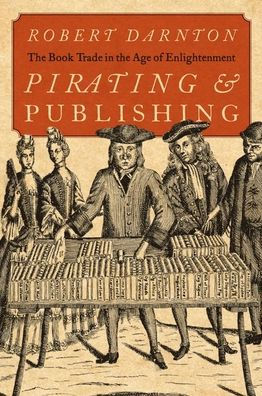 In the late-18th century, a group of publishers in what historian Robert Darnton calls the ‘Fertile Crescent’ countries located along the French border, stretching from Holland to Switzerland pirated the works of prominent (and often banned) French writers and distributed them in France, where laws governing piracy were in flux and any notion of ‘copyright’ very much in its infancy. Piracy was entirely legal and everyone acknowledged tacitly or openly that these pirated editions of works by Rousseau, Voltaire, and Diderot, among other luminaries, supplied a growing readership within France, one whose needs could not be met by the monopolistic and tightly controlled Paris Guild.
Pirating and Publishing: The Book Trade in the Age of Enlightenment focuses on a publisher in Switzerland, one of the largest and whose archives are the most complete. Through the lens of this concern, Darnton offers a sweeping view of the world of writing, publishing, and especially bookselling in pre-Revolutionary France—a vibrantly detailed inside look at a cut-throat industry that was struggling to keep up with the times and, if possible, make a profit off them. Featuring a fascinating cast of characters lofty idealists and down-and-dirty opportunists this new book expands upon on Darnton’s celebrated work on book-publishing in France, most recently found in A Literary Tour de France. Pirating and Publishing reveals how and why piracy brought the Enlightenment to every corner of France, feeding the ideas that would explode into revolution.
Registration is requested. Boston Athenæum Members and VESP holders: free. Visitors: $5.
Robert Darnton is Carl H. Pforzheimer University Professor and University Librarian, Emeritus of Harvard University, and the author of The Great Cat Massacre (1984) and A Literary Tour de France (2018), among others.
John Buchtel is Curator of Rare Books and Head of Special Collections at the Boston Athenaeum.
◊ ◊ ◊ ◊ ◊
Robert Darnton, Pirating and Publishing: The Book Trade in the Age of Enlightenment (Oxford: Oxford University Press, 2021), 400 pages, ISBN: 978-0195144529, $35.
C O N T E N T S
Introduction
Publishing
1 The Rules of the Game and How the Game was Played
2 The Landscape in Paris
3 The Fertile Crescent
Pirating
4 How to Pirate a Book
5 Portraits of Pirates and Their Businesses
6 Underground Geneva
7 A Confederation of Pirates
8 The Struggle to Pirate Rousseau and Voltaire
Inside a Swiss Publishing House
9 Business as Usual
10 Our Man in Paris
11 Relations with Authors
12 Making and Losing Money
Conclusion
New Book | Porcelain: A History from the Heart of Europe
From Princeton UP:
Suzanne Marchand, Porcelain: A History from the Heart of Europe (Princeton: Princeton University Press, 2020), 544 pages, ISBN: 978-0691182339, $35.
 Porcelain was invented in medieval China—but its secret recipe was first reproduced in Europe by an alchemist in the employ of the Saxon king Augustus the Strong. Saxony’s revered Meissen factory could not keep porcelain’s ingredients secret for long, however, and scores of Holy Roman princes quickly founded their own mercantile manufactories, soon to be rivaled by private entrepreneurs, eager to make not art but profits. As porcelain’s uses multiplied and its price plummeted, it lost much of its identity as aristocratic ornament, instead taking on a vast number of banal, yet even more culturally significant, roles. By the nineteenth and twentieth centuries, it became essential to bourgeois dining, and also acquired new functions in insulator tubes, shell casings, and teeth.
Weaving together the experiences of entrepreneurs and artisans, state bureaucrats and female consumers, chemists and peddlers, Porcelain traces the remarkable story of ‘white gold’ from its origins as a princely luxury item to its fate in Germany’s cataclysmic twentieth century. For three hundred years, porcelain firms have come and gone, but the industry itself, at least until very recently, has endured. After Augustus, porcelain became a quintessentially German commodity, integral to provincial pride, artisanal industrial production, and a familial sense of home. Telling the story of porcelain’s transformation from coveted luxury to household necessity and flea market staple, Porcelain offers a fascinating alternative history of art, business, taste, and consumption in Central Europe.
Suzanne L. Marchand is the Boyd Professor of History at Louisiana State University. Her books include German Orientalism in the Age of Empire and Down from Olympus.
C O N T E N T S
List of Illustrations and Tables
Note on Currencies and Other Abbreviations
Acknowledgments
Introduction
1 Reinventing the Recipe
2 The Challenge of Wedgwood and the Rise of the Private Firm
3 Making, Marketing, and Consuming in the ‘Golden Age’
4 Surviving the Revolutions
5 The Discrete Charms of Biedermeier Porcelain
6 Of Capitalism and Cartels: The Glory Days of the Private Producer, 1848–1914
7 Porcelain, the Whilhelmine Plastic
8 The Fragility of Interwar Porcelain
9 From Cold War Wonder to Contemporary White Elephant: Does the Story End Here?
Notes
Bibliography
Image Credits
Index
New Book | The City of Blue and White
From Cambridge UP:
Anne Gerritsen, The City of Blue and White: Chinese Porcelain and the Early Modern World (New York: Cambridge University Press, 2020), 354 pages, ISBN: 978-1108499958, $35.
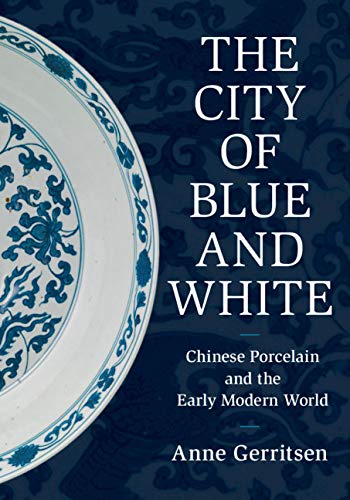 We think of blue and white porcelain as the ultimate global commodity: throughout East and Southeast Asia, the Indian Ocean including the African coasts, the Americas and Europe, consumers desired Chinese porcelains. Many of these were made in the kilns in and surrounding Jingdezhen. Found in almost every part of the world, Jingdezhen’s porcelains had a far-reaching impact on global consumption, which in turn shaped the local manufacturing processes. The imperial kilns of Jingdezhen produced ceramics for the court, while nearby private kilns manufactured for the global market. In this beautifully illustrated study, Anne Gerritsen asks how this kiln complex could manufacture such quality, quantity and variety. She explores how objects tell the story of the past, connecting texts with objects, objects with natural resources, and skilled hands with the shapes and designs they produced. Through the manufacture and consumption of Jingdezhen’s porcelains, she argues, China participated in the early modern world.
Anne Gerritsen is Professor of History and directs the Global History and Culture Centre at the University of Warwick. Since 2013, she has also held the Chair of Asian Art at the Universiteit Leiden where she teaches at the Leiden Institute for Area Studies (LIAS) and the Leiden University Centre for the Arts in Society (LUCAS).
C O N T E N T S
Figures
Maps
Table
Acknowledgements
1 The Shard Market of Jingdezhen
2 City of Imperial Choice: Jingdezhen, 1000–1200
3 Circulations of White
4 From Cizhou to Jizhou: The Long History of the Emergence of Blue and White Porcelain
5 From Jizhou to Jingdezhen in the Fourteenth Century: The Emergence of Blue and White and the Circulations of People and Things
6 Blue and White Porcelain and the Fifteenth-Century World
7 The City of Blue and White: Visualizing Space in Ming Jingdezhen, 1500–1600
8 Anxieties over Resources in Sixteenth-Century Jingdezhen
9 Skilled Hands: Managing Human Resources and Skill in the Sixteenth-Century Imperial Kilns
10 Material Circulations in the Sixteenth Century
11 Local and Global in Jingdezhen’s Long Seventeenth Century
12 Epilogue: Fragments of a Global Past
Notes
Bibliography
Index
ASECS Repudiates Report of 1776 Advisory Commission
This statement repudiating the “1776 Report”—which was released by the Trump Administration on 18 January 2021—was approved by the ASECS Executive Board on 22 January 2021. The statement follows the condemnation offered by the American Historical Association (AHA), which was signed by 42 organizations, including the College Art Association. As Tina Nguyen reports for Politico (19 January 2021), the “1776 Report” appears to contain multiple instances of self-plagiarism from prior texts by commission members Thomas Lindsay and Matthew Spalding, including direct quotes left unacknowledged in the document (the report includes neither a bibliography nor notes of any kind). HECAA is an affiliate society of both ASECS and CAA.
◊ ◊ ◊ ◊ ◊
 The American Society for Eighteenth-Century Studies stands in solidarity with other academic organizations that condemn the Trump Administration’s “1776 Report,” issued on January 18, 2021. We reject the report’s caricature of the transformative period of American and global history that we study. The report proffers a facile myth of cardboard great men creating a Utopian nation and fails to represent the fullness, the complexity, and, critically, the failures of the American experiment in instituting Enlightenment philosophical ideals.
We decry in particular the following distortions and falsehoods:
• Government: The report ignores the ways in which the American experiment in republican form of government emerged in crisis and conflict and disagreement in 1776 and 1789. Those events—winning independence from the British Empire and founding a new federal republic on principles of liberty and equality—seeded the new nation with democratic ways of mediating conflict and negotiating difference. This enabled the early reform movements like Abolition and Women’s suffrage.
• Religion: The report advances the false belief that the Founding established a “common American morality” by promoting religious faith and revelation as components of political discourse. The Founders did not fuse but separated church and state.
• Slavery: We deplore the report’s minimization of slavery’s role in the formation of our nation and the creation of its wealth and power in the modern world. It ignores the role of racism in perpetuating slavery, as well as slavery’s persistent effects in American society today. We reject the false characterization of the Founders as uniformly opposed to slavery; of course, many prominent Founders owned slaves and enshrined slavery in the Constitution.
• Indigenous First Nations: We denounce the glaring omission from the report of any mention of indigenous peoples, as well as the failure to acknowledge the oppression, violence, and erasure done to our First Nations, who, as the report evidences, continue to be banished from our collective history.
We support the decision by the new administration inaugurated on January 20, 2021, to remove this report from the White House website and to dissolve the 1776 Commission. The rejection of the report by the new administration, however, has not prevented other institutions from posting it on their websites, and the false narrative that it promotes may still be exploited.
The history of the United States is often a painful one. Rather than ignore or underplay its dark side, we hope that future scholars will interrogate comforting narratives of America’s greatness and replace them with a clear-eyed understanding of our history in all its complexity. Our wish can be summed up in the words of Amanda Gorman: “It’s because being American is more than a pride we inherit, it’s the past we step into and how we repair it.”
New Book | She Being Dead Yet Speaketh
Distributed by The University of Chicago Press:
Mary Franklin and Hannah Burton, She Being Dead Yet Speaketh: The Franklin Family Papers, edited by Vera Camden (Toronto: Iter Press, 2020), 349 pages, ISBN: 978-0866986236, $60.
 On Black Bartholomew’s Day—August 24, 1662—nearly two thousand ministers denied the authority of the Church of England and were subsequently removed from their posts. Mary Franklin was the wife of Presbyterian minister Robert Franklin, one of the dissenting ministers ejected from their pulpits and their livings on that day. She recorded the experience of her persecution in the unused pages of her husband’s sermon notebook. In 1782—some hundred years after the composition of her grandmother’s narrative— Mary’s granddaughter, Hannah Burton, took up this same notebook to chronicle her experience as an impoverished widow, barely surviving the economic revolutions of eighteenth-century London. Collected for the first time, this volume of the Franklin Family Papers offers rare insight into the personal lives of three generations of dissenting women.
The Other Voice in Early Modern Europe: The Toronto Series, 71
Mary Franklin (d. 1711) was the wife of an English Presbyterian minister.
Hannah Burton (1723–1786) was the granddaughter of Mary and Robert Franklin and the wife of a London goldsmith.
Vera J. Camden is professor of English at Kent State University, training and supervising analyst at the Cleveland Psychoanalytic Center, and assistant clinical professor of psychiatry at Case Western Reserve University. She is associate editor of American Imago and American editor of the Journal of Graphic Novels and Comics.
C O N T E N T S
Acknowledgments
Illustrations
Abbreviations
Introduction
Mary Franklin (d. 1711)
The Notebook of Mary Franklin (ca. 1685)
The Experience of Mary Franklin (ca. 1689–90)
The Prison Correspondence of Mary and Robert Franklin (1670)
The Last Will and Testament of Mary Franklin (1709, probated 1711)
Hannah Burton (1723–1786)
The Diary of Hannah Burton (1782)
Appendix 1: The Funeral Sermon for Mary Franklin
• The Dissolution of the Earthly House of this Tabernacle (1713)
Appendix 2: Letters
• The Letters of Ralph Snow (1691)
• The Letter of William Bailey to Joshua Wilson (1817)
Appendix 3: Probated Wills
• The Last Will and Testament of Walter Boddington (1734, probated 1736)
• The Last Will and Testament of William Burton (1777, probated 1781)
Bibliography
Index
Call for Papers | Figures of Widows

Jean-Baptiste Greuze, The Widow Receiving Her Priest Surrounded by Her Children , 1784, oil on canvas, 50 × 63 inches
(Saint Petersburg: Hermitage Museum)
◊ ◊ ◊ ◊ ◊
The Call for Papers for this GRHAM Study Day, via ArtHist.net, where the French version is also available:
Widows in the 17th and 18th Centuries: Images of Social Status—Accepted, Hidden, Claimed?
Figures de veuves à l’époque moderne (XVIIe et XVIIIe siècles): Images d’un statut social accepté, caché, revendiqué?
INHA (Institut National d’Histoire de l’Art), Galerie Colbert, Paris, 15 June 2021
Proposals due by 15 March 2021
Woman and widow under the Ancien Régime? The images defining a woman abound, should they describe a seductive woman, an influential or a common one. However, the images that could characterize the widow remain vague. As a matter of fact, the widow is defined essentially in negative terms; a widow is ‘the one who has lost her husband’ [1]. The social status imposed by widowhood is considered less favorable than that of a married woman, the Dictionnaire de Trévoux specifying that ‘a widow mourns her husband, not so much for her loss, but mostly because she is deprived of the rank she held and the consideration she benefited from’ [2]. This could lead her to condemnable behaviors: ‘The widow often subtracts and conceals her husband’s most beautiful furniture’ [3]. Opposite to this unattractive vision, however, widowhood seems then to offer to women a freedom that neither daughters nor wives experienced [4].
Several images arise from this contrasting portrait. The first one to appear is the widow seen through a state policy point of view such as Marie de Medici as Regent by Frans Pourbus (1613), Anne of Austria in Mourning Clothes with her Children by Philippe de Champaigne (1643) or Marie-Antoinette in the Conciergerie Prison by Alexandre Kucharski (1793). These portraits evoke in turn the woman in position of power, the patron, the arts and letters’ amateur, but also the grieving, lonely, old and fallen woman.
The widow can be portrayed in many other ways. Like Madame Godefroid, Keeper of the King’s Paintings by Jean Valade (1755), she could hold a position by succession to her late husband. She could also be the spokesperson for various passions highlighted by bourgeois drama: the sadness of Greuze’s Inconsolable Widow (1762), the melancholy of Reynolds’s Countess of Lincoln (1781), or the moral probity of Greuze’s Widow Receiving her Priest Surrounded by her Children (1782). These different aspects of widowhood revealed by the artists enable to question all the statutory references that define the widow: her mourning clothes, her attributes such as the faithful dog and her psychological characteristics which give great importance to sentimentality. The absence of some of these visual codes allows to question other widow figures for the young widow rarely remains inconsolable, as La Fontaine’s fable reminds us [5]. Under Choderlos de Laclos’ pen, the Marquise de Merteuil became even a manipulative libertine, taking full advantage of the financial autonomy and independence of mind that the widowhood offered her.
This brief panorama would be incomplete without mentioning the widow in religious paintings such as The Raising of the Son of the Widow of Naim, The Raising of Lazarus, or Agrippina Landing at Brindisi with the Ashes of Germanicus. The image of the widow is also endowed with a strong allegorical power that makes her one of the first figures in war memorials, such as the Monument for the Heart of Victor Thérèse Charpentier, Count of Ennery (1777–81).
This study day aims to question the identity of these widows—famous or unknown—in order to better understand their intellectual, political, and social influence, by finding out whether their widowhood proved to be an asset or a weakness. How did the image of the widowed woman develop during the 17th and 18th centuries? And how did it deal with the particular 18th-century rising value shaped by Rousseau’s representation of a woman as a mother dedicated to both her home and the education of her children?
This study day proposes several topics in order to better define and understand the image of the widow in the arts, not only in France but also in Europe:
• The image of the widow through her various portraits, emphasizing her political, economic, intellectual, and moral power. Were such portraits reserved only for influential women or for those who had famous husbands? Or, could they also depict women belonging to different social classes?
• The representation of the widow in history and genre painting: is she the main figure in these paintings or secondary one? In these paintings, which psychological characteristics are most often solicited? Do these descriptions reflect a widow’s specific identity?
• The destination of the image of the widow in the arts of the Ancien Régime. Are these representations kept within family confines or are they disseminated in a wider environment? If so, which are the reasons behind?
• Beyond the specific matter of representation, particular attention will be paid to widows who are also artists as well as artists’ widows. What is their place in society? What role do they play in the preservation of their husband’s artistic heritage?
• Finally, considering also the material culture, do external signs of mourning worn by widows—clothes and accessories—act as a testimony of constant imposed codes or, conversely, bear witness of an evolution, not only in fashion, but also in the way in which widows are represented?
We welcome proposals in French or English, of about 500 words, for papers addressing either broader analyses or specific case studies. Candidates are invited to attach a curriculum vitae. Submission and contact: asso.grham@gmail.com.
This study day is organized by GRHAM with the support of the Doctoral School of Art History of the University Paris 1 Panthéon-Sorbonne (ED 441) and the HiCSA (EA 4100).
[1] Antoine FURETIÈRE, Dictionnaire universel contenant généralement tous les mots françois tant vieux que modernes, & les Termes des Sciences & des Arts (La Haye, Rotterdam, Arnoud & Reinier Leers, 1701), III, See «Veuf, Veuve».
[2] Dictionnaire universel François et latin, vulgairement appelé Dictionnaire de Trévoux (Paris, Delaune, 1743), VI, See «Veuf, Veuve».
[3] FURETIÈRE, Dictionnaire, op. cit., See ‘Soustraire’.
[4] Françoise FORTUNET, «Veuves de guerre à l’époque révolutionnaire», PELLEGRIN, Nicole, WINN, Colette H. (dir.), Veufs, veuves et veuvage dans la France d’Ancien Régime (Paris, Champion, 2004), 138–39: ‘It has long been noted that widowhood was the most favorable status that a woman could have had in our old society, for it gave her a freedom ignored by daughters and wives. In theory it was known, but living examples are stronger proof’ (translated from French).
[5] Jean de LA FONTAINE, Fables choisies mises en vers (Lyon, Sarrazin, 1696, 1668), 140, CXXIV: «La perte d’un époux ne va point sans soupirs//On fait beaucoup de bruit, et puis on se console».
Call for Paper by GRHAM (Research Group in Modern art History) / Appel diffusé par les membres du bureau du GRHAM (Groupe de Recherche en Histoire de l’Art Moderne):
• Florence Fesneau (Université Paris 1 Panthéon-Sorbonne)
• Barbara Jouves-Hann (Université Paris 1 Panthéon-Sorbonne/ENS Paris-Saclay)
• Maxime Georges Métraux (Université Paris-Sorbonne)
• Alice Ottazzi (Université Franche-Comté)
• Marine Roberton (Université Paris 1 Panthéon-Sorbonne)
• Maël Tauziède-Espariat (Université de Bourgogne)
• Marianne Volle (Université Paris 1 Panthéon-Sorbonne et York University)
New Book | A Catalogue of the Sculpture Collection at Wilton House
From Oxbow Books:
Peter Stewart, ed., A Catalogue of the Sculpture Collection at Wilton House, with photographs by Guido Petruccioli (Oxford: Archaeopress Archaeology, 2021), 438 pages, ISBN: 978-1789696554, $160.
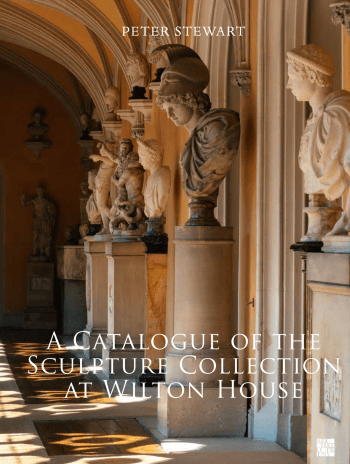 The Wilton House sculptures constituted one of the largest and most celebrated collections of ancient art in Europe. Originally comprising some 340 works, the collection was formed around the late 1710s and 1720s by Thomas Herbert, the eccentric 8th Earl of Pembroke, who stubbornly ‘re-baptized’ his busts and statues with names of his own choosing. His sources included the famous collection of Cardinal Mazarin, assembled in Paris in the 1640s and 1650s, and recent discoveries on the Via Appia outside Rome. Earl Thomas regarded the sculptures as ancient—some of them among the oldest works of art in existence—but in fact much of the collection is modern and represents the neglected talents of sixteenth-and seventeenth-century artists, restorers and copyists who were inspired by Greek and Roman sculpture.
About half of the original collection remains intact today, adorning the Gothic Cloisters that were built for it two centuries ago. After a long decline, accelerated by the impact of the Second World War, the sculptures have been rehabilitated in recent years. They include masterpieces of Roman and early modern art, which cast fresh light on Graeco-Roman antiquity, the classical tradition, and the history of collecting.
Illustrated with specially commissioned photographs, this catalogue offers the first comprehensive publication of the 8th Earl’s collection, including an inventory of works dispersed from Wilton. It re-presents his personal vision of the collection recorded in contemporary manuscripts. At the same time, it dismantles some of the myths about it which originated with the earl himself, and provides an authoritative archaeological and art-historical analysis of the artefacts.
Peter Stewart is Director of the Classical Art Research Centre and Associate Professor of Classical Art and Archaeology at the University of Oxford. He has worked widely in the field of ancient sculpture. His publications include Statues in Roman Society: Representation and Response (2003) and The Social History of Roman Art (2008). Much of his research concerns the relationship between Gandhāran art and Roman sculpture.
Guido Petruccioli is an Oxford University-trained classical archaeologist and professional photographer with specialist interests in Roman imperial portraiture and the documentation of ancient sculpture.
C O N T E N T S
Preface
Image Credits
Introduction
Catalogue
Statues, Statuettes, and Herms
Busts and Heads
Reliefs and Miscellaneous Objects
Architectural Elements
Plates
Appendix 1 Works Formerly in the Collection
Appendix 2 Concordance to Michaelis
Index of Names and Places










 Enfilade
leave a comment