New Book | This Is America
From Oxford UP:
Keri Watson and Keidra Daniels Navaroli, This Is America: Re-Viewing the Art of the United States (Oxford: Oxford University Press, 2023), 416 Pages, ISBN: 978-0190084882, $100.
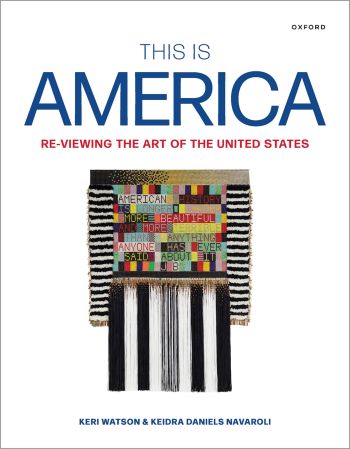 This Is America: Re-Viewing the Art of the United States is a new, inclusive introduction to American visual culture from early history to the present. Reimagining the traditional survey of American art, the book provides expanded coverage of underrepresented stories through the inclusion of marginalized makers, diverse media, and vast geographic regions. Accessible to students with no background in art history, This Is America offers links between recent works of art and the rich cultural history of each major era with succinct and illuminating analysis of key contemporary works in ‘Contemporary Connections’ boxes. By combining close visual and historical analyses with discussion of how works of art operated within specific cultural contexts and for us today, this publication prioritizes art’s critical role in social discourse.
Keri Watson is Associate Professor of Art History at University of Central Florida. Keidra Daniels Navaroli is a McKnight Doctoral Fellow in the Texts and Technology Program at University of Central Florida.
C O N T E N T S
Preface
1 Constructing Indigenous America
Early America: Mound Builder Cultures
Adena Culture
Hopewell Culture
Art of the Pacific Northwest
Old Bering Sea Culture
The Tlingit and Haida Cultures of the Northwest Coast
Art and Architecture of the Southwest
The Hohokam Culture
The Mimbres Culture
Art of the Caribbean Taíno
2 Colonial Disruptions: Un/Making a ‘New World’
Constructing and Circulating Images of the Other
In Search of Spices
In Search of Gold
Labor and Luxury
Forced Labor, Conquest, and Colonization
Power and Portraiture
Building the ‘New World’
New Spain
New England and New Netherland
New France
3 Establishing an Anglo American Nation: Art during the Federal Period
Visualizing Revolution
The War of the Conquest
The Sons of Liberty
Picturing America and Americans
Framing the Other
Establishing a National Iconography
Building American Institutions
Staging Rebellion
The Myth of Benevolence
4 The Nineteenth Century: Westward Expansion and Indian Removal
Remaking the Nation
Florida and the American South
The Trans-Mississippi West
Portraying Native Bodies
From ‘Noble Savage’ to ‘Vanishing Race’
Fashioning the Self: Native Subjects Speak Back
Imagining the West
Survey Paintings and Photography
‘Cowboys and Indians’
5 The Nineteenth Century: Stitching Together a New Body Politic
Painting Scenes of Everyday Life
Americans at Work and at Home
Prints and Patrons
Performing the Other
Mythologizing the Past
Art, Literature, and the Penny Press
The Mexican American War
The Civil War
Go West!
Race, Art, and Activism
Representing Slavery and Freedom
Images of Reconstruction
6 The Nineteenth Century: Reshaping the Landscape
Rural Cemeteries and Public Parks
Philadelphia: Athens of America
The American Sublime
Plantation Portraits
American Impressionism
The End of Landscape Painting
7 From the Gilded Age to the Progressive Era: Picturing Gender, Race, and Class
Exhibiting Wealth and Class in the Gilded Age
Portraits and Power
Building the Gilded Age
Globalism and Imperialism at World’s Fairs
Scientific Racism and the Centennial International Exposition of 1876
Women, Race, and the World’s Columbian Exposition of 1893
The War of 1898 and the Louisiana Purchase Exposition
Picturing Gender, Race, and Class in the Progressive Era
How the Other Half Lives
Out of the Ash Can
8 The Multiple Modernisms of the Interwar Period
The New Negro Movement
The Jazz Age
Sculpting the Harlem Renaissance
Stieglitz, Precisionism, and Surrealism
The Stieglitz Circle
Capturing the Machine Age
Surrealism in the Americas
Pueblo Artists and the Taos School
Figuration
Abstraction
Regionalism and the American Scene
American Regionalism
Painting the American Scene
9 Depression and Recovery: The New Deal, World War II, and the Post-War Boom
The New Deal
Public Works of Art
Social Realism
The Art of War
Representing War
Illustrating Internment
Mythmaking: Postwar Abstraction
Abstract Expressionism
Color Field Painting
‘Out in the World’: Found Objects, Funk, and Pop
Neo-Dada
Pop
10 Challenging the Past and Imagining the Future
Art and/as Activism
The Black Arts Movement
The Feminist Arts Movement
The Chicano Arts Movement
Disability Rights
The Gay Rights Movement
Art in the Expanded Sphere
Minimalism, Conceptualism, and Earth Art
Faith and Reason
Neo-Expressionism and Afro-Futurism
Key Terms
Index
New Book | The Rediscovery of America
From Yale UP:
Ned Blackhawk, The Rediscovery of America: Native Peoples and the Unmaking of U.S. History (New Haven: Yale University Press, 2023), 616 pages, ISBN: 978-0300244052, $35.
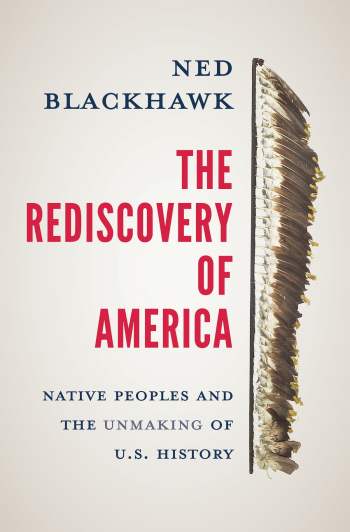 A sweeping and overdue retelling of U.S. history that recognizes that Native Americans are essential to understanding the evolution of modern America
The most enduring feature of U.S. history is the presence of Native Americans, yet most histories focus on Europeans and their descendants. This long practice of ignoring Indigenous history is changing, however, with a new generation of scholars insists that any full American history address the struggle, survival, and resurgence of American Indian nations. Indigenous history is essential to understanding the evolution of modern America. Ned Blackhawk interweaves five centuries of Native and non‑Native histories, from Spanish colonial exploration to the rise of Native American self-determination in the late twentieth century. In this transformative synthesis he shows that
• European colonization in the 1600s was never a predetermined success
• Native nations helped shape England’s crisis of empire
• The first shots of the American Revolution were prompted by Indian affairs in the interior
• California Indians targeted by federally funded militias were among the first casualties of the Civil War
• The Union victory forever recalibrated Native communities across the West
• Twentieth-century reservation activists refashioned American law and policy
Blackhawk’s retelling of U.S. history acknowledges the enduring power, agency, and survival of Indigenous peoples, yielding a truer account of the United States and revealing anew the varied meanings of America.
Ned Blackhawk (Western Shoshone) is the Howard R. Lamar Professor of History and American Studies at Yale University, where he is the faculty coordinator for the Yale Group for the Study of Native America. He is the author of Violence over the Land: Indians and Empires in the Early American West.
C O N T E N T S
List of Maps
Introduction: Toward a New American History
Part I | Indians and Empire
1 American Genesis: Indians and the Spanish Borderlands
2 The Native Northeast and the Rise of British North America
3 The Unpredictability of Violence: Iroquoia and New France to 1701
4 The Native Inland Sea: The Struggle for the Heart of the Continent, 1701–55
5 Settler Uprising: The Indigenous Origins of the American Revolution
6 Colonialism’s Constitution: The Origins of Federal Indian Policy
Part II | Struggles for Sovereignty
7 The Deluge of Settler Colonialism: Democracy and Dispossession in the Early Republic
8 Foreign Policy Formations: California, the Pacific, and the Borderlands Origins of the Monroe Doctrine
9 Collapse and Total War: The Indigenous West and the U.S. Civil War
10 Taking Children and Treaty Lands: Laws and Federal Power during the Reservation Era
11 Indigenous Twilight at the Dawn of the Century: Native Activists and the Myth of Indian Disappearance
12 From Termination to Self-Determination: Native American Sovereignty in the Cold War Era
Notes
Acknowledgments
Index










 Enfilade
leave a comment