Conference | Dressing the Interior
From the conference programme:
Dressing the Interior in the Early Modern Period: Textiles in Domestic Settings
Dressing the Early Modern Network Conference
Leiden University Centre for the Arts in Society (LUCAS), 23 September 2023
Organised by Jola Pellumbi, Sara van Dijk, and Alexander Dencher
Registration due by 20 September 2023
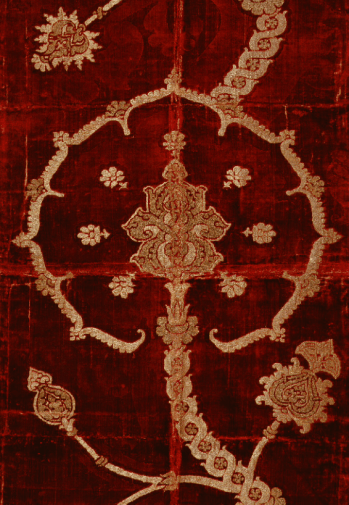
Length of velvet, 16th century, Spanish or Italian; pile on pile cut, voided, and brocaded velvet of silk and gold metallic thread with bouclé details (New York: The Metropolitan Museum of Art, 46.156.120).
Textiles, wall and furniture coverings played an important role in dressing interiors in the early modern period. From curtains to chairs, tables and beds, a variety of textiles were needed to protect, adorn, and transform rooms, homes, and palaces. They were an important part of the dwelling as they linked the interiors together and showcased the taste and material means of the owners. Different rooms served diverse purposes, from more public spaces such as waiting rooms, reception rooms, and ballrooms, to more private rooms such as the bedroom with its antechambers. In other households, rooms had multiple functions, and in many cases the distinctions between private and public spaces were more flexible. Textiles played an important role in distinguishing and modifying these spaces while giving a glimpse of the relationships that owners had with those interiors.
While extant textiles have been frequently altered to fit new purposes denoting both their durability and the costly aspects of this medium, ledgers provide further examples of repairs and replacements. On the other hand, inventories give a more accurate picture of the changes in fashion over time. Fashions played an important role in the dressing of interiors, from certain more desirable fabrics and colours being favoured over others, while also being altered according to seasons. This conference aims to generate a discussion about the use of various textiles in early modern interiors, focusing on their function, durability, colour, texture and pattern, and how they were made to fit a specific purpose and give meaning to every room.
The conference is organised by Jola Pellumbi and Sara van Dijk of Dressing the Early Modern Network and by Alexander Dencher of Leiden University and the Rijksmuseum.
Registration is available here»
p r o g r a m m e
10.00 Registration
10.30 Welcome
10:45 Session 1 | Interior and Experience
• Dangerous Liaisons Revisited: Drapery and Dress in 18th-Century French Interiors — Mei Mei Rado (Bard Graduate Center, New York)
• Tiny Textiles: Dressing the Interiors of 18th-Century English Baby Houses — Amy Craig (Cambridge University)
• 18th-Century Global Domesticity — Valeria Viola (University of Palermo)
12.15 Lunch Break
13.00 Session 2 | Objects’ Pasts and Futures
• Reduce, Reuse, Recycle ….Restore? A Case Study of Re-Using ‘Original’ Fabrics in the Collection of the Rijksmuseum — Marjolein Koek (Rijksmuseum, Amsterdam)
• Bed of White Satin with Silk Embroidery and Bobbin Made Silver Edgings — Lena Dahrén (affiliated with Uppsala University)
• Title to be confirmed — Alexander Dencher (Rijksmuseum, Amsterdam)
14.30 Coffee and Tea
15.00 Session 3 | Materials and Materiality
• Strong Weave, Soft Texture, Crisp White: The Unravelling of Fustian in Dutch Interiors in the Early 17th Century — Sara Wieman (University of Amsterdam)
• Re-Materialising Walls through Intermedial Design: Chinese Silk and Paper Wall Hangings in 18th-Century European Interiors — Erika Riccobon (Leiden University)
16.00 Keynote Lecture
• The Seemingly Original Interior — Anna Jolly (Abegg-Stiftung, Riggisberg)
16.45 Closing Remarks










 Enfilade
leave a comment