SAAM Fellowships for American Art History
From the Smithsonian American Art Museum:
SAAM and its Renwick Gallery invite applications to its premier fellowship program, the oldest and largest in American art. Scholars from any discipline who are researching topics relating to U.S. art, craft, and visual culture are encouraged to apply, as are those who foreground new perspectives, materials, and methodologies. Fellowships are residential and support full-time research. SAAM is devoted to advancing inclusive excellence in the discipline of art history, and therefore encourages candidates who identify as members of historically underrepresented groups to apply.
Each fellow is provided a carrel in SAAM’s Research and Scholars Center. There, they have access to the museum’s collection of over 45,500 works, specialized study collections and databases, the Smithsonian’s Archives of American Art, and an 180,000-volume branch library specializing in American art. The Research and Scholars Center is a short walk from other Smithsonian museums and libraries, the Library of Congress, the National Archives, and the National Gallery of Art. Regular workshops, seminars, and lectures provide a forum for lively scholarly exchange and professional advancement.
Candidates may apply to one or more of the following three opportunities:
• SAAM and SIFP Fellowships — SAAM hosts fellows through the Smithsonian Institution Fellowship Program (SIFP), and also awards a number of named fellowships to graduate, predoctoral, postdoctoral, and senior candidates from this general pool. Deadline: 1 November 2023.
• The Betsy James Wyeth Fellowship in Native American Art — This joint fellowship at SAAM and the National Museum of the American Indian is awarded for a twelve-month term at the predoctoral level or a nine-month term at the postdoctoral or senior level. Deadline: 1 December 2023.
• The Audrey Flack Short-Term Fellowship — One fellowship is awarded at the predoctoral, postdoctoral, or senior level for a one-month term. Deadline: 1 February 2024.
18th-Century Hearth Cooking at the Queens County Farm Museum
From Eventbrite and Queens County Farm Museum:
Chris Lord-Barry, 18th-Century Hearth Cooking
Queens County Farm Museum, Floral Park, New York, Saturday, 4 November / 11 November 2023, 11am — 2pm
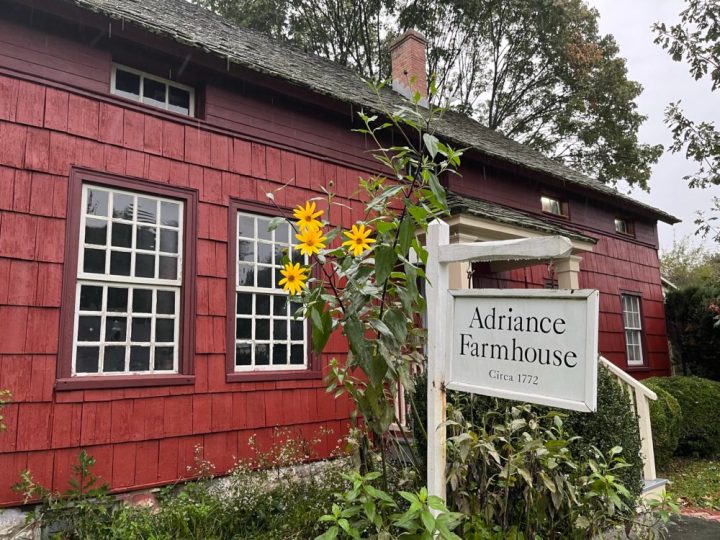
Join us in the kitchen of the Adriance Farmhouse at Queens County Farm Museum to learn how settlers prepared food over an open hearth.
 Original 18th-century recipes, seasonal ingredients, traditional cooking utensils, and the warm embers of the fire will bring history to life as participants assist in preparing and sampling several delightful dishes. Participants will receive modern adaptations of all recipes to try at home. Advance online tickets ($53) are required as space is limited. The class is part of the Public Education Program at Queens Farm and is open to ages 18 and up. In the fall the session is offered on November 4 and then repeated on November 11.
Chris Lord-Barry is an educator with over 20 years of experience, who specializes in teaching 18th-century cooking. Over the past 10+ years, she has studied historic cookery and foodways specific to early America and has designed this popular class to share her passion for early American recipes with others.
The Queens County Farm Museum is a New York City Landmark, is on the National Register of Historic Places, and is a member of the Historic House Trust of New York City. Dating back to 1697, it occupies New York City’s largest remaining tract of undisturbed farmland and is one of the longest continuously farmed sites in New York State. The site includes historic farm buildings, a greenhouse complex, livestock, farm vehicles and implements, planting fields, an orchard, and an herb garden. Queens Farm connects visitors to agriculture and the environment through the lens of its 47-acre historic site, providing learning opportunities and creating conversations about biodiversity, nutrition, health and wellness, climate change and preserving local history. The centerpiece of the farm complex, the Adriance Farmhouse was first built as a three-room Dutch farmhouse in 1772. The house and surrounding area mirror the evolution of this unique tract of land from a colonial homestead to a truck farm that served the needs of a growing city in the early twentieth century. . .










 Enfilade
leave a comment