Exhibition | Angelica Kauffman

Angelica Kauffman, Portrait of Emma, Lady Hamilton, as Muse of Comedy, detail, 1791, oil on canvas, 127 × 102 cm
(Private collection)
◊ ◊ ◊ ◊ ◊
A version of the exhibition appeared in 2020 at Düsseldorf’s Kunstpalast and was intended to arrive much sooner at the Royal Academy but was derailed by Covid. The show opens next month (hooray!). . .
Angelica Kauffman
Royal Academy of Arts, London, 1 March — 30 June 2024
Curated by Bettina Baumgärtel and Per Rumberg, with Annette Wickham
Angelica Kauffman RA (1741–1807) was one of the most celebrated artists of the 18th century. In this major exhibition, we trace her trajectory from child prodigy to one of Europe’s most sought-after painters.
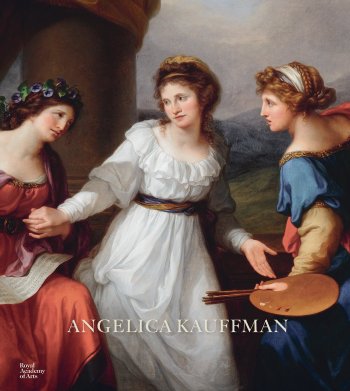 Known for her celebrity portraits and pioneering history paintings, Angelica Kauffman helped to shape the direction of European art. She painted some of the most influential figures of her day—queens, countesses, actors and socialites—and she reinvented the genre of history painting by focusing largely on female protagonists from classical history and mythology. This exhibition covers Kauffman’s life and work: her rise to fame in London, her role as a founding member of the Royal Academy, and her later career in Rome where her studio became a hub for the city’s cultural life. See paintings and preparatory drawings by Kauffman, including some of her finest self-portraits and her celebrated ceiling paintings for the Royal Academy’s first home in Somerset House, as well as history paintings of subjects including Circe and Cleopatra, and discover the remarkable life of the artist whom one of her contemporaries described as “the most cultivated woman in Europe.”
The exhibition is curated by Bettina Baumgärtel, Head of the Department of Painting at the Kunstpalast in Düsseldorf, and Per Rumberg, Curator at the Royal Academy, with Annette Wickham, Curator of Works on Paper at the Royal Academy.
Bettina Baumgärtel and Annette Wickham, Angelica Kauffman (London: Royal Academy of Arts, 2024), 144 pages, ISBN: 978-1915815033, £20 / $30.
◊ ◊ ◊ ◊ ◊
Note (added 15 February 2024) — Wendy Wassyng Roworth’s review of the 2020 exhibition catalogue appeared in The Woman’s Art Journal 42.1 (Spring/Summer 2021): 46–48.
Exhibition | Entangled Pasts, 1768–Now
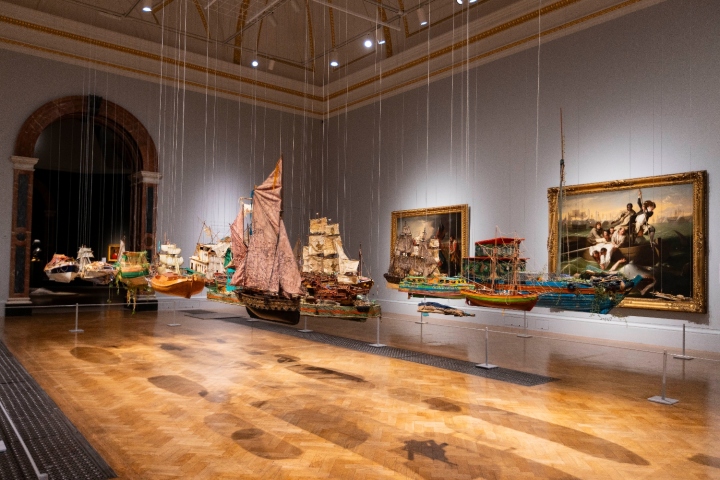
Installation view of Entangled Pasts, 1768–Now: Art, Colonialism, and Change at the Royal Academy of Arts, London, showing Hew Locke’s Armada, 2017–19 (Photo by David Parry for the Royal Academy of Arts, London).
◊ ◊ ◊ ◊ ◊
Now on view at the RA:
Entangled Pasts, 1768–Now: Art, Colonialism, and Change
Royal Academy of Arts, London, 3 February — 28 April 2024
Curated by Dorothy Price with Cora Gilroy-Ware and Esther Chadwick
J.M.W. Turner and Ellen Gallagher. Joshua Reynolds and Yinka Shonibare. John Singleton Copley and Hew Locke. Past and present collide in one powerful exhibition.
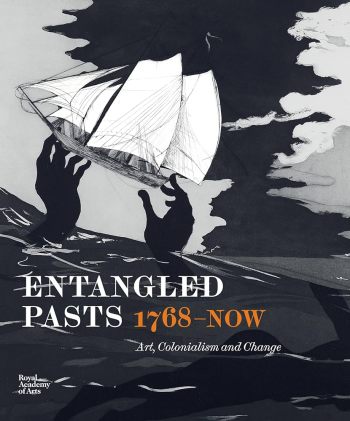 This spring, we bring together over 100 major contemporary and historical works as part of a conversation about art and its role in shaping narratives of empire, enslavement, resistance, abolition, and colonialism—and how it may help set a course for the future. Artworks by leading contemporary British artists of the African, Caribbean, and South Asian diasporas, including Sonia Boyce, Frank Bowling, and Mohini Chandra will be on display alongside works by artists from the past 250 years including Joshua Reynolds, J.M.W.Turner, and John Singleton Copley—creating connections across time which explore questions of power, representation, and history. Experience a powerful exploration of art from 1768 to now. Featuring a room of life-sized cut-out painted figures by Lubaina Himid, an immersive video installation by Isaac Julien, a giant flotilla of model boats by Hew Locke, and a major new sculpture in the Courtyard by Tavares Strachan. Plus, powerful paintings, photographs, sculptures, drawings, and prints by El Anatsui, Barbara Walker, Kerry James Marshall, Kara Walker, Shahzia Sikander, John Akomfrah, and Betye Saar. Informed by our ongoing research of the RA and its colonial past, this exhibition engages around 50 artists connected to the RA to explore themes of migration, exchange, artistic traditions, identity, and belonging.
More information is available here»
Dorothy Price, Alayo Akinkugbe, Esther Chadwick, Cora Gilroy-Ware, Sarah Lea, and Rose Thompson, Entangled Pasts, 1768–Now: Art, Colonialism, and Change (London: Royal Academy of Arts, 2024), 208 pages, 978-1912520992, £25 / $35.
Curatorial Workshop | Inside Drawings
From ArtHist.net and The Menil Collection:
Inside Drawings: A Workshop on the Materiality of Unique Works on Paper
The Menil Drawing Institute, Houston, 3–7 June 2024
Applications due by 22 March 2024
The Menil Drawing Institute at the Menil Collection in Houston is dedicated to the study and display of drawing, with a focus on scholarship and raising public appreciation of the medium—from early drawings to modern and contemporary works. Inside Drawings: A Workshop on the Materiality of Unique Works on Paper will address the physical components of drawing practices in a focused manner, intended to give curators of drawing collections a broader understanding of unique works on paper for the purpose of better defining, researching, and interpreting drawings.
Fully funded by the Getty Foundation through their Paper Project initiative, this weeklong workshop will utilize the collection and staff of the Menil, involving outside experts in the fields of paper conservation, papermaking history, materials study, conservation imaging and science, and curation of drawings. There will be hands-on opportunities to deepen understanding of materials, as well as visits to exhibitions, collections, and an artist’s studio. Sixteen selected participants will have all expenses paid. Ideal participants will be early to mid‐career curators, with up to fifteen years of experience, who work directly with a collection of drawings. The Menil Drawing Institute seeks to assemble an international cohort of colleagues to participate in this workshop and encourages international applicants.
More information is available here.
Online Talk | Mark Crinson on Hounslow Heath

Captain Thomas Hastings, after Richard Wilson, On Hounslow Heath, Outer Suburb, West, detail, 1820, etching on paper, sheet: 12 × 16 cm
(New Haven: Yale Center for British Art, Paul Mellon Collection, B1977.14.16595)
◊ ◊ ◊ ◊ ◊
Today, from YCBA:
Mark Crinson | The Insignificance of Hounslow Heath
Online, Tuesday, 13 February 2024, 12.30–1.00 (ET)
Now a rump of its former self, a municipal park of barely 200 acres, Hounslow Heath before the nineteenth century was a vast area of ‘wasteland’, 5,000 acres in extent. Mark Crinson will discuss the relatively late enclosure of the heath, its landscape characteristics, certain geometric impositions on it (mapping and the military), myths of delinquency and criminality (highwaymen) associated with it, its negative relation to contemporary discourses of the English garden and to the villa culture on its southeastern fringe, and even the very occasional painting of it. Crinson’s current research on ‘flatlands’ explores the claimed cultural insignificance of a particular area of flat landscape to the west of London as well its relation to the theme of flatlands in general. Part of a larger book-length project on Heathrow Airport and its surrounding environment, the research supplies a prehistory of evaluations and representations of the area, asking if this supposed cultural insignificance played a role in the environmental despoliations associated with the airport and its surroundings, both deemed subordinate to London’s global city status and the advantages of international connectedness.
Registration is available here»
Mark Crinson is emeritus professor of architectural history at Birkbeck, University of London, and previously taught at the University of Manchester (1993–2016). He served as vice president and president of the European Architectural History Network. Recent books include Shock City: Image and Architecture in Industrial Manchester (2022, winner of the 2024 Historians of British Art Prize); The Architecture of Art History: A Historiography (2019, co-authored with Richard J. Williams); Alison and Peter Smithson (2018); and Rebuilding Babel: Modern Architecture and Internationalism (2017). His current book, titled Heathrow’s Genius Loci, will be completed in summer 2024. He was elected Fellow of the British Academy in 2023.
Call for Papers | The Bottle, 17th- and 18th-C. Representations of Alcohol
From the Call for Papers, which includes the original French Appel à communication, information on the organizing committee, and a select bibliography:
The Culture of the Bottle: Uses and Visual Representations of Alcoholic Drinks in the 17th and 18th Centuries
La culture du flacon: Usages et représentations visuelles des boissons alcoolisées aux XVIIe et XVIIIe siècles
Institut national d’histoire de l’art, Paris, 13–14 June 2024
Proposals due by 31 March 2024

Jean-François de Troy, The Oyster Luncheon / Le Déjeuner d’huîtres, 1735, oil on canvas, 180 × 126 cm (Chantilly, Musée Condé).
The subject of alcoholic beverages (wine, beer, liqueurs, etc.) in the modern era has been embraced by the museum world, which has found it a pleasing and intriguing subject to attract audiences. Over the last twenty years, modernist historians have also have also examined the subject, publishing major works on drunkenness (Lecoutre, 2007, 2011 & 2017) and wine (Figeac-Monthus & Lachaud-Martin, 2021).
However, alcoholic beverages such as Armagnac for France, schnapps for the German Empire, gin for Great Britain, or rum and sake for more distant regions, remain under-studied as compared to wine—and, to a lesser extent, beer—which have been the subject of scientific publications. The history of art has often multiplied studies concerning bacchanals, Dutch or Roman bambochades, and the works of the Le Nain brothers but has neglected other types of representations as well as objects associated with this consumption. Above all, places of alcoholic consumption such as farmlands, wine cellars, breweries, taverns, inns, and banquets are largely absent from this historiography. Case studies drawing on cultural history, art history, and material history are needed to fill these gaps and sketch out a comprehensive overview of the production, consumption, and representation of alcoholic beverages in the 17th and 18th centuries.
By fostering a dialogue among researchers engaged in the exploration of this interdisciplinary theme, GRHAM’s annual symposium [at INHA] aims to scrutinize the concept of ‘alcoholic beverage’ in France, Europe, and worldwide to better comprehend the methods and stakes related to its representation. A comprehensive approach to global exchanges and consumption patterns could shed light on a perspective often overly focused on Europe. Moreover, various disruptions, such as armed conflicts, droughts, and floods, intermittently disrupted the habits of European consumers.
A lexicographical approach allows us to identify a typology of beverages and consumers and to move away from a rhetoric that can be simplifying and tinged with moralizing connotations. In the 18th century, the Encyclopédie defined “drink” as “liquid food intended to repair our strength,” before distinguishing cold water (recommended as the healthiest) from “beer, wine, & other strong liquors [which should be reserved] for occasions when where it is a matter of warming up, giving movement, irritating, attenuating.” A drinker is “a man who drinks wine, & who drinks a lot of it.” A drunken person is said to have a “brain clouded by the fumes & vapors of wine, or some other beverage.” A “drunkard” is a man “who has the habit of getting drunk or drinking to excess” (Dictionnaire de l’Académie française). In the 1718 edition, the ivrognesse is already mentioned: a woman who is “inclined to get drunk & drink to excess.” Those drunkards are then contrasted with the “sober” individual who is “Temperant in drinking & eating, who drinks & eats little” (Dictionnaire de l’Académie française, 1762). What might these definitions be in other languages? And in other cultures? What types of beverages, more or less strong, were drunk in the 17th and 18th centuries?
A marker of everyday practices, often tied to a particular geographical area, alcohol also played a part in the dynamics of social distinction and conspicuous consumption. The cohabitation of busy servants and cheerful masters around the Déjeuner d’huîtres is an instructive illustration. Unlike effervescent champagne, beer was a “very common drink” made from wheat, barley, or hops in 18th-century France (Dictionnaire de l’Académie française, 1762). However, the Encyclopédie does not devote a single entry to this beverage. Wine, on the other hand, gives rise to a fascinating history of taste, highlighting the characteristics of this beverage as well as the most important wine-growing regions of the time. How do discourses and images apprehend drinks and consumers (drunk or sober) in the society of modern times period? What are the moments, functions (festive, medical, religious, etc.), spaces, and objects (typology of drinking and serving containers) associated with this practice?
The first axis of this symposium is dedicated to the analysis of artistic practices and sociability related to alcohol. Taverns are an essential meeting place for both local and foreign artists. What role do these spaces play in artistic sociability (professional, friendly and emotional encounters; workplaces; recreational and commercial activities…)? To what extent do gatherings over a glass of beer boost or hinder artistic activity? It’s worth noting, for instance, new members of the Bentvueghels in Rome underwent an initiation rite involving the baptism of wine. Painters such as Valentin de Boulogne, Alexis Grimou, and Gabriel de Saint-Aubin were known for their excessive drinking. But what about lesser-known architects, sculptors, and engravers? It is not uncommon for an inventory after an artist’s death to reveal a well-stocked cellar. Was alcohol a source of inspiration or failure? Was it a factor of sociability or social exclusion?
The second axis focuses on the iconography of alcoholic beverages and drinkers. How have artists represented the alcoholic liquid and its container in their works? Is the moralism in literature just as strong in visual representations? The representation of liquids is a recurrent motif in still life paintings, Nordic and Caravaggesque genre scenes and Italian bambochades. These themes spread throughout the 18th century, particularly in engravings. Alcohol nourished a varied iconography that contributes to festive, religious, and political themes, often with moral or provocative dimensions that should be put into perspective.
Drunkenness, festivity, fertility, and sexuality are intimately linked to the representation of alcohol when it comes to bacchanals, carnival parades, banquets, Dionysian scenes, and trysts. In this respect, the representation of drunkenness can be understood as a way of contravening the norms imposed by civility. Alcohol is also an important symbol in religious and political iconography. Wine has a strong spiritual and liturgical dimension in Christian Europe and the representation of opponents (political, religious, etc.) as drinkers could be used to discredit them, as in counter-revolutionary prints. On the other hand, a true scenography of alcohol can mark certain political celebrations. For instance, the construction of wine fountains regularly accompanies military successes and royal entrances. More detailed studies could reveal other meanings linked to the representation of alcohol. For example, the allegory of joy is often associated with a glass of wine, as are oaths of loyalty or, on the contrary, of revenge. More broadly, we will inquire into how representations of alcohol were employed to convey social and political commentary. Were they the target of regulatory limitations or repressive measures in response to moral license and deviant alcohol consumption? Finally, we aim to examine the various alcohol containers (engraved glasses, bottles, services, etc.) and the drinkers’ accessories which serve as supports for all these iconographies. How did craftsmen and artist-decorators interpret and reproduce motifs widely disseminated through engraving?
The third and final axis aims to focus on the representation of the work of the brewer, the winemaker, and the intermediaries who transport the alcohol to the consumer’s table. How can these images shed light on the production, marketing, and service of alcoholic beverages? We would like to analyze the illustrations of vineyards and their topography, the instruments used to make the beverages, the architecture of the production sites, the stores built in Paris by suppliers to the French Court, and the merchants’ advertising tools (signs, posters, labels, etc.).
Participants are encouraged to review existing work, identify gaps in current research, discuss methodological approaches, and propose new ones (quantitative methods, digital humanities…). We welcome critical analyses, reflections on research methods, as well as innovative proposals for understanding the presence and significance of alcohol in the art (and history) of the 17th and 18th centuries. Proposals must be submitted by 31 March 2024 to asso.grham@gmail.com.
New Books | Shortlist, 2024 Charles Rufus Morey Book Award
The shortlist for the 2024 Charles Rufus Morey Book Award, from the College Art Association, with three of the five books addressing the long 18th c. (and special congratulations to HECAA president, Jennifer Van Horn) –CH
The Charles Rufus Morey Book Award, named in honor of one of the founding members of CAA and first teachers of art history in the United States, was established in 1953. This award honors an especially distinguished book in the history of art, published in the English language. Preference is given to books, including catalogues raisonnés, by a single author, but major publications in the form of articles or group studies may be included. Publication of documents or inventories, unless specifically in the context of an exhibition, are also eligible.
◊ ◊ ◊ ◊ ◊
Delia Cosentino and Adriana Zavala, Resurrecting Tenochtitlan: Imagining the Aztec Capital in Modern Mexico City (Austin: University of Texas Press, 2023), 272 pages, ISBN: 978-1477326992, $60.
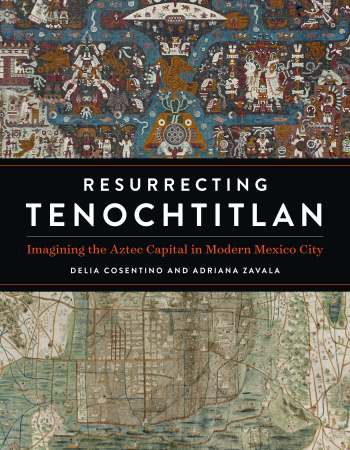 How Mexican artists and intellectuals created a new identity for modern Mexico City through its ties to Aztec Tenochtitlan
After archaeologists rediscovered a corner of the Templo Mayor in 1914, artists, intellectuals, and government officials attempted to revive Tenochtitlan as an instrument for reassessing Mexican national identity in the wake of the Revolution of 1910. What followed was a conceptual excavation of the original Mexica capital in relation to the transforming urban landscape of modern Mexico City. Revolutionary-era scholars took a renewed interest in sixteenth century maps as they recognized an intersection between Tenochtitlan and the foundation of a Spanish colonial settlement directly over it. Meanwhile, Mexico City developed with modern roads and expanded civic areas as agents of nationalism promoted concepts like indigenismo, the embrace of Indigenous cultural expressions. The promotion of artworks and new architectural projects such as Diego Rivera’s Anahuacalli Museum helped to make real the notion of a modern Tenochtitlan. Employing archival materials, newspaper reports, and art criticism from 1914 to 1964, Resurrecting Tenochtitlan connects art history with urban studies to reveal the construction of a complex physical and cultural layout for Mexico’s modern capital.
Delia Cosentino is an associate professor of Latin American art history at DePaul University. She is the author of Las joyas de Zinacantepec: Arte colonial en el Monasterio de San Miguel and was a guest editor for Artl@s Bulletin’s thematic volume Cartographic Styles and Discourse.
Adriana Zavala is an associate professor of the history of art and architecture and race, colonialism, and diaspora studies at Tufts University. She is the author of Becoming Modern, Becoming Tradition: Women, Gender, and Representation in Mexican Art.
◊ ◊ ◊ ◊ ◊
Matthew Francis Rarey, Insignificant Things: Amulets and the Art of Survival in the Early Black Atlantic (Durham: Duke University Press, 2023), 304 pages, ISBN: 978-1478017158 (hardback), $100 / ISBN: 978-1478019855, $27.
 In Insignificant Things Matthew Francis Rarey traces the history of the African-associated amulets that enslaved and other marginalized people carried as tools of survival in the Black Atlantic world from the seventeenth to the nineteenth centuries. Often considered visually benign by white Europeans, these amulet pouches, commonly known as ‘mandingas’, were used across Africa, Brazil, and Portugal and contained myriad objects, from herbs and Islamic prayers to shells and coins. Drawing on Arabic-language narratives from the West African Sahel, the archives of the Portuguese Inquisition, sixteenth- and seventeenth-century European travel and merchant accounts of the West African Coast, and early nineteenth-century Brazilian police records, Rarey shows how mandingas functioned as portable archives of their makers’ experiences of enslavement, displacement, and diaspora. He presents them as examples of the visual culture of enslavement and critical to conceptualizing Black Atlantic art history. Ultimately, Rarey looks to the archives of transatlantic slavery, which were meant to erase Black life, for objects like the mandingas that were created to protect it.
Matthew Francis Rarey is Associate Professor of Art History at Oberlin College.
◊ ◊ ◊ ◊ ◊
Tatiana Reinoza, Reclaiming the Americas: Latinx Art and the Politics of Territory (Austin: University of Texas Press, 2023), 248 pages, ISBN: 978-1477326909, $35.
 How Latinx artists around the US adopted the medium of printmaking to reclaim the lands of the Americas
Printmakers have conspired, historically, to illustrate the maps created by European colonizers that were used to chart and claim their expanding territories. Over the last three decades, Latinx artists and print studios have reclaimed this printed art form for their own spatial discourse. This book examines the limited editions produced at four art studios around the US that span everything from sly critiques of Manifest Destiny to printed portraits of Dreamers in Texas.
Reclaiming the Americas is the visual history of Latinx printmaking in the US. Tatiana Reinoza employs a pan-ethnic comparative model for this interdisciplinary study of graphic art, drawing on art history, Latinx studies, and geography in her discussions. The book contests printmaking’s historical complicity in the logics of colonization and restores the art form and the lands it once illustrated to the Indigenous, migrant, mestiza/o, and Afro-descendant people of the Americas.
Tatiana Reinoza is an assistant professor of art history at the University of Notre Dame.
◊ ◊ ◊ ◊ ◊
Andrew Shanken, The Everyday Life of Memorials (New York: Zone Books, 2022), 432 pages, ISBN: 9781942130727, £30 / $35.
 Memorials are commonly studied as part of the commemorative infrastructure of modern society. Just as often, they are understood as sites of political contestation, where people battle over the meaning of events. But most of the time, they are neither. Instead, they take their rest as ordinary objects, part of the street furniture of urban life. Most memorials are ‘turned on’ only on special days, such as Memorial Day, or at heated moments, as in August 2017, when the Robert E. Lee monument in Charlottesville was overtaken by a political maelstrom. The rest of the time they are turned off. This book is about the everyday life of memorials. It explores their relationship to the pulses of daily life, their meaning within this quotidian context, and their place within the development of modern cities. Through Andrew Shanken’s close historical readings of memorials, both well-known and obscure, two distinct strands of scholarship are thus brought together: the study of the everyday and memory studies. From the introduction of modern memorials in the wake of the French Revolution through the recent destruction of Confederate monuments, memorials have oscillated between the everyday and the ‘not-everyday’. In fact, memorials have been implicated in the very structure of these categories. The Everyday Life of Memorials explores how memorials end up where they are, grow invisible, fight with traffic, get moved, are assembled into memorial zones, and are drawn anew into commemorations and political maelstroms that their original sponsors never could have imagined. Finally, exploring how people behave at memorials and what memorials ask of people reveals just how strange the commemorative infrastructure of modernity is.
Andrew M. Shanken is Professor of Architecture at the University of California, Berkeley. He is the author of 194X: Architecture, Planning, and Consumer Culture on the American Home Front and Into the Void Pacific: Building the 1939 San Francisco World’s Fair.
◊ ◊ ◊ ◊ ◊
Jennifer Van Horn, Portraits of Resistance: Activating Art during Slavery (New Haven: Yale University Press, 2022), 344 pages, ISBN: 978-0300257632, $60.
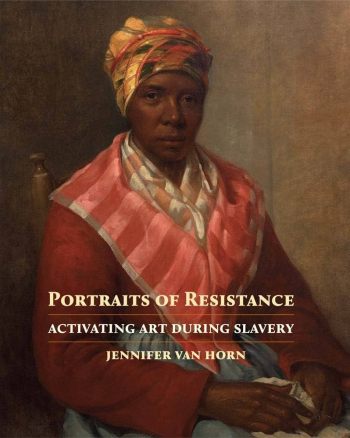 A highly original history of American portraiture that places the experiences of enslaved people at its center
This timely and eloquent book tells a new history of American art: how enslaved people mobilized portraiture for acts of defiance. Revisiting the origins of portrait painting in the United States, Jennifer Van Horn reveals how mythologies of whiteness and of nation building erased the aesthetic production of enslaved Americans of African descent and obscured the portrait’s importance as a site of resistance. Moving from the wharves of colonial Rhode Island to antebellum Louisiana plantations to South Carolina townhouses during the Civil War, the book illuminates how enslaved people’s relationships with portraits also shaped the trajectory of African American art post-emancipation. Van Horn asserts that Black creativity, subjecthood, viewership, and iconoclasm constituted instances of everyday rebellion against systemic oppression. Portraits of Resistance is not only a significant intervention in the fields of American art and history but also an important contribution to the reexamination of racial constructs on which American culture was built.
Jennifer Van Horn is associate professor of art history and history at the University of Delaware.
New Book | Picturing Animals in Early Modern Europe
An early modern story, concluding with late 17th-century France—and entirely relevant to the 18th century. From Brepols:
Sarah Cohen, Picturing Animals in Early Modern Europe: Art and Soul (London: Harvey Miller, 2022), 296 pages, ISBN: 978-1912554324, €150.
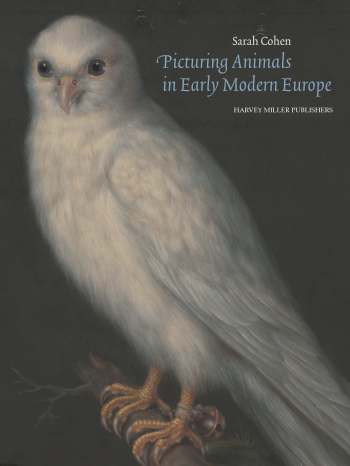 Do animals other than humans have consciousness? Do they knowingly feel and think, rather than simply respond to stimuli? Can they be said to have their own subjectivity? These questions, which are still debated today, arose forcefully in Europe during the sixteenth and seventeenth centuries, when empirical approaches to defining and studying the natural world were coming to the fore. Philosophers, physicians and moralists debated the question of whether the immaterial ‘soul’—which in the early modern era encompassed all forms of thought and subjective experience—belonged to the human mind alone, or whether it could also exist in the material bodies of nonhuman animals.
This book argues that early modern visual art offers uniquely probing and nuanced demonstrations of animal consciousness and agency. The questions that impelled the early modern debates over animal soul are used as a guide to examine a range of works produced in different media by artists in Germany, the Netherlands, northern Italy, and France. Manipulating the matter of their respective mediums, artists emphasized animals’ substantial existence, and a number of them explicitly connected their own role as painters, sculptors, or graphic artists with the life force of animal matter. As nature’s protagonists, the animals in these artworks assume many different kinds of roles, often quite subtle and hard to construe. When studied as a group, they offer striking insight into how early moderns struggled to define and depict the animal ‘soul’.
Sarah R. Cohen is Professor of Art History and Women’s Studies and Chair of the Department of Art and Art History at the University at Albany, SUNY. Her interdisciplinary research explores the body as it has been configured, performed and understood in early modern European culture. Her books include Art, Dance and the Body in French Culture of the Ancien Régime (2000) and Enlightened Animals in Eighteenth-Century Art: Sensation, Matter, and Knowledge (2021).
c o n t e n t s
Acknowledgments
Introduction
Part I: Nature’s Protagonists
Introduction
1 The Sensitive Soul
2 Matter into Life
3 Titian’s Characters
4 Montaigne and the Earthly Paradise
Part II: Animal Drama in the Netherlands
Introduction
5 Exemplary Animal Lives
6 The Debate Over Animal Soul
7 Life and Death
Part III: The Courtly Animal
Introduction
8 Animals in the Salon
9 Animals at Versailles
10 Interspecies Transformations
Conclusion
Notes
Call for Essays | Animal Preservation before 1850
From ArtHist.net, which includes the German version of the CFP:
‘Weder Fisch noch Fleisch’: Animal Preservation before 1850 in Theory and Practice
‘Weder Fisch noch Fleisch’: Tierpräparation vor 1850 in Theorie und Praxis
Volume of essays edited by Dorothee Fischer and Robert Bauernfeind
Proposals due by 31 May 2024, with final essays due by 15 November 2024
The volume ‘Weder Fisch noch Fleisch’ will explore the theory and practice of animal preparation prior to 1850. The book project focuses thus on animal preparations made before the modernization of taxidermy around the middle of the 19th century. While taxidermied objects themselves are irritating in their semantic ambivalence of being both the animal itself and its representation, early modern animal preparation often underwent a further distortion: It was susceptible to deformation due to inadequate conservation methods and created less evidence of the animals’ appearance rather than developing its own momentum as an aesthetic object. Neglect of historical specimens in modern collections contributed to the continuation of this momentum right up to the present day. Damage, deformation, and discolouration can often be observed on the—relatively few—preserved pre-modern specimens. However, both unintentional and deliberate deformations of the specimens contributed to the idea of the ‘nature’ of the respective animals since specimens formed the basis of early modern natural history collections in the 16th century.
In line with these observations, the volume aims to interpret historical specimens not only as objects of the history of both science and collecting, but also in terms of their distinct aesthetics and as sources of insights into (historical) human-animal relationships. In this way, the topic responds to current impulses from various research discourses, promoting interdisciplinary research. While these objects have recently been increasingly addressed from the perspective of collection history, questions about the taxidermied animal as an aesthetic object and trace of the living animal, further bridges the topic to questions of Visual Studies and Human-Animal Studies. From a Human-Animal Studies perspective, deceased yet materially preserved animals still receive less attention than living ones, despite their comparable impact on the relationship between humans and non-human animals. Also, questions about the ‘biographies’ of individual specimens are often a desideratum. Moreover, the exact practices of animal preparation before 1850 have only been marginally examined. The contributions of this volume aim to fill these gaps.
Topics for contributions could encompass, for example, preparation methods, preserved specimens, and their contribution to knowledge production. How do early preparations straddle naturalist interest and artistic craftsmanship? How do these procedures differ from subsequent centuries, and what insights do these objects offer into historical and contemporary human-animal relationships? A workshop held at the University of Trier in the summer of 2022 ignited the dialogue among perspectives from the humanities and natural history museum practice. The volume positions itself as a continuation of this exchange and a deepening of the interdisciplinary examination of early animal preparation. We welcome contributions not only from scholars in cultural studies, art history, and the history of science and knowledge, but also from practitioners of the trade and museum professionals, as well as individuals from other disciplines and perspectives.
Prospective contributors are invited to submit an abstract (maximum of 350 words) and a brief biography via email to the editors, Dorothee Fischer (fischerd@uni-trier.de) and Robert Bauernfeind (robert.bauernfeind@philhist.uni-augsburg.de) by 31 May 2024. Abstracts and contributions may be presented in either English or German. Feedback on our decision will be provided by the end of June 2024. The submission date of the complete contribution (with up to 40,000 characters and 3–4 illustrations) is 15 November 2024. The publication is planned for 2025.
Call for Papers | Improvisation and Citation in the Arts of 18th-C. France
For next year’s MLA conference, which takes ‘Visibility’ as its presidential theme:
Improvisation and Citation: Experimentation and Creativity in the Arts
18th-Century French Forum at the Modern Language Association Convention, New Orleans, 9–12 January 2025
Proposals due by 18 March 2024
This panel, covering topics of or related to eighteenth-century French or Francophone culture, invites submissions that explore the role of improvisation and citation as techniques in aesthetic creation, focusing on their adaptation from music to other art forms such as literature, theatre, and visual arts. We are particularly interested in interdisciplinary topics, including but not limited to: portrayals of musical performances in literary and theatrical works, and the use of improvisational and citational methods in literary forms. Additionally, we seek analyses of art criticism that employ the improvisational vocabulary of music. Another area of interest is also the representation of improvisation in various arts: we aim to examine which type of artists are portrayed as possessing the innate ability to improvise, and how literary works reinterpret and repurpose the motifs associated with the improvisational prowess of artists. Please send abstract submissions to scott.m.sanders@dartmouth.edu by Monday, 18 March 2024.
Conference | Traveling Objects: Material Cultures of the Atlantic Routes
Hosted by the INHA, as noted at ArtHist.net:
Travelling Objects: The Material Culture of the Atlantic Routes — Encounters of Cultures and Things
Institut national d’histoire de l’art, Paris, 21 February 2024
Organized by Maddalena Bellavitis and José Manuel Santos Pérez
9.30 Welcome and Opening
Maddalena Bellavitis (EPHE) and José Manuel Santos Pérez (Centro de Estudios Brasileños, Universidad de Salamanca)
9.45 Morning Session
1 Alicia Sempere Marín and Ignacio José García Zapata (Universidad de Murcia), Jesuits’ Travel Journal from New Spain to Europe: Routes, Stops, and Acquisitions of Devotional Objects in 1757
2 Genevieve Warwick (University of Edinburgh), Jewelled Currency: Glass Conterie in the First Age of Circumnavigation
3 Charikleia (Haris) Makedonopoulou (NTU Athens / ETH Zurich), Tracing the Multiple Journeys of the Palm Tree between the East and the West
4 Rebecca Legrand, Fanny Bulté (Université de Lille), The Taste of Others: Between Fear and Fascination
5 Patrícia Gomes da Silveira (Colégio Pedro II/Universidade do Estado do Rio de Janeiro), William John Burchell and the Representation of Brazilian Landscape in His Expedition, online
13.30 Lunch Break
14.30 Afternoon Session
6 Carmen Espejo-Cala (Universidad de Sevilla) and Paul Firbas (Stony Brook University, New York), Conexiones entre las imprentas de lima y Sevilla (siglos XVI y XVII): agentes y actores-red
7 Eduardo Corona Pérez (Universidad de Sevilla), En los albores de la fundación y de la fiebre del oro: los hombres y mujeres que hicieron Vila Rica de Ouro Preto
8 Lauren Beck (Mount Allison University), Viewing Spain from the Americas: Indigenous Perspectives, Experiences, and Sources
9 Britt Dams (Ghent University / Université Paul Valéry), « I am a better Christian than you are », The Remarkable Epistolary Exchange between Two Potiguara Leaders, Pedro Poti and Felipe Camarão
10 Eduardo Cesar Valuche Oliveira Brito (Universidade Federal Fluminense, UFF-Brasil), As ‘Missões de Marinheiros’ no Atlântico anglo-americano: a cultura material protestante na virada dos séculos XVIII e XIX
11 Ana-Marianela Rochas-Porraz (ÉNSA Versailles), Images d’expatriation de la France au Mexique: le fonds photographique de l’architecte Fernand Marcon (1877–1962)
17.30 Discussion and Conclusions
The description of the project from the Call for Papers is available here»
Contact Information
Maddalena Bellavitis
Laboratoire Saprat
École pratique des hautes études
Campus Condorcet – Bâtiment Recherche Nord
14, Cours des Humanités
93322 Aubervilliers Cedex
France
maddalena.bellavitis@gmail.com










 Enfilade
leave a comment