Conference | Commerce and Circulation of Decorative Arts, 1792–1914

Ignacio de León y Escosura, Auction Sale in Clinton Hall, New York, detail, 1876
(New York: The Metropolitan Museum of Art, Gift of the Artist, 1883, 83.11)
◊ ◊ ◊ ◊ ◊
From the conference programme:
The Commerce and Circulation of Decorative Arts, 1792–1914:
Auctions, Dealers, Collectors, and Museums
Le commerce et la circulation des objets d’art, 1792–1914:
Ventes aux enchères, marchands/es, collectionneurs/ses et musées
Musée des Beaux-Arts de Lyon, 25–27 September 2024
This international three-day colloquium, to be held in Lyon, France, from 25 to 27 September 2024, will investigate the role played by auctions, dealers, collectors, and museums in the circulation of the decorative arts from 1792 until 1914. Beginning with the ‘ventes des biens des émigrés’ in Revolutionary France and ending with the onset of World War I, these were years of seismic political and socio-economic change that revolutionised the art market. Day 1 will start with an introduction by Daniel Alcouffe and an opening lecture by Tom Stammers. Three sessions will follow on the role of auctions, antique dealers, and dealer-decorators in the circulation of the decorative arts. Day 2 will be devoted to the museums, collectors, and networks of exchange across borders. Day 3 will discuss the interplay between the market, expertise, and the tailoring of objects, ending in the afternoon with a round-table discussion on research in the digital age, showcasing several projects, with short presentations by Mark Westgarth, Lynn Catterson, Koenraad Brosens, and Anne-Sophie Radermecker. The conference is free to attend but registration is essential. Your registration will be effective for any session you wish to attend throughout the conference. Accommodation in Lyon is limited; so we suggest that you arrange this as soon as possible. Please see the conference page for updates.
This colloquium forms part of a wider project on the market for decorative arts: OBJECTive – ANR ACCESS ERC / Université Lumière Lyon-2, LARHRA : OBJECTive – ANR Objects through the Art Market : A Global Perspective – LARHRA.
w e d n e s d a y , 2 5 s e p t e m b e r
10.30 Introduction
• Welcome — Camille Mestdagh and Diana Davis (organisers)
• Introductory Comments — Daniel Alcouffe (Conservateur général honoraire au musée du Louvre), Les arts décoratifs : Une ressource pour l’avenir de l’histoire de l’art
• Opening Lecture — Tom Stammers (Reader in the history of the art market, The Courtauld Institute of Art), Dealing with the Decorative Arts: Sources, Paradigms, and Problems
11.30 Session 1 | The Auction: A Window on the Decorative Arts Market
Moderator: Suzanne Higgott (independent scholar, formerly the Wallace Collection)
• Helen Jacobsen (PhD, University of Oxford, Executive Director, The Attingham Trust), The Anatomy of an Auctioneer: Harry Phillips and the Growth of the Decorative Art Market in London, 1796–1839
• Stuart Moss (PhD candidate, University College London), ‘Schöne Kunstsachen aller Art’: Decorative Art at the Munich Secularisation Sales, 1803–1807
• Sabine Lubliner-Mattatia (PhD, Sorbonne Université, independent lecturer), From the Limelight to the Spotlight: The Jewellery Sales of Actresses in 19th-Century Paris (in French)
13.00 Lunch
14.00 Session 2 | Fluid Boundaries: Defining the Antique Dealer
Moderator: Paola Cordera (Associate Professor, Politecnico Milano, School of Design)
• Lucie Chopard (PhD, Ecole Pratique des Hautes Etudes, Saprat), The Sichel Brothers and the Parisian Art Market: Commercial Networks and Strategies
• Servane Rodié-Dumon (PhD candidate, Université d’Artois), Objects in Motion: Emile Peyre’s Collection of Decorative Art and the South Kensington Museum
• Nathalie Neumann (provenance researcher, formerly Johannes Gutenberg-Universität, Mainz), Reconstructing the Art Collection of Felix Ganz (1869–1944): From Constantinople to Northern Europe
15.30 Break
16.00 Session 3 | Dealer Decorators in the Gilded Age: Shaping Taste in the New World
Moderator: Adriana Turpin (Professor, IESA Arts and Culture)
• Justine Lécuyer (PhD, Sorbonne Université), Tapissiers: Interior Decorators as Experts, Antique Dealers, and Collectors: The Example of Rémon and Alavoine
• Flaminia Ferlito (PhD candidate, Scuola Alti Studi Lucca), Stanford White: Italian Baroque Elegance and the Decorative Art Market
• Aniel Guxholli (Lecturer, McGill University, School of Architecture), The Culture Market: American Firms and French Decorative Arts in Montreal
t h u r s d a y , 2 6 s e p t e m b e r
9.00 Session 4 | The Art Market and the Museum: Collecting, Display, and Knowledge
Moderator: Caroline McCaffrey-Howarth (PhD, Lecturer, University of Edinburgh)
• Françoise Barbe (Conservatrice en chef du patrimoine) and Fernando Filipponi (PhD, Chargé de recherche, musée du Louvre), The Commerce and Circulation of Maiolica between Italy and France, 1850–1902: A Case Study of the Argnani Collection in the Musée du Louvre (in French)
• Félix Zorzo (Assistant Curator, National Museums Scotland), The Public Collecting of Spanish Ceramics in 19th-Century Edinburgh
• Maialen Maugars (PhD candidate, University of Warwick), Collecting Italian Renaissance Decorative Arts for the Birmingham Museum and Art Gallery, 1881–1889
• Mirjam Dénes (Curator, Museum of Fine Arts, Ferenc Hopp Museum of Asiatic Arts, Budapest), Crafting Connections, Making Meanings, and Sealing Deals: Jenő Radisics and the International Network of the Budapest Museum of Applied Arts, 1897–1914
11.00 Break
11.30 Session 5 | Collectors and Their Networks of Acquisition
Moderator: Elodie Baillot (Maîtresse de conférences, Université Lumière Lyon-2)
• Armandine Malbois (PhD candidate, Ecole Pratique des Hautes Etudes, Saprat, Ecole du Louvre), The Schlichting Taste: Collecting 18th-Century French Decorative Arts for the Louvre, 1880–1914
• Agnès Bos (Déléguée générale, Comité des Travaux Historiques et Scientifiques, École nationale des chartes-PSL), A Very Special Collection: The Marquise Arconati Visconti (1840–1923), Her Network, and Personal Choices
• Paula Maria de la Fuente Polo (PhD candidate, Universidad Rey Juan Carlos, Madrid), The Formation of the Hispano-Moresque Ceramic Collection of Don Guillermo de Osma y Scull
13.00 Lunch
14.30 Session 6 | Networks and Cultural Exchange across the Oceans
Moderator: Florencia Rodríguez Giavarini (PhD Fellow, Centro de Investigaciones en Arte y Patrimonio, Buenos Aires)
• Gustavo Brognara (PhD candidate, Universidade de São Paulo), Cultural Exchanges: The Circulation of European Decorative Arts in Brazil
• Paolo Coen (Professor of Museology, Università di Teramo), The Export of Art Objects from Rome to Australia and New Zealand, 1884–1904
15.30 Break
16.00 Session 7 | The Middle East and Asia in Europe: Inventing Genres and Forming Taste
Moderator: Elizabeth Emery (Professor, Montclair University)
• Mercedes Volait (Emeritus Research Professor, CNRS), ‘Arab Antiques?’: Scrutinising an Egyptian Collection of Middle Eastern Artefacts Dispersed in the Wake of the Paris 1867 Exposition Universelle
• Akane Nishii (PhD, CRJ-EHESS, CY Cergy Paris Université), The Export of Japanese Decorative Arts from Yokohama in the 1870s
• Maria Metoikidou (PhD candidate, University of Glasgow), Shifting Perspectives on Japonisme Collecting: Exploring the Case of Gregorios Manos in the Market for Japanese Objects
f r i d a y , 2 7 s e p t e m b e r
9.00 Session 8 | Connoisseurship: Framing Objects for the Market
Moderator: Damien Delille (Maître de conférences, Université Lumière Lyon-2)
• Inès Maechler (Master, Ecole Pratique des Hautes Etudes, Saprat), The Paris 1876 Retrospective Exhibition of Tapestries: Institutions, Collectors, and the Development of a Market (in French)
• Pauline d’Abrigeon (Conservatrice, Fondation Baur/ PhD candidate, Ecole Pratique des Hautes Études), Pathways of the ‘Famille Rose’ in the Parisian Art Market during the Second Half of the 19th Century: From the Success of a Term to the Success of the Object
• Nick Pearce (Professor, Richmond Chair of Fine Art, University of Glasgow), A New Taste for the Old: Collecting Chinese Ceramics, 1910
10.30 Break
11.00 Session 9 | From Floor to Ceiling: Reconfiguring Objects for the Market
Moderator: Jérémie Cerman (Professeur, Université d’Artois)
• Kassiani Kagouridi (PhD candidate, University of Ioannina), Tailoring the ‘Baluchistan’ Carpets: Art Market and Art Historiography Interplay in Late 19th- and Early 20th-Century Europe
• Mei Mei Rado (Assistant Professor, Bard Graduate Center), Fragments, Encyclopedia, and Industry: Japanese Silk Samples Collected and Sold by Siegfried Bing and Hayashi Tadamasa
• Roberta Aglio (PhD candidate, Universitat Rovira i Virgili, Tarragona), The Dispersion, Circulation, and Reuse of Ceiling Panels in France in the 19th and 20th Centuries
12.30 Lunch
13.30 Session 10 | Rethinking Research Approaches for the Digital Age
Moderator: Sandra van Ginhoven (Head, Getty Provenance Index, Getty Research Institute)
• Camille Mestdagh (Chercheure, Université Lumière Lyon-2) and Morgane Pica (Ingénieure d’études, ENS Lyon), A Presentation of Project OBJECTive: Objects through the Art Market
Round Table
• Lynn Catterson (Lecturer, University of Columbia, NY), Stefano Bardini: Mapping a Dealer’s Transnational Network
• Mark Westgarth (Professor, University of Leeds), Antique Dealer Archives in the Digital Age
• Anne-Sophie Radermecker (Assistant Professor, Université Libre de Bruxelles), Price-Related Sources in Historical Contexts: The Case of the Val Saint Lambert Crystal Glassware Manufactory
• Koenraad Brosens (Professor, KU Leuven University), Project Cornelia and Slow Digital Art History: A New Path in the Study of Flemish Tapestries
• Pierre Vernus (Maître de conférences, Université Lumière Lyon-2, LARHRA, Head of Project SILKNOW), Concluding Remarks
16.00 Final Words — Natacha Coquery, Igor Moullier, and Paola Cordera
Organising Committee
Natacha Coquery (Professeure, Université Lumière Lyon 2, LARHRA), Camille Mestdagh (Post-doctoral researcher, Université Lumière Lyon 2, LARHRA), Igor Moullier (Maître de conférences, ENS Lyon, LARHRA), Rossella Froissart (Directrice d’études, Ecole Pratique des Hautes Études-PSL, SAPRAT), Diana Davis (Independent researcher, PhD, University of Buckingham)
Scientific Committee
Arnaud Bertinet (Maître de Conférences, Paris 1 Panthéon Sorbonne), Jérémie Cerman (Professeur, Université d’Artois, Arras), Paola Cordera (Associate Professor, Politecnico di Milano), Elizabeth Emery (Professor, Montclair State University, New Jersey), Sandra van Ginhoven (Head, Getty Provenance Index, Getty Research Institute, Los Angeles), Anne Helmreich (Director, Archives of American Art, Smithsonian Institution, Washington), Caroline McCaffrey-Howarth (Lecturer, University of Edinburgh), Johannes Nathan (co-founder of the Centre of Art Market Studies, Technische Universität, Berlin), Anne Perrin-Khelissa (Maître de conferences HDR, Université Toulouse-Jean Jaurès), Florencia Rodríguez Giavarini (Doctoral fellow, UNSAM-CONICET, Buenos Aires), Adriana Turpin (Head of Research, IESA, Paris)
Enfilade turns 15!
From the Editor
This weekend (22 June) Enfilade turns fifteen! No one is more surprised than I am. Thanks to you all for reading. And to celebrate, please buy an art book! It’s also a fine time to renew (or begin) your HECAA membership.
Best for a good summer!
Craig Hanson
Call for Papers | SEASECS 2025, Savannah
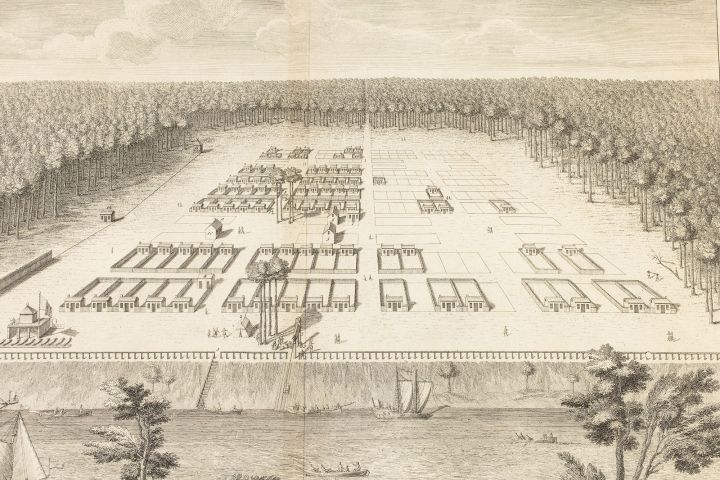
Paul Fourdrinier, after George Jones, A View of Savannah as it stood the 29th of March 1734, detail, ca. 1734, engraving, 20 × 26 inches.
◊ ◊ ◊ ◊ ◊
From SEASECS, with a selection of panels of particular interest for art historians:
51st Annual Meeting of the Southeastern American Society for Eighteenth-Century Studies
The Past is Still Present: Reclaiming the Eighteenth Century
The DeSoto, Savannah, Georgia, 6–8 February 2025
Proposals due by 16 September 2024
Conference Highlights
• Plenaries by Kurt Knoerl (underwater archaeologist and historian) and Celeste Guichard (architectural historian)
• Walking tour of historic Savannah led by Christopher Hendricks
• Reacting to the Past pedagogical workshop led by David Eick
• Writing (and submitting!) a pedagogy article led by Martha Bowden
Three ways to submit proposals
1. For any of the 23 outstanding Panels Seeking Participants, send your paper proposal (230–300 words) directly to the panel organizer by Monday, September 16. Include your full name, your institutional affiliation, and your email address (if possible, your ‘official’ institutional/professional email address).
2. For all other individual paper submissions on any topic related to the long 18th century, send your proposal to Elizabeth Kuipers by Monday, September 16, Elizabeth.Kuipers@asurams.edu. Include your full name, your institutional affiliation and your email address.
3. Send information on fully formed panels (including but not limited to undergraduate research panels) to Elizabeth Kuipers by Monday, September 16. Organizers, please send the title of your panel, your name, your institutional affiliation, and your email address along with the names of each of your participants, the titles of their papers, their institutional affiliations, and their email addresses.
Notifications of acceptances will be sent the first week of October.
Graduate students: We will have extra graduate student travel stipends this year to defray costs, thanks to the generosity of SEASECS members! Application details will be available in the fall.
◊ ◊ ◊ ◊ ◊
Illustrating the Past: The Long 18th Century in Graphic Novels, Comic Books, and Comic Strips
Joe Johnson, joejohnson@clayton.edu
This panel seeks presentations on graphic novels, comic books, and comic strips produced during or after, set in, and/or responding to the long 18th century. These comics can be adaptations of period works (such as renderings of Gulliver’s Travels, Robinson Crusoe, Tristram Shandy, and Frankenstein) or original stories depicting the era, its events, and people, such as Isaac Newton, the noted artist Jacques-Louis David, Napoleon, France’s loss of Canada in 1759, or its Revolution thirty years later.
◊ ◊ ◊ ◊ ◊
Art & Nature: Landscape in the Long 18th Century
Kasie Alt, kalt@georgiasouthern.edu
Ars et natura, art/skill and nature, form a foundational pairing, or tension depending on the source, in Enlightenment thinking. At the intersection of art and nature the concept of ‘landscape’ pervades the 18th century. Beneath what was, in European artistic hierarchies, a relatively lowly genre lies a complex matrix of identities and questions about the nature of the world and one’s place in it. Throughout the 18th century, art, literature, and philosophy, on a global scale, grappled with ideological, aesthetic, and cultural approaches to land in a manner that blurs, tests, and renegotiates the very identity of humans vis à vis nature and each other. Landscape was often used to locate oneself—to develop, negotiate, or reappraise one’s identity, place, and/or relationship to the world in which we live. Leveraging the interdisciplinary nature of the concept, this panel invites presentations examining landscape, broadly defined, in any discipline including visual and material cultures, architecture and design, literature, history, and philosophy, in any geographic area during the long 18th century. Given the theme of this year’s conference, presentations that discuss the lasting presence, effects, or ideological implications of 18th century landscape in today’s world are particularly welcome.
◊ ◊ ◊ ◊ ◊
Teaching Symposium
Martha F. Bowden, mbowden@kennesaw.edu
The teaching symposium invites teachers of the 18th century in all disciplines to contribute their particular strategies for introducing their 21st-century students to the world of the long 18th century. The 18th century offers challenges to our students: it is so near and yet so far, its developing consciousness of race, ethnicity, and gender like ours in its struggles but often so foreign in its approaches and conclusions. You may want to describe a syllabus for a class specifically about the 18th century, or a unit in a survey or freshman seminar that includes the 18th century but is not confined to it. Teachers at all levels, from AP and honors high school courses through graduate courses, are invited to submit proposals.
As time goes on, the challenges to our teaching change; how did the disruptions of the Covid pandemic change the needs of your students? Do you have strategies for dealing with AI, including teaching your students to use AI-powered tools? How has the increased availability of Digital Humanities resources affected your teaching strategies? The symposium takes the form of short, focused presentations about specific strategies, ideally accompanied by handouts that the audience can take home. While the presenters are usually the instructors, we have also had professor/student dialogues; I encourage participants to consider this dialogic approach to the pedagogy of the 18th century. Historically, the sessions have been very well attended, and the audiences not only ask really significant questions but also contribute wisdom of their own. I think of it as a conversation as much as a traditional panel. Send your proposal as a Word attachment containing the description of your teaching strategy.
◊ ◊ ◊ ◊ ◊
From Textile to Fashion and Beyond
Arlene Leis, Aleis914@gmail.com
What histories might emerge when we explore simultaneously textile and fashion practices and examine the possibilities between and beyond the two? Over the past fifty years research into the synergies between textile and dress histories continue to gain momentum. Ground breaking research by Lou Taylor, Evelyn Welch, Peter McNeil, Luca Molà, Rebecca Arnold, and John Styles have studied how dress and textiles were sources of innovation and economic and cross-cultural influences. More recently, Christopher Breward, Beverly Lemire, and Giorgio Riello’s substantial The Cambridge Global History of Fashion presents broader contextualization and investigates a range of key topics pertaining to fashion practice across time and space, including synergies between dress and textile, while also providing sharp analysis of wider visual and material cultures. There is also a continuing interest in how science and technology as seen in photography, conservation, reconstruction, and digitization help us better understand complex textiles and garment histories.
Our panel focuses on the interdisciplinarity between two seemingly separate histories: textile and fashion. Examining closely the relationship between the two, including across diverse media and genres, our goal is to utilize this panel as a way to explore, encourage, and foreground a range of interactions, and it attempts to further grasp and understand, at historical, practical, and theoretical levels, the possible links between these practices. The papers explore the cultural and social histories of apparel and textiles as well as their preservation, with the aim of presenting and making way for new and emerging research on textiles, fashion, and beyond.
◊ ◊ ◊ ◊ ◊
Artist’s Signatures
Sarah Sylvester Williams, willisj@millsaps.edu
During the 18th century, artists did not always sign their artworks. Scholar Charlotte Guichard has written about artists who did, such as Chardin, François Boucher, Hubert Robert, and Jacques-Louis David. These signatures were evidence of the changing status of the artist and art market, as well as political developments. But what about other artists who did not regularly sign their work? This panel seeks papers that deal with rare or infrequent artistic signatures. What do the odd occasions when the artist included their signature tell us about the artist, the artwork, or the circumstances of its commissioning or reception?
◊ ◊ ◊ ◊ ◊
Material Culture of Gender
Lauren DiSalvo, Laurendisalvo4@vt.edu
This is an open session exploring the relationships between material culture and gender in the long 18th century. Of interest are papers that use material culture to explore how social behavior relating to gender might be communicated or reinforced through material objects. For example, Ryan Whyte writes about miniature women’s almanacs as a subversive mode of women’s participation in Enlightenment knowledge. The miniaturizing of paintings in the almanacs’ pages and their decorative covers presented a feminized knowledge, yet the same material object allowed women to participate in the discourse of history painting. Especially welcome are papers that use material culture to challenge or complicate 18th-century understandings of gender. Participants may choose to focus discussions on gendering in relationship to individual objects or their materiality.
◊ ◊ ◊ ◊ ◊
Representations of Indigenous Perspectives
Patty Hamilton, phamilto@uu.edu
To follow up on LeAnne Howe’s plenary presentation at our 2024 conference at Furman, “The Art and Craft of Image Production in Fiction: Depictions of Native Americans in Historical Fiction,” I propose to broaden the conversation from ‘depictions’ (which may or may not be historically accurate depending on who is doing the depicting, as Prof. Howe illustrated) to ‘representations of indigenous perspectives’ in the long 18th century. Spanning genres, these representations may be literary, historical, or artistic, but they should share in common an attempt to accurately represent the perspective (beliefs, values, social fabric, experience) of indigenous peoples (as Olaudah Equiano does in the opening chapter of his autobiography). What insights or re-visioning can such representations yield? For the purposes of the panel, ‘indigenous’ may be broadly construed as the native peoples of North, Central, and South America and the Caribbean as well as West Africa, India, or other sites of European empire in the 18th century. Orientations may be critical or pedagogical.
New Book | Billy Waters is Dancing
From Yale UP:
Mary Shannon, Billy Waters is Dancing: Or, How a Black Sailor Found Fame in Regency Britain (New Haven: Yale University Press, 2024), 384 pages, ISBN: 978-0300267686, $38.
 The story of William Waters, Black street performer in Regency London, and how his huge celebrity took on a life of its own
Every child in Regency London knew Billy Waters, the celebrated ‘King of the Beggars’. Likely born into enslavement in 1770s New York, he became a Royal Navy sailor. After losing his leg in a fall from the rigging, the talented and irrepressible Waters became London’s most famous street performer. His extravagantly costumed image blazed across the stage and in print to an unprecedented degree. For all his contemporary renown, Waters died destitute in 1823—but his legend would live on for decades. Mary L. Shannon’s biography draws together surviving traces of Waters’ life to bring us closer to the historical figure underlying them. Considering Waters’ influence on the London stage and his echoing resonances in visual art, and writing by Douglass, Dickens, and Thackeray, Shannon asks us to reconsider Black presences in nineteenth-century popular culture. This is a vital attempt to recover a life from historical obscurity—and a fascinating account of what it meant to find fame in the Regency metropolis.
Mary L. Shannon is a writer, broadcaster, and senior lecturer in English literature at the University of Roehampton, where her research focuses on nineteenth-century literature and culture. She is author of the award-winning Dickens, Reynolds, and Mayhew on Wellington Street.
Exhibition | The Legacy of Vesuvius
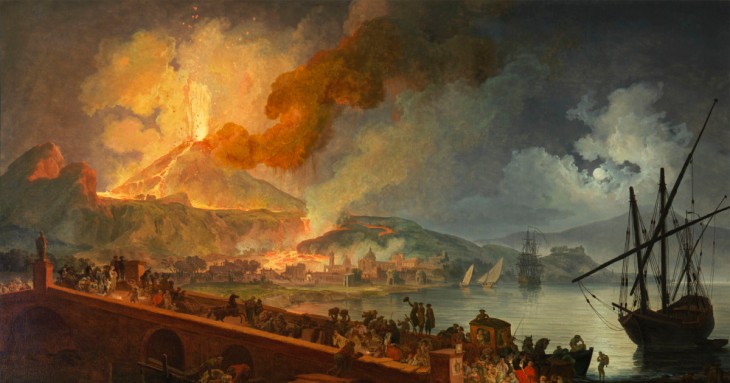
Pierre-Jacques Volaire, Eruption of Mount Vesuvius on the Ponte della Maddalena, 1782, oil on canvas, 129 × 260 cm
(Naples: Museo e Real Bosco di Capodimonte)
◊ ◊ ◊ ◊ ◊
From the press release (8 May) for the exhibition opening this fall:
The Legacy of Vesuvius: Bourbon Discoveries on the Bay of Naples
The Meadows Museum, SMU, Dallas, 15 September 2024 — 5 January 2025
Curated by Michael Thomas, with Heather Bowling and P. Gregory Warden
Set during one of the most dynamic moments in Western history, The Legacy of Vesuvius: Bourbon Discoveries on the Bay of Naples looks at the groundbreaking archaeological excavations sponsored by the Bourbon King Charles VII of Naples—the future king of Spain—and his wife, Maria Amalia, and continued by his son and successor Ferdinand IV, and demonstrates their formative influence on art and thought in the Age of Enlightenment. Comprised of nearly 50 objects, the exhibition’s unique combination of Roman archaeological material from the excavations at Pompeii, Herculaneum, and other sites, mingled with 18th-century paintings, porcelain, and prints—including major loans from Museo e Real Bosco di Capodimonte, Museo Archeologico Nazionale di Napoli, The Metropolitan Museum of Art, and the Wellcome Collection—will provide an exciting introduction to the archaeological treasures of this period and their formative influence on contemporary artistic production. The Meadows Museum, SMU, is the sole venue for the exhibition, which will open on 15 September 2024 and run through 5 January 2025.
“When Mount Vesuvius erupted in 79 CE, in a near instant it preserved the art and material culture of the thriving Roman cities around the Bay of Naples. While these archaeological sites were known in the early modern period, it was thanks to the patronage of the Bourbon monarchs in the 18th century that their systematic excavation was undertaken. The result was nothing short of ‘Roman-mania’ as recently unearthed objects inspired contemporary artistic production, from fashion to furniture, and cemented the Bourbon tastemakers as the force behind Neoclassicism” said Amanda W. Dotseth, the Linda P. and William A. Custard Director of the Meadows Museum. “Upon assuming the throne as Charles III of Spain, the Bourbon monarchs brought their taste, and crucially, their artists with them to Madrid where the archaeological discoveries of Herculaneum and Pompeii inspired new styles and forms in Spanish art, changing it forever. By bringing together ancient artifacts and the 18th-century objects they inspired, this exhibition celebrates the lasting impact of visionary patrons—a fitting subject given the Meadows Museum was itself founded by such a collector with a vision, Algur H. Meadows.”
“We are excited to introduce Dallas to Naples, its connection to Spain, and the profound impact the Bourbon excavations had on the cultural and artistic landscape of 18th- century Europe,” said Michael Thomas, professor and director of the Edith O’Donnell Institute of Art History at The University of Texas at Dallas and the exhibition’s curator. “At its core, this exhibition celebrates the discovery of what is arguably the world’s most famous archaeological site, Pompeii, as well as other ancient sites destroyed by the eruption of Vesuvius in 79 CE. The exhibition captures the innovative vision of Charles and Maria Amalia in the years just before they assumed the Spanish throne. The reigns of Charles and his successor Ferdinand define the ‘Golden Age’ of Naples when the city rose to the forefront of artistic production and cultural influence.”
The Legacy of Vesuvius will unfold across several galleries that define different topics. The exhibition begins with an overview of key historical personalities from the period, emphasizing the royal family’s significant role. Featured prominently in this room are depictions of Charles VII and Maria Amalia, by Francesco Liani, an esteemed Neapolitan artist. A depiction of a youthful Ferdinand by Bourbon court painter Anton Raphael Mengs captures the 8-year old monarch on the occasion of his accession to the throne. Antonio Joli’s landscape painting The Royal Procession of Piedigrotta, seen from the West documents a royal procession that includes Charles and Ferdinand in a gilded carriage set against a panoramic view of the city of Naples, the city at the center of this exhibition.
The next section will showcase finds discovered near the royal palace at Portici which included the ancient city of Herculaneum. These finds include Roman wall paintings, documents cataloging Bourbon finds, as well as 18th-century renditions of ancient artifacts in biscuit porcelain, and 19th-century copies of the famous bronzes from the Villa of the Papyri at Herculaneum. Additionally, a copy of Karl Jakob Weber’s detailed plan of the Villa’s walls, excavation tunnels, and ‘find-spots’, along with excerpts from the Bourbon-commissioned work Le Antichità di Ercolano Esposte (The Antiquities of Herculaneum Exhibited) will be on display.

Flora, from the Villa Arianna, Stabiae, early first century CE, pigment on plaster, 38 × 32 cm (Naples: Museo Archeologico Nazionale de Napoli; photo by Giorgio Albano).
In the next gallery, visitors will see a selection of frescoes that were recovered from both public and private contexts from Pompeii and Stabiae, including a wall painting from a lararium (household shrine) in Pompeii; a fresco and gladiator helmet from the gladiator barracks in Pompeii; and frescoes from the Villa Arianna, Stabiae. Also in this gallery are several objects from Temple of Isis in Pompeii, excavated during the reigns of both Charles and Ferdinand. This temple served as a center for the worship of the Egyptian goddess Isis and documents the influence of Egyptian culture in Roman religious practices. On display will be ancient artifacts unearthed during the Bourbon- led archaeological efforts at the temple, including frescoes depicting sacred landscapes alongside imagery of priests conducting rituals. Among the other notable items will be a bronze sistrum, an instrument used in ceremonies by the priests of Isis.
The next section will highlight the Bourbon court’s fascination with Naples’ picturesque landscapes. Antonio Joli’s pair of evocative paintings depicting King Charles’ departure to Spain provides perspectives from both the maritime and coastal vantage points. Another work by Joli captures Ferdinand’s hunting party in front of the Capodimonte palace with the city of Naples as the backdrop. Jakob Philipp Hackert’s work depicts Ferdinand in his favorite pastime, hunting, while also capturing the natural beauty of the Neapolitan coastline. Élisabeth Vigée Le Brun’s portrait of a young Francis of Bourbon features Mount Vesuvius in the background, further underscoring the connection between the landscape and the Bourbon court. A nighttime scene of the Eruption of Mount Vesuvius on the Ponte della Maddalena (1782) by French artist Pierre-Jacque Volaire emphasizes the sublime beauty and terror of the volcano.
Looming over much of this history were the many eruptions of Mount Vesuvius itself, which will be explored by the prints of Pietro Fabris in the next room. Sir William Hamilton commissioned Fabris to record the scientific properties of Vesuvian eruptions in his publication, Campi Phlegraei: Observations on the Volcanos of the Two Sicilies (1776). Hamilton, a British diplomat, archaeologist, and volcanologist served as the British Ambassador to the Kingdom of Naples from 1764 to 1800. His tenure in Naples provided him the opportunity to indulge in his passion for classical antiquities and led to significant contributions to the fields of archaeology and volcanology.
Lastly, the exhibition demonstrates the influence of these discoveries on the art of the Bourbon court and the enduring impact it had on the artistic production associated with the Grand Tour. This room includes examples of royal furniture and porcelain from the famed factories at Capodimonte. The exhibition concludes with a first look at Royal Power, Exoticism, and Technology, a digital heritage collaboration between the Meadows’s Custard Institute for Spanish Art and Culture and the Edith O’Donnell Institute of Art History that is creating digital models of the two Bourbon porcelain rooms at the royal palaces of Portici and Aranjuez.
The Legacy of Vesuvius: Bourbon Discoveries on the Bay of Naples is a collaboration between the Meadows Museum, SMU, and the Edith O’Donnell Institute of Art History at The University of Texas at Dallas. The exhibition is curated by UTD Professor Michael Thomas, PhD, Director of the O’Donnell Institute, with support from Heather Bowling, Research Coordinator at the O’Donnell Institute, and P. Gregory Warden, PhD, the Mark A. Roglán Director of the Custard Institute for Spanish Art and Culture at the Meadows Museum.
A fully illustrated, hardcover catalogue published by Scala Arts & Heritage Publishers—and sponsored by The Custard Institute for Spanish Art and Culture—will accompany the exhibition, with essays by Michael Thomas, P. Gregory Warden, Robin Thomas, Eric M. Moormann, Carmine Romano, and Agnieszka Anna Ficek. Essay topics include multiple aspects of the Bourbon Court and Vesuvian archaeology. Each object will have a catalogue entry, written by Heather Bowling, Domenico Pino, and Lynley McAlpine.
Michael L. Thomas, ed., The Legacy of Vesuvius: Bourbon Discoveries on the Bay of Naples (London: Scala Arts Publishers, 2024), 192 pages, ISBN: 978-1785515736.
Exhibition | Colonial Memory in the Thyssen-Bornemisza Collections
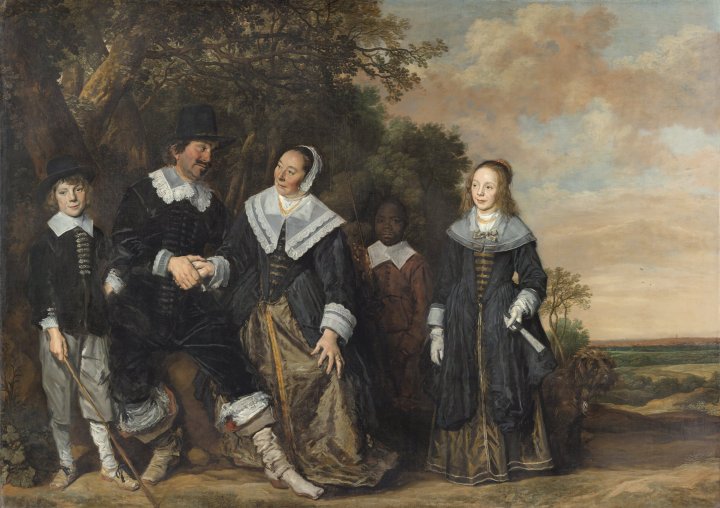
Frans Hals, Family Group in a Landscape, ca.1645–48, oil on canvas, 202 × 285 cm
(Madrid: Museo Nacional Thyssen-Bornemisza)
◊ ◊ ◊ ◊ ◊
Opening this week at the Thyssen:
Colonial Memory in the Thyssen-Bornemisza Collections
Museo Thyssen-Bornemisza, Madrid, 25 June — 20 October 2024
The colonial system lies at the origins of modern western society while its legacy continues to affect human and geopolitical relations around the world. As Europe advanced in the conquest of liberties, it simultaneously imposed a regime of extractivism and physical domination on its territories across the globe.

Circle of Sir Joshua Reynolds (?), Portrait of a Man from the Island of Dominica (?), ca. 1770s, oil on canvas, 76 × 64 cm (Madrid: Museo Nacional Thyssen-Bornemisza).
This exhibition sets out to decipher the elements of colonial power within the iconography of certain works in the Thyssen-Bornemisza collections. A selection of paintings will reveal ‘invisibilised’ stories of racial domination, marronage, and the civil rights struggle, as well as the introduction of the modern mercantile system based on European military control, the use of enslaved African workers, and the appropriation of firstly Latin American and later Asian and African land and raw materials. Visitors will be introduced to fictitious representations of new Arcadias and will witness the western projection of its unsatisfied desires in the form of the ‘Orient’ and the construction of the ‘other’ as barbarian or primitive.
With the aim of rethinking the future through the parameters of cultural diversity, the exhibition benefits from a curatorial team comprising Juan Ángel López (curator at the museum and director of this project), Alba Campo Rosillo (art historian), Andrea Pacheco González (independent curator and artistic director of the space ‘FelipaManuela’), and Yeison F. García López (director of the ‘Espacio Afro’ cultural centre).
La memoria colonial en las colecciones Thyssen-Bornemisza (Madrid: Fundación Thyssen-Bornemisza, 2024), 232 pages, ISBN: 978-8417173906, €42.
Call for Papers | The Material Text in Latin American Digital Humanities
From the SHARP listserv (Society for the History of Authorship, Reading and Publishing) . . .
The Material Text in Colonial and Nineteenth-Century Latin American Digital Humanities
El texto como objeto material en las humanidades digitales latinoamericanas del periodo colonial y del siglo XIX
Online, Fall 2024
Proposals due by 12 July 2024
The Alliance for Digital Research on Early Latin America (adrela.net) seeks proposals for a virtual symposium examining ways that digital methods and tools enable us to ask new questions about the materiality of manuscript and print texts from the colonial period and nineteenth century. This will be a multilingual session, or series of sessions, in English, Spanish, and potentially other languages that will take place sometime between September 2024 and January 2025. Please send a title, 250-word abstract, and a short bio (150 words maximum) to Clayton McCarl, clayton.mccarl@unf.edu, by July 12.
Exhibition | Miguel Cabrera (1695–1768)
Now on view at Madrid’s Museo de América:
Miguel Cabrera: Las reglas del arte de un pintor novohispano
Museo de América, Madrid, 31 May — 13 October 2024
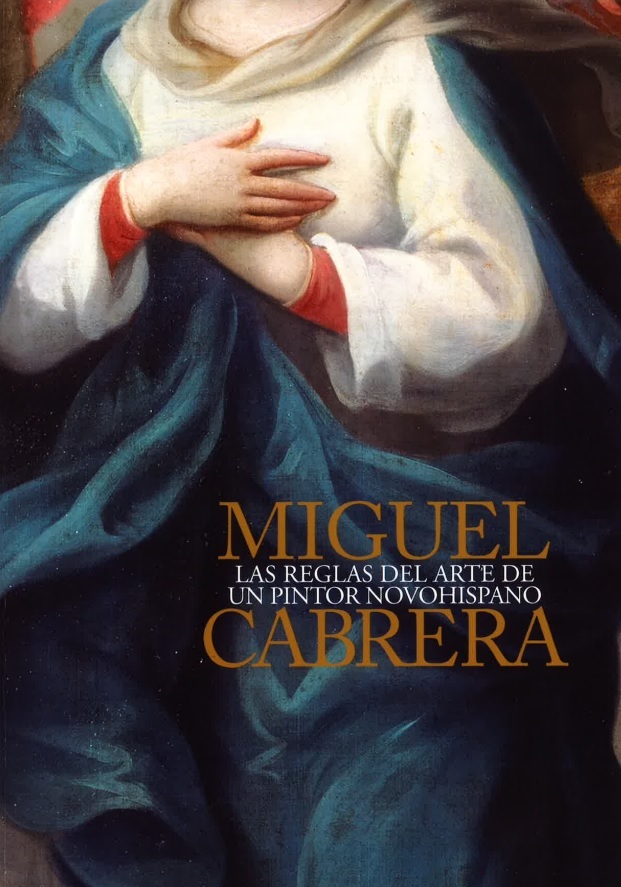 Desde 2019 el Museo de América ha liderado el proyecto Estudio y conservación de la serie La vida de la Virgen, de Miguel Cabrera. El proyecto integró numerosos profesionales de diferentes instituciones museísticas y académicas españolas y latinoamericanas. Sus trabajos han aportado importantes avances en el conocimiento de la pintura barroca novohispana y la conservación de la pintura sobre lienzo. Como resultado del extenso trabajo llevado a cabo se presenta esta magna exposición para cerrar con broche de oro este proyecto: La primera exposición en España dedicada a uno de los pintores más importantes del México Virreinal: Miguel Cabrera, a su vida, obra y el estudio técnico de su pintura. El discurso museográfico se sustenta en veintitrés obras pictóricas pertenecientes principalmente a las colecciones del Museo de América, así como préstamos bibliográficos de la Biblioteca Nacional de España.
Objetivos de la exposición
• Dar a conocer en España la obra y técnica de Miguel Cabrera, maestro de la pintura novohispana
• Presentar la magnífica serie de cuadros de La vida de la Virgen, su historia y su llegada a España en el siglo XVIII
• Mostrar al público los trabajos de conservación y de investigación técnica realizados en torno a estas obras
• Poner en valor el trabajo de conservación y restauración del patrimonio histórico-artístico llevado a cabo en los museos e instituciones museísticas
Miguel Cabrera: Las reglas del arte de un pintor novohispano (Madrid: S.G. Museos Estatales, 2024), 296 pages, ISBN: 978-8481818611, €21.
The Decorative Arts Trust Announces Recipients of Publishing Grants
From the press release (13 June 2024) . . .
The Decorative Arts Trust congratulates the inaugural recipients of their new Publishing Grants. The Hispanic Society Museum and Library; the Philadelphia Museum of Art; and The Huntington Library, Art Museum, and Botanical Gardens received Publishing Grants for Collections, Exhibitions, and Conferences, and Dr. Joseph Larnerd from Drexel University received a Publishing Grant for Dissertations and First-Time Authors.
In November 2024, the Hispanic Society Museum and Library in New York City’s Washington Heights will publish A Room of Her Own: The Estrados of Viceregal Spain to accompany their landmark exhibition of the same name. Guest Curator Alexandra Frantischek Rodriguez-Jack and Deputy Director and Head of Collections Margaret Connors McQuade will lead this examination of the estrado, defined in the early 18th-century treatise Diccionario de Autoridades as the “set of furniture used to cover and decorate the place or room where the ladies sit to receive visitors.” The estrado was a remarkable space where a diverse group of women engaged in elaborate social practices and displayed their collections of valuable objects from the Americas, Asia, and Europe. Decorative arts, paintings, rare books, and engravings from the Hispanic Society Museum and Library’s collection will be presented in an entirely new light, with many to be exhibited for the first time.
The Huntington Library, Art Museum, and Botanical Gardens in San Marino, California plans to release a comprehensive publication about an influential Los Angeles-based ceramics artist in fall 2026. Although additional details cannot be announced at this time, the book will complement an exhibition led by Lauren Cross, PhD, the Gail-Oxford Associate Curator of American Decorative Arts.
The Philadelphia Museum of Art is publishing Art, Industry, and Reform in Philadelphia, 1876–1926, accompanying the museum’s spring 2026 exhibition of the same name. David Barquist, The H. Richard Dietrich, Jr., Curator of American Decorative Arts, and Colin Fanning, Assistant Curator of European Decorative Arts, lead the exhibition and publication, which will focus on Philadelphia artisans and architects who drew on a range of inspirations—from the British Arts and Crafts movement to masterworks at the World’s Fairs—to address challenges of urban industrialization. Their investigation will be among PMA’s offerings during the nation’s 250th commemoration, which is also the museum’s 150th anniversary year.
Dr. Joseph Larnerd received the inaugural Publishing Grant for Dissertations and First-Time Authors. Larnerd, an Assistant Professor of Design History at Drexel University in Philadelphia, will publish Undercut: Cut Glass in Working-Class Life during the Long Gilded Age with the University of Delaware Press in fall 2025. This publication offers an original history of cut glass refracted through the labors required to make and maintain the glistening wares. Larnerd will show how popular representations of the medium and these widely discussed labors undercut how working-class peoples imagined and enacted social class, privilege, and mobility.
The deadline to apply for Decorative Arts Trust Publishing Grants is March 31 annually. For more information, visit decorativeartstrust.org.
Conference | The Study of the Book Trade since Peter Isaac
From the Centre for Printing History and Culture:
Unfinished Business: Progress, Stasis, and New Directions in the Study of the Book Trade since Peter Isaac
Annual Print Networks Conference
University of Newcastle-upon-Tyne, 9–10 July 2024
Organised by the University of Newcastle and sponsored by Print Networks and the Centre for Printing History and Culture, this conference considers the British and Irish book trades locally, nationally, and in their global perspective, including comparative perspectives. It addresses questions such as how has research on these trades’ histories developed and advanced, or not, in the past two decades? How has an emphasis on valuing the local, the specific or the seemingly minor been taken up in studies of the book trade? How do such interests sit with the expansion of book trade research into ever larger data-sets and/or within national and global print histories? What are the key social, political, and technological questions scholars of the book trade are now grappling with? In what fresh directions must the study of the trades now strike out? The fee for this two-day conference is £80.
Peter Isaac (1921–2002) investigated numerous strands of the British book trade. A distinguished professor of civil and public health engineering at Newcastle University, he also enjoyed a highly regarded career as a print historian and bibliographer. The working group that he founded, The History of the Book Trade in the North, was immensely influential in moving the study of the British book trade beyond the confines of London. More broadly, his work insisted on the value of the local for our national and global understandings of the book trade. He considered the internationally famous engravings of Thomas Bewick, the ornament stocks of the Alnwick pharmacist and printer William Davison, and the inventory of books sold by a Penrith grocer in the seventeenth century to be equally worthy of scholarly attention and careful study.
t u e s d a y , 9 j u l y
9.30 Panel 1 | Politics and the Print Trade
• Kate de Rycker (Newcastle), ‘Danter’s Gentleman’: Thomas Nashe and the Precarity of Cheap Print
• Maria Zukovs, (St Andrews), Beyond the United Irishmen: A View of the French Revolution from the Dublin Press, 1789–94
10.45 Panel 2 | Radical Work
• Fionnghuala Sweeney (Newcastle), The Unfinished Business of Freedom: Slave Narratives, Surfeit, and the British Northeast in Antebellum Black Atlantic Print Culture
• Andrea Lloyd (BCU), ‘An Indissoluble Unity’: Considering the Relationship between outward Influences and the Design of Birmingham’s Radical Newspapers, 1815–36
12.15 Panel 3 | The Marketplace of Print: Advertising, Promotion, Demand
• Bethan Elliott (York), ‘None… Took any Notice of It’: Publication and the Promotion of Romantic Drama in Print
• Karen McAulay (Royal Conservatoire of Scotland), ‘Music for All’: The Rise and Fall of Scottish Music Publishing, 1880–1964
13.15 Lunch break
14.15 Panel 4 | Advancing the Study of Women in the Book Trade
• Emma Sibbald (Queens’ College, Cambridge), ‘A Servant’s Receipt for the World’: Women Wagoners and the Antiquarian Book Trade at the Bodleian Library, 1690–1720 [online]
• Joanne Butler (Keele), Locating Women Booksellers in 18th-Century Regional England
• Charley Matthews (Edinburgh), Geraldine Jewsbury’s Labour as a 19th-Century ‘Publisher’s Reader’
16.15 Keynote 1
• Ruth Frendo (Stationers’ Company)
w e d n e s d a y , 1 0 j u l y
9.30 Panel 5 | The Networks and Power Structures of the Early Modern Book Trade
• Sam Bailey, Sorority, Spycraft, and Sodomy: Collaboration and the Erotic Book Trade in 18th-Century London
• Beth DeBold, A House Divided: The Internal Conflict of the Stationers’ Company
• Matt Ryan, ‘Unquiet Spyrittes’: Martin Marprelate and Communal Strategies of Resistance
11.00 Lunch break
13.30 Keynote 2
• Joseph Hone (Newcastle), How to Smuggle Books into 18th-Century Britain
14.45 Panel 6 | Unconsidered Forms
• Roseanna Smith (BCU), A Book by Any Other Name? 19th-Century Trade Catalogues as a Unique Format of Print
• Holly Day (York), Selling the Memorandum Book in 18th-Century Britain: Bibliographic Trends and the Mechanics of the Trade
16.15 Panel 7 | Technology and the Print Trades
• Ian Dooley (Institute of English Studies, UCL), Cheap Colour Ink and the Creation of Mass Print Culture
• Helen Williams (Edinburgh Napier), Newspapers, Timetables, and the ‘World’s First Comic’: The 19th-Century Print Trade in Glasgow
Roundtable | Advancing the Study of North East Print
Helen Williams (Northumbria), Barbara Crosbie (Durham), and Kirsten Gibson (Newcastle)










 Enfilade
leave a comment