Exhibition | Looking Allowed?
Now on view at Ambras Castle in Austria:
Looking Allowed? Diversity from the 16th to the 18th Century
Schloss Ambras, Innsbruck, 20 June — 6 October 2024
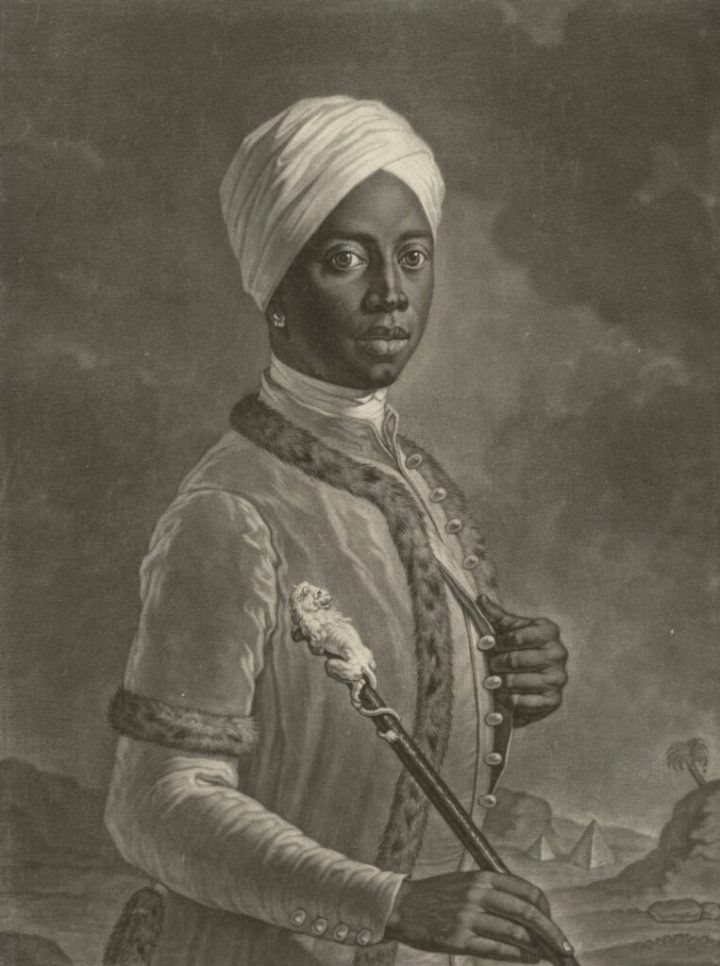
Johann Gottfried Haid after Johann Nepomuk Steiner, Portrait of Angelo Soliman (Mmadi Make), ca. 1750. Born in West Africa, Soliman was enslaved and shipped to Europe before eventually advancing in Austrian society as a successful Freemason and member of court.
Diversity has always existed. In the Renaissance—as humans increasingly took centre stage—it was not only the ideal that was of interest, but also humans’ inexhaustible diversity. The exhibition Looking Allowed? Human Diversity from the 16th to the 18th Century considers diversity in the past from today’s perspective, taking as its point of reference the Ambras collections of Archduke Ferdinand II. Here the whole world was illustrated, as was common in chambers of art and wonders.
Why did the Portrait of a Disabled Man find its way into the Ambras Chamber of Art and Wonders? Who is behind the ‘hair family’? And why do portraits of ‘court giants’ and ‘court dwarves’ move us? Such paintings run the risk of being dismissed as mere curiosities. This exhibition, by contrast, tells the stories of these people who did not fit period norms, taking as its theme the questions of whether, and if so, how encounters with them took place. It invites visitors to reflect on their own perceptions, confronting us with the question: ‘is it permissible to look?’
Current viewpoints are brought into the exhibition through audio and video contributions. Adapted font sizes and objects placed on different levels are aimed at reducing barriers and making it possible for a variety of visitors to experience the exhibition. Furthermore, the installation of a lift in the upper castle offers easy access for the first time to the special exhibition rooms located on the second floor.
Thomas Kuster, Christian Mürner, and Veronika Sandbichler, eds., Schauen erlaubt: Vielfalt Mensch vom 16. bis 18. Jahrhundert (Cologne: Walther König, 2024), 192 pages, ISBN: 978-3753306506, €19. With contributions by Volker Schönwiese, Katharina Seidl, Susanne Hehenberger, Eva Seemann, Anne Kuhlmann-Smirnov, and Rudi Risatti.
With statements, six essays, and over 70 catalog entries, the volume engages human diversity and the tensions between self-empowerment, acceptance, and discrimination.










 Enfilade
leave a comment