The Huntington Acquires Portrait by Antoine-François Callet
From the press release (28 August 2024) . . .
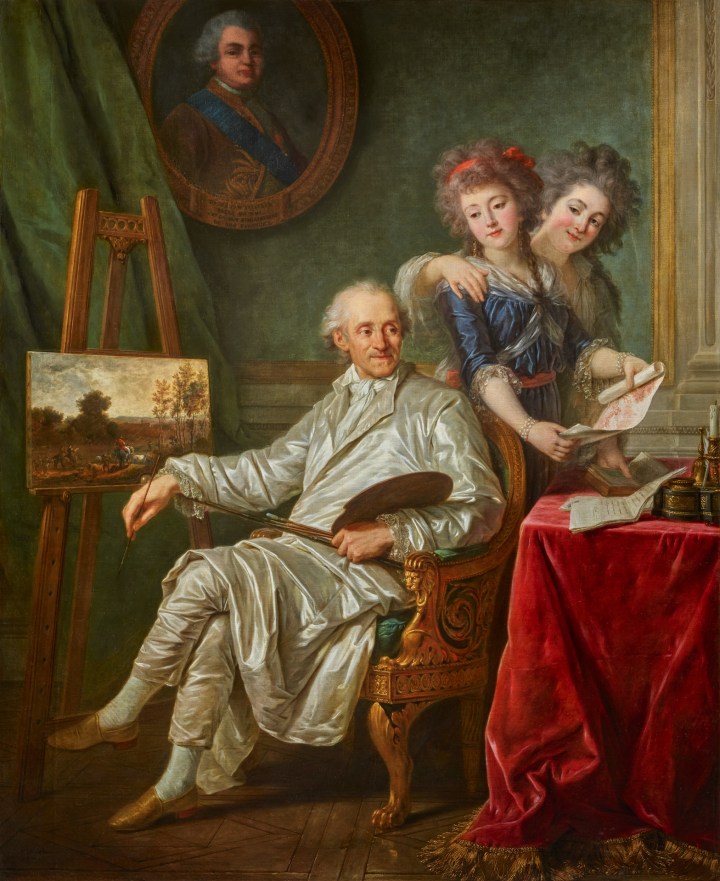
Antoine-François Callet, Portrait of the Comte de Cromot, Superintendent of the Comte de Provence, at an easel, accompanied by his two daughters-in-law, 1787, oil on canvas, 78 × 64 inches (San Marino: The Huntington Library, Art Museum, and Botanical Gardens).
The Huntington Library, Art Museum, and Botanical Gardens has acquired an ambitious, large-scale masterpiece by 18th-century French portraitist Antoine-François Callet (1741–1823), the official painter of Louis XVI. The work is the fourth in a series of acquisitions made possible by The Ahmanson Foundation.
Painted at the height of the artist’s career, Portrait of the Comte de Cromot, Superintendent of the Comte de Provence, at an easel, accompanied by his two daughters-in-law is a unique Old Master work that contains a painting within a painting. The small landscape on the easel adjacent to the sitter was painted on a separate canvas and signed by the Comte de Cromot himself, known to be an amateur painter, and then inserted into the overall composition by Callet. The complex portrait will go on view in the Huntington Art Gallery this fall as an important counterpart to the institution’s world-class collection of 18th-century French decorative arts, complementing the recent addition of Joseph Hyacinthe François-de-Paule de Rigaud, comte de Vaudreuil by Élisabeth Louise Vigée Le Brun, which also became part of the collection through a gift from The Ahmanson Foundation.
“This historically significant work by Antoine-François Callet is an extraordinary addition to our signature portrait collection and will be vital in our interpretive work as we draw connections to our related French holdings,” Huntington President Karen Lawrence said. “We are immensely grateful to The Ahmanson Foundation for their support in strengthening The Huntington’s collection of European art with this masterpiece.”
Antoine-François Callet was born in Paris in 1741. In 1764, at the age of 23, he won the Prix de Rome and completed his artistic education at the Académie de France in Rome. In the late 1770s, he returned to Paris to begin work on a ceiling painting for the Louvre, which earned him admission to the Académie Royale. He received patronage and the protection of King Louis XVI and the monarch’s brothers. As the official painter of Louis XVI, he painted the famous portrait of the king in his coronation robes. Callet was also the First Painter to ‘Monsieur’ (Comte de Provence) and the official painter to the Comte d’Artois, who were the king’s brothers. During the turbulent 18th and 19th centuries, Callet regularly exhibited at the Salon of the Académie des Beaux-Arts in Paris.
“The portrait of the Comte de Cromot is exceptional both historically and artistically,” said Christina Nielsen, Hannah and Russel Kully Director of the Art Museum at The Huntington. “It has tremendous presence—great not only in scale but also in ambition as it contains four portraits in one: that of the Comte de Cromot, his two daughters-in-law, and the future King Louis XVIII, seen in a roundel on the wall in the background.”
The primary sitter, the Comte de Cromot, was Jules-David Cromot du Bourg, superintendent of finances to the Comte de Provence, who was the brother of Louis XVI and the future king of France. The frame of the portrait of the Comte de Provence is inscribed with the words “Donné par Mr. frère du Roi au Grand Surintendant de ses finances,” acknowledging that the monumental work was commissioned by the future king for the model. The Comte de Cromot died in 1786, which makes the portrait the last representation of this important 18th-century figure. The two daughters-in-law in the painting are Marie Sophie Guillauden du Plessis and Sophie de Barral. “The Comte de Cromot is rendered as an accomplished artist, while his daughters-in-law are pictured reading letters and books and considering drawings, signifying the importance of the arts across the spectrum of intellectual life in French society,” Nielsen said.
Through its partnership with The Ahmanson Foundation, The Huntington has acquired Portrait of José Antonio Caballero, Second Marqués de Caballero, Secretary of Grace and Justice (1807) by Francisco de Goya in 2023; Portrait of Joseph Hyacinthe François-de-Paule de Rigaud, comte de Vaudreuil (ca. 1784) by Vigée Le Brun, the most important female artist of 18th-century France, in 2022; and the monumental Portage Falls on the Genesee (ca. 1839) by Anglo American painter Thomas Cole in 2021.
◊ ◊ ◊ ◊ ◊
On 25 January 2023, the portrait was sold at Christie’s in New York as lot 55 of Remastered: Old Masters from the Collection of J.E. Safra for $201,600, well under its low estimate of $300,000. –CH
Exhibition | Kerry James Marshall and John Singleton Copley
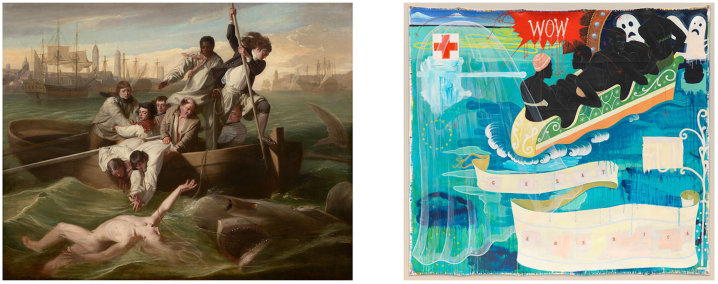
John Singleton Copley, Watson and the Shark, 1778, oil on canvas (DC: NGA, 1963.6.1); and Kerry James Marshall, Great America, 1994, acrylic and collage on canvas (DC: NGA, Gift of the Collectors Committee, 2011.20.1).
◊ ◊ ◊ ◊ ◊
Now on view at the NGA in DC:
Conversations: Kerry James Marshall and John Singleton Copley
National Gallery of Art, Washington DC, 18 November 2023 — 31 January 2025
Two centuries apart, American artists John Singleton Copley and Kerry James Marshall pushed the boundaries of history painting.
A special installation brings together three monumental paintings for a thought-provoking dialogue: Copley’s 18th-century canvas Watson and the Shark and Marshall’s two 20th-century works Great America and Voyager. These paintings—all maritime-themed—address the violent history of the transatlantic slave trade and the Middle Passage, the forced journey of enslaved people across the Atlantic. All three works are part of the National Gallery of Art collection, but this is a rare chance to experience them together in the same exhibition space, in conversation. Compare how Marshall and Copley skillfully wove historical and contemporary events together with cultural, mythological, and spiritual allusions. Take a closer look at these iconic paintings and explore a selection of Marshall’s related drawings for a glimpse into his process.
This is the second installation in our Conversations series, which connects works in our collection from our past and present to reveal how artists help us understand our place in history.
Exhibition | The Birch Trials at Fraunces Tavern
From the press release for the exhibition:
The Birch Trials at Fraunces Tavern
Fraunces Tavern Museum, New York, opening 23 October 2024
Curated by Craig Hamilton Weaver
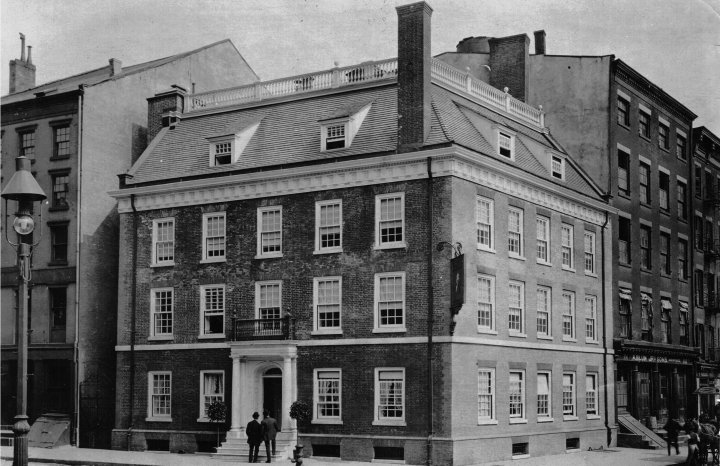
As noted at the museum’s website: “Built by the De Lancey family in 1719, 54 Pearl Street has been a private residence, hotel, and one of the most important taverns of the Revolutionary War.” It is the oldest standing structure in Manhattan.
On 23 October 2024, the Fraunces Tavern Museum, located in the oldest building in Manhattan, will unveil a vastly enlarged permanent exhibition entitled The Birch Trials at Fraunces Tavern. The exhibition highlights the role of Fraunces Tavern in the emancipation of thousands of Black Loyalists at the end of the Revolutionary War (enabling them to leave New York City) and in the creation of the Book of Negroes (the record created of those who departed with the British). The exhibition expands upon one opened at the Museum in June 2023. Recognition is also given to the thousands of Black Patriots who fought to further the cause of American Independence. The previous exhibition attracted a multitude of visitors from around the world, including large numbers of school children. Relocating the exhibition to a larger permanent gallery will enable the Museum to provide a better visitor experience as well as include recent new discoveries of significant information concerning the identities of individuals participating in the Birch Trials and their inclusion in the Book of Negroes.
The exhibition reflects several years of exhaustive research on both sides of the Atlantic in thousands of pages of existing original documents. Museum and Art Committee Co-Chairman and Chief Curator of the exhibition, Craig Hamilton Weaver, emphasizes that “this exhibition is the most comprehensive ever organized on this tremendously significant event in the history of Black emancipation in the United States and is made all the more compelling because it can be viewed within the very walls of the building within which the events occurred.”
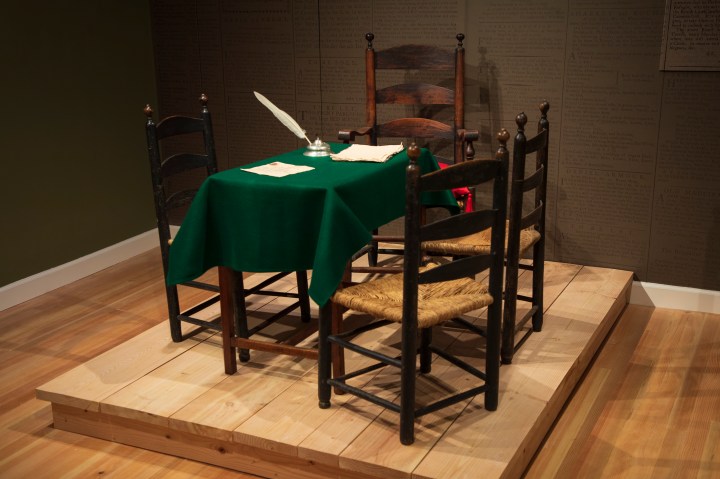
Installation view of The Birch Trials at Fraunces Tavern, 2024.
In 1783, as the Revolutionary War was drawing to a close, a joint British and American Commission met weekly at Fraunces Tavern from April until November. The proceedings of the Commission are known as the ‘Birch Trials’, named after Brigadier General Samuel Birch who oversaw the proceedings. The Commission reviewed and deliberated upon the eligibility of some Black Loyalists to evacuate with the British Army. Testimonies were provided by individuals in person and through documentary evidence to enable the Commissioners to render final decisions. Given that the Commissioners met at Fraunces Tavern weekly and had the responsibility “to superintend all embarkation,” it is reasonable to conclude that the British and American Commissioners reviewed and compiled the lists of names for inclusion in the Book of Negroes during the course of their weekly sessions at Fraunces Tavern. The names would later be inscribed neatly into the final Book of Negroes by staff.
Visitors will observe chairs and a table arranged as if waiting for the Commissioners to enter the room and hear cases. The exhibition also contains reproductions of pages from the Book of Negroes as well as the advertisement in the 30 May 1783 New York Gazette stating that the Commissioners would meet at Fraunces Tavern. Recent discoveries featured in this newly expanded exhibition include the identities of two women, Dinah Archey and Judith Jackson, whose fates were undecided by the Commission at their hearings, but who ultimately were recorded in the Book of Negroes as having evacuated New York City on departing ships.
Major support for this exhibition has been provided by the Robert David Lion Gardiner Foundation. The purpose of the Robert David Lion Gardiner Foundation is to educate, cultivate, and encourage the study and understanding of Long Island and New York’s historic role in the American experience. The Foundation also supports scholarships and historic preservation, including study, stewardship, and promotion of Long Island’s historic educational aspects. The Robert David Lion Gardiner Foundation remains inspired by Robert David Lion Gardiner’s personal passion for Long Island and New York history.
SAAM Fellowships for American Art History
From the Smithsonian American Art Museum:
The Smithsonian American Art Museum and its Renwick Gallery invite applications for its 2025–26 research fellowships, awarded through the Smithsonian Institution Fellowship Program (SIFP). Residencies are available at the graduate, doctoral, postdoctoral, and senior levels. The deadline to apply is October 15.
Scholars from any discipline who are researching topics relating to U.S. art, craft, and visual culture are encouraged to apply, as are those who foreground new perspectives, materials, and methodologies. Fellowships are residential and support full-time research. SAAM is devoted to advancing inclusive excellence in art history and encourages candidates who identify as members of historically underrepresented groups to apply.
The stipend for a twelve-month SIFP fellowship is $45,000 for predoctoral scholars and $57,000 for postdoctoral and senior scholars, with a supplemental research allowance of up to $5,000. Applicants who need less time to complete their research may apply for as few as three months with a prorated stipend. Residencies should take place between 1 June 2025 and 31 August 2026.
SIFP graduate student fellowships are available for ten-week summer terms and carry a stipend of $10,000.
To learn more and apply, click here. With additional questions or for research consultation, email SAAMFellowships@si.edu.
Call for Articles | Sequitur (Fall 2024): Beyond the Veil
From:
Sequitur 11.1 (Fall 2024): Beyond the Veil
Submissions and proposals due by 27 September 2024, for January 2025 publication
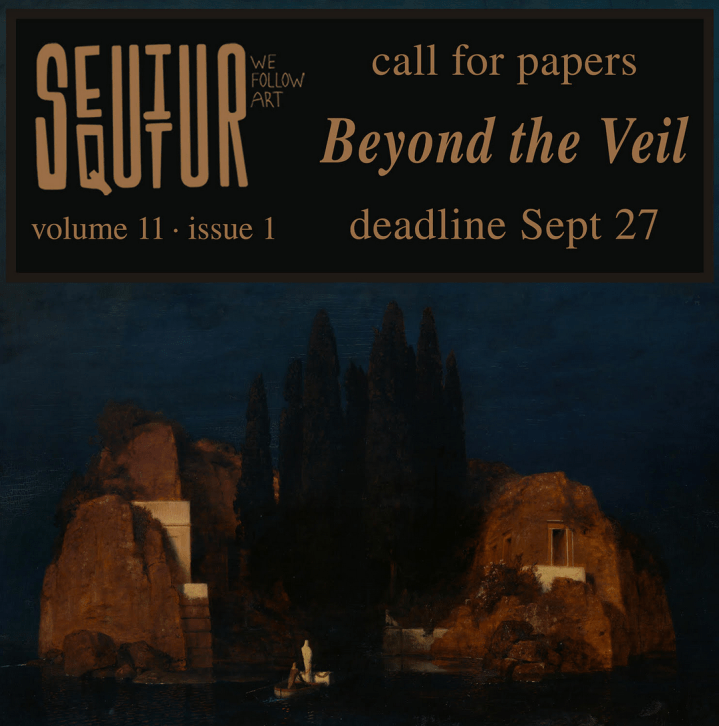
Arnold Böcklin, Island of the Dead, 1880, oil on wood, 29 × 48 inches (New York: The Metropolitan Museum of Art, 26.90).
The editors of SEQUITUR, the graduate student journal published by the Department of History of Art & Architecture at Boston University, invite current and recent MA, MFA, and PhD students to submit content on the theme of Beyond the Veil for our Fall 2024 issue. This issue invites an exploration of the unseen, the unknown, and the realms that lie out of reach of ordinary or earthly perception. What other worlds exist beyond death, within our minds, under the surface, or in the shadows?
Artists have used every medium at their disposal to imagine what these other worlds might look like, going so far as to employ symbolism, abstraction, and surrealism to grapple with the otherworldly. Ritualistic items, religious artifacts, and funerary objects serve as tangible links to the spiritual and the supernatural. On a larger scale, architectural elements like arches, portals, and windows invite us into holy spaces to seek sanctuary or guide transitions from life to death and back again. In this issue, we aim to gather scholarship that focuses on topics beyond the ordinary that consider the myriad ways in which humanity has envisioned and sought access to the mystical, the transcendent, and the liminal.
Possible subjects may include, but are not limited to:
• Otherworlds: the in-between, separation, the unearthly, seen and unseen, obfuscated, hidden, neither here nor there, out of time, secret spaces
• Transience: the beyond, travel, thresholds, liminal spaces, parallels, interstices, passages, portals, doorways, interfaces, windows, brinks
• Death & resurrection: mourning, memory, farewell, remembrance, burial, necropolis, underworld, afterlife, psychopomp, crossing, sanctuary, heaven, ascension, ceremony, rite, rite of passage, religion, holy, sacrament, celebration, life
• The supernatural: spiritualism, phantasmagoria, spectral, ethereal, occult, fantasy, superstition, internment, surreal
SEQUITUR welcomes submissions from graduate students in the disciplines of art history, architecture, archaeology, fine arts, material culture, visual culture, literary studies, queer and gender studies, disability studies, memory studies, and environmental studies, among others. We encourage submissions that take advantage of the digital format of the journal.
Founded in 2014, SEQUITUR is an online biannual scholarly journal dedicated to addressing events, issues, and ideas in art and architectural history. Edited by graduate students at Boston University, the journal engages with and expands current conversations in the field by promoting the perspectives of graduate students from around the world. It seeks to contribute to existing scholarship by focusing on valuable but often overlooked parts of art and architectural history. Previous issues can be found here.
We invite full submissions in the following categories:
Feature essays (1,500 words)
Content should present original material that falls within the stipulated word limit (1,500 words). Please adhere to the formatting guidelines available here.
Visual and creative essays (250 words, up to 10 works)
We invite MArch and MFA students to showcase a selection of original work in or reproduced in a digital format. We welcome various kinds of creative projects that take advantage of the online format of the journal, such as works that include sound or video. Submissions should consist of a 250-word artist statement and up to 10 works in JPEG, HTML, or MP4 format. All image submissions must be numbered and captioned and should be of good quality and high resolution.
We invite proposals for the following categories (abstracts should be no more than 200 words):
Exhibition reviews (500 words)
We are especially interested in exhibitions currently on display or very recently closed. We typically prioritize reviews of exhibitions in the Massachusetts and New England area.
Book or exhibition catalog reviews (500 words)
We are especially interested in reviews of recently published books and catalogs (1–3 years old).
Interviews (750 words)
Please include documentation of the interviewee’s affirmation that they will participate in an interview with you. Plan to provide either a full written transcript or a recording of the interview (video or audio).
Research spotlights (750 words)
Short summaries of ongoing research written in a more casual format than a feature essay or formal paper. For research spotlights, we typically, but not universally, prioritize doctoral candidates who plan to use this platform to share ongoing dissertation research or work of a comparable scale.
To submit, please send the following materials to sequitur@bu.edu by 27 September 2024:
• Your proposal or submission
• Recent CV
• Brief (50-word) bio
• Your contact information in the body of the email: name, institution and program, year in program, and email
• Subject line: ‘SEQUITUR Fall 2024’ and the type of submission/proposal
Please adhere to the formatting guidelines available here. Text must be in the form of a Word document, and images should be sent as .jpeg files. While we welcome as many images as possible, at least one must be very high resolution and large format. All other creative media should be sent as weblinks, HTML, or MP4 files if submitting video or other multimedia work. Please note that authors are responsible for obtaining all image copyright releases before publication. Authors will be notified of the acceptance of their submission or proposal the week of 7 October 2024 for publication in January 2025. Please contact the editors (sequitur@bu.edu) with any questions.
Lecture | Miriam Schefzyk on German Cabinetmaker in 18th-C. Paris
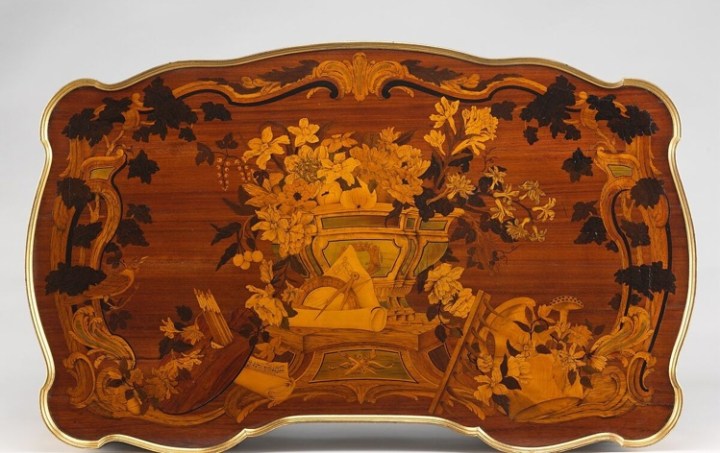
Jean-Francois Oeben and Roger Vandercruse, Tabletop of a mechanical table, ca. 1761–63, oak veneered with mahogany, kingwood, and tulipwood, with marquetry of mahogany, rosewood, holly, and various other woods; gilt-bronze mounts; imitation Japanese lacquer; replaced silk (New York: The Metropolitan Museum of Art, 1982.60.61).
◊ ◊ ◊ ◊ ◊
This fall at BGC:
Miriam Schefzyk | Parisian Dreams: German Migrants and Cabinetmaking in 18th-Century Paris
A Françoise and Georges Selz Lecture on Eighteenth- and Nineteenth-Century French Decorative Arts and Culture
Bard Graduate Center, New York, 2 October 2024, 6pm
Paris has long been a privileged destination for many, but there was a particularly significant migration that began in the seventeenth century and gathered strength during the eighteenth century: that of German cabinetmakers. Hardworking and aspiring to wealth, recognition, and a better life, these numerous artisans made Paris into the most important center in the furniture and luxury trade of the time. Many of them rose to important positions as masters or leaders in the guild, and some even obtained royal privileges and titles. Their furniture was regarded as the incarnation of French taste and is still viewed as evidence of the supremacy of French decorative arts today. In this lecture, Miriam Schefzyk will examine the living and working conditions of these artisans and how their background as migrants significantly shaped the framework in which these extraordinary pieces of furniture were created.
$15 General | $12 Seniors | Free for people associated with a college or university, people with museum ID, people with disabilities and caregivers, and BGC members.
Miriam E. Schefzyk is the associate curator of decorative arts at the J. Paul Getty Museum and previously worked at the Museum of Decorative Arts in Berlin. She studied art history at the universities of Marburg, Berlin, Münster, and Paris, earning a PhD in a joint French-German doctoral program. A specialist of French decorative arts of the seventeenth and eighteenth centuries, her research focuses on Parisian furniture, artistic transfer, social history, and materiality. Her book Migration und Integration im Paris des 18. Jahrhunderts: Martin Carlin und die deutschen Ebenisten (Bielefeld: Transcript Verlag, 2022) was awarded the Marianne Roland Michel Foundation Prize for its important contribution to French art and will soon be published in French.
Lecture | Mia Jackson on the Birds of Louis-Denis Armand

Louis-Denis Armand, Parrots, ca. 1750–70
(Paris: Galerie Dragesco-Cramoisan)
◊ ◊ ◊ ◊ ◊
This fall at BGC:
Mia Jackson | Flights of Fancy: The Birds of Louis-Denis Armand (1723–1796)
A Françoise and Georges Selz Lecture on Eighteenth- and Nineteenth-Century French Decorative Arts and Culture
Bard Graduate Center, New York, 11 December 2024, 6pm
Mia Jackson will talk about her recent exhibition, Flights of Fancy, the first ever survey of the life and work of the recently rediscovered Sèvres painter Louis-Denis Armand (1723–1796), now celebrated as one of the foremost painters of birds. Very few artisans from the eighteenth century have left us such a detailed biography; over thirty drawings by Armand survive, and research into the drawings and their inscriptions (by Jackson and collaborator Bernard Dragesco) has revealed a wealth of detail about the artist, his life, his work, and even his political opinions.
Mia Jackson has been curator of decorative arts at Waddesdon Manor since 2017. She studied French and Philosophy at the University of Oxford then completed an MA in eighteenth-century French decorative arts at the Courtauld Institute of Art. Her doctoral thesis entitled “André-Charles Boulle (1642–1732) and Paper: Prints and Drawings in the Workshop of an Ébéniste du Roi” was completed at Queen Mary, University of London in 2016. She previously worked in the Prints and Drawings Department at the British Museum, the Wallace Collection, and English Heritage. Eighteenth-century France is her area of expertise, in particular the links between works on paper and the decorative arts.
Exhibition | Flights of Fancy: Birds at Waddesdon
Now on view at Waddesdon:
Flights of Fancy: Birds at Waddesdon
Waddesdon Manor, Buckinghamshire, 22 May – 27 October 2024
Curated by Mia Jackson

Snuff-box with Sèvres porcelain plaques, 1758, painted by Louis-Denis Armand (Waddesdon Image Library, photo by Mike Fear).
Flock to Waddesdon this summer for a celebration of birds. Throughout the Manor, Aviary, and Gardens discover a range of bird-themed exhibitions, events, and activities for all the family.
Flights of Fancy is a rare chance for bird enthusiasts and art lovers alike to explore this beautiful subject through our birds and remarkable displays of porcelain, paintings, drawings, and prints. The exhibition features the life and work of the recently rediscovered Louis-Denis Armand (1723–1796), a painter at the world-famous Sèvres porcelain manufactory. Widely acknowledged as the most talented bird painter at Sèvres, his birds were initially ‘flights of fancy’, drawn from his wild imagination but as time went on, they gained ornithological accuracy. He also drew exotic birds from life, picking and choosing elements to combine and exaggerate. Waddesdon’s own impressive collection of Sèvres painted by Armand includes ten vases from the 1750s and 60s and important pieces from the Razumovsky dessert service. These are displayed alongside nearly 50 loans from private collections and from the Musée national de céramique at Sèvres.
Exhibition | The King’s Horses: The Marly Horses
From the press release for the exhibition (a companion to the show Horse in Majesty on view at Versailles):
The King’s Horses: The Marly Horses, Masterpieces of Equestrian Art
Musée du Domaine Royal de Marly, 7 June — 3 November 2024
Curated by Karen Chastagnol
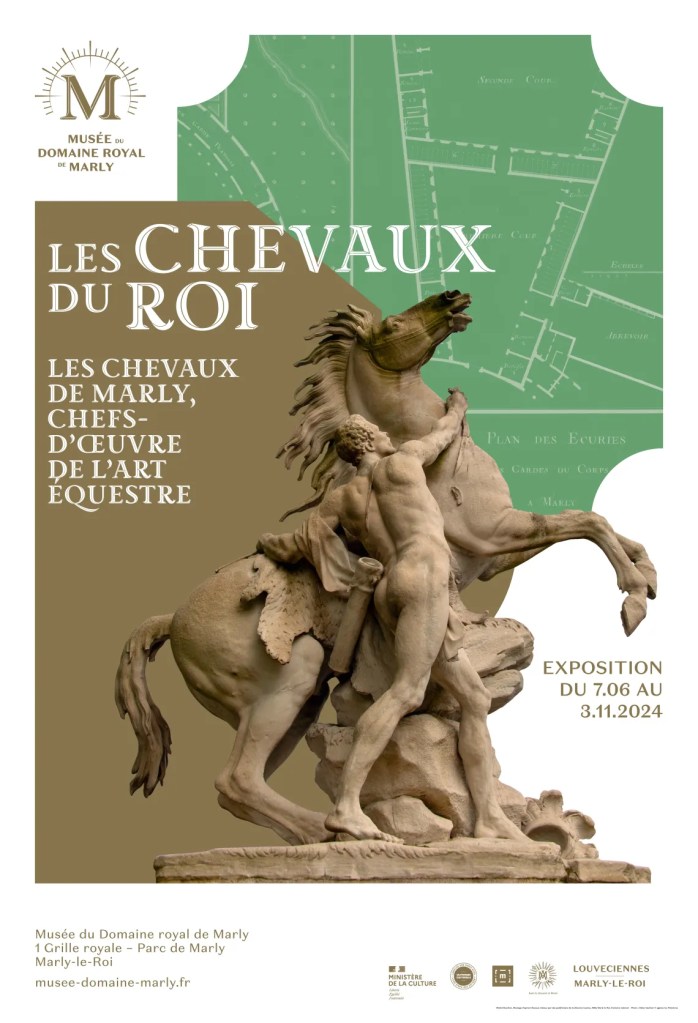 The Royal Estate of Marly, once a hunting residence of kings and the setting for the monumental Marly Horses, has always given an essential role to the horse. From transportation and aristocratic entertainments to military activities, equestrian buildings and artistic representations, horses have taken over the estate in various forms. Through a hundred paintings, sculptures, drawings, engravings, accessories, and archival documents, the Museum of the Royal Estate of Marly presents, on the occasion of the equestrian events of the Paris 2024 Olympic and Paralympic Games, an original exhibition dedicated to the role of the horse at the Estate of Marly, from Louis XIV to the French Revolution.
Karen Chastagnol, ed., Les chevaux du roi: Les chevaux de Marly, chefs-d’œuvre de l’art équestre (Milan: Silvana Editoriale, 2024), 104 pages, ISBN: 978-8836657919, €28. With contributions by Ambre Bozec, Valérie Carpentier-Vanhaverbeke, Annick Heitzmann, Carlos Pereira, and Benjamin Ringo.
The full press release is available here»
The Burlington Magazine, August 2024
The long 18th century in the August issue of The Burlington—and special thanks to The Burlington for making Rosalind Savill’s article available to Enfilade readers for free.
The Burlington Magazine 166 (August 2024) — Decorative Arts
a r t i c l e s

Unidentified artist, Portrait of Paul Crespin, ca.1726, oil on canvas laid on board, 114 × 90 cm (London: Victoria and Albert Museum).
• Lucy Wood and Olivia Fryman, “The 1st Duke of Devonshire’s ‘Queen Mary’ Beds at Devonshire House, Chatsworth, and Hardwick Hall,” pp. 780–809.
In 1696 the 1st Duke of Devonshire purchased two beds that had belonged to Mary II, one of which was made by Louis XIV’s upholsterer, Simon Delobel. Documents and fragments of its crimson velvet embroidered hangings record a lost example of Stuart state furniture of the highest quality.
• Stefano Rinadli, “Six Horses for the King of Poland: Making and Staging a Diplomatic Gift at the Court of Louis XIV,” pp. 810–25.
In July 1715 Augustus the Strong of Saxony-Poland received a splendid present from the Sun King: a team of six Spanish stallions, each equipped with embroidered trappings and a pair of elaborate flintlock holster pistols. Documents published here for the first time help establish the gift’s political context and chronology and provide detailed insight into the payment and the identity of all the craftsmen involved.
• Teresa Leonor M. Vale, “Eighteenth-Century English Silver for King João V of Portugal,” pp. 826–33.
João V of Portugal acquired works of art from Rome and Paris; analysis of diplomatic correspondence illustrates how he also commissioned objects from Britain in the 1720s, notably spectacular examples of silverware. These included and exceptionally large and renowned silver-gilt bath by Paul Crespin, the Huguenot silversmith who lived and worked in Soho, London.

Detail of the bottom tray of worktable mounted with two trays, attributed to Bernard II van Risenburgh, ca.1761–63. Table: wood, green varnish and gilt-bronze mounts, 68.6 × 36.8 × 30.5 cm; trays: Sèvres soft-paste porcelain, green ground, enamel colours and gilding, 32 × 26 cm (New York: Metropolitan Museum of Art, 58.75.45).
• Rosalind Savill, “From Storeroom to Stardom: The Revelations of Two Sèvres Porcelain Trays,” pp. 834–47.
Two porcelain trays set into a Rococo table in the early 1760s, now in the Metropolitan Museum of Art, New York, are reassessed and here confirmed as Sèvres. Their subjects are probably the family of the Marquis de Courteille, Louis XV’s representative at the porcelain factory, and their intimate representation in this manner is almost unique in eighteenth-century Sèvres.
The full article is available for free here»
r e v i e w s
• Elizabeth Savage, Review of two exhibition catalogues: Edina Adam and Julian Brooks, with an essay by Matthew Hargraves, William Blake: Visionary (J. Paul Getty Museum, 2020); and David Bindman and Esther Chadwick, eds., William Blake’s Universe (Philip Wilson Publishers, 2024), pp. 862–65.
• John Pinto, Review of the exhibition catalogue, John Marciari, Sublime Ideas: Drawings by Giovanni Battista Piranesi (Paul Holberton Publishing, 2023), pp. 865–67,
• Gauvin Alexander Bailey, Review of the exhibition catalogue, Rosario Inés Granados, ed., Painted Cloth: Fashion and Ritual in Colonial Latin America (University of Texas Press, 2022), pp. 867–69.
• Camilla Pietrabissa, Review of the exhibition catalogue, Anita Viola Sganzerla and Stephanie Buck, eds., Connecting Worlds: Artists and Travel (Paul Holberton Publishing, 2023), pp. 870–72.
• Giullaume Kientz, Review of the exhibition catalogue, Víctor Nieto Alcaide, ed., Goya: La ribellione della ragione (ORE Cultura, 2023), pp. 872–74.
• Timothy Wilson, Review of Marino Marini, Maiolica and Ceramics in the Museo Nazionale del Bargello, translated by Anna Moore Valeri (Allemandi, 2024), pp. 876–77.
• J. V. G. Mallet, Review of Caterina Marcantoni Cherido, Maioliche italiane del Rinascimento (Fondazione Musei Civici di Venezia, 2022), pp. 877–79.
• Aurora Laurenti, Review of Esther Bell, Pauline Chougnet, Sarah Grandin, Charlotte Guichard, Corinne Le Bitouzé, Anne Leonard, and Meredith Martin, Promenades on Paper: Eighteenth-Century French Drawings from the Bibliotheque nationale de France / Promenades de papier: Dessins du XVIIIe siècle des collections de la Bibliothèque nationale de France (Clark Art Institute and BnF Editions, 2023), pp. 883–84.
• Clare Hornsby, Review of Christopher M.S. Johns, Tommaso Manfredi, and Karin Wolfe, eds., American Latium: American Artists and Travelers in and around Rome in the Age of the Grand Tour (Accademia Nazionale di San Luca, 2023), pp. 884–86.
• Lydia Hamlett, Review of John Laycock, William Kent’s Ceiling Paintings at Houghton Hall (Houghton Arts Foundation, 2021), p. 887.
• Lin Sun, Review of Shane McCausland, The Art of the Chinese Picture-Scroll (Reaktion Books, 2023), pp. 887–88.










 Enfilade
leave a comment