Exhibition | The Birch Trials at Fraunces Tavern
From the press release for the exhibition:
The Birch Trials at Fraunces Tavern
Fraunces Tavern Museum, New York, opening 23 October 2024
Curated by Craig Hamilton Weaver
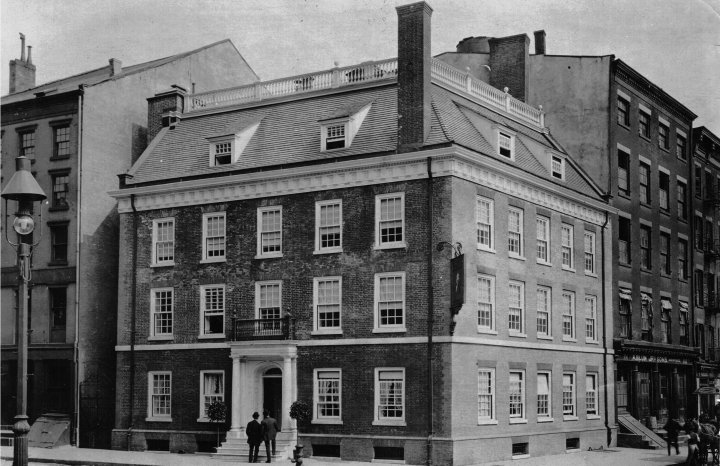
As noted at the museum’s website: “Built by the De Lancey family in 1719, 54 Pearl Street has been a private residence, hotel, and one of the most important taverns of the Revolutionary War.” It is the oldest standing structure in Manhattan.
On 23 October 2024, the Fraunces Tavern Museum, located in the oldest building in Manhattan, will unveil a vastly enlarged permanent exhibition entitled The Birch Trials at Fraunces Tavern. The exhibition highlights the role of Fraunces Tavern in the emancipation of thousands of Black Loyalists at the end of the Revolutionary War (enabling them to leave New York City) and in the creation of the Book of Negroes (the record created of those who departed with the British). The exhibition expands upon one opened at the Museum in June 2023. Recognition is also given to the thousands of Black Patriots who fought to further the cause of American Independence. The previous exhibition attracted a multitude of visitors from around the world, including large numbers of school children. Relocating the exhibition to a larger permanent gallery will enable the Museum to provide a better visitor experience as well as include recent new discoveries of significant information concerning the identities of individuals participating in the Birch Trials and their inclusion in the Book of Negroes.
The exhibition reflects several years of exhaustive research on both sides of the Atlantic in thousands of pages of existing original documents. Museum and Art Committee Co-Chairman and Chief Curator of the exhibition, Craig Hamilton Weaver, emphasizes that “this exhibition is the most comprehensive ever organized on this tremendously significant event in the history of Black emancipation in the United States and is made all the more compelling because it can be viewed within the very walls of the building within which the events occurred.”
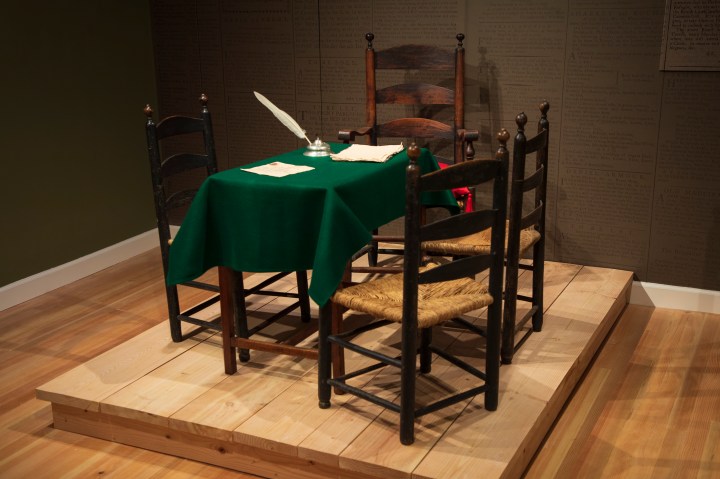
Installation view of The Birch Trials at Fraunces Tavern, 2024.
In 1783, as the Revolutionary War was drawing to a close, a joint British and American Commission met weekly at Fraunces Tavern from April until November. The proceedings of the Commission are known as the ‘Birch Trials’, named after Brigadier General Samuel Birch who oversaw the proceedings. The Commission reviewed and deliberated upon the eligibility of some Black Loyalists to evacuate with the British Army. Testimonies were provided by individuals in person and through documentary evidence to enable the Commissioners to render final decisions. Given that the Commissioners met at Fraunces Tavern weekly and had the responsibility “to superintend all embarkation,” it is reasonable to conclude that the British and American Commissioners reviewed and compiled the lists of names for inclusion in the Book of Negroes during the course of their weekly sessions at Fraunces Tavern. The names would later be inscribed neatly into the final Book of Negroes by staff.
Visitors will observe chairs and a table arranged as if waiting for the Commissioners to enter the room and hear cases. The exhibition also contains reproductions of pages from the Book of Negroes as well as the advertisement in the 30 May 1783 New York Gazette stating that the Commissioners would meet at Fraunces Tavern. Recent discoveries featured in this newly expanded exhibition include the identities of two women, Dinah Archey and Judith Jackson, whose fates were undecided by the Commission at their hearings, but who ultimately were recorded in the Book of Negroes as having evacuated New York City on departing ships.
Major support for this exhibition has been provided by the Robert David Lion Gardiner Foundation. The purpose of the Robert David Lion Gardiner Foundation is to educate, cultivate, and encourage the study and understanding of Long Island and New York’s historic role in the American experience. The Foundation also supports scholarships and historic preservation, including study, stewardship, and promotion of Long Island’s historic educational aspects. The Robert David Lion Gardiner Foundation remains inspired by Robert David Lion Gardiner’s personal passion for Long Island and New York history.










 Enfilade
leave a comment