Mount Vernon Enters Next Phase of $30million Restoration
From coverage of the project by The Washington Post:
Michael Ruane, “George Washington’s Mansion Gets First Major Rehab in More than 150 Years,” The Washington Post (17 October 2024). Much of the historic Mount Vernon home in Virginia will close starting next month for a massive preservation project.
. . . On Nov. 1, the bulk of Washington’s famous home is due to close for several months as it undergoes the next phase of its largest-scale rehabilitation in over 150 years.
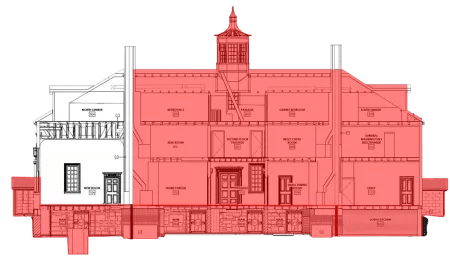
In Phase 2, scheduled to run from November 2024 until January 2025, the New Room, Servants’ Hall, and Kitchen are open; all other rooms will be closed to visitors.
The $30 million project is the most complicated preservation effort since the house was saved from decay in 1860 by the private, nonprofit Mount Vernon Ladies’ Association of the Union, which still owns it, said Douglas Bradburn, president of George Washington’s Mount Vernon. “We’re shutting down a big chunk of it for the next eight months or so,” he said. “I would say that’s two-thirds of the house.”
Other parts of the house, along with the extensive grounds, Washington’s tomb, the quarters for enslaved people and other outbuildings will remain open, Bradburn said in a recent interview. Mount Vernon gets about 1 million visitors a year, and millions more check out the historic estate online, he said.
The historic structure had become loosened from its foundation over time, and the work will resecure it, Bradburn said. There also will be restoration work done in the basement and on flooring, among other things. He said the goal is to complete the project in 2026.
“It’s some of the most important work that’s ever been done at Mount Vernon,” Bradburn said. Earlier repair projects have been piecemeal. At one point, ship masts were used to help support the roof of the crumbling piazza that overlooks the Potomac River. “They’re dealing with problems as they come,” he said. This is a chance for a more complete approach. . .
The full article is available here»










 Enfilade
leave a comment