Exhibition | Get to Work! The Work and Toil of Women

.
Francisco Muntaner, The Spinners, detail, 1796, engraving
(Staatliche Museen zu Berlin, Kupferstichkabinett / Dietmar Katz)
◊ ◊ ◊ ◊ ◊
From the Staatliche Museen zu Berlin:
Get to Work! The Work and Toil of Women
An die Arbeit! Vom Schaffen und Schuften der Frauen
Kupferstichkabinett, Gemäldegalerie, Berlin 18 February — 18 May 2025
Curated by Dagmar Korbacher, Mailena Mallach, and Christien Melzer
Women’s contributions to society are often unseen and seldom considered in art. Many women’s names and their stories have long since been forgotten. Using French, German, Italian, Spanish and Dutch works on paper, this exhibition looks behind the allegorical scenes to shed light on women’s work in early modern Europe.
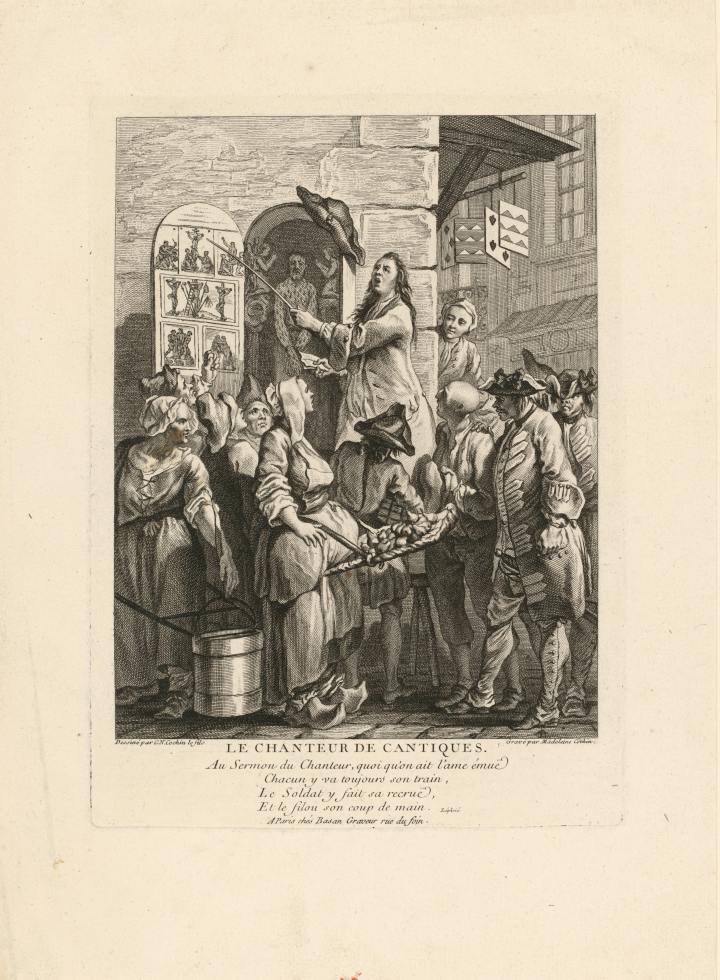
Louise Madeleine Cochin, after Charles-Nicolas Cochin the Younger, Le Chanteur de Cantiques, 1742, engraving and etching, 38 × 28 cm (Staatliche Museen zu Berlin, Kupferstichkabinett / Dietmar Katz).
This small thematic exhibition presents 25 French, German, Italian, Spanish, and Dutch prints from the 16th to 18th centuries preserved in the Kupferstichkabinett’s (Museum of Prints and Drawings) rich holdings. Works have been selected that show women in everyday activities, working as peasants, farmhands, teachers, maids, midwives and courtesans. One focus provide insight into the professions practised by women, including attending to births as midwives; another shows those areas of society where men and women went about their daily tasks side by side (as equals?). Beneath the allegorical layers of meaning, the viewer often discovers self-confident women going about their lives, yet the hardship of everyday travail is evident. To this day, so-called care work for children and the elderly receives little recognition; efforts are being made to reconcile work and family life and to achieve equality between women and men, including in financial matters, but these goals have yet to be fully attained. At the same time, it becomes clear that many of the depictions displayed were created by men—Albrecht Dürer, Lucas Cranach, and Rembrandt—to name just a few. Their (male) view of women characterised societal perspectives for centuries. Also represented, however, are two women artists, Louise Magdeleine Horthemels (1686–1767) and Marguerite Ponce (1745–1800), who earned their livings creating art.
An die Arbeit! Vom Schaffen und Schuften der Frauen is the Kupferstichkabinett’s contribution to Women’s Month in March, as well as to Equal Pay Day (7 March) and Labour Day (1 May in Europe). The exhibition is curated by Dagmar Korbacher, director; Mailena Mallach, curator of German art before 1800; and Christien Melzer, curator of Dutch and English art before 1800, Kupferstichkabinett, Staatliche Museen zu Berlin.
Call for Papers | Fashioning the Body: Dress in New England, 1600–1900
From the Call for Papers:
Fashioning the Body: Dress in New England, 1600–1900
Historic Deerfield, Deerfield, Massachusetts, 12–13 September 2025
Organized by Lauren Whitley
Proposals due by 3 May 2025
Fashion has garnered great interest in recent decades, and research into the history of clothing has yielded new insights into culturally embedded ideas around self-styling and the body. Understanding the mechanisms of stylish dress was the subject of several publications including Extreme Beauty (Metropolitan Museum of Art, 2001), Fashioning the Body (Bard Museum, 2015), and Structuring Fashion: Foundation Garments through History (Bayerisches Nationalmuseum, 2019). Yet, few studies have explored New England’s relationship with styling the body and fashionable dress.
In conjunction with the exhibition Body by Design: Fashionable Silhouettes from the Ideal to the Real, opening 3 May 2025, Historic Deerfield will host a Fall Forum, Fashioning the Body: Dress in New England 1600–1900, that aims to examine men’s and women’s fashion through a specific New England lens by convening a group of experts in the field to explore the rich history of dressing the body in this region. The Forum seeks to explore the following questions:
• What was distinctive about dress in New England, 1600–1900?
• How did aspirational fashion silhouettes form an aspect of New England dress?
• Was the cold weather of New England a factor in attaining stylishness?
• What were the connections between the clothing practices of indigenous people and English Colonists?
• What was the connection between religion and clothing in New England?
• How did attitudes around the body in New England influence self-styling?
• How were foundation garments a factor in New England clothing?
• What was the role of homespun in New England clothing?
• What can we say about either agency or subjugation in the dress of enslaved New Englanders?
• How was New England a place of innovation in fashion?
• If not aligned with prevailing fashions, how did New Englanders express anti-fashion?
• How was New England’s past revisited in Colonial Revival fancy dress?
• What is the role of painted portraits in documenting clothing styles or presenting an aspirational ideal? Does the representation of clothing in photography play a different role?
Historic Deerfield invites paper proposals for its two-day forum. Priority will be given to paper submissions that present new research and examine topics in non-traditional ways. Submissions beyond the geographical scope of New England but informative to this area are also encouraged. Topics and themes might include but are not limited to:
• Object Studies
• Artisan/Artist Biographies
• Analysis and Conservation
• Collectors and Collections
• Social and Cultural Meanings
To submit a proposal, please send (as a single email attachment) a lecture title, a 250-word abstract that describes the lecture, and a one-page vita or biography to Lauren Whitley, Curator of Historic Textiles and Clothing and Forum organizer, at lwhitley@historic-deerfield.org. Papers should be 25 minutes in length and must be object/image based. Proposals will be accepted until 3 May 2025. You will be notified of the status of your proposal no later than 24 May 2025. Speakers whose papers are accepted will be given complimentary registration to the symposium, lodging, and meals. The forum will convene in Deerfield, Massachusetts, as a hybrid program, with both on-site and virtual registration options for attendees. Speakers are expected to present their papers on site at Historic Deerfield.
Historic Deerfield is home to one of the finest collections of New England architecture, interiors, and decorative arts, including clothing. Historic dress was a particular interest of Historic Deerfield’s founder, Helen Flynt (1895–1986), who in the 1940s actively acquired high-style European dress as well as clothing made and worn locally in New England. The textile and clothing collection now boasts 8,000 objects including important examples of fashionable 18th– and 19th-century European, English, and American dresses and suits, the undergarments that were worn with them, and stylish accessories such as shoes, hats, gloves, purses, and aprons. Over the course of the last fifty years, Historic Deerfield has also amassed related materials, from fashion plates to original account books, that document the role of fashion in the lives of New Englanders.
Exhibition | Body by Design: Fashionable Silhouettes
Opening in May at Historic Deerfield:
Body by Design: Fashionable Silhouettes from the Ideal to the Real
Historic Deerfield, Deerfield, Massachusetts, 3 May 2025 — 22 February 2026

Gown or robe à la française, made in France or Amsterdam, ca. 1765; blue and white brocade weave silk (paduasoy?, bleached plain weave linen lining, and silk knotted fringe (Historic Deerfield, F.355).
This exhibition explores the enduring interest in clothing our bodies to achieve fashionable shapes. It will feature twenty-five ensembles from the 18th to 21st centuries drawn predominantly from Historic Deerfield’s renowned clothing collection. Displayed along with the historical garments will be the understructures—stays, corsets, hoops skirts, and bustles—that helped shape, exaggerate, or reduce bodies to fit fashionable ideals. The show follows a loose chronological organization starting with two garments from the 1760s: a woman’s formal dress with exaggerated wide skirt supported by hooped petticoats and a man’s pink and gold brocaded suit. Fashions from the 19th century highlight huge sleeves, corseted torsos, and skirts that were supported by crinolines and bustles. Fashion plates from the museum’s collection will help contextualize styles within their time while select modern fashions, juxtaposed with historical garments, offer interesting connections between the past and today.
Call for Papers | Luxury in Fabrics and Fashion
From ArtHist.net:
Luxury in Fabrics and Fashion: 5th Colloquium of Textile and Fashion Researchers
El luxe en els teixits i la moda / El lujo en los tejidos y la moda
Barcelona Design Museum, 6–7 November 2025
Organized by Sílvia Rosés and Sílvia Ventosa
Proposals due by 31 March 2025
The Design History Foundation and Catalonia’s textile museums announce their 5th Colloquium of Textile and Fashion Researchers, to be held at the Barcelona Design Museum on 6 and 7 November 2025. This year’s theme is textiles and fashion as powerful instruments of social stratification and distinction. On the one hand, luxury has positioned itself at the service of the ruling classes by consolidating established, imposed hierarchies, although, on the other hand, it has also helped to blur and rewrite them. This is why the concept of luxury has been one of the best-guarded bastions by the privileged sectors, given that it is one of the most powerful resources of social significance, the legitimation of power and the recognition of the elites. What is understood as luxury has consequently changed its semantics in order to adapt to the various facets that power has assumed.
In the past, colours such as purple or black, the quality of fabrics or jewellery were major indicators of status. Items of clothing such as ruffles, chopines, corsets, togas or crinoline indicated the high social class of those who did not have to work. Today, more subtle aspects such as hygiene, the cut of suits, the concept of good taste or the recent obsession with brands have become intangible added values that distinguish those who have political or economic power from those who do not.
This congress aims to examine the various facets of luxury, both in the field of fabrics and clothing and the changes in meaning that this concept has undergone at different times throughout history and in various cultures. It intends to provide an in-depth analysis from a historical and sociological perspective (through its role in shaping societies), from a technical perspective (through the tradition and innovation of crafts and their adaptation to the industrial paradigm), from an anthropological perspective (through the analysis of multiple cultural realities), and from an economic perspective (through the study of the implications of luxury in the configuration of fashion systems).
This 5th Colloquium therefore proposes various strands to submit your papers:
• Luxury throughout History
• The Aesthetics of Luxury: Tastes and Ornaments
• Luxury and Elitism
• The Moral and Psychological Implications of Practicing Luxury
• The Semantics of Luxury
• The Production of Luxurious Objects
• Craftsmanship and Luxury: Tradition, Innovation, and Modernity
• Economy and Luxury
• Luxury and the Issue of Gender
• Luxury and Sustainability
With this fifth edition of the TFR Colloquium—prior editions were held in 2017, 2019, 2021, and 2023—the Design History Foundation and Catalonia’s textile museums have established themselves as a forum for exchange designed to promote top-level research and the dissemination of knowledge in the fields of textiles and fashion. These Colloquiums have showcased public and private archives and collections and have helped to place the spotlight on a group of historians and scholars who had previously worked in isolation. The TFR Colloquium brings together people of the highest academic level. The committee will not accept abstracts from artists and designers who come to promote their work.
The conference languages will be Catalan, Spanish, and English, and the papers to be presented in person during the conference will last a maximum of 15 minutes. Registered participants will receive a certificate, as will the researchers presenting the papers. The papers will be published in the conference proceedings. They will have a DOI if they are published online and an ISBN if they are published in paper form.
Proposals (maximum of 500 words) should address the general aims of the research, theoretical framework (reference authors), methodology, and the originality of research within context of textile and fashion history and studies. Proposals should also include a paper title and details of the researcher (full name, academic post, current occupation, and email address), as well as the strand in which the abstract belongs. Abstracts must be sent in Word format (absolutely not in PDF format) to coloquiotextil@gmail.com, with no images or citations, for subsequent processing on paper and/or in digital format.
Once the abstract has been accepted, the researcher will register through the website of the Design History Foundation. All researchers must register and pay the appropriate fee, which will be announced when the programme is published. Diplomas will be issued only to registered individuals in the case of group research. The organisation reserves the right to cancel the colloquium in the event of exceptional circumstances beyond its control.
Exhibition | Romney: Brilliant Contrasts in Georgian England
Opening next month at the Yale University Art Gallery:
Romney: Brilliant Contrasts in Georgian England
Yale University Art Gallery, New Haven, 17 March — 14 September 2025
Organized by Brooke Krancer with the assistance of Martina Droth and Laurence Kanter

George Romney, A Conversation (or The Artist’s Brothers Peter and James Romney), 1766, oil on canvas (New Haven: Yale Center for British Art, Paul Mellon Collection).
Romney: Brilliant Contrasts in Georgian England, co-organized by the Yale University Art Gallery and the Yale Center for British Art to celebrate the YCBA’s reopening, features the work of the British portrait painter George Romney (1734–1802). Remembered today for his fashionable likenesses of wealthy patrons, Romney was rivaled in late eighteenth-century London only by the now better known artists Thomas Gainsborough and Sir Joshua Reynolds. His aspirations to be a history painter were never realized, but his many drawings serve as a testament to those greater ambitions. These swiftly executed sketches reveal a mastery of form, line, and light, while his proficiency as a musician and early experience building musical instruments distinguish him among his polymath contemporaries. To fully explore the era’s subjects and sensibilities, paintings and drawings by Romney from both museums are shown alongside selections from the Morris Steinert Collection of Musical Instruments. Unveiling the contrasts in his artistic practice, the exhibition presents a forceful vision—one that has resonated with admirers through the centuries, from William Blake in Romney’s own time to the portraitist Kehinde Wiley today.
This exhibition is made possible by the Wolfe Family Exhibition and Publication Fund and is organized by Brooke Krancer, Senior Curatorial Assistant, Yale Center for British Art, with the assistance of Martina Droth, Paul Mellon Director, Yale Center for British Art, and Laurence Kanter, Chief Curator and the Lionel Goldfrank III Curator of European Art.
8th Annual Ricciardi Prize from Master Drawings
From Master Drawings:
Eighth Annual Ricciardi Prize from Master Drawings
Submissions due by 15 November 2025
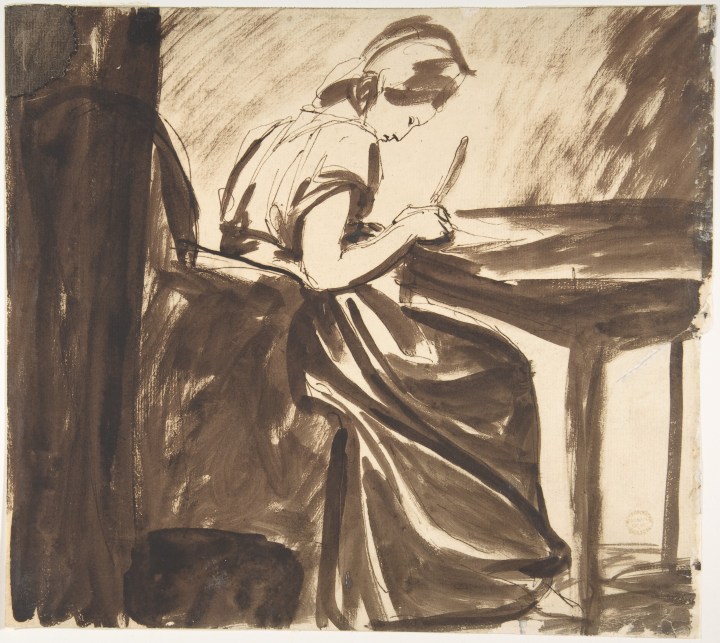
George Romney, Lady Seated at a Table (recto); pen and brown ink, brush and brown wash (NY: The Metropolitan Museum of Art, 11.66.3).
Master Drawings is now accepting submissions for the 8th Annual Ricciardi Prize of $5,000. The award is given for the best new and unpublished article on a drawing topic (of any period) by a scholar under the age of 40. Candidates are also eligible for a $1000 runner-up prize and publication. Prize winners are eligible for reimbursement of costs associated with obtaining image publication permissions. They will be invited to present their research at a symposium held during Master Drawings Week in New York (January 2026). Information about essay requirements and how to apply can be found here. Information about past winners and finalists is available here.
The average length is between 2,500 and 3,750 words, with five to twenty illustrations. Submissions should be no longer than 7,500 words and have no more than 75 footnotes. All submissions must be in article form, following the format of the journal. Please refer to our Submission Guidelines for additional information. We will not consider submissions of seminar papers, dissertation chapters, or other written material that has not been adapted into the format of a journal article. Written material that has been previously published, or is scheduled for future publication, will not be eligible. Articles may be submitted in any language. Please be sure to include a 100-word abstract outlining the scope of your article with your submission.
Exhibition | Sir William and Lady Hamilton

.
Installation of the exhibition Sir William and Lady Hamilton at the Gallerie d’Italia, Naples, with a view of Joshua Reynolds’s 1777 Portrait of Sir William Hamilton (London: NPG) and George Romney’s 1782 Portrait of Lady Hamilton as Circe (Waddesdon Manor). Photo by Roberto Della Noce.
◊ ◊ ◊ ◊ ◊
Closing soon at the Gallerie d’Italia in Naples:
Sir William and Lady Hamilton
Gallerie d’Italia, Naples, 25 October 2024 — 2 March 2025
In the wake of the important studies by Carlo Knight (who recently passed away) and the great exhibition at the British Museum in 1996, the Gallerie d’Italia–Napoli dedicates its 2024 autumn exhibition to William Hamilton, the British royal ambassador at the court of Ferdinand IV of Bourbon and his wife Maria Carolina of Hapsburg. Diplomat, antiquarian and volcanologist, Hamilton, with his multifaceted personality, found fertile ground in the ‘Enlightened’ Naples of the second half of the 18th century to affirm and develop his great passions: antiquity and science.

Jakob Philipp Hackert, View of the English Garden at Caserta, 1793, oil on canvas, 93 × 130 cm (Madrid: Museo Nacional Thyssen-Bornemisza).
The exhibition highlights Hamilton’s great interest in volcanology, landscape painting, music, and collecting, as well as the role he played in Neapolitan society of the time, amplified by the sometimes legendary figure of Lady Emma Hamilton. In reconsidering and promoting the extraordinary human, political, and intellectual story of a man who was undoubtedly one of the greatest interpreters of his time, leaving a profound mark on the city, the exhibition also traces the fruitful cultural and artistic exchanges that took place between Italy and the United Kingdom at a key moment in European history.
By virtue of its theme, the exhibition has the support of the Italian Embassy in the United Kingdom as well as the support of the British Embassy in Rome and boasts the presence on the scientific committee of Carlo Knight and Kim Sloan, curators of the important exhibition Vases and Volcanoes dedicated to Hamilton in 1996 by the British Museum, and Aidan Weston-Lewis, Chief Curator of European Art at the National Galleries of Scotland.
William Hamilton—cadet son of Lord Archibald Hamilton, the ‘milk brother’ of King George III of England, possessed of a solid cultural education and a rich network of social relations—moved to Naples as British ambassador to the Kingdom of Naples in 1764, together with his first wife Catherine Barlow. In the Bourbon capital, where he stayed until 1798—when the French troops arrived—he was able to cultivate his greatest passions: Greco-Roman antiquities, of which he became one of the greatest collectors of all time, the scientific study of the eruptions of Vesuvius, collecting ancient and contemporary paintings, the sea, and hunting. His residences crammed with works of art and full of charm, Villa Emma in Posillipo, Villa Angelica near Torre del Greco, and especially Palazzo Sessa in Pizzofalcone with its famous view of the gulf, were the theatres of a refined and cosmopolitan worldliness for over thirty years. His extraordinary publishing ventures, his relationships with Ferdinand IV and Maria Carolina—cultivated also thanks to his second wife Emma, the legend of whom has been nurtured in modern times by literature and film—and with great international travellers, such as Goethe, Mozart, William Beckford, and the Russian Tsar Paul I, made him one of the most influential figures in 18th-century European culture, as recognised by prestigious institutions such as the Royal Academy and the Royal Society of London.
Exhibition | Small but Mighty! Models, Toys, and Miniature Ships
.
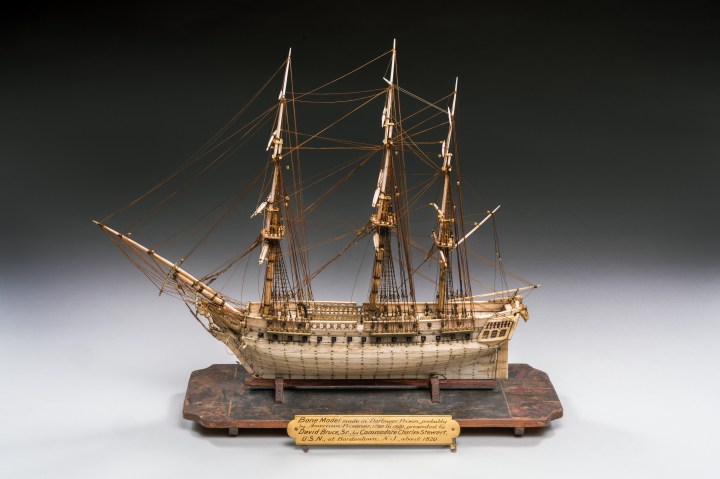
Attributed to an unknown French prisoner in Dartmoor Prison, Napoleonic War Model (Unidentified British Frigate), ca. 1790–1820, bone with a wooden stand covered in paper, 16 × 12 × 3 inches (Philadelphia: Independence Seaport Museum, Gift of Elizabeth Blaisdell, 1969.091).
◊ ◊ ◊ ◊ ◊
From the press release (3 February 2025) . . .
Small but Mighty! Models, Toys, and Miniature Ships
Independence Seaport Museum, Philadelphia, opening 20 March 2025
For centuries, people of all ages have been intrigued by model ships. Made for myriad reasons ranging from pure enjoyment to promotional tools, most are unique objects made by hand. Opening on 20 March 2025, a new permanent exhibition at the Independence Seaport Museum (ISM) will display nearly 50 rarely seen models dating from the early 19th century to the later 20th century, along with related paintings and prints. Primarily made of wood, the models were also fashioned out of paper, bone, and metal. Among the examples to be displayed are extraordinarily detailed and realistic models, such as the Heavy Cruiser USS Indianapolis, as well as highly stylized toy models intended for adults and children.
“Guests to the ISM over the years have remarked at the amazing range of ship models, toys, and pond models in our permanent collection,” said Peter Seibert, museum president and CEO. “This new exhibition has given us the opportunity to not only exhibit some of the public’s favorite examples along with many that have rarely ever been shown before. Young and old alike will love exploring these masterpieces of miniature craftsmanship.”
Over the centuries, ships models were used for various purposes. Some were design sources, known as half hulls, used in building larger vessels, while others were used for sport, such as pond models that were raced. Model ships were made as toys for children, and highly crafted, expensive models were intended as toys for adults. Other models were made to commemorate new vessels and were presented to shipbuilders or owners; some that were made by prisoners were used to exchange for food. Model ships were also used as tokens of remembrance either made by those who were on particular boats or those who were simply avid towards certain boats. Most of the models in the Independence Seaport Museum’s collection are ‘scratch built’, meaning that the craftsmen had to shape each piece from raw or lightly prepared materials rather than using premade parts. This method can be complex: metal casting is often used to produce the funnels, propellers, and other elements of a highly detailed model.
Among the most noteworthy ship models to be on view is the Heavy Cruiser USS Indianapolis. The legendary ship—launched on 7 November 1931 at the New York Shipbuilding Company in Camden, New Jersey to deliver the bomb to end World War II—was sunk by Japanese submarine 1-58 on 30 July 1945, after being hit by two torpedoes. Within just twelve minutes, the ship sank and the majority of the crew was launched into the water, while the remaining 300 or so crew members were left onboard. Three days later, a random sighting by a pilot led to the rescue of some of the sailors. (Today, the USS Indianapolis is most famous because its story was recounted in a scene in the movie Jaws.) This model of the Indianapolis, built in 1934–38 by Walter H. Gerber, a German mechanical engineer who originally worked at Cramp’s Shipyard in New York and then later transferred to Cramp’s Shipyard in Philadelphia, is massive in size: it measures 12 feet long by 17 inches wide. It was originally constructed as a radio-controlled, in-water model that had the capability to power its inside mechanics as well. The maker also has an interesting story: Gerber came under scrutiny from the United States government during World War II because he was fixated on the accuracy of the model and came from an enemy country. Afraid that information about the United States Navy would fall into the wrong hands, his actions were monitored and his home was raided, looking for cameras and other equipment supposedly to have been reported and/or voluntarily turned over to the government. Nothing of significance was found.
Another exquisite model of early shipbuilding is the Napoleonic War Model. Made entirely of bone by French prisoners in the British Dartmoor Prison, it was likely traded for food (prisoners were held on British prison ships during the Napoleonic wars; other similar models may have been made by American prisoners during the war of 1812). This model depicts an unidentified British frigate with 50 guns and has a decorative paper-covered wooden stand dating from about 1790 to 1820. With no provenance, it is assumed to be French and made for the British. The model, considered a folk-art masterpiece, was presented to David Bruce, Sr. by Commodore Charles Stewart, United States Navy, at Bordentown, New Jersey, in about 1820. Stewart was a Philadelphian who served in the navy for 63 years, playing key roles in the Quasi-War, Barbary Wars, and the War of 1812.
On 10 August 1893, the Steamer Priscilla, made by the Delaware River Iron Shipbuilding and Engine Works Company (John Roach & Sons) in Chester, Pennsylvania, for the Old Colony Steamboat Company, launched. Three years later, she was recreated as a child’s toy by R. Bliss Manufacturing Company in Pawtucket, Rhode Island, known for making inexpensive but realistic toys. One of these large toy ships made of chromolithographed paper attached to a wooden frame is equipped with wheels for motion, is a highlight of Small but Mighty! Measuring 37 inches long by 20 inches high and 5 inches wide, it is in pristine condition and illustrates the color and beauty of late 19th-century ships. This faithfully executed toy offered children a duplicate of the type of vessels actively used on America’s waterways. Toys such as these were sailed on the floors of large Victorian homes and enjoyed by children and, likely, adults as well.
The racing of small model yachts began in England in the 1870s, spread across the European continent, and eventually came to the United States. (New York’s Central Park Lake was built expressly for people to use in sailing pond models.) Organizations such as the Model Yacht Association determined rules and umpired regattas of two types: open water sailing and pond sailing. By 1950, five classes of model yachts were used, including the Marblehead or ‘M’ Class (also known as the 50/800 Class). Their small, manageable size made this sport appealing to those who could not handle a full-scale boat or those with limited financial resources. One such example of an ‘M’ Class model made in 1949, the Pond Yacht Almary II, is featured in the exhibition. It was made by Albert Link (born in Fishtown, Pennsylvania, 1909–1993) and is considered to be one of the biggest and best of its kind. Link worked as a machinist for Smith, Kline, and Beecham in Philadelphia. Link built approximately 15 model sailboats in his lifetime (the Almary II was his eighth) and raced them at Gustine Lake in Fairmont Park, Concourse Hunting Park, League Island Swimming Pool in Philadelphia as well as on Cooper River in Camden, New Jersey, and Long Island, New York. In 1950, he was a national prize winner at the New York Yacht Club and again in 1954 at Cooper River. He stopped racing that same year.
For children of all ages who are fascinated with model ships, Small but Mighty! Models, Toys, and Miniature Ships will delight and inform.
Call for Papers | Out of Scale
From ArtHist.net:
Out of Scale: From ‘Miniature’ Material Cultures to the Anthropic Principle
The Courtauld Institute of Art, London, 16–18 June 2025
Organized by Wenjie Su, Yizhou Wang, and Stephen Whiteman
Proposals due by 15 March 2025
Scale—the relative dimension, magnitude, or scope of objects, and their proportional relationship to the observer—is often understood through the lens of individual or collective visual assumptions. As inhabitants of the terrestrial sphere, we tend to rely on our bodies and cultural paradigms to interpret the scale of geographical terrain, human-made structures, material artifacts, social phenomena, and historical events. Technological advancements—from maritime expeditions to space exploration, from telescopic and microscopic investigations to the detection of cosmic microwave background—have urged humanity to redefine its scale of existence. Meanwhile, various philosophical and religious traditions have long pondered humanity’s place and purpose in relation to natural and supernatural realms.
By exploring designs and creations conceived on a micro-scale or as small-sized, this conference invites discussion on human creativity and human existence through the theme of scale. Examples abound across diverse human traditions, including burial and ritual objects, microarchitecture, portrait miniatures, and accessorial items such as netsukes, snuff boxes, and pocket watches. These objects appear diminutive when compared to the human body, the ‘worlds’ they represent, or their counterparts within more dominant socio-cultural systems. At times dismissed as frivolous and superficial, these streamlined and recontextualized objects can evoke out-of-scale resonances, transcending the original limitations of data or resources.
This conference connects studies that examine the art historical, historiographical, and ideological significance of scaled objects. First, we aim to deepen discussions on the sensorial, spiritual, intellectual, and technical implications of scaling. Particularly understudied are ephemeral objects and repositioned sites, such as lab settings and festival stagings. Second, we seek to investigate how the scale—of originals, reproductions, or paradigms—has shaped the central or peripheral status of specific objects and sites in art historical scholarship. Third, we aim to highlight the unique contributions that humanities and art historical scholars can make in addressing cutting-edge intellectual challenges in fields including AI and astrophysics. Throughout the global history of visual and material cultures, creatively re-scaled objects have played a central role in conceiving and simulating worlds that surpass our optical and epistemological thresholds. By exploring how humans have continually shifted scales to position themselves within and across realms, this conference reflects on humanity’s inherently limited yet endlessly creative perspective and envisions pathways to launch beyond boundaries.
Further questions and topics include but are not limited to:
• Material, aesthetic, sensory, and affective qualities unique to small-scale objects
• Practices of modeling and scaling in the production of scientific knowledge, such as mapping and laboratory experiments
• The dialectics of miniature and monumentality
• Relationships between scale, virtuality, and reality
• Critical reflections on the interpretational framework of ‘miniaturization’, such as the so-called miniature paintings of various Asian and Islamic traditions
• Challenges posed by small-scale objects or fragments in archaeological, museum, and pedagogical contexts
• The role of scale-shifting in methodological turns, such as global history, gender criticism, and eco-criticism
We invite proposals from scholars in a range of disciplines, including art and architecture history, museum studies, cultural history, intellectual history, and the history of science. Please send an abstract (ca. 250 words) for a 20-minute presentation and a 150-word bio as a single PDF file by 15 March 2025 to w-su@nga.gov; yizhouwang@hkbu.edu.hk; and stephen.whiteman@courtauld.ac.uk. Acceptance notification: 30 March 2025.
Conveners
Wenjie Su (Princeton University; CASVA)
Yizhou Wang (Hong Kong Baptist University)
Stephen Whiteman (The Courtauld Institute of Art)
Keynote Speakers
Andrew James Hamilton (The Art Institute of Chicago)
Wei-Cheng Lin (The University of Chicago)
The conference will be held 16–18 June 2005 at the Courtauld Institute of Art. Optional group viewing sessions will be arranged on June 18 in or around London. Accepted speakers will be invited to propose objects from London-based collections or sites that resonate with the themes of scale and the miniature.
Exhibition | Versailles: Science and Splendour

From the press release for the exhibition, a reworking of Sciences et curiosités de Versailles, which was on view at the palace in 2010–11.
Versailles: Science and Splendour
Science Museum, London, 12 December 2024 — 21 April 2025
Curated by Anna Ferrari
A significant new exhibition unveils the fascinating stories of science at Versailles, exploring how scientific knowledge became widespread, fashionable, and a tool of power to enhance France’s prestige. Versailles: Science and Splendour invites visitors to discover the unexpected, yet vitally important, role of science at the French royal court through spectacular scientific objects and artworks. Many items will be on display for the first time in the UK, including Louis XV’s rhinoceros and a splendid sculptural clock representing the creation of the world. The sumptuous exhibition also sheds light on the contribution of women to physics, medicine, and botany in 18th-century France.
Versailles—the seat of royal power in France in the 17th and 18th centuries—was renowned for its opulent palace and gardens, but it was also a cradle of scientific spirit. Developed with support from the Palace of Versailles, the exhibition reveals the meeting of art and science in the court as it showcases more than 100 fascinating objects, from the extravagant to the everyday. The exhibition explores how Louis XIV, Louis XV, and Louis XVI encouraged scientific pursuit and readily drew on technological advances of their times, enhancing France’s prestige and extending its influence. The exhibition highlights significant figures, including stories of women in science, such as the pioneering midwife Madame du Coudray who trained thousands of midwives in rural France and Emilie du Châtelet, the eminent physicist and mathematician who translated Isaac Newton’s Principia.
Anna Ferrari, lead curator of Versailles: Science and Splendor, said: “We are delighted to bring Versailles to London in this new exhibition, which invites visitors to discover an unusual but crucial side of the palace’s history and grandeur. This exhibition will reveal fascinating stories of science at Versailles through more than a hundred treasures, bringing new attention to the relationship between science and power.”
Christophe Leribault, President of the Palace of Versailles, said: “The Sciences and Curiosities at the Court of Versailles exhibition, held in 2010 at the Palace of Versailles, made a lasting impression. It unveiled a lesser-known aspect of life at the former royal residence: the interest in sciences and the spirit of curiosity and innovation that animated the sovereigns and the entire court. Through this revisited version of the exhibition, we take pride in the fact that our collections and expertise can now cross the Channel to meet visitors at the Science Museum, inspiring them to visit or revisit the Palace of Versailles.”
Sir Ian Blatchford, Director and Chief Executive of the Science Museum Group, said: “Science was at the heart of the French royal court, from the engineering innovations needed to build the regal seat of power to the lavish scientific demonstrations staged for the kings. We are able to share these remarkable stories with Science Museum visitors for the first time thanks to a close partnership with the Palace of Versailles. In strengthening such cultural connections with European partners, we will continue to inspire people with incredible stories of science and culture around the world.”

Versailles: Science and Splendour as installed in London’s Science Museum.
◊ ◊ ◊ ◊ ◊
Harnessing Science
Versailles: Science and Splendour takes visitors on a 120-year journey through the evolution of science at Versailles, from the creation of the Academy of Sciences by Louis XIV in 1666, to Louis XV’s passion for exquisite scientific instruments, and Louis XVI’s ordering of the La Pérouse expedition to the Pacific in 1785.
Measuring time and space was one of the key tasks of the Academy of Sciences, reflecting the challenges of the time in Europe. Members of the Academy mapped the Earth and the skies as visitors can observe in a 1679 map of the Moon by Cassini, the precision of which remained unrivalled for over 200 years. The promotion of France’s power through scientific developments also served political purposes, with exquisite instruments given as diplomatic gifts across the world.
The exhibition also gives visitors the opportunity to see the magnificent gardens of Versailles in a new light. Recruited by Louis XIV, Academicians and experts used mathematics and engineering to transform the site into a statement of power and prestige. Of particular importance for Louis XIV was the creation of spectacular fountains and water features in the grounds, which required hydraulic engineering projects of unprecedented scale. A painting of the monumental Marly Machine, which supplied Versailles’ fountains with water from the river Seine, will impress upon visitors the magnitude of Louis XIV’s grand ambitions.
Understanding Nature

Louis XV’s Rhinoceros (Paris: Muséum national d’Histoire naturelle).
France’s imperial reach enabled Versailles to become a centre for the scientific study of plants and animals from around the world. The exhibition will display this growing interest in zoology and the kings’ luxurious taste, which pushed for inventive botanic engineering to allow exotic fruits, like pineapples, to grow at Versailles.
Visitors will also be able to learn the surprising story of Louis XV’s rhinoceros, on display in the UK for the very first time. Gifted by a French governor in India, this rhinoceros was perhaps the Versailles menagerie’s most pampered and famous resident. Acquired by the Muséum national d’Histoire naturelle in Paris during the revolution, it was dissected after its death in 1793, and has been held there for over two hundred years.
Versailles will also feature the medical advances supported by the kings. The royal family made precious contributions to these developments by submitting their own bodies to procedures. On display will be a scalpel designed specifically to operate on the Sun King, while the exhibition will cover the inoculation against smallpox which Louis XVI and his family underwent as soon as he ascended the throne.
Louis XV supported the training of midwives across France to reduce infant mortality and grow a populous and strong kingdom. Born outside the nobility, to a family of doctors, Madame du Coudray rose to prominence through her pioneering practical training of midwives. She employed sophisticated life-sized mannequins to demonstrate the mechanics of birth—part of the only surviving mannequin will be showcased in the exhibition. Madame du Coudray ultimately trained over 5,000 women, as well as physicians, across France.

Versailles: Science and Splendour as installed in London’s Science Museum.
◊ ◊ ◊ ◊ ◊
Embracing Knowledge
Scientific culture became widespread and fashionable at the courts of Louis XV and Louis XVI, with members of the royal family and of the aristocracy educated in physics, mathematics, and chemistry. Examples of Louis XV’s magnificent collection of instruments will be on display. Visitors will see a sophisticated and rare optical microscope made by the king’s brilliant engineer, Claude-Siméon Passemant, which is also a work of art with its gilt bronze rococo stand by the Caffieri sculptors.
Jean-Antoine Nollet, tutor of physics and natural history to the royal children during Louis XV’s reign, demonstrated principles of physics in sensational presentations at court. His air-pump, used to ‘make the invisible visible’, will be on display in the exhibition. Visitors will also learn about Emilie du Châtelet, an exceptional physicist and mathematician. Her translation of Isaac Newton’s Principia Mathematica into French, with her own additional commentary, remains in use today.
From the heart of government at Versailles, science was used strategically to assert imperial power on the world stage. The exhibition highlights technological developments in warfare and defence engineering, as well as the 1785 expedition of La Pérouse. Commissioned by Louis XVI, the expedition had a dual aim. It sought to establish trade connections around the Pacific as well as further scientific knowledge: mapping coastlines as yet uncharted by Europeans and collecting scientific data.
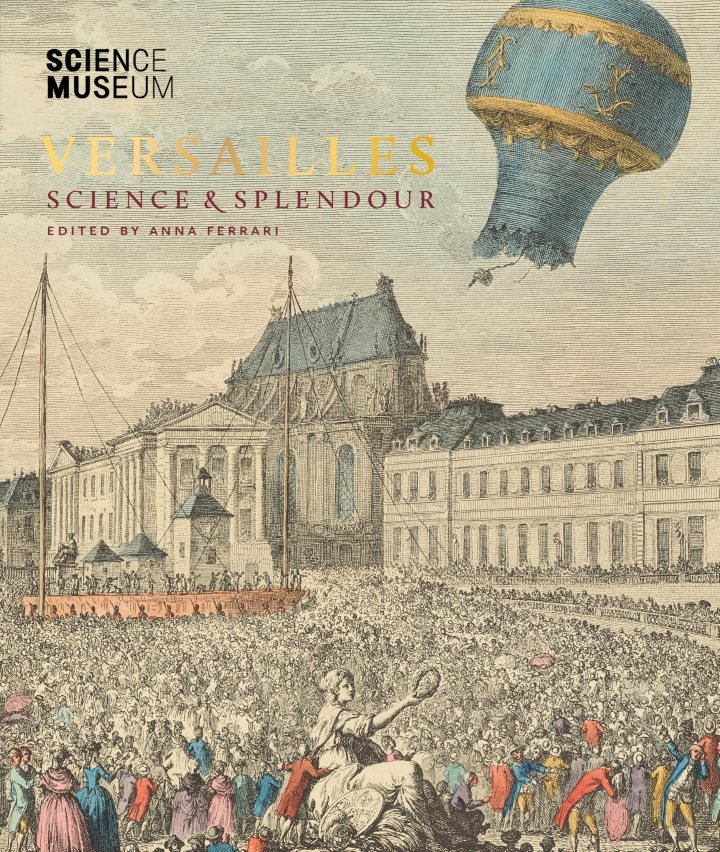
The exhibition also interrogates the surprising role of science in Versailles’ taste for spectacle. The palace provided an influential platform for scientific figures to present their work, as well as for the kings to display their power through extraordinary demonstrations, such as the flight of Etienne Montgolfier’s hot-air balloon at Versailles in 1783. One of the most complex pieces of engineering of its time, Pendule de la Création du Monde, presented to Louis XV in 1754, will also be on display. This exquisite astronomical clock exemplifies the intersection of scientific interest and royal opulence, boasting Versailles’ splendour through mechanical wonder.
Anna Ferrari, ed., Versailles: Science and Splendour (Milan: Scala, 2025), 128 pages, ISBN: 978-1785515828, £30.
Published to accompany the exhibition at London’s Science Museum, this richly illustrated book breaks new ground in exploring the relationship between science and power at the French court of Versailles. It features sixteen short chapters by experts from Britain, France, and America.
Anna Ferrari is Curator of Art and Visual Culture at the Science Museum and lead curator of the exhibition Versailles: Science and Splendour. Trained as an art historian, she has previously curated and co-curated exhibitions at the Victoria and Albert Museum, the Royal Academy of Arts and the Sainsbury Centre for Visual Arts.










 Enfilade
leave a comment