New Book | Slavery and the Invention of Dutch Art
From Duke UP, with a talk on Thursday at BGC:
Caroline Fowler, Slavery and the Invention of Dutch Art (Durham: Duke University Press, 2025), 176 pages, ISBN: 978-1478028093 (hardcover), $125 / ISBN: 978-1478031321 (paperback), $30.
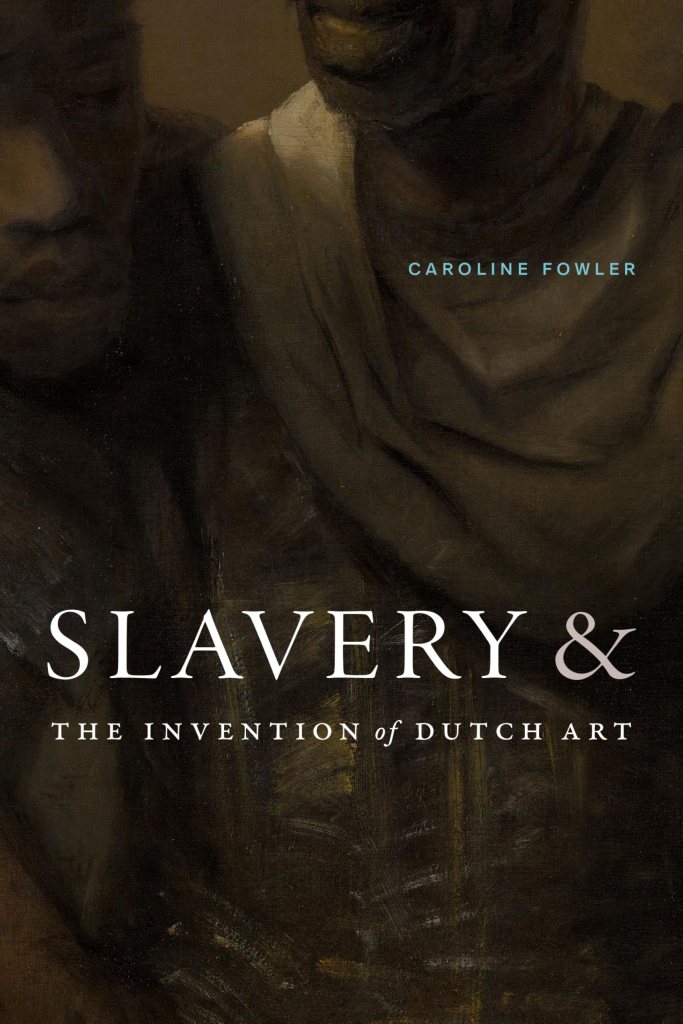 In Slavery and the Invention of Dutch Art, Caroline Fowler examines the fundamental role of the transatlantic slave trade in the production and evolution of seventeenth-century Dutch art. Whereas the sixteenth-century image debates in Europe engaged with crises around the representation of divinity, Fowler argues that the rise of the transatlantic slave trade created a visual field of uncertainty around picturing the transformation of life into property. Fowler demonstrates how the emergence of landscape, maritime, and botanical painting were deeply intertwined with slavery’s economic expansion. Moreover, she considers how the development of one of the first art markets was inextricable from the trade in human lives as chattel property. Reading seventeenth-century legal theory, natural history, inventories, and political pamphlets alongside contemporary poetry, theory, and philosophy from Black feminism and the African diaspora, Fowler demonstrates that ideas about property, personhood, and citizenship were central to the oeuvres of artists such as Rembrandt van Rijn, Hercules Segers, Frans Post, Johannes Vermeer, and Maria Sibylla Merian and therefore inescapably within slavery’s grasp.
Caroline Fowler is Starr Director of the Research and Academic Program at the Clark Institute. She is the author of The Art of Paper: From the Holy Land to the Americas and Drawing and the Senses: An Early Modern History.
c o n t e n t s
Acknowledgments
Introduction: Transubstantiation across Atlantic Worlds
1 Art Markets and Futures Speculation
2 Seascapes and Landscapes
3 Monuments and Architectural Painting
4 Domestic Interiors and Natural History
Conclusion: Historiography and Race
Notes
Bibliography
Index
◊ ◊ ◊ ◊ ◊
Slavery and the Invention of Dutch Art | A Conversation with Caroline Fowler and Helga Davis
Bard Graduate Center, New York, 13 February 2025, 6pm
Caroline Fowler will speak with renowned artist and podcaster Helga Davis about the book Slavery and the Invention of Dutch Art, thinking about the role of poetics in writing history, the importance of Black feminism in rethinking art history, and the ways in which ‘Old Master’ painting continues to impact how the world is seen and interpreted.
Registration is available here»
Call for Papers | Representing the Body
From the Call for Papers (Dorothy Johnson is slated to give a keynote address). . .
VariAbilities 2025 | Exploring Representations of the Body across Visual Disciplines
Mercy University, New York, 11–15 June 2025
Proposals due by 14 February 2025
 The representation of the body is a fundamental aspect of human culture, reflecting societal values, norms, and power structures. From ancient civilizations to contemporary times, various visual disciplines have been employed to create different forms of bodily representation to convey meaning, express emotions, to teach and tell stories. This conference seeks to examine a wide range of representations across multiple visual forms, and across a wide history, shedding light on the ways in which they intersect, diverge, and influence one another.
Some of the key questions we shall address might be:
• How do different visual disciplines (e.g., medical imagery and illustration, painting, photography, sculpture) represent the human body, and what are the implications of these representations?
• What role does performance play in bodily representation, and how do various forms of performance (e.g., doctor/patient interactions, dance, theatre, music) shape our understanding of the body?
• How do word-based and image-based portrayals of the body differ (e.g. literary and cinema, poetry and portraits), and what insights can be gained by comparing these approaches?
• In what ways do representations of the body reflect social attitudes towards gender, race, class, VariAbility, and other forms of identity?
These some of the many questions you may wish to explore, you may have others! Please email a 300-word proposal to Variabilities8@gmail.com by 14 February 2025. The event will take place at the Mercy University Campus in Manhattan, where there is some dorm accommodation for delegates should they choose it. There is also some scope for online presentations for those who have travel issues. Come and tell us what the ‘body’ means to you. More information is available here.










 Enfilade
leave a comment