Prado Launches Online Collection of Printed References to Goya
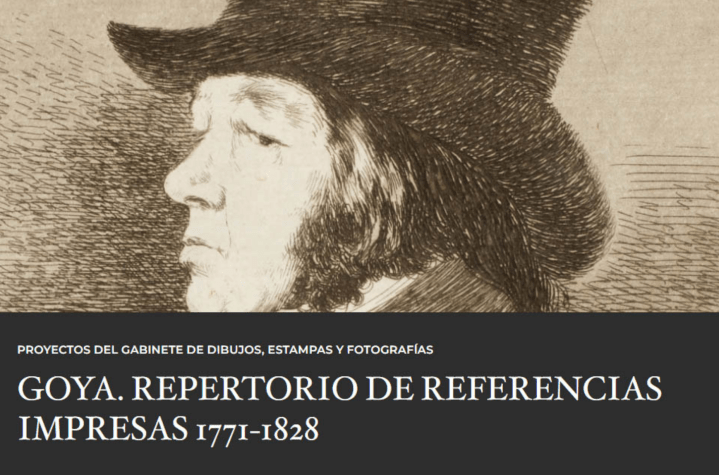
As noted at Art History News, the Prado has just launched its latest online digital project, Goya: Repertorio de referencias impresas: 1771–1828, which collects some 30,000 published references to Goya made during his lifetime in books, advertisements, newspaper articles, and prints. From the press release (6 February 2025) . . .
Goya: Repertorio de Referencias Impresas, 1771–1828
Online, The Prado Museum, Madrid
El Museo del Prado amplía los proyectos digitales del Gabinete de Dibujos, Estampas y Fotografías reuniendo por primera vez todas las referencias impresas sobre Goya publicadas durante su vida. Este Repertorio de referencias impresas. 1771–1828, disponible en la web, facilita el acceso a un corpus documental de gran valor para investigadores y amantes del arte, y público en general.
Para acercar al público su extensa colección de dibujos, estampas y fotografías—formada por aproximadamente 30.000 obras que por motivos de su conservación no se exponen permanentemente en las salas—el Museo Nacional del Prado ha desarrollado un espacio web con contenidos monográficos especialmente concebidos para dar a conocer su singularidad y riqueza. En este contexto, el Museo presenta el Repertorio de referencias impresas. 1771–1828 sobre Francisco de Goya, una herramienta única que pone a disposición del público el primer repertorio en el mundo que reproduce la totalidad de referencias publicadas sobre un artista durante su vida.
Este nuevo repertorio amplía el campo de divulgación de la obra de Goya mediante la recopilación de referencias impresas, conservadas en bibliotecas y museos de todo el mundo, algunas de difícil acceso. Desde la primera mención de Goya en 1771 hasta su fallecimiento en 1828, su nombre fue citado en libros, anuncios, artículos periodísticos y estampas, reflejando su notoriedad y reconocimiento en vida. El Repertorio de referencias impresas. 1771–1828 está organizado mediante fichas cronológicas que incluyen datos bibliográficos, transcripciones, traducciones, imágenes de documentos originales y enlaces a versiones digitalizadas completas. Asimismo, se ha desarrollado un sistema de búsqueda por términos y etiquetas, permitiendo filtrar la información por tipología documental y década.
Este recurso digital ha sido posible gracias al trabajo del especialista en obra gráfica de Goya, Juan Carrete Parrondo, quien inició este proyecto antes de su fallecimiento en 2023. Tras dos años de labor, el Museo del Prado culmina su esfuerzo y lo pone a disposición del público. Siguiendo el espíritu colaborativo de su creador, el proyecto sigue abierto a nuevas aportaciones, invitando a los usuarios a contribuir con referencias adicionales mediante el correo gabinete.dibujos@museodelprado.es.
El Repertorio de referencias impresas. 1771–1828 ha sido financiado con fondos del Plan de Recuperación, Transformación y Resiliencia de España (PRTR) y vinculado a las actuaciones dentro del programa C.24 I3 Digitalización e impulso de los grandes servicios culturales, incluido en el eje incluido en el eje Prado Formación y dentro de la actuación “Prado Formación e Investigación” y de la actividad Canal de formación e investigación.
Research Seminar | Martin Myrone on the Foggo Brothers’ Parga

.
James and George Foggo, Parga during the Awful Ceremony that Preceded the Banishment of its Brave Christian Inhabitants and the Entrance of Ali Pacha, ca. 1819, lithograph, 42 × 64 cm (London: the British Museum, 1842,0319.14).
◊ ◊ ◊ ◊ ◊
Next month at the Mellon Centre:
Martin Myrone | A Radical Alternative within British Romanticism: The Foggo Brothers’ Parga
Online and in-person, Paul Mellon Centre, London, 19 March 2025, 5pm
This talk focuses on one of the most remarkable—but forgotten—works of British art of any era: The Christian Inhabitants of Parga Preparing to Emigrate (1822) by the brothers George and James Foggo. This huge painting, twenty-six feet long by sixteen high, was exhibited several times in the nineteenth century before disappearing. Recorded in a mezzotint, the picture features a multitude of figures in a scene of horror with the people of Parga in Greece disinterring their ancestors so that their remains were not left on ground falling under Ottoman rule. The incident of 1819 on which the picture was based was an international scandal, identified as an appalling indictment of British foreign policy. Ironically, the very size, political purpose and pictorial ambition of the Foggo brothers’ picture has made it easy to be ignored by art history. This talk will explore how the discipline has by contrast—and this is almost regardless of political orientation—been preoccupied with the subjective and commodified aesthetics assumed to be the enduring legacy of the ‘Romanticism’ of the era.
The event starts with a presentation and talk by Martin Myrone, lasting around 40 minutes, followed by Q&A and a free drinks reception. The event is hosted in our Lecture Room, which is up two flights of stairs (there is no lift). The talk will also be streamed online and recording published on our website.
More information and registration is available here»
Martin Myrone is Head of Research Support and Pathways at the Paul Mellon Centre. Before joining the Centre in 2020, Martin spent over twenty years in curatorial roles at Tate, London. His many exhibitions at Tate Britain have included Gothic Nightmares (2006), John Martin (2011), William Blake (2019), and Hogarth and Europe (2021). His research and publications have focused on eighteenth- and nineteenth-century British art, with a special interest in artistic identity and artists’ labour, class, cultural opportunity and gender. His many published works include Bodybuilding: Reforming Masculinities in British Art 1750–1810 (2005) and Making the Modern Artist: Culture, Class and Art-Educational Opportunity in Romantic Britain (2020), both published by the Paul Mellon Centre.










 Enfilade
leave a comment