Exhibition | Versailles: Science and Splendour

From the press release for the exhibition, a reworking of Sciences et curiosités de Versailles, which was on view at the palace in 2010–11.
Versailles: Science and Splendour
Science Museum, London, 12 December 2024 — 21 April 2025
Curated by Anna Ferrari
A significant new exhibition unveils the fascinating stories of science at Versailles, exploring how scientific knowledge became widespread, fashionable, and a tool of power to enhance France’s prestige. Versailles: Science and Splendour invites visitors to discover the unexpected, yet vitally important, role of science at the French royal court through spectacular scientific objects and artworks. Many items will be on display for the first time in the UK, including Louis XV’s rhinoceros and a splendid sculptural clock representing the creation of the world. The sumptuous exhibition also sheds light on the contribution of women to physics, medicine, and botany in 18th-century France.
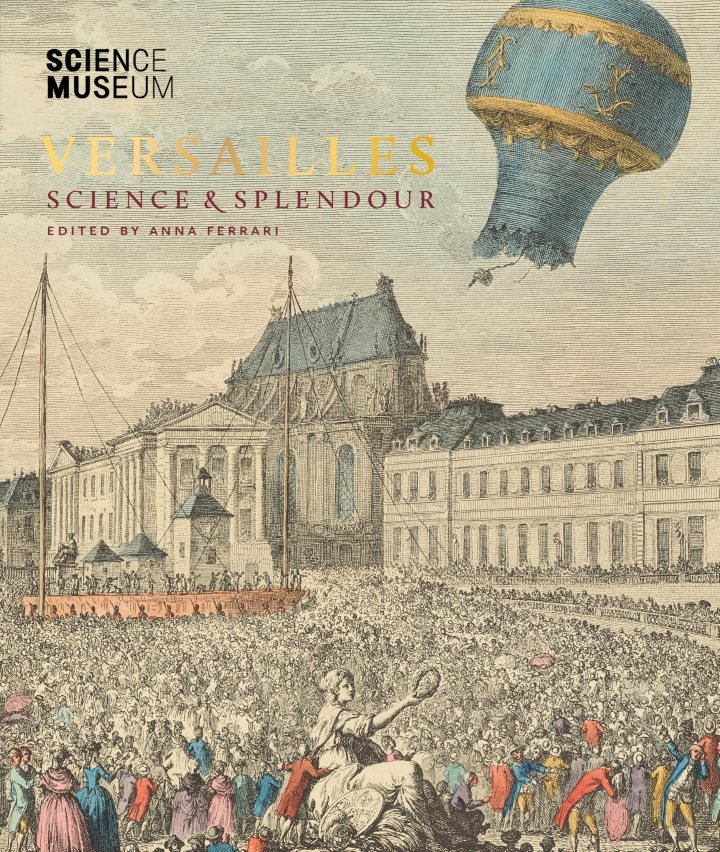
Versailles—the seat of royal power in France in the 17th and 18th centuries—was renowned for its opulent palace and gardens, but it was also a cradle of scientific spirit. Developed with support from the Palace of Versailles, the exhibition reveals the meeting of art and science in the court as it showcases more than 100 fascinating objects, from the extravagant to the everyday. The exhibition explores how Louis XIV, Louis XV, and Louis XVI encouraged scientific pursuit and readily drew on technological advances of their times, enhancing France’s prestige and extending its influence. The exhibition highlights significant figures, including stories of women in science, such as the pioneering midwife Madame du Coudray who trained thousands of midwives in rural France and Emilie du Châtelet, the eminent physicist and mathematician who translated Isaac Newton’s Principia.
Anna Ferrari, lead curator of Versailles: Science and Splendor, said: “We are delighted to bring Versailles to London in this new exhibition, which invites visitors to discover an unusual but crucial side of the palace’s history and grandeur. This exhibition will reveal fascinating stories of science at Versailles through more than a hundred treasures, bringing new attention to the relationship between science and power.”
Christophe Leribault, President of the Palace of Versailles, said: “The Sciences and Curiosities at the Court of Versailles exhibition, held in 2010 at the Palace of Versailles, made a lasting impression. It unveiled a lesser-known aspect of life at the former royal residence: the interest in sciences and the spirit of curiosity and innovation that animated the sovereigns and the entire court. Through this revisited version of the exhibition, we take pride in the fact that our collections and expertise can now cross the Channel to meet visitors at the Science Museum, inspiring them to visit or revisit the Palace of Versailles.”
Sir Ian Blatchford, Director and Chief Executive of the Science Museum Group, said: “Science was at the heart of the French royal court, from the engineering innovations needed to build the regal seat of power to the lavish scientific demonstrations staged for the kings. We are able to share these remarkable stories with Science Museum visitors for the first time thanks to a close partnership with the Palace of Versailles. In strengthening such cultural connections with European partners, we will continue to inspire people with incredible stories of science and culture around the world.”

Versailles: Science and Splendour as installed in London’s Science Museum.
◊ ◊ ◊ ◊ ◊
Harnessing Science
Versailles: Science and Splendour takes visitors on a 120-year journey through the evolution of science at Versailles, from the creation of the Academy of Sciences by Louis XIV in 1666, to Louis XV’s passion for exquisite scientific instruments, and Louis XVI’s ordering of the La Pérouse expedition to the Pacific in 1785.
Measuring time and space was one of the key tasks of the Academy of Sciences, reflecting the challenges of the time in Europe. Members of the Academy mapped the Earth and the skies as visitors can observe in a 1679 map of the Moon by Cassini, the precision of which remained unrivalled for over 200 years. The promotion of France’s power through scientific developments also served political purposes, with exquisite instruments given as diplomatic gifts across the world.
The exhibition also gives visitors the opportunity to see the magnificent gardens of Versailles in a new light. Recruited by Louis XIV, Academicians and experts used mathematics and engineering to transform the site into a statement of power and prestige. Of particular importance for Louis XIV was the creation of spectacular fountains and water features in the grounds, which required hydraulic engineering projects of unprecedented scale. A painting of the monumental Marly Machine, which supplied Versailles’ fountains with water from the river Seine, will impress upon visitors the magnitude of Louis XIV’s grand ambitions.
Understanding Nature

Louis XV’s Rhinoceros (Paris: Muséum national d’Histoire naturelle).
France’s imperial reach enabled Versailles to become a centre for the scientific study of plants and animals from around the world. The exhibition will display this growing interest in zoology and the kings’ luxurious taste, which pushed for inventive botanic engineering to allow exotic fruits, like pineapples, to grow at Versailles.
Visitors will also be able to learn the surprising story of Louis XV’s rhinoceros, on display in the UK for the very first time. Gifted by a French governor in India, this rhinoceros was perhaps the Versailles menagerie’s most pampered and famous resident. Acquired by the Muséum national d’Histoire naturelle in Paris during the revolution, it was dissected after its death in 1793, and has been held there for over two hundred years.
Versailles will also feature the medical advances supported by the kings. The royal family made precious contributions to these developments by submitting their own bodies to procedures. On display will be a scalpel designed specifically to operate on the Sun King, while the exhibition will cover the inoculation against smallpox which Louis XVI and his family underwent as soon as he ascended the throne.
Louis XV supported the training of midwives across France to reduce infant mortality and grow a populous and strong kingdom. Born outside the nobility, to a family of doctors, Madame du Coudray rose to prominence through her pioneering practical training of midwives. She employed sophisticated life-sized mannequins to demonstrate the mechanics of birth—part of the only surviving mannequin will be showcased in the exhibition. Madame du Coudray ultimately trained over 5,000 women, as well as physicians, across France.

Versailles: Science and Splendour as installed in London’s Science Museum.
◊ ◊ ◊ ◊ ◊
Embracing Knowledge
Scientific culture became widespread and fashionable at the courts of Louis XV and Louis XVI, with members of the royal family and of the aristocracy educated in physics, mathematics, and chemistry. Examples of Louis XV’s magnificent collection of instruments will be on display. Visitors will see a sophisticated and rare optical microscope made by the king’s brilliant engineer, Claude-Siméon Passemant, which is also a work of art with its gilt bronze rococo stand by the Caffieri sculptors.
Jean-Antoine Nollet, tutor of physics and natural history to the royal children during Louis XV’s reign, demonstrated principles of physics in sensational presentations at court. His air-pump, used to ‘make the invisible visible’, will be on display in the exhibition. Visitors will also learn about Emilie du Châtelet, an exceptional physicist and mathematician. Her translation of Isaac Newton’s Principia Mathematica into French, with her own additional commentary, remains in use today.
From the heart of government at Versailles, science was used strategically to assert imperial power on the world stage. The exhibition highlights technological developments in warfare and defence engineering, as well as the 1785 expedition of La Pérouse. Commissioned by Louis XVI, the expedition had a dual aim. It sought to establish trade connections around the Pacific as well as further scientific knowledge: mapping coastlines as yet uncharted by Europeans and collecting scientific data.
The exhibition also interrogates the surprising role of science in Versailles’ taste for spectacle. The palace provided an influential platform for scientific figures to present their work, as well as for the kings to display their power through extraordinary demonstrations, such as the flight of Etienne Montgolfier’s hot-air balloon at Versailles in 1783. One of the most complex pieces of engineering of its time, Pendule de la Création du Monde, presented to Louis XV in 1754, will also be on display. This exquisite astronomical clock exemplifies the intersection of scientific interest and royal opulence, boasting Versailles’ splendour through mechanical wonder.
Anna Ferrari, ed., Versailles: Science and Splendour (Milan: Scala, 2025), 128 pages, ISBN: 978-1785515828, £30.
Published to accompany the exhibition at London’s Science Museum, this richly illustrated book breaks new ground in exploring the relationship between science and power at the French court of Versailles. It features sixteen short chapters by experts from Britain, France, and America.
Anna Ferrari is Curator of Art and Visual Culture at the Science Museum and lead curator of the exhibition Versailles: Science and Splendour. Trained as an art historian, she has previously curated and co-curated exhibitions at the Victoria and Albert Museum, the Royal Academy of Arts and the Sainsbury Centre for Visual Arts.
New Book | The Enlightenment’s Most Dangerous Woman
From Oxford UP:
Andrew Janiak, The Enlightenment’s Most Dangerous Woman: Émilie du Châtelet and the Making of Modern Philosophy (Oxford: Oxford University Press, 2024), 304 pages, ISBN: 978-0197757987, .
 Just as the Enlightenment was gaining momentum throughout Europe, philosopher Émilie Du Châtelet (1706–1749) broke through the many barriers facing women at the time and published a major philosophical treatise in French. Within a few short years, she became famous: she was read and debated from Russia to Prussia, from Switzerland to England, from up north in Sweden to down south in Italy. This was not just remarkable because she was a woman, but because of the substance of her contributions. While the men in her milieu like Voltaire and Kant sought disciples to promote their ideas, Du Châtelet promoted intellectual autonomy. She counselled her readers to read the classics, but never to become a follower of another’s ideas. Her proclamation that a true philosopher must remain an independent thinker, rather than a disciple of some supposedly ‘great man’ like Isaac Newton or René Descartes, posed a threat to an emerging consensus in the Enlightenment. And that made her dangerous.
After all, if young women took Du Châtelet’s advice to heart, if they insisted on thinking for themselves, they might demand a proper education—the exclusion of women from the colleges and academies of Europe might finally end. And if young women thought for themselves, rather than listening to the ideas of the men around them, that might rupture the gender-based social order itself. Because of the threat that she posed, the men who created the modern philosophy canon eventually wrote Du Châtelet out of their official histories. After she achieved immense fame in the middle of the eighteenth century, her ideas were later suppressed, or attributed to the men around her. For generations afterwards, she was forgotten. Now we can hear her voice anew when we need her more than ever. Her lessons of intellectual independence and her rejection of hero worship remain ever relevant today.
Andrew Janiak is Professor of Philosophy and Bass Fellow at Duke University. For the last decade, he has co-led—with Liz Milewicz—Project Vox, a digital project that seeks to recover the lost voices of women who contributed to modern science and philosophy. Janiak is the author or editor of five previous books and numerous articles concerning the relationship between science and philosophy in the 17th and 18th centuries.
c o n t e n t s
1 The Rise and Fall of Émilie Du Châtelet
2 What Was the Scientific Revolution?
3 Du Châtelet’s Vision of Science and Philosophy
4 The Enlightenment’s Most Famous Woman
5 The Enlightenment’s Most Dangerous Woman, Or The Making of Modern Philosophy
6 Du Châtelet’s Enlightenment: Philosophy for Freethinkers
Notes
Bibliography
Index
New Book | Hercules of the Arts
The exhibition was on view last year at Vienna’s Gartenpalais Liechtenstein. The catalogue is distributed by The University of Chicago Press:
Stephan Koja, ed., Hercules of the Arts: Johann Adam Andreas I von Liechtenstein and Vienna around 1700 (Munich: Hirmer Verlag, 2024), 240 pages, ISBN: 978-3777443638, $45. With contributions by Thomas Baumgartner, Reinhold Baumstark, Alexandra Hanzl, Claudia Lehner-Jobst, Katharina Leithner, Gernot Mayer, Cecilia Mazzetti di Pietralata, Andreas Nierhaus, Peter Stephan, Arthur Stögmann, and Silvia Tammaro.
 The life of one of Vienna’s foremost patrons of art.
This book focuses on Prince Johann Adam Andreas I of Liechtenstein (1657–1712). His skillful economic policies enabled him to increase his fortune, with which he purchased important artworks, invested in building projects and their artistic design, founded a city district, and developed Italian art and architecture in Vienna in around 1700. The prince was an important individual in his dynasty and a great patron and builder. He reorganized administrative structures and invested in businesses and innovative production techniques. He thus created the financial basis for the expansion of the art collection and the construction and furnishing of imposing buildings. To this day, the Gartenpalais and Stadtpalais in Vienna bear witness to the activities of this prince known as a Hercules of the arts.










 Enfilade
leave a comment