Xavier Salomon Named Director of the Calouste Gulbenkian Museum
As noted at the Art History News Blog; from the press release (24 June 2025) . . .
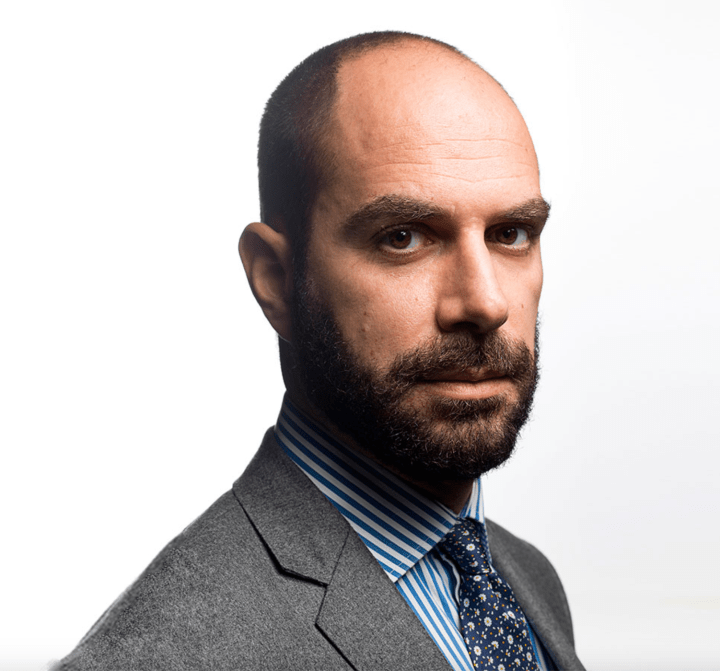 Xavier F. Salomon, the current Deputy Director and Peter Jay Sharp Chief Curator of the Frick Collection in New York, has been chosen by the Gulbenkian Foundation’s Board of Trustees as Director of the Calouste Gulbenkian Museum in Lisbon. Following an international recruitment process, Solomon will succeed António Filipe Pimentel, who will retire at the beginning of next year.
Xavier F. Salomon was born in Rome [in 1979] and grew up between Italy and the United Kingdom. He was educated at the Courtauld Institute of Art in London, where he received his BA in art history, his MA, and his PhD with a thesis on “The Religious, Artistic, and Architectural Patronage of Cardinal Pietro Aldobrandini (1571–1621).”
Salomon worked at the British Museum and at the National Gallery in London, before joining, in 2006, Dulwich Picture Gallery as the Arturo and Holly Melosi Chief Curator. At Dulwich, Salomon curated many exhibitions on artists such as Guido Reni, Paolo Veronese, Salvator Rosa, Anthony van Dyck, Nicolas Poussin, and Cy Twombly. In 2011, he joined the Department of European Paintings at the Metropolitan Museum of Art in New York, as Curator of Southern Baroque, in charge of Italian paintings from the 17th and 18th century, French 17th-century, and Spanish paintings. In 2014, he curated the monographic exhibition Paolo Veronese: Magnificence in Renaissance Venice at the National Gallery in London.
Since 2014, he has been Deputy Director and Peter Jay Sharp Chief Curator at the Frick Collection in New York where he curated exhibitions on artists such as Guido Cagnacci, Paolo Veronese, Antonio Canova, Giambattista Tiepolo, Luigi Valadier, Bartolomé Esteban Murillo, Bertoldo di Giovanni, Giovanni Bellini, and Giorgione. He also worked on projects with contemporary artists such as Doron Langberg, Salman Toor, Jenna Gribbon, Nicolas Party, and Flora Yukhnovich. In 2022, he curated the exhibitions James McNeill Whistler (1834–1903): Masterpieces of the Frick Collection, New York at the Musée d’Orsay in Paris and The Polish Rider: The King’s Rembrandt at the Royal Łazienki Museum, Warsaw and Wawel Royal Castle, Kraków. In recent years, he supervised the renovation of the galleries at the Frick, moving them first in 2021 to Frick Madison and then back to the historic location of the museum, which reopened in April 2025.
Salomon is the author of the acclaimed online series Cocktails with a Curator and Travels with a Curator and of the book thereon (2022). He is widely published and his scholarly articles have appeared in The Burlington Magazine, Apollo, Journal of the History of Collections, Master Drawings, The Metropolitan Museum Journal, and the Boletín del Museo del Prado, among others. He was a Rome Scholar at the British School at Rome in 2002–03; a Fellow at the Robert H. Smith International Center for Jefferson Studies in Monticello, Virginia in 2017; and a Leigh Fermor House Fellow at the Benaki Museum, Athens in 2024.
Salomon’s main areas of expertise are art and patronage in 17th- and 18th-century Rome and Venice, and the painters Paolo Veronese and Rosalba Carriera. He is currently working on a new catalogue raisonné of Paolo Veronese’s drawings and one of Rosalba Carriera’s works, while working also on the catalogue of the Spanish paintings at the Frick Collection. In 2018, Salomon was nominated Cavaliere della Stella d’Italia by the Italian President of the Republic.
The Calouste Gulbenkian Museum in Lisbon, Portugal houses the collection gathered by Calouste Sarkis Gulbenkian throughout his life (1869–1955). The collection includes more than 6,000 pieces from antiquity to the early 20th century, including Egyptian, Greco-Roman, Islamic, and Far Eastern art, as well as European numismatics, paintings, and decorative arts. Currently closed, the museum will reopen in the summer of 2026, after the extensive renovation of the air conditioning, lighting, and security systems in its galleries.
Conference | The 9th Feminist Art History Conference
From ArtHist.net and the conference website:
The 9th Feminist Art History Conference
Online and in-person, American University, Washington D.C., 25–26 September 2025
Registration due by 1 September 2025
The Feminist Art History Conference fosters intersectional and interdisciplinary scholarship on the ways in which gender and sexuality have shaped the visual arts and their study–with a conference program designed to advance new research on topics from the ancient past through the present and across the globe. It provides a forum for participants to examine the roles that art and its agents have played in informing and resisting historical and contemporary inequities. Through this forum, the conference aims to model a more inclusive art history and scholarly community.
The Feminist Art History Conference was established in 2010 to celebrate and build on the feminist art-historical scholarship and pedagogy of Norma Broude and Mary D. Garrard, Professors Emeriti at American University. It is sponsored by the Art History Program in the Art Department, College of Arts and Sciences, at American University, with the generous support of Robin D’Alessandro and Dr. Jane Fortune. The conference comprises 10 in-person panels, 12 online panels, and 5 hybrid panels. Keynotes will be hosted in-person with a livestream feed. Registration is available here.
Organizing Committee
Andrea Pearson, Joanne Allen, Juliet Bellow, Kim Butler Wingfield, Mary Garrard, Norma Broude, Nika Elder, Ying-chen Peng
f r i d a y , 2 6 s e p t e m b e r
10.30 Keynote 1 (online)
• Dorothy Price (Courtauld Institute)
1.00 Session 1 | Shifting Identities / Identity Shifts (online)
• Judith Rehermann — Hans Baldung Grien’s Enigmatic Painting Lot and His Daughters
• Anna Savchenkova — Beauties Replacing Popes and Crosses: The Phenomena of Renaissance Niello Medallions
• Pat Simons — The Amateur Woman Artist and the Myth of Irene di Spilimbergo
• Lauryn Smith — Transcending One’s Sex: Connoisseurial Displays in the Cabinets of Amalia van Solms-Braunfels
2.00 Session 2 | Images of the Female Body as Resistance I (online)
• Georgieva & Takeyana Jini — Embodied Revolt: Gender Perspectives on the Female Body in Japanese Modern and Contemporary Art
• Maite Luengo-Aguirre — Reimagining the Female Body: Feminist Interventions in Painting and Photography in 1990s Spain
• Maria Garth — Zenta Dzividzinska: Nude Photography and Self-Portraiture in the Soviet 1960s
• Gandotra Apeksha — Gender Analysis of Korean Drama Posters: Visual Representation and Stereotypes
3.00 Session 3 | Italy: Women Artists, Feminist Art, and Their Promotion in the 20th Century (online)
• Federica Arcorarci — Romana Loda’s Legacy: Promoting Feminist Art in 1970s Italy Francesca della Ventura: ‘La lotta é FICA1!’. Feminist Practices of Urban Art and Gender Claims in Contemporary Italy
• Camilla Paolino — Feminist Escapes from the Domestic through Art Making in 1970s Italy: On the Work of Clemen Parrocchetti and Lydia Sansoni
4.00 Session 4 | Locating Agency (online)
• Carmen Ruiz Vivas — Women and Peace in Ancient Roman Art: From Symbols to Agents
• Lydia McKelvie — Ghiberti’s Story of Rebecca: Women’s Agency in the Gates of Paradise
• Monica Zavala Cabello — Practices, Rituals, and Agency of the ‘Warrior Woman’ in the Ancient Mexican Tradition: A Gender Perspective Approach to Bernardino de Sahagún’s Images in the Florentine Codex
• Emma Luisa Cahill Marrón — Bloody Mary Tudor Revisited: Queen Mary I of England in the Prado Museum’s Female Perspective
s a t u r d a y , 2 7 s e p t e m b e r
9.00 Session 5a | From the Margins (online)
• Mey-yen Moriuchi — A Reconsideration of Las Señoritas Pintoras from 19th-Century Mexico
• Yuniya Kawamura — Female Ukiyo-e Artists in the Male-dominated Japanese Art World during the Edo Period
• Nadine Nour el-Din — Inventing the Modern: Women Who Shaped Collecting and Patronage in Egypt: Émilienne Hector Luce and Huda Shaarawi
• Georgina Gluzman — Decorative, Useful, National, and Very Feminine: Discourses and Practices around the ‘Impure’ Arts (Argentina, 1920–1940)
9.00 Session 5b | Textiles I: Tradition and Subversion (online)
• Irene Bronner — Eroticism as Gender Critique in Textile Art by South Africans Ilené Bothma, Kimathi Mafafo, and Talia Ramkilawan
• Marina Vinnik — Otti Berger and Anni Albers: Bauhaus Weaving Workshop and Architecture
• Smaranda Ciubotaru — Crafting Subversion: Intermediality and Artisanal Knowledge Among the Female Fiber Artists of the Ceaușescu Regime
• Elizabeth Hawley — Intertwined: “Ancestral Lands, Women’s Work, and Indigenous Sovereignty in the Photographic Weavings of Sarah Sense and Darby Raymond-Overstreet
9.00 Session 5c | Domestic Labor I (online)
• Sarah Evans — Twinned Mothers Set to Work? Bharti Kher’s Mother and Child Joins the Debate About Remunerated Gestational Surrogacy in India
• Bálint Juház — Gender and Motherhood on Eszter Mattioni’s female portraits in the 1930s: The contradictions of a Hungarian woman artist
• Elizabeth Hamilton — Troubled Domesticities
10.00 Session 6a | State of the Field: Asia (extended panel; runs until 11.50)
• Naoko Seki, Professor, Faculty of Letters, Waseda University
• Yoonjung Seo, Assistant Professor, Department of Art History, Myonji University
• Soyeon Kim, Associate Professor, Department of Art History, Ewha Womans University
• Yutong Li, Postdoc fellow, Center for Global Asia, NYU Shanghai
10.00 Session 6b | Spectatorship in France (online)
• Dani Sensabaugh — Virtue and Viewership in Élisabeth Vigée Le Brun’s Julie Le Brun as a Bather (1792)
• Heather Belnap — Homme Fatal: Female Spectators and the Male Nude in the Musée Napoléon
• Mathilde Leichle — Looking for the Male Gaze in 19th-Century France: Armand Silvestre and Le Nu au Salon
• Viktoriia Bazyk — The Hypermasculine Male Nude in Student Works at the Académie de France à Rome Viewed through a Queer-Feminist Lens
10.00 Session 6c | Historic Feminist Art Exhibitions (online)
• Joanna Gardner-Huggett — Beijing and Beyond: The Women’s Caucus for Art and the Fourth U.N. World Conference on Women (1995)
• Maggie Hire — Valie Export and Magna Feminism
• Emilie Martin-Neute — In the Shadows: French Female Artists Groups Exhibitions, the Case of the Société des Femmes Artistes (1893–1908)
10.00 Session 6d | Herstories across Asia (Online)
• Lily Filson — From Rada’a to Rome: Elite Women of Tahirid Yemen in the Codex Casanatense
• SaeHim Park — The Little Girl Commemorative Coin: Art, Memory, and Commodification
• Chinghsin Wu — Womanhood and Ethnicity: Chen Jin’s Paintings of Women in Modern Japan and Taiwan
• Sophia Merkin — Fanny van de Grift Osbourne Stevenson (1840–1914)
11.00 Lunch Break
12.30 Session 7a | Mother Nature (in-person)
• Katia Myers — Brú na Bóinne Monuments: The Female Body in Architecture, Myth and Landscape
• Jessica Weiss — Be Fruitful and Multiply: Vegetal Decoration and Dynastic Aspirations in Isabel of Castile’s Breviary
• Tobah Auckland-Peck — The Mine, ‘Mother Nature’, and the Woman Artist: Gender and Industry in Modern British Art
12.30 Session 7b | Feminist Methodologies (online)
• Nina Lubbren — Women’s Public Sculpture in Weimar Germany’s Regions, or: Feminist Art History and Canon Critique
• Nancy Gebhart — Theorizing a Nonlinear Art Historical Timeline as Feminist Practice and Pedagogy
• Karen Leader — Critical Contexts: Getting the Art History We Deserve
12.30 Session 7c | Public Monuments: Feminist Protest and Canon Critique (in-person)
• Sierra Rooney — On the Pedestal: Gender, Representation, and Violence in Monuments to Hannah Duston (19th-Century America)
• Francesca Gregori — The Feminist Antimonumenta Movement in Mexico: The case of ‘Antimonumenta – Vivas Nos Queremos’
• Brenda Schmahmann — Between a Torch and a Wing: Liberating Women in Two Public Sculptures in Johannesburg
12.30 Session 7d | Politics of Media (in-person)
• Agnieszka Anna Ficek — (Un)Fragile Passions: Maria Amalia’s Porcelain Salottino and Queenly Patronage
• Brittany Luberda — Forces at the Forge: 18th-Century Women Silversmiths in America
• Isabel Bird — ‘People Have No Trust in Glue’: Eve Babitz, Amateurism, and the Art of Collage
1.45 Caffe Pause
2.00 Session 8a | 1930s Germany (hybrid)
• Annika Richter — Queer-Feminist Utopias and Deviant Aesthetic Practices in the Artist Album ‘Die Ringlpitis’, 1931
• Elizabeth Otto — Designing Home: Bauhaus Designers and the Nazi Everyday
• Shalon Parker — Two in One: Doubling of the Self in Lotte Jacobi’s Interwar-Period Portraiture
2.00 Session 8b | Images of the Female Body as Resistance II (in-person)
• Theo. Triandos — Crossing: Feminist Interventions at the Intersection of Critical and Aesthetic Practice (Lynda Benglis)
• Rachel Middleman — Revisiting ‘Female Imagery’: Abstract Painting and the Central Image, c. 1963–1973
• Marissa Vigneault — Hannah Wilke: Nice Piece of Art
2.00 Session 8c | Assertions of Women Artists (hybrid)
• Ann Pleiss-Morris — ‘Embroiderers in blue, purple and scarlet yarn and fine linen’: The Reclamation of Feminine Spirituality in the Embroidered Cabinets of Early Modern Women
• Emma Thompson — Authorship, Agency, and Inventive Input: Claudine Bouzonnet Stella and Professional Self-Fashioning
• Mirja Beck — Aimée-Zoë Lizinka de Mirbel and Her Networks: European Women Miniature Painters around 1800
2.00 Session 8d | Domestic Labor II (in-person)
• Ashley McNelis — Mother Art’s Public Performances of Care
• Oriana Mejias Martinez — Art Revindicates Afro Latin American Households Run by Women
• Rebecca DeRoo — Reconsidering Motherhood and Labor in Mary Kelly’s Post-Partum Document
3.15 Katzen Museum Visit/In-person Meetings
4.00 Museum Reception
4.30 Keynote 2 (in-person)
• Joan Breton Connelly (NYU)
s u n d a y , 2 8 s e p t e m b e r
9.00 Tour at the National Museum of Women in the Arts
10.30 Transportation to Katzen Art Center at American University
11.45 Session 9a | Interrogating Female Vices (in-person)
• Michelle Moseley-Christian — Eve as Glutton: Appetite and Sensory Embodiment in 15th-Century Netherlandish Imagery
• Stephen Speiss — Representing Whoredom in the Early Modern Visual Arts
• Maria Maurer — Imagining the Mistress: Renaissance Portraits and Modern Fantasies
• Annelies Verellen — Michaelina Wautier, Judith Leyster, and Maria Schalcken
11.45 Session 9b | Italy: Women Artists, Feminist Art, and Their Promotion in the 20th Century II (in-person)
• Greta Boldorini — ‘Ashes to Ashes’: An Intimate Work by Adrian Piper from US to Italy
• Allison Belzer — Shared Origins, Distinct Paths: The Nathan and Modigliani Sisters in Post-Risorgimento Italian Art
• Jennifer Griffiths — Adriana Bisi Fabbri: Caricatures and Cartoons of the Feminist Avant-garde
• Giulia Colombo/Zompa — Photography in the Journals by Milanese Feminist Collectives (1972–1978)
11.45 Session 9c | Feminist Museum Initiatives Today (in-person)
• Bryn Schockmel — A Feast of Fruit and Flowers: Women Still Life Painters of the Seventeenth Century and Beyond, on view at The Hyde Collection in Glens Falls, New York (from October 25, 2025 to March 8, 2026)
• Élenore Besse — AWARE (Archives of Women Artists, Research & Exhibitions) Proposes to Present Its Missions, History and Research
• Maria Holtrop and Charles Kang — Point of View, Gender at the Rijksmuseum
• Carolyn Russo — Art, Space, and Gender: The Evolution of Women Artists in the NASA Art Program
11.45 Session 9d | Women of a Certain Age: Looking at the Overlooked (hybrid)
• Jessica Fripp — The ‘Critical Age’ during a Critical Time: Older Women and the French Revolution
• Alissa Adams — From Telling to Reading Stories: Older Women and the Disembodiment of Knowledge in 19th-Century Art
• Ruth E. Iskin — Mary Cassatt’s ‘Splendid Old Woman’: Aging as a Feminist Issue in Cassatt’s Art and Time
• Alice Price — Aging Bodies, Mature Careers: Intersectionality of Modernism, Gender, and Aging
1.15 Caffe Pause
1.25 Session 10a | Crossing the Binary (hybrid)
• Robin O’Bryan — A Female Dwarf as a Warrior Maiden: Poetry and Performance in a Venetian Portrait
• Consuelo Lollobrigida — Amaryllis and Mirtillo: Did Women Have in 17th-century Europe Their Same Sexual Love Affair Code of Representation in 17th-Century Europe?
• Yukina Zhang — Vogue Chang’an: Fashion, Gender, and New Female Beauty in Tang China, 618–907
• Kathrine Kiltzanidou — Women as Patrons of Ecclesiastical Institutions in the Balkans and Cyprus during the Late Medieval and Early Modern Periods
1.25 Session 10b | Textiles II: Labors of Love (in-person)
• Amy Rahn — Affiliative Threads: Made-to-Measure Clothes as Circuits of Care
• Stephanie Strother — Jeanne Goehring, Agnès Jallat, Gabrielle Rousselin, Alice Rutty
• Diletta Haberl — Herta Wedekind zur Horst / Herta Ottolenghi Wedekind
• Margot Yale — At the Seams: The Labor Politics of Sewing in Elizabeth Catlett’s Prints
1.25 Session 10c | Lesbian Self-Fashioning in the 19th and 20th Centuries (in-person)
• Justine De Young — Public Selves, Private Lives: Lesbian Self-Fashioning in Louise Abbéma’s Portraiture
• Toni Armstrong — Beauty Contest: Florine Stettheimer and Queer Modernism
• Julie Cole — Lesbian Collaboration as Subterfuge in the Works of Marcel Moore and Claude Cahun
• Rachel Silveri — Sapphic Surrealism: Valentine Penrose’s Dons des féminines
1.25 Session 10d | 1970s Feminist Art Movement: New Contexts (in-person)
• Susana Pomba — Smoke & Dust Bodies: Judy Chicago’s Atmospheres and Antonioni’s Zabriskie Point
• Jennifer Kruglinski — Eleanor Antin’s Exiled King in Solana Beach
• Stephanie Seidel — Temporary Constellations: The Installations of Betye Saar
• Lesley Shipley — Making Whiteness Visible: The Protest Paintings of Vivian Browne, Faith Ringgold, and May Stevens










 Enfilade
leave a comment