Conference | Eat, Drink, Revolution: Our Friend the Tavern

From Colonial Williamsburg:
Eat, Drink, Revolution: Our Friend the Tavern
Online and in-person, Colonial Williamsburg, 6–8 November 2025
This fall, Colonial Williamsburg will host the inaugural Eat, Drink, Revolution: Our Friend the Tavern conference, which explores taverns as both dining establishments and as important gathering places throughout the centuries, particularly in the years surrounding the American Revolution.
While the in-person conference registration is now sold out, virtual registration, along with limited in-person spaces for scholarship recipients, is still available. Interested attendees can email us to request to be added to the in-person waitlist. Scholarships are available to students currently enrolled in programs relating to history and foodways, emerging professionals in fields related to food and drink, and history museum professionals.
Conference speakers include Pete Brown, renowned Sunday Times Magazine columnist, author and broadcaster; Dr. Jonathan Zarecki, associate professor of classical studies, University of North Carolina at Greensboro; The Beer Archaeologist Travis Rupp; Marc Meltonville, food and drink historian, author and heritage distiller; public historian and executive director of Newlin Grist Mill, Tony Shahan; Jason Baum, interpretive park ranger at Guilford Courthouse National Military Park; Dr. Sarah Hand Meacham, associate professor, Virginia Commonwealth University; along with members of Colonial Williamsburg’s staff. The full conference schedule is available here.
Virtual registration is $100 per person and includes livestream access to all conference presentations, access to presentations as recordings through the end of the year, and a 7-day ticket voucher to Colonial Williamsburg’s Historic Area, valid for redemption through May of 2026.
Eat, Drink, Revolution: Our Friend the Tavern is sponsored in part by Craft & Forge, a lifestyle brand that reimagines early American maker style for today’s audience with a focus on craftsmanship, authenticity, and high-quality materials.
Online Event | 18th-C American Furniture from The Met
From The Met:
Alyce Perry Englund | Art History Study Group: 18th-Century American Furniture
Online, Wednesday, 16 July 2025, 3–4:30 pm
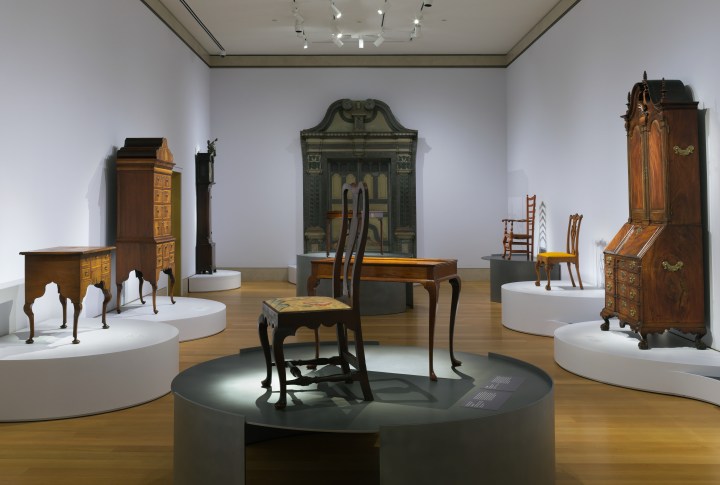 Join curator Alyce Perry Englund, Associate Curator of American Decorative Arts of the American Wing, to talk about The Calculated Curve: Eighteenth-Century American Furniture and delve into a pivotal moment in American furniture design from 1720 to 1770. Take a closer look at the materials, ergonomics, and sculptural expression embedded in furniture design during a critical age of global exchange and social stratification. This live event will take place on Zoom. Space is limited, and advance registration is required. Registration closes Tuesday, July 15, or when registration is full. Fee: $40.
Presented in conjunction with the exhibition The Calculated Curve: Eighteenth-Century American Furniture.
The Burlington Magazine, June 2025
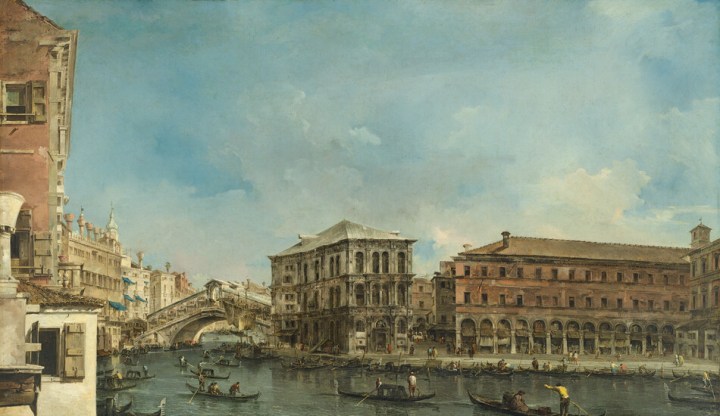
Francesco Guardi, Venice: The Rialto Bridge with the Palazzo dei Camerlenghi, ca.1764, oil on canvas, 120 × 204 cm
(Private collection)
◊ ◊ ◊ ◊ ◊
The long 18th century in the June issue of The Burlington:
The Burlington Magazine 167 (June 2025)
e d i t o r i a l
• “American Gothic,” p. 531.
There are many excoriating ways in which the current administration in Washington might be described; a number of them are perhaps too impolite to appear in a decorous journal such as this. The necessity of restraint does not, however, mean we should refrain from expressing a view on the provocative actions of the new United States government. They are not merely a matter of political theatre that feeds the news cycles, but also a corrosive force that is undermining many valued cultural institutions and having a direct and negative impact on the lives of tens of millions of people.
l e t t e r
• David Wilson, “More on Lorenzo Bartolini’s The Campbell Sisters Dancing a Waltz,” pp. 532–34.
Response to the article in the February issue by Lucy Wood and Timothy Stevens, “The Elder Sisters of The Campbell Sisters: William Gordon Cumming’s Patronage of Lorenzo Bartolini.”
a r t i c l e s
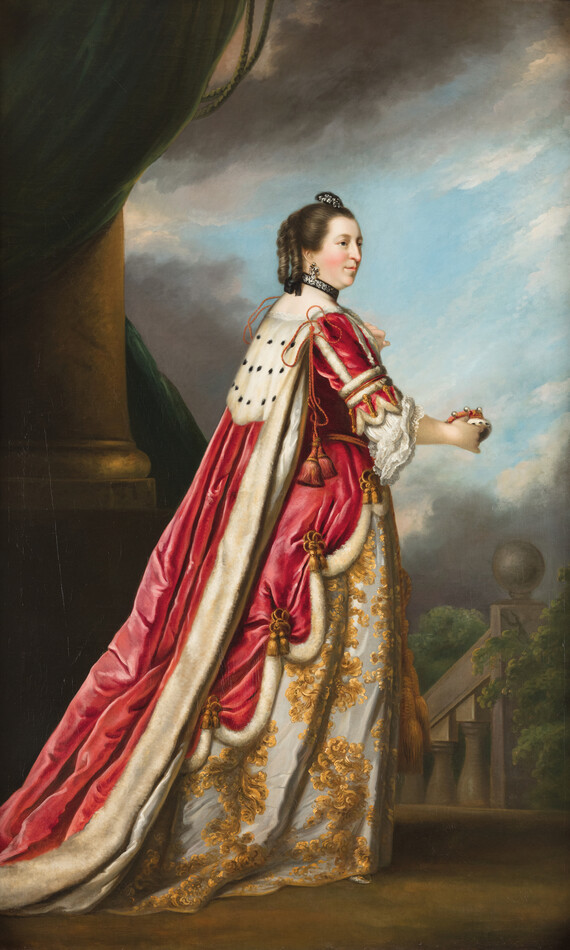
Joshua Reynolds, Elizabeth Percy, Countess (later Duchess) of Northumberland, 1757, oil on canvas, 240 × 148.6 cm. (Collection of the Duke of Northumberland, Syon House, London).
• Justus Lange and Martin Spies, “Two Royal Portraits by Reynolds Rediscovered in Kassel,” pp. 564–71.
Two paintings in the Gemäldegalerie Alte Meister, Kassel, are here identified as portraits by Joshua Reynolds of Princess Amelia, second daughter of George II, and her brother William Augustus, Duke of Cumberland. Both were gifts from the sitters to their sister Mary, Landgravine of Hesse-Kassel, a provenance that sheds new light on the cultural links between England and the landgraviate in the mid-eighteenth century.
• Giovanna Perini Folesani, “An Unpublished Letter by Sir Joshua Reynolds,” pp. 575–78.
in the historical archive of the Accademia di Belle Arti, Florence, there is an autograph letter by Sir Joshua Reynolds dated 20th May 1785 that was sent from London. . . . The text is in impeccable Italian, suggesting that Reynolds copied a translation made by a native speaker. . . .
• Francis Russell, “Guardi and the English Tourist: A Postscript,” pp. 578–83.
Some three decades ago this writer sought to demonstrate in this Magazine that the early evolution of Francesco Guardi (1712–93) as a vedutista could be followed in a number of pictures supplied to English patrons who were in Venice from the late 1750s. Other pieces of the jigsaw now fall into place. . . .
r e v i e w s
• Christoph Martin Vogtherr, Review of Schönbrunn: Die Kaiserliche Sommerresidenz, edited by Elfriede Iby and Anna Mader-Kratky (Kral Verlag, 2023), pp. 614–16.
• Steven Brindle, Review of Christopher Tadgell, Architecture in the Indian Subcontinent: From the Mauryas to the Mughals (Routledge, 2024), pp. 620–21.
• Stephen Lloyd, Review of ‘What Would You Like?’ Collecting Art for the Nation: An Account by a Director of Collections, edited by Magnus Olausson and Eva-Lena Karlsson (Nationalmuseum Stockholm, 2024), pp. 627–28.










 Enfilade
leave a comment