New Book | Les Pierres de la Nation
From Mare et Martin:
Maddalena Napolitani, Les pierres de la Nation: Les collections minéralogiques de l’Ecole des mines de Paris, 1760–1860 (Paris: Les Éditions Mare et Martin, 2025), 362 pages,
ISBN: 978-2362220838, €48.
 Les pierres de la Nation raconte l’histoire des collections de minéralogie de l’Ecole des mines de Paris, les considérant surtout sous le point de vue de leurs caractéristiques esthétiques et artistiques, à un moment clé pour l’histoire du collectionnisme : celui de la naissance des musées et du patrimoine. De leur constitution pendant les années 1760, à la création du musée de minéralogie dans les années 1850–1860, passant par les bouleversements révolutionnaires, ces collections contribuent à bâtir de nouveaux récits historiques au fil des changements socio-politiques, et se lient au territoire national et à la création de ses monuments et musées.
Maddalena Napolitani | Docteure histoire de l’art, ses recherches, à la croisée avec l’histoire des sciences concernent l’histoire des collections, des musées et du patrimoine scientifique, ainsi que les rapports entre esthétique et sciences de la Terre à l’âge moderne (XVIIIe–XIXe siècles). Italienne, elle travaille à présent au Musée Galileo (Florence) et a travaillé en France (ENS de Paris, Université de Grenoble), participant aussi à des expositions sur les collections mixtes des cabinets de curiosités.
New Book | Les Peintures italiennes du musée Napoléon, 1810–1815
As noted at the Art History News blog; from the publisher:
Stéphane Loire, Les Peintures italiennes du musée Napoléon, 1810–1815: Édition illustrée et commentée du volume I de l’inventaire Napoléon (Paris: Les Éditions Mare et Martin, 2025), 760 pages, ISBN: 978-2362221026, €149.
 Ce volume est l’édition illustrée du premier des dix-sept registres manuscrits formant l’Inventaire Napoléon (1810–1815), dont quatre se rapportent aux quelque six mille peintures figurant dans cet inventaire. L’Inventaire Napoléon est le premier inventaire des collections du musée du Louvre après sa création en 1793 sous le nom de Muséum français, devenu en 1803 Musée Napoléon. Comprenant notamment les oeuvres issues des saisies révolutionnaires et napoléoniennes, en France comme à l’étranger, et donnant pour la plupart des estimations financières, il est essentiel pour l’histoire du patrimoine artistique que le Louvre a abrité à l’époque de la Révolution et du Premier Empire. Mais il enregistre aussi la dispersion d’une partie de ce patrimoine dans d’autres institutions publiques françaises à partir de 1798, ainsi que sa restitution partielle à divers pays à partir de 1814 : c’est un document de première importance pour l’histoire de nombreux musées, en France et en Europe.
Stéphane Loire est conservateur général, adjoint au directeur du département des Peintures du musée du Louvre.
Newly Designed Galleries for Applied Arts of Europe Open in Chicago
◊ ◊ ◊ ◊ ◊
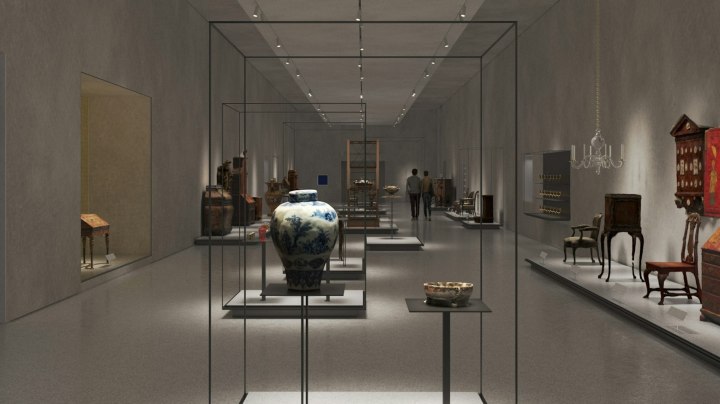
The new AIC galleries were designed by Barcelona-based architects Barozzi Veiga, who were hired in 2019 to produce a master plan for the museum campus, with future work funded in part by a $75million donation made in 2024 by Aaron Fleischman and Lin Lougheed. The new galleries are named for Eloise Wright Martin (1914–2008), a Life Trustee of the museum who endowed both the Museum Director and Curator of European Decorative Arts positions. From the press release:
Eloise W. Martin Galleries for the Applied Arts of Europe
Art Institute of Chicago, new installation open from 11 July 2025
Curated by Ellenor Alcorn, Christopher Maxwell, and Jonathan Tavares, with the assistance of Mairead Horton
The Art Institute of Chicago is pleased to open the newly designed Eloise W. Martin Galleries for the Applied Arts of Europe on 11 July 2025. The elegant space will present more than 300 objects from the Art Institute’s distinguished collections of furniture, silver, ceramics, and glass made between 1600 and 1900. The expanded presentation will allow 40% more objects to be on view than our previously installed galleries, and offer visitors a deeper and more nuanced exploration of European design during a period of extraordinary transformation.
This 4,500-square-foot space follows a chronological narrative and examines the dynamic intersection of design, craftsmanship, and commerce against a backdrop of geopolitical shifts, colonialism, and innovation. This setting provided fertile ground for designers, craftspeople, and consumers to embrace new technologies and respond to the allure of newly imported materials, such as Asian porcelain and lacquer and tropical hardwoods. Iconic works from the Art Institute’s collection as well as rarely seen pieces appear alongside new acquisitions and select loans from private collections, all presented with interpretive materials that emphasize the ingenuity of European makers working in increasingly global markets.
“We hope that this ambitious reinstallation allows visitors to consider the daring innovations of European designers during this vibrant period,” said Ellenor Alcorn, chair and Eloise W. Martin Curator of Applied Arts of Europe. “We are thrilled to present these objects in a space that invites close looking, deep reflection, and renewed appreciation for the craftsmanship and global influence that shaped design from the 17th through the 19th centuries.”
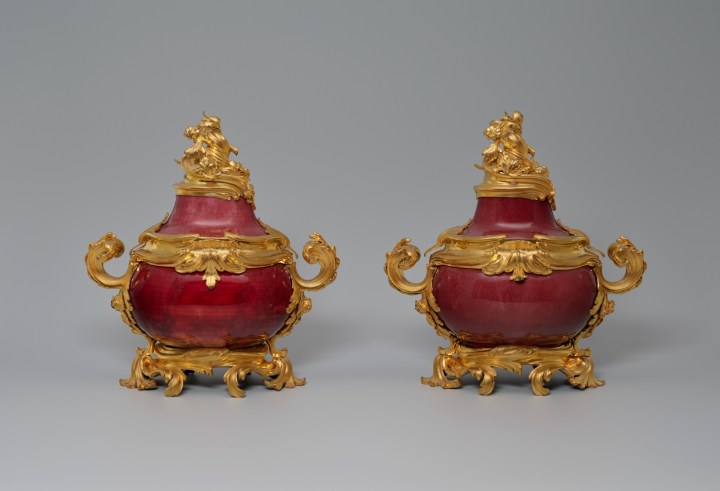
Pair of Chinese porcelain vases, with mounts attributed to Jean-Claude Duplessis, ca. 1750, hard paste porcelain and gilt bronze, 14 inches high
(Art Institute of Chicago, purchased with funds provided by the Antiquarian Society, 2021.135.1-2)
◊ ◊ ◊ ◊ ◊
Highlights of the collection on view include a finely carved chair crafted by Indian artisans for a European merchant in Madras (present day Chennai) in the late 1600s, a pair of rare red-glazed Chinese porcelain vases imported to Paris in the mid-1700s where they were mounted in exuberant gilded bronze, and a striking English neo-Gothic sideboard designed by William Burges in the mid-1800s, painted with witty wine-themed references. A dramatic new room is also dedicated to the Art Institute’s outstanding collection of European ceramics, including one of the country’s finest groupings of Meissen and Du Paquier porcelain.
The renowned Barcelona-based architects Barozzi Veiga have designed a striking contemporary space integrating state-of-the-art casework and lighting. The galleries offer a stunning setting for the creativity and innovation that defined European design during this dynamic period.
The reinstallation is curated by the department of Applied Arts of Europe: Ellenor Alcorn, chair and Eloise W. Martin Curator; Christopher Maxwell, Samuel and M. Patricia Grober Curator; and Jonathan Tavares, Amy and Paul Carbone Curator, with the assistance of Mairead Horton, research associate.










 Enfilade
leave a comment