Call for Papers | On the Materiality of Scent
From the conference website and the Call for Papers, which include the French and a bibliography:
The Odorous Object: On the Materiality of Scent
L’objet et son sillage: Penser la matérialité des odeurs
Brown University, Providence, Rhode Island, 27–28 February 2026
Proposals due by 15 September 2025
Organized by Chanelle Dupuis, Jasmine Laraki, and Clara May
Perfumed letters, colorful flasks, scented ceramics, fragrant glass vases, scented jewelry, fragrant wooden boxes, vaporizers, scratch and sniff stickers, soaps, bio-noses, imaginary smell devices; all of these are examples of odorous objects. From the intricate textures and shapes of perfume flasks to the aromatic clays and glass containers of past eras, the materials used to hold scent have changed over time and acquired various cultural and social significance.
Sensory studies approaches have revitalized the study of material culture by reorienting attention towards the life of “sensori-social” things (Howes, 2022) and bringing to light the types of agentivity, exchanges, and experiences that emerge out of interactions between objects, the senses, and socio-cultural contexts. What becomes of perfume and smell when we cease to consider it as a simple emanation or pure olfactory experience and interrogate the materiality itself—that of shapes, gestures, and mediums that render it perceptible?
The receptacle exists in a strange relationship to its contents; while it itself is visible, the scent it holds, the perfume it cherishes, is invisible. The play on presence and absence is central to the perfume, as the liquid we see does not indicate the notes of the perfume we are about to smell. It is this ephemeral quality to smell that creates interesting relationships to materials. A privileged interface—opaque or transparent, open or sealed—the flask represents both visible materiality and the volatile essence of perfume, it condenses an ambivalence where presence and absence coexist (Stamelman, 2006, 2022).
Profoundly complex, the way that smell works has long been misunderstood, leading to centuries of beliefs that belittle the importance of smell. Culturally situated and raising social, moral, political, scientific, religious, or aesthetic questions, these objects today represent useful mediums through which to think about smell. As tools for power and social distinction, as prophylactic instruments, and as routes to other dimensions, perfumes and their contents are inscribed in the history of art, in the history of perfumery, but also in the history of medicine and chemistry. Furthermore, while the usage and purpose of perfume changes from one time period to another, and one region to another, the odorant substances that make up these odorous objects come from around the world: a study of smells, thus, cannot exclude a large geographic coverage, and must address, in our present moment especially, colonial and ecological impacts.
Whether real or imagined, objects contribute to the atmosphere of a place and participate in the creation of a particular ambience. The ecological implications of the storage and disposal of olfactory objects bring to question the atmospheric, material qualities of these and their impacts on bodies. Olfactory objects can be tangible, real-world items, but also invented, imaginary, objects. In literary texts, for example, authors invent olfactory objects that have creative functions. In the dystopia Tè Mawon (2022) by Michael Roch, individuals wear headsets that can simulate “fake food” smells to satiate one’s hunger and mask the bad smells in one’s neighborhood. Smell and taste, the two chemical senses, are closely linked and evoked in unison throughout this dystopia. The evocation of food necessarily comes with smells and flavors, thus showing how odorous objects often involve important multimodal associations.
Due to their immersive and multisensorial nature, perfumes and odors evoke an ensemble of interlinked perceptions that go beyond the sense of smell alone. Synesthesia, an initially physiological phenomenon, has inspired creative initiatives ranging from branding and marketing stories to the creation of immersive environments. For example, a fragrance is often anticipated, prolonged, or translated using a color, a sound, a texture, or movement. The senses that are more difficult to represent—such as taste, touch, or smell—are thus mobilised through metaphors and linguistic slips in a multisensorial logic of correspondences.
To reflect the vastness and complexity of this topic, we invite propositions focused on any time period and any geographic location. While the focus of this conference is research in the humanities and social sciences, we welcome presentations from science, technology, engineering, and mathematics (STEM) researchers in order to foster interdisciplinary conversations on the topic. Research on smell has been shaped by a variety of disciplines and necessitates a variety of perspectives. Likewise, olfactory aids (perfumes, scented objects, etc.) are welcome at the conference: we encourage presenters to not only talk about smell but also bring scents to be smelled when possible.
As part of our hybrid format we welcome both formal research presentations and creative expositions related to olfactory objects and devices.
1) Formal Research Presentations
Research participants will present their work for 20 minutes in organized panels, followed by a Q&A session. Presentations can be in French or English. We welcome papers related (but not limited) to the following topics:
Odor, object, and:
• Spirituality
• Medicine
• Imagination
• Environment
• Emotions
• Memory
• Gestures
• Agency
• Taste
• Aesthetics
• Art
• Genre(s)
• Materiality
• Technique and know-how
• Storage and conservation
• Economy
• Commerce, colonialism
• Linguistics
• Synesthesia
• Decomposition
2) Creative Expositions
As part of this conference, there will be an open exposition space for those wishing to present a creative research project, a new olfactory design, a perfume sample, or other. Each participant in this space will be offered a table where they can expose their work and talk freely with attendees who will explore the space during a set time in the conference program. Our hope is to encourage artists, designers, perfumers, artisans, and researchers to consider experimental, embodied, ways of researching olfaction.
The expositions may include, but are not limited to:
• Olfactory devices or installations
• Olfactory objects or artifacts accompanied by a scientific or theoretical research proposal
• Olfactory design prototypes
• Artworks that mobilize the medium of olfaction
• Performances, sensory archives, or sensory narratives
For research presentations (option 1), we ask participants to submit an abstract of no more than 400 words including a title, description of your research project, and a bibliography. Please also include a short biography containing your name, research discipline, contact information, and University or laboratory affiliation.
For creative expositions (option 2), we ask participants to submit a description of your project or sample of no more than 400 words, including a title for your exposition and a description of the nature of the object or research exposition, the modality of your presentation, dimensions, and specifics regarding the installation of your project (if you need access to a power plug, ventilation, etc.). Please also include a biography containing your name, contact information, and description of past works and past engagements.
To participate, all proposals, written in French or English, must be sent by 15 September 2025, to theodorousobject@gmail.com.
Keynote Speaker
Prof. Érika Wicky (Université Grenoble Alpes-UFR ARSH, France)
Organizers
Chanelle Dupuis (Brown University, USA), Jasmine Laraki (Université Libre de Bruxelles, Belgium, Paris 1 Panthéon-Sorbonne, France), Clara May (Université de Neuchâtel, Switzerland)
Exhibition | 1793–1794: Un Tourbillon Révolutionnaire
A second iteration of the exhibition on view previously at the Musée Carnavalet:
1793–1794: Un Tourbillon Révolutionnaire
Musée de la Révolution française, Vizille, 27 June — 23 November 2025
 Entre 1793 et 1794, « l’An II de la République » marque les débuts mouvementés de la toute première république française. Des idéaux de la Révolution aux grands procès politiques, de la liesse aux insurrections populaires, les premiers mois du nouveau régime emportent tout sur leur passage, jusqu’au quotidien des Français. Un véritable tourbillon révolutionnaire, nourri d’espoirs et de peurs.
Cette exposition revient sur des mois décisifs pour l’histoire de France : l’arrestation des Girondins, l’assassinat de Marat, l’exécution de Marie-Antoinette jusqu’à la chute de Robespierre. Voici donc « la Terreur », décryptée à la lumière des recherches historiques les plus récentes.
L’exposition 1793–1974: Un tourbillon révolutionnaire est une adaptation de l’exposition Paris 1793–1794: Une année révolutionnaire conçue par le musée Carnavalet – Histoire de Paris.
The Art of the Ephemeral in 18th-Century France
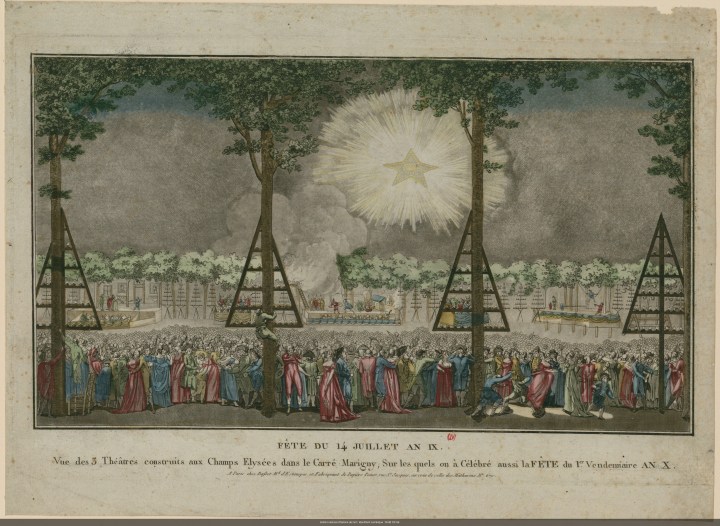
Paul-André Basset, Fête du 14 Juillet An IX, ca. 1801, hand-colored engraving, 28 × 44 cm (Paris: Bibliothèque de l’Institut National d’Histoire de l’Art). The print depicts the national holiday, as celebrated on the Champs-Élysées and organized by Chalgrin, commemorating the storming of the Bastille in 1789.
◊ ◊ ◊ ◊ ◊
All contents from this special issue of Status Quaestionis are available as free downloads:
Here Today, Gone Tomorrow?
The Art of the Ephemeral in Eighteenth-Century France
Status Quaestionis: Language, Text, Culture 28 (2025)
Edited by Elisa Cazzato
This monographic issue of Status Quaestionis explores the notion of ephemerality in French artistic culture during the long eighteenth-century. The volume is highly interdisciplinary, featuring articles from art and theatre history, costume-making, and performance studies, extending the notion of the ephemeral to a wide range of examples. The authors investigate how, in order to exist, ephemerality needs materiality, since any creative process intersects with the material requirement that both artworks and performances need: materials, locations, settings, scripts, costumes, and bodies. This dichotomy enables historians to further analyse the cultural and political meanings of the ephemeral, connecting artworks to social contexts, dance costumes to movements, and public festivals to human reception. Rather than focusing solely on aesthetics, the volume interrogates how the ephemeral was experienced, recorded, and remembered and how its traces persist in artworks, texts, and collective memory. The contributions question the boundary between presence and absence, visibility and oblivion, reflecting on the long-term cultural implications of transience. In seeking what remains of the ephemeral, the volume challenges dominant narratives and reconsiders the politics of cultural memory.
This special issue was inspired by the intellectual discussions that took place during the international conference organised at Ca’ Foscari University of Venice in June 2023. The conference was part of the research project SPECTACLE, funded by the European Union’s Horizion 2020 research and innovation programme under the Marie Skłodowska-Curie grant agreement no. 893106.
t h e m a t i c a r t i c l e s
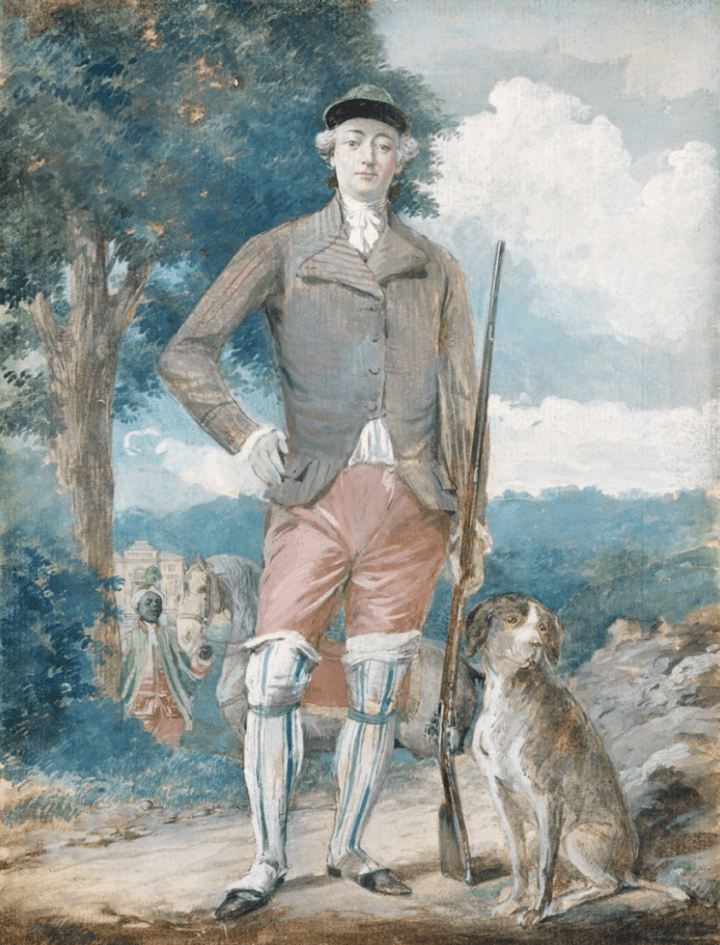
Jean-Baptiste-Philibert Moitte, The Comte d’Artois as a Hunter, ca. 1777, gouache on paper, 22.9 × 30 cm (Amiens, Musée de Picardie). Figure 1 from the article by Noémie Étienne and Meredith Martin.
• Introduction: Here Today, Gone Tomorrow? The Art of the Ephemeral in Eighteenth-Century France — Elisa Cazzato
• ‘Mais, le lendemain matin’: Residues of the Ephemeral in Eighteenth-Century French Art — Mark Ledbury
• Spectacular Blindness: Enslaved Children and African Artifacts in Eighteenth-Century Paris — Noémie Étienne and Meredith Martin
• L’art du comédien au tournant des Lumières: Conscience de l’éphémère et sensibilité mémorielle — Ilaria Lepore
• L’expérience éphémère d’Ériphyle (Voltaire, 1732): Matériaux tangibles et réécritures d’une dramaturgie passagère — Renaud Bret-Vitoz
• Un événement unique: Le théâtre de la Révolution entre surgissement et disparition — Pierre Frantz
• Ephemeral Emblem: Jacques-Louis David and the Making of a Revolutionary Martyr — Daniella Berman
• Les feux d’artifices des frères Ruggieri à l’intérieur d’un théâtre: L’autonomie de l’éphémère dans le Paris du XVIIIe siècle — Emanuele De Luca
• Tra utopia e ricerca del consenso: Fuochi e apparati effimeri di epoca napoleonica a Milano tra il 1801 e il 1803 — Alessandra Mignatti
• Witnesses of the Past: Costumes as Material Evidence of the Ephemeral Performance — Petra Zeller Dotlačilová
• Noverre’s Lament: Inscription, Posterity, and the Ephemeral Art of Dance — Olivia Sabee
• Ephemerality on the Fringe: Exploring the Venues Hosting Power Quadrilles in Brussels on the Eve of Waterloo and Beyond (1814–1816) — Cornelis Vanistendael
Miscellaneous articles and reviews are available here»
◊ ◊ ◊ ◊ ◊
Elisa Cazzato is research fellow at the University of Naples Federico II. She holds a PhD in art history from the University of Sydney, and she is a former Marie Skłodowska-Curie Global Fellow. For her project SPECTACLE she was a visiting scholar at the CELLF of the Université Sorbonne and in the New York University’s Department of Art History. Her publications include articles in the peer-review journals Studi Francesi, Dance Research, Humanities Research Journal, and RIEF. She is currently writing her first book on the life and career of Ignazio Degotti.
Exhibition | Adèle de Romance (1769–1846)
Now on view at the Fragonard Museum in Grasse (with more information available here, pp. 124–27):
Adèle de Romance: A Liberated Painter / Peintre Libre
Musée Fragonard, Grasse, 14 June — 12 October 2025
Curated by Carole Blumenfeld
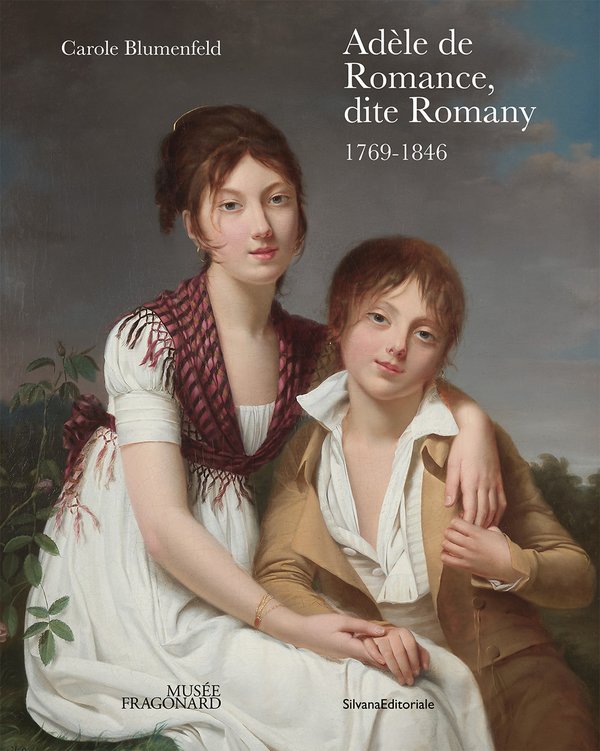 After dedicating the summer 2023 exhibition to the Lemoine sisters and their cousin Jeanne Élisabeth Chaudet, the Jean-Honoré Fragonard Museum will celebrate Adèle de Romance in 2025. This painter, whose life was as brilliant as it was tumultuous, embodies all the opportunities that the end of the 18th century and the beginning of the 19th century offered to talented artists.
Born from an illegitimate union between the Marquis Godefroy de Romance, Adèle de Romance (1769–1846) was eventually recognized and adopted by her father at the age of 8. Her younger half-sister, whose personal life perfectly met their father’s expectations, received many signs of trust from him. Despite this, Adèle de Romance now had a name and enjoyed one of the largest collections of Nordic and French paintings, including many works by Fragonard. Concerned with her education, the Marquis de Romance guided all her personal choices, from her passion for painting to the birth of her first child at the age of 18. Adèle then married the miniaturist François Antoine Romany, a mismatched union whose sole purpose was to give her a status. When her father left France in August 1791 to defend the counter-revolutionary ideas that mattered to him, Adèle de Romance was forced to conceal her partly aristocratic origins and to live… by her brushes.
After a divorce, which she willingly kept her married name, she began a series of small portraits of prominent figures. She took advantage of the fame of her subjects and, for four decades, played with a multitude of surnames, embracing public exposure and presenting dozens of works. Witnessing the upheavals of her time, she made the most of the political and social context that favored portraiture. Better than many other artists, she succeeded in capturing the desire for reinvention of the personalities she painted, presenting a gallery of portraits that reflected France. Adèle de Romance participated in a time when images were about to play an unprecedented role. Portraits, a rather insignificant genre in a monarchy—where only one person matters and everyone else is nothing—acquired a new level of interest in a Republic. It then became a vector of virtues, talents, services, and memories.
Adèle de Romance did not have the privilege of joining the royal collections, the birthplace of today’s national collections. Paying tribute to this painter who managed to live from her art first required finding her works. Thus, with the exception of the rich corpus preserved in the collections of the Comédie-Française, the paintings of Adèle de Romance held in French public collections are not only rare but rarely exhibited. Many of her portraits remained with the descendants of the sitters, who kindly allowed them to be displayed for the Grasse exhibition, thus honoring this woman who, very early on, understood that culture and artistic talents were a remarkable passport to being accepted, regardless of her origins, and having a voice in a world dominated by men.
From Silvana:
Carole Blumenfeld, Adèle de Romance, dite Romany, 1769–1846 (Milan: Silvana Editoriale, 2025), 232 pages, ISBN: 978-8836661121, €35.
Adèle de Romance appartient à cette caste ténue de femmes qui, sans jamais se poser en séditieuses, surent hanter les lisières du monde établi et frayer, dans les anfractuosités d’un ordre contraignant, un sentier d’autonomie patiemment conquis. Douée d’un discernement affûté et d’un sens exquis de la conjoncture, la portraitiste sut, avec adresse et aplomb, tirer parti des ondulations du temps et des vents favorables, pour jouer des équivoques de sa propre identité et en faire un atout, pour ses modèles et pour elle-même. Adèle de Romance devint pleinement maîtresse de son destin en peignant les visages d’autrui, qu’elle signait parfois de son nom de naissance, « de Romance », mais le plus souvent : « Romany », « Rom… », « Romanée », « de Romany » ou « DR »… Ces jeux de recomposition nominale, souples et ductiles, savamment dosés, relèvent d’une poétique du nom propre, où l’identité se dit autant par esquive que par assertion.
c o n t e n t s
Philippe Costamagna — Preface
Carole Blumenfeld — Peindre pour s’appartenir: Marie Jeanne de Romance, Adèle de Romance, dite Romany, Adèle Romanée, Adèle Romany-de-Romance, AR
Carole Blumenfeld — Catalogue des Oeuvres Exposées
Arbre généalogique d’Adèle de Romance
Chronobiographie
Liste des œuvres présentées aux Salons
Annexes
Index
Bibliographie
Exhibition | Traits of Genius
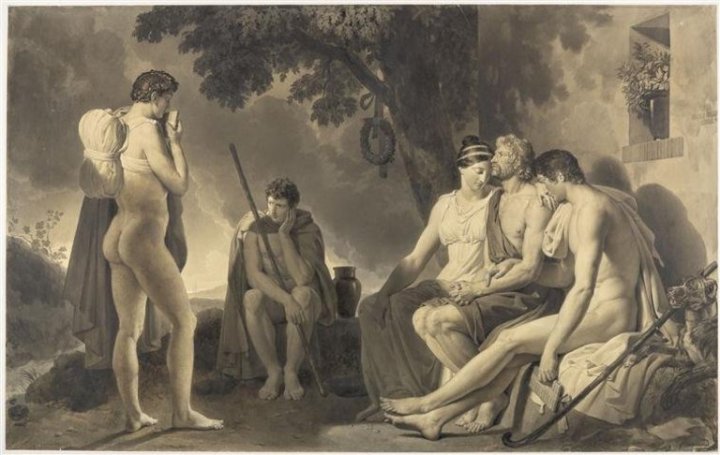
Alexandre-Évariste Fragonard, Pastorale / Homère et les Bergers, 1810; graphite, brown wash, black ink, and white highlights on beige paper; 55 × 88 cm (Louvre, INV 26657).
◊ ◊ ◊ ◊ ◊
The exhibition presents some sixty drawings by Jean-Honoré Fragonard, his wife Marguerite Gérard, and their son Alexandre-Évariste from the collections of the Louvre:
Les Traits du Génie: Dessins du Louvre par Jean-Honoré Fragonard,
Alexandre-Évariste Fragonard, et Marguerite Gérard
Musée International de la Parfumerie, Grasse, 27 June — 26 October 2025
Cet été, le Musée International de la Parfumerie vous invité à découvrir l’œuvre de Jean-Honoré Fragonard, l’un des plus grands peintres du XVIIIe siècle, à travers une exposition exceptionnelle. Né à Grasse en 1732, Fragonard a marqué son époque par son talent unique, tout en restant profondément attaché à sa ville natale. Bien que Paris ait été son principal lieu de vie, son mariage avec Marie-Anne Gérard, issue d’une famille de parfumeurs grassois, ainsi que ses séjours réguliers à Grasse, témoignent de l’attachement de l’artiste à sa ville d’origine.
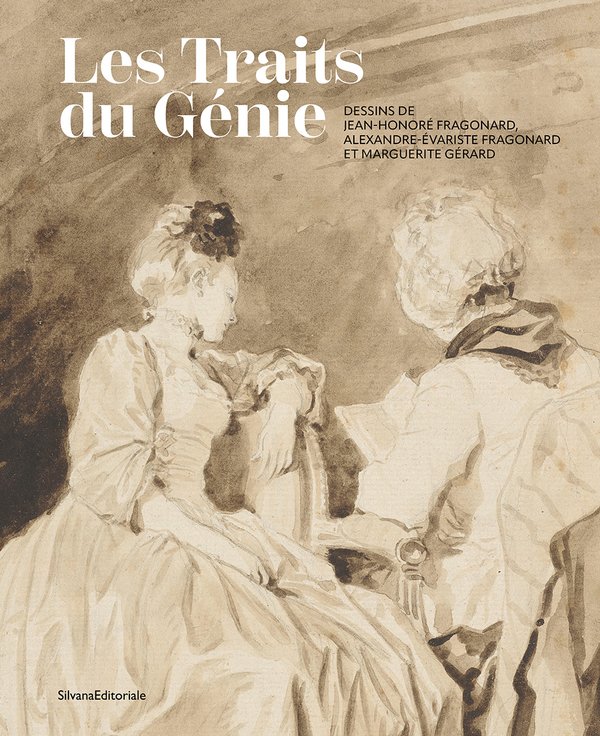 L’exposition propose une sélection de plus de soixante dessins de Fragonard, jamais exposés à Grasse et rarement montrés ailleurs. Ces œuvres, provenant des collections du département des Arts Graphiques du musée du Louvre, offrent un regard privilégié sur le processus créatif de Fragonard. Que ce soit des autoportraits, des souvenirs de voyages, des études de figures ou des projets d’illustration, les dessins de Fragonard nous donnent un aperçu de l’étendue du génie de l’artiste et offrent au visiteur grassois une proximité inédite avec l’essence de son œuvre.
Fragonard n’a pas seulement marqué l’histoire de la peinture. Son influence s’étend également aux arts décoratifs, et notamment à l’univers de la parfumerie, un domaine dans lequel Grasse occupe une place centrale. Pour illustrer ce lien, l’exposition présente une série de flacons de parfum en porcelaine du XVIIIe siècle, prêtés par la société Givaudan. Que vous soyez passionné d’art, d’histoire ou simplement curieux, cette exposition est une occasion unique de plonger dans l’univers de Jean-Honoré Fragonard, de découvrir ses œuvres et d’explorer les liens entre son art et l’univers du parfum.
From Silvana:
Laure Decomble, Olivier Quiquempois, Xavier Salmon, and Martine Uzan, Les Traits du Génie: Dessins de Jean-Honoré Fragonard, Alexandre-Évariste Fragonard et Marguerite Gérard (Milan: Silvana Editoriale, 2025), 200 pages, ISBN: 978-8836661534, €29.
c o n t e n t s
• Grasse et Jean-Honoré Fragonard — Olivier Quiquempois
• Crayonnages et lavis de Fragonard: Quelques considérations sur certains amateurs et collectionneurs — Xavier Salmon
Oeuvres
• Les Fragonard, une famille d’artistes — Laure Decomble
• Voyager et apprendre — Laure Decomble
• Regarder et inventer — Xavier Salmon
• Fragonard, illustrateur — Olivier Quiquempois
• Les Flacons de la Séduction — Martine Uzan
English Texts
Bibliographie
New Book | Les Pierres de la Nation
From Mare et Martin:
Maddalena Napolitani, Les pierres de la Nation: Les collections minéralogiques de l’Ecole des mines de Paris, 1760–1860 (Paris: Les Éditions Mare et Martin, 2025), 362 pages,
ISBN: 978-2362220838, €48.
 Les pierres de la Nation raconte l’histoire des collections de minéralogie de l’Ecole des mines de Paris, les considérant surtout sous le point de vue de leurs caractéristiques esthétiques et artistiques, à un moment clé pour l’histoire du collectionnisme : celui de la naissance des musées et du patrimoine. De leur constitution pendant les années 1760, à la création du musée de minéralogie dans les années 1850–1860, passant par les bouleversements révolutionnaires, ces collections contribuent à bâtir de nouveaux récits historiques au fil des changements socio-politiques, et se lient au territoire national et à la création de ses monuments et musées.
Maddalena Napolitani | Docteure histoire de l’art, ses recherches, à la croisée avec l’histoire des sciences concernent l’histoire des collections, des musées et du patrimoine scientifique, ainsi que les rapports entre esthétique et sciences de la Terre à l’âge moderne (XVIIIe–XIXe siècles). Italienne, elle travaille à présent au Musée Galileo (Florence) et a travaillé en France (ENS de Paris, Université de Grenoble), participant aussi à des expositions sur les collections mixtes des cabinets de curiosités.
New Book | Les Peintures italiennes du musée Napoléon, 1810–1815
As noted at the Art History News blog; from the publisher:
Stéphane Loire, Les Peintures italiennes du musée Napoléon, 1810–1815: Édition illustrée et commentée du volume I de l’inventaire Napoléon (Paris: Les Éditions Mare et Martin, 2025), 760 pages, ISBN: 978-2362221026, €149.
 Ce volume est l’édition illustrée du premier des dix-sept registres manuscrits formant l’Inventaire Napoléon (1810–1815), dont quatre se rapportent aux quelque six mille peintures figurant dans cet inventaire. L’Inventaire Napoléon est le premier inventaire des collections du musée du Louvre après sa création en 1793 sous le nom de Muséum français, devenu en 1803 Musée Napoléon. Comprenant notamment les oeuvres issues des saisies révolutionnaires et napoléoniennes, en France comme à l’étranger, et donnant pour la plupart des estimations financières, il est essentiel pour l’histoire du patrimoine artistique que le Louvre a abrité à l’époque de la Révolution et du Premier Empire. Mais il enregistre aussi la dispersion d’une partie de ce patrimoine dans d’autres institutions publiques françaises à partir de 1798, ainsi que sa restitution partielle à divers pays à partir de 1814 : c’est un document de première importance pour l’histoire de nombreux musées, en France et en Europe.
Stéphane Loire est conservateur général, adjoint au directeur du département des Peintures du musée du Louvre.
Newly Designed Galleries for Applied Arts of Europe Open in Chicago
◊ ◊ ◊ ◊ ◊
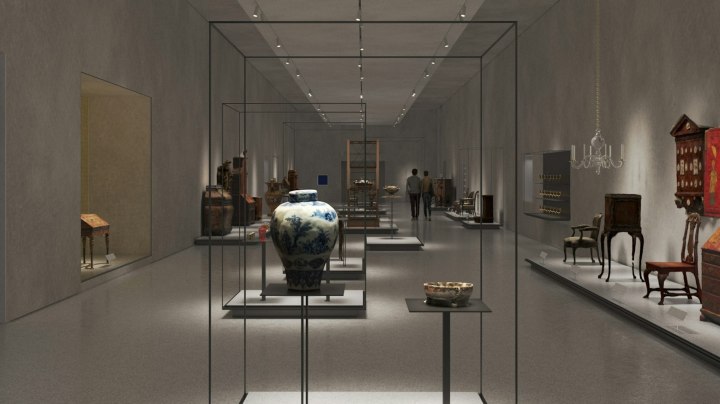
The new AIC galleries were designed by Barcelona-based architects Barozzi Veiga, who were hired in 2019 to produce a master plan for the museum campus, with future work funded in part by a $75million donation made in 2024 by Aaron Fleischman and Lin Lougheed. The new galleries are named for Eloise Wright Martin (1914–2008), a Life Trustee of the museum who endowed both the Museum Director and Curator of European Decorative Arts positions. From the press release:
Eloise W. Martin Galleries for the Applied Arts of Europe
Art Institute of Chicago, new installation open from 11 July 2025
Curated by Ellenor Alcorn, Christopher Maxwell, and Jonathan Tavares, with the assistance of Mairead Horton
The Art Institute of Chicago is pleased to open the newly designed Eloise W. Martin Galleries for the Applied Arts of Europe on 11 July 2025. The elegant space will present more than 300 objects from the Art Institute’s distinguished collections of furniture, silver, ceramics, and glass made between 1600 and 1900. The expanded presentation will allow 40% more objects to be on view than our previously installed galleries, and offer visitors a deeper and more nuanced exploration of European design during a period of extraordinary transformation.
This 4,500-square-foot space follows a chronological narrative and examines the dynamic intersection of design, craftsmanship, and commerce against a backdrop of geopolitical shifts, colonialism, and innovation. This setting provided fertile ground for designers, craftspeople, and consumers to embrace new technologies and respond to the allure of newly imported materials, such as Asian porcelain and lacquer and tropical hardwoods. Iconic works from the Art Institute’s collection as well as rarely seen pieces appear alongside new acquisitions and select loans from private collections, all presented with interpretive materials that emphasize the ingenuity of European makers working in increasingly global markets.
“We hope that this ambitious reinstallation allows visitors to consider the daring innovations of European designers during this vibrant period,” said Ellenor Alcorn, chair and Eloise W. Martin Curator of Applied Arts of Europe. “We are thrilled to present these objects in a space that invites close looking, deep reflection, and renewed appreciation for the craftsmanship and global influence that shaped design from the 17th through the 19th centuries.”
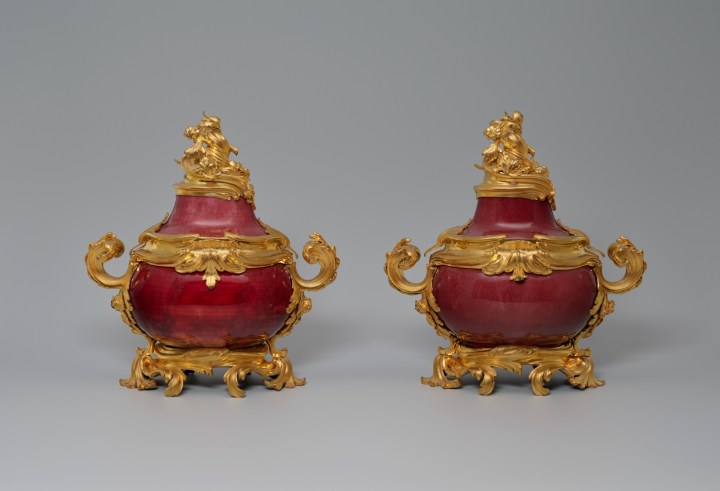
Pair of Chinese porcelain vases, with mounts attributed to Jean-Claude Duplessis, ca. 1750, hard paste porcelain and gilt bronze, 14 inches high
(Art Institute of Chicago, purchased with funds provided by the Antiquarian Society, 2021.135.1-2)
◊ ◊ ◊ ◊ ◊
Highlights of the collection on view include a finely carved chair crafted by Indian artisans for a European merchant in Madras (present day Chennai) in the late 1600s, a pair of rare red-glazed Chinese porcelain vases imported to Paris in the mid-1700s where they were mounted in exuberant gilded bronze, and a striking English neo-Gothic sideboard designed by William Burges in the mid-1800s, painted with witty wine-themed references. A dramatic new room is also dedicated to the Art Institute’s outstanding collection of European ceramics, including one of the country’s finest groupings of Meissen and Du Paquier porcelain.
The renowned Barcelona-based architects Barozzi Veiga have designed a striking contemporary space integrating state-of-the-art casework and lighting. The galleries offer a stunning setting for the creativity and innovation that defined European design during this dynamic period.
The reinstallation is curated by the department of Applied Arts of Europe: Ellenor Alcorn, chair and Eloise W. Martin Curator; Christopher Maxwell, Samuel and M. Patricia Grober Curator; and Jonathan Tavares, Amy and Paul Carbone Curator, with the assistance of Mairead Horton, research associate.
Call for Papers | Design Collection Displays
From ArtHist.net and ICOM Design:
Design Collection Displays Reassessed
International Committee for Decorative Arts and Design Symposium
National Museum of Art, Architecture, and Design, Oslo, 28 October — 1 November 2025
Proposals due by 29 July 2025
The Design Collection Displays Reassessed symposium will discuss collection displays as sites of knowledge exchange and active engagement. From a traditionally linear, encyclopedic display, to today’s more narrative approaches, in the last decades, historical and contemporary displays of decorative arts and design have changed dramatically, in response to a variety of forces, including reassessments of institutional priorities, foregrounding of audiences, and the inclusion of different voices. The symposium will interrogate how design objects and interiors are displayed, discussed, and interpreted, and for whom. What does curating these kinds of collection displays represent and mean today? And how might this practice look in the future? What new museological approaches are needed?
The new National Museum of Art, Architecture, and Design, Oslo—a merger of four previously independent museums—is a fitting venue for a symposium with this theme. It opened its new, large-scale collection display in 2022, including decorative arts, design, interiors, fashion, and studio crafts from the 1100s to the present. This permanent collection reinstallation, the first since 2005, provided an opportunity to re-think the curation of the design and decorative arts display.
Some of the questions raised in the curatorial process at the National Museum have inspired and will inform this symposium, including
• How might we curate critically meaningful displays that communicate the distinctiveness of design objects and which reach beyond heroization of the maker?
• What are the specific challenges of exhibiting historic decorative arts for contemporary audiences and how might we meet those challenges?
• How do historic and contemporary objects interact in collection displays, if at all?
• Museum collections have traditionally often reinforced hegemonic and dominant histories. How might collection displays instead convey more inclusive and nuanced narratives?
• How might collection displays be more accessible to new and diverse audiences?
• How might we use the collection display to address societal and global issues?
• How might a design object that is interactive—physically and digitally—have its own presence and be successfully displayed within a collection installation?
• How do collection displays change within house museums?
We welcome submissions that touch on any of the questions above, as well as explorations that go beyond these topics. We also invite contributions that look towards possible futures of collection displays. We look forward to meeting in person to discuss and debate an ever-changing field—a conversation between scholars and practitioners across borders, institutions, and disciplines. An international anthology based on the conference presentations is planned.
Keynote Speakers
• Corinna Gardner (Senior Curator, Design and Digital, Victoria and Albert Museum, London)
• Sebastian Hackenschmidt (Curator of Furniture and Woodwork, MAK – Museum für angewandte Kunst, Vienna)
• Marco Magni (founder and chief architect, and Maria Cristina Rizzello, architect and partner, Guicciardini & Magni Architetti, Florence)
• Leena Svinhufvud (Leading Researcher, Architecture & Design Museum, Helsinki)
Please submit an abstract of 300–400 words for a 20-minute presentation, including a title and a 50-word biography, to denise.hagstroemer@nasjonalmuseet.no. All selected speakers must be ICOM members at the time of the symposium.
Symposium Convener
Dr Denise Hagströmer (Senior Curator, National Museum of Art, Architecture and Design, Oslo), denise.hagstroemer@nasjonalmuseet.no
Berger Prize 2025 Longlist Announced
From The Walpole Society:
Berger Prize 2025 Longlist
The longlist of eighteen titles for the 2025 Berger Prize was announced on July 9 at the Walpole Society Summer Party, held at the Warburg Institute. The chair of the judging panel, Dr Jonny Yarker, noted that this year’s prize received its highest ever number of submissions, from a wide range of publishers. The shortlist is scheduled to be announced September 16. The winner and prize ceremony is scheduled for November 12. The overall winner will receive £5000, while the five other shortlisted books will each receive £500.
• Fay Blanchard and Anthony Spira, eds., Vanessa Bell: A World of Form and Colour (Philip Wilson Publishers).
• Rosie Broadley, ed., Francis Bacon: Human Presence (National Portrait Gallery).
• Bruce Boucher, John Soane’s Cabinet of Curiosities: Reflections on an Architect and his Collection (Yale University Press).
• Esther Chadwick, The Radical Print: Art and Politics in Late Eighteenth-Century Britain (Paul Mellon Centre).
• Bryony Coombs, Visual Arts and the Auld Alliance: Scotland, France and National Identity c.1420–1550 (Edinburgh University Press).
• Paul Gough, Gilbert Spencer: The Life and Work of a Very English Artist (Yale University Press).
• Bendor Grosvenor, The Invention of British Art (Elliott & Thompson).
• Elain Harwood and Alan Powers, eds., Ernö Goldfinger (Liverpool University Press).
• Mark Laird, The Dominion of Flowers: Botanical Art & Global Plant Relations (Paul Mellon Centre).
• Cristina S. Martinez and Cynthia E. Roman, eds., Female Printmakers, Printsellers and Publishers in the Eighteenth Century: The Imprint of Women 1735–1830 (Cambridge University Press).
• Nicholas Olsberg, The Master Builder: William Butterfield and His Times (Lund Humphries).
• Madeleine Pelling, Writing on the Wall: Graffiti and Rebellion in Eighteenth-Century Britain (Profile Books).
• Eleonora Pistis, Architecture of Knowledge: Hawksmoor and Oxford (Brepols).
• Dorothy Price, Esther Chadwick, Cora Gilroy-Ware, and Sarah Lea, Entangled Pasts, 1768–Now: Art, Colonialism and Change (Royal Academy of Arts).
• Natalie Prizel, Victorian Ethical Optics: Innocent Eyes and Aberrant Bodies (Oxford University Press).
• Jeff Rosen, Julia Margaret Cameron: The Colonial Shadows of Victorian Photography (Paul Mellon Centre).
• Fiona Smyth, Pistols in St Paul’s: Science, Music, and Architecture in the Twentieth Century (Manchester University Press).
• Gavin Stamp, Interwar British Architecture 1919–39 (Profile Books).










 Enfilade
leave a comment