New Book | Nobody Men
From Yale UP:
Travis Glasson, Nobody Men: Neutrality, Loyalties, and Family in the American Revolution (New Haven: Yale University Press, 2025), 368 pages, ISBN: 978-0300258899, $38.
 The story of colonists who were neither loyalists nor patriots during the American Revolution, told through the experiences of one transatlantic family
At least one‑third of the colonial population were neutrals during the American Revolution, yet they have rarely featured in narratives that shape our ideas about the conflict. By following a single transatlantic family, the Crugers, historian Travis Glasson puts neutrals—the ‘nobody men’—at the center of this tumultuous period’s history.
Like most neutrals, the Crugers prioritized peace above any specific constitutional arrangement and sought ways out of the military struggle. The Crugers were prominent among prewar defenders of colonial rights, and their experiences once the shooting started, in places including New York, the island of St. Croix, and London, reveal the complex dilemmas that confronted those in the middle during the violent upheaval. The Crugers’ dealings with each other—and with a cast of boldfaced names including Alexander Hamilton, John Jay, Edmund Burke, John Wilkes, Lord North, and George Washington—illuminate how some people looked to chart alternate courses through perilous waters. Based on extensive research in the United States and Britain, Nobody Men humanizes what it meant to live through revolutionary civil war and recovers little‑known but essential histories of how new nations formed as an older empire broke apart.
Travis Glasson is associate professor of history at Temple University. He is the author of Mastering Christianity: Missionary Anglicanism and Slavery in the Atlantic World.
c o n t e n t s
Introduction
Part One | ‘Cruger and Liberty!: 1760–1775
1 The Crugers’ World
2 Stamps and People
3 Transatlantic Patriots
4 The Center Fails
Part Two | ‘Some Middle Way Should be Found Out’, 1775–1783
5 Whigs Killing for the King
6 The Price of Neutrality
7 The Search for Peace
8 Friend of Washington?
Part Three | ‘My Heart Still Cleaves to New York’, 1783–1800
9 Subjects and Citizens
10 Oblivion and Conciliation
Conclusion
Notes
Acknowledgments
Index
Conference | Eat, Drink, Revolution: Our Friend the Tavern

From Colonial Williamsburg:
Eat, Drink, Revolution: Our Friend the Tavern
Online and in-person, Colonial Williamsburg, 6–8 November 2025
This fall, Colonial Williamsburg will host the inaugural Eat, Drink, Revolution: Our Friend the Tavern conference, which explores taverns as both dining establishments and as important gathering places throughout the centuries, particularly in the years surrounding the American Revolution.
While the in-person conference registration is now sold out, virtual registration, along with limited in-person spaces for scholarship recipients, is still available. Interested attendees can email us to request to be added to the in-person waitlist. Scholarships are available to students currently enrolled in programs relating to history and foodways, emerging professionals in fields related to food and drink, and history museum professionals.
Conference speakers include Pete Brown, renowned Sunday Times Magazine columnist, author and broadcaster; Dr. Jonathan Zarecki, associate professor of classical studies, University of North Carolina at Greensboro; The Beer Archaeologist Travis Rupp; Marc Meltonville, food and drink historian, author and heritage distiller; public historian and executive director of Newlin Grist Mill, Tony Shahan; Jason Baum, interpretive park ranger at Guilford Courthouse National Military Park; Dr. Sarah Hand Meacham, associate professor, Virginia Commonwealth University; along with members of Colonial Williamsburg’s staff. The full conference schedule is available here.
Virtual registration is $100 per person and includes livestream access to all conference presentations, access to presentations as recordings through the end of the year, and a 7-day ticket voucher to Colonial Williamsburg’s Historic Area, valid for redemption through May of 2026.
Eat, Drink, Revolution: Our Friend the Tavern is sponsored in part by Craft & Forge, a lifestyle brand that reimagines early American maker style for today’s audience with a focus on craftsmanship, authenticity, and high-quality materials.
Online Event | 18th-C American Furniture from The Met
From The Met:
Alyce Perry Englund | Art History Study Group: 18th-Century American Furniture
Online, Wednesday, 16 July 2025, 3–4:30 pm
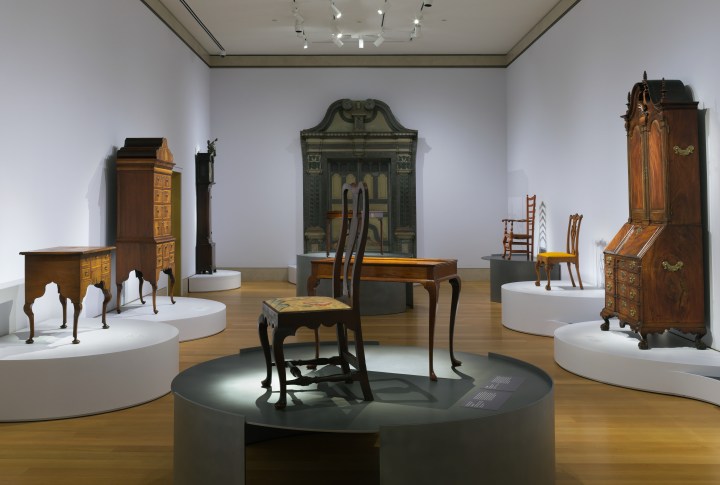 Join curator Alyce Perry Englund, Associate Curator of American Decorative Arts of the American Wing, to talk about The Calculated Curve: Eighteenth-Century American Furniture and delve into a pivotal moment in American furniture design from 1720 to 1770. Take a closer look at the materials, ergonomics, and sculptural expression embedded in furniture design during a critical age of global exchange and social stratification. This live event will take place on Zoom. Space is limited, and advance registration is required. Registration closes Tuesday, July 15, or when registration is full. Fee: $40.
Presented in conjunction with the exhibition The Calculated Curve: Eighteenth-Century American Furniture.
The Burlington Magazine, June 2025
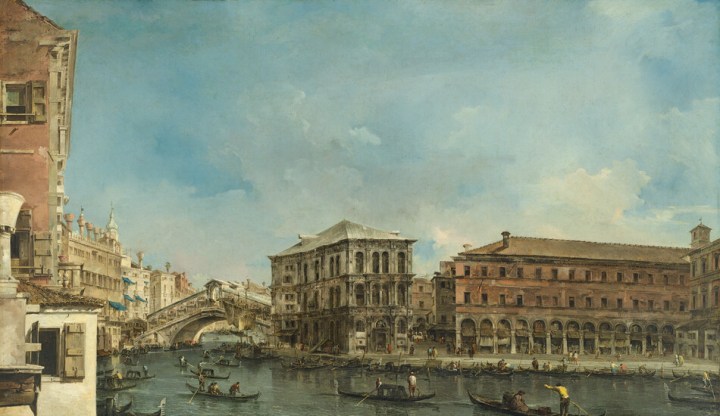
Francesco Guardi, Venice: The Rialto Bridge with the Palazzo dei Camerlenghi, ca.1764, oil on canvas, 120 × 204 cm
(Private collection)
◊ ◊ ◊ ◊ ◊
The long 18th century in the June issue of The Burlington:
The Burlington Magazine 167 (June 2025)
e d i t o r i a l
• “American Gothic,” p. 531.
There are many excoriating ways in which the current administration in Washington might be described; a number of them are perhaps too impolite to appear in a decorous journal such as this. The necessity of restraint does not, however, mean we should refrain from expressing a view on the provocative actions of the new United States government. They are not merely a matter of political theatre that feeds the news cycles, but also a corrosive force that is undermining many valued cultural institutions and having a direct and negative impact on the lives of tens of millions of people.
l e t t e r
• David Wilson, “More on Lorenzo Bartolini’s The Campbell Sisters Dancing a Waltz,” pp. 532–34.
Response to the article in the February issue by Lucy Wood and Timothy Stevens, “The Elder Sisters of The Campbell Sisters: William Gordon Cumming’s Patronage of Lorenzo Bartolini.”
a r t i c l e s
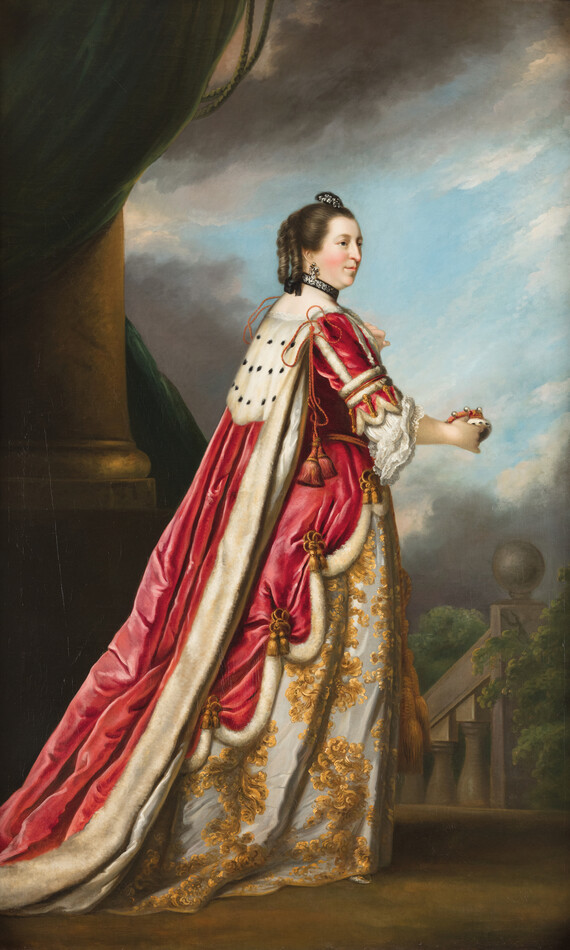
Joshua Reynolds, Elizabeth Percy, Countess (later Duchess) of Northumberland, 1757, oil on canvas, 240 × 148.6 cm. (Collection of the Duke of Northumberland, Syon House, London).
• Justus Lange and Martin Spies, “Two Royal Portraits by Reynolds Rediscovered in Kassel,” pp. 564–71.
Two paintings in the Gemäldegalerie Alte Meister, Kassel, are here identified as portraits by Joshua Reynolds of Princess Amelia, second daughter of George II, and her brother William Augustus, Duke of Cumberland. Both were gifts from the sitters to their sister Mary, Landgravine of Hesse-Kassel, a provenance that sheds new light on the cultural links between England and the landgraviate in the mid-eighteenth century.
• Giovanna Perini Folesani, “An Unpublished Letter by Sir Joshua Reynolds,” pp. 575–78.
in the historical archive of the Accademia di Belle Arti, Florence, there is an autograph letter by Sir Joshua Reynolds dated 20th May 1785 that was sent from London. . . . The text is in impeccable Italian, suggesting that Reynolds copied a translation made by a native speaker. . . .
• Francis Russell, “Guardi and the English Tourist: A Postscript,” pp. 578–83.
Some three decades ago this writer sought to demonstrate in this Magazine that the early evolution of Francesco Guardi (1712–93) as a vedutista could be followed in a number of pictures supplied to English patrons who were in Venice from the late 1750s. Other pieces of the jigsaw now fall into place. . . .
r e v i e w s
• Christoph Martin Vogtherr, Review of Schönbrunn: Die Kaiserliche Sommerresidenz, edited by Elfriede Iby and Anna Mader-Kratky (Kral Verlag, 2023), pp. 614–16.
• Steven Brindle, Review of Christopher Tadgell, Architecture in the Indian Subcontinent: From the Mauryas to the Mughals (Routledge, 2024), pp. 620–21.
• Stephen Lloyd, Review of ‘What Would You Like?’ Collecting Art for the Nation: An Account by a Director of Collections, edited by Magnus Olausson and Eva-Lena Karlsson (Nationalmuseum Stockholm, 2024), pp. 627–28.
Exhibition | Travels: Artists on the Move

Jakob Philipp Hackert, Cestius Pyramid with German Artists at the Grave of a Companion, 1777, pen and watercolor on paper, 35 × 46 cm
(Vienna: Albertina)
◊ ◊ ◊ ◊ ◊
From the press release:
Travels: Artists on the Move / Fernweh — Künstler:innen auf Reisen
Albertina, Vienna, 27 June — 24 August 2025
Ancient buildings, sunny southern landscapes, or local mountain worlds: travel has inspired numerous artists to create new perspectives and pictorial worlds. The Albertina Museum’s summer exhibition is dedicated to this artistic wanderlust with a selection of 18th- and 19th-century masterpieces from its own collection—from Johann Wolfgang von Goethe to Caspar David Friedrich and Tina Blau.
Travels: Artists on the Move spans an arc from the ‘Grand Tour’—an educational journey through Europe lasting several years with Rome as its destination—to voyages of discovery to distant continents. What was reserved for the sons of the nobility during the Renaissance increasingly became an educational ritual for the aspiring bourgeoisie from the 18th century onwards. Important destinations included Paris, Lyon, Marseille, Florence, Pisa, and the Eternal City. Johann Wolfgang von Goethe was drawn even further south on his Italian journey, and the museum presents four views from his trip to Italy from its own collection. The exhibition draws attention to landscapes that are as diverse as they are special, the intensity of the personal experience of nature and the conditions of travel in the 18th and 19th centuries. The finest drawings and luminous watercolors bring the longing for distant places and new horizons to life.
Introduction
Traveling—indulging the longing for the unknown and for faraway lands—is a notion dating to Romanticism, but as a phenomenon it was by no means limited to this era. The desire to leave one’s familiar surroundings, to get to know new scenery and distant destinations, and capturing them in drawings and paintings for those who had stayed behind also prompted numerous artists of Neoclassicism, Biedermeier, and Realism in the 18th and 19th centuries to set off for places near and far. They did so either on their own initiative as an educational journey in order to gain inspiration for their own artistic work, or on behalf of ruling dynasties and art publishers editing compilations of the most stunning views of a particular region. Countless picturesque impressions could be gained, whether near ancient buildings in Rome, in landscapes under the southern sun and in alpine mountains, on picturesque lakes, along the Danube and the Rhine, or on journeys to foreign countries.
The Albertina’s exhibition sheds light on this artistic love of travel by presenting 18th- and 19th-century masterpieces from its own collection while illustrating the various travel routes that existed. The show ranges from the Grand Tour and the study of antiquity and the Italian landscape to the beauty of the Austrian countryside, the fascination of the mountains and romantic journeys along the Rhine, and the discovery of other continents. The focus is on the various landscapes and motifs studied, as well as the exploration of nature in the works of Johann Wolfgang von Goethe, Caspar David Friedrich, Jakob Alt, Thomas Ender, and Rudolf von Alt. Women landscapists have also conquered nature, as is proven by works by Tina Blau, Olga Wisinger-Florian, Marie Lippert-Hoerner, and Emilie Mediz-Pelikan. Precious drawings and colorful watercolors allow us to sense the hunger for new horizons and witness not only individual experiences of nature but also the travel conditions in those days. In this way, travel becomes art and art becomes a mirror of travel.
Grand Tour
While since the Renaissance the traditional educational tour of Continental Europe had been exclusively reserved for the sons of aristocratic families, from the 18th century onward it also became popular among the upper middle classes as the so called Grand Tour. With Rome as its destination, it lasted several years and was the culmination of any higher education. Time and again, the travelers were accompanied by artists who were supposed to capture the beauties of nature. Over time, routes developed that led to must-see cities. The English voyaged from London to the Channel Coast, with Paris as their first important stop. They traveled via Burgundy and Lyon to Marseille and on to Italy, where Florence was most important as a first station. Visiting Pisa and Lucca, they moved on to the much-longed-for destination of the Eternal City, where they usually spent several months. It was almost obligatory to have one’s portrait painted by a local artist. Naples was also on the itinerary, and some were even drawn as far as Sicily, including Johann Wolfgang von Goethe. The return journey was then via Verona, Padua, and Venice. However, there were also many individual routes depending on the personal interests and networks of the travelers, leading through Germany, Austria, Switzerland, and the Netherlands on the way back home.
Goethe’s Italian Journey

Johann Wolfgang von Goethe, Lakescape, 1787, brush on paper 19.5 × 31 cm (Vienna: Albertina, permanent loan of Österreichische Goethe-Gesellschaft).
Johann Wolfgang von Goethe’s account of his Italian Journey (1813–1817) makes him one of the most famous Grand Tour homecomers. During the trip he made around 850 drawings. The writer, who was already well known at the time, traveled incognito in order to be able to move around more freely. He set off for Italy in September 1786, visiting Trento and Verona and stayed in Venice for a first extended stay of a fortnight. Goethe then visited the cities of Bologna and Florence in rapid succession before finally arriving in Rome, the place he had always longed for as a child. After four months he moved on to Naples. Goethe, following in the footsteps of his father on his own Grand Tour, ventured a little further than the latter had done in 1740. In the spring of 1787, he set sail for Sicily. For his exploration of the island he also hired a travel sketch artist, Christoph Heinrich Kniep, to capture the most beautiful vistas. For over a month, the two of them drew side by side. The four views of Sicily by Goethe shown in this exhibition bear witness to this journey and to his passion for drawing. Goethe eventually returned home via Naples and Rome in the spring of 1788.
Rome and the Study of Antiquity
Once Grand Tourists had arrived in Rome after months of traveling and numerous stopovers, they stayed for a few months to familiarize themselves with the city’s art treasures as profoundly as possible. Johann Joachim Winckelmann’s History of Ancient Art (1764) played a decisive role in the emergence and spread of the enthusiasm for antiquity. The tour comprised museums, old churches, ancient monuments, and such sites as the excavations on the Palatine, one of Rome’s seven hills. The Roman Forum, the ancient marketplace, offered ample opportunity to study the architecture and sculpture of antiquity through the temples, official buildings, market and assembly halls (basilicas), and the two triumphal arches from the first centuries AD. Magnificent villas and their exquisitely landscaped gardens, among them the 17th-century Villa Ludovisi, likewise attracted visitors to Rome.
According to the rules of the Académie française, the study of antiquity was the most important element in a painter’s education and training, alongside instruction in drawing and copying models. Many artists, thus encouraged by their art academies, traveled to Rome to study the city’s ancient heritage and the way the High Renaissance revisited it as to content and form.
The Italian Landscape
The artists visiting Rome not only discovered the city’s ancient monuments but also undertook excursions to the countryside and familiarized themselves with the unique scenery of the Campagna, the impressive coast near Naples, and the enchanting island of Capri. With its outstanding light, the Southern Italian landscape made a lasting impression on countless artists that prevailed even after their return home. Artists such as father and son Alt and Thomas Ender, whose origins lay in the Austrian Biedermeier period, painted topographically meticulous landscapes effectively staging light, water, and sky in the colors of nature.
Some artists imaginatively assembled different parts of a region, adding fictitious ancient ruins and random staffage figures. They created ideal Arcadian landscapes that were modeled on antiquity and evoked a nostalgic mood for past beauty. This ideal landscape painting style harked back to the 17th-century tradition of Claude Lorrain.
Fascination of the Mountains
Until well into the 19th century, the nature of high mountains was perceived as threatening. Crossing the Alps, as some people did on their Grand Tours, was fraught with danger. There were no well-maintained paths, rivers were not regulated, and one was rather defenseless in the face of rapid weather changes. Many a traveler fell victim to avalanches or rockslides, and some even died.
In the 18th century, a genuine enthusiasm for the Alps prevailed. Literature played a quite significant role in this. Publications dealing with the Alps and Switzerland in particular enticed many travelers. Improved transportation conditions had made traveling more comfortable. The golden age of alpinism began in the middle of the 19th century, with many first ascents. Artists captured the beauty of the mountains and catered to the newly awakened interest in mountain peaks, glaciers, and wild, pristine nature.
In the Service of Archduke John
As many as about 1,400 watercolors and drawings were executed by artists in the service of Archduke John. The works of his so-called ‘chamber painters’, who were on an equal footing with court painters, were originally created in the context of his efforts to produce a systematic description of Styria, for which the artists were to provide a pictorial documentation. Ferdinand Runk was employed by Archduke John from 1795 on and later also worked for the Princes Schwarzenberg and Johann I of Liechtenstein. The commissions that went to Matthäus Loder were still connected with the purpose of documentation, but more and more often motifs from the archduke’s immediate personal life and experiences were added. Loder’s task was taken over by Thomas Ender in 1828. He traveled as far as the glacier regions for Archduke John and also accompanied him on journeys to more distant destinations. The chamber painters came from several generations of artists. Their works were created over a period of almost fifty years and represent an important contribution to the development of 19th-century Austrian landscape painting.
In the Service of Emperor Ferdinand I

Rudolf von Alt, The Dachstein in the Salzkammergut as Seen from the Vorderer Gosausee, 1840, watercolor on paper, 42 × 52.5 cm (Vienna: Albertina).
Archduke Ferdinand (from 1835 Emperor Ferdinand I of Austria) commissioned the most highly renowned artists of his time to paint the most beautiful places throughout the Austrian monarchy. It was the heyday of Austrian watercolor painting. Initially, Eduard Gurk became the archduke’s companion and chronicler. In 1830 he created the first drawings for the imperial peep box series, which could be viewed by means of an optical device, offering the illusion of a deceptively real perspective expanse. Soon, Jakob Alt was also employed by Archduke Ferdinand. He had already made a name for himself with his work as a landscape painter for the art publisher Artaria. On the peep box series he collaborated particularly closely with his son Rudolf, yet the works were all signed by Jakob Alt as principal contractor. His son Franz Alt too was a talented landscapist. The painter Leander Russ worked for Emperor Ferdinand I’s peep box series starting in 1841.
Women Landscapists
In the 19th century few women were able to pursue an artist’s career. They were not allowed to study at the Vienna Academy of Fine Arts, as women were generally assumed to lack a creative spirit in the domain of high art. It was not until 1920 that women were admitted. Before that, they had to rely on private art schools, private teachers and, above all, family support, or their father or a close relative was a painter himself. Nevertheless, there were women landscape painters who traveled with their sketchbooks or painted directly in the great outdoors. The most important practitioners in Austria were Olga Wisinger-Florian and Tina Blau, who were already successful during their lifetimes, and who were permitted to take part in exhibitions. However, as Olga Wisinger-Florian complained, the works of women were poorly hung, and the women artists were not invited to exhibition openings. There were hardly any commissions from financially strong rulers or aristocrats for whom they could travel and paint.
Romantic Rhine Journey
Towards the end of the 18th century—based on the writings of Johann Wolfgang von Goethe, Friedrich Hölderlin, and Heinrich von Kleist—a rapturous interest in the Rhine landscape developed, which was in stark contrast to the wild alpine valleys of Switzerland. The rocky Upper Middle Rhine Valley, now a UNESCO World Heritage Site, became a popular tourist destination due to its fascinating river landscape and large number of castle ruins. The classic Rhine Romanticism route essentially stretched from Cologne to Mainz, although there were also variants and extensions similar to the Grand Tour, which led to the Upper Rhine between Basel and Bingen or to the sources of the Rhine. Many artists either traveled on their own initiative or were commissioned to capture the romantic views of the Rhine in painting. The Swiss artist Johann Ludwig Bleuler, who also owned a publishing house, and the Austrian landscape painter and etcher Laurenz Janscha created important series of vedute and views of the Rhine region.
On the Move
Until the 19th century, voyaging had mainly been reserved for the nobility. It was only then, in the course of industrialization, that a wealthy middle class discovered travel as well. From 1825 on, when the first train line was put into operation in England, the railroad rapidly developed into a widely networked transport system over the decades to come, making traveling much easier, more convenient, and safer. Until then, people had traveled in horse-drawn carriages. Artists could only go on such journeys if they had sufficient funds of their own or if they were financed by wealthy patrons. However, they often also traveled on foot to sketch in nature. In 1835, an English company brought out a paint box that was easy to transport and ideal for painting en plein air. The new pocket-sized travel guides published by Baedeker and Hartleben became useful companions. Many of the places that artists wished to capture were difficult to reach. They thus carried sketchbooks with them or had a light travel easel that could easily be set up anywhere.
Traveling to Faraway Countries
The longing for endless expanses and an unbridled spirit of discovery were the driving forces behind travel in the 19th century. In most cases, however, it was solid monetary and territorial reasons that led to numerous journeys of exploration and discovery. Artists often accompanied these voyages in order to capture romanticizing impressions of the various stations in paintings and drawings. One of the most ambitious expeditions in the name of science was the circumnavigation of the world with the frigate Novara between 1857 and 1859, which was also not without economic interests. Archduke Ferdinand Maximilian, commander-in-chief of the Austrian navy, made the converted frigate Novara available to the Academy of Sciences and the Geographical Society. On board was the landscape painter Josef Selleny, who documented the journey. He produced around 2,000 watercolors, sketches, and studies, thus making a significant contribution to the success of the expedition. Another example was Leander Russ, who had already been the artistic companion of a diplomat on a trip to the Orient when he was commissioned by Emperor Ferdinand I in 1841 to produce peep box paintings with motifs from Egypt, Bethlehem, Jerusalem, Beirut, and India.
New Book | Old Age in Art
From Reaktion Books, with distribution by The University of Chicago Press:
Larry Silver, Old Age in Art (London: Reaktion, 2025), 208 pages, ISBN: 978-1836390527, £20 / $30.
 Old Age in Art shows how elders have been depicted from ancient Greece and Rome to the present century. The book explores portraits, including self-portraits, and stories of older figures in religion, myth, and history, focusing on the theme of wisdom versus folly. Larry Silver also discusses the concept of old age within the Middle Ages and early modern periods. The final chapter examines how renowned artists like Michelangelo, Titian, and Monet turned to experimental forms and new subjects in their later years. This book provides a comprehensive overview of old age in European art history.
Larry Silver is the Farquhar Professor Emeritus of History of Art at the University of Pennsylvania and a specialist in Dutch and Flemish paintings. He has published numerous monographs and exhibition catalogues, including Rembrandt’s Holland (Reaktion, 2018).
c o n t e n t s
Preface: Ars longa, vita brevis
1 Old Age Is Relative: Age and Stage as Concepts from Antiquity to the Renaissance
2 Wisdom and Folly
3 Old Age Stories
4 Portraits – Self and Others
5 Old-Age Style
References
Bibliography
Acknowledgements
Photo Acknowledgements
Index










 Enfilade
leave a comment