New Book | Splendour in Venice: From Canaletto to Guardi
The exhibition was noted here at Enfilade in May 2024. The catalogue will soon be available from ACC Art Books and Simon & Schuster:
Luísa Sampaio, with Alberto Craievich, Mar Borobia, and Vera Mariz, Splendour in Venice: From Canaletto to Guardi (Lisbon: Calouste Gulbenkian Foundation, 2025), 208 pages, ISBN: 978-9899119208, £45.
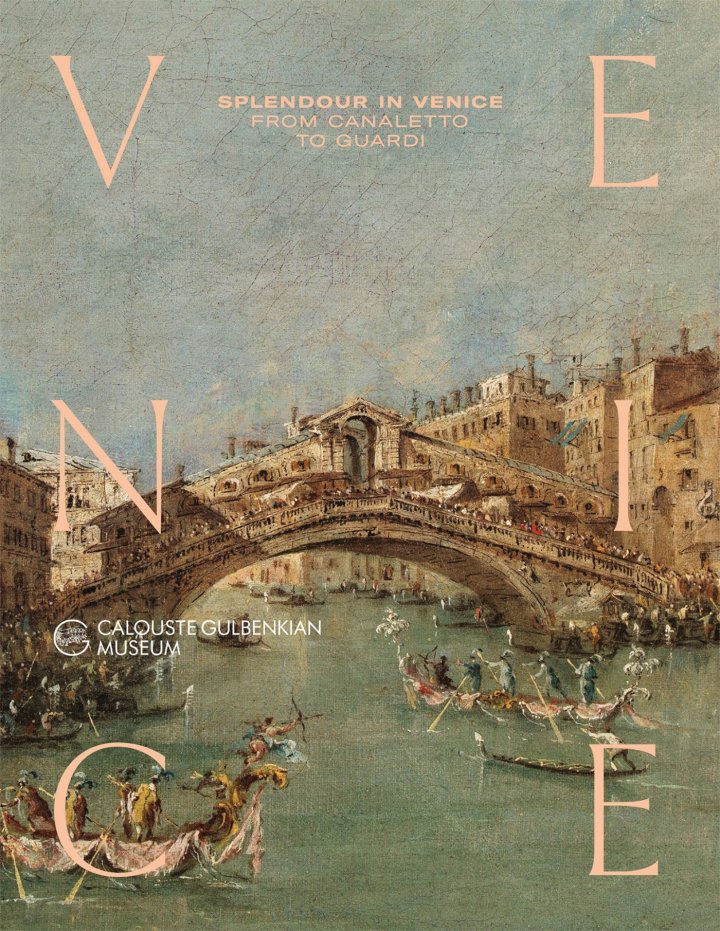 In October 2024 The Calouste Gulbenkian Museum in Lisbon, in collaboration with the Museo Thyssen-Bornemisza in Madrid, presented the exhibition Splendor in Venice: From Canaletto to Guardi, devoted to 18th-century Venetian painting. Artists such as Canaletto, Francesco Guardi, Bernardo Bellotto, and Giambattista Tiepolo—creators of some of the most brilliant compositions of their time and undeniable highlights in the collections of both Iberian museums—were among the artists showcased in the exhibition.
This accompanying publication is divided into two parts: the first featuring three essays and the second comprising individual catalogue entries. Mar Borobia, Chief Curator of Old Master Painting at the Museo Thyssen-Bornemisza, opens the first part with an essay on the history of the collection of 18th-century Venetian painting belonging to the Madrid museum. Next, Vera Mariz, curator at the Calouste Gulbenkian Museum, reflects on Gulbenkian’s admiration for the work of Francesco Guardi, which led him to purchase 19 paintings by the Italian master for his collection. Finally, Alberto Craievich, director of Ca’ Rezzonico, Museo del Settecento Veneziano, explores the artistic context of the city of Venice during the 18th century. The second part consists of 34 catalogue entries written by Luísa Sampaio, the curator of the exhibition.
Luísa Sampaio is in charge of collections management at the Calouste Gulbenkian Museum. As a curator, she takes care of the departments of Painting, Sculpture, and the works of René Lalique. She has curated various international exhibitions devoted to artists including Turner, Fantin-Latour, Carpeaux, and Rodin. She recently curated the exhibition René Lalique and the Age of Glass (2020). She is the author of the Calouste Gulbenkian Museum’s painting catalogue (2009).
New Book | The French Silverware in the Calouste Gulbenkian Collection
This catalogue, which was published in 2023 and recently reviewed in The Burlington Magazine, will soon be re-released, with distribution by ACC Art Books and Simon & Schuster:
Peter Fuhring, The French Silverware in the Calouste Gulbenkian Collection (Lisbon: Calouste Gulbenkian Foundation, 2023), 408 pages, ISBN: 978-9899119055, £65 / $85.
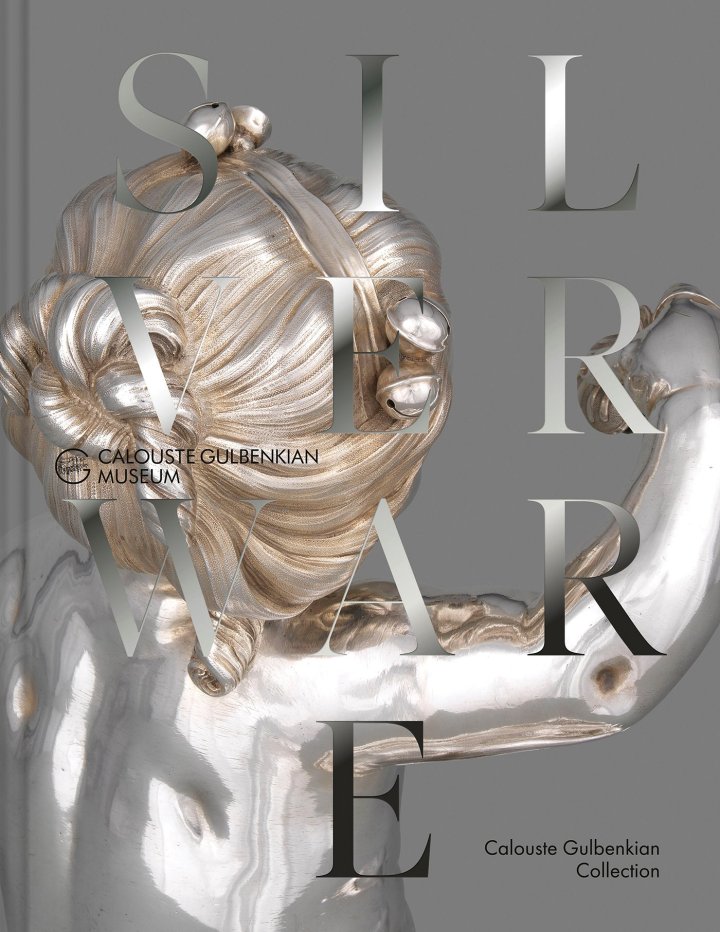 The collection of 18th- and early-19th-century French silverware brought together by Calouste Sarkis Gulbenkian is the most important of its time and one of the most significant sections of the Gulbenkian Museum’s collection. Amassed between 1900 and 1950, these pieces constitute a unique group due to their diversity and quality. The collection comprises over 150 works, including several world-class masterpieces that represent the collector’s taste.
The catalogue is dedicated to a selection of silver works of different typologies, such as centrepieces, tureens, salt cellars, candelabras and candlesticks, made by renowned silversmiths such as François-Thomas Germain, Antoine-Sébastien Durant, Robert-Joseph Auguste, and Martin-Guillaume Biennais. Despite this diversity, these works all share the characteristics that make this collection unique: quality and authenticity combined with original designs, technical expertise, and distinguished provenances, with former owners including members of European aristocracy and the Russian imperial family. These works were mostly purchased in Paris, but there is also an important group of works from the Hermitage collection, acquired through negotiations made between Calouste Gulbenkian and the Soviet government between 1928 and 1930.
After an initial text about Calouste Gulbenkian’s passion for 18th-century French silverware, the most prominent pieces of the collection are presented in chronological order of acquisition and are accompanied by comprehensive descriptions and analyses, as well as detailed information on hallmarks, inscriptions, and provenances, along with historical and bibliographical sources. An excellent photographic survey, carried out specifically for the purpose, illustrates the 43 catalogue entries. At the end of the publication, the reader can find a list of secondary silverware, an index of names, and the group of archive documents and bibliography consulted.
Peter Fuhring studied biology and art history at Leiden University and obtained his doctorate in 1994 with a study of the life and works of Juste-Aurèle Meissonnier (1695–1750), published in 1999. His thesis was awarded the Præmium Erasmianum and the J. W. Frederiks prize. A specialist in the history of ornament and design, he has published many articles and other works on drawings, ornament prints, and the decorative arts and has organised several exhibitions on these subjects. He was the first to hold the Ottema Kingma chair in the History of Decorative Arts at Radboud University in Nijmegen (2005–09). He was the lead author of the catalogue of the Jourdan Barry silver collection (2005) and also organised the exhibition Designing the Décor: French Drawings of the Eighteenth Century (2005–06) at the Gulbenkian Museum. From 2005 to 2022, he has worked for the Fondation Custodia in Paris, on the Marques de collections de dessins & d’estampes by Frits Lugt, for which an online database was created in 2010.










 Enfilade
leave a comment