Symposium | Meissen Symposium: Höroldt’s Legacy
From the Meissen Porcelain Museum:
1st Meissen Symposium: Höroldt’s Legacy
Meissen Porzellan-Stiftung, Meißen, 7–9 November 2025
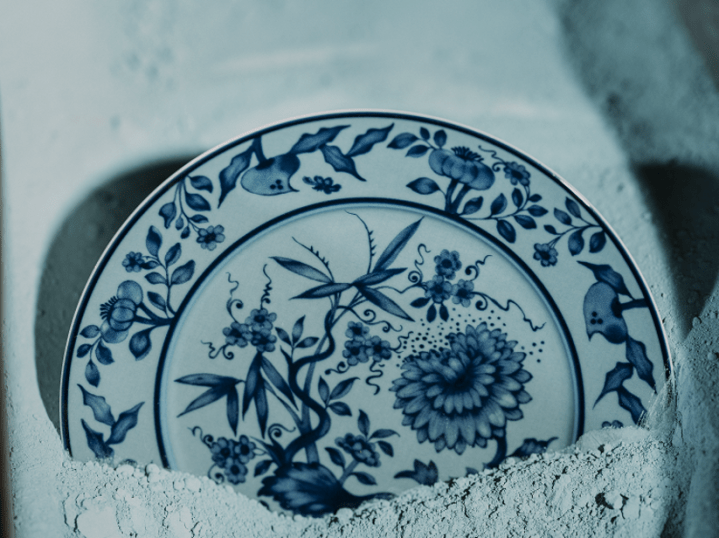 The Meissen Porcelain Foundation is hosting the Meissen Symposium, part of what is envisioned as a regular series of symposia aimed at facilitating exchanges on ceramic history at the birthplace of European porcelain. The subject of this year’s symposium is Höroldt’s Legacy, with an emphasis on ceramic pigments, their historical and contemporary development, and their use within the Meissen Manufactory and beyond. The occasion for this year’s symposium is the 250th anniversary of the deaths in 1775 of Meissen’s two towering figures, Johann Gregorius Höroldt (1696–1775) and Johann Joachim Kaendler (1706–1775).
Höroldt’s arrival in Meissen in 1720 signaled a breakthrough in porcelain painting. Höroldt was an innovative artist with a natural and intuitive understanding of pigment chemistry without any formal training. He developed the proper technology for the enameling of porcelain using metal-oxide-based pigments at high temperatures. Today, his initial set of 16 enamel colors has grown to around 10,000.
Augustus the Strong’s initial objective was the making of blue-and-white porcelain, similar to that of the Chinese. With Höroldt’s arrival the success story of overglaze polychrome painting began. Inspired initially by East Asian decors it was expanded to include European flower painting, the classic harbor scenes, hunting scenes, and scenes after Watteau, Ridinger and others. In the 19th century it was expanded to royal blue ground, to include platinum, pâte-sur-pâte, and Limoges painting. Experiments with tinted porcelain paste can be traced to the 18th century. Exploring the miscibility of colorants was intensely investigated as documented by the hundreds of surviving, meticulously documented and archived color samples in the Meissen Manufactory Museum. In-glaze painting, and the invention of soluble and high-temperature resistant colorants that could be used underglaze were significant additional technological developments. Advances in scientific analysis are expected to provide new insights.
f r i d a y , 7 n o v e m b e r
10.00 Morning Session
1 Frank Löchelt, Meissen — Color Laboratory / Farblabor der Manufaktur
2 Nicholas Zumbulyadis, USA — Influencing the Influencer: Thoughts about the Origins of Höroldt’s Technological Advances / Wer beeinflusste Höroldt: Gedanken zu den Ursprüngen von Höroldts technologischen Fortschritten
3 Ullrich Knüpfer — Insights into the Technological Basics of Polychrome Porcelain Decoration / Technologische Grundlagen der farbigen Porzellan-Dekoration
4 Annett Lorenz, Meissen — Porcelain Painter: Aspects of Figure Painting / Porzellanmaler: Aspekte der Figurenmalerei
5 Maureen Cassidy-Geiger, USA — Glazed Canvases: New Approaches to the Study of (Miniature) Painting on Meissen Porcelain / Neue Ansätze zur Erforschung der (Miniatur-)Malerei auf Meissener Porzellan
6 Holger Schill, Meissen — Head of Bundling and Finishing: A Practical Report on Customer Requests, Color Palettes, and New Decors / Leiter Bund- und Endfertigung: Ein Praxisbericht über Kundenwünsche, Farbpalletten und neue Dekore
1.30 Lunch
3.00 Afternoon Session
7 Sebastian Bank, SKD — Frankenthal Colors: From Meissen to the Palatinate / Die Entwicklung der Frankenthaler Farben aus kunsthistorischer Sicht
8 Uwe Marschner, Meissen — About Pate-sure-pate Painting / Leiter Modellherstellung und Formenarchiv: Zur Pate-sure-pate Malerei
9 Lena Hensel, Meissen — Meissen Today / Leiterin Produktentwicklung: Meissen heute
s a t u r d a y , 8 n o v e m b e r
9.30 Welcome
10.00 Morning Session
1 Susanne Bochmann, Meissen — Porzellan-Stiftung Color Samples and Patterns in the Collections of the Meissen Porcelain Foundation / Farbproben und Farbmuster in der Sammlung der Meissen Porzellan-Stiftung
2 Jens Petzold, KI-Institut Meißen — The Influence of Firing on Ceramic Colors / Einfluss der Brandführung auf keramische Farben
3 Lena Kaapke, Künstlerin — Inquiring the Red: A Visually and Sensually Organized, Tactile Archive of Various Red Ceramic Surfaces / Befragungen an das Rot: ein visuell und sinnlich geordnetes, haptisches Archiv verschiedener keramisch roter Oberflächen
4 Zhong Zhenhua, Deputy Dean of the School of International Exchange and Education and the Deputy Director of the Ceramic Culture Exchange and Research Center at Jingdezhen College — Johann Gregorius Höroldt and Jingdezhen Porcelain: The Historical and Aesthetic Connections between Höroldt’s Chinoiserie and Jingdezhen’s Ceramic Heritage / Johann Gregorius Höroldt und Jingdezhen-Porzellan: Die historischen und ästhetischen Verbindungen zwischen Höroldts Chinoiserie und dem keramischen Erbe von Jingdezhen
5 Vanessa Sigalas, Wadsworth Atheneum, USA — Where Are All the White Figures? Later Decorated Meissen Porcelain / Wo sind all die weißen Figuren? Später dekoriertes Meissener Porzellan
6 Valérie Montens, Curator of European Ceramics and Glass Collections, Royal Museums of Art and History, Brussels; and Sofia Cruz Oulhaj, student in conservation and restoration of ceramic and glass, ENSAV La Cambre, Brussels — From Restoration to Attribution: Scientific and Stylistic Reassessment of a Meissen Huntress Figurine / Von der Restaurierung zur Zuschreibung: Wissenschaftliche und stilistische Neubewertung einer Meissener Jägerinnenfigur
1.00 Lunch
2.30 Afternoon Session
7 Bernd Ullrich — Initial Analytical Material Investigations on Historical Products from the Meissen Porcelain Manufactory Using X-ray Fluorescence, Scanning Electron Microscopy, and Electron Beam Microprobe Technology in the 1980s at the TU Bergakademie Freiberg / Erste analytische Werkstoffuntersuchungen an historischen Erzeugnissen der Porzellanmanufaktur Meissen mittels Röntgenfloureszenz, Rasterelektronenmikroskopie und Elektronenstrahlmikrosondentechnik in den 1980er Jahren an der TU Bergakademie Freiberg
8 Philippe Colomban, Sorbonne University — How to Extract the Maximum Information on Enamels in a Non-invasive Way with Mobile Instrumentation (Raman + pXRF), Explaining which Results Can Be Reliable and What the Difficulties Are, with the Example of This France/Italy/Germany/China Comparison / Wie man mit mobilen Messgeräten (Raman + pXRF) auf nicht-invasive Weise möglichst viele Informationen über Glasur gewinnt, wobei anhand des Vergleichs zwischen Frankreich, Italien, Deutschland und China erläutert wird, welche Ergebnisse zuverlässig sind und wo die Schwierigkeiten liegen
9 Christian Lechelt, Fürstenberg — For Some Years Now, the Museum Schloss Fürstenberg and the Freundeskreis Fürstenberger Porzellan e. V. Have Collaborated with Cranfield University and Leiden University on a Project Aimed at Gaining New Insights into 18th-Century Fürstenberg Porcelain Production Using X-ray Fluorescence Analysis / Seit einigen Jahren verfolgen das Museum Schloss Fürstenberg und der Freundeskreis Fürstenberger Porzellan e. V. zusammen mit den Universitäten in Cranfield (UK) und Leiden (NL) ein Projekt, um mittels Roentgenfluoreszenzanalyse zu neuen Erkenntnissen über die Fürstenberger Porzellanproduktion des 18. Jahrhunderts zu gelangen
4.15 Panel Discussion / Podiumsdiskussion
Conference | Sacred Ceramics
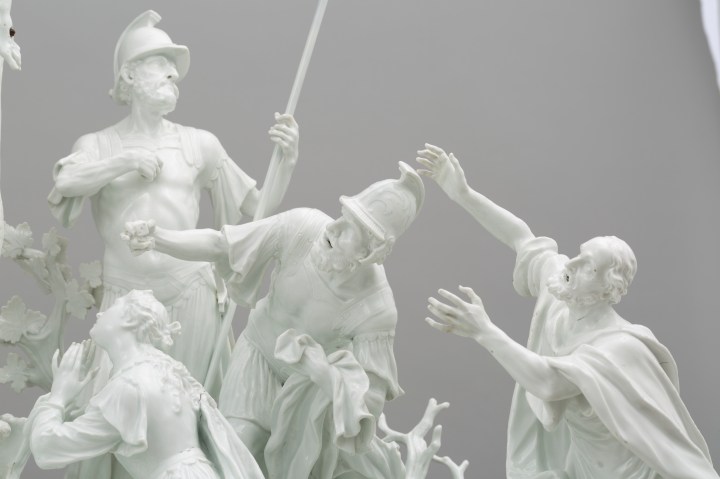
Johann Joachim Kaendler, Crucifixion Group, detail, Meissen, 1743
(Porzellansammlung, Staatliche Kunstsammlungen Dresden; photo by Adrian Sauer)
◊ ◊ ◊ ◊ ◊
Details of this conference appeared here at Enfilade several weeks ago; please note, however, that registration now includes an online option (with recordings sent out afterwards) for anyone who is interested but unable to attend on Tuesday.
Sacred Ceramics: Devotional Images in European Porcelain
Online and in-person, Victoria & Albert Museum, London, 30 September 2025
Organized by Matthew Martin and Rebecca Klarner
Was eighteenth-century European porcelain just a ceramic material to be moulded into useful objects—or could it mean more? This conference explores what European porcelain might have communicated when it was used to create devotional objects.
This conference explores the phenomenon of religious sculpture produced in European porcelain in the eighteenth century. Sculptures on religious subjects represent some of the most ambitious and complex productions in European porcelain of the period, yet they remain relatively understudied. Meissen, Doccia Vienna, Höchst, Fulda, Nymphenburg—all these factories produced devotional images in porcelain. Even factories in mid eighteenth-century Protestant England—Chelsea and Derby—produced sculptures employing Catholic devotional imagery. In each instance, cultural-political motives for the creation of these images can be reconstructed.
The 1712 letter penned by the Jesuit Father François Xavier d’Entrecolles not only conveyed to Europe first-hand knowledge of Chinese porcelain production at Jingdezhen, but it also construed access to this knowledge as a triumph of the Jesuit global mission—the successes of the Jesuits in China made the secret of kaolinic porcelain available to the Catholic princes of Europe.
Porcelain’s alchemical heritage was also not without significance: success at the alchemical enterprise had always been deemed dependent on divine favour. These factors could lead to porcelain assuming a sacral character in Catholic court contexts. Devotional images in European porcelain exploited these cultural associations of the medium itself.
This international conference will explore the religious production of European ceramic factories and consider questions such as: Who were the artists and patrons involved in these sculptures’ creation? How did these sculptures function in private and public contexts? What significance lay in the use of porcelain to create devotional images?
More information is available here»
Study Day | Drawing in 18th-C. Academies, Schools, and Private Studios
From ArtHist.net and the conference programme:
Académies, écoles et ateliers privés :
Conditions pratiques du dessin dans l’enseignement artistique au XVIIIe siècle
École des Beaux-Arts de Paris, 16 October 2025
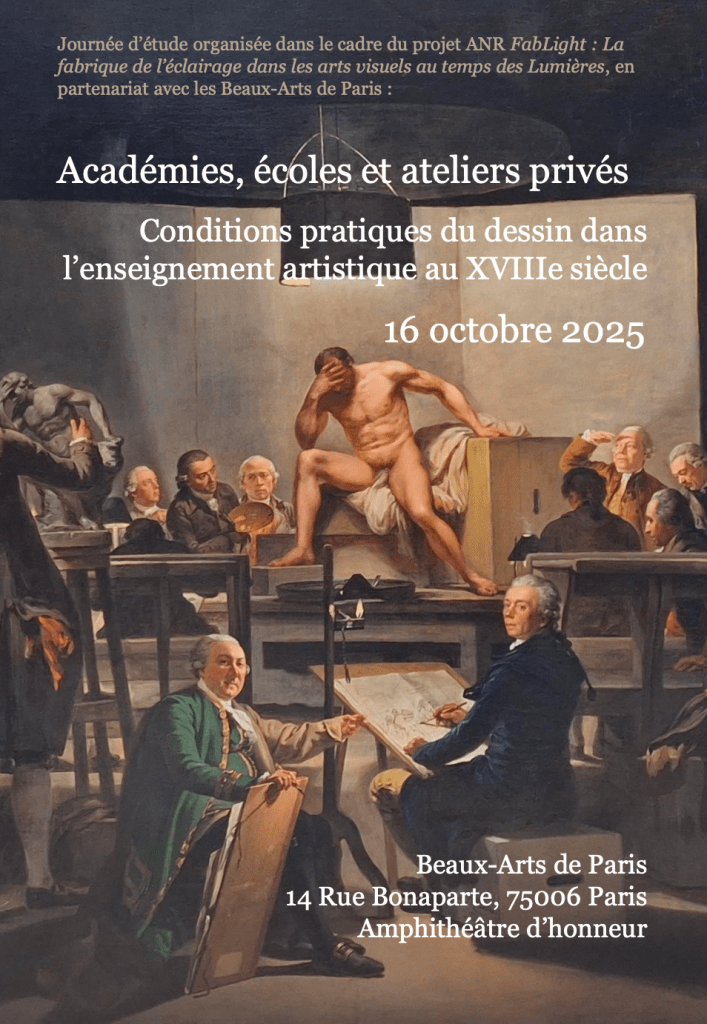 Dans le cadre de l’ANR FabLight, et en partenariat avec l’École des Beaux-Arts de Paris, Marlen Schneider (Université Grenoble Alpes/LARHRA) organise une journée d’étude intitulée Académies, écoles et ateliers privés : Conditions pratiques du dessin dans l’enseignement artistique au XVIIIe siècle.
Au cœur de la formation artistique au XVIIIe siècle, le dessin constitue une base fondamentale pour comprendre l’évolution de la peinture et de la sculpture, mais aussi d’autres formes d’art et d’artisanat. Des études récentes se sont intéressées à la diffusion des modèles au sein des réseaux des académies d’art et écoles de dessin, en France et en Europe, à la circulation des pratiques et à la constitution de collections pédagogiques servant de support à l’enseignement du dessin. La journée d’étude entend approfondir la question des conditions matérielles et de l’organisation pratique du dessin, dans une perspective comparatiste internationale et selon une approche attentive aux différents lieux de la formation artistique. Comment furent aménagés les espaces destinés au dessin, quel mobilier et quels outils étaient nécessaires à l’apprentissage ? Quels étaient leurs coûts et qui les finançait ? Que sait-on des pratiques d’éclairage, des horaires et du déroulement des séances de pose ? Pouvons-nous constater des différences entre l’enseignement académique et celui des ateliers privés ou des écoles de dessin ? Quelles furent les conséquences des conditions de travail sur la réalisation des dessins — par exemple l’emploi du clair-obscur, le choix des matériaux ou des compositions ? La journée sera consacrée à ces questions selon une perspective européenne, et à une période qui a vu naître un nombre considérable d’académies d’art et d’écoles de dessin, tout en étant marquée par des innovations technologiques importantes, notamment en termes d’éclairage.
Organisée en partenariat entre les Beaux-Arts de Paris et le projet ANR FabLight, la journée d’étude vise à faire dialoguer les recherches récentes en Histoire de l’art sur la pratique du dessin, croisant les études visuelles et matérielles avec les humanités numériques, afin d’évaluer l’apport de ces dernières pour une meilleure compréhension des conditions de travail des artistes.
Cette journée aura lieu à l’École des Beaux-Arts de Paris, 14 rue Bonaparte, le 16 octobre 2025. Les séances de l’après-midi sont ouvertes au public, sans inscription mais dans la limite des places disponibles.
p r o g r a m m e
Matinée réservée aux intervenants (visite et présentation de dessins)
14.00 Introduction — Alice Thomine-Berrada et Hélène Gasnault (Beaux-Arts de Paris), Marlen Schneider (UGA/LARHRA)
14.15 Papiers, crayons, bougies et autres fournitures utiles à l’apprentissage : les supports pédagogiques dans les écoles de dessin provinciales — Anne Perrin-Khelissa (Université Toulouse – Jean Jaurès / FRAMESPA) et Émilie Roffidal (CNRS/FRAMESPA)
15.00 Local Academy, Global Ambition: The Garemijn Booklets and Life Drawing in Bruges, c. 1770 — Thijs Dekeukeleire (Musea Brugge)
15.45 Pause
16.00 On the Conditions in Life Rooms, Their Impact, and the Agency of Drawn Academic Nudes — Susanne Müller-Bechtel (Universität Würzburg)
16.45 Lighting and Learning: Sir John Soane, Turner, and the Early 19th-Century Royal Academy of Arts, London — Rebecca Lyons (Pitzhanger Manor & Gallery, London)
17.30 Une Académie en 3D : table ronde avec des membres du projet Fablight autour d’une reconstitution numérique d’une salle de dessin académique
18.30 Conclusion
Poster Image: Martin Ferdinand Quadal, The Drawing Room of the Vienna Academy in the St. Anne Building, detail, 1787, 56 × 81 inches (Vienna: Gemäldegalerie der Akademie der bildenden Künste).
Call for Papers | Switzerland between the Sublime and Picturesque
From ArtHist.net:
Switzerland between Sublime and Picturesque
Swiss Drawings and Prints in the 18th and 19th Centuries
Die Schweiz zwischen sublim und pittoresk
Forschungen zur Schweizer Zeichnung und Druckgraphik im 18. und 19. Jahrhundert
Zurich, 5 June 2026
Proposals due by 1 November 2025
Im Rahmen der Ausstellung Gletscher und Stromschnellen. Gezeichnete Schweiz um 1800 in der Graphischen Sammlung der ETH (1.4.–5.7.2026) organisiert das Kunsthistorische Institut der Universität Zürich ein Symposium zu Forschungen zu Zeichnungen und Druckgrafik in der Schweiz im 18. und 19. Jahrhundert. Die eintägige Tagung findet am Freitag, 5. Juni 2026, in Zürich statt und soll eine Plattform zur Diskussion aktueller Projekte zur Kunst in der Schweiz aus der akademischen Forschung und Museumswelt bieten.
Mit dem aufkommenden Alpentourismus in der zweiten Hälfte 18. Jahrhundert wurde eine intensive Zeichnungspraxis und vielfältige Bildproduktion in der Schweiz entwickelt. Kunstschaffende begleiteten Naturforscher auf Expeditionen, dokumentierten Gletscher, geologische Phänomene und Pflanzen, und lieferten damit unverzichtbares Bildmaterial für wissenschaftliche Publikationen. Dem gegenüber stand die wachsende Nachfrage eines breiteren Reisepublikums nach Bildern der von ihnen bereisten und neu entdeckten Orten in der Schweiz im Sinne von Souvenirs. Geschäftstüchtige Künstler wie Johann Ludwig Aberli und andere aus dem Kreis der Schweizer Kleinmeister sahen darin ihre Chance: Illustrationen zu Reisebeschreibungen und einzelne Veduten in kleinen Formaten, die sich gut transportieren liessen, waren ihre Antwort. Sie prägten nachhaltig das landschaftliche Bild der Schweiz. Gleichzeitig beflügelte diese Bildproduktion die Zusammenarbeit von Künstler:innen, Verleger:innen und Wissenschaftler:innen. Topographisch getreue Naturauffassung und künstlerische Imagination standen in enger Wechselwirkung. Dabei zeigen sich zwei Hauptstrategien: Zum einen wird eine pittoreske Landschafts- und Genremalerei etabliert, die sich besonders durch eine Idealisierung des idyllischen Schweizer Bauernlebens auszeichnet, zum anderen erfährt die Bergwelt eine Erhöhung bis hin zu einer einschüchternden Monumentalität.
Die Kunst der Schweizer Kleinmeister bot in den vergangenen Jahren Anlass für wertvolle Grundlagenforschung. Der Fokus lag dabei grösstenteils auf der Beschäftigung mit den druckgrafischen Erzeugnissen, während der Blick auf das Medium der Zeichnung bisher nur marginal vertieft wurde. Die Zeichnung war im Werkprozess der Künstler:innen jedoch zentral. Aus dem folgend umrissenen Themenspektrum freuen wir uns deshalb besonders über Vortragsvorschläge, die sich mit Zeichnungen sowie Fragen rund um Material und Technik beschäftigen. Die an der Konferenz präsentierten Projekte sollen ein Schlaglicht auf punktuelle Vertiefungen und Spezialisierungen werfen, aber auch breitere Verbindungen zur europäischen Kunst der Zeit aufzeigen. Die Vorträge sollen einerseits die oben beschriebene Kreation eines Schweizbildes und dessen Rezeption beleuchten. Andererseits sollen das Verständnis für die vielfältige künstlerische Arbeit, die Künstlerausbildung, die Netzwerke unter den Kunstschaffenden und die Handelsbeziehungen zu international tätigen Verlegern, Buch- und Kunsthändlern in der Schweiz im 18. und 19. Jahrhundert das Themenspektrum erweitern.
Es dürfen Arbeitsberichte zu aktuell laufenden sowie kürzlich abgeschlossenen Projekten vorgestellt werden. Die Einreichung von interdisziplinären und praxisorientierten Beiträgen, die sich an der Schnittstelle von Forschung, Museumsarbeit und Konservierung/Restaurierung befinden, sind explizit erwünscht.
Die Referate sollen max. 20 Minuten lang sein. Themenvorschläge können in englischer oder deutscher Sprache eingereicht werden. Bitte senden Sie ein Kurzexposé zu Ihrem Beitrag (max. 1 Seite) sowie einen kurzen tabellarischen Lebenslauf in einer einzigen PDF-Datei bis am 1. November 2025 per E-Mail an Linda Vogel, linda.vogel@khist.uzh.ch. Sie werden bis Ende Dezember 2025 über die Teilnahme informiert. Bei Bedarf kann ein Reisekostenzuschuss beantragt werden.
Im Anschluss wird ein Tagungsband publiziert. Die Beiträge sind bis am 1. September 2026 in druckreifer Form einzureichen. Weitere Informationen werden rechtzeitig kommuniziert.
Bei Fragen stehen Ihnen Dr. Michael Matile (michael.matile@uzh.ch) und Linda Vogel MA (linda.vogel@khist.uzh.ch) gerne zur Verfügung.
Exhibition | Squalor City: William Hogarth’s London
From the press release for the exhibition:
Squalor City: William Hogarth’s London
Pruzan Art Center, Wesleyan University, Middletown, Connecticut, 23 September — 13 December 2025
Curated by Miya Tokumitsu

William Hogarth, Night, 1738, etching, from the suite of four etchings The Four Times of Day (Davison Art Collection, Wesleyan University, Gift of George W. Davison (BA Wesleyan 1892), 1943.D1.102.4; photo by T. Rodriguez).
Wesleyan University’s Pruzan Art Center will highlight 18th-century British prints by William Hogarth from the Davison Art Collection, the first exhibition focused on the works of Hogarth at Wesleyan in three decades.
A peerless storyteller with great satirical flourish, William Hogarth (1697–1764) brings spectators into the raucous streets and parlors of Georgian London, at once the center of a mighty empire and, in the artist’s view, a den of grifters, social climbers, cynics, and fools. Though his images teem with references to actual personalities and places of 18th-century London, Hogarth’s concerns were more universal than specific. With a balance of humor and sincerity, his art contends with the quandaries of how to hew to a moral path within a competitive, market-driven society; how to build social institutions that serve their communities faithfully; and fundamentally, what kind of society the people of a given time and place ought to build—all questions that demand our attention in the present.
Squalor City draws from the Davison Art Collection’s deep holdings of Hogarth’s prints. It features several complete series by Hogarth, including The Harlot’s Progress, The Rake’s Progress, Marriage à la Mode, and The Four Stages of Cruelty, along with other works by the artist. The exhibition is curated by Miya Tokumitsu, the Donald T. Fallati and Ruth E. Pachman Curator of the Davison Art Collection.
Tokumitsu has found it important to highlight different strengths of the Davison Art Collection across the three previous exhibitions since the Pruzan Art Center opened in February 2024. This, the fourth exhibition in the space, will be the first show in the Goldrach Gallery dedicated wholly to historical art. “As the United States prepares to mark 250 years since the signing of the Declaration of Independence in 1776, now seems an apt time to take a measured look at the colonial power from which our state emerged—England during the Georgian era,” Tokumitsu said. “This was William Hogarth’s world, which he documented and critiqued in his art. Many of the issues Hogarth contends with remain of immediate concern.”
Tokumitsu said Hogarth was an engaging storyteller and excelled in creating serial narratives. “While each sheet in his various series is entertaining and meaningful in its own right, viewing Hogarth’s complete series allows spectators to glean the fullness of his creativity and narrative verve,” Tokumitsu said.
Tokumitsu noted that George W. Davison strove to collect canonical works of European graphic art, and that Hogarth is a towering figure in this history. “Hogarth’s prints were instrumental to the tradition of satire and caricature in print, and his influence extends to Francisco de Goya and Honoré Daumier,” Tokumitsu said. “Contemporary artists, including David Hockney, continue to find Hogarth’s work meaningful for their practice.”
The Pruzan Art Center’s Goldrach Gallery is located at 238 Church Street in Middletown, between Wesleyan’s Olin Memorial Library and the Frank Center for Public Affairs. The Davison Art Collection holds more than 25,000 works of art on paper, including prints, photographs, and drawings. The print collection is one of the foremost at a college or university in the United States. The collection supports teaching and learning in many ways, and was established at Wesleyan University with the founding gifts of George Willets Davison, class of 1892.
Exhibition | Le Petit Salon
Now on view at the Middlebury College Museum of Art:
Le Petit Salon: The Journey of an 18th-Century Room from Paris to Vermont
Middlebury College Museum of Art, 8 July — 7 December 2025
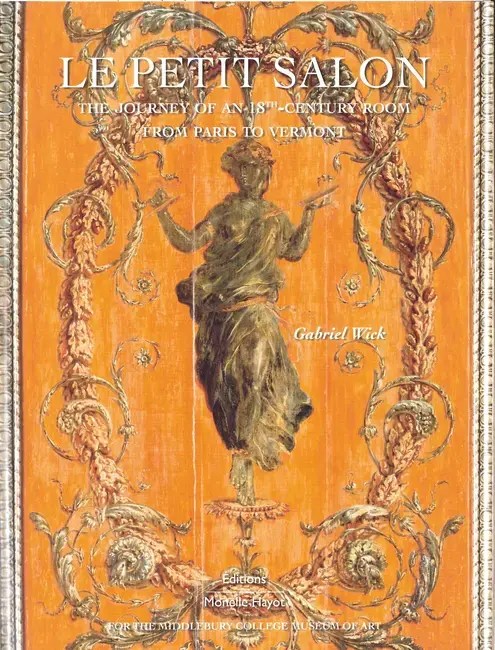 The Middlebury College Museum of Art possesses a jewel of French neoclassicism, Le Petit Salon, a delicately painted, paneled room made around 1776 for a Parisian mansion. It was designed by Pierre-Adrien Pâris ( 1745–1819), subsequently the architect of court fêtes for Louis XVI and Marie-Antoinette. His client was the duc d’Aumont, a renowned collector and patron of the arts, who had the panels installed in his Paris home, now the Hôtel de Crillon on Place de La Concorde. Gifted to Middlebury in 1959, but held in storage since the 1990s, the room will be reassembled for the first time in three decades.
The exhibition follows the journey of Le Petit Salon from Paris to Middlebury via Manhattan, where for fifty years it formed part of the decor of the Bliss family’s Gilded Age mansion. At Middlebury, the Petit Salon became part of Le Château, the college’s French language dorm, itself a fanciful recreation of a 16th-century Norman manoir. The exhibition incorporates Pâris’s 1776 exquisite watercolor elevations of Aumont’s mansion, as well as studies from his long educational sojourn in Rome and Naples. Included in the exhibition are loans from Bowdoin College, the Metropolitan Museum of Art, the Cooper-Hewitt National Design Museum, and the Fine Arts Museum of Besançon.
Gabriel Wick, Le Petit Salon: The Journey of an 18th-Century Room from Paris to Vermont (Saint-Remy-en-l’Eau: Monelle Hayot, 2025), 192 pages, €35.
Exhibition | Valkenburg — Willem de Rooij
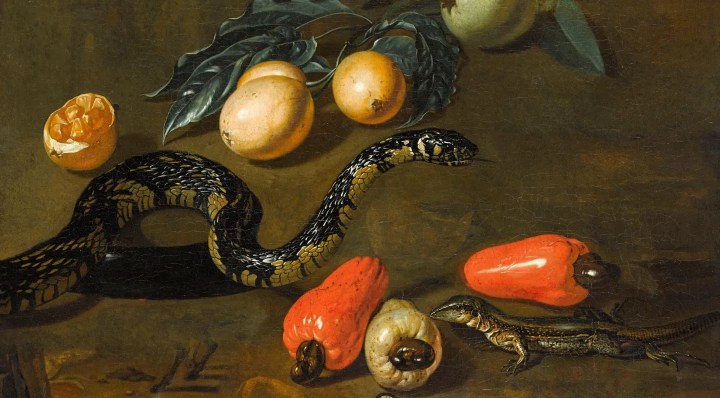
Dirk Valkenburg, Study of Cashews, Maracujas, a Tropical Chicken Snake, and an Ameiva Lizard from Suriname, detail, 1706–08, oil on canvas, 40 × 48 cm (Musée des Beaux-Arts de Quimper).
◊ ◊ ◊ ◊ ◊
Now on view at Utrecht’s Centraal Museum:
Valkenburg — Willem de Rooij
Centraal Museum Utrecht, 13 September 2025 — 25 January 2026
Dirk Valkenburg (1675–1721) was one of the first Europeans to depict Indigenous and enslaved people on Surinamese plantations, while also painting hunting still lifes and portraits of Dutch elites. The breadth of his oeuvre makes it particularly relevant for research into colonial image production and the ‘white gaze’. In this installation, Willem de Rooij displays 30 works in idiosyncratic combinations, inviting reflection on how these 18th-century Dutch elites used art to support and legitimise colonial ideology.
Since the early 1990s, Willem de Rooij (b. 1969) has created temporary installations in that explore the politics of representation through appropriation and collaboration. In 2005, he represented the Netherlands at the Venice Biennale and has since exhibited in leading museums worldwide. A distinctive feature of his practice is the reuse and rearrangement of existing images and objects, often based on in-depth art-historical and cultural research. In doing so, he creates new meanings between diverse visual elements. Recent exhibitions include King Vulture (Akademie der Künste, Vienna) and Pierre Verger in Suriname (Portikus, Frankfurt). De Rooij teaches in Frankfurt, Berlin, and Amsterdam and lectures internationally.
The exhibition will be accompanied by the first comprehensive publication on Dirk Valkenburg’s oeuvre: a catalogue raisonné developed in collaboration with the RKD–Netherlands Institute for Art History. This volume, edited by Willem de Rooij and Karwan Fatah-Black—historian and expert in Dutch colonial history, (Leiden University)—includes new essays by international scholars and thinkers from various disciplines, including art history, anthropology, postcolonial, and queer studies.
Conference | Lost Cities in a Global Perspective
From ArtHist.net:
Lost Cities in a Global Perspective:
Sources, Experience, and Imagery, 15th–18th Centuries
University of Campania ‘Luigi Vanvitelli’, Caserta, 16–17 October 2025
Organized by Giulia Ceriani Sebregondi, Francesca Mattei, and Danila Jacazzi
 In conjunction with the Research Project “The Vesuvian Lost Cities before the ‘Discovery’: Sources, Experience, and Imagery in Early Modern Period” (VeLoCi)
Many cities, all over the world, have disappeared over the centuries, abandoned—but perhaps never forgotten—destroyed by natural disasters or buried under new urban layers, re-emerging for different reasons. Fascinating historians, explorers, archaeologists, architects, and artists, the ‘lost cities’—both literally and metaphorically—have continued to exist in literary sources, descriptions, chronicles, and sometimes in iconographic representations. Starting from the case study of the Vesuvian cities, this international conference will investigate in an interdisciplinary and comparative way the material and imaginary dimensions assumed by the lost cities in a global perspective, before the birth of archaeology as a science in the 18th and 19th centuries.
The full program is available here»
t h u r s d a y , 1 6 o c t o b e r
10.00 Welcome
10.30 Session One | Textual Sources for the Reconstruction of Lost Cities
Chair: Giulia Ceriani Sebregondi (Università degli Studi della Campania ‘Luigi Vanvitelli’)
• Il territorio di Pompei in età moderna — Danila Jacazzi (Università degli Studi della Campania ‘Luigi Vanvitelli’)
• In Search of the Lost Palace: The First Attempts at an Ideal Reconstruction of Diocletian’s Palace in Split — Josip Belamarić (Institute of Art History in Split; Department of Art History, University of Split)
• Pirro Ligorio e le città vesuviane — Francesca Mattei (Università degli Studi Roma Tre)
11.30 Coffee Break
12.00 Session One, continued
• Views of Palmyra in the 17th and 18th Centuries — Gregorio Astengo (IE School of Architecture and Design, Madrid/Segovia)
• Il mito etrusco nelle narrazioni dell’origine delle città campane scomparse — Concetta Lenza (Università degli Studi della Campania ‘Luigi Vanvitelli’)
13.10 Light Lunch
14.10 Session Two | Lost Cities between Antiquarian Research and Material Exploration
Chair: Francesca Mattei (Università degli Studi Roma Tre)
• ‘Certi belli sassi et prede piccade antiquissime’: il Lapidarium quattrocentesco di Brescia — Alessandro Brodini (Università degli Studi di Firenze)
• When Were the Vesuvian Lost Cities Discovered? Traces and Evidence about Ancient Stabiae in the Early Modern Period — Giulia Ceriani Sebregondi (Università degli Studi della Campania ‘Luigi Vanvitelli’)
• La rocca Paolina di Perugia: una città sepolta che ha custodito la memoria della città medievale — Paolo Belardi (Università degli Studi di Perugia), Francesca Funis (Università degli Studi di Perugia)
15.10 Tea Break
15.40 Session Two, continued
• Beneath Resina: Traces of Herculaneum before the Excavations — Giorgia Pietropaolo (Università degli Studi della Campania ‘Luigi Vanvitelli’)
• Il luogo del convento francescano di San Gabriel a Cholula (Messico) — Daniel Fernando Macìas Parra (Università Iuav di Venezia)
• Da Corpus Civitatis a casale collinare: Distruzioni e rifondazioni della Città Nova dell’Annunziata di Massa Lubrense — Giuseppe Pignatelli Spinazzola (Università degli Studi della Campania ‘Luigi Vanvitelli’)
f r i d a y , 1 7 o c t o b e r
9.30 Session Three | Visual Culture and Cartography, Travel, and Exploration Reports
Chair: Alessandro Brodini (Università degli Studi di Firenze)
• The City of Soltaniyeh in Northern Iran — Lorenzo Vigotti (Alma Mater Studiorum, Università di Bologna)
• Percorrendo le città vesuviane di XV e XVI secolo tra narrazione e osservazione dell’antico — Giorgia Aureli (Università degli Studi Roma Tre)
• Phantom Cities of the Living Library: The Early Modern Imagining of Amazonian Urbanscapes — Juan Carlos Mantilla (King’s College London)
10.30 Coffee Break
11.00 Session Three, continued
• La presenza delle città sepolte nella produzione vedutistica cinque e seicentesca — Milena Viceconte (Universitat de Lleida)
• La morte o la sopravvivenza della città antica per eccellenza: Atene osservata da Cornelio Magni (1674), viaggiatore parmigiano nel mondo ottomano — Alper Metin (I Tatti, The Harvard University Center for Italian Renaissance Studies)
• La riscoperta delle città perdute in Abruzzo nel periodo del Grand Tour — Diletta Haberl (Università degli Studi dell’Aquila)
• La ‘riscoperta’ della città maya di Palenque: vedute e interpretazioni tra il XVIII e XIX secolo — Arianna Campiani (Sapienza Università di Roma)
12.50 Light Lunch
13.50 Session Four | Myth, Imaginary, and Cultural Memory
Chair: Milena Viceconte (Universitat de Lleida)
• Frammenti di Roma perduta: l’immagine della Domus Aurea nella prima età moderna — Federica Causarano (Università degli Studi Roma Tre)
• Hochelaga’s Transatlantic Afterlife, 1535–1678 (Canada) — Lorenzo Gatta (I Tatti, The Harvard University Center for Italian Renaissance Studies)
• Gladiators in Altera Roma: Tenochtitlan in the European Imagination (Mexico) — Delia Cosentino (DePaul University, Chicago)
14.50 Tea Break
15.20 Session Four, continued
• L’oro, le conchiglie, l’assenza: identità e memoria della Taranto ‘perduta’ negli appunti di viaggiatori europei ed eruditi tra Settecento e Ottocento — Stefania Castellana (Università del Salento)
• Costantinopoli ‘seconda Pompei’: il mito della città sepolta dai Patria Costantinopolitana alla letteratura odeporica di epoca moderna — Maria Carolina Campone (Scuola Militare ‘Nunziatella’ di Napoli)
• The Lost City of Oyo-Ile in Yoruba Cultural Memory and Identity — Adekunle Adeyemo (Redeemer’s University, Ede, Nigeria)
16.50 Closing Roundtable — Giulia Ceriani Sebregondi, Francesca Mattei, Danila Jacazzi
Call for Papers | Decentring Europe: Nordic–Iberian Histories
From ArtHist.net and the Call for Papers:
Decentring Europe: Nordic–Iberian Histories in Transregional Perspective
University of Gothenburg, 21–22 May 2026
Proposals due by 15 November 2025
We are writing to announce the Call for Papers for the fourth workshop of SWESP, the International Research Network on Iberian–Nordic Contacts throughout History. The workshop is free of charge, and we offer partial bursaries to cover travel costs for doctoral students and early-career researchers with limited access to funding.
This interdisciplinary conference will explore the multifaceted connections and entanglements between the Nordic and Iberian worlds. Moving beyond traditional centre-periphery and modernisation narratives, the event aims to foster dialogue on how exchanges across these regions have shaped diplomatic, economic, political, and cultural networks from the late medieval period to the contemporary era. We welcome approaches from comparative and transnational history, histoire croisée (entangled history), and other interdisciplinary frameworks that examine both the continental lands and the overseas territories of these regions.
We invite contributions from a wide range of disciplines, including history, literature, arts, philosophy, and the social sciences. Topics may include, but are not limited to:
• Cross-regional diplomatic, religious, and military networks
• Movements of people, goods, and ideas; political exile and migration
• Comparative studies of governance, reform, and military/maritime infrastructures
• Cultural exchange, translation, and artistic reception; knowledge production and scientific transfer
• Comparative gender, family, and welfare structures
• Environmental and climatic histories
• Transregional solidarities and intellectual entanglements
We encourage submissions that focus on specific historical periods or adopt cross-temporal perspectives. The workshop aims to illuminate the shared questions and conceptual paradigms that emerge from studying the Nordic and Iberian regions in relation to one another. Proposals should be sent as a Word or PDF document containing a title, a short abstract (maximum 250 words), and the author’s name and affiliation to the organisers at swespnet@gmail.com by 15 November 2025. The results of the selection process will be communicated by 15 December 2025. If you wish to request a bursary, please include a short motivation letter (maximum 250 words) explaining how attending the workshop may impact your career, with details of available funding.
Organising Committee
A. Jorge Aguilera-López (University of Helsinki), Enrique J. Corredera Nilsson (University of Bern), Lucila Mallart (Pompeu Fabra University, Barcelona), Kenneth Nyberg (University of Gothenburg), Ingmar Söhrman (University of Gothenburg)
Print Quarterly, September 2025
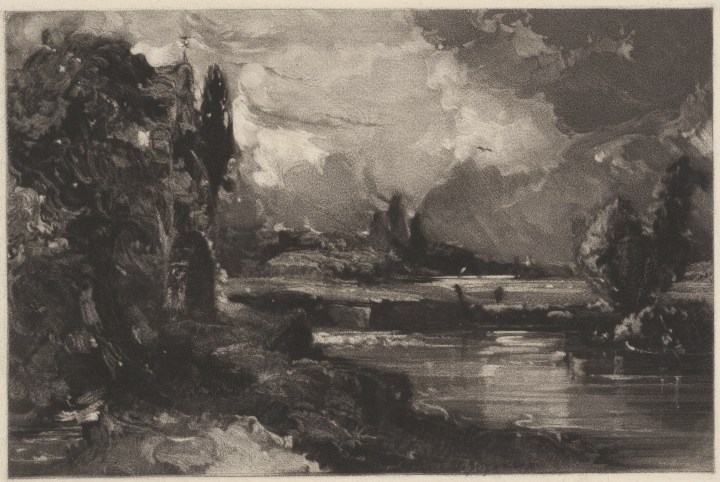
David Lucas, after John Constable, A Mill, 1829, mezzotint, 182 × 250 mm
(Cambridge, Fitzwilliam Museum, inv. P.145-1954)
◊ ◊ ◊ ◊ ◊
The long eighteenth century in the latest issue of Print Quarterly:
Print Quarterly 42.3 (September 2025)
a r t i c l e s
• Elenor Ling and Harry Metcalf, “John Constable’s Working Relationship with David Lucas on the English Landscape Series,” pp. 272–85. This article examines the collaborative partnership between John Constable (1776–1837) and his engraver David Lucas (1802–81) using the mezzotint print series English Landscape as a case study, based particularly on the technical examination of various impressions and plates.
• Niklas Leverenz, “Lithographs from Shanghai of the East Turkestan Engravings, 1890,” pp. 301–06. This short article examines the popularity of the East Turkestan engravings depicting the 1755–60 Qianlong Emperor’s conquest. Leverenz specifically discusses a set of 34 photolithographs printed in 1890 by the photographer Herman Salzwedel (active c. 1877–1904) in Shanghai.
n o t e s a n d r e v i e w s
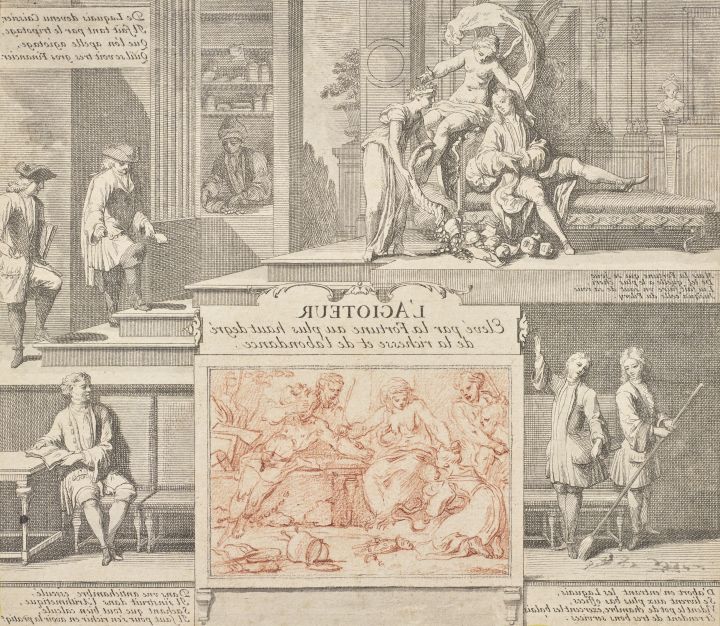
Claude Gillot, The Speculator Raised by Fortune to the Highest Degree of Wealth and Abundance, 1710–11, counterproof of engraving, with additions in red chalk, 255 × 220 mm (Paris, Private collection).
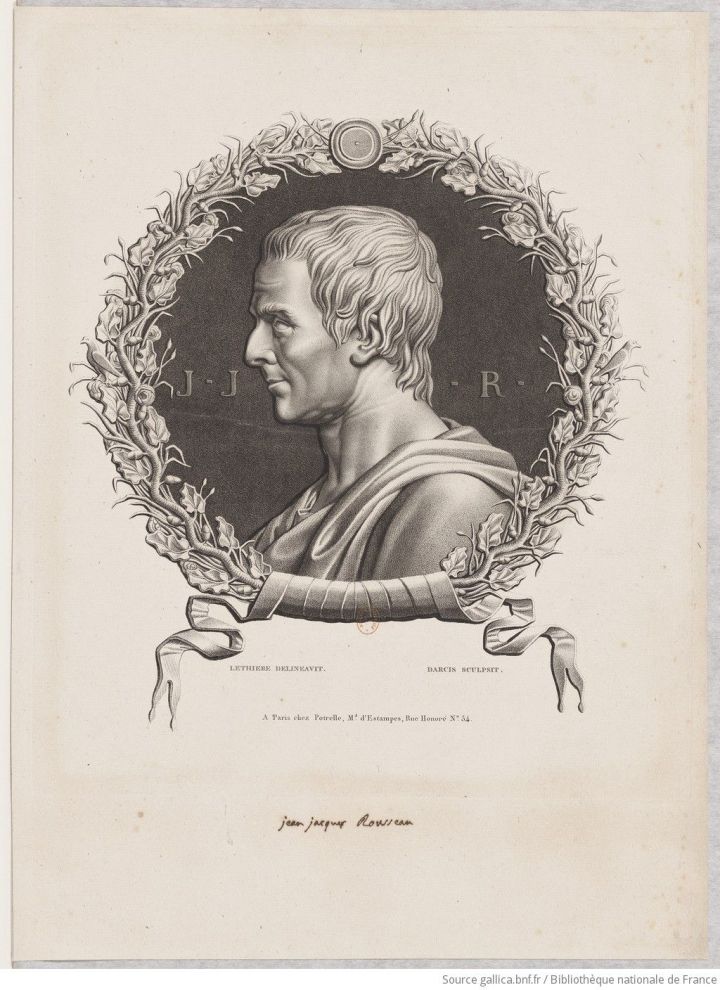
J.-Louis Darcis, after Guillaume Lethière, Portrait of Jean Jacques Rousseau, 1795, engraving, platemark 355 × 305 mm, page 440 × 320 mm (Paris, Bibliothèque Nationale de France).
• Dagmar Korbacher, Review of Andaleeb Badiee Banta, Alexa Griest and Theresa Kutasz Christiensen, eds., Making Her Mark: A History of Women Artists in Europe, 1400–1800 (Goose Lane Editions, 2023), pp. 307–10.
• Daniel Godfrey, Review of Gwendoline de Mûelenaere, Early Modern Thesis Prints in the Southern Netherlands: An Iconological Analysis of the Relationship between Art, Science, and Power (Université Catholique de Louvain, 2022), pp. 310–12.
• Meredith M. Hale, Review of Julie Farguson, Visualising Protestant Monarchy: Ceremony, Art and Politics after the Glorious Revolution, 1689–1714 (The Boydell Press, 2021), pp. 313–15.
• Rena M. Hoisington, Review of Jennifer Tonkovich, Claude Gillot: Satire in the Age of Reason (Paul Holberton, 2023), pp. 315–17.
• Michael Snodin, Review of Orsola Braides, Giovanni Maria Fara, and Alessia Giachery, eds., L’arte di tradurre l’arte: John Baptist Jackson incisore nella Venezia del Settecento (Leo S. Olschki, 2024), pp. 317–19.
• Benito Navarrete Prieto, Review of Ana Hernández Pugh and José Manuel Matilla, Del lapicero al buril. El dibujo para grabar en tiempos de Goya (Museo del Prado, 2023), pp. 320–24.
• Giorgio Marini, Review of Ilaria Miarelli Mariani, Tiziano Casola, Valentina Fraticelli, Vanda Lisanti, and Laura Palombaro, eds., La storia dell’arte illustrata e la stampa di traduzione tra il XVIII e il XIV secolo (Campisano Editore, 2022), pp. 324–28.
• Julie Mellby, Review of Roberta J. M. Olson, Audubon as Artist: A New Look at The Birds of America (Reaktion Books, 2024), pp. 328–29.
• Thea Goldring, Review of Esther Bell and Olivier Meslay, eds., Guillaume Lethière (Clark Art Institute, 2024), pp. 347–52.










 Enfilade
leave a comment