Symposium | Meissen Symposium: Höroldt’s Legacy
From the Meissen Porcelain Museum:
1st Meissen Symposium: Höroldt’s Legacy
Meissen Porzellan-Stiftung, Meißen, 7–9 November 2025
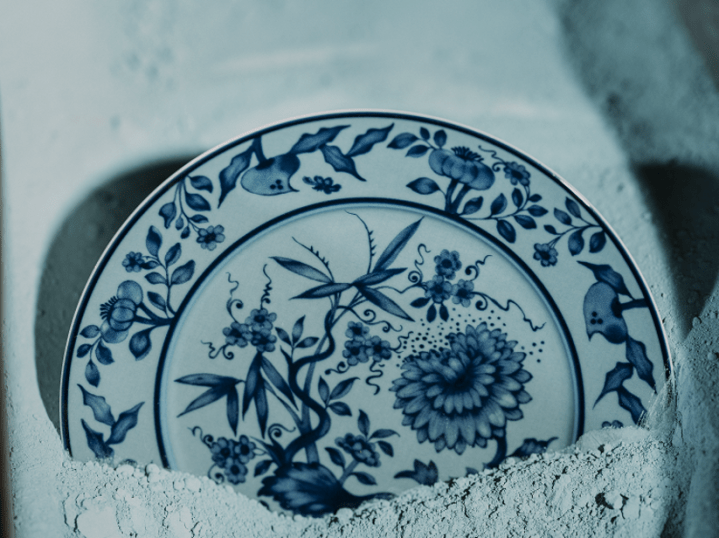 The Meissen Porcelain Foundation is hosting the Meissen Symposium, part of what is envisioned as a regular series of symposia aimed at facilitating exchanges on ceramic history at the birthplace of European porcelain. The subject of this year’s symposium is Höroldt’s Legacy, with an emphasis on ceramic pigments, their historical and contemporary development, and their use within the Meissen Manufactory and beyond. The occasion for this year’s symposium is the 250th anniversary of the deaths in 1775 of Meissen’s two towering figures, Johann Gregorius Höroldt (1696–1775) and Johann Joachim Kaendler (1706–1775).
Höroldt’s arrival in Meissen in 1720 signaled a breakthrough in porcelain painting. Höroldt was an innovative artist with a natural and intuitive understanding of pigment chemistry without any formal training. He developed the proper technology for the enameling of porcelain using metal-oxide-based pigments at high temperatures. Today, his initial set of 16 enamel colors has grown to around 10,000.
Augustus the Strong’s initial objective was the making of blue-and-white porcelain, similar to that of the Chinese. With Höroldt’s arrival the success story of overglaze polychrome painting began. Inspired initially by East Asian decors it was expanded to include European flower painting, the classic harbor scenes, hunting scenes, and scenes after Watteau, Ridinger and others. In the 19th century it was expanded to royal blue ground, to include platinum, pâte-sur-pâte, and Limoges painting. Experiments with tinted porcelain paste can be traced to the 18th century. Exploring the miscibility of colorants was intensely investigated as documented by the hundreds of surviving, meticulously documented and archived color samples in the Meissen Manufactory Museum. In-glaze painting, and the invention of soluble and high-temperature resistant colorants that could be used underglaze were significant additional technological developments. Advances in scientific analysis are expected to provide new insights.
f r i d a y , 7 n o v e m b e r
10.00 Morning Session
1 Frank Löchelt, Meissen — Color Laboratory / Farblabor der Manufaktur
2 Nicholas Zumbulyadis, USA — Influencing the Influencer: Thoughts about the Origins of Höroldt’s Technological Advances / Wer beeinflusste Höroldt: Gedanken zu den Ursprüngen von Höroldts technologischen Fortschritten
3 Ullrich Knüpfer — Insights into the Technological Basics of Polychrome Porcelain Decoration / Technologische Grundlagen der farbigen Porzellan-Dekoration
4 Annett Lorenz, Meissen — Porcelain Painter: Aspects of Figure Painting / Porzellanmaler: Aspekte der Figurenmalerei
5 Maureen Cassidy-Geiger, USA — Glazed Canvases: New Approaches to the Study of (Miniature) Painting on Meissen Porcelain / Neue Ansätze zur Erforschung der (Miniatur-)Malerei auf Meissener Porzellan
6 Holger Schill, Meissen — Head of Bundling and Finishing: A Practical Report on Customer Requests, Color Palettes, and New Decors / Leiter Bund- und Endfertigung: Ein Praxisbericht über Kundenwünsche, Farbpalletten und neue Dekore
1.30 Lunch
3.00 Afternoon Session
7 Sebastian Bank, SKD — Frankenthal Colors: From Meissen to the Palatinate / Die Entwicklung der Frankenthaler Farben aus kunsthistorischer Sicht
8 Uwe Marschner, Meissen — About Pate-sure-pate Painting / Leiter Modellherstellung und Formenarchiv: Zur Pate-sure-pate Malerei
9 Lena Hensel, Meissen — Meissen Today / Leiterin Produktentwicklung: Meissen heute
s a t u r d a y , 8 n o v e m b e r
9.30 Welcome
10.00 Morning Session
1 Susanne Bochmann, Meissen — Porzellan-Stiftung Color Samples and Patterns in the Collections of the Meissen Porcelain Foundation / Farbproben und Farbmuster in der Sammlung der Meissen Porzellan-Stiftung
2 Jens Petzold, KI-Institut Meißen — The Influence of Firing on Ceramic Colors / Einfluss der Brandführung auf keramische Farben
3 Lena Kaapke, Künstlerin — Inquiring the Red: A Visually and Sensually Organized, Tactile Archive of Various Red Ceramic Surfaces / Befragungen an das Rot: ein visuell und sinnlich geordnetes, haptisches Archiv verschiedener keramisch roter Oberflächen
4 Zhong Zhenhua, Deputy Dean of the School of International Exchange and Education and the Deputy Director of the Ceramic Culture Exchange and Research Center at Jingdezhen College — Johann Gregorius Höroldt and Jingdezhen Porcelain: The Historical and Aesthetic Connections between Höroldt’s Chinoiserie and Jingdezhen’s Ceramic Heritage / Johann Gregorius Höroldt und Jingdezhen-Porzellan: Die historischen und ästhetischen Verbindungen zwischen Höroldts Chinoiserie und dem keramischen Erbe von Jingdezhen
5 Vanessa Sigalas, Wadsworth Atheneum, USA — Where Are All the White Figures? Later Decorated Meissen Porcelain / Wo sind all die weißen Figuren? Später dekoriertes Meissener Porzellan
6 Valérie Montens, Curator of European Ceramics and Glass Collections, Royal Museums of Art and History, Brussels; and Sofia Cruz Oulhaj, student in conservation and restoration of ceramic and glass, ENSAV La Cambre, Brussels — From Restoration to Attribution: Scientific and Stylistic Reassessment of a Meissen Huntress Figurine / Von der Restaurierung zur Zuschreibung: Wissenschaftliche und stilistische Neubewertung einer Meissener Jägerinnenfigur
1.00 Lunch
2.30 Afternoon Session
7 Bernd Ullrich — Initial Analytical Material Investigations on Historical Products from the Meissen Porcelain Manufactory Using X-ray Fluorescence, Scanning Electron Microscopy, and Electron Beam Microprobe Technology in the 1980s at the TU Bergakademie Freiberg / Erste analytische Werkstoffuntersuchungen an historischen Erzeugnissen der Porzellanmanufaktur Meissen mittels Röntgenfloureszenz, Rasterelektronenmikroskopie und Elektronenstrahlmikrosondentechnik in den 1980er Jahren an der TU Bergakademie Freiberg
8 Philippe Colomban, Sorbonne University — How to Extract the Maximum Information on Enamels in a Non-invasive Way with Mobile Instrumentation (Raman + pXRF), Explaining which Results Can Be Reliable and What the Difficulties Are, with the Example of This France/Italy/Germany/China Comparison / Wie man mit mobilen Messgeräten (Raman + pXRF) auf nicht-invasive Weise möglichst viele Informationen über Glasur gewinnt, wobei anhand des Vergleichs zwischen Frankreich, Italien, Deutschland und China erläutert wird, welche Ergebnisse zuverlässig sind und wo die Schwierigkeiten liegen
9 Christian Lechelt, Fürstenberg — For Some Years Now, the Museum Schloss Fürstenberg and the Freundeskreis Fürstenberger Porzellan e. V. Have Collaborated with Cranfield University and Leiden University on a Project Aimed at Gaining New Insights into 18th-Century Fürstenberg Porcelain Production Using X-ray Fluorescence Analysis / Seit einigen Jahren verfolgen das Museum Schloss Fürstenberg und der Freundeskreis Fürstenberger Porzellan e. V. zusammen mit den Universitäten in Cranfield (UK) und Leiden (NL) ein Projekt, um mittels Roentgenfluoreszenzanalyse zu neuen Erkenntnissen über die Fürstenberger Porzellanproduktion des 18. Jahrhunderts zu gelangen
4.15 Panel Discussion / Podiumsdiskussion










 Enfilade
leave a comment