New Book | Napoleonic Objects and Their Afterlives
From Bloomsbury:
Matilda Greig and Nicole Cochrane, eds., Napoleonic Objects and Their Afterlives: Art, Culture, and Heritage, 1821–Present (London: Bloomsbury Visual Arts, 2025), 232 pages, ISBN: 978-1350415072, $80.
 Two centuries after Napoleon Bonaparte’s death, this edited volume brings together a diverse group of historians, art historians, and museum professionals to critically examine the enduring power of visual and material culture in the making of Napoleonic memory. While most discussions surrounding the legendary figure explore his impact on legislative, political, or military reform, this innovative volume explores the global dimensions of the trade in Napoleonic collectibles, art, and relics over time.
Representing new avenues of research and scholarship, Napoleonic Objects and Their Afterlives investigates the material objects and cultural forms that Napoleon inspired through a range of themes. These include art collecting, the circulation and display of objects, political and imperial symbolism, and the flexibility and ambiguity of Napoleon’s enduring legacy. The essays examine how and why, despite his contentious role in contemporary memory, Napoleon continues to escape much historical and popular censure. They explore the ways people have connected with the idea of him: on stage and screen; in museums and galleries; and most intimately of all, by gathering items said to have belonged to him, right down to his toothbrush and locks of his hair.
Napoleonic items can be official or personal, serious or comical, luxury or disposable, yet little work has been done to bring together these diverse cultural histories into conversation with one another. With its broad, multi-disciplinary approach, including perspectives from art history, film studies, cultural history, and museum curation, the book provides a deep critical insight into the cult of personality surrounding Napoleon and its effect on our understanding of celebrity culture today and in the future.
Matilda Greig is a Historian at the National Army Museum in London, specialising in the cultural history of warfare in the 19th century. She is the author of Dead Men Telling Tales (2021).
Nicole Cochrane is Assistant Curator in Historic British Art (1790–1850) at Tate Britain.
c o n t e n t s
List of Plates
List of Figures
Notes on Contributors
Acknowledgements
Foreword — Ruth Scurr (University of Cambridge)
Introduction — Matilda Greig (National Army Museum) and Nicole Cochrane (Tate Britain)
Part One | Collections
1 The Mysteries of Napoleon’s Toothbrush — Harriet Wheelock (Royal College of Physicians of Ireland)
2 Making Napoleonic Memory in Australia: The Dame Mabel Brookes Collection — Emma Gleadhill (Independent scholar) and Ekaterina Heath (Independent scholar)
Part Two | Relics
3 ‘The management wisely refrains from guaranteeing the absolute authenticity of all the exhibits’: Napoleon, Wellington, and the 1890 London Waterloo Panorama — Luke Reynolds (University of Connecticut)
4 Dominique-Vivant Denon’s Reliquary and the Cult of Napoleonic Relics — David O’Brien (University of Illinois)
Part Three | Images
5 The Emperor’s No Clothes: Canova, Citation, and Commemoration in Napoleon as Mars Peacemaker — Melissa L. Gustin (National Museums Liverpool)
6 Icon? Napoleon in Art since 1900 — Nicole Cochrane (Tate Britain)
Part Four | Embodiment
7 I, Napoleon: Blurred Boundaries in Napoleonic Performance — Laura O’Brien (Northumbria University)
8 The Emperor’s New Clothes: Napoleon’s Enduring Impact on Contemporary Media as an Iconic Historical Brand — Aidan Moir (University of Windsor)
Afterword: A One-Trick Pony? Napoleon’s Horse at the National Army Museum — Matilda Greig
New Book | Protestant Relics in Early America
From Oxford UP (use code AAFLYG6 for a 30% discount) . . .
Jamie Brummitt, Protestant Relics in Early America (New York: Oxford University Press, 2025), 560 pages, ISBN: 978-0197669709, $149.
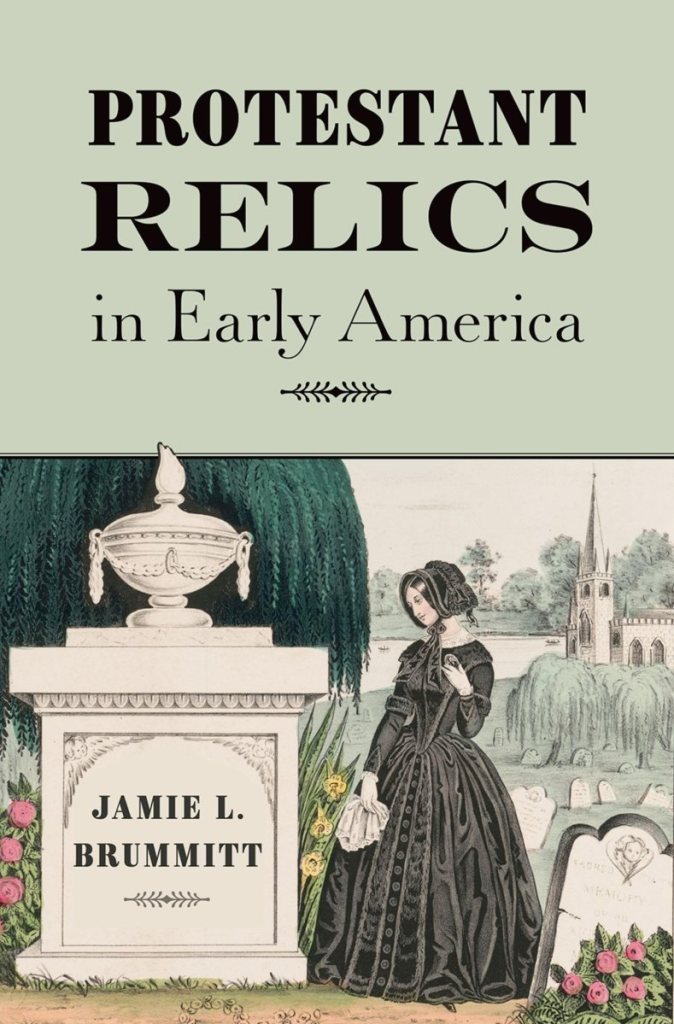 In Protestant Relics in Early America, Jamie L. Brummitt upends long-held assumptions about religion and material culture in the early United States. Brummitt chronicles how American Protestants cultivated a lively relic culture centered around collecting supernatural memory objects associated with dead Christian leaders, family members, and friends. These objects materialized the real physical presences of God, Jesus, the Holy Spirit, and souls of the dead on earth.
As Brummitt demonstrates, people of nearly all Protestant denominations and walks of life—including members of Congress, college presidents, ministers, mothers, free Black activists, schoolchildren, and enslaved people—sought embodied and supernatural sense experiences with relics. They collected relics from deathbeds, stole relics from tombs, made relics in schools, visited relics at pilgrimage sites like George Washington’s Mount Vernon, purchased relics in the marketplace, and carried relics into the American Revolution and the Civil War. Locks of hair, blood, bones, portraits, daguerreotypes, post-mortem photographs, memoirs, deathbed letters, Bibles, clothes, embroidered and painted mourning pieces, and a plethora of other objects that had been touched, used, or owned by the dead became Protestant relics. These relic practices were so pervasive that they shaped systems of earthly and heavenly power, from young women’s education to national elections to Protestant-Catholic relations to the structure of freedom and families in the afterlife.
In recovering the forgotten history and presence of Protestant relics in early America, Brummitt demonstrates how material practices of religion defined early American politics and how the Enlightenment enhanced rather than diminished embodied presence. Moreover, Brummitt reveals how the secular historical method has obscured the supernatural significance of relics for the Protestants who made, collected, exchanged, treasured, and passed them down. This book will be an essential resource for scholars and students of early American history, religion, politics, art, and popular culture.
Jamie L. Brummitt is an Associate Professor of American religions and material culture at the University of North Carolina Wilmington. Brummitt earned her PhD from Duke University. In 2017, Brummitt was the recipient of the Anthony N. B. and Beatrice W. B. Garvan Research Fellowship in American Material Culture at The Library Company of Philadelphia. She is also a past fellow of the George Washington Presidential Library at Mount Vernon; Winterthur Museum, Garden and Library; the Filson Historical Society; and the New England Regional Fellowship Consortium.
c o n t e n t s
Introduction: The History and Presence of Protestant Relics
1 From ‘Memorials and Signs’ to ‘Art That Can Immortalize’: The Evangelical Enlightenment’s Influence on Real Presence in Protestant Relic Culture
2 The ‘Precious Relict[s]’ of George Whitefield: Collecting the Supernatural Memory Objects of a Dead Minister and the Spread of Masculine Mourning in Late Eighteenth-Century Evangelicalism
3 The ‘Invaluable Relique[s]’ of George Washington: Sensing the Heavenly Presence of America’s Savior and the Politics of Protestant Relics in the Early Republic
4 ‘The Reign of Embroidered Mourning Pieces: The Rise and Decline of Handmade Relics in Young Protestant Women’s Education and the ‘Feminization’ of Mourning
5 ‘A Sacred Relic Kept’: The Evangelical ‘Good Death’ Experience and Protestant Relics in the Marketplace
6 ‘Protestant Evidence on the Subject of Relics: Catholic Encounters with Protestant Relic Practices and the Christian Roots of American Civil Religion
7 ‘I Was Not a Slave with These Pictured Memorials’: Supernatural Deathbed Experiences as Justifications for Slavery and the Work of Protestant Relics in Black Liberation
8 The Deaths and Afterlives of Protestant Relics: Or, Why Enlightened People Forgot the History and Presence of Protestant Relics
Notes
Bibliography
◊ ◊ ◊ ◊ ◊
Online Talk | Protestant Relics in Early America with Jamie Brummitt
The Library Company of Philadelphia, Thursday, 20 November 2025, 7pm (ET)
Virtual Event | Free
Registration is available here»
Exhibition | Thomas Patch and the British Grand Tour
Opening this week at the Lewis Walpole Library:
Caricatures, Campagna, and Connoisseurs:
Thomas Patch and the British Grand Tour in Eighteenth-Century Italy
Lewis Walpole Library, Farmington, CT, 10 September — 15 December 2025
Curated by Hugh Belsey
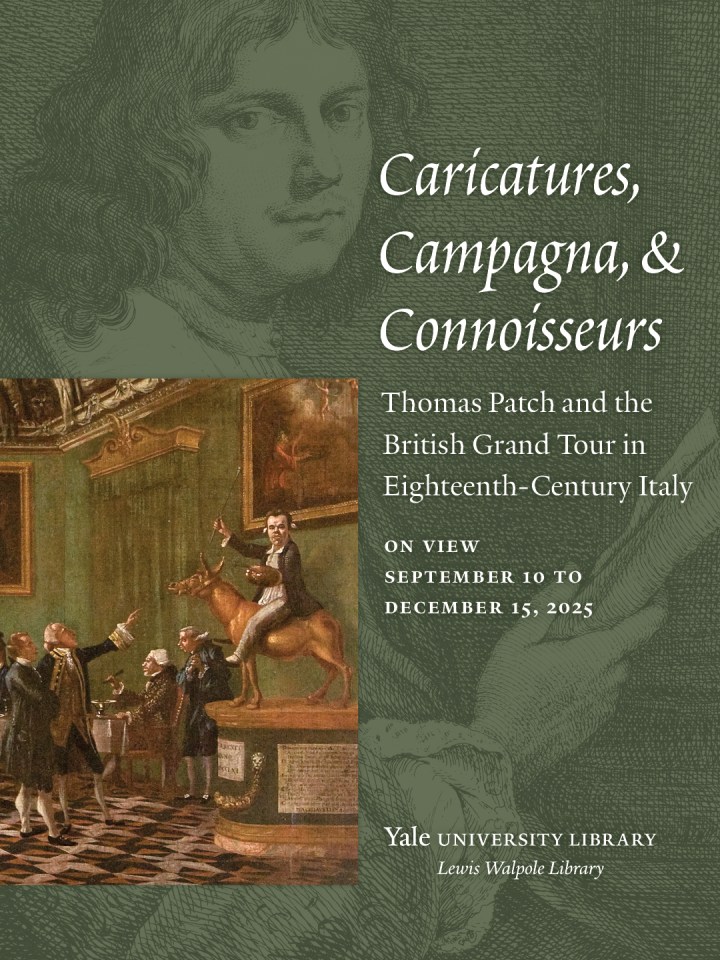 Known primarily as a caricature artist, Thomas Patch (1725–1782) in fact engaged in a much wider array of activities. He was a landscape painter, experimental printmaker, and a dealer of antiquities and old master paintings. He was also among the first scholars of early Renaissance art. This exhibition will explore the many aspects of Patch’s art, life, and associations with the British community of diplomats, tourists, artists, and collectors in Italy.
Hugh Belsey, a graduate of the Universities of Manchester and Birmingham, has lectured to groups in Europe, America, Australia, and Britain. For twenty-three years he was the curator of Gainsborough’s House in Sudbury (UK) where he formed one of the largest collections of the artist’s paintings and drawings. In 2004 he was awarded an MBE in recognition of his museum work. His long-awaited catalogue of portraits by Thomas Gainsborough was published by Yale University Press in February 2019, and was awarded the William W.B. Berger Prize for British Art History in 2020.
The exhibition brochure is available at the Library’s website»
Exhibition Lecture | Caricatures, Campagna, and Connoisseurs
Presented by Hugh Belsey, guest curator and independent scholar
Thursday, October 16, 7pm
Space is limited and advance registration is required.
Conference | Bertoli (1677–1743)
From ArtHist.net:
Bertoli (1677–1743): Zeichnerische Eleganz in den Diensten des Kaiserhofes
Italian Embassy, Vienna, 25 September 2025
Organized by Rudi Risatti
Registration due by 19 September 2025
 Ab 1707 ‘Dissegnatore di camera’ (Kammerzeichner) seiner Majestät Kaiser Karls VI., jahrzehntelang Kostümbildner des Hoftheaters, früh Zeichenlehrer der jungen Erzherzogin Maria Theresia und ab 1731 sogar Galerie- und Kunstkammerinspektor des Hofes … Antonio Daniele Bertoli, geboren in San Daniele del Friuli und in Venedig künstlerisch ausgebildet, war ein Mann mit weitreichenden Ansichten. Ein Gemälde von Martin van Meytens zeigt ihn während eines Aufenthalts in Rom in Begleitung seines Windhundes Pattatocco, der damals vielleicht ebenso berühmt war wie sein Herrchen. Ziel dieser internationalen Konferenz ist es, die Persönlichkeit Bertolis in ihren verschiedenen Facetten wiederzuentdecken. Dabei soll der Schwerpunkt auf seinem grafischen Werk liegen, das über Sammlungen in aller Welt verstreut ist und zu lange unbeachtet blieb. Ein Großteil seiner exquisiten Zeichnungen, etwa rund 280 Kostümfigurinen von beispielloser Eleganz, werden im Theatermuseum in Wien verwahrt und stehen im Mittelpunkt der Tagung. Die Konferenz ist öffentlich, Anmeldung bis zum 19.9.2025 an vienna.eventi@esteri.it.
Kuratiert von Rudi Risatti, Theatermuseum Wien. Eine Kooperation zwischen dem Theatermuseum und der italienischen Botschaft in Wien.
p r o g r a m m
9.15 Eröffnung der Tagung — S.E. Giovanni Pugliese (Ambasciatore d’Italia in Austria) und Franz Pichorner (Direktor des Theatermuseums)
9.30. Einführung
Rudi Risatti (Wien, Theatermuseum) — Die Eleganz zeichnen: Bertolis Kostümentwürfe im Theatermuseum
9.50 Artist Statement
Monika von Zallinger (Wien) — Bertolis Kostümkunst: Apotheose des Floralen
10.00 Enrico Lucchese (Trieste/Napoli) — I disegni di Daniele Antonio Bertoli a Dresda
10.30 Kaffeepause
11.00 Andrea Sommer-Mathis (Wien) — Bertoli und der kaiserliche Kostümfundus
11.30 Jean-Philippe Huys — Bertoli, disegnatore cortigiano: Grafica e fortuna critica
12.30 Caterina Pagnini (Firenze) — La danza teatrale sulle scene del Settecento
1.00 Pause
14.00 Çiğdem Özel (Wien) — Bertoli als kaiserlicher Gallerie- und Kunst-Cammer Inspector, 1731–1743
14.30 Nadja Pohn (Theatermuseum), Martina Griesser, Nikoletta Sárfi, Katharina Uhlir (Kunsthistorisches Museum, Naturwissenschaftliches Labor) — Bertoli’s Drawing Art: Scientific Investigations with a Focus on Photographic and Other Non-Destructive Techniques
15.00 Paolo Pastres (Udine) — Le Antichità di Aquileja: Un’allegoria di Carlo VI protettore delle arti
15.30 Kaffeepause
16.00 Alexander McCargar (Vienna/Boston) — From Scottish Kings to Chinese Emperors: On Bertoli’s Exoticism
16.30 Juergen Hagler, Nils Gallist, Kurt Korbatits (FH Oberösterreich) — Bertoli Goes Digital: New Horizons
New Book | Lady Charlotte Schreiber, Extraordinary Art Collector
Coming soon from Lund Humphries (with a related online talk scheduled for October 21) . . .
Caroline McCaffrey-Howarth, Lady Charlotte Schreiber, Extraordinary Art Collector (London: Lund Humphries Publishers, 2025), 192 pages, ISBN: 978-1848226814, £40.
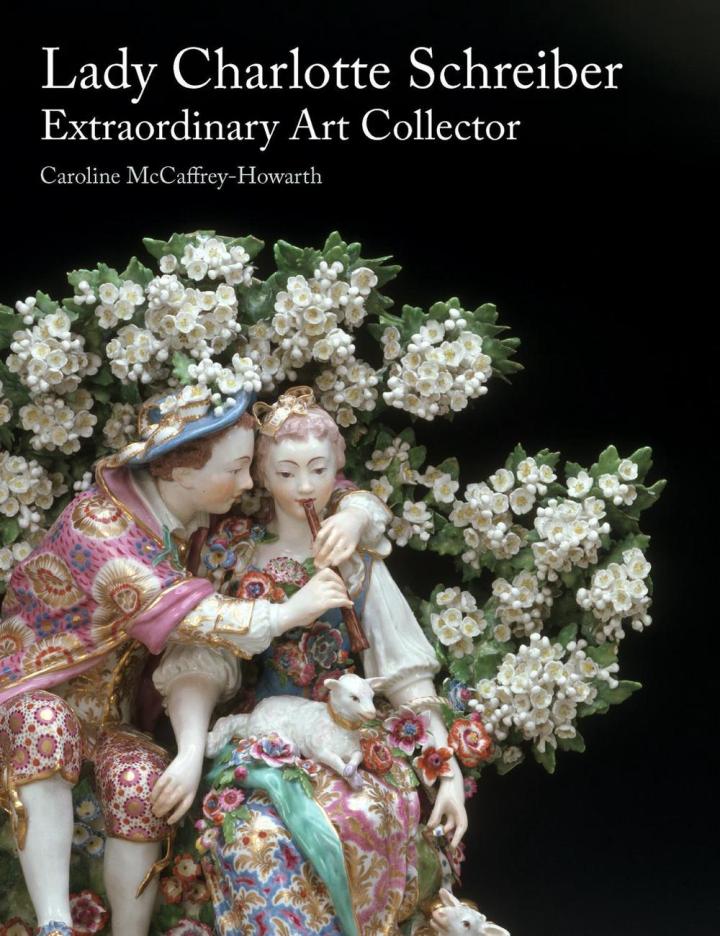 This book emphasises Lady Charlotte Schreiber (1812–1895)—also known as Lady Charlotte Guest, née Bertie—as one of the most significant women in the history of collecting. An extraordinary collector, historian, and philanthropist, Charlotte subverted gendered norms and challenged Victorian conventions. This new study establishes Charlotte’s contribution to ceramic history and cultural education, and demonstrates her influential role in transnational artistic networks. Charting Charlotte’s eventful life, McCaffrey-Howarth focuses on her identity as a renowned connoisseur, whose donation of thousands of objects to the Victoria & Albert Museum and the British Museum marked a pioneering move for a female benefactor. Lady Charlotte Schreiber, Extraordinary Art Collector presents unique insight into the social and cultural world of Victorian England and the role of women within this.
Caroline McCaffrey-Howarth is Lecturer in History of Art at the University of Edinburgh. She was previously Curator of Ceramics and Glass at the Victoria and Albert Museum and Curator of The Chitra Collection.
c o n t e n t s
Acknowledgements
List of Illustrations
Introduction: China-Hunting with Charlotte
1 ‘A Man’s Education’
2 A Welsh Heiress
3 Becoming a Collector
4 ‘Our Ceramic Chasse’
5 English Ceramic Art
6 Collecting World History
7 ‘My Adieux to the Collection’
Conclusion: ‘Old Life Reminiscences’
Bibliography
◊ ◊ ◊ ◊ ◊
Online Talk | Caroline McCaffrey-Howarth on Lady Charlotte Schreiber
Tuesday, 21 October 2025, 14.00–15.30 GMT-4
Part of the series Victorians in the Bookshops, organized by The Victorian Society
Registration is available here»
Conference | Women’s Enterprise in the French Art Economy
From ArtHist.net:
The Business of Art, au féminin:
Women’s Enterprise in the French Art Economy, Late 1600s to 1945
Institut National d’Histoire de l’Art (INHA), Paris, 26–27 September 2025
Bringing together the history of art, the history of women, and economic history, this colloquium investigates women’s role in the financing of artistic production and development in France (painting, sculpture, architecture, decorative arts, engraving, photography, etc.). Embracing an extended time frame, we intend to interrogate both continuities and transformations in their roles across a significant period, starting from the policies and practices of artistic patronage initiated by Louis XIV up to the particular circumstances of the Occupation. Across this longue durée, women are approached as agents making and moving the money required for artistic invention and production (their own as well as others’) and as integral actors in the operation of art markets, within the bounds imposed by their marital and legal status.
The colloquium focuses particularly on strategies of adapting, circumventing, and assertion deployed by French women or women working in France to negotiate masculine circuits of capital(ists)—strategies that may have gone beyond a mere male/female coexistence to include collaboration, emulation, competition, and conflict. Determined by their access to education, knowledge, and economic information, this positioning emerges clearly in discussions about the financial and legal subordination of women, whether single, married, or widowed. We study their ability to assemble capital, invest in their own names or via proxies, operate shops, form enterprises, and organize companies. We will also interrogate the limits of their range of action and empowerment, and inquire into the possible existence of economic practices specific to women in the arts.
f r i d a y , 2 6 s e p t e m b e r
9.45 Welcome
10.00 Introduction
10.15 Session 1 | Patrons and Philanthropists of the Arts
Moderator: Élodie Vaudry (maîtresse de conférences, Sorbonne Université)
• Aux origines du Comité des Dames de l’UCAD : des femmes actrices de l’économie des arts décoratifs — Coline Dupuis (PhD candidate, UVSQ-Paris Saclay)
• L’art comme instrument d’ascension socio-économique. Le cas Nélie Jacquemart (1841–1912) — Claire Dupin de Beyssat (post-doctoral researcher, École des chartes et Centre national des arts plastiques)
• Et si la « duchesse de Guermantes » (Proust) était réellement engagée dans l’économie des arts ? La comtesse Greffuhle (1860–1952), mécène, collectionneuse et médiatrice des arts — Emma Bayle (Ma2 student, Université de Poitiers)
• Mécène et créatrice : la Baronne d’Oettingen et les avant-gardes —Gwendoline Corthier‑Hardoin (deputy curator, Musée d’art moderne de Céret and associate researcher, Framespa, Université Toulouse Jean Jaurès)
12.30 Lunch break
2.30 Session 2 | Art Dealers and
Moderator: Julia Drost (director of research, Centre allemand d’Histoire de l’Art, DFK Paris)
• Marchandes d’art : place et rôle des femmes dans le commerce des œuvres d’art à Paris dans l’entre-deux-guerres — Olivia Delporte, (PhD candidate, Université de Tours)
• « Femmes d’affaires !! / Ton domaine est la création d’art et non le commerce ». Marie Cuttoli : collectionneuse, marchande et éditrice (1922–1935) — Laura Pirkelbauer (PhD candidate, EPHE, Saprat)
• Innovation Irregardless: the entrepreneurship strategies of women artists in 1930s Paris — Charlotte Greenaway (Ma2, IntM, Glasgow University)
• Femmes pionnières du marché de l’art extra-européen durant première moitié du XXe siècle — Nathalie Bertrand (associate professor) and Coralie Panizza (Ma2 student, TELEMMe CNRS, Aix Marseille Université)
• Berthe Weill : s’imposer par la modernité, parcours d’une marchande d’art, éditrice et mécène — Marianne Le Morvan (founder and director of the Berthe Weill Archives, independent scholar, and curator of the exhibition Berthe Weill: Galeriste d’avant-garde at the Musée de l’Orangerie)
s a t u r d a y , 2 7 s e p t e m b e r
9.30 Welcome
9.45 Session 3 | Self-Financing and Creation
Moderator: Justine Lécuyer (Sorbonne Université)
• The Business of Teaching Female Artists in Paris (1848–1870) — Alison McQueen (professor, McMaster University)
• The Woman Artist as a Collector: The Avuncular Economies of Claudine Bouzonnet Stella (1636–1697) — Yasemin Altun (PhD candidate, Duke University)
• Femmes copistes à Versailles : stratégies économiques et institutionnelles sous la Monarchie de Juillet — Agathe Arrighi (PhD candidate, Sorbonne Université)
• Les métiers de la haute couture – les « arts alimentaires » des intellectuelles russes en exil à Paris (1920–1930) — Diana Plachendovskaya (PhD candidate, EHESS)
11.30 Coffee break
11.45 Session 4 | The Economic Life of the Workshop
Moderator: Elsa Jamet (researcher, CNRS, Centre André-Chastel)
• Julie Lavergne (1823–1886) : Une femme au cœur de l’économie d’un atelier de vitrail au XIXe siècle — Auriane Gotrand (Sorbonne Université)
• Au-delà de la muse : Gala Diakonova, Simone Kahn et les engagements économiques des femmes dans les premières années du mouvement surréaliste — Domiziana Serrano (Université Jean Monnet Saint-Étienne, France)
12.45 Lunch break
2.30 Session 5 | Promoting and Financing the Performing Arts
Moderator: Nastasia Gallian (associate professor, Sorbonne Université)
• Mademoiselle Castagnery et l’édition gravée de la danse à Paris (1760–1789) — Pauline Chevalier (professor, Université de Tours) and Johanna Daniel
• « C’est une très mauvaise tête, mais l’on ne peut s’en passer ». Antoinette de Saint Huberty et la place des femmes dans l’économie des arts au sein de l’Académie royale de musique à fin du XVIIIe siècle — Caroline Giron-Panel (archivist, Université de Grenoble, Università Ca’Foscari, École nationale des chartes)
3.30 Conclusion
Exhibition | Women Artists from Antwerp to Amsterdam, 1600–1750
Opening this month at the NMWA:
Women Artists from Antwerp to Amsterdam, 1600–1750
National Museum of Women in the Arts, Washington, DC, 26 September 2025 — 11 January 2026
Museum voor Schone Kunsten, Ghent, 7 March — 31 May 2026
Curated by Virginia Treanor and Frederica Van Dam

Maria Schalcken, Self-Portrait in Her Studio, ca. 1680, oil on panel, 17 × 13 inches (Museum of Fine Arts, Boston, 2019.2094).
Women Artists from Antwerp to Amsterdam, 1600–1750 showcases a broad range of work by more than forty Dutch and Flemish women artists, including Gesina ter Borch, Maria Faydherbe, Anna Maria de Koker, Judith Leyster, Magdalena van de Passe, Clara Peeters, Rachel Ruysch, Maria Tassaert, Jeanne Vergouwen, Michaelina Wautier, and more. Presenting an array of paintings, lace, prints, paper cuttings, embroidery, and sculpture, this exhibition draws on recent scholarship to demonstrate that a full view of women’s contributions to the artistic economy is essential to understanding Dutch and Flemish visual culture of the period.
Women were involved in virtually every aspect of artistic production in the Low Countries during the seventeenth and early eighteenth centuries. During this period, colonial exploitation and the international slave trade enriched Europe’s upper and middle classes, fueling demand for art and other luxuries. From celebrated painters who excelled in a male-dominated field to unsung women who toiled making some of the most expensive lace of the day, to wealthy patrons who shaped collecting practices, women created the very fabric of the visual culture of the era. Within a thematic presentation that considers the intertwined influences of status, family, and social expectations on a woman’s training and career choices, this exhibition demonstrates the many ways in which women of all classes contributed to the booming artistic economy of the day. Whether their work was circulated within aristocratic social circles, sold on the open market, or commissioned by patrons, women shaped and molded the world around them from Antwerp to Amsterdam.
Women Artists from Antwerp to Amsterdam, 1600–1750 is organized in partnership with the Museum of Fine Arts in Ghent, Belgium.
The press release is available here»
Virginia Treanor and Frederica Van Dam, eds., Women Artists from Antwerp to Amsterdam, 1600–1750 (Veurne: Hannibal Books, 2025), 304 pages, ISBN: 978-9493416277, $60. With contributions by Klara Alen, Frima Fox Hofrichter, Elena Kanagy-Loux, Judith Noorman, Catherine Powell-Warren, Inez De Prekel, Marleen Puyenbroek, Oana Stan and Katie Altizer Takata. Available in English and Dutch editions.
Frederica Van Dam is the Curator of Old Masters at MSK Ghent. Specializing in early modern Flemish painting, Dr. Van Dam co-curated Van Eyck: An Optical Revolution and led the first monographic show on Theodoor Rombouts (1597–1637). Virginia Treanor is the Senior Curator at the National Museum of Women in the Arts in Washington, D.C. She earned her PhD in 17th-century Dutch and Flemish art from the University of Maryland. Since joining NMWA in 2012, Dr. Treanor has curated numerous exhibitions, including multiple installments of the Women to Watch series.
New Book | The Pineapple from Domestication to Commodification
From Liverpool UP:
Victoria Avery and Melissa Calaresu, eds., The Pineapple from Domestication to Commodification: Re-presenting a Global Fruit (Liverpool University Press, 2025), 272 pages, ISBN: 978-1836245933, $115. Proceedings of the British Academy.
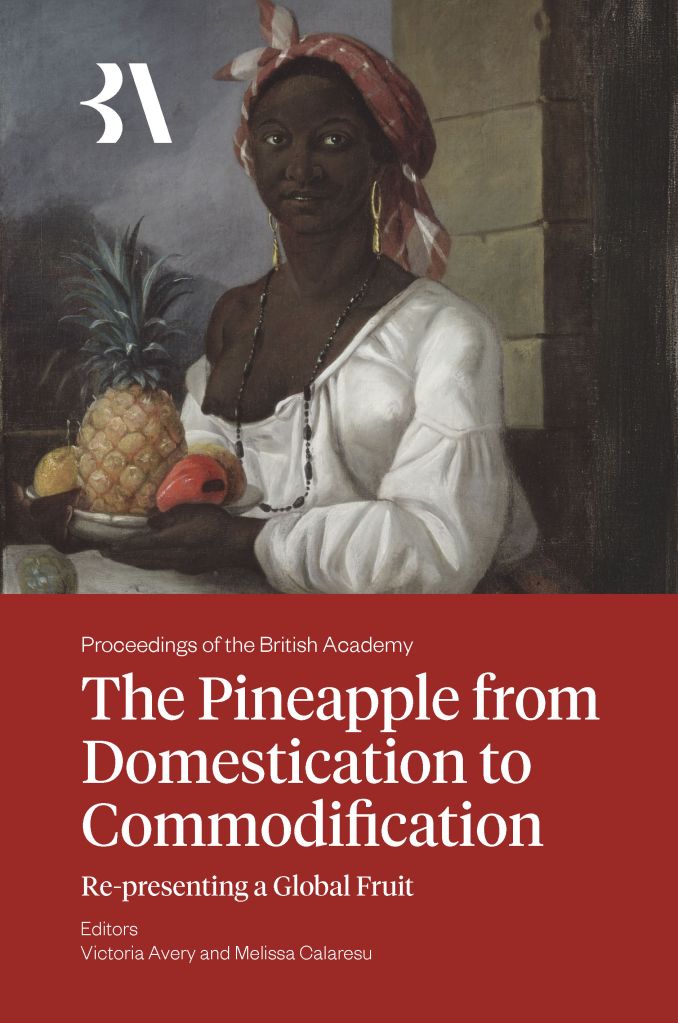 The pineapple’s ‘discovery’ by European colonisers in the late fifteenth century and its remarkable global trajectory—from an early modern object of rarity, desire, and horticultural innovation to a cheap, canned consumable and fair-trade logo today—is a story of modern globalisation. The Pineapple from Domestication to Commodification is a wide-ranging, interdisciplinary volume intended to provoke timely debate and generate radical rethinking of an overly familiar fruit with associations from luxury to kitsch. It deliberately problematizes the pineapple by investigating understudied tensions between its representational power and the historical and political contexts of its worldwide production and consumption. This connects the global and local at the heart of contemporary debates about the nature and origins of our food. It will have cross-disciplinary appeal for scholars of politics, economics, history, plant sciences, food, and material culture as well as for broader audiences interested in food, gardening, the environment, and visual arts.
Victoria Avery has been Keeper of European Sculpture & Decorative Arts at the Fitzwilliam Museum, University of Cambridge, since 2010 prior to which she was Associate Professor in the Department of Art History at the University of Warwick. Vicky’s primary field of expertise is European sculpture from 1400 to the present day, but she has broad knowledge of the materiality, making, usage, collecting, and display of early modern European decorative arts. She has curated numerous research-led interdisciplinary exhibitions including Feast & Fast: The Art of Food in Europe, 1450–1800, from which this book emerges.
Melissa Calaresu is the Neil McKendrick Lecturer in History at Gonville and Caius College, University of Cambridge, and co-curator, with Victoria Avery, of the Fitzwilliam Museum exhibition and accompanying catalogue, Feast & Fast: The Art of Food in Europe, 1450–1800 (Philip Wilson, 2019). She is a cultural historian whose research interests include the history of food, the representation of urban space, and material culture in early modern Italy. Recent publications have focused on selling food on the street, urban kitchens, and the Grand Tour of the eighteenth-century Welsh painter, Thomas Jones. She is co-editor of the journal Global Food History.
c o n t e n t s
List of Tables
Notes on Contributors
Acknowledgements
1 Introduction | The Multi-Faceted Global Pineapple: Motifs, Materialities, and Meanings — Melissa Calaresu and Victoria Avery
Part I | The Global Pineapple
2 From Wild Pine to Domesticated Delicacy: Metabolic and Evolutionary Diversity of the Pineapple — Howard Griffiths
3 From the Caribs to Carmen Miranda: Pineapples Across Time and Space — Rebecca Earle
4 Pineapple as Palimpsest: Island Landscapes as Iconography and Identity in the Anglophone Caribbean — Alissandra Cummins
5 Paradise Lost: The Pineapple Between Tropical Imaginaries and American Mythologies — Melissa L. Caldwell
Part II | The Cultivated Pineapple
6 Transporting Images, Transplanted Fruits: The Pineapple, the Jesuits and the Afro-Asia Trade — Eszter Csillag
7 ‘A Box of Fresh Pineapples to the Holy Father’: Pineapples and the Worlds of Sociability and Science in Eighteenth-Century Rome — Lavinia Maddaluno
8 Princely Fruit: The Pineapple in Print in Old Regime France — E. C. Spary
Part III | The Replicated Pineapple
9 Iconic: The Pineapple in Seventeenth-Century Dutch Painting — Julie Hochstrasser
10 ‘A Profusion of Pines’: Representations of the Pineapple in Architecture and the Decorative Arts in the Long Eighteenth Century — Kathryn Jones
11 ‘A Profusion of Metaphor’: Modern Literature’s Pineapples — Kasia Boddy
Part IV | The Political Pineapple
12 A Liminal Commodity: Catch-Cropping, Chinese Capitalists and the Colonial State in the Pineapple Industry of Singapore, 1900s–1930s — Michael Yeo
13 A Settler Colonial Experiment: The Pineapple and American Hawai‘i — Henry Knight Lozano
14 Dirty Pineapples from Costa Rica — Martin Mowforth
Bibliography
Index
New Book | Mistress: A History of Women and their Country Houses
Coming soon from Yale UP:
Anthony Fletcher and Ruth Larsen, Mistress: A History of Women and their Country Houses (New Haven: Yale University Press, 2025), 352 pages, ISBN: 978-0300163810, $35.
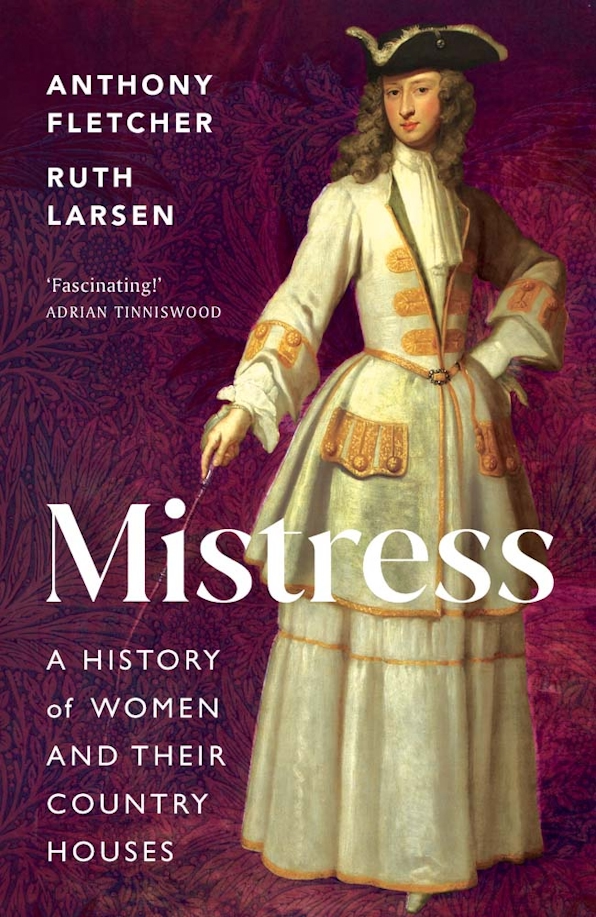 An insightful, hugely engaging new history of elite women and the country house from the sixteenth to the twentieth century
Grand houses can be found across the countryside of England and Wales. From the Stuart and Georgian periods to the Edwardian and Victorian, these buildings were once home to the aristocratic families of the nation. But what was life like for the mistresses of these great houses? How much power and influence did they really have? Anthony Fletcher and Ruth M. Larsen explore the lives of country house mistresses. Focusing on eighteen women, and spanning five centuries, they look at the ways in which elite women not only shaped the house, household, and family, but also had an impact on society, culture, and politics within their estates and beyond. We meet Brilliana Harley, who defended her castle at Brampton Bryan; Frances Boscawen, who oversaw the building of Hatchlands; and Lady Mary Elcho, who preserved her secret life as mistress to Arthur Balfour. This is a fascinating account of the country house that puts women’s experiences centre stage.
Anthony Fletcher was formerly professor of history at the Universities of Sheffield, Durham, and Essex, and professor of English social history at the University of London. His previous works include Gender, Sex, and Subordination in England 1500–1800 and Growing up in England. Ruth M. Larsen is a senior lecturer in history at the University of Derby. An expert on gender and the country house, she has contributed to several books on the subject.
Call for Papers | Cut along the Dotted Line

◊ ◊ ◊ ◊ ◊
As noted at Fabula:
Découper suivant les pointillés / Cut along the Dotted Line
Images manufacturées à manipuler, XVIIIe–XXIe siècles
Craft Practices around Manufactured Pictures, 18th–21st Centuries
Organized by Johanna Daniel and Hélène Valance
Institut National d’Histoire de l’Art, Paris, 31 March — 1 April 2026
Proposals due by 30 September 2025
Cut, folded, pierced, embroidered, glued: a material as fragile as it is ubiquitous, paper is a medium allowing for the expression of multiple skills. These manipulations free the printed image from flatness, while enhancing its materiality. From the plane surfaces of the ‘constructions’ plates marketed by the Pellerin printing house in Epinal at the end of the 19th century, for instance, emerged three-dimensional models of airplanes, of Noah’s Ark, or of the Eiffel Tower, bringing a whole world to life. Shadow and transparency effects used in miniature theaters, paper folding, coloring, or collage activities : all these manipulations multiply the potential of paper as a material and, at the same time, of the image. These pictures are not simply produced as images to be contemplated, but they require their audiences to actively engage in the realization of their full potential.
This symposium will focus on the triangular relationship between image, paper, and manipulation. It will consider pictures manufactured and designed to be handled, constructed, and augmented by their audiences. It will also examine amateur craft practices based on serially or mass-produced pictures, whether or not these are meant for such practices (such as ephemeras turned into scrapbooks, hand-colored prints, or embroidered religious images and postcards).
Although these images and techniques are widespread (Hans Christian Andersen, for example, left a large collection of amateur cut-outs), they have only been the subject of occasional academic research. Art and material culture historians have mostly focused on the works of renowned artists, such as Max Ernst or Pierre Alechinsky. A few recent studies have addressed anonymous works, particularly collage and scrapbooking (Garvey 2012, Sebayashi 2016, Elliott, Gowrley, and Etga 2019, Gowrley 2024). Paper as a material has received a renewed attention (Laroque and Lee 2016, Laroque and Pierrard 2020, De Mayer, Kaminska, and Thibault 2024). However, gestures surrounding pictures have so far been relatively rarely taken into consideration (Kisiel 2021-23).
This conference will explore the practices developed around a variety of pictures produced in series or on a massive scale, from the 18th to the 21st centuries. From backlit optical views marketed in Europe in the 1760s to the cutting, folding, and coloring activities circulated in children’s magazines today, via religious imagery and advertising materials, we will examine the interactions between paper and other materials (fabric, cardboard, wood), tools (scissors, needles, punches), as well as the physical environment (light, wind, fire). What does the materiality of paper do to the image? We will question the gestures and know-how involved in the production of these works, examining how these techniques were and are acquired and transmitted (school, home), as well as the expectations regarding the users’ skills. The conference will analyze the constraints and negotiations imposed by the articulation between mass- or serially-produced pictures, and individual practices. What forms and spaces of autonomy are allowed by these manipulations? What gestures, artistic and social practices, and uses of images are visible here? It will consider the techniques and networks of production and commercialization of these printed images in the general landscape of picture-making: what cultural, ideological, and economic networks are at play here?
Proposals may address one or several of the following questions, without being limited to these suggestions:
Designing printed images to be manipulated
Prints such as cutouts, fashion engravings, or optical views began to be produced specifically to be cut out, glued, and augmented with different materials in the late 17th century. With the industrialization of imagery in the 19th century, this type of production expanded dramatically. How did and do the designers of these images anticipate the future interventions of consumers in their creative process? How does this impact the way they drew and engraved? Do these images allow for free, autonomous uses? From 19th century scrap sheets to contemporary youth magazines, who are the designers of paper models? What specific skills do they demonstrate?
Feasibility and technical skill
Although small and large constructions from the Pellerin house in Epinal were inexpensive, they were far from being within everyone’s reach: they required a great deal of skill, and their production relied on the acquisition of advanced manual competences. How was the expertise surrounding these images passed on? What theories of education or domestic economy accompany them? How have they evolved since the 18th century? How much individual creativity is involved, and conversely, what constraints are imposed by models and instructions?
Circulation and social interactions
Paper crafts are remarkably mobile, crossing socio-cultural and geographical boundaries—and even temporal ones, despite their often ephemeral nature. We will focus on the joint circulation of images and practices related to paper: Who are the actors of these production and circulation networks? What is their general economic environment? Which images circulate in which formats? Which specific audiences do these images address, and are they diverted for other uses? What types of social relationships developed around these practices?
Conservation, transmission, and digitization of images to be manipulated
Considered as popular productions and classified as ephemera, pictures designed to be manipulated have been imperfectly preserved, because they have been of less interest to fine arts institutions than to collectors. However, there are important collections (the Musée de l’Image in Épinal, the dépôt légal at the Bibliothèque Nationale de France, the Papier Museum in Düren) which pose specific problems of inventory, cataloguing, and public outreach around these collections. We are particularly interested in the challenges of collecting “manipulated” objects alongside printing plates that have not been altered in any way. We would like to interrogate public outreach activities around these productions (print reissuing, pedagogical workshops, contemporary creation). We also invite proposals for papers on digitization issues, which may especially question the relationship between flat images and volume.
This is an international interdisciplinary symposium. We welcome contributions from various fields (art history, education sciences, design, material and cultural history, communication sciences, or literature) and areas of specialization (with no regional restriction, from the 18th century to the present day). The call is also open to curators and conservators, collectors, contemporary creators, publishers, and professional users. Proposals may take several forms including individual 20-minute presentations, practical workshops, interviews, or panel discussions. Proposals, written in French or English and under 450 words, must be submitted by 30 September 2025. They should be accompanied by a brief bio-bibliographical note and sent to helene.valance@inha.fr and johanna.p.daniel@gmail.com.
Scientific Committee
Manuel Charpy, Laboratoire InVisu, CNRS
Pauline Chevalier, Université de Tours
Ariane Fennetaux, Université Sorbonne Nouvelle – Paris 3
Marine Kisiel, Palais Galliera
Séverine Montigny, Bibliothèque Historique de la Ville de Paris
Aurélie Petiot, Université Paris Nanterre
b i b l i o g r a p h y
Audin, Marius, Marshall, Alan, Moglia, Bernadette, Ephemera : les imprimés de tous les jours, 1880–1939, Lyon, Musée de l’imprimerie, 2001.
Brust, Beth Wagner, The Amazing Paper Cuttings of Hans Christian Andersen, Boston, Houghton Mifflin, 1994.
De Maeyer, Juliette, Kaminska, Aleksandra, and Thibault, Ghislain, Histoires matérielles du papier, 2024, online : https://doi.org/10.13098/infoclio.ch-lb-0012
Dolan, Alice, « An Adorned Print: Print Culture, Female Leisure and the Dissemination of Fashion in France and England, around 1660–1779 », V&A Online Journal, no 3, 2011, online : .
Elliott, Patrick, Freya Gorwley, and Yuval Etgar, Cut & Paste: 400 Years of Collage, Edimbourg, National galleries of Scotland, 2019.
Garvey, Ellen Gruber, Writing with Scissors: American Scrapbooks from the Civil War to the Harlem Renaissance, Oxford, Oxford University Press, 2012.
Gobbé-Mévellec, Euriell, and Hamaide, Eléonore, « “Déployer sa fragilité” : quand le pop-up transforme les petites mains en grands lecteurs », Elfe XX–XXI, n°13, 2024, online: http://journals.openedition.org/elfe/6868
Gowrley, Freya, Fragmentary Forms: A New History of Collage, Princeton University Press, 2024.
Han, Huirong, Revolutionary Chinese paper cuts from the Newark Museum, Newark, Newark Museum, 2015.
Ingold, Tim, Making: Anthropology, Archaeology, Art and Architecture, Abingdon-on-Thames 2013.
Jammes, André. Papiers dominotés : trait d’union entre l’imagerie populaire et les papiers peints : France, 1750–1820. Paris, Éditions des Cendres, 2010.
Kisiel, Marine, et al., « Gestes d’Images » seminar, laboratoire InVisu-INHA, 2021–2023. Online : https://gestesdimages.inha.fr/
Kopylov, Marc, and Jammes André. Papiers dominotés français : ou l’art de revêtir d’éphémères couvertures colorées : livres et brochures entre 1750 et 1820, Paris, Éditions des Cendres, 2012.
Laroque, Claude, and Valérie Lee (eds.), Papiers en volume, traditions asiatiques et occidentales (actes de la journée d’étude du 4 novembre 2016), site de l’HiCSA, 2018. Online :
Laroque, Claude, and Maryse Pierrard (eds.), Histoire du papier et de la papeterie : actualités de la recherche II (Actes de la journée d’étude du 13 octobre) Online : 2020) https://hicsa.pantheonsorbonne.fr/sites/default/files/2023-09/livre_laroque_02-2.pdf
Laroque, Claude, and Maryse Pierrard (eds.), Les Papiers filigranés de la période 1830–1950 (Actes de la journée d’étude du 8 octobre 2021), Paris, sites de l’HiCSA et de l’ENS. Online : https://hicsa.pantheonsorbonne.fr/sites/default/files/2023-09/livre_laroque_02-2.pdf
Lerch, Dominique, et al, Les Images de dévotion en Europe XVIe–XXIe siècle : Une Précieuse Histoire, Beauchesne, 2021.
Le Thomas, Claire, Racines populaires du cubisme : pratiques ordinaires de création et art savant, Dijon, les Presses du réel, 2016.
Magnien, Gabriel, Canivets : découpures et silhouettes. Lyon: Imprimeries réunies, 1947.
Mainardi, Patricia, Another World: Nineteenth-Century Illustrated Print Culture, New Haven, Yale University Press, 2017
Montigny, Séverine « Les grands magasins parisiens, fabriques du petit consommateur ». L’échauguette, carnet de recherche de la BHVP, 27 mai 2025, online : https://doi.org/10.58079/140r4
Oelschlägel, Petra, and Anna Arnold, Aus Papier!, Dortmund, Verlag Kettler, 2021.
Pelachaud, Gaëlle, Livres animés : Du papier au numérique, Paris, L’Harmattan, 2011.
Plunkett, John, « Light work : Feminine Leisure and the Making of Transparencies », in Hadjiafxendi Kyriaki and Zakreski Patricia (eds.), Crafting the Woman Professional in the Long Nineteenth Century, Artistry and Industry in Britain, Burlington, Ashgate, 2013, p. 45‑67.
Rickards Maurice, Twyman Michael, De Beaumont Sally, and Tanner Amoret, The Encyclopedia of Ephemera: a Guide to the Fragmentary Documents of Everyday Life for the Collector, Curator, and Historian, New York, Routledge, 2000.
Sadion, Martine (ed.), 14–18 L’Enfant découpait des images, Épinal, Musée de l’image, 2014.
Schneider, Malou (ed.), Des Mondes de papier: l’imagerie populaire de Wissembourg, Strasbourg, Musées de la ville de Strasbourg, 2010.
Sebayashi, Nathalie, « Appropriation par le collage : Le cas de l’album factice », Histoire de l’art, n° 78-1, 2016, p. 71–85.
Taveneaux, Evelyn, La piété en dentelles : les images de dévotion et leurs dentelles, 1830–1910, Nancy, Presses universitaires de Nancy, 1992.
Tucker, Susan, Katherine Ott, and Patricia Butler (eds.), The Scrapbook in American Life, Temple University Press, 2006.










 Enfilade
leave a comment