Exhibition | Count Cozio and the Myth of Stradivari
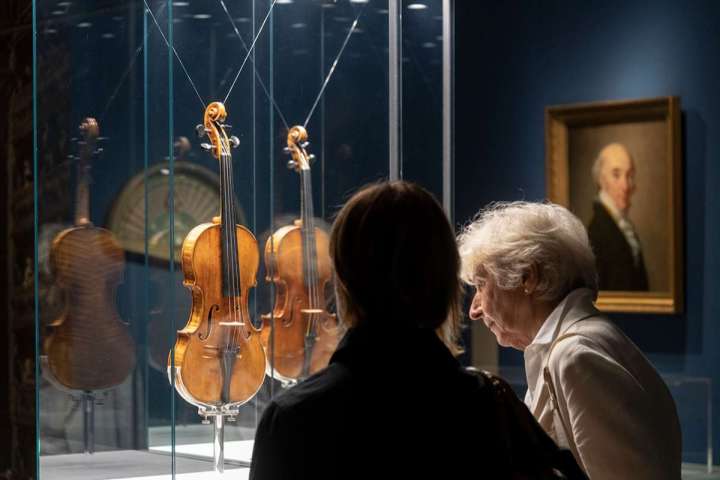
Installation of the exhibition Il conte Cozio e il mito di Stradivari: Capolavori in Piemonte tra ‘700 e ‘800 at Palazzo Madama in Torino (2025).
◊ ◊ ◊ ◊ ◊
Now on view at Palazzo Madama:
Count Cozio and the Myth of Stradivari
Masterpieces in Piedmont between the 18th and 19th Centuries
Palazzo Madama, Torino, 19 September — 23 November 2025
Curated by Giovanni Accornero and Duane Rosengard
On the occasion of the 270th anniversary of the birth of Count Ignazio Alessandro Cozio di Salabue, this exhibition celebrates and sheds light on the legacy of this remarkable collector, born in Casale Monferrato on 14 March 1755. Unlike other collectors of his time, Cozio did not merely acquire valuable stringed instruments. By studying their provenance and construction, he became a true pioneer of what we now call the modern organological approach.
 Through his collaboration with the violin maker Giovanni Battista Guadagnini, Cozio succeeded in purchasing from Paolo Stradivari twelve of his father Antonio’s violins—including the legendary ‘Messiah’, built in Cremona in 1716 and considered the most famous Stradivari violin in the world. Cozio also acquired the entire contents of Stradivari’s workshop: moulds, tools, cardboard patterns, and drawings. This invaluable heritage—a portion of which is presented in the exhibition—today stands as the historical memory of the Cremonese violin-making tradition.
The exhibition retraces Cozio’s life as a collector through seven sections, displaying 20 stringed instruments of exceptional historical importance, twelve of which once belonged to him. Many of these instruments are being shown to the public for the very first time. Among them is the 1668 violin by Nicolò Amati, inherited from Cozio’s father, which has never before been exhibited. The journey is enriched by rare plucked string instruments, representing a significant part of the production of violin makers active in Turin during the 18th and early 19th centuries.
Archival documents from Cozio’s Carteggio accompany the display, offering new insights into both the Count himself and the musical world in which his passion for string instruments flourished. A special section is dedicated to the Teatro Regio of Turin, featuring the unprecedented display of violins once owned by Piedmontese virtuosos Gaetano Pugnani (Giuseppe Guarneri ‘del Gesù’, 1736) and Giovanni Battista Viotti (Antonio Stradivari, 1718), alongside two rare portraits of the musicians. Along the exhibition path, visitors will encounter the interactive 3D installation “The Shape of Sound,” which allows them to explore a faithful 3D replica of the ‘Salabue-Berta’ violin. The ‘Salabue-Berta’ violin was built in Turin by Giovanni Battista Guadagnini in 1774 and is also presented in the exhibition. This section is further enhanced by the presence of a bench copy crafted by Luiz Amorim, a tangible bridge between historical mastery and contemporary craftsmanship.
◊ ◊ ◊ ◊ ◊
The Strad adds this bit of information about one of the portraits of Battista Viotti: “the exhibition includes the famous portrait of Viotti by the French portraitist Élisabeth Vigée Le Brun, marking its first public display. The painting recently resurfaced on the antiques market, having previously been considered lost in the early 20th century.”
Call for Papers | Mozart and His Time
From the conference website:
Mozart and His Time
Palácio Nacional da Ajuda, Lisbon, 22–24 January 2026
Organized by Aline Gallasch-Hall de Beuvink and Helena Gonçalves Pinto
Proposals due by 15 November 2025
 The conference Mozart and His Time is organised by the Department of History, Art, and Humanities of the Universidade Autonoma of Lisbon, in partnership with the Ajuda National Palace (Portuguese Republic – Ministry of Culture, Youth and Sport, Museums and Monuments of Portugal) and Parques de Sintra – Monte da Lua. It is supported by CIDEHUS – University of Évora (CIDEHUS.UAL Centre).
The year 2026 commences with the commemoration of Wolfgang Amadeus Mozart’s 270th anniversary (1756–1791) on January 27th. Universally esteemed as a prodigious genius and one of history’s most exceptional composers, Mozart lived during an era of significant upheaval. He was arguably the first composer to endeavor to be self-employed (Norbert Elias), a concept that was ahead of its time. This conference seeks to illuminate Mozart’s genius, while also fostering a greater comprehension of the era in which he lived: a period of profound political and social transformation that bridged the modern and contemporary eras.
Our national keynote speakers will be Rui Vieira Nery and Rosana Marreco Brescia. The international keynote speaker will be Mozart expert Simon Keefe, from the University of Sheffield.
We invite submissions that explore, but are not limited to, the following themes:
• The oeuvre and biography of Wolfgang Amadeus Mozart
• The influence of Mozart on his contemporaries
• Political, social, and cultural shifts in the latter half of the 18th century
• The reverberations of colonial revolutions in continental Europe
• Artistic movements in Central Europe during Mozart’s era (literature, painting, sculpture, architecture)
• The evolving role of women in opera and performance
• Libretti and musical performances reflecting the social transitions of the period
• The striving of artists to establish social standing
• Pivotal junctures that catalyzed social, political, philosophical, cultural, and artistic transformations (e.g., the 1755 Lisbon Earthquake, the French Revolution)
The conference languages will be Portuguese and English. Proposals should be sent as a Word or PDF document containing a title, a short abstract (maximum 250 words), and the author’s name and affiliation to the organisers at abeuvink@autonoma.pt by the 15th of November 2025.
Scientific Committee
Miguel Figueira de Faria
Rui Vieira Nery
Frédéric Vidal
Aline Gallasch-Hall de Beuvink
Roberta Stumpf
Helena Gonçalves Pinto
Rosana Marreco Brescia
Miguel Jalôto
Symposium | The French Influence in Newport
From Newport Mansions:
The French Influence in Newport
Rosecliff and Marble House, Newport, Rhode Island, 6–7 November 2025
French art, architecture, design and cuisine permeated the lifestyles of the Gilded Age elite as they looked to the French aristocracy for inspiration. Richard Morris Hunt, the first American architect trained at the Ecole des Beaux-Arts in Paris, modeled the architecture of Alva Vanderbilt’s Marble House after the Petit Trianon at Versailles. Horace Trumbauer’s inspiration for The Elms came from the 18th-century Château d’Asnières, while Stanford White’s design for Rosecliff incorporated elements of another Versailles palace, the Grand Trianon. Furniture maker and interior designer Jules Allard et Fils furnished Newport’s summer ‘cottages’ with treasures inspired by and imported from France, and French chefs created magnificent culinary confections. Learn about all of this and more during the symposium’s morning lectures and guided afternoon tours (Thursday at Rosecliff and Friday at Marble House). Registration includes special access to the exhibition Richard Morris Hunt: In a New Light at Rosecliff.
Scholarships are available to assist undergraduate and graduate students interested in attending the symposium.
t h u r s d a y , 6 n o v e m b e r
Speakers
• Keynote Speaker: Mathieu Deldicque, Chief Curator and Museum Director of Château de Chantilly
• Margot Bernstein, Private Collection Curator
• Becky Libourel Diamond, Food Culture Historian
• Leslie Jones, Director of Museum Affairs and Chief Curator, the Preservation Society
• Laura Bergemann, former Preservation Society Conservation Research Fellow and PhD candidate at Vanderbilt University
• Théo Lourenço, Preservation Society Curatorial Research Fellow
f r i d a y , 7 n o v e m b e r
Speakers
• Justine De Young, Associate Professor and Chair of the History of Art Department, Fashion Institute of Technology (SUNY) in New York City
• Natalie Larson, Interior Textile Historian, Historic Textile Reproductions LLC
• Nadia Albertini, French Heritage Society Scholar, Franco-Mexican embroidery and textile designer
• Bob Shaw, HBO’s The Gilded Age Production Designer
Conversations | Regarding History: American Art in Perspective
From The Met:
Regarding History: American Art in Perspective
The Metropolitan Museum of Art, New York, 1 November 2025
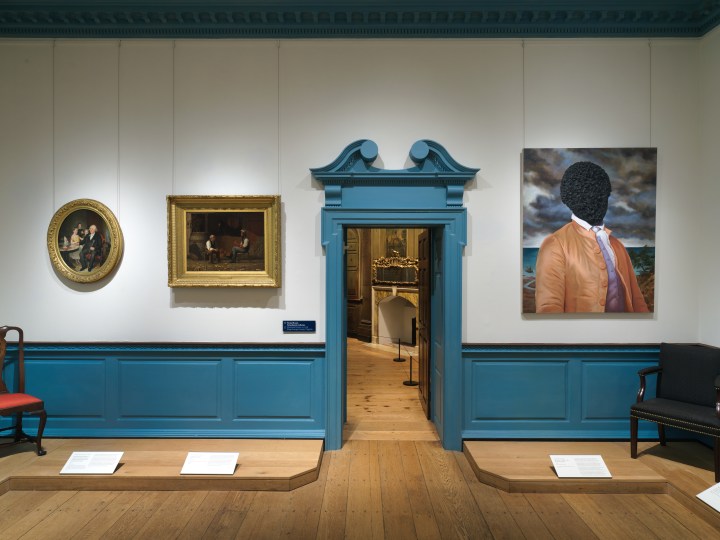 Join curators, academics, and artists to mark the end of the American Wing’s 100th anniversary with dynamic conversations and presentations that explore multilayered interpretations of American art and history. Discover how diverse institutions and individuals are bringing history to life for audiences through a variety of engaging approaches that activate digital technologies, showcase innovations in visual and material object-based displays, and center the power of place and the potential for contemporary artistic interventions. Presentations will be recorded and posted soon after the event on The Met’s YouTube channel.
Registration for in-person attendance is available here»
s c h e d u l e
11.00 Introduction — Sylvia Yount (Lawrence A. Fleischman Curator in Charge of the American Wing, The Met)
11.15 Keynote Conversation
• Edward Ayers (Tucker-Boatwright Professor of the Humanities and President Emeritus, University of Richmond)
• Christy Coleman (Executive Director, Jamestown-Yorktown Foundation)
12.15 Break
1.30 Curatorial Roundtable
Moderated by Sylvia Yount
• Layla Bermeo (Museum of Fine Arts, Boston)
• Kathleen Foster (Philadelphia Museum of Art)
• Sarah Kelly Oehler (Art Institute of Chicago)
2.30 Artist Presentation — Titus Kaphar
3.00 Closing Remarks
Call for Papers | ASECS 2026 Session: Lighting the Enlightenment
A few sessions for next spring’s ASECS conference are still finalizing participants and hoping for submissions, including this one on “Lighting the Enlightenment.” Do get in touch with chairs right away if you have an idea (there may be a little wiggle room even with the late deadline).
Session | Lighting the Enlightenment:
Artificial Light and the Transformation of Cultural Practices
ASECS Annual Conference, Philadelphia, 9–11 April 2026
Proposals due by 3 October 2025
Chairs: Sophie Raux, Université Lumière Lyon 2, LARHRA, sophie.raux@9online.fr; and Marie Thebaud-Sorger, CNRS, Centre Alexandre-Koyré Paris, marie.thebaud-sorger@cnrs.fr
The renewal of theories of light in the eighteenth century, alongside the development of practices and uses related to the economy of lighting—such as lamps—contributed to shaping a metaphorical understanding of luminous phenomena within the broader discourse of rationalization that characterized the aptly named Age of Enlightenment. Artificial light came to be seen as a manifestation of humanity’s ability to overcome natural constraints, enabling the development of a wide range of practices—nocturnal sociability, theater, art academies, night work, domestic interiors—aligned with the transformation of material environments aimed at improving comfort, safety, and hygiene.
In recent years, interdisciplinary approaches have opened new avenues for research that move beyond literary or visual representations, emphasizing the role of material culture, technology, and sensory experience in shaping historical analysis. This panel invites proposals that explore how artificial lighting influenced, enabled, or transformed social, artistic, and literary practices. To what extent did innovations in lighting modify, inspire, or make possible such practices? What relationships emerged between technical innovation and artistic or literary creativity? How did artificial light affect the visual cultures of the Enlightenment? What were its implications for the history of vision and representation? We welcome contributions from a wide range of perspectives, including literary studies, theater studies, art history, the history of technology, the history of knowledge, and sensory studies. Special attention will be given to papers that reflect on methodological questions—for instance, the role of digital simulation or reenactment in reconstructing past sensory experiences. All submissions must be submitted through the Annual Meeting and Membership Portal.
New Book | Architecture and Artifice
Distributed by Yale UP:
Christine Casey, Architecture and Artifice: The Crafted Surface in Eighteenth-Century Building Practice (London: Paul Mellon Centre for Studies in British Art, 2025), 208 pages, ISBN: 978-1913107482, £45 / $60.
 Revealing the materials and craftsmanship that shaped the look of eighteenth-century architecture in Britain and Ireland
This book uncovers the overlooked material practices that were crucial to architectural production in the eighteenth century. Centred on the architecture of England and Ireland, it examines the facing materials that define the distinctive character of cities and regions. Focusing on the final stages of construction—the external façade and interior finishes in stone, plaster, and wood—Architecture and Artifice combines archival research with insights from architectural conservation to reveal the hidden techniques behind these structures. It explores the lives of craftsmen, uncovering the unwritten standards that guided their work and argues for the agency of materials and craft in shaping the meanings of eighteenth-century buildings. Featuring a cast of lesser-known craftsmen alongside new perspectives on iconic structures such as Chatsworth, the Cambridge Senate House, and Dublin’s Parliament House, the book introduces a wealth of previously unpublished archival material uncovering the intricate processes and people behind the era’s most enduring buildings.
Christine Casey is a professor of architectural history and fellow at Trinity College Dublin. She is a member of the Royal Irish Academy and an honorary member of the Royal Institute of the Architects of Ireland.
Conference | Servants, Labourers, and the Manorial World
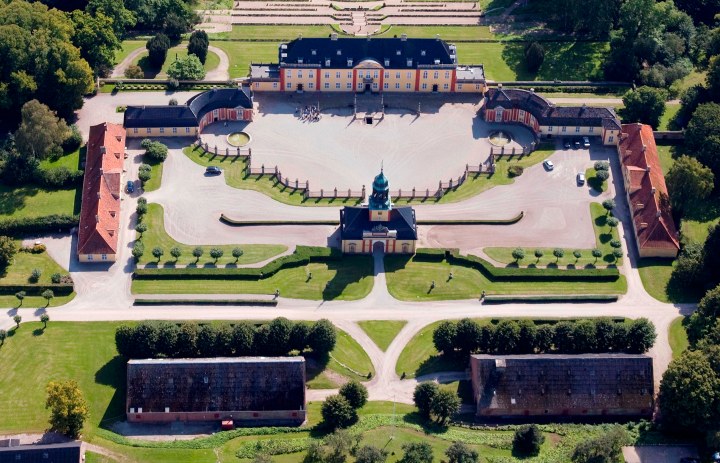
Johan Cornelius Krieger, Ledreborg Castle, Denmark (about 30 miles west of Copenhagen). Most of the house was constructed in the 1740s.
◊ ◊ ◊ ◊ ◊
From ENCOUNTER:
Servants, Labourers, and the Manorial World: Alternative Perspectives
9th ENCOUNTER Conference
Ledreborg Castle, Denmark, 9–11 October 2025
The European Network for Country House and Estate Research (ENCOUNTER) is pleased to host its ninth conference, organized in collaboration with The Danish Research Centre for Manorial Studies and Gammel Estrup, The Danish Manor Museum.
The manor or country house is often viewed exclusively as a stage for the economic and political elite of the past, a setting for splendour, luxury, and self-presentation. However, the world of the manor also included a well-defined hierarchy consisting of landowning families, tenant farmers, servants, craftsmen and labourers, all negotiating the dynamics of power. Ideally, the manor operated as a paternalistic institution built on mutual obligations: masters provided care and protection and subordinates offered work, loyalty and obedience. This relationship was both a practical arrangement and an ideological framework, a power dynamic and a manifestation of social inequality.
These historical structures could however be a source of both resistance and conflict as well as support and benevolence. On a larger scale, country houses became both targets and symbols during major confrontations, from peasant revolts to revolutions and civil wars. On a smaller scale, historical court records reveal conflicts involving servants and owners or the owners’ representatives. Conversely, the manor provided the social framework for many people’s lives, offering employment, housing, and protection. Country house owners offered patronage and sought to cultivate the religious and moral development of their staff and communities. Loyal service was rewarded with promotions and comfortable living conditions. Manors funded churches, schools, alms-houses, and gave donations. However, the nineteenth century brought dramatic social changes, as industrialisation drew labor and wealth into the urban centres. To what extent were these changes driven by further political developments and societal reforms? Was social change in a rural context a one-way phenomenon dictated by landowners?
This ENCOUNTER conference will explore these dynamics, primarily focusing on a bottom-up perspective, highlighting the master-servant relationship in its full paternalistic scope, and addressing household, villages, rural communities, etc. This includes shedding light on the conditions and material realities for servants and workers, as well as the organisational structures. And to explore conflicts/resistance and limits within the relationship, as well as changes in the nature and conditions of the relationship over time.
ENCOUNTER was founded in Denmark in 2015 and has since provided a framework for interaction between scholars and cultural institutions in Europe sharing a professional interest in the research and interpretation of manor and country house history. The conference thus also marks the network’s 10th anniversary.
Abstracts for each paper are available here»
t h u r s d a y , 9 o c t o b e r
8.40 Bus departure from Scandic Roskilde
8.55 Bus departure from Roskilde Station
9.15 Arrival Ledreborg Estate
10.00 Welcome — Kasper Steenfeldt Tipsmark (Gammel Estrup The Danish Manor & Estate Museum) and Signe Boeskov (The Danish Research Centre for Manorial Studies)
10.15 Keynote
• Aristocratic Servants in 17th-Century Sweden: Gender, Recruitment, and Career — Svante Norrhem (Lund University)
10.55 Session 1 | Servants
Chair: Kasper Steenfeldt Tipsmark
• Servants’ Property and Material Culture on Swedish Manors, 1770–1870 — Göran Ulväng (Uppsala University)
• The Organisation of the Household: The Role of High-Ranking Servants at 19th-Century Danish Manors — Signe Boeskov and Søren Broberg Knudsen (The Danish Research Centre for Manorial Studies)
• Behind the Scenes of the Manor — Aina Aske (Vestfoldmuseene IKS) and Lars Jacob Hvinden-Haug (Norwegian Institute for Cultural Heritage Research, NIKU)
• Hidden Doors and Secret Passages: Telling the Story of Servants in Eidsvoll House — Solveig Therese Dahl (Eidsvoll 1814, The Norsk Folkemuseum foundation)
13.00 Lunch
14.10 Guided tour Ledreborg
15.25 Session 2 | Labour and Estate Community
Chair: Paul Zalewski (European University of Viadrina)
• The Transition from Serfdom to the Industrial Worker in the Vodka Distillery of the Estonian Manor during the 19th Century — Mirje Tammaru (Estonian Academy of Arts)
• Arm Wrestling: Agency and Negotiations between Tenant Farmers and the Big House: An Alternative Perspective from Four 18th-Century Estates in the Netherlands — Gerrit van Oosterom, (independent researcher)
• Labourers on the Estate—Esbogård, 1770–1920 — Tryggve Gestrin (Espoo City Museum)
• Work, Family, Security: The Relationships and Life Strategies within the Håkansböle Manor Community — Eeva Kotioja (Vantaa City Museum)
17.30 Discussion and break
18.45 Dinner at Restaurant Herthadalen
f r i d a y , 1 0 o c t o b e r
8.10 Bus departure from Scandic Roskilde
8.25 Bus departure from Roskilde Station
8.45 Arrival Ledreborg Estate
9.30 Early Career Keynote
• Early Modern Estates as Communities of ‘Care’: Medical Practice across the Social Hierarchy in Rural England, 1650–1750 — Emma Marshall (University of Birmingham and University of York)
10.10 Session 3 | Care and Crisis
Chair: Hanneke Ronnes (University of Groningen)
• A Manorial World in Miniature? The Hospital of Laurvig County in the 18th Century — Arne Bugge Amundsen (University of Oslo)
• The State, the Subjects, and the Lord: Conflicts at Ängsö Manor, 1690–1710 — Joakim Scherp (Stockholm University and The Riksdag Library)
• Caring Beyond the Grave? The Estate of Denis Roest van Alkemade (1720–1791) — Thijs Boers (Amsterdam Museum and University of Amsterdam)
12.15 Lunch
13.35 Bus departure for Gisselfeld
14.30 Guided tour of Gisselfeld
16.45 Departure for Vallø
17.20 Guided tour of Vallø
19.00 Dinner at Vallø Slotskro
s a t u r d a y , 1 1 o c t o b e r
8.10 Bus departure from Scandic Roskilde
8.25 Bus departure from Roskilde Station
9.30 Guided tour of Gjorslev
11.15 Departure for Gavnø
12.35 Lunch at Café Tulipanen / Guided tour of Gavnø
14.45 Bus departure
16.15 Arrival Scandic Roskilde
16.30 Arrival Roskilde Banegård










 Enfilade
leave a comment