Thematic Route | Queen Isabel de Farnesio (1692–1766)
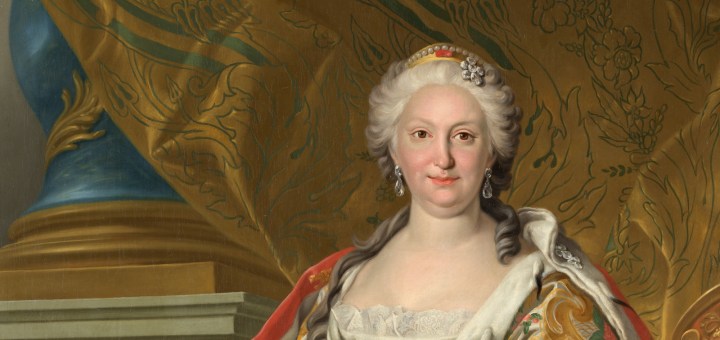
Louis-Michel van Loo, Queen Elisabetta Farnese, detail, ca. 1739, oil on canvas, 152 × 110 cm
(Madrid: Museo Nacional del Prado, P002397)
◊ ◊ ◊ ◊ ◊
From the press release for the new edition of the Prado’s Female Perspective initiative:
El Prado en femenino III: Queen Isabel de Farnesio (1692–1766)
Museo Nacional del Prado, Madrid, 1 December 2025 — 26 May 2026
Curated by Noelia García Pérez
The Museo Nacional del Prado shines a long-overdue spotlight on one of the most influential yet often overlooked women in European art history: Queen Isabel de Farnesio. With the third edition of its acclaimed initiative El Prado en femenino, the museum invites visitors to rediscover the 18th-century monarch whose passion for collecting helped shape what is now one of the world’s great art museums. Running until 26 May 2026, the new itinerary, created in collaboration with Spain’s Women’s Institute and supported by Iryo, moves the focus into the 18th century, following earlier editions devoted to Renaissance and Baroque royal women. This time, the star is a queen whose impact on the arts remains quietly yet unmistakably present throughout the Prado: Isabel de Farnesio (1692–1766), wife of King Philip V and one of the most active artistic patrons of her era.
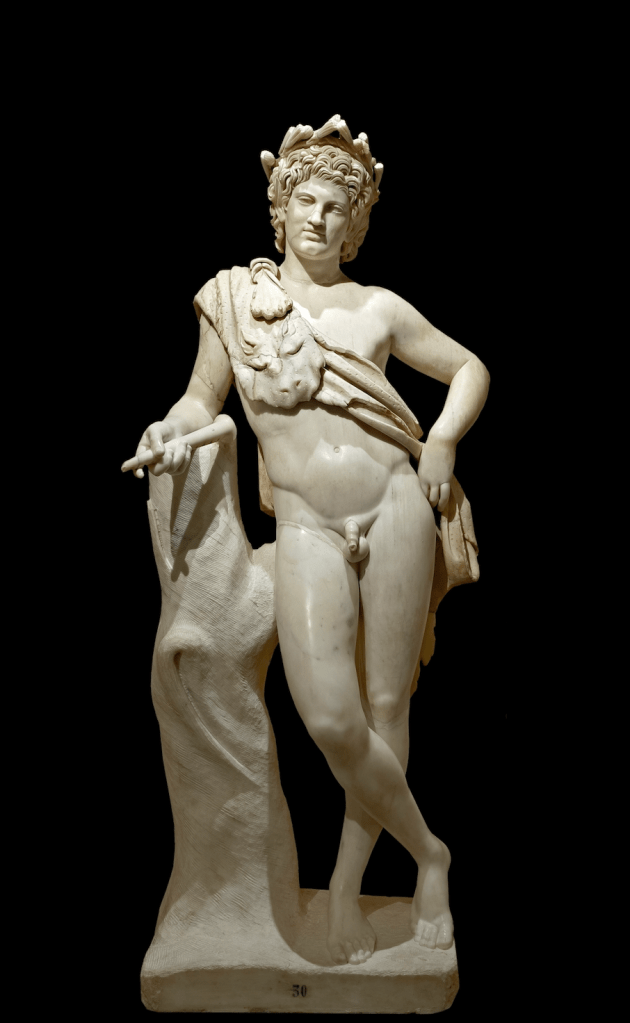
Resting Satyr, an ancient Roman copy of a work by Praxiteles, ca. 150–75 CE, Carrara marble (Madrid: Museo Nacional del Prado, E000030). The work was restored in the 17th century by Bernini’s workshop.
Few visitors realize that nearly 500 works in today’s Prado once belonged to her—paintings, drawings, and sculptures that now hang in almost half the museum’s galleries. The itinerary traces her unmistakable imprint, marked historically by a tiny fleur-de-lis stamped on the back of the works she owned. These include masterpieces like Rubens’s Apostolate, Ribera’s Jacob’s Dream, Velázquez’s Sibyl, Guido Reni’s Saint Sebastian, Correggio’s Virgin and Child with Saint John, and dozens of luminous works by Murillo, her favorite painter. Her taste was cosmopolitan and bold. Drawing on her Italian upbringing and a sharp eye for quality, Isabel assembled one of the finest painting collections of her time, particularly strong in the Flemish and Italian schools. She relied on a network of diplomats, agents, and noble intermediaries—yet maintained striking independence through her own private funds known as ‘the queen’s purse’.
Isabel’s legacy is not only pictorial. She was also responsible for bringing to Spain one of the most coveted collections of ancient sculpture in Europe: the classical masterpieces once owned by Queen Christina of Sweden. Works such as the Group of San Ildefonso, the Faun with a Kid, the Diadoumenos, and the Resting Satyr—cornerstones of the Prado’s classical sculpture galleries—arrived in Spain because Isabel insisted on acquiring them. She personally selected the pieces, reserved the finest for herself, and ensured they would become part of the Royal Collection.
The 45 works featured in this edition of El Prado en femenino, curated under the academic direction of Professor Noelia García Pérez, span newly rediscovered paintings, long-hidden works pulled from storage, and pieces returned from university and embassy loans. A recently identified Murillo sketch—found in the Musée de Pau during an inventory—appears at the Prado for the first time.
The project extends beyond the walls of the museum with the launch of an ambitious programme of talks, symposia, audiovisual productions, guided tours, family resources, a teacher-training course, concerts, and a new Wikipedia Editathon dedicated to expanding the online presence of women who shaped art history. With El Prado en femenino III, the museum takes another major step in reframing its collection through a gender-aware lens. In giving Isabel de Farnesio the attention she long deserved, the Prado not only revisits its past—it redefines the future of how art history is told.
The brochure for the thematic route is available here»
The website for the broader initiative of The Female Perspective is available here»
Exhibition | Times in Tapestry

Judocus de Vos after the model by Philippe de Hond, La Rencontre des belligérants, tapestry from l’Art de la guerre, ca. 1718–24, Brussels
(Lausanne: Fondation Toms Pauli, donation Mary Toms)
◊ ◊ ◊ ◊ ◊
Now on view at mudac:
Times in Tapestry / Tisser son temps / Am Webstuhl der Zeit
Musée cantonal de design et d’arts appliqués contemporains, Lausanne, 7 November 2025 — 8 March 2026
mudac and Fondation Toms Pauli are proud to present this exhibition dedicated to tapestry as a vector for social and political discourse.
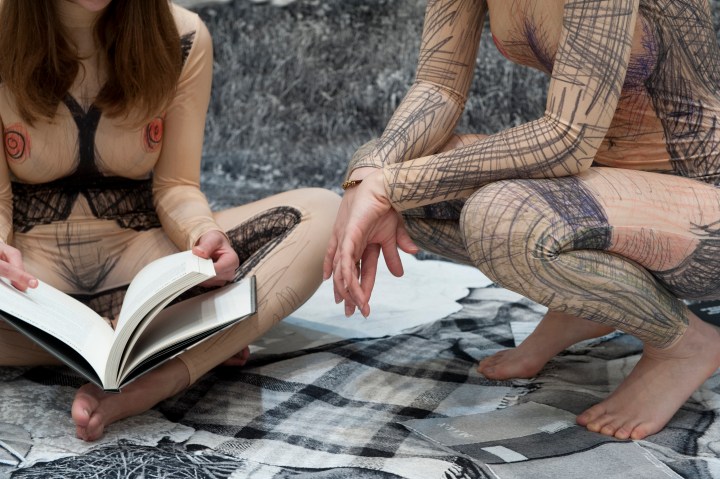
Goshka Macuga, Performance of Death of Marxism, Women of All Lands Unite, 2013, wool tapestry with two women wearing printed lycra suits, 560 × 290 cm, 2013.
Far from being confined to a decorative role, tapestry has always been a powerful tool for storytelling. From medieval times to contemporary creations, it provides a space for dialogue at the crossroads of collective aspirations, historical narratives, and contemporary issues. The exhibition brings together major works from the Toms collection, woven in the prestigious Brussels workshops between 1660 and 1725, alongside contemporary creations by Goshka Macuga and Grayson Perry. Tapestries, such as The History of Scipio Africanus and The Emperors Titus and Vespasian, depict glorious and symbolic episodes from Roman narratives. At this occasion two tapestries will be presented to the public for the first time, highlighting the value and prestige of this collection, owned by the State of Vaud.
These historical masterpieces resonate with the powerful creations of Goshka Macuga and Grayson Perry. Through tapestries such as Perry’s The Vanity of Small Differences and bespoke works by Macuga, the exhibition explores contemporary themes of social struggle, critiques of consumer society, and power dynamics. For this occasion, Macuga will create a unique textile work, specially created in dialogue with the Toms collection, which will enhance the exhibition with a distinctive and contemporary perspective. The confrontation of ancient and contemporary works highlights the timeless power of tapestry, with its visual language capable of conveying complex messages and fostering reflection on universal issues.
The exhibition press kit is available here»
More on the Toms Collection is available from the press release:
The Toms Collection is one of the most significant privately assembled collections of historic tapestry from the second half of the 20th century. Bequeathed to the State of Vaud by Mary Toms in 1993, it comprises over one hundred wall tapestries and decorative pieces from major European workshops, dating from the early 16th to the late 19th centuries. After amassing a fortune in real estate, British developer Reginald Toms (1892–1978) and his wife Mary (1901–1993) settled at Château de Coinsins in French-speaking Switzerland in 1958, where they discovered a passion for historic textiles. During the 1960s, they acquired over a hundred works, including furniture, carpets, and embroidery.
More than fifty tapestries in the collection originate from the leading workshops of Flanders, particularly from the 17th to the 18th centuries. The gold- and silver-threaded masterpieces on show are drawn from the original Toms collection and later acquisitions by the Toms Pauli Foundation, established in 2000. Known for its geographical, chronological and thematic breadth, as well as its outstanding state of preservation, this collection, owned by the State, has been exhibited in venues such as Payerne Abbey, the Metropolitan Museum in New York, the MCBA in Lausanne, the Palacio Real in Madrid, the Cité de la Tapisserie in Aubusson and Musée Rath in Geneva. It now takes pride of place at mudac for this landmark exhibition.
While the name Mary Toms is now recognised worldwide thanks to her prestigious collection, the life of the donor herself remains largely private. Trained as a secretary, Mary Alice Winterton married Reginald Toms in 1933. Reginald had achieved considerable success in finance and real estate, allowing the couple to live an international life between Britain, South Africa, Monte Carlo, and Ireland, before finally settling in French-speaking Switzerland in 1958, where they acquired the Château de Coinsins. In the short span of just ten years (1959–1969), Mary and Reginald Toms assembled, through purchases on the London art market, one of the world’s largest private collections of tapestries from the 16th to the 19th centuries, outside royal or aristocratic holdings.
Until Reginald’s death in 1978, the couple kept their collection relatively private. Yet they were fully aware of its exceptional nature and were concerned with ensuring its preservation. In 1990, Mary Toms drew up a will bequeathing to the Canton of Vaud the Château de Coinsins, its furnishings, art collections and the surrounding vineyard. Upon accepting this legacy, the State undertook to preserve and promote the remarkable collection of tapestries that Mary and Reginald Toms had so passionately assembled during the 1960s.
Based in Lausanne since its founding in 2000, the Toms Pauli Foundation is an active institution on both Swiss and international stages. Its core mission is to research, preserve and promote collections of historic and 20th-century textile art owned by the State of Vaud. The Foundation’s heritage consists of a significant collection of European tapestries and embroidery dating from the 16th to the 19th century, bequeathed by Mary Toms in 1993, as well as textile artworks from 1954 to 2011 that are emblematic of the Nouvelle Tapisserie movement.
Lacking its own exhibition space to showcase its exceptional holdings, the Foundation regularly presented its collections abroad. Since 2020, the Toms Pauli Foundation has been based at Plateforme 10. Its offices, collections, and specialised library are housed within the building of the MCBA. The public can discover the Foundation’s historic and contemporary collections through temporary exhibitions held at Plateforme 10—such as the major 2023 exhibition Magdalena Abakanowicz: Textile Territories, organised in collaboration with Tate—and in other venues in Switzerland and beyond. At the end of 2025, another piece from the Titus and Vespasian series will go on display at the MCBA as a follow-up to the Tisser son temps exhibition.
As the successor to the Centre International de la Tapisserie Ancienne et Moderne (CITAM), the organisation behind the Lausanne Tapestry Biennials from 1962 to 1995, the Foundation also maintains artist archives from these historic events and regularly hosts researchers from around the world.
Colloquium | Textile Conservation Research at The Met
From The Met:
Conferences to Colloquium: Sharing Textile Conservation Research
The Metropolitan Museum of Art, New York, 9 December 2025
Join us for a colloquium featuring a series of talks by The Met’s Textile Conservation Department focusing on innovative conservation efforts that have been presented at leading conferences across the United States and internationally. Listen as speakers share case studies, methodologies, and insights into the preservation of historical and culturally significant textiles. The colloquium offers an opportunity for dialogue among professionals and people with an interest in historic textiles, highlighting recent advancements and practical challenges in the field of textile conservation.
This event is free to attend, though advance registration is required. Please note that space is limited; registration does not guarantee admission once the lecture hall reaches capacity.
s c h e d u l e
11.00 Morning Papers
• Monitoring Deformation of Tapestries by Image Analysis — Kisook Suh (Conservator) and Alejandro Schrott (Consultant, Department of Scientific Research)
• Technical and Scientific Findings of Four Textile Fragments with Shaded Bands from Dura-Europos — Martina Ferrari (Associate Conservator) and Janina Poskrobko (Conservator in Charge)
• Conservation of American Wing Samplers — Alexandra Barlow (Associate Conservator)
12.00 Lunch break
1.00 Afternoon Papers
• X-radiography of Textiles, Evolving Techniques and Approaches —Cristina Balloffet Carr (Conservator and Consulting Conservator for the Antonio Ratti Textile Center)
• The Met’s Contribution to Green Art: Experimentations with Nanogels and Green Consolidants for the Historic Textiles Preservation — Giulia Chiostrini (Conservator), Kristine Kamiya (Conservator), and Janina Poskrobko (Conservator in Charge)
2.00 Closing remarks
Exhibition | Beyond The Medici: The Haukohl Collection
Given that the exhibition has been on tour since 2018, it’s laughable that I’ve missed it for so long. The latest iteration is now on view in Phoenix under the title Florentine Baroque: The Haukohl Collection. –CH
Beyond The Medici: The Haukohl Collection
Kuntsammlungen und Museen Augsburg, 20 October 2018 — 20 January 2019
Arp Museum Bahnhof Rolandseck, Remagen, 10 February — 8 September 2019
Musèe National d’historie et d’art, Luxembourg, 16 October 2020 — 21 February 2021
Palais de Beaux Arts, Brussels, June — September 2021
Rollins Museum of Art, Winter Park, Florida, 23 September — 31 December 2023
David Owsley Museum of Art, Ball State University, Muncie, Indiana, 24 February — 24 August 2024
Georgia Museum of Art, Athens, 1 February — 18 May 2025
Phoenix Art Museum, 28 August 2025 — 26 July 2026
 Florentine Baroque: The Haukohl Collection presents more than 30 examples of painting, sculpture, and decorative arts drawn from the most important Florentine Baroque art collection outside of Italy, assembled over more than 40 years by Houston-based art collector and co-founder of the Medici Archive Project Sir Mark Fehrs Haukohl. Featured artworks by local Florentine artists and artists living across Europe reflect Florence’s flourishing art industry, as well as the cultural and intellectual legacy of the Medici Grand Dukes on the Renaissance and Baroque movements.
The catalogue is available from Distributed Art Publishers (Artbook) . . .
Federico Berti, ed., Beyond the Medici: The Haukohl Family Collection (Milan: Silvana Editoriale, 2019), 288 pages, ISBN: 978-8836641284, $60.
Sir Mark Fehrs Haukohl, a Houston-based art collector and cofounder of the Medici Archive Project, has built America’s largest private collection of Florentine baroque paintings from the 17th to 18th centuries. The paintings, drawings, textiles, and sculpture illustrated in the collection document the Medici patronage and artists of the period. Particular attention is paid to the Dandini Family of painters: Cesare, Vincenzo, Pier and Ottaviano. Essays by Eike Schmidt, James Bradburn, Federico Berti, Fabio Sottili, and Francesco Scasciamacchia address a broad overview of collecting and history of the period.
New Book | Cello: A Journey through Silence to Sound
The four central musicians are not from the eighteenth century, but the instruments are! From Simon & Schuster:
Kate Kennedy, Cello: A Journey through Silence to Sound (New York: Pegasus Books, 2024), 480 pages, ISBN: 978-1639367504, $35.
 A cello has no language, yet it possesses a vocabulary wide enough to tell, bear witness, and make connections across time and continents—a feat brought to life in this brilliant new book.
In this luminous narrative, Kate Kennedy, a writer and cellist herself, weaves together the story of four cellists who suffered various forms of persecution, injury, and misfortune. The stories are those of the forgotten Jewish cellist Pál Hermann, who is likely to have been murdered by the Nazis in Lithuania during the Holocaust; Lise Cristiani, another forgotten performer, who is considered to be the first female professional cello soloist and who embarked on an epic concert tour of Siberia in the 1850s taking with her a Stradivarius cello that can be seen to this day in a museum in Cremona in northern Italy; Anita Lasker-Wallfisch, who played in the orchestra at Auschwitz and survived spells in both that camp and in Bergen-Belsen; and Amedeo Baldovino of the Trieste piano trio, whose ‘Mara’ Stradivarius was lost in a shipwreck in the River Plate between Buenos Aires and Uruguay but later recovered from the water and repaired.
Kate Kennedy is one of the foremost critics of twentieth-century music of her generation and is frequently heard on Radio 3. She is an Associate of the English Faculty at Oxford, where she lectures on twentieth-century literature and biography. She is the author of Dweller in Shadows: A Life of Ivor Gurney. She is a fellow of the Royal Historical Society, a Supernumerary Fellow of Wolfson College, Oxford, co-director of the Oxford Centre for Life-Writing, and director of the Centre for the Study of Women Composers.
New Fiction | The Hounding
From Macmillan:
Xenobe Purvis, The Hounding: A Novel (New York: Henry Holt and Co., 2025), 240 pages, ISBN: 978-1250366382, $27
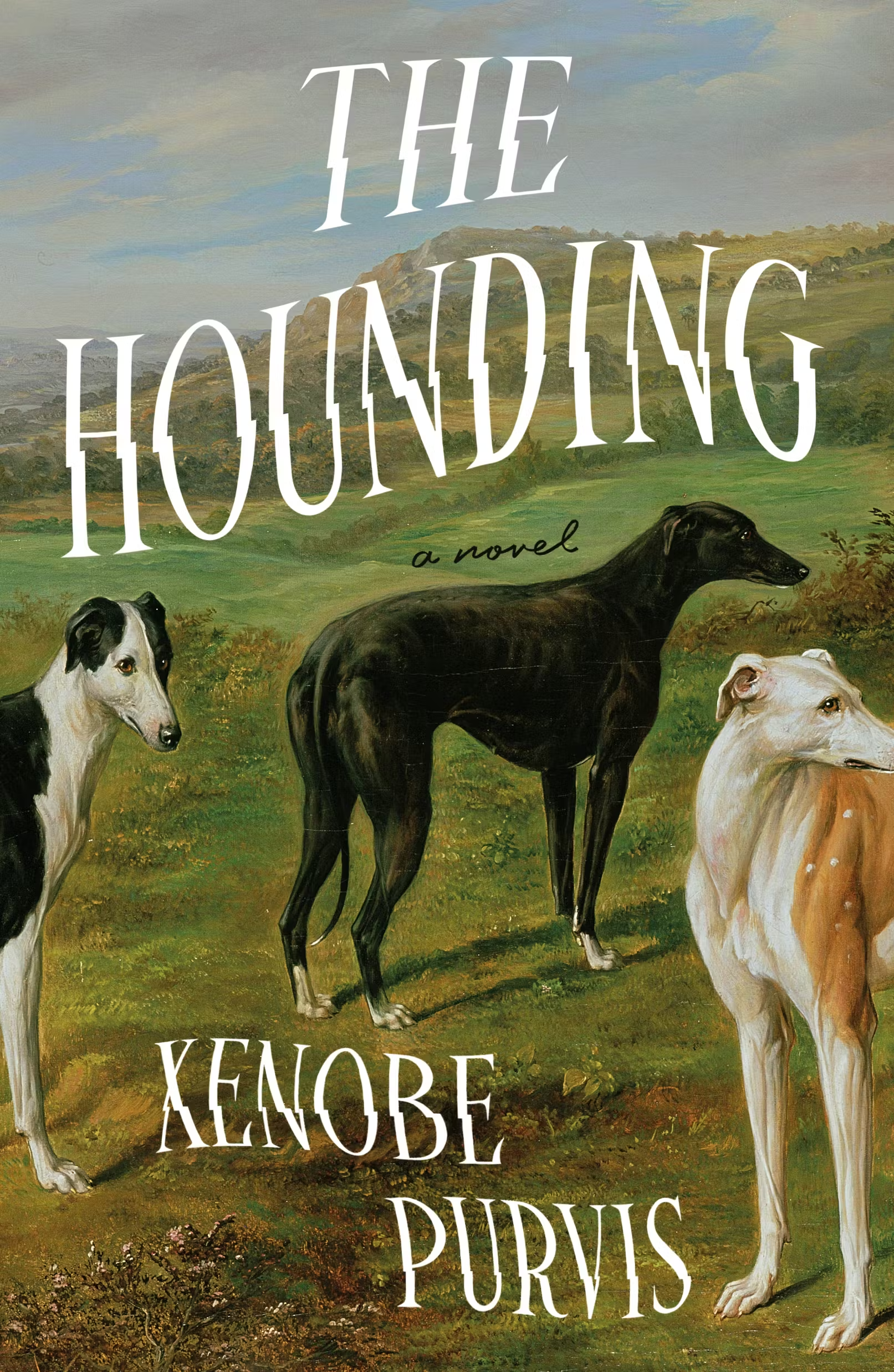 The Crucible meets The Virgin Suicides in this haunting debut about five sisters in a small village in eighteenth-century England whose neighbors are convinced they’re turning into dogs.
Even before the rumors about the Mansfield girls begin, Little Nettlebed is a village steeped in the uncanny, from strange creatures that wash up on the riverbank to portentous ravens gathering on the roofs of people about to die. But when the villagers start to hear barking, and one claims to see the Mansfield sisters transform before his very eyes, the allegations spark fascination and fear like nothing has before.
The truth is that though the inhabitants of Little Nettlebed have never much liked the Mansfield girls—a little odd, think some; a little high on themselves, perhaps—they’ve always had plenty to say about them. As the rotating perspectives of five villagers quickly make clear, now is no exception. Even if local belief in witchcraft is waning, an aversion to difference is as widespread as ever, and these conflicting narratives all point to the same ultimate conclusion: Something isn’t right in Little Nettlebed, and the sisters will be the ones to pay for it. A richly atmospheric parable of the pleasures and perils of female defiance, The Hounding considers whether in any age it might be safer to be a dog than an unusual young girl.
Xenobe Purvis was born in Tokyo in 1990. She studied English Literature at the University of Oxford, has an MA in creative writing from Royal Holloway, and was part of the London Library’s Emerging Writers Programme. She is a writer and literary researcher, with essays published in the Times Literary Supplement, The London Magazine, and elsewhere.
New Fiction | The Art of a Lie
From Simon & Schuster:
Laura Shepherd-Robinson, The Art of a Lie: A Novel (New York: Atria Books, 2025), 304 pages, ISBN: 978-1668083093, $28.
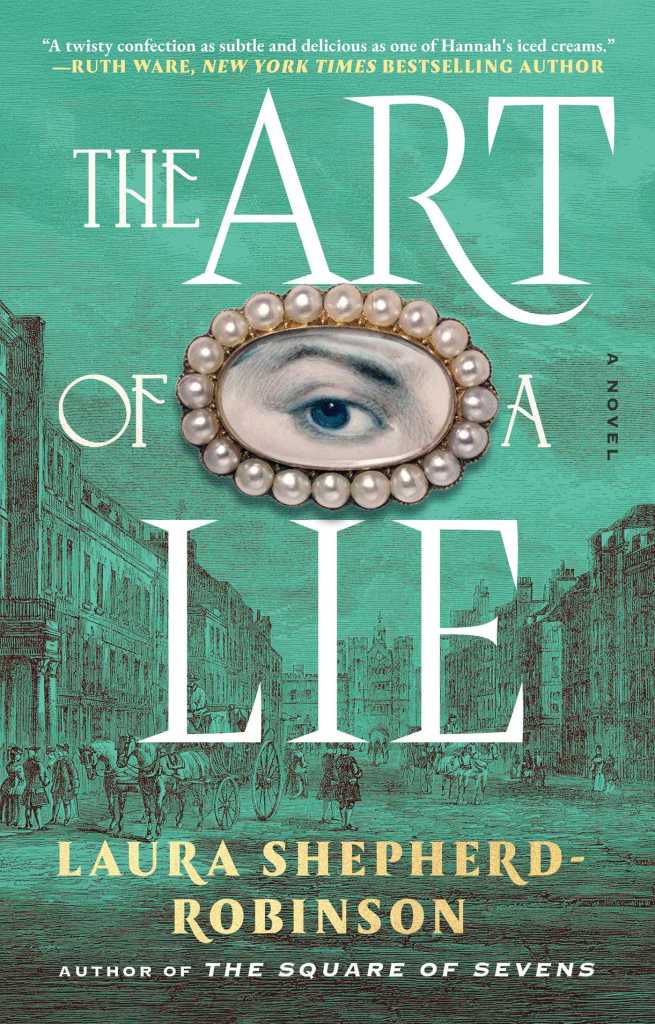 In 18th-century England, a widowed confectioner is drawn into a web of love, betrayal, and intrigue and a battle of wits in this masterful historical novel from the author of the “delicious puzzle-box of a novel” (The New York Times) and USA Today bestseller The Square of Sevens.
Following the murder of her husband in what looks like a violent street robbery, Hannah Cole is struggling to keep her head above water. Her confectionary shop on Piccadilly is barely turning a profit, her suppliers conspiring to put her out of business because they don’t like women in trade. Henry Fielding, the famous author-turned-magistrate, is threatening to confiscate the money in her husband’s bank account because he believes it might have been illicitly acquired. And even those who claim to be Hannah’s friends have darker intent. Only William Devereux seems different. A friend of her late husband, Devereux helps Hannah unravel some of the mysteries surrounding his death. He also tells her about an Italian delicacy called iced cream, an innovation she is convinced will transform the fortunes of her shop. But their friendship opens Hannah to speculation and gossip and draws Henry Fielding’s attention her way, locking her into a battle of wits more devastating than anything she can imagine.
Laura Shepherd-Robinson was born in Bristol in 1976. She has a BSc in politics from the University of Bristol, an MSc in political theory from the London School of Economics, and an MA in creative writing from City St. George’s, University of London. She is the author of three other novels, Blood & Sugar, Daughters of Night, and The Square of Sevens. She lives in London with her husband, Adrian.
New Fiction | Saltblood
The book first appeared from Bloomsbury in 2024 with a paperback edition released earlier this year:
Francesca de Tores, Saltblood (London: Bloomsbury, 2024), 368 pages, ISBN: 978-1526661333, £17.
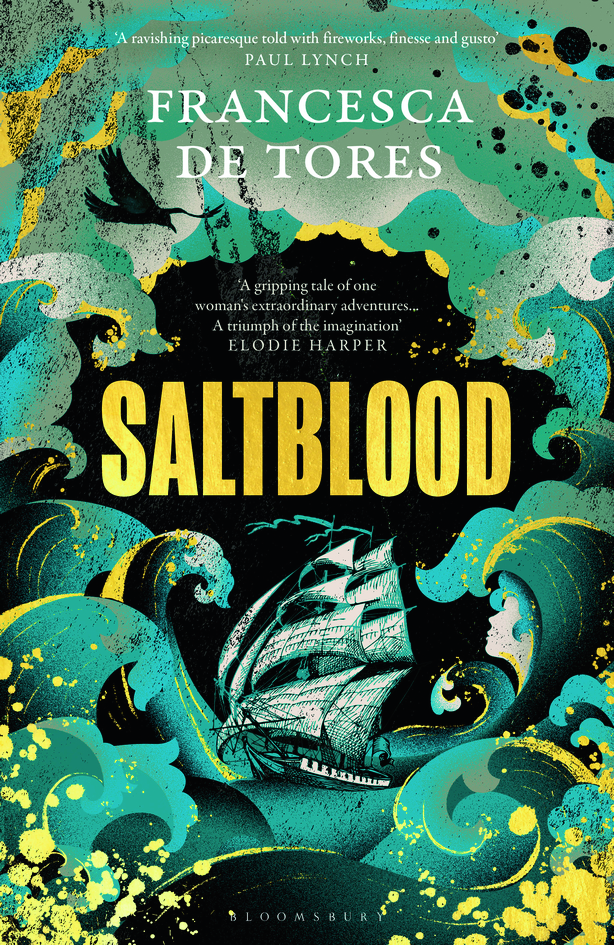 An epic historical fiction debut inspired by real life female pirates.
In a rented room outside Plymouth in 1685, a daughter is born as her half-brother is dying. Her mother makes a decision: Mary will become Mark, and Ma will continue to collect his inheritance money. Mary’s dual existence as Mark will lead to a role as a footman in a grand house, serving a French mistress; to the navy, learning who to trust and how to navigate by the stars; and to the army and the battlegrounds of Flanders, finding love among the bloodshed and the mud. But none of this will stop Mary yearning for the sea. Drawn back to the water, Mary must reinvent herself yet again, for a woman aboard a ship is a dangerous thing. This time Mary will become something more dangerous than a woman. She will become a pirate.
Breathing life into the Golden Age of Piracy, Saltblood is a wild adventure, a treasure trove, weaving an intoxicating tale of gender and survival, passion and loss, journeys and transformation, through the story of Mary Read, one of history’s most remarkable figures.
Francesca de Tores is a novelist, poet, and academic. She is the author of several novels, published in over 20 languages, including Saltblood, which won the 2024 Wilbur Smith Adventure Writing Prize. In addition to a collection of poems, her poetry is published widely in journals and anthologies. She grew up in Lutruwita/Tasmania and, after fifteen years in England, is now living in Naarm/Melbourne.
Exhibition | Anton Raphael Mengs (1728–1779)
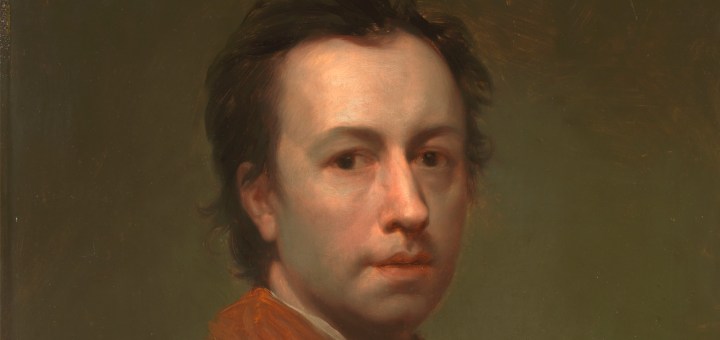
Anton Raphael Mengs, Self-Portrait, detail, 1761, oil on panel, 63 × 50 cm
(Madrid, Museo Nacional del Prado)
◊ ◊ ◊ ◊ ◊
From the press release for the exhibition:
Anton Raphael Mengs (1728–1779)
Museo Nacional del Prado, Madrid, 25 November 2025 — 1 March 2026
Curated by Andrés Úbeda and Javier Jordán de Urríes
The Museo del Prado and Fundación BBVA present an ambitious exhibition devoted to Anton Raphael Mengs, a key figure in the birth of Neoclassicism and one of the most influential artists of the 18th century. Anton Raphael Mengs (1728–1779) offers a detailed analysis of the painter’s work, thought, and legacy, in dialogue with the great masters of the past. It brings together a total of 159 works—including 64 paintings, 14 examples of the decorative arts, and 81 drawings, prints and studies on paper—allowing visitors to explore both the artist’s role as court painter and muralist as well as his intellectual and theoretical dimension. The works have been loaned from twenty-five international and nine Spanish institutions and ten private collections, reflecting the European reach of Mengs’s influence and the richness of his legacy.
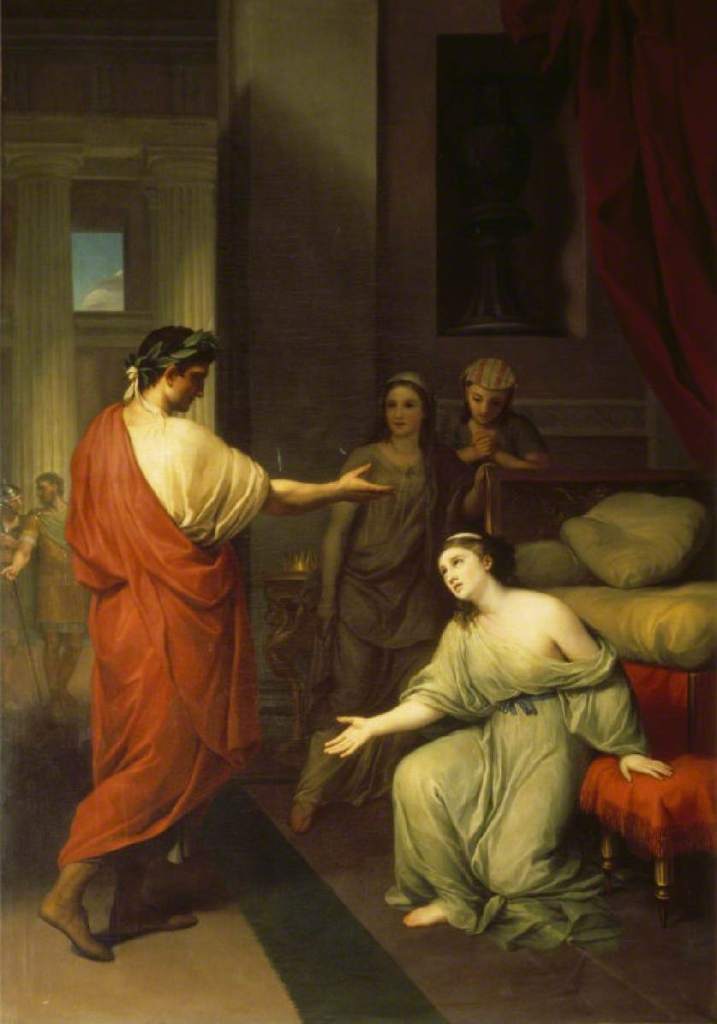
Anton Raphael Mengs, Octavian and Cleopatra, 1760, oil on canvas, 300 × 212 cm (National Trust Collections, Stourhead, The Hoare Collection).
The exhibition traces the artist’s journey from his training in Dresden and Rome to his rise to prominence as court painter to Charles III. It highlights his connections with figures such as Raphael, Correggio, and Winckelmann, as well as his role in redefining artistic taste in Europe. Exceptional loans that enrich the exhibition’s argument include The Lamentation over the Dead Christ from the Galería de las Colecciones Reales, Madrid; Jupiter and Ganymede from the Palazzo Barberini, Rome; and Octavian and Cleopatra from the National Trust Collections, United Kingdom.
The show is structured into ten thematic sections, combining a biographical survey of this cosmopolitan artist with areas devoted to specific aspects of his work and thought. Visitors will learn more about Mengs’s early training in Dresden and Rome under the strict discipline of his father, the court painter Ismail Mengs, and discover how the influence of Raphael and Correggio profoundly influenced his style and aspirations.
A section on “The Constant Challenge to Raphael” analyses Mengs’s conscious emulation of that artist, evident in works such as The Lamentation over the Dead Christ, displayed in a dialogue with Raphael’s Lo Spasimo di Sicilia. The sections on Rome, entitled “Rome, Caput Mundi” and “Rome: Fascination with the Ancient World,” show the impact of the Eternal City on Mengs’s work, both as a spiritual capital and as a repository of classical civilisation, with portraits of sitters such as Pope Clement XIII and Cardinal Zelada, as well as copies of antique sculptures that inspired the artist’s ideal of beauty.
 The exhibition also addresses Mengs’s complex relationship with the archaeologist Johann Joachim Winckelmann. “The End of Mengs’s Relationship with Winckelmann” tells the story of a friendship betrayed by the falsification of the fresco Jupiter and Ganymede. The section “Mengs, Painter-Philosopher” explores the artist’s theoretical activities, which made him an intellectual reference for Enlightenment art, and analyses the critical reception of his work after his death.
The patronage of Charles III is of central importance. The section “Painter to His Catholic Majesty and the Madrid Court” features portraits of the royal family and figures from Enlightenment Spain, while “Mengs, Painter of Frescoes” highlights the artist’s abilities at decorating large surfaces, such as the frescoes in the Royal Palace in Madrid. The section “Mengs as an Exponent of the New Enlightenment Devotion” focuses on his contribution to religious painting, influenced by Raphael, Correggio, Guido Reni, and Velázquez. Finally, “Mengs’s Legacy” looks at the painter’s influence on subsequent generations of artists, including Antonio Canova and Francisco de Goya.
Organised by the Museo Nacional del Prado with the exclusive sponsorship of Fundación BBVA, Anton Raphael Mengs (1728–1779) is curated by Andrés Úbeda de los Cobos, Head of the 18th-century Painting Collection and Goya at the Museo del Prado, and Javier Jordán de Urríes y de la Colina, Curator of 18th-century painting at Patrimonio Nacional.
Andrés Úbeda and Javier Jordán de Urríes, eds., Antonio Raphael Mengs, 1728–1779 (Madrid: Prado, 2025), 488 pages, ISBN: 978-8484806455, €38. Spanish edition.
Daniel Weiss Named as Director of Philadelphia Art Museum
From the press release:
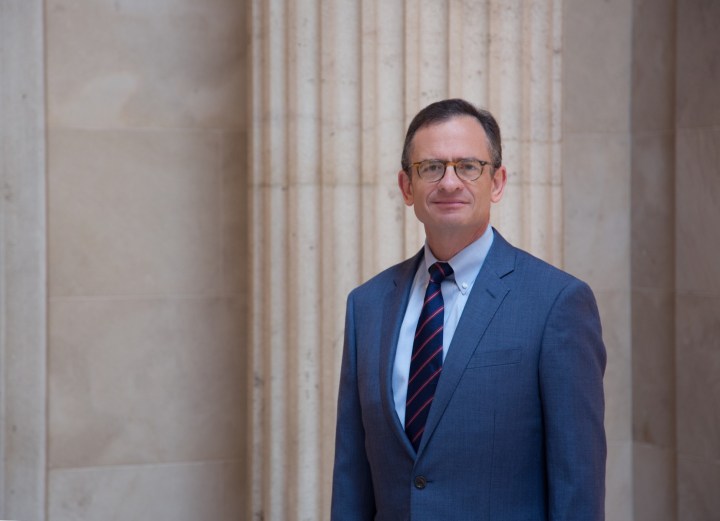 The Board of Trustees of the Philadelphia Art Museum announced the appointment of Daniel H. Weiss as the George D. Widener Director and CEO, effective 1 December 2025. Weiss, an accomplished museum executive with extensive leadership experience at major educational and cultural institutions, will guide the art museum through at least 2028, providing stability for staff, stakeholders, and the community.
“We are extraordinarily fortunate to have someone of Dan Weiss’s caliber and experience step into this critical role,” said Ellen Caplan, Chair of the Board of Trustees. “Dan’s proven track record of museum leadership, his deep understanding of the field, and his ability to navigate complex institutional challenges make him ideally suited to provide stability and strategic direction during this critical period for the art museum.”
Weiss brings decades of distinguished service in museum and educational leadership. Most recently, he served as President and CEO of The Metropolitan Museum of Art from 2015 to 2023, where he oversaw one of the world’s largest and most respected art museums. Prior to The Met, he served as President of Haverford College (2013–15) and of Lafayette College (2005–13). Weiss has spent the past two years as a Homewood Professor of the Humanities and Senior Advisor to the Provost for the Arts at Johns Hopkins University, where he received his PhD and served as chair of the Art History department and Dean of the Krieger School of Arts and Sciences earlier in his career.
“The Philadelphia Art Museum is one of America’s great cultural treasures, with an extraordinary collection, a dedicated staff, and deep connections to its community,” said Weiss. “It is a privilege and an honor to serve during this important moment, and I look forward to working with the Board, staff, and stakeholders to ensure the art museum continues its vital mission and advances its strategic priorities.”
During Weiss’s tenure at The Met, he led the institution through significant operational improvements, including addressing financial challenges, enhancing visitor experience, and strengthening the museum’s organizational effectiveness and building its infrastructure. Under his leadership, The Met completed a comprehensive facilities master plan, expanded its digital initiatives, and deepened community engagement.
As Director and CEO of the Philadelphia Art Museum, Weiss will oversee all aspects of the art museum’s operations, including curatorial programming, education initiatives, collection stewardship, fundraising, and strategic planning. He will work closely with the Board of Trustees and senior leadership team to maintain institutional momentum.
The Philadelphia Art Museum ranks among the largest art museums in the United States, with a collection of more than 240,000 objects spanning 2,000 years. The art museum serves approximately 700,000 visitors annually and plays a vital role in Philadelphia’s cultural and civic life.
Weiss holds a PhD in western medieval and Byzantine art from Johns Hopkins University, an MBA from Yale University, and a bachelor’s degree from George Washington University. The author of numerous books, Weiss has published extensively on medieval art, higher education, museums, and American culture. An elected member of the American Academy of Arts and Sciences, he serves on numerous cultural and civic boards and is widely recognized as one of the museum field’s most respected leaders.










 Enfilade
leave a comment