Exhibition | Kids! Between Representation and Reality
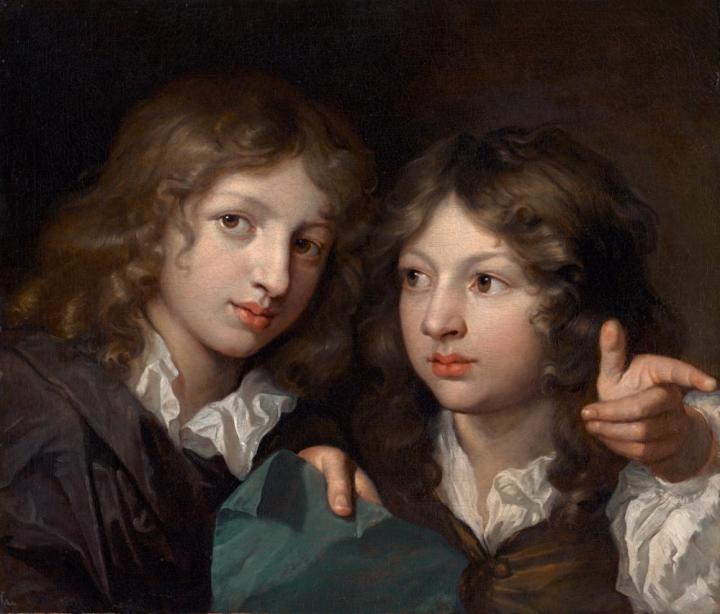
Caspar Netscher, A Portrait of Two Boys, Presuambly the Artist‘s Sons Everardus and Constantijn, ca. 1680–83
(Amsterdam: Collection Bob Haboldt)
◊ ◊ ◊ ◊ ◊
From the press release for the exhibition:
Kids! Between Representation and Reality
Bucerius Kunst Forum, Hamburg, 28 November 2025 — 6 April 2026
The exhibition Kids! Between Representation and Reality at the Bucerius Kunst Forum is dedicated to the representation of children in art from the 16th to the 21st century. Six chapters approach the subject from different perspectives and show not only paintings but also photographs, works on paper, prints, media art, and sculptures. The exhibition includes works by Tizian, Anthonis van Dyck, Oskar Kokoschka, Paula Modersohn-Becker, Nobuyoshi Araki, Thomas Lawrence, Joshua Reynolds, Rineke Dijkstra, Judith Leyster, Christoph Amberger, Gerhard Richter, and many more. The multifaceted nature of the exhibition illuminates the diverse perspectives and functions of children’s pictures over the centuries. Whether as a symbol of power and domination, as an expression of compassion or as snapshots of happy and sad childhoods: The depictions bear witness to the changing understanding of childhood over the centuries and at the same time illustrate the significance phase of life.
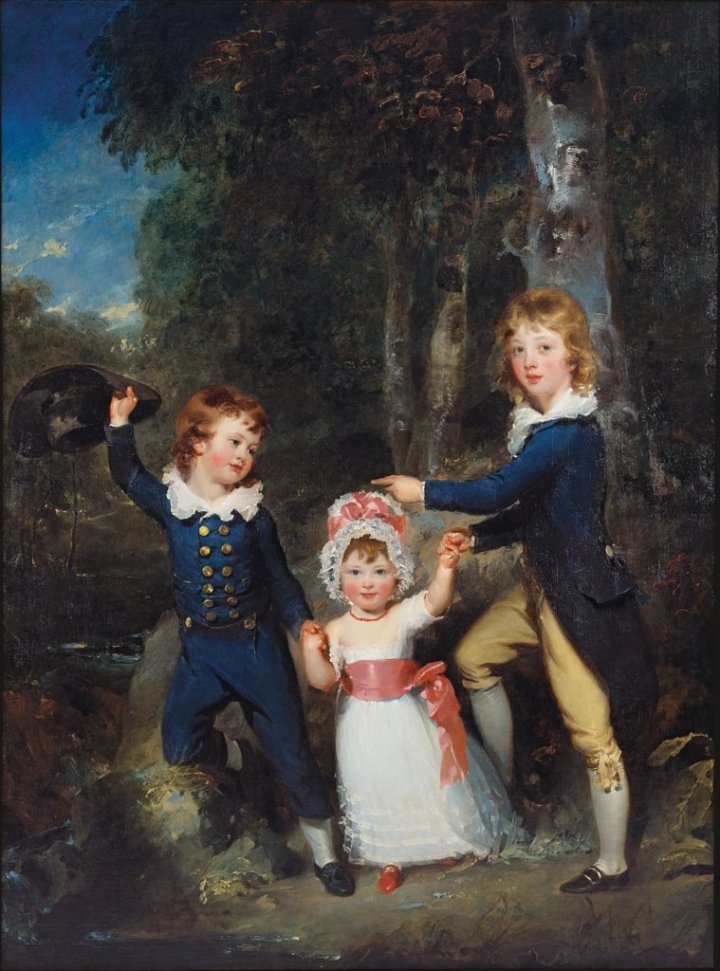
Thomas Lawrence, Portrait of the Children of Lord George Cavendish, 1790 (Frankfurt am Main: Städel Museum, Permanent Loan from the Adolf and Luisa Haeuser Foundation for Art and Culture).
The topic of images of children reflects the values and norms of a society and their changes in a special way. Images of children can be used to draw conclusions about social structures and power relations. Origin, status, and sometimes gender play an important role here. At the same time, over the centuries, social groups have influenced each other in the staging of their children and adapted their own representations in the process. How children are shown today is therefore linked to the reception of images of children from earlier times.
The exhibition reveals such cross-references and influences from the past to the present day and also identifies recurring patterns. The exhibition thus begins with a presentation of depictions of Madonna, in which the ideas of mother-child relationships and their influence up to the present day become clear. The father, on the other hand, usually fades into the background. Only when it comes to presenting the progenitor of the family do fathers proudly and consciously show themselves at the side of their young offspring. Until modern times, intimate father-child images were a rarity.
Created in aristocratic circles around 1500, the child portrait was intended to underpin the continuity and claim to power. Against this backdrop, portraits were often created showing the successors to the throne in armor as small adults. In this way, they were prepared for the future role of general and ruler. A playful variant is the portrait historié, in which the children were depicted as ancient gods, for example. Daughters were depicted at a very young age for reasons of marriage policy. Through strategic marriage promises and early marriages, it was possible to expand one’s own political influence and territorial power. In the course of the 16th century, the upper classes also portrayed their children, albeit less elaborately. In the 17th century, however, the representative and extravagant portrait of a child became increasingly popular in wider society.
In the 17th century in particular, Dutch and Spanish genre painters took up the motif of poor children, which still lives on today. The artists were not necessarily interested in taking a socially critical stance. It is not uncommon for children in financially disadvantaged, often precarious life situations to have a smile written all over their faces. Child labor was not fundamentally rejected either. It was seen as a positive contribution that children could make to the family income.
 Photographs illustrate how differently children grow up globally and structurally to this day. For many children, the street and not the nursery is the place where they come together, interact socially and play together. How the depiction of children has changed over the centuries is made particularly clear in the exhibition by the works of deceased adolescents. In the past, portraits of deceased children were the only means of preserving their memory. Today, commemoration takes place in a different way—for example through lifelike photographs that show children in happy life situations.
The most serious change, which testifies to a different conception and definition of childhood, took place at the end of the 17th century and in the 18th century. Children were now allowed their own development—as close to nature as possible and away from the adult world. The children’s room also became increasingly important, and toys and special children’s literature were regarded as fundamental elements of its furnishings. The theme of ‘being a child’ is still one of the most popular pictorial themes in the visual arts today: trying things out, pushing oneself to the limits, drawing, playing, and togetherness are characteristic of the most important phase of a person’s life.
For the first time at this exhibition, young visitors can borrow a discovery case free of charge at the ticket office or cloakroom. The kit offers elementary school-aged art explorers the opportunity to experience art in a playful way and contains various viewing tools and materials. A telescope, colored glasses, a prism, and a magnifying glass invite them to explore the exhibition and the museum on their own. The kit also includes exciting tasks that draw attention to details in the art. In this way, they learn more about art in a playful way, actively engage with the works, and develop their own perspectives on them.
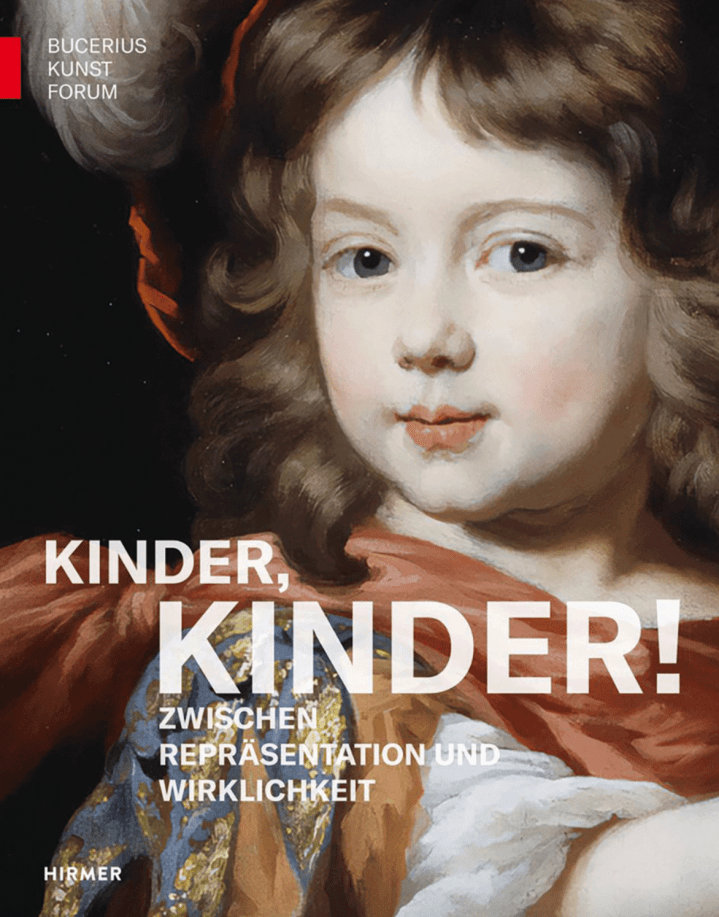
Katrin Dyballa, ed., Kinder, Kinder! Zwischen Repräsentation und Wirklichkeit (Munich: Hirmer Verlag, 2025), 288 pages, ISBN: 978-3777444963, €50.
Princeton University Library Special Collections Research Grants
From Princeton University Library:
Princeton University Library Special Collections Research Grants
Applications due by 14 January 2026
The Friends of the Princeton University Library Research Grants Program, funded by the Friends of PUL, is now accepting applications through noon on 14 January 2026. With grants of up to $6,000, plus travel expenses, this competitive grant program offers researchers from around the world access to PUL’s rare and unique collections. Awarded to short-term research projects lasting between two and four weeks, the grants aim to promote scholarly use of the Library’s special collections. Research projects are focused on scholarly use of archives, manuscripts, rare books, and other rare and unique holdings of PUL.
A new grant is available this year: the “Will Noel Innovative Cultural Heritage Research Grant,” specifically for cultural heritage professionals to work with PUL’s Special and Distinctive Collections and the Library IT Digital Studio’s specialized photographic equipment to gain new insights into our collective past.
Find out more and how to apply here. Questions can be directed to pulgrant@princeton.edu.










 Enfilade
leave a comment