2025 Berger Prize Winner | Architecture of Knowledge
From the press release (14 November) from The Walpole Society:
Eleonora Pistis, Architecture of Knowledge: Hawksmoor and Oxford (Turnhout: Brepols, 2024), 320 pages, ISBN: 978-1905375974, €150.
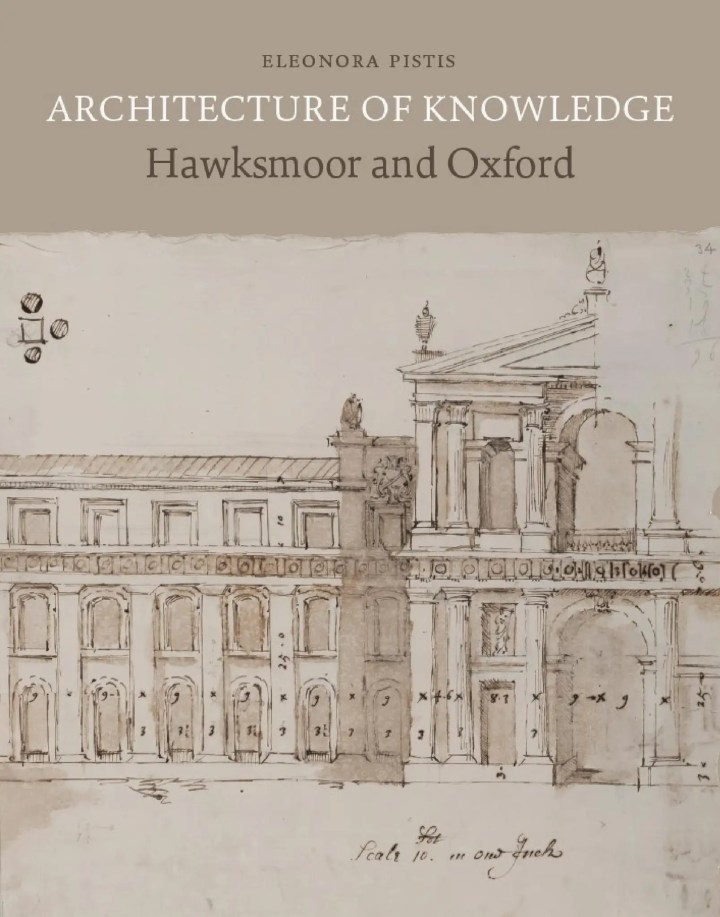 We are delighted to announce that the winner of the 2025 Berger Prize is Eleonora Pistis, for her book Architecture of Knowledge: Hawksmoor and Oxford. Dr Pistis will be awarded £5,000 through the generosity of the Berger Collection Educational Trust. and each of the shortlisted authors will be awarded £500. The winner was announced by Tim Knox, Director of the Royal Collection, at a reception at the Warburg Institute on 12 November.
Jonny Yarker, the chairman of the panel of assessors, praised the work of the judges in winnowing down the extensive list of entries to a shortlist of only six titles. He also paid tribute to Dr Julia Alexander (1967–2025), a longstanding and much valued Berger Prize assessor, in whose memory this year’s prize was awarded.
The shortlist featured The Radical Print by Esther Chadwick, “hotly anticipated, with its rich research and insights,” which the judges envisaged would “set a new agenda for writing about the eighteenth-century print.” Visual Arts and the Auld Alliance: Scotland, France and National Identity, c. 1420–1550 by Bryony Coombs was filled with “scrupulous archival work and a staggering range of material” making it “a joy from beginning to end.” Jointly edited by Cristina S. Martinez and Cynthia E. Roman, Female Printmakers, Printsellers and Print Publishers in the Eighteenth Century: The Imprint of Women c.1700–1830 included “scintillating material” of the highest calibre throughout, making it “a launching point for whole new areas of study.” Nicholas Olsberg’s “brilliant portrait of Victorian Britain” in The Master Builder: William Butterfield and his Times was praised for its beautiful presentation, exhaustive illustration, and expert writing, making it “the last word on Butterfield.” Published posthumously, Gavin Stamp’s Interwar: British Architecture 1919–39, provided a “perfect guide to the period and its buildings,” with the author’s voice, and his lifetime of learning, evident on each page he “re-defines British architecture of the interwar period.”
Eleonora Pistis’ prize-winning book, Architecture of Knowledge: Hawksmoor and Oxford, was described as representing a significant contribution to architectural history, as well as a careful reconstruction of hierarchies of knowledge during Hawksmoor’s period. Informed by a ‘dizzying range of archival and architectural sources’ the judges believed that this book will become a standard text for intellectual as well as architectural historians.
Dr Pistis is Associate Professor of of Art History and Archaeology at Columbia University. She was trained as both an architect and architectural historian at the University IUAV of Venice, Italy, where she earned her Ph.D. in the History of Architecture and Urban Planning. Before coming to Columbia she was, from 2011 to 2014, the Scott Opler Research Fellow in Architectural History at Worcester College, Oxford, Research Fellow at the Italian Academy for Advanced Studies in America at Columbia University, and visiting Assistant Professor in Art History at Grinnell College, Iowa
If you wish to learn more about the winning book, or indeed any of the titles above, each of the shortlisted authors has been interviewed by Dr Christina Faraday for our podcast British Art Matters. All of these episodes are now live, and can be listened to on our website, or on Spotify and Apple Podcasts. We would like to congratulate Dr Eleonora Pistis, the prize-winning author, and all involved in bringing her book to fruition!
American Numismatic Society Moving to Toledo Museum of Art
As someone who collected coins as a kid, who has lived proudly in the Midwest for three decades, and who really cares about antiquarian traditions, I’m so excited about this news from the American Numismatic Society! –CH
Dan Barry wrote about the move for The New York Times. From the press release (via Coin Week) . . .
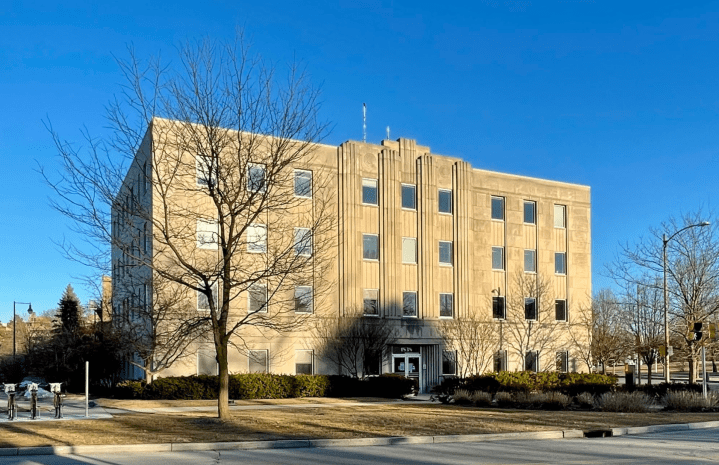
Tolford and Lange, Professional Arts Building, 1939. Located on the campus of the Toledo Museum of Art, the Art Deco building will be home to the American Numismatic Society, starting in 2028.
The American Numismatic Society—a nearly 170-year-old organization dedicated to the public appreciation and research of coins, currency, and medals and holding the most comprehensive collection of numismatic objects in the United States—today announced its strategic relocation from its current leased location at 75 Varick Street in New York City to Toledo, Ohio, where it will take up residence on the campus of the Toledo Museum of Art. This major relocation, taking place in the first half of 2028, will enable the ANS to better serve its American and international audiences while developing a strong relationship with the local community in the former major industrial city now undergoing a cultural revival.
“The American Numismatic Society’s move to Toledo marks a transformative new chapter in our long history,” says Dr. Ute Wartenberg Kagan, Sydney F. Martin Executive Director, The American Numismatic Society. “Partnering with the renowned Toledo Museum of Art, we will create innovative museum displays that highlight our remarkable collection of coins and medals. We are eager to reach new audiences and develop an affordable, state-of-the-art museum space that supports our mission of research, education, and public engagement. We also anticipate strengthening our academic partnerships with local universities, making Toledo a vibrant hub for numismatic study and research.”
Founded in 1858 by a group of passionate collectors in New York City, the ANS has grown from modest beginnings as a coin club into a prominent museum and research institution. Its extensive collection—ranking among the top four of its kind worldwide—includes nearly 800,000 coins, monetary objects, art medals, military orders, and decorations, which collectively serve as a gateway to history, providing profound insight into the cultural, economic, political, and art of societies around the world and across the centuries. Home to the best numismatic library anywhere, the ANS is also a major publisher of books on coins and medals, while leading the way in the digital transformation of numismatics by developing open-access online tools and databases that connect coins and currency globally to broader historical and humanities research.
A four-story Art Deco building adjacent to and acquired from TMA will serve as the ANS’s new home, where a dedicated museum hall and flexible gallery spaces will enable the organization to host world-class exhibitions and to showcase a wider array of its extraordinary treasures, many of which have never been publicly displayed. Offering more space to properly care for, study, and display its ever-growing collections—of which more than 100,000 numismatic objects were added in the past twenty years alone, including the extensive archives of the Medallic Art Company acquired in 2017—the ANS’s Toledo building will house a library, an auditorium, and an education center. Together these vastly expanded resources will serve to cement the organization’s position as a leading research center, while reaching a wider audience. As numismatics is one of the largest fields of collecting interest, with approximately 150 million enthusiasts in the U.S. alone, the ANS will become an unmatched destination not just for local audiences and the 300,000-plus visitors TMA welcomes to its campus each year, but also for international travelers, with the Detroit Metro Airport less than an hour away.
Through a new institutional partnership, objects from the ANS collection will be integrated into several of TMA’s permanent collection galleries, which are currently undergoing a major chronological reinstallation to be unveiled in late 2027. TMA’s permanent collection exhibits will be conceptually and materially enhanced by these additions from the ANS, providing unique insight into and a direct connection with each historical era since coins represent tangible, everyday reflections of events, social norms, and economic behaviors.
“We could not be more excited as a Museum or as a community to welcome the American Numismatic Society to the city as our neighbor,” comments Adam Levine, TMA’s Edward Drummond and Florence Scott Libbey President, Director and CEO. “TMA’s collection spans human history but is distinguished by a commitment to presenting works of only outstanding quality, which makes ANS the perfect partner to enrich our collection displays with the integration of numismatic items while enhancing both the art historical experience for all visitors to our shared campus and research opportunities for scholars.”
In addition to this close partnership with TMA, the ANS intends to partner with other local organizations and venues, furthering the organization’s ability to mount interdisciplinary exhibitions, conduct new research, and host events that the current facilities in New York City cannot support, such as major academic conferences and hands-on programs that demonstrate how money functions and help attendees develop practical financial skills for everyday life.










 Enfilade
leave a comment