Exhibition | Anton Raphael Mengs (1728–1779)
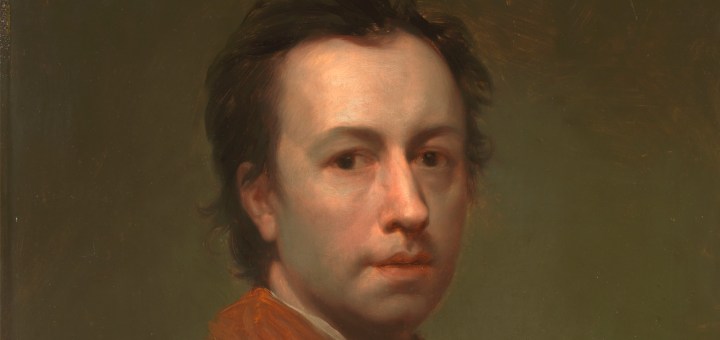
Anton Raphael Mengs, Self-Portrait, detail, 1761, oil on panel, 63 × 50 cm
(Madrid, Museo Nacional del Prado)
◊ ◊ ◊ ◊ ◊
From the press release for the exhibition:
Anton Raphael Mengs (1728–1779)
Museo Nacional del Prado, Madrid, 25 November 2025 — 1 March 2026
Curated by Andrés Úbeda and Javier Jordán de Urríes
The Museo del Prado and Fundación BBVA present an ambitious exhibition devoted to Anton Raphael Mengs, a key figure in the birth of Neoclassicism and one of the most influential artists of the 18th century. Anton Raphael Mengs (1728–1779) offers a detailed analysis of the painter’s work, thought, and legacy, in dialogue with the great masters of the past. It brings together a total of 159 works—including 64 paintings, 14 examples of the decorative arts, and 81 drawings, prints and studies on paper—allowing visitors to explore both the artist’s role as court painter and muralist as well as his intellectual and theoretical dimension. The works have been loaned from twenty-five international and nine Spanish institutions and ten private collections, reflecting the European reach of Mengs’s influence and the richness of his legacy.
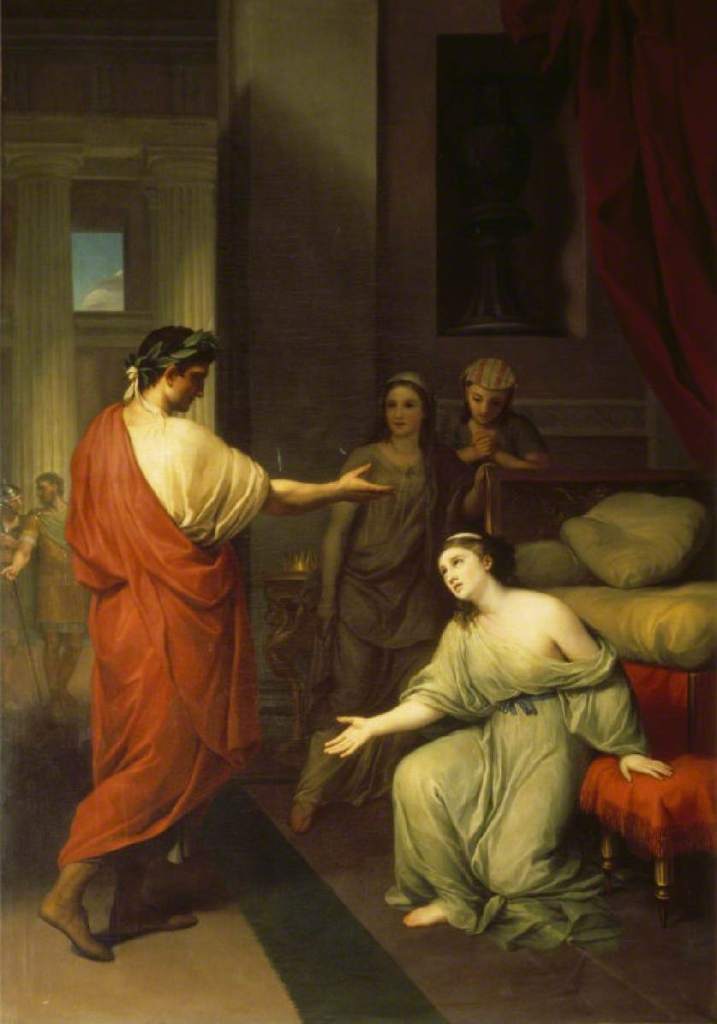
Anton Raphael Mengs, Octavian and Cleopatra, 1760, oil on canvas, 300 × 212 cm (National Trust Collections, Stourhead, The Hoare Collection).
The exhibition traces the artist’s journey from his training in Dresden and Rome to his rise to prominence as court painter to Charles III. It highlights his connections with figures such as Raphael, Correggio, and Winckelmann, as well as his role in redefining artistic taste in Europe. Exceptional loans that enrich the exhibition’s argument include The Lamentation over the Dead Christ from the Galería de las Colecciones Reales, Madrid; Jupiter and Ganymede from the Palazzo Barberini, Rome; and Octavian and Cleopatra from the National Trust Collections, United Kingdom.
The show is structured into ten thematic sections, combining a biographical survey of this cosmopolitan artist with areas devoted to specific aspects of his work and thought. Visitors will learn more about Mengs’s early training in Dresden and Rome under the strict discipline of his father, the court painter Ismail Mengs, and discover how the influence of Raphael and Correggio profoundly influenced his style and aspirations.
A section on “The Constant Challenge to Raphael” analyses Mengs’s conscious emulation of that artist, evident in works such as The Lamentation over the Dead Christ, displayed in a dialogue with Raphael’s Lo Spasimo di Sicilia. The sections on Rome, entitled “Rome, Caput Mundi” and “Rome: Fascination with the Ancient World,” show the impact of the Eternal City on Mengs’s work, both as a spiritual capital and as a repository of classical civilisation, with portraits of sitters such as Pope Clement XIII and Cardinal Zelada, as well as copies of antique sculptures that inspired the artist’s ideal of beauty.
 The exhibition also addresses Mengs’s complex relationship with the archaeologist Johann Joachim Winckelmann. “The End of Mengs’s Relationship with Winckelmann” tells the story of a friendship betrayed by the falsification of the fresco Jupiter and Ganymede. The section “Mengs, Painter-Philosopher” explores the artist’s theoretical activities, which made him an intellectual reference for Enlightenment art, and analyses the critical reception of his work after his death.
The patronage of Charles III is of central importance. The section “Painter to His Catholic Majesty and the Madrid Court” features portraits of the royal family and figures from Enlightenment Spain, while “Mengs, Painter of Frescoes” highlights the artist’s abilities at decorating large surfaces, such as the frescoes in the Royal Palace in Madrid. The section “Mengs as an Exponent of the New Enlightenment Devotion” focuses on his contribution to religious painting, influenced by Raphael, Correggio, Guido Reni, and Velázquez. Finally, “Mengs’s Legacy” looks at the painter’s influence on subsequent generations of artists, including Antonio Canova and Francisco de Goya.
Organised by the Museo Nacional del Prado with the exclusive sponsorship of Fundación BBVA, Anton Raphael Mengs (1728–1779) is curated by Andrés Úbeda de los Cobos, Head of the 18th-century Painting Collection and Goya at the Museo del Prado, and Javier Jordán de Urríes y de la Colina, Curator of 18th-century painting at Patrimonio Nacional.
Andrés Úbeda and Javier Jordán de Urríes, eds., Antonio Raphael Mengs, 1728–1779 (Madrid: Prado, 2025), 488 pages, ISBN: 978-8484806455, €38. Spanish edition.










 Enfilade
leave a comment