Thematic Route | Queen Isabel de Farnesio (1692–1766)
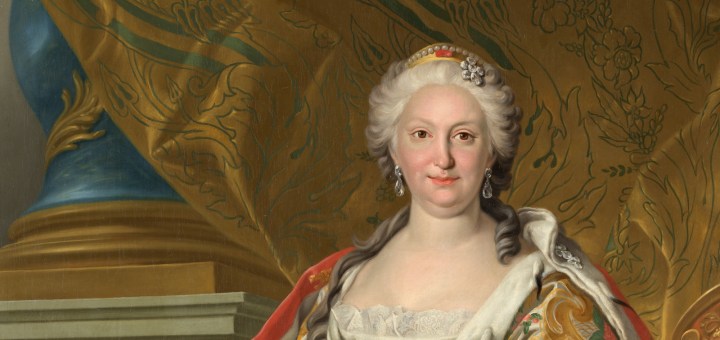
Louis-Michel van Loo, Queen Elisabetta Farnese, detail, ca. 1739, oil on canvas, 152 × 110 cm
(Madrid: Museo Nacional del Prado, P002397)
◊ ◊ ◊ ◊ ◊
From the press release for the new edition of the Prado’s Female Perspective initiative:
El Prado en femenino III: Queen Isabel de Farnesio (1692–1766)
Museo Nacional del Prado, Madrid, 1 December 2025 — 26 May 2026
Curated by Noelia García Pérez
The Museo Nacional del Prado shines a long-overdue spotlight on one of the most influential yet often overlooked women in European art history: Queen Isabel de Farnesio. With the third edition of its acclaimed initiative El Prado en femenino, the museum invites visitors to rediscover the 18th-century monarch whose passion for collecting helped shape what is now one of the world’s great art museums. Running until 26 May 2026, the new itinerary, created in collaboration with Spain’s Women’s Institute and supported by Iryo, moves the focus into the 18th century, following earlier editions devoted to Renaissance and Baroque royal women. This time, the star is a queen whose impact on the arts remains quietly yet unmistakably present throughout the Prado: Isabel de Farnesio (1692–1766), wife of King Philip V and one of the most active artistic patrons of her era.
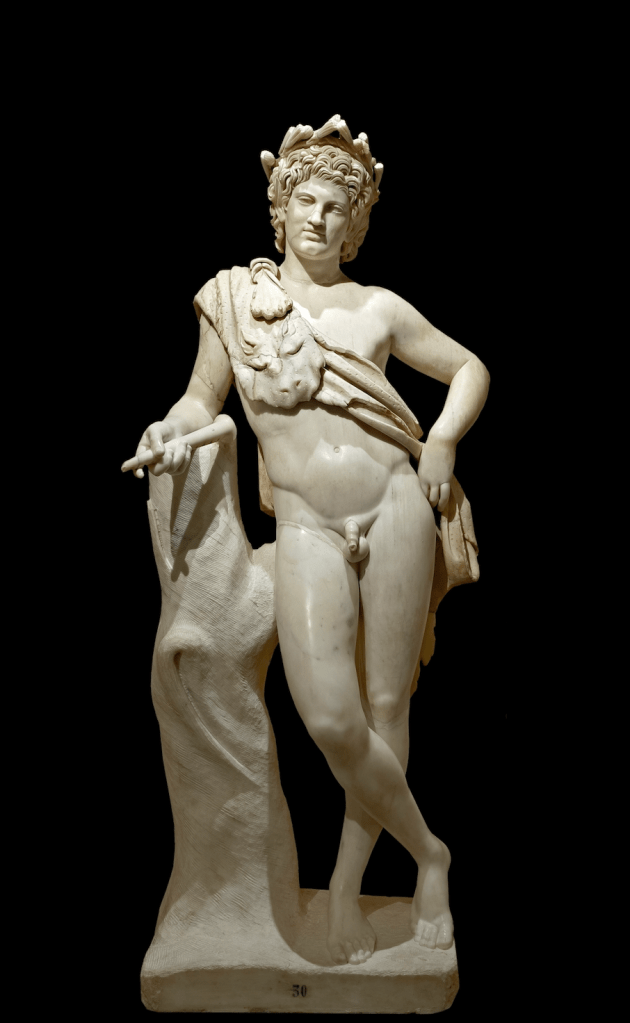
Resting Satyr, an ancient Roman copy of a work by Praxiteles, ca. 150–75 CE, Carrara marble (Madrid: Museo Nacional del Prado, E000030). The work was restored in the 17th century by Bernini’s workshop.
Few visitors realize that nearly 500 works in today’s Prado once belonged to her—paintings, drawings, and sculptures that now hang in almost half the museum’s galleries. The itinerary traces her unmistakable imprint, marked historically by a tiny fleur-de-lis stamped on the back of the works she owned. These include masterpieces like Rubens’s Apostolate, Ribera’s Jacob’s Dream, Velázquez’s Sibyl, Guido Reni’s Saint Sebastian, Correggio’s Virgin and Child with Saint John, and dozens of luminous works by Murillo, her favorite painter. Her taste was cosmopolitan and bold. Drawing on her Italian upbringing and a sharp eye for quality, Isabel assembled one of the finest painting collections of her time, particularly strong in the Flemish and Italian schools. She relied on a network of diplomats, agents, and noble intermediaries—yet maintained striking independence through her own private funds known as ‘the queen’s purse’.
Isabel’s legacy is not only pictorial. She was also responsible for bringing to Spain one of the most coveted collections of ancient sculpture in Europe: the classical masterpieces once owned by Queen Christina of Sweden. Works such as the Group of San Ildefonso, the Faun with a Kid, the Diadoumenos, and the Resting Satyr—cornerstones of the Prado’s classical sculpture galleries—arrived in Spain because Isabel insisted on acquiring them. She personally selected the pieces, reserved the finest for herself, and ensured they would become part of the Royal Collection.
The 45 works featured in this edition of El Prado en femenino, curated under the academic direction of Professor Noelia García Pérez, span newly rediscovered paintings, long-hidden works pulled from storage, and pieces returned from university and embassy loans. A recently identified Murillo sketch—found in the Musée de Pau during an inventory—appears at the Prado for the first time.
The project extends beyond the walls of the museum with the launch of an ambitious programme of talks, symposia, audiovisual productions, guided tours, family resources, a teacher-training course, concerts, and a new Wikipedia Editathon dedicated to expanding the online presence of women who shaped art history. With El Prado en femenino III, the museum takes another major step in reframing its collection through a gender-aware lens. In giving Isabel de Farnesio the attention she long deserved, the Prado not only revisits its past—it redefines the future of how art history is told.
The brochure for the thematic route is available here»
The website for the broader initiative of The Female Perspective is available here»










 Enfilade
leave a comment