Exhibition | Teatime: Chinese Enamels from the Taft Collection
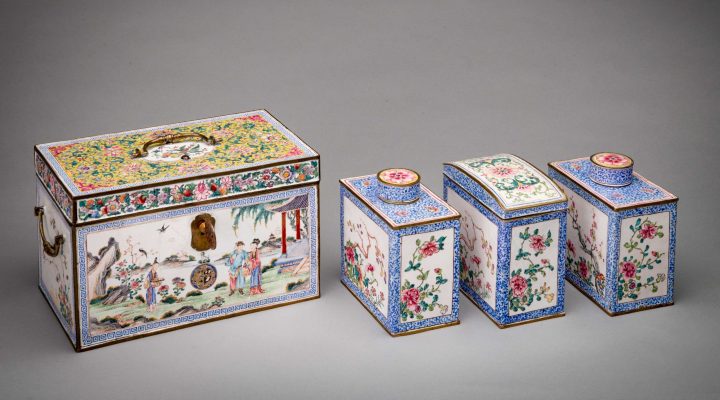
Tea Caddy with Armorial Decoration, ca. 1750–60, Qing dynasty, enamel on copper with gilded copper mounts (Cincinnati: Taft Museum of Art, Bequest of Compton Allyn, 2014.1.27.1, 2a-b, 3a-b, 4a-b).
◊ ◊ ◊ ◊ ◊
From the press release for the exhibition:
Teatime: Chinese Enamels from the Taft Collection
Taft Museum of Art, Cincinnati, 15 November 2025 — 22 March 2026
The Taft Museum of Art presents Teatime: Chinese Enamels from the Taft Collection, the museum’s first exhibition dedicated to the history of tea and its cultural legacy. Adorned with colorful designs, the works of art included in the show are part of a bequest of 89 enamels from the late Reverend Compton Allyn. His 2014 donation forms one of the world’s largest known public collections of Chinese painted enamels. Featuring 24 rarely seen works from the museum’s collection—most of which are typically in storage—Teatime offers a unique opportunity to explore the beauty, symbolism, and craftsmanship of enamelware in the context of tea culture in China and beyond.
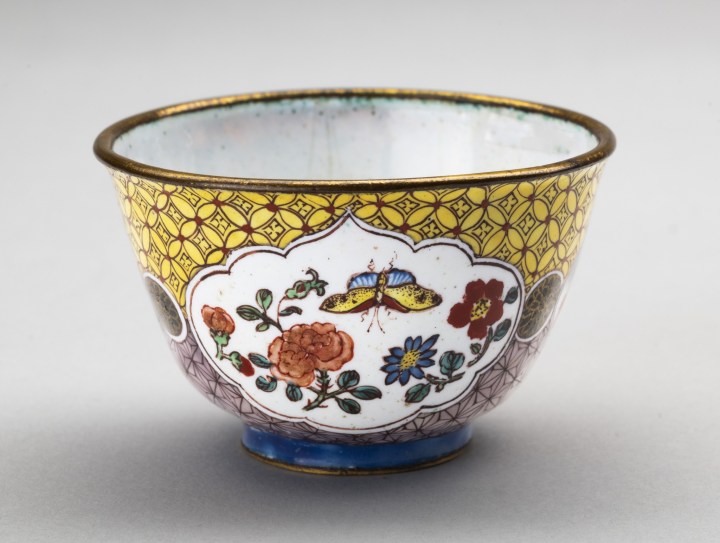
Cup with Flowers and Insects, ca. 1740–95, Qing dynasty, enamel on copper (Cincinnati: Taft Museum of Art, Bequest of Compton Allyn, 2014.1.40.1).
From intricately decorated teapots and cups to saucers and tea caddies, the objects on view reflect the skill of Qing dynasty artisans. These works were probably intended for Western buyers, as the passion for tea spread from China to Europe and America in the 1700s. Dutch merchants had first begun importing tea into Europe in the early 1600s. In 1662, King Charles II of England married the Portuguese noblewoman Catherine of Braganza, who brought her love of tea to the English court. The beverage quickly became popular with the aristocracy, and eventually the craze for tea permeated Western society. Of course, Westerners not only wanted tea leaves from China, they wanted teapots, cups, saucers, and accessories. Today, the skillfully created works of art in Teatime help tell the story of tea’s roots in China and how it became all the rage in 18th-century Europe and America.
“The Taft has a long history steeped in tea traditions—from New Year’s Day parties thrown by museum founders, Anna Sinton Taft and Charles Phelps Taft, in the early 1900s to festive holiday teas offered to visitors today—so it is fitting to celebrate this beloved beverage in an exhibition that also highlights some of the beautiful works of art in the collection,” says Taft Museum of Art Associate Curator, Ann Glasscock.
Visitors who want to extend the tea experience can explore the museum’s Chinese porcelain teapots and other tea-related objects on view in the collection galleries, and through Sunday, January 4, they can enjoy a tea-themed holiday tree with decorations by contemporary artists in the Duncanson Foyer and see the annual holiday display in the Dining Room, “All Set for Afternoon Tea.”
The museum’s 200-year-old historic house was once home to notable Cincinnatians such as Nicholas Longworth and museum co-founders Anna Sinton Taft and Charles Phelps Taft. The one-of-a-kind landmark is now a destination of international cultural significance. The museum’s collection of more than 800 objects includes important Chinese porcelains, European decorative arts, French Renaissance enamels, American furniture, and masterpiece paintings by Thomas Gainsborough, Francisco Goya, Rembrandt van Rijn, John Singer Sargent, J. M. W. Turner, and James McNeill Whistler. Eight monumental landscape murals by Robert S. Duncanson, the first Black American artist to achieve global acclaim, also adorn the walls of the museum’s foyer.
New Book | BVRB’s Commodes
From Giles:
Marie-Laure Buku Pongo and William Christie, BVRB’s Commodes (London: D. Giles, 2025), 72 pages, ISBN: 978-1917273121, $30. Frick Diptych 16.
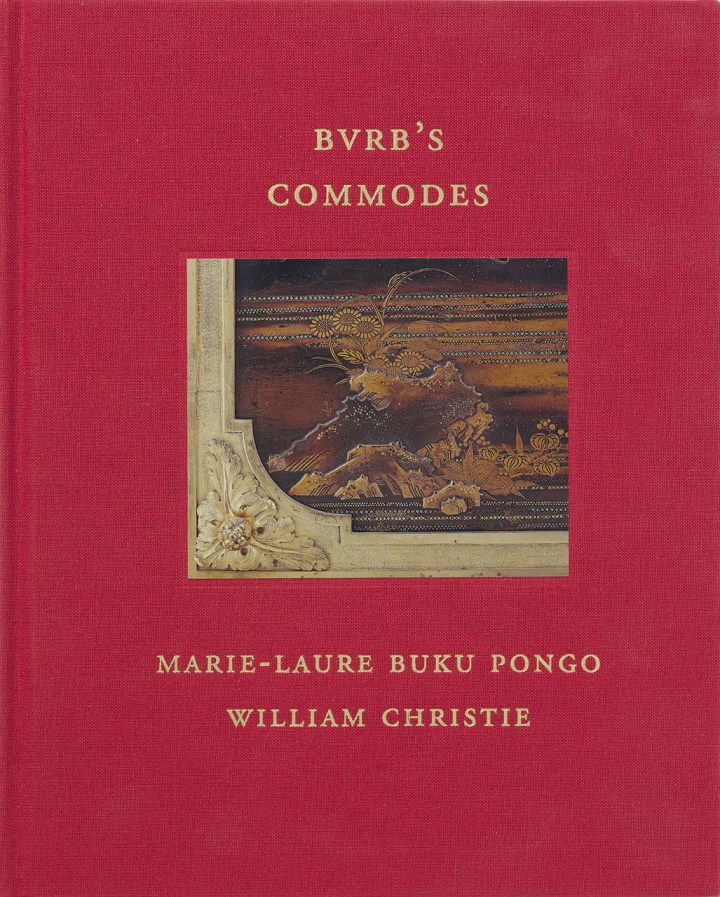 This new volume in the Frick Diptych series features an essay by Frick curator Marie-Laure Buku Pongo paired with a contribution by world-renowned conductor and keyboardist William Christie.
These two cabinets, stamped BVRB, may well be the last pieces of furniture made by the celebrated Parisian cabinetmaker Bernard van Risenburgh II just before he retired in 1764 and sold his workshop to his son, Bernard van Risenburgh III, who finished them. The cabinets feature panels of black-and-gold Japanese lacquer of exceptionally high quality taken from a seventeenth-century Japanese cabinet, chest, or screen. Beginning in the 1730s, the older van Risenburgh worked almost exclusively with the influential marchands-merciers or merchants of luxury goods, who provided the cabinetmaker with the rare and costly Oriental lacquers and sometimes with the design for the furniture on which to mount them.
Marie-Laure Buku Pongo is assistant curator of Decorative Arts at The Frick Collection. Conductor and harpsichordist William Christie is a specialist in the baroque and classical repertoire; he is the founder of the ensemble Les Arts Florissants.
H-France Salon 17.1 (2025): The Myth of French Taste
The following articles are all available free of charge . . .
H-France Salon 17.1 (2025) — The Myth of French Taste
Edited by Oliver Wunsch
The concept of goût français has been central to French national identity since at least the late seventeenth century, yet the centuries since have yielded no clear consensus on its meaning. Does ‘French taste’ signify the cosmopolitanism of a nation whose defining feature is its role as a cultural crossroads? Or does it name the very quality that shields France from foreign influence and the pressures of globalization?
The essays in this special issue of H-France Salon show how the idea of French taste has, for over three hundred years, mediated between these opposing visions of France’s place in the world. From the luxury trades of the ancien régime to postwar debates over abstraction, ‘French taste’ has been invoked as a unifying principle precisely when the conception of France itself was most in flux. Yet a closer look at its history reveals the limits of its power to reconcile the antipodes of cosmopolitan universalism and nationalistic chauvinism.
c o n t e n t s
• The Vexations of French Taste — Oliver Wunsch (Boston College)
• French Taste, Absolutism, and Economic Competition in the Eighteenth Century — Natacha Coquery (University of Lyon 2, LARHRA)
• From le Goût Universel to le Goût de Terroir: ‘French Taste’ in Modern Gastronomic Discourse — Benjamin Poole (Texas Tech University)
• Was (and Is) ‘French Fashion’ Just a Myth? — Sophie Kurkdjian (American University of Paris)
• Toying with Taste: Play and Aesthetic Education in Modern France — Shana Cooperstein (School of Humanities, IE University)
• Expressionist Abstraction and the Tradition Française — Linda Stratford (Asbury University)
• Globalizing French Luxury: The Comité Colbert and L’Art de Vivre, 1983–2025 — Grace Allen (The College Preparatory School in Oakland, California)
Exhibition | The Grand Dauphin (1661–1711)
Now on view at Versailles:
The Grand Dauphin (1661–1711): Son of a King, Father of a King, but Never a King
Château de Versailles, 14 October 2025 — 15 February 2026
Curated by Lionel Arsac and Lorène Legrand
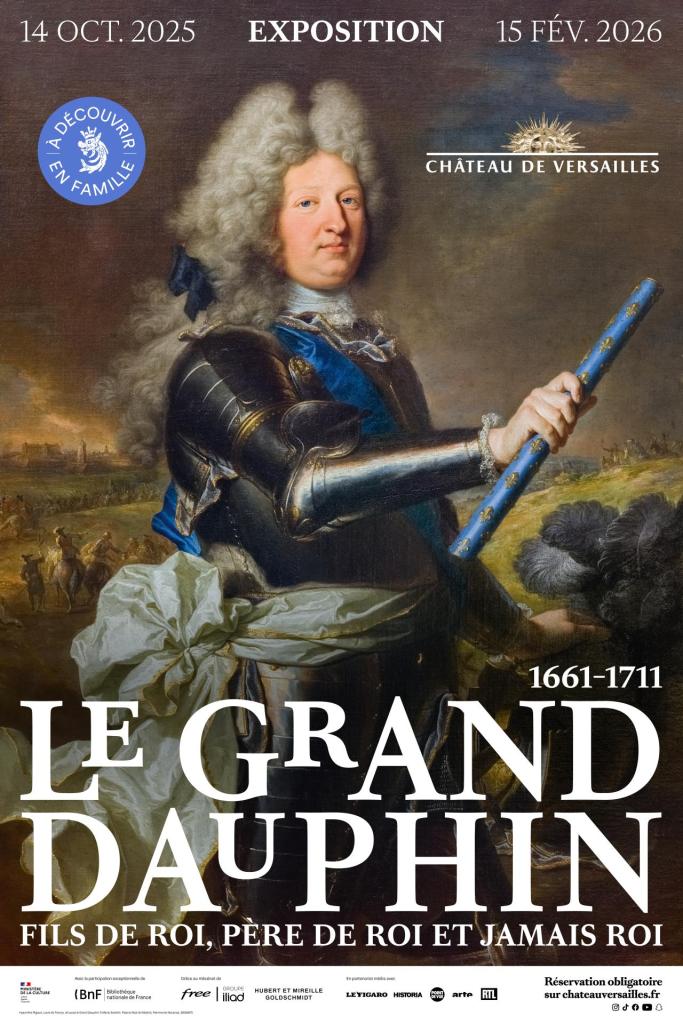 The Palace of Versailles is presenting an exhibition devoted to the Grand Dauphin, Louis de France, the eldest child of Louis XIV. It traces the life of this often overlooked prince through nearly 250 works from French and international collections. As heir to the throne, he was the focal point of Bourbon dynastic ambitions, without ever reigning, but his education, residences, and taste for the arts reflect the destiny which was his due.
Born in 1661 at the château de Fontainebleau, Louis de France was the first son of Louis XIV and Maria Theresa of Spain. During his lifetime as Dauphin, he was called ‘Monseigneur’ but was given the name ‘Grand Dauphin’ after his death in 1711, to distinguish him from his son, the Duke of Burgundy.
This heir to the crown died prematurely of smallpox in April 1711 at the château de Meudon, four years before his father. His eldest son, the Duke of Burgundy, died a year later, leaving behind two children. The eldest child, the two-year-old Duke of Anjou, became the dauphin and acceded to the throne in 1715 after the death of Louis XIV under the name Louis XV. Although the Grand Dauphin did not reign, he remains a key figure in the Bourbon dynasty: grandfather to Louis XV, great-great-grandfather to Louis XVI, Louis XVIII and Charles X, and father of Philip V, first sovereign of the Spanish branch of the Bourbons, which still reigns to this day.
The Grand Dauphin’s entire life was spent preparing to be king, and he received a rigorous education in the arts, war, and government. His life was summed up by Saint-Simon in the famous formula: “Son of a king, father of a king, but never a king.” It embodies the paradox of a prince who was trained to rule, but was never crowned.
Aside from his political duties, the Grand Dauphin also developed a keen taste for the arts and the pleasures of the court. He was an avid collector and assembled a large number of works of art, some of which will be exhibited for the first time due to exceptional loans, notably from the Prado Museum in Madrid.
The exhibition, created with the exceptional participation of the BnF Museum, turns the spotlight on what it meant to be the Dauphin of France under the Ancien Régime by retracing the major stages of the life of the Grand Dauphin. It is presented in three sections mirroring Saint Simon’s formula, and explores his education as a prince, his life at court, and his involvement in affairs of state.
Lionel Arsac and Lorène Legrand, eds., Le Grand Dauphin: Fils de Roi, Père de Roi et Jamais Roi (Dijon: Éditions Faton, 2025), 472 pages, ISBN: 978-2878444087, €54.
2025 Berger Prize Winner | Architecture of Knowledge
From the press release (14 November) from The Walpole Society:
Eleonora Pistis, Architecture of Knowledge: Hawksmoor and Oxford (Turnhout: Brepols, 2024), 320 pages, ISBN: 978-1905375974, €150.
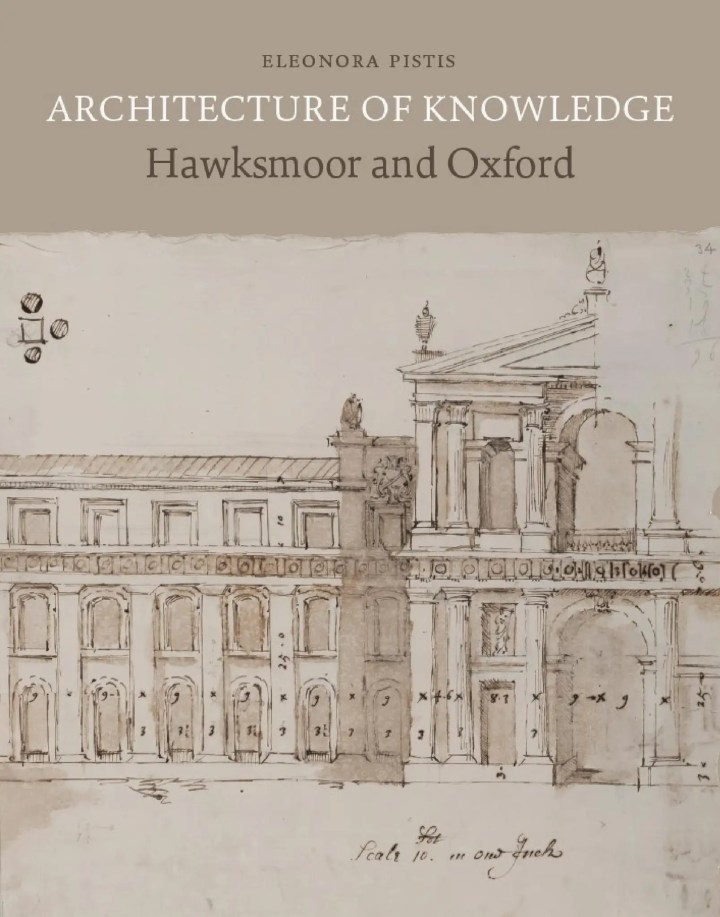 We are delighted to announce that the winner of the 2025 Berger Prize is Eleonora Pistis, for her book Architecture of Knowledge: Hawksmoor and Oxford. Dr Pistis will be awarded £5,000 through the generosity of the Berger Collection Educational Trust. and each of the shortlisted authors will be awarded £500. The winner was announced by Tim Knox, Director of the Royal Collection, at a reception at the Warburg Institute on 12 November.
Jonny Yarker, the chairman of the panel of assessors, praised the work of the judges in winnowing down the extensive list of entries to a shortlist of only six titles. He also paid tribute to Dr Julia Alexander (1967–2025), a longstanding and much valued Berger Prize assessor, in whose memory this year’s prize was awarded.
The shortlist featured The Radical Print by Esther Chadwick, “hotly anticipated, with its rich research and insights,” which the judges envisaged would “set a new agenda for writing about the eighteenth-century print.” Visual Arts and the Auld Alliance: Scotland, France and National Identity, c. 1420–1550 by Bryony Coombs was filled with “scrupulous archival work and a staggering range of material” making it “a joy from beginning to end.” Jointly edited by Cristina S. Martinez and Cynthia E. Roman, Female Printmakers, Printsellers and Print Publishers in the Eighteenth Century: The Imprint of Women c.1700–1830 included “scintillating material” of the highest calibre throughout, making it “a launching point for whole new areas of study.” Nicholas Olsberg’s “brilliant portrait of Victorian Britain” in The Master Builder: William Butterfield and his Times was praised for its beautiful presentation, exhaustive illustration, and expert writing, making it “the last word on Butterfield.” Published posthumously, Gavin Stamp’s Interwar: British Architecture 1919–39, provided a “perfect guide to the period and its buildings,” with the author’s voice, and his lifetime of learning, evident on each page he “re-defines British architecture of the interwar period.”
Eleonora Pistis’ prize-winning book, Architecture of Knowledge: Hawksmoor and Oxford, was described as representing a significant contribution to architectural history, as well as a careful reconstruction of hierarchies of knowledge during Hawksmoor’s period. Informed by a ‘dizzying range of archival and architectural sources’ the judges believed that this book will become a standard text for intellectual as well as architectural historians.
Dr Pistis is Associate Professor of of Art History and Archaeology at Columbia University. She was trained as both an architect and architectural historian at the University IUAV of Venice, Italy, where she earned her Ph.D. in the History of Architecture and Urban Planning. Before coming to Columbia she was, from 2011 to 2014, the Scott Opler Research Fellow in Architectural History at Worcester College, Oxford, Research Fellow at the Italian Academy for Advanced Studies in America at Columbia University, and visiting Assistant Professor in Art History at Grinnell College, Iowa
If you wish to learn more about the winning book, or indeed any of the titles above, each of the shortlisted authors has been interviewed by Dr Christina Faraday for our podcast British Art Matters. All of these episodes are now live, and can be listened to on our website, or on Spotify and Apple Podcasts. We would like to congratulate Dr Eleonora Pistis, the prize-winning author, and all involved in bringing her book to fruition!
American Numismatic Society Moving to Toledo Museum of Art
As someone who collected coins as a kid, who has lived proudly in the Midwest for three decades, and who really cares about antiquarian traditions, I’m so excited about this news from the American Numismatic Society! –CH
Dan Barry wrote about the move for The New York Times. From the press release (via Coin Week) . . .
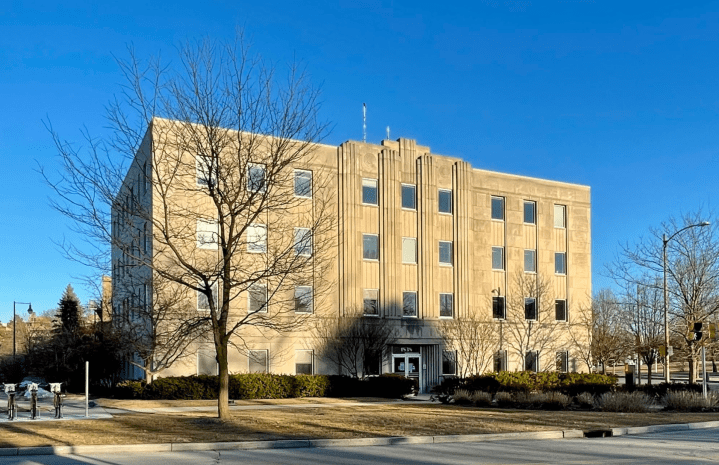
Tolford and Lange, Professional Arts Building, 1939. Located on the campus of the Toledo Museum of Art, the Art Deco building will be home to the American Numismatic Society, starting in 2028.
The American Numismatic Society—a nearly 170-year-old organization dedicated to the public appreciation and research of coins, currency, and medals and holding the most comprehensive collection of numismatic objects in the United States—today announced its strategic relocation from its current leased location at 75 Varick Street in New York City to Toledo, Ohio, where it will take up residence on the campus of the Toledo Museum of Art. This major relocation, taking place in the first half of 2028, will enable the ANS to better serve its American and international audiences while developing a strong relationship with the local community in the former major industrial city now undergoing a cultural revival.
“The American Numismatic Society’s move to Toledo marks a transformative new chapter in our long history,” says Dr. Ute Wartenberg Kagan, Sydney F. Martin Executive Director, The American Numismatic Society. “Partnering with the renowned Toledo Museum of Art, we will create innovative museum displays that highlight our remarkable collection of coins and medals. We are eager to reach new audiences and develop an affordable, state-of-the-art museum space that supports our mission of research, education, and public engagement. We also anticipate strengthening our academic partnerships with local universities, making Toledo a vibrant hub for numismatic study and research.”
Founded in 1858 by a group of passionate collectors in New York City, the ANS has grown from modest beginnings as a coin club into a prominent museum and research institution. Its extensive collection—ranking among the top four of its kind worldwide—includes nearly 800,000 coins, monetary objects, art medals, military orders, and decorations, which collectively serve as a gateway to history, providing profound insight into the cultural, economic, political, and art of societies around the world and across the centuries. Home to the best numismatic library anywhere, the ANS is also a major publisher of books on coins and medals, while leading the way in the digital transformation of numismatics by developing open-access online tools and databases that connect coins and currency globally to broader historical and humanities research.
A four-story Art Deco building adjacent to and acquired from TMA will serve as the ANS’s new home, where a dedicated museum hall and flexible gallery spaces will enable the organization to host world-class exhibitions and to showcase a wider array of its extraordinary treasures, many of which have never been publicly displayed. Offering more space to properly care for, study, and display its ever-growing collections—of which more than 100,000 numismatic objects were added in the past twenty years alone, including the extensive archives of the Medallic Art Company acquired in 2017—the ANS’s Toledo building will house a library, an auditorium, and an education center. Together these vastly expanded resources will serve to cement the organization’s position as a leading research center, while reaching a wider audience. As numismatics is one of the largest fields of collecting interest, with approximately 150 million enthusiasts in the U.S. alone, the ANS will become an unmatched destination not just for local audiences and the 300,000-plus visitors TMA welcomes to its campus each year, but also for international travelers, with the Detroit Metro Airport less than an hour away.
Through a new institutional partnership, objects from the ANS collection will be integrated into several of TMA’s permanent collection galleries, which are currently undergoing a major chronological reinstallation to be unveiled in late 2027. TMA’s permanent collection exhibits will be conceptually and materially enhanced by these additions from the ANS, providing unique insight into and a direct connection with each historical era since coins represent tangible, everyday reflections of events, social norms, and economic behaviors.
“We could not be more excited as a Museum or as a community to welcome the American Numismatic Society to the city as our neighbor,” comments Adam Levine, TMA’s Edward Drummond and Florence Scott Libbey President, Director and CEO. “TMA’s collection spans human history but is distinguished by a commitment to presenting works of only outstanding quality, which makes ANS the perfect partner to enrich our collection displays with the integration of numismatic items while enhancing both the art historical experience for all visitors to our shared campus and research opportunities for scholars.”
In addition to this close partnership with TMA, the ANS intends to partner with other local organizations and venues, furthering the organization’s ability to mount interdisciplinary exhibitions, conduct new research, and host events that the current facilities in New York City cannot support, such as major academic conferences and hands-on programs that demonstrate how money functions and help attendees develop practical financial skills for everyday life.
Conference | The Future of the Antique
From Eventbrite:
The Future of the Antique: Interpreting the Sculptural Canon
Institute of Classical Studies, Senate House and Warburg Institute, London, 10–12 December 2025
Organized by Adriano Aymonino and Kathleen Christian
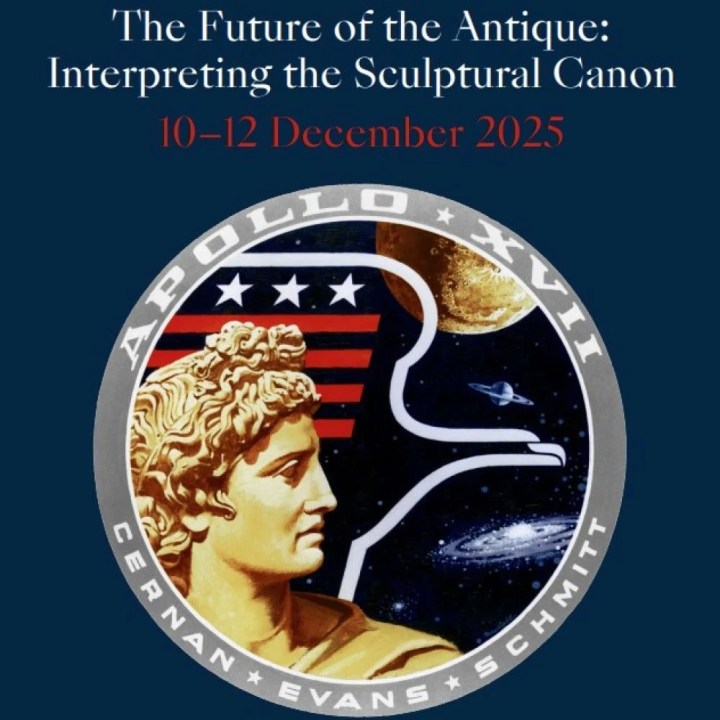 Celebrating the publication of the new, expanded edition of Francis Haskell and Nicholas Penny’s seminal Taste and the Antique (3 vols, Harvey Miller/Brepols, 2024), this conference explores the interpretation and reception of classical sculpture.
The original edition of Taste and the Antique was a landmark study that established a canonical list of ninety-five ancient sculptures that were widely admired, collected, and copied between 1500 and 1900. It traced how these works—from the Apollo Belvedere to the Laocoön—shaped artistic taste, collecting practices, and artistic discourse by defining a classical aesthetic and pedagogy. As one of the most influential texts in the history of art history, Taste and the Antique has profoundly shaped scholarship and curatorial practice on the reception of ancient sculpture. The revised three-volume edition of 2024 substantially updates the original text with recent research. It broadens the discussion of the reception of the classical canon, incorporates decades of intervening scholarship, and brings the conversation into the realm of contemporary art, opening new perspectives on the afterlives of Greek and Roman sculpture. Taking the new edition as a point of departure, the conference assesses the state of the field, explores emerging methodologies, and considers future directions. It aims to foster dialogue across generations, traditions, and methodologies of scholarship.
Sessions will address how classical statues shaped visual culture beyond replication, including:
• Shaping and Transmitting the Canon | Examining the establishment, radical alteration, and dissolution of the sculptural canon in the early modern era.
• The Canon and the Body in the Age of Empire | Exploring the role of classical statuary in the conception of ‘proportionate’ and ‘disproportionate’ bodies, in the representation of non-European populations, and in colonial educational and social policies.
• Restoration and Display | Considering reconfigurations of the antique and notions of authenticity; situating the antique within modern museum contexts.
• Changing and Rethinking Canons | Rethinking the antique within modern and postmodern theoretical frameworks and practices.
The conference is organised by Adriano Aymonino (University of Buckingham) and Kathleen Christian (Census of Antique Works of Art and Architecture Known in the Renaissance, Humboldt University of Berlin). It is supported by Humboldt-Universität zu Berlin; Center for Palladian Studies in America; Trinity Fine Art; and Istituto Italiano di Cultura.
w e d n e s d a y , 1 0 d e c e m b e r
6.00 Doors open
6.20 Introduction — Katherine Harloe (Director, Institute of Classical Studies)
6.30 Keynote
• Salvatore Settis (Accademico dei Lincei) — Only Connect: Dionysus and Christ
t h u r s d a y , 1 1 d e c e m b e r
10:00 Registration
10.30 Introduction — Adriano Aymonino (The University of Buckingham) and Kathleen Christian(Census-Humboldt University of Berlin)
10.45 Session 1 | Shaping and Transmitting the Canon
Chair: Katherine Harloe (Institute of Classical Studies)
• An Antiquity of Plants and Animals? Towards a Non-Human Canon — Katharina Bedenbender (Humboldt-Universität zu Berlin)
• Piranesi and the Classical Body — Clare Hornsby(British School at Rome)
• Art, Historiography, and Connoisseurship: The Specimens of Antient Sculpture (1809) — Vivien Bird (The University of Buckingham)
12.00 Lunch break
2.00 Session 2 | The Canon and the Body in the Age of Empire
Chair: Caroline Vout (University of Cambridge)
• Living Antiquities? Anthropological/Travel Imagery and the Sculptural Canon in the Late Eighteenth Century — Annette Kranen (Universität Bern)
• The Bodies of Gods: Drawing from the Antique in Colonial India — Eva Ehninger (Humboldt-Universität zu Berlin)
• A Black Apollo? John Quincy Adams Ward’s The Freedman and the Belvedere Torso — Anna Degler (Freie Universität Berlin)
• Between Plaster and Stone: Reframing the Classical Canon in Bourbon New Spain — Rebecca Yuste (Columbia University)
3.35 Tea and coffee break
4.05 Introducing the Updated Census — Kathleen Christian(Census-Humboldt University of Berlin)
4.25 Introducing the New Edition of Haskell and Penny, Taste and the Antique — Adriano Aymonino (University of Buckingham) and Eloisa Dodero (Capitoline Museums, Rome)
5.00 Keynote Introduction — Bill Sherman (Director, Warburg Institute)
5.10 Keynote
• The Invention of the Classical — Nicholas Penny (Former Director of the National Gallery, London)
f r i d a y , 1 2 d e c e m b e r
Warburg Institute – Auditorium
10.00 Registration
10.30 Introduction — Adriano Aymonino (The University of Buckingham) and Kathleen Christian (Census-Humboldt University of Berlin)
10.45 Session 3 | Restoration and Display
Chair: Chiara Piva (Sapienza Università di Roma)
• Zooming In: The Social Lives of Statues — Jeffrey Collins (Bard Graduate Center)
• Zooming Out: Restoration as Taste — Elizabeth Bartman (Former President of the Archaeological Institute of America)
• Restoration, De- and Re-restoration of Ancient Sculptures in the Munich Glyptothek, Nineteenth to Twenty-First Century — Astrid Fendt (Landesmuseum Württemberg, Stuttgart)
11.45 Tea and coffee break
12.15 Session 3 | Restoration and Display, continued
• The Braccio Nuovo in the Vatican Museums: Display and Restorations of the Antique in the Nineteenth Century — Eleonora Ferrazza (Vatican Museums) and Claudia Valeri (Vatican Museums)
• Revealing Restorations: Assessing the Presentation and Reception of Restored Roman Sculptures from the Torlonia Collection at the Art Institute of Chicago — Lisa Ayla Çakmak (Art Institute of Chicago) and Katharine A. Raff (Art Institute of Chicago)
1.30 Lunch break
3.00 Session 4 | Changing and Rethinking Canons
Chair: Flora Dennis (Warburg Institute)
• The Head of an Etruscan: Alternative Antiquities and the Physiognomies of Modern Sculpture — Joanna Fiduccia (Yale University)
• The Fragmented Marble Body: Surrealism, Political Phantoms, and the Canon Recast — Domiziana Serrano (Université Jean Monnet -Saint-Étienne)
• From the Cortile to the Cosmos: Interpreting the Sculptural Canon in the Context of US Space Travel — Tilman Schreiber (Friedrich Schiller University Jena)
4.15 Tea and coffee break
4.45 Closing Paper | Historiographic Perspectives on the Canon
• Fear Revealed: Jacob Burckhardt on Classical Anthropomorphism and Demonic Hybridity — Mateusz Kapustka (Freie Universität Berlin – Zurich)
5.05 Final Remarks
Online Seminar | Casts Collections across Time and Borders
From ArtHist.net:
Plaster and Bronze Legacies: Rediscovering, Preserving, and
Teaching with Casts Collections across Time and Borders
Online, 25 November 2025, 14.00–18.00 (CET Paris/Rome/Berlin)
Organized by Sarah Coviello, Valeria Paruzzo, and Giuseppe Rizzo
The Research & Development Committee of the Society for the History of Collecting is happy to announce the online seminar Plaster and Bronze Legacies: Rediscovering, Preserving and Teaching with Casts Collections across Time and Borders, the second of the cycle Unveiling Hidden Histories, Creating New Narratives: The Collections of Teaching Institutes. Attendance is free. Please register in advance here.
p r o g r a m m e
14.00 Introduction — Sarah Coviello, Valeria Paruzzo, Giuseppe Rizzo (The Society for the History of Collecting)
14.15 Session 1 | Origins and Early Histories of Cast Collections
• Tanja Kilzer (University of Trier) — The Plaster Cast Collection of the University of Bonn: Lost Works and Major Classical Sculptures in Plaster since 1818
• Jelena Todorović (University of the Arts Belgrade) — Bronze Casts with a Curious History: How a Collection of Bronzes from 1930s Became a Teaching Tool at the Faculty of Fine Arts Belgrade
• Rebecca Yuste (Columbia University, New York City) — Classicism in Mexico: Plaster Casts at the Royal Academy of San Carlos, 1791
15.15 Session 2 | Past and Present of a Fragile Heritage
• Linca Kucsinschi (Jean Moulin University, Lyon 3) — Reviving Classical Antiquity: The Gypsothèque of the University of Bucharest
• Ioana Rus-Cacovean and Tereza Pop (University of Art and Design in Cluj-Napoca) — The Collection of Classical and Hellenistic Plaster Casts of the University of Art and Design in Cluj-Napoca, Romania
• Flaminia Ferlito (IMT School for Advanced Studies in Lucca) — Provenance Studies of Sacred Art in Post-unitary Timeframe: Oronzo Lelli and the Plaster Casts Collection of the Liceo Artistico di Porta Romana in Florence
16.30 Session 3 | Contemporary Uses and New Narratives
• Milena Gallipoli (Museo de la Cárcova, Universidad Nacional de las Artes, Buenos Aires) — Reframing America within ‘Universal Art History’: The Collection of Mesoamerican Plaster Casts and Visual Resources at the Museo de la Cárcova (Buenos Aires, Argentina)
• Emy Faivre (Université Marie & Louis Pasteur, Besançon), Arianna Esposito (Université Bourgogne Europe, Dijon), and Sophie Montel (Université Marie & Louis Pasteur, Besançon) — Sharing Collections for Teaching Purposes (Museums, Art Schools, and Universities): Viewpoint of Preserving and Present-day Learning Practices from France
• Giulia Coco (Galleria dell’Accademia di Firenze e Musei del Bargello) — Enhancement, Research, and Inclusion at the Galleria dell’Accademia di Firenze e Musei del Bargello: The New Acquisition of Venus Entering the Bath by Luigi Pampaloni for the Plaster Casts Collection
17.15 Roundtable Discussion and Networking: Towards a Shared Framework for Cast Collections in Teaching
Constable 250
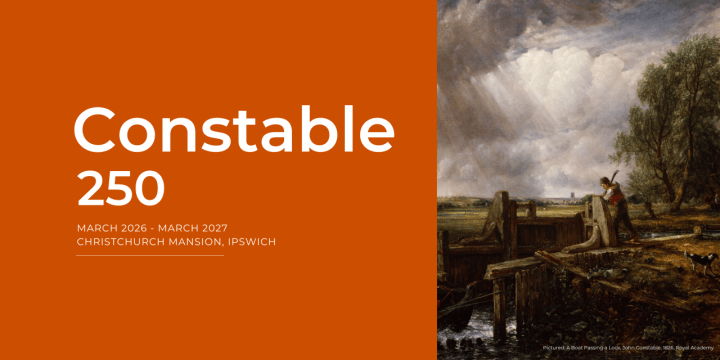
From the Colchester and Ipswich Museums:
Constable 250
Christchurch Mansion, Ipswich, March 2026 — March 2027
2026 marks the 250th anniversary of the birth of Suffolk born artist, John Constable (1776–1837), who would become one of the most important of all British painters. To commemorate his life and work Colchester and Ipswich Museums present Constable 250, a programme of exhibitions and activities at the heart of which will be three landmark exhibitions at Ipswich’s Christchurch Mansion, featuring works from CIMS own collections alongside major loans from across the UK.
Watch this space for ticket and booking details, which will be available in the new year, along with further information about Constable 250 Project activities.
Constable: A Cast of Characters
28 March — 14 June 2026
Introducing those who inspired and supported the artist. New work by international sculptor and direct descendant, Sasha Constable will also feature.
Constable: Walking the Landscape
11 July — 4 October 2026
Showcasing loans from Tate, V&A, Royal Academy, National Galleries of Scotland, and many in Suffolk for the first time. Seen alongside Colchester & Ipswich’s Constable collection, all exploring the theme of walking.
Constable to Contemporary
24 October 2026 — 28 February 2027
The final exhibition will highlight the relevancy and contemporary responses to Constable’s art.
Exhibition | Turner & Constable
Opening soon at Tate Britain:
Turner & Constable: Rivals and Originals
Tate Britain, London, 27 November 2025 — 12 April 2026
Curated by Amy Concannon, with Nicole Cochrane and Bethany Husband
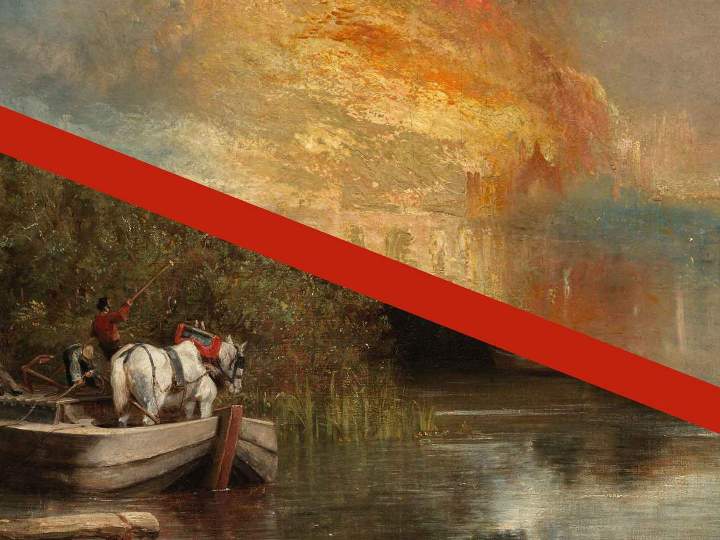 The definitive exhibition of two pivotal British artists in the 250th year of their births
Two of Britain’s greatest painters, J.M.W. Turner and John Constable were also the greatest of rivals. Born within a year of each other—Turner in 1775, Constable in 1776—the art critics of the day compared their paintings to a clash of ‘fire and water’.
Raised in the gritty heart of Georgian London, Turner quickly became a young star of the art world despite his humble beginnings. Meanwhile Constable, the son of a wealthy Suffolk merchant, was equally determined to forge his own path as an artist but faced a longer, more arduous rise to acclaim. Though from different worlds, both artists were united in their desire to transform landscape painting for the better.
With the two painters vying for success through very different but equally bold approaches, the scene was soon set for a heady rivalry within the competitive world of landscape art. Turner painted blazing sunsets and sublime scenes from his travels, while Constable often returned to depictions of a handful of beloved places, striving for freshness and authenticity in his portrayal of nature.
Marking 250 years since their births, this landmark exhibition explores Turner and Constable’s intertwined lives and legacies. Discover unexpected sides to both artists alongside intimate insights seen through sketchbooks and personal items. Experience many of the artists’ greatest works, with over 170 paintings and works on paper. Highlights include Turner’s momentous 1835 The Burning of the Houses of Lords and Commons, not seen in Britain for over a century and The White Horse 1819, one of Constable’s greatest artistic achievements. This is a one in a lifetime opportunity to explore the careers of the two greatest British landscape painters, seen—as they often were in their own time—side by side.
Amy Concannon, ed., Turner and Constable: Rivals and Originals (London: Tate Publishing, 2025), 240 pages, ISBN: 978-1849769853, £32. With additional contributions from Thomas Ardill, Nicole Cochrane, Sarah Gould, Katharine Martin, Nicola Moorby, Nick Robbins, Emma Roodhouse, and Joyce Townsend.










 Enfilade
leave a comment