Exhibition | Art of Faith from the Jewish Museum, New York
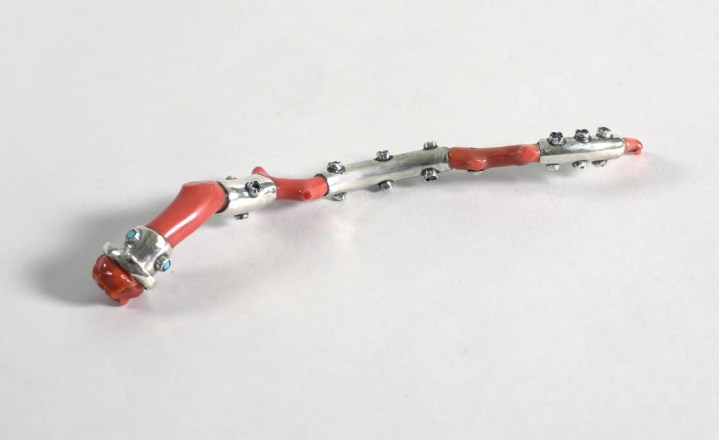
Torah Pointer, 18th century, coral and silver
(New York: Jewish Museum)
◊ ◊ ◊ ◊ ◊
From the press release for the exhibition:
Guests of Honor: Art of Faith from the Jewish Museum, New York
Detroit Institute of Arts, 5 December 2025 — 3 January 2027
The Detroit Institute of Arts presents a special exhibition in partnership with the Jewish Museum in New York, highlighting the heritage, traditions, and vibrancy of thriving Jewish communities from Europe, the Middle East, and North Africa. Guests of Honor: Art of Faith includes 13 exceptional ceremonial objects, dating from the 1400s to the 1900s, that illustrate connections across faith traditions.
With the works placed throughout the museum, this DIA Guests of Honor presentation offers a rare opportunity to experience exquisite objects of Jewish ceremonial art alongside pieces produced for Christian and Islamic patrons in the same period. These diverse works both demonstrate the specificity of Jewish communities, their holidays and rituals and mutual influence of craftspeople, artists, and patrons across faiths. This loan from New York’s Jewish Museum brings a culturally specific set of artworks into conversation with DIA’s encyclopedic collections.
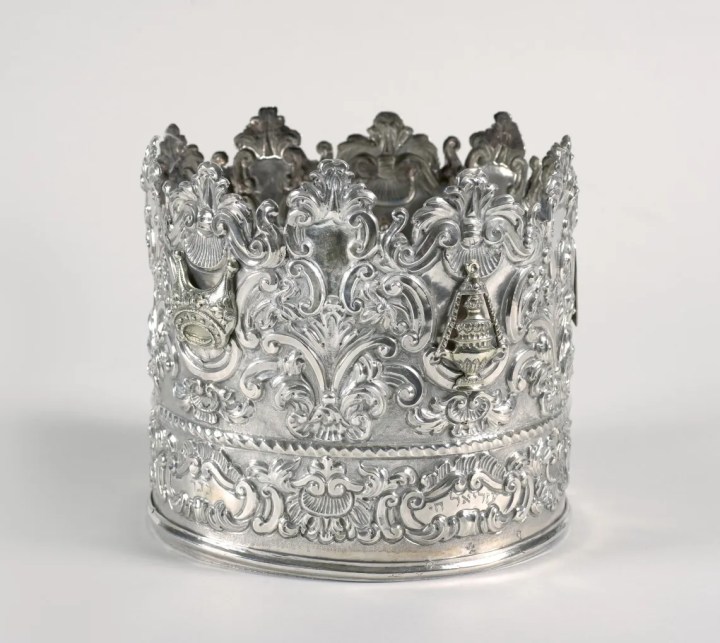
Giovanni Maria Ronchi (active in Ferrara, 1764–1801), Torah Crown, 1764–77, silver, partial gilt (NY: The Jewish Museum, F3688).
“The Detroit Institute of Arts is deeply honored to collaborate with the Jewish Museum to bring these extraordinary Jewish ceremonial artworks to our community,” said Detroit Institute of Arts Director Salvador Salort-Pons. “This partnership represents more than a loan of objects; it is a testament to the power of cultural institutions working together to preserve and share the richness of Jewish history as well as artistic and spiritual life. Through this exhibition, we hope to foster greater understanding and appreciation for Jewish history and culture, while strengthening the bonds between our institutions and communities.”
Among the items are several that adorn Torah scrolls, the holiest text of Judaism. These objects reflect both Jewish practice as well as the artistic styles of their places of production. The oldest of the works on view include a silver Torah shield from the 1660s, one of the earliest surviving pieces of Jewish ceremonial art from Nuremburg, Germany. This specific shield is decorated with unicorns, lions, and foliage, echoing styles popular in German art across religious communities in the period. The exhibition also includes three sets of Torah finials (ornamental metal objects placed atop the wooden rollers of a Torah scroll) featuring small bells to announce the movement of the holy text during congregational processions. These three sets of Torah finials come from distinct Jewish communities—one was crafted in London by the noted silversmith Solomon Hougham in the 1700s, another made in Iran a century later, and the third made in Morocco in the early 1900s—and reflect how Jewish communities across the world ornament the Torah in different ways. The exhibition also includes two silver Torah crowns used to beautify the Torah scroll: one from the late 1700s made in Ferrara, Italy, an important center of Jewish life since the 1100s; and the other made in North Africa in 1898–99.
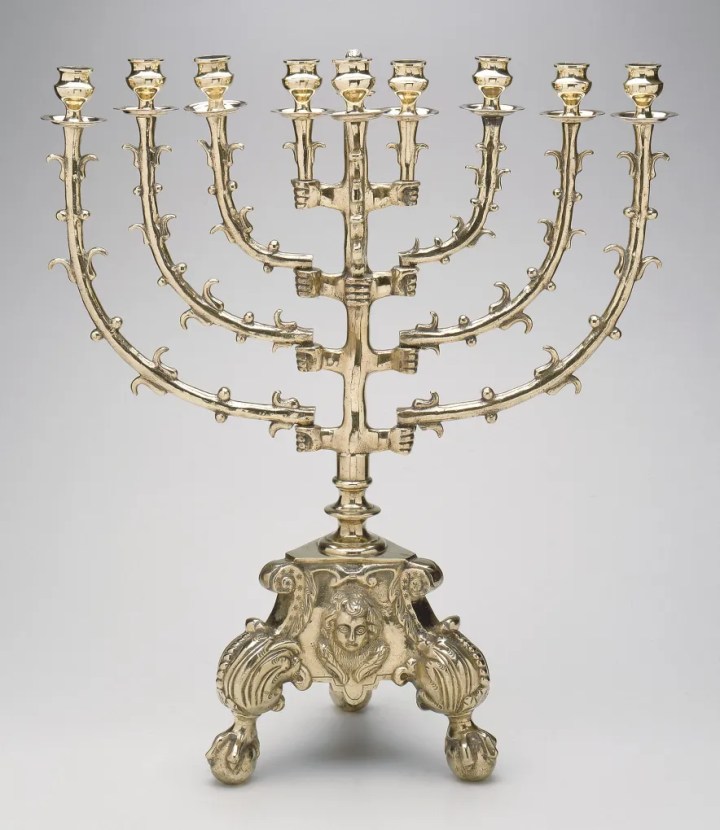
Hanukkah Lamp, Northern Rhineland, late 17th or early 18th century, cast copper alloy, 24 × 22 × 11 inches (NY: Jewish Museum, F5591).
Alongside objects centering the Torah in Jewish ceremonial life are works connected to Jewish holidays and festivals. These works also reflect the broader context in which they were made and first used. An Eastern European spice container (used during the Havdalah ceremony at the end of the Jewish Sabbath) resembles the form of a Gothic clock tower, echoing the architecture of the region. A silver container for an etrog (a fruit used to celebrate the fall holiday of Sukkot) made in the Ottoman Empire in the late 1800s is adorned with designs similar to Islamic silver from the same time and place. Two Hanukkah lamps, one from northern Germany and one from Ottoman Baghdad, share characteristics with designs popular in each region.
Presented alongside DIA’s outstanding collections of Islamic Art and European Decorative Arts, these works of Jewish ceremonial art help tell a broader story of interfaith interaction, shared creativity, and culture around the world.
“Working alongside our collaborating partners at the Jewish Museum to select these pieces has been an incredible journey of discovery and scholarship,” said Judith Dolkart, Detroit Institute of Arts Deputy Director, Art, Education & Programs. “Each artwork tells a unique story—of faith, resilience, craftsmanship, and community—and together we have carefully identified objects that will resonate with our visitors on multiple levels. I am excited for our audiences to experience the beauty, meaning, and history embedded in each piece.”
Guests of Honor: Art of Faith from the Jewish Museum, New York is organized by the Detroit Institute of Arts. The exhibition is generously supported by the William Davidson Foundation.
Exhibition | Adorning Ritual: Art from the Jewish Museum, New York
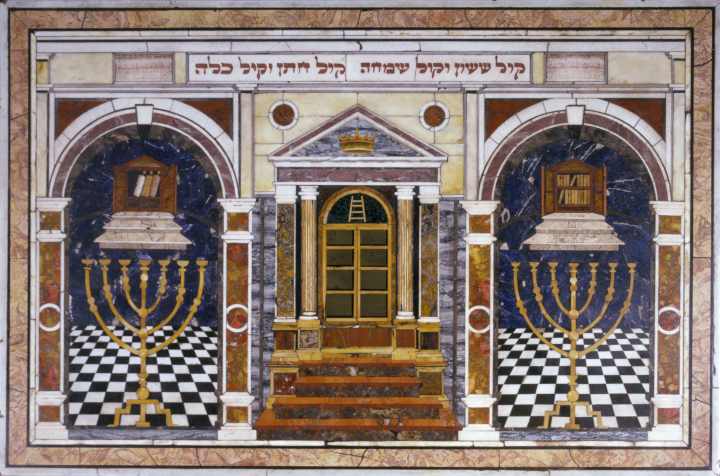
Marriage Wall Panel or Tabletop, 18th–early 19th century, marble inlaid with cut stones, 58 × 38 × 2 inches
(NY: The Jewish Museum, 2007-1)
◊ ◊ ◊ ◊ ◊
Now on view at the Cleveland Museum of Art:
Adorning Ritual: Jewish Ceremonial Art from the Jewish Museum, New York
Cleveland Museum of Art, 25 May 2025 — 10 May 2026
The Cleveland Museum of Art houses an encyclopedic collection, giving visitors valuable insights and perspectives into the lives and cultures of people around the world and throughout time. To enhance its permanent collection and to more fully represent the stories and objects important to our communities, the museum is displaying art on loan from the Jewish Museum, New York, in six galleries.
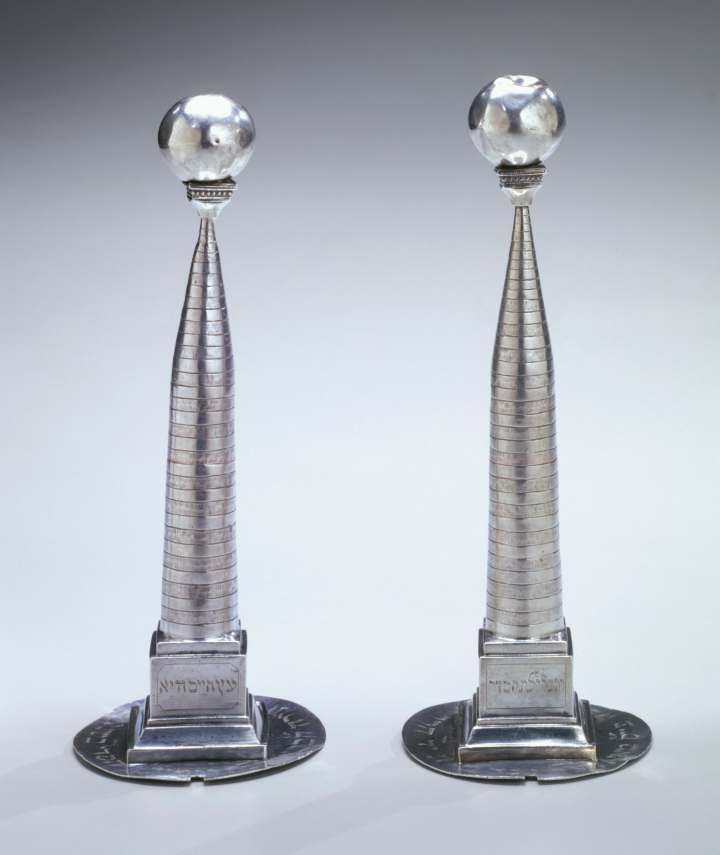
Heinrich Wilhelm Kompff, Torah Finials, 1797–99, silver, 11 inches high (NY: The Jewish Museum).
Most of the works are ritual objects relating to Judaism or the lives of Jewish people, from silver Torah finials to an inlaid marble panel commemorating a marriage. The objects have been placed in context with other works of the same time or region, allowing a fuller narrative to unfold. As you encounter these objects in the galleries, we invite you to consider their relationships to the other works in these spaces.
In addition to the loans from the Jewish Museum, two examples of Jewish ceremonial art from local collections are on display in two additional galleries: an etrog box recently acquired by the Cleveland Museum of Art and a miniature Torah ark on loan from the Mishkan Or Museum of Jewish Cultures in Beachwood, Ohio.










 Enfilade
leave a comment