Prado Honors Its Founding Queen, María Isabel, with Dedicated Gallery
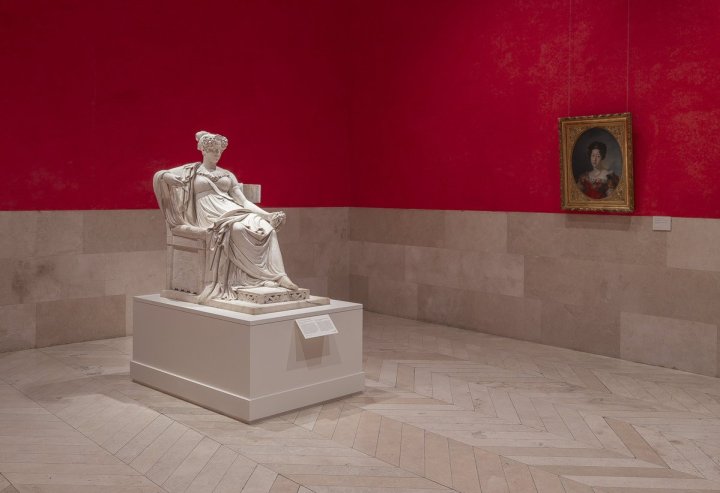
Gallery 54 of Museo Nacional del Prado with José Álvarez Cubero’s marble sculpture of Queen María Isabel de Braganza.
◊ ◊ ◊ ◊ ◊
From the press release:
The Museo Nacional del Prado has opened a new gallery that brings long-overdue attention to one of the most decisive yet often overlooked figures in its history: Queen María Isabel de Braganza. Gallery 54, inaugurated on 11 December 2025, is dedicated to the queen consort of Spain whose vision, influence, and personal commitment were instrumental in the creation of what would become one of the world’s great art museums.
María Isabel de Braganza (1797–1818), second wife of King Ferdinand VII, was deeply engaged with the arts at a time when royal patronage was crucial to cultural development. An honorary member of the Royal Academy of Fine Arts of San Fernando and an amateur painter herself, she championed the transformation of Juan de Villanueva’s unfinished building on the Paseo del Prado into the Royal Museum of Paintings and Sculptures. Although she died prematurely at the age of 21 and never saw the museum open in 1819, historical records—including funerary eulogies and a key annotation by Pedro de Madrazo in the museum’s 1854 catalogue—confirm her central role in the Prado’s foundation.
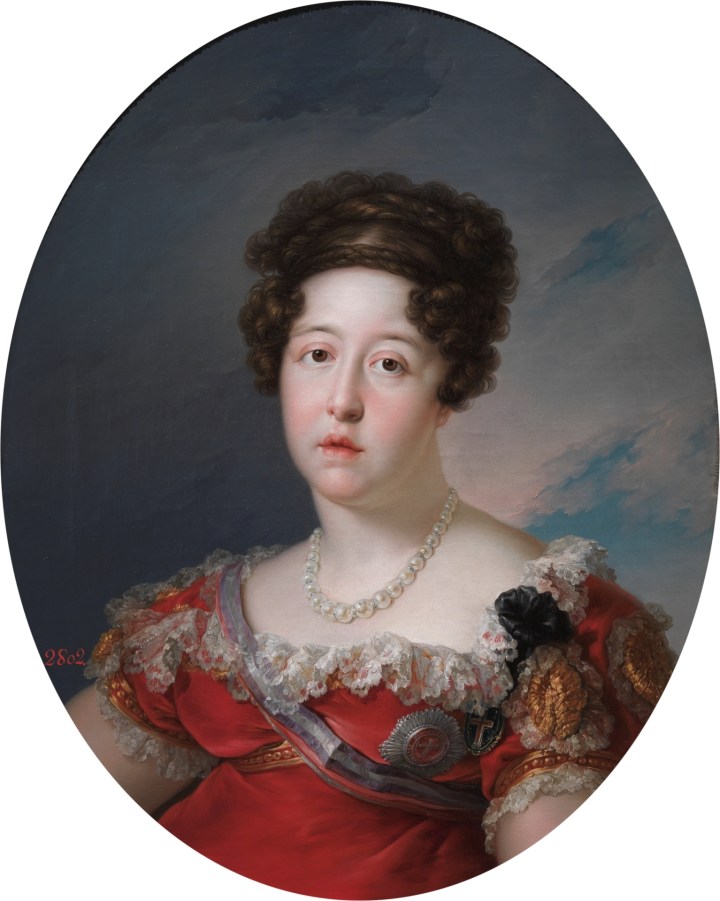
Vicente López Portaña, Queen María Isabel de Braganza, ca. 1816, oil on canvas (Madrid, Museo Nacional del Prado).
The newly inaugurated gallery presents a focused yet powerful tribute. At its core are two historic portraits that trace the construction of the queen’s image between tradition and modernity. The first, painted around 1816 by Vicente López Portaña shortly before her marriage, follows the Empire-style portrait conventions popularized by Joséphine Bonaparte: a bust-length composition, rich red dress, and pearl necklace. This image became the definitive likeness of the queen and later served as the model for Bernardo López’s depiction of her as the founding queen of the Prado.
The second work, a posthumous marble sculpture by José Álvarez Cubero completed between 1826 and 1827, presents Maria Isabel as a Roman matron. Drawing on classical models such as Agrippina and filtered through Neoclassical aesthetics associated with artists like Canova, the sculpture transforms the queen into a timeless symbol of civic virtue and cultural legacy.
Together, these works form the basis of a museographic narrative that positions María Isabel de Braganza not merely as a historical figure, but as a founder and patron whose personal wealth and determination helped shape the Prado’s identity. By dedicating Gallery 54 to her memory, the museum reinforces its commitment to telling its own institutional history—and to recognizing the individuals who made its existence possible. This new space invites visitors to reflect not only on the origins of the Prado, but also on the power of cultural vision, even when cut tragically short.










 Enfilade
leave a comment