Exhibition | Ringleaders of Rebellion: Charleston in Revolt, 1775–1783
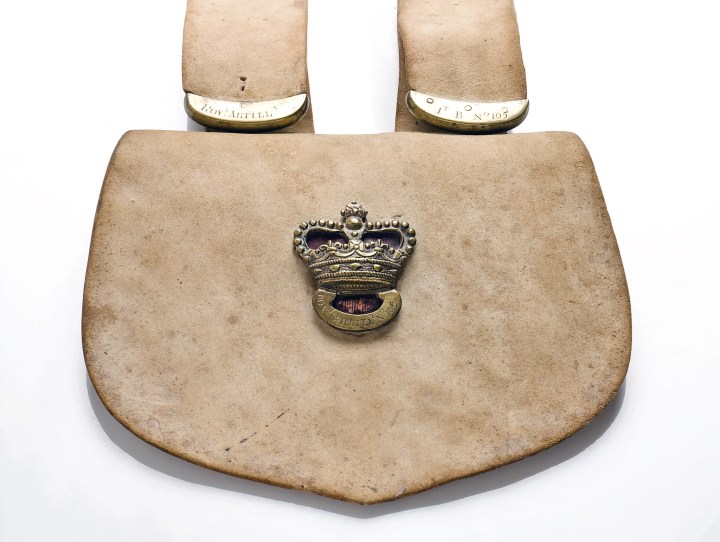
Cartridge Box, one of the best-preserved examples of its kind from the Revolutionary War
(Charleston Museum)
◊ ◊ ◊ ◊ ◊
From the press release for the exhibition:
Ringleaders of Rebellion: Charleston in Revolt, 1775–1783
Charleston Museum, 31 January — 20 September 2026
To mark 250th anniversary of the Declaration of Independence, the Charleston Museum will present a special exhibition in the Historic Textiles Gallery; Ringleaders of Rebellion: Charleston in Revolt, 1775–1783 provides an in-depth overview of the Lowcountry’s role in the Revolutionary War, featuring objects from the Museum’s collections alongside special pieces on loan during certain months of the display.
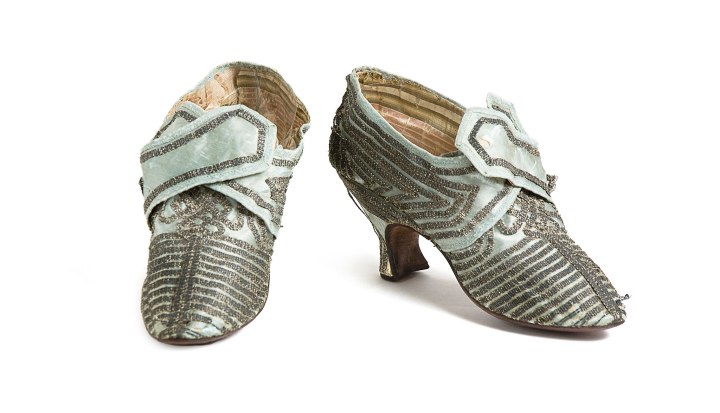
Shoes that belonged to Eliza Lucas Pinckney (Charleston Museum).
Among the latter will be a broadside of the Declaration of Independence, one of the first copies of the document printed in Charleston after news of its adoption reached the city in August 1776. The document, loaned from the Gilder-Lehrman Institute of American History, will be shown May 29 to August 30. Another remarkable piece is the logbook of the Royal Navy’s HMS Bristol, the flagship of Commodore Peter Parker during the Battle of Sullivan’s Island. This record of the ship’s daily activities (on view from June 15 to September 20) comes from the Royal Museums of Greenwich and will be a key addition to the exhibition as 2026 also represents the 250th anniversary of the Battle of Sullivan’s Island. In addition, the show will feature archaeological pieces from battlefields around the state including Camden, Ninety Six, Fort Motte, and Fort Watson. From May 23 to July 26, the Museum will present Eliza Lucas Pinckney’s silk gown, along with her recently conserved shoes and sash (supported by the fundraising efforts of the Eliza Lucas Pinckney chapter of the Daughters of the American Revolution).
Several new acquisitions will also be featured, including a ‘Brown Bess’ musket (the primary infantry weapon of the British army during the Revolutionary War), an officer’s camp bed from the era, a pair of period leather horseman’s breeches, and a William Lee bracket clock. William Lee, a Charleston clockmaker, was one of the paroled prisoners whom the British exiled to St. Augustine, Florida in 1780 for clandestinely continuing rebellious activities. British officers referred to them as the “Ringleaders of Rebellion.”
Funding for the Ringleaders exhibit was made available by SC250, the Therblig Foundation, the Post and Courier Foundation, and Henry and Sylvia Yaschik Foundation.










 Enfilade
leave a comment