Exhibition | A Grand Chorus: The Power of Music

Left: Therese Schwartze, A Choir of Foundling Girls, ca. 1910 (London: Foundling Museum). Center: Mikhail Karikis, We Are Together Because, 2025, at Centro de Arte Moderna Gulbenkian (Photo by Pedro Pina), Right: Foundling Hospital, The Chapel, detail, Microcosm of London, pl. 37, published 1808, hand-colored etching and aquatint (London: Foundling Museum).
◊ ◊ ◊ ◊ ◊
Originally associated with Easter more than Christmas, Handel’s Messiah did have its American premier on 25 December in 1818 at Boston’s Boylston Hall. This exhibition at The Foundling unpacks the legacy of its triumphal ‘Hallelujah Chorus’:
A Grand Chorus: The Power of Music
Foundling Museum, London, 2 October 2025 — 29 March 2026
Explore the life-affirming power of music through the lens of Handel’s iconic ‘Hallelujah Chorus’.
Looking at the exhilarating experience and enduring impact of the ‘Hallelujah Chorus’ in the past and present, A Grand Chorus explores, across all four floors of the Museum, the profound effect that music can have on both listeners and performers, encouraging visitors to think about their own physical and emotional connections with music, either through encounters with the ‘Hallelujah Chorus’ or reflecting on music that has transformed and enriched their own lives.
A Grand Chorus brings together musical scores, librettos, and musical instruments as well as paintings, photographs, audio, video, personal testimony, and other archival material spanning three centuries. The exhibition takes a fresh look at the origins and enduring popularity of the ‘Hallelujah Chorus’, as well as reflecting on the impact of music on the lives of former Foundlings and care-experienced individuals. Originally composed as part of his famous Messiah oratorio, Handel later incorporated the ‘Hallelujah Chorus’ into an anthem he created specially for the Foundling Hospital that premiered in 1749 to help raise money for the charitable institution.
The exhibition also showcases a major sound and video installation by Mikhail Karikis, We Are Together Because… (2025), the first time the work has been presented in the UK. Featuring a powerful anthem for a new generation, Karikis’s work can be imagined as a contemporary counterpart to the ‘Hallelujah Chorus’.
More information is available here»
New Book | Goya: The Disasters of War
From Rizzoli and Distributed Art Publishers:
Francisco de Goya, Goya: The Disasters of War (Madrid: La Fábrica, 2025), 176 pages, ISBN: 978-8410024632, $60.
 Based on the original 1863 edition, this presentation of Goya’s 80 etchings decries the consequences of war through his bleak, gruesome, and unflinching imagery.
Following his tenure as court painter for the Spanish royal family, Francisco de Goya’s art took on darker subjects and a more expressive style, especially during the Peninsular War (1808–14). Much can be gleaned from the fraught and visceral work of this period, including his series of etchings known as The Disasters of War. Concerned about the state of the world as much as his own failing health, Goya spent 10 years on what he personally titled Fatal Consequences of Spain’s Bloody War with Bonaparte, and Other Emphatic Caprices. Starvation, sickness, looting, assault, torture, execution—each image confronts the shattered lives of everyday soldiers and civilians, accompanied by brief, ambiguous captions such as “Y no hay remedio” (“And there is no remedy”) and “Yo lo vi” (“This I saw”).
This clothbound book faithfully reproduces the first edition of the complete set of 80 works which was published in 1863, 35 years after Goya’s death. It features exquisite printing quality on paper that closely resembles the texture of the original engravings, in a similar format and scale. War is still a condition of human existence today; Goya’s etchings are timeless for their vehement denunciation of its atrocities committed by all combatants, regardless of their national affiliations.
Born in Fuendetodos, Spain, Francisco de Goya (1746–1828) trained in Zaragoza and later moved to Madrid. In 1789 he was appointed as a court painter by Charles IV. Considered “the last of the Old Masters and the first of the moderns,” Goya blended elements of Romanticism with a deeply personal and often critical vision of society.
Installation | Revolution!

Paul Revere Jr., after Henry Pelham, The Boston Massacre, or, The Bloody Massacre perpetrated in King Street, Boston on 5 March 1770 by a party of the 29th Regiment, detail, 1770, hand-colored engraving and etching, second state, sheet: 11 × 9.5 inches (New York: The Metropolitan Museum of Art, Gift of Mrs. Russell Sage, 1910, 10.125.103).
◊ ◊ ◊ ◊ ◊
Opening soon at The Met:
Revolution!
The Metropolitan Museum of Art, New York, 19 January — 6 August 2026
Curated by Sylvia Yount, Constance McPhee, and Wolf Burchard
This special installation marks the 250th anniversary of the Declaration of Independence, the founding document of the United States of America. Works drawn from many different areas of The Met offer a wide view of the roots, course, and aftermath of the Revolutionary War (1775–1783)—from early conflicts between colonists and Indigenous peoples and the 1765 Stamp Act imposed by the British government on its North American colonies to George Washington’s voluntary retirement, in 1797, from his two-term presidency.
Rarely seen prints reveal the transatlantic circulation of news about the struggle for independence during a fractious political era. This window into the era’s print culture highlights the global dimensions of the rebellion, the contested ideas about liberty that shaped it, and its consequential outcomes. Also on view are American and European works of art that depict a range of significant individuals. These include iconic contributors to the Declaration of Independence John Adams, Benjamin Franklin, and Thomas Jefferson; patriots and presidents such as Paul Revere and George Washington; the Wampanoag chief Metacomet, whose conflicts with early British colonists laid the groundwork for revolution; Mohawk leader Thayendanegea, who allied with the British in an effort to retain Indigenous sovereignty; and African American poet Phillis Wheatley, who raised her voice against an expansive tyranny in her call for emancipation. Together, these artworks acknowledge multiple complex and intertwined histories that continue to resonate in the United States and beyond, some two and half centuries later.
Revolution! is curated by Sylvia Yount, Lawrence A. Fleischman Curator in Charge of the American Wing; Constance McPhee, Curator, Department of Drawings and Prints; and Wolf Burchard, Curator, Department of European Sculpture and Decorative Arts.
◊ ◊ ◊ ◊ ◊
With this additional information from the press release:
The American Wing will also feature in its Alexandria Ballroom (Gallery 719), an historical interior focused on George Washington and his complex legacy—from fall 2025 through early August 2026—with artist Titus Kaphar’s 2016 ‘tar’ portraits of Ona Judge and William Lee, both enslaved members of the Washington family’s households, on loan from private collections. In addition, from March through summer 2026, a recent acquisition by Carla Hemlock (Mohawk) will be on view in dialogue with Rembrandt Peale’s portrait of Washington in the foyer of the Art of Native America installation (Gallery 746 South).
◊ ◊ ◊ ◊ ◊
The Art of the American Revolution: A Conversation with Ken Burns and Sarah Botstein
Thursday, 29 January 2026, 6pm
The Museum will present a panel discussion on the “Art of Revolution” with filmmakers Ken Burns and Sarah Botstein, co-directors with David Schmidt of their new documentary, The American Revolution; historians Philip Deloria and Jane Kamensky; and art historian Gwendolyn DuBois Shaw, along with a screening of excerpts from the PBS series, produced exclusively for The Met, highlighting the creative process of visual storytelling. The conversation will provide an opportunity to reflect on the continued relevance of historical imagery and the power of art to explore the varied stories of the country’s founding.
Exhibition | Ringleaders of Rebellion: Charleston in Revolt, 1775–1783
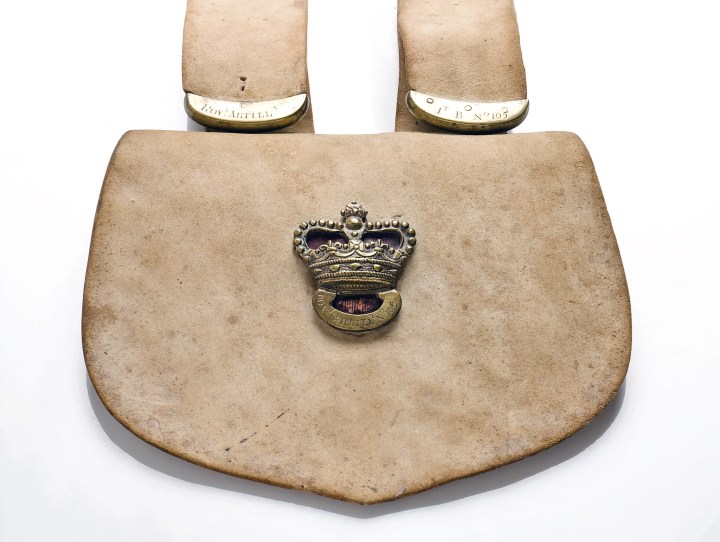
Cartridge Box, one of the best-preserved examples of its kind from the Revolutionary War
(Charleston Museum)
◊ ◊ ◊ ◊ ◊
From the press release for the exhibition:
Ringleaders of Rebellion: Charleston in Revolt, 1775–1783
Charleston Museum, 31 January — 20 September 2026
To mark 250th anniversary of the Declaration of Independence, the Charleston Museum will present a special exhibition in the Historic Textiles Gallery; Ringleaders of Rebellion: Charleston in Revolt, 1775–1783 provides an in-depth overview of the Lowcountry’s role in the Revolutionary War, featuring objects from the Museum’s collections alongside special pieces on loan during certain months of the display.
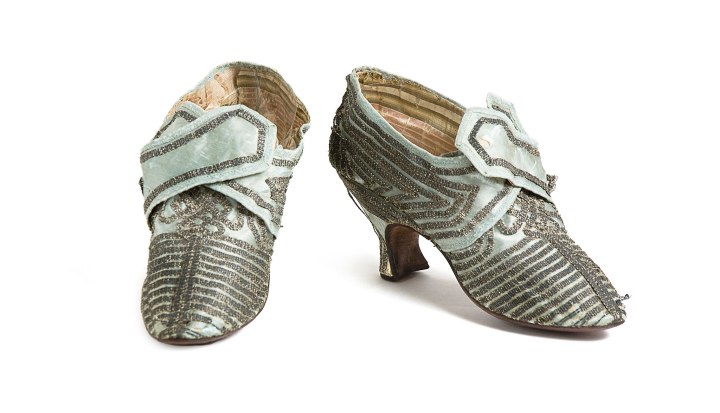
Shoes that belonged to Eliza Lucas Pinckney (Charleston Museum).
Among the latter will be a broadside of the Declaration of Independence, one of the first copies of the document printed in Charleston after news of its adoption reached the city in August 1776. The document, loaned from the Gilder-Lehrman Institute of American History, will be shown May 29 to August 30. Another remarkable piece is the logbook of the Royal Navy’s HMS Bristol, the flagship of Commodore Peter Parker during the Battle of Sullivan’s Island. This record of the ship’s daily activities (on view from June 15 to September 20) comes from the Royal Museums of Greenwich and will be a key addition to the exhibition as 2026 also represents the 250th anniversary of the Battle of Sullivan’s Island. In addition, the show will feature archaeological pieces from battlefields around the state including Camden, Ninety Six, Fort Motte, and Fort Watson. From May 23 to July 26, the Museum will present Eliza Lucas Pinckney’s silk gown, along with her recently conserved shoes and sash (supported by the fundraising efforts of the Eliza Lucas Pinckney chapter of the Daughters of the American Revolution).
Several new acquisitions will also be featured, including a ‘Brown Bess’ musket (the primary infantry weapon of the British army during the Revolutionary War), an officer’s camp bed from the era, a pair of period leather horseman’s breeches, and a William Lee bracket clock. William Lee, a Charleston clockmaker, was one of the paroled prisoners whom the British exiled to St. Augustine, Florida in 1780 for clandestinely continuing rebellious activities. British officers referred to them as the “Ringleaders of Rebellion.”
Funding for the Ringleaders exhibit was made available by SC250, the Therblig Foundation, the Post and Courier Foundation, and Henry and Sylvia Yaschik Foundation.
Collecting250 Educator Guides Available from The Decorative Arts Trust
From the press release:
 The Decorative Arts Trust is excited to announce the publication of four complimentary educator guides related to Collecting250.org, a free, public resource that commemorates the United States Semiquincentennial with a celebration of 250 historic objects from all 50 states and the District of Columbia. The online collection includes meaningful and impactful objects that represent independence, identity, and community, which were submitted by over 140 museums and historic associations from across the country. This resource demonstrates how objects can tell the story of America.
The Trust’s new educator guides feature complimentary lessons and worksheets to teach art and history through the exploration of objects on Collecting250. A team of experienced educators provided lesson plans, worksheets, and extension ideas aligned with the National Standards for Visual Arts Education and the Common Core Standards. These exciting and interactive lessons are designed to encourage students at the middle and high school levels to view objects—whether historic or more modern—in a whole new way.
The educator guides focus on four themes: function, collecting, story, and traditions. The Functions of Objects: An American Collection asks students to examine various objects in Collecting250 and determine their function through the question, “What job does this object do?” Students present a proposal (in trading card form) for the acquisition of an object, antique or present-day, that they believe should be included in the collection. Students’ trading cards can be shared in a school display in recognition of the Semiquincentennial.
For Collecting: Uncovering America through Its Objects, students explore reasons why humans engage in collecting. They share their knowledge of collections and role-play as private collectors. Then students curate a series of objects from Collecting250 for their own museum spaces, with peers discussing which collection is the most historically significant, the most expensive, etc. Students also investigate an object and create a ‘missing’ poster.
The Weaving a Storyline across 250 Years guide has students investigating various objects in Collecting250 and considering the underlying history of those objects through the question, “What story does this object have to share?” Students create a historical fiction narrative that threads the stories of various objects from the collection into a storyboard that interweaves personal student stories with the stories told by objects found in the collection.
Objects and Traditions: History Revealed guides students to consider Collecting250 objects through the lens of tradition. Students discuss traditions that are important in their families and communities, and then students examine objects and discuss how they might have been made in association with traditions. As students investigate objects, they discuss how cultural beliefs, values, and artistic expression influence the making of an object.
The Decorative Arts Trust would like to thank Dr. Marilyn Stewart, Professor Emerita of Art Education at Kutztown University of Pennsylvania, for coordinating the team that developed these educator guides. The Trust learned of Dr. Stewart and her talented colleagues through the fantastic resources they have developed for Craft in America. Collecting250 will be available for the next few years, so these lessons will be applicable for the 2026–27 and 2027–28 school years as well. Visit Collecting250.org to explore these new resources.
Columbia Museum of Art Receives Key Gift of New Hall Porcelain
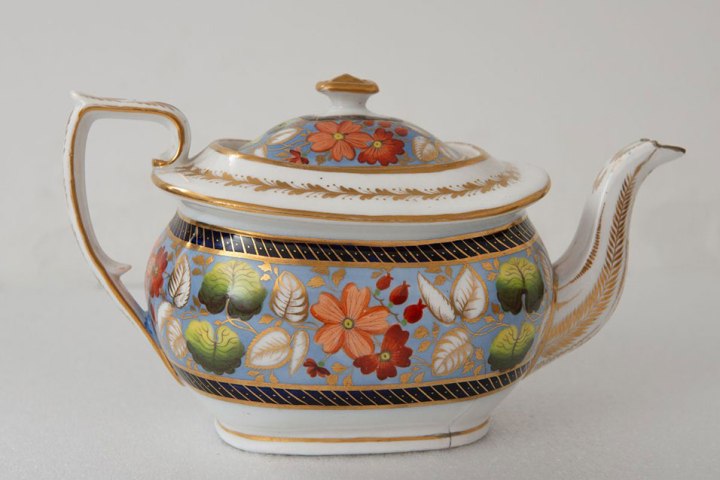
New Hall (manufacturer), British, active 1781–1835, teapot and lid, ca. 1812–19, bone china painted in enamels and gilt (Columbia Museum of Art, seventy-fifth anniversary acquisition, gift of the Joseph Bruce Collection of Georgian Porcelain, 2025.5.125a-b; photo by Drew Baron).
◊ ◊ ◊ ◊ ◊
From the press release:
The Columbia Museum of Art in South Carolina announced a major gift of the Joseph Bruce Collection of Georgian Porcelain, one of the most comprehensive private holdings of New Hall porcelain in the United States. The gift, made in celebration of the museum’s 75th anniversary, ultimately totals nearly 200 pieces, representing 58 patterns produced by New Hall between the late 18th and early 19th centuries.
Founded in 1781, New Hall was England’s first successful manufacturer of hard-paste porcelain. After decades of experimentation to replicate the prized porcelains of China, New Hall developed the first formula ideally suited for commercial production. Its early wares blended Chinese-inspired decoration with distinctly English shapes, reflecting a moment when global trade, shifting tastes, and advances in technology transformed English domestic life. The manufactory’s later bat-printed designs, many adapted from works by leading artists, link high art and mass production, making New Hall an essential chapter in British decorative arts and cultural history. Comparable collections of this depth are rare outside the United Kingdom, and no other museum in the United States holds a New Hall collection of this scale or significance.
“This extraordinary gift transforms how we can present the story of British decorative arts,” says CMA Senior Curator Michael Neumeister. “The Joseph Bruce Collection offers both depth and range, enabling visitors to experience the full evolution of New Hall porcelain in one place, an experience heretofore possible only at the Victoria & Albert Museum in London. It will be a touchstone for scholarship and a source of inspiration for years to come.”
The Joseph Bruce Collection charts the full aesthetic and technical evolution of New Hall porcelain, with carefully chosen examples illustrating major design phases, patterns, and innovations. Bruce, a CMA board trustee, has spent more than 40 years assembling this collection, beginning in New York with guidance from two major dealers of antique porcelain. He later acquired works through noted porcelain specialists in England, most notably Robert Hawker, through whom he acquired a number of pieces from the holdings of noted New Hall scholar Patricia Preller.
“New Hall porcelain has been my passion for decades,” says Bruce. “In its new home at the Columbia Museum of Art, I hope this collection will spark curiosity, inspire scholarship, and bring the beauty of Georgian England to life.”
In mid-January 2026, the CMA unveils all 20 newly refreshed galleries devoted to the CMA Collection. The Joseph Bruce Collection will be a highlight of a new British gallery, outfitted with period-correct wallpaper, furniture, and a newly conserved painting attributed to Benjamin Wilson, offering visitors an immersive late 18th- and early 19th-century experience.
“As we celebrate our 75th anniversary, we are absolutely thrilled to receive this spectacular gift, a shining example of how passionate collectors shape museum collections for generations to come,” says CMA Executive Director Della Watkins. “We are deeply grateful to Joseph for entrusting us with such a remarkable legacy, one that will inspire and delight our community and the world.”
Call for Papers | The Global Neoclassicism Project
From the Call for Papers:
Neoclassicism in the Extended Field: A Global Project
Online, 28–30 May 2026
Organized by Faraz Olfat and Rebecca Yuste
Proposals due by 1 February 2026
Neoclassicism—rooted in the aesthetic, philosophical, and political traditions of Greece and Rome—stands as a defining current of the long nineteenth century, especially the period from 1750 to 1860. Often linked to state-building, emerging national identities, and the rise of secular modernity, the movement was shaped significantly by figures such as Robert Adam, Jacques-Louis David, Angelica Kauffman, Thomas Jefferson, Antonio Canova, and Abbé Laugier. Their ideas circulated broadly, aided by expanding imperial networks, print culture, and the development of photography. As a result, Neoclassical forms and ideals appeared far beyond Europe, taking shape in the colonial Americas, the Middle East, South Asia, and across the African continent. Art academies and new modes of image dissemination further amplified access to classical models once limited to travelers and on-site observers.
This conference asks what happens when Neoclassicism moves beyond its traditionally understood geographic center in Western Europe. How was the movement introduced, promoted, adapted, and transformed in non-Western contexts? How did Greco-Roman traditions intersect with existing local architectural, artistic, and archaeological legacies? And in what ways did Neoclassicism participate in, or respond to, global imperial structures?
We invite papers that expand, complicate, or challenge established narratives of Neoclassicism across media from the rediscovery of Pompeii and Herculaneum through the first decade of the twentieth century. Topics may include, but are not limited to:
• Transmission of Neoclassical design through colonial networks
• Photography, pattern books, architectural treatises, and academic training (including the École des Beaux-Arts)
• Governmental architecture, libraries, financial institutions, religious monuments, private residences, or unrealized projects
• Theoretical or historiographic studies that question conventional boundaries of the movement
We welcome contributions that offer new perspectives, illuminate understudied regions, or reconsider the global dynamics that shaped Neoclassical expression. As this will be an online symposium, we are especially eager to hear from scholars working in Asian, African, and Latin American geographies. Please submit an abstract of no more than 250 words along with a CV to faraz.olfat@yale.edu by the 1st of February 2026. We will communicate decisions by the beginning of March. For any questions or concerns contact Rebecca Yuste at rmy2107@columbia.edu.
Keynote Speaker
Meredith Martin — Professor of Art History, New York University
Chairs
Faraz Olfat — PhD candidate, Department of the History of Art, Yale University
Rebecca Yuste — PhD candidate, Department of Art History & Archaeology, Columbia University, and Junior Fellow, Garden and Landscape Studies, Dumbarton Oaks
Call for Articles | Images of Architecture at the Turn of the Enlightenment
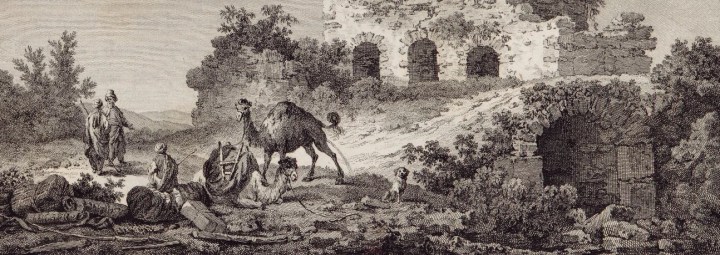
Ruines d’un Gymnase à Pergame, detail, from the second volume of Choiseul-Gouffier, Voyage pittoresque de la Grèce (1809).
◊ ◊ ◊ ◊ ◊
Utpictura 18 is now accepting proposals for a special issue, scheduled for publication in January 2027:
Utpictura18 | Images d’architecture au tournant des Lumières
Edited by Séverine Guillet and Fabrice Moulin
Proposals due by 30 January 2026; final articles will be due by 10 July 2026
Entreprises éditoriales, aux contours génériques mouvants, les “Voyages pittoresques” se développent de façon très importante à partir du dernier tiers du XVIIIe siècle et dans la période romantique. Ils sont les héritiers de traditions littéraires savantes occidentales, qui ont participé, par la découverte et l’observation, à l’ouverture et à l’élargissement du monde et du savoir: lointainement, le récit viatique humaniste, et plus directement les voyages antiquaires des XVIIe et XVIIIe siècles, ou encore les recueils d’antiquités ainsi que les voyages à visée scientifique et encyclopédique des Lumières.
Ancré, au départ, dans un double territoire, méditerranéo-oriental d’une part (le Voyage pittoresque ou description des royaumes de Naples et de Sicile de Saint-Non en 1781; le Voyage pittoresque de la Grèce de Choiseul-Gouffier en 1782), et national d’autre part (le Voyage pittoresque de la France, initié par Laborde dès 1780), le voyage pittoresque, dont les horizons s’élargissent parfois jusqu’aux Indes ou au Nouveau Monde, est aussi bien une affaire d’histoire (avec en vue l’antique, ou le passé médiéval) que de géographie (paysages lointains ou proches, urbains, ruraux, alpins…). Parmi les nombreuses publications françaises qui s’affichent sous ce titre, on compte, sur cette période, au moins une quarantaine d’ouvrages illustrés. En dépit des disparités qui traversent ce corpus, a fortiori sur une période de quarante ans, les voyages pittoresques illustrés ont en commun, bien souvent, une forte ambition éditoriale: ce sont le plus souvent de luxueux ouvrages, de grand format, financés non sans difficultés par des souscriptions, voire des subventions. Ils sont richement illustrés de gravures (plus tard de lithographies) extrêmement soignées. Ils partagent surtout le projet, inscrit aussi dans leur titre (qui joint parfois le «voyage» au «tableau», et le «pittoresque» au «sentimental», puis au «romantique»), de faire voir, de rendre visible l’expérience singulière et sensible du voyage. Par l’image comme par le texte, le pittoresque traduit d’abord une nouvelle sensibilité au paysage, qui, à travers le vécu du voyage, cherche avant tout à produire de l’effet sur le spectateur-lecteur. Depuis Choiseul, qui place, dans son prospectus, le Voyage pittoresque de la Grèce sous le signe du désir de «communiquer […] une partie des sensations qu’[il] ven[ait] d’éprouver» jusqu’à Nodier, qui dit écrire, avec le Voyage pittoresque de l’ancienne France, un «voyage d’impressions», le voyage pittoresque configure la communication d’une expérience.
Des expériences d’architecture en images?
Qu’ils participent tantôt de la culture de l’observation scientifique des Lumières (en articulant, à loisir, savoirs archéologiques et topographiques, histoire naturelle, études de mœurs…) ou de l’affirmation d’une nouvelle sensibilité romantique (notamment à l’histoire et au passé national), ces voyages pittoresques placent l’architecture, délibérément ou non, au cœur de leurs enquêtes. Dans un article, adossé à une thèse restée inédite mais importante pour l’étude de ce corpus, Caroline Jeanjean-Becker constate que si «la forme et le fond de ces récits évoluent au cours de la période […] l’intérêt des voyageurs pour les monuments et la manière dont ils sont érigés demeure une constante. [Ces voyages] constituent donc autant d’histoires de l’architecture et d’expression d’une sensibilité à l’architecture» (Jeanjean-Becker 1999). L’intérêt des historiens de l’architecture pour ces voyages n’a fait que confirmer cette intuition (Szambien 1988; Armstrong 2013, par exemple). D’une certaine manière, c’est même autour du savoir et de l’imaginaire architectural que l’entreprise du voyage pittoresque s’invente (avec les Ruines des plus beaux monuments de la Grèce de Leroy, précurseur du genre) et qu’elle aurait pu trouver son apogée (avec le projet initial, mais abandonné car trop ambitieux, du baron Taylor de donner une «histoire de l’architecture chez tous les peuples», qui se resserra finalement sur les Voyages pittoresques de l’ancienne France).
Inabouti, ce rêve éditorial d’une histoire universelle de l’architecture dans les premières années du XIXe siècle, nous invite néanmoins – c’est tout le sens de ce projet de numéro – à lire la production des voyages pittoresques illustrés comme autant, sinon d’histoires, du moins de récits imagés, d’expériences figurées d’architecture. Avec des accents culturels différents selon les périodes, les intentions éditoriales, les auteurs et les artistes, qu’ils soient portés par l’esprit de découverte encyclopédique des Lumières, ou la nouvelle sensibilité au paysage, par la passion archéologique de l’antique ou le goût pour les vestiges médiévaux, par l’attirance exotique ou la constitution d’un patrimoine national, tous ces ouvrages ont en commun de produire et diffuser, avec les moyens mécaniques de l’imprimé, un nombre colossal d’images qui font basculer l’essentiel du savoir et du plaisir promis au lecteur du voyage, du régime du discours vers celui du visible. Comment ces voyages pittoresques, en permettant la circulation et la comparaison massive d’images d’architectures – tantôt lointaines, inconnues ou redécouvertes, tantôt ancrées dans la France et ses provinces – participent-ils d’une nouvelle forme d’histoire de l’architecture par les images? et, plus généralement, d’une culture visuelle du bâti? Comment cette galerie, ce museum imaginaire et livresque (le musée s’invente d’ailleurs à cette époque) dialogue-t-il avec d’autres traditions visuelles de l’architecture, d’autres corpus d’images (comme ceux de Fischer von Erlach ou de Piranèse, par exemple); mais aussi avec les recueils d’antiquités ou encore les traités d’architecture et leurs illustrations, voire des illustrations de fictions? Comment ces illustrations donnent-elles à voir l’inscription complexe du savoir architectural (que l’iconographie humaniste avait surtout centré sur la question des proportions et des ordres), dans l’expérience multiple et dynamique du voyage? Comment se traduisent, dans les vues des voyages pittoresques, la série de nouveaux rapports dont se nourrit l’imaginaire architectural du tournant des Lumières? Rapport à la nature et au paysage (quelle part du bâti dans les esthétiques pittoresque et sublime?); rapport aux passés (quelles reconfigurations historiques, entre retour à l’antique et conscience d’une histoire nationale?); rapport à la subjectivité (la poétique ou la mélancolie des ruines, par exemple); rapport aux mœurs et aux sociétés (quand le bâti participe de l’enquête ethnographique naissante).
Cet appel se veut une invitation à circuler dans ces corpus gravés, dessinés, lithographiés, en croisant les approches plurielles de l’histoire de l’art, de l’architecture et du livre, de l’histoire littéraire, mais aussi de la sémiologie, ou des études visuelles. Les quelques grands circuits suivants pourront guider les recherches et les enquêtes, sans exclusive:
L’architecture et l’expérience du voyage
On pourra interroger les différentes modalités selon lesquelles les perceptions, les savoirs, les découvertes d’architecture s’intègrent dans l’expérience globale et mouvante, intellectuelle et sensible, du voyage. Quelle place pour l’architecture au sein du système des savoirs construit par le voyage et son illustration? Comment l’information d’architecture s’articule-t-elle aux autres types de savoirs véhiculés par l’image (savoir géologique, géographique, historique, ethnographique, épigraphique, numismatique…)? De même, quelle place occupe la thématique de l’architecture et son iconographie au sein du projet éditorial? Dans quelle mesure l’enquête architecturale reste-t-elle, comme le suggérait Caroline Jeanjean-Becker «le souci principal» du voyageur? Parfois, cet intérêt est délibérément formulé et mis en avant (comme dans le Voyage pittoresque de la Syrie, de la Phénicie, de la Palestine et de la Basse-Egypte de Louis-François Cassas ou le Voyage pittoresque des isles de Sicile… de Jean-Pierre-Louis Houël), posant la question de la nature de cet intérêt. Dans cette perspective, l’étude des discours préfaciels et préliminaires, des péritextes promotionnels, voire des traces de métadiscours sur le projet iconographique pourrait permettre de dégager une sorte de poétique de l’image d’architecture, qui interroge les fonctions différentes qu’on lui assigne et les publics auxquels on la destine: restitution scientifique pour le savant et l’amateur? sauvegarde patrimoniale ou mémorielle? recherche de l’«effet» pour le lecteur? À l’inverse, on pourra se pencher sur les cas où le bâti s’invite sans qu’on l’y attende, jusqu’à occuper, dans le texte et dans l’image, une place importante, parfois à réévaluer, dans des voyages a priori tournés vers l’évocation de la nature ou l’observation des mœurs. Au-delà des approches qui ont volontiers privilégié le champ antiquaire ou l’histoire monumentale, on pourra se demander comment l’expérience du voyage, comme laboratoire d’une ethnographie naissante et au gré des mutations du pittoresque, a contribué à élargir les représentations de l’architecture, en portant une attention nouvelle à des formes du bâti encore relativement négligées par la littérature d’architecture: habitat modeste, rural ou typique, architectures vernaculaires ou industrielles (moulins, manufactures…), constructions édilitaires (pont, aqueduc, fontaine…) mais aussi logements fragiles, provisoires ou nomades (on pense, par exemple, aux frêles tentes des habitants d’Anatolie, que Choiseul-Gouffier fait représenter au milieu des vestiges de temples antiques). Quelle nouvelle visibilité pour ces bâtiments et constructions? Pour quelles nouvelles formes d’inscription du bâti dans les représentations de la société et des pratiques humaines? Enfin, entre exotisme (dans les expéditions de Grèce, du Levant ou d’Egypte…) et imaginaire national (depuis les Antiquités de France de Clérisseau, conçues comme parallèlement au Voyage pittoresque de la Grece de Choiseul-Gouffier, jusqu’à l’ancienne France de Taylor et Nodier), on pourra interroger les rôles fluctuants des motifs d’architecture dans les constructions politiques, idéologiques et poétiques des identités culturelles.
L’architecture mise en scène
«On a peint ce qu’on a vu, et on l’a peint avec amour » déclare le comte de Choiseul-Gouffier dans le prospectus du Voyage pittoresque de la Grèce. Cela pose la question, abordée dans le premier axe, de ce que les voyageurs voient effectivement, mais aussi celle de la manière dont ils le restituent «avec amour». Un questionnement autour de la mise en scène de l’architecture dans les voyages pittoresques permettra ainsi de s’emparer de corpus graphiques plus ou moins connus et de créer des ponts avec d’autres ensembles issus des livres d’architecture, d’histoire naturelle (où le bâti est parfois présent en tant que décor ou élément de contexte, comme dans les Tabulae sceleti… (1747) d’Albinus et Wandelaar), de fiction (tel le Voyage du jeune Anacharsis de l’abbé Barthélémy), ou avec l’œuvre de dessinateurs, architectes et graveurs (Piranèse, Clérisseau, Pâris, Wailly…).
On pourra plus précisément mettre en avant des filiations à travers la circulation de modes de représentation de l’architecture entre ces différentes sources: jeux d’échelles, cadrage, point de vue, mise en page, etc., dans la lignée de ce qu’a fait, par exemple, Susan M. Dixon pour Piranèse et Houël (Dixon 2003). Un questionnement autour de la circulation de motifs et même de gravures (par exemple entre le Voyage pittoresque de la Grèce et le Voyage du jeune Anacharsis), sera également bienvenu.
Le même Choiseul-Gouffier affirme que les «planches utiles» de son ouvrage, à savoir les cartes, les relevés d’édifices et d’éléments architecturaux, supposent un «goût vif pour l’architecture et des connaissances en géographie». Mais ce type de gravures côtoie aussi des scènes d’intérieur, des vues d’ensemble et paysagères, des reconstitutions parfois: autant de représentations jugées moins utiles mais susceptibles, en parlant à l’imagination, de plaire à un plus large lectorat. Cette tension ou complémentarité entre deux registres figurés caractérise un grand nombre d’ouvrages de la période étudiée. Il s’agira ainsi d’envisager les choix de représentation opérés dans les voyages pittoresques comme autant d’éléments d’une culture livresque plus vaste: comment s’articulent ces différents modes de représentation de l’architecture, entre recherche de rigueur, d’exactitude et d’effet voire d’émotion? À quels régimes de connaissance se raccrochent-ils? Au cœur de cette thématique se trouvent les vues animées de figures. S’agit-il de figures de convention, contemporaines ou historiques, ou bien de protagonistes du récit et/ou d’acteurs du projet éditorial (le comte de Choiseul-Gouffier abordé par un moine sur l’île de Patmos, ou Voltaire dessiné au premier plan d’une vue de Ferney dans les Tableaux de la Suisse de Laborde)? Qu’ajoutent-elles à l’intelligence des lieux représentés et quelle médiation apportent-elles au lecteur (guide, dessinateur, voyageur…)? Habitent-elles ces lieux ou sont-elles simplement disposées autour? La question de l’absence de ces figures, le cas échéant, pourra aussi être posée. Enfin, on s’intéressera au rapport de l’architecture à la nature, afin de mieux cerner les contours problématiques d’un pittoresque et d’un sublime qui seraient proprement architecturaux. Au-delà du motif de la ruine ou du tombeau, qu’on pourra suivre dans leurs glissements de l’antique vers le médiéval, le ressort principal des gravures, moins souvent étudié, réside aussi dans l’inscription du bâti (quel qu’il soit) dans l’écrin du site naturel (de la cabane rustique au village, en passant par le pont), voire la fusion métaphorique de leurs frontières: dans le texte comme dans l’image, la nature s’appréhende parfois comme artefact (terrasses, ponts, forteresses, colosses…) et l’artefact comme production naturelle (les visions piranésiennes de l’océan de débris, des murailles qui deviennent roches…). Autant de variations sur la confrontation entre l’homme et la nature, qu’on pourra étudier, en écho avec les grandes rêveries philosophiques des Lumières (celles d’un Diderot du Salon de 1767, d’un Bernardin de Saint-Pierre dans les Études de la Nature) ou les méditations romantiques (comme celles d’un Chateaubriand).
La fabrique du livre illustré: une architecture entre estampe et texte
Les voyages pittoresques sont souvent le résultat de véritables entreprises éditoriales qui ont pu durer de longues années. Peut-on d’ailleurs parler d’un résultat unique? Parutions par livraisons, puis en volumes, puis rééditions: ce que l’on désigne comme un voyage pittoresque recouvre parfois plusieurs réalités matérielles. Dans la lignée de ce qui a déjà été proposé pour certaines de ces entreprises (celles de Choiseul-Gouffier, de Laborde et de Saint-Non, par exemple), il conviendra alors d’éclairer la fabrique de ces livres. Que sait-on des premières démarches de leur(s) concepteur(s)? Quel était l’objectif de départ et à quoi cela a-t-il abouti? Derrière un ou deux noms, de multiples acteurs ont généralement contribué à ces entreprises. Dessinateurs, peintres, architectes, graveurs, écrivains, érudits, entrepreneurs, souscripteurs, imprimeurs, éditeurs…: on pourra, dans la mesure du possible, retracer certaines collaborations, certains parcours d’artistes (voir par exemple les rares études sur les architectes Fauvel ou Foucherot (Zambon et Pinon 2007)). Cela permettra d’éclairer et d’interroger les choix opérés, d’une technique de gravure à un mode de financement, ainsi que les chaînes de production, de l’artiste à l’éditeur et du dessin à la gravure, par exemple. La question de la publicité et de la réception pourra également être abordée.
Enfin, l’un des enjeux majeurs du voyage pittoresque – dans sa fabrication comme sa réception – c’est l’articulation complexe entre l’illustration et le texte. La représentation de l’architecture s’élabore dans le rapport entre ces deux régimes, iconique et textuel. Selon quelles tensions? Quelles complémentarités? Quels décrochages, quelles circulations pour le lecteur? Quels dialogues, quels passages entre les logiques narratives ou descriptives du voyage d’une part et l’organisation de la collection d’images (parfois en recueil et livraisons) qui fixent l’édifice ou cherchent à l’animer, d’autre part?
Si la promotion de l’illustration, tout au long de la période, tend à faire primer l’image, «partie principale», sur le texte «accessoire» (Choiseul), dans quelle mesure le discours (explicatif, descriptif, narratif) ne détient-il pas malgré tout certaines clefs de la lisibilité de l’image d’architecture ? Comment le texte du voyageur, traversé lui-même par d’autres textes, nourri de références livresques (Choiseul voyage «un Homère à la main») en vient-il à habiter et animer les lieux et les sites représentés? À les creuser par le récit, le mythe, ou l’expérience vécue? Comment, à l’inverse, l’illustration s’affranchit-elle du texte, selon quels décalages, pour quelle autonomie?
La période retenue pour les enquêtes s’ouvre naturellement avec les trois premiers voyages pittoresques illustrés édités par Saint-Non, Choiseul et Laborde, pour se refermer dans les années 1820, avec, notamment le premier volume des Voyages pittoresques de l’Ancienne France de Taylor et Nodier. En effet, à partir des années 1825, une double révolution scientifique (avec l’invention de l’archéologie moderne) et technique (le succès définitif du procédé lithographique), inaugure une nouvelle ère pour le livre illustré, le tourisme moderne et l’approche scientifique du monument historique. Cette périodisation a aussi l’avantage de placer l’imaginaire des voyages pittoresques en perspective avec ce moment, à la fois cohérent et tourmenté, du tournant des Lumières, dont bien des mutations culturelles se cristallisent, justement, dans les représentations du paysage. On laissera néanmoins ouverte la possibilité d’explorations comparatives en amont (en convoquant, par exemple, l’influence de la tradition savante des voyages d’antiquaires ou, dans un autre registre, les premiers voyages pittoresques au format de guides pratiques pour la découverte des beaux-arts à Paris ou ailleurs) et les prolongements en aval vers les mutations du genre après 1830, ou la réception et l’exploitation postérieure des gravures. D’une manière générale, nous serons ouverts à l’examen de propositions de contributions dédiées à des périodes plus tardives du XIXe siècle, pourvu qu’elles présentent, d’une façon ou d’une autre, un ancrage dans les enjeux et la période du tournant des Lumières.
De même, si le volume envisage de centrer les contributions sur les publications en France, on pourra nourrir la réflexion en montrant comment ces images d’architectures s’inscrivent dans un contexte européen, marqué notamment par la double influence anglaise, antiquaire (les premières grandes expéditions en Grèce de Richard Pococke, Stuart et Revett ou encore Wood et Dawkins) et esthétique (avec les élaborations théoriques autour du pittoresque chez Gilpin notamment).
A selected bibliography of primary and secondary sources is available here»
Calendrier et consignes
Les propositions d’articles (250-300 mots) devront être envoyées, accompagnées d’une courte bio-bibliographie, avant le 30 janvier 2026 à Séverine Guillet, guillets@parisnanterre.fr, et à Fabrice Moulin, moulinfabrice@yahoo.fr. Le comité donnera sa réponse à la mi-mars 2026.
Les articles dont les propositions auront été retenues devront nous parvenir avant le 10 juillet 2026. Longueur maximale des articles: 35000 signes, espaces compris. Se conformer aux consignes de mise en page (à lire avant de commencer à rédiger). Chaque article pourra être illustré de 15 images maximum. Les consignes sur la préparation des dossiers iconographiques seront données aux auteurs en mars 2026. Publication prévue en janvier 2027.
Numéro coordonné par
Séverine Guillet, université Paris Nanterre (HAR)
Fabrice Moulin, université Paris Nanterre (CSLF)
Comité scientifique:
Odile Parsis-Barubé, Université de Lille, IRHIS
Gilles Bertrand, Université Grenoble Alpes, LUHCIE
Elise Pavy, Université Bordeaux-Montaigne, PLURIELLES
Jean-Marie Roulin, Université Jean-Monnet Saint Etienne, IHRIM
Christopher Drew Armstrong, University of Pittsburg, Dpt of History of Art and Architecture
Éditeur de la revue Rubriques:
Université d’Aix-Marseille, CIELAM
Maison de la recherche
29, avenue Robert-Schuman-Schuman
13621 Aix-en-Provence cedex 01
Directeur de la publication: Stéphane Lojkine
Prado Honors Its Founding Queen, María Isabel, with Dedicated Gallery
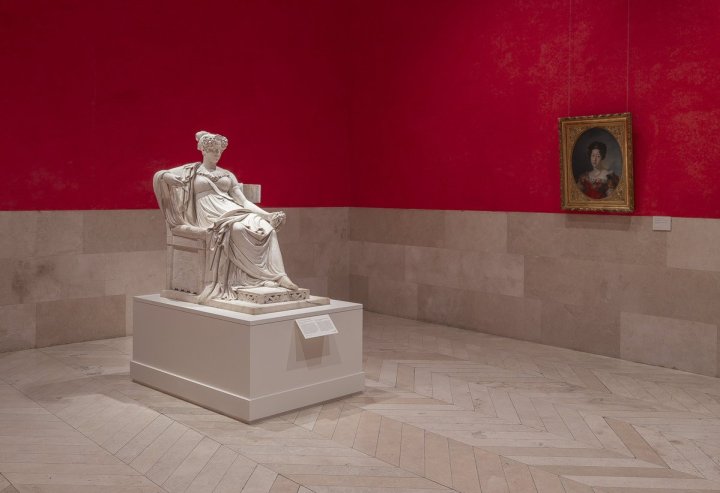
Gallery 54 of Museo Nacional del Prado with José Álvarez Cubero’s marble sculpture of Queen María Isabel de Braganza.
◊ ◊ ◊ ◊ ◊
From the press release:
The Museo Nacional del Prado has opened a new gallery that brings long-overdue attention to one of the most decisive yet often overlooked figures in its history: Queen María Isabel de Braganza. Gallery 54, inaugurated on 11 December 2025, is dedicated to the queen consort of Spain whose vision, influence, and personal commitment were instrumental in the creation of what would become one of the world’s great art museums.
María Isabel de Braganza (1797–1818), second wife of King Ferdinand VII, was deeply engaged with the arts at a time when royal patronage was crucial to cultural development. An honorary member of the Royal Academy of Fine Arts of San Fernando and an amateur painter herself, she championed the transformation of Juan de Villanueva’s unfinished building on the Paseo del Prado into the Royal Museum of Paintings and Sculptures. Although she died prematurely at the age of 21 and never saw the museum open in 1819, historical records—including funerary eulogies and a key annotation by Pedro de Madrazo in the museum’s 1854 catalogue—confirm her central role in the Prado’s foundation.
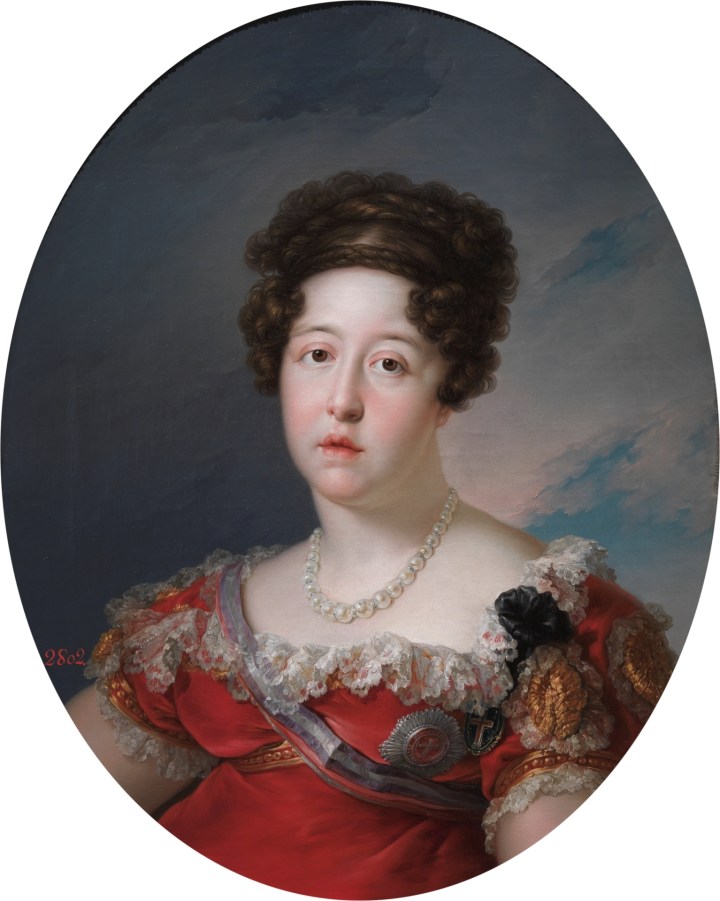
Vicente López Portaña, Queen María Isabel de Braganza, ca. 1816, oil on canvas (Madrid, Museo Nacional del Prado).
The newly inaugurated gallery presents a focused yet powerful tribute. At its core are two historic portraits that trace the construction of the queen’s image between tradition and modernity. The first, painted around 1816 by Vicente López Portaña shortly before her marriage, follows the Empire-style portrait conventions popularized by Joséphine Bonaparte: a bust-length composition, rich red dress, and pearl necklace. This image became the definitive likeness of the queen and later served as the model for Bernardo López’s depiction of her as the founding queen of the Prado.
The second work, a posthumous marble sculpture by José Álvarez Cubero completed between 1826 and 1827, presents Maria Isabel as a Roman matron. Drawing on classical models such as Agrippina and filtered through Neoclassical aesthetics associated with artists like Canova, the sculpture transforms the queen into a timeless symbol of civic virtue and cultural legacy.
Together, these works form the basis of a museographic narrative that positions María Isabel de Braganza not merely as a historical figure, but as a founder and patron whose personal wealth and determination helped shape the Prado’s identity. By dedicating Gallery 54 to her memory, the museum reinforces its commitment to telling its own institutional history—and to recognizing the individuals who made its existence possible. This new space invites visitors to reflect not only on the origins of the Prado, but also on the power of cultural vision, even when cut tragically short.
New Book | Canova and His World
Coming in the spring from Lund Humphries:
Livio Pestilli, Canova and His World (London: Lund Humphries, 2025), 240 pages, ISBN: 978-1848227354, £60.
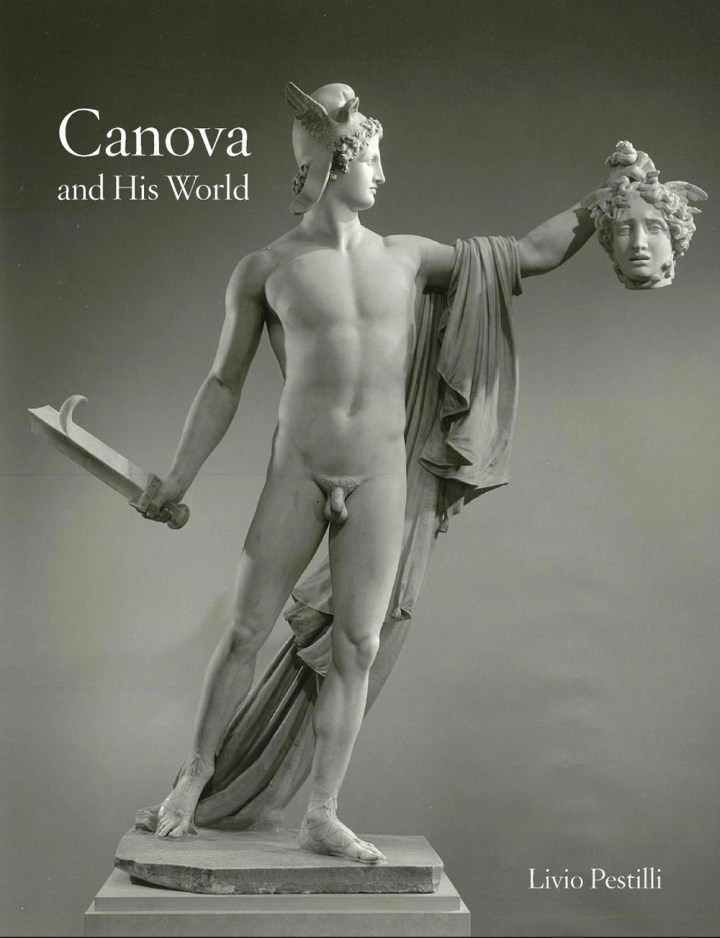 A new examination of Canova’s life and work in comparison with his contemporaries
This kaleidoscopic study of Antonio Canova (1757–1822), one of the most celebrated sculptors of the Neoclassical era, reconsiders his life, work, and artistic legacy in the wake of the two-hundredth anniversary of his death. Pestilli here examines how critics such as Carl Ludwig Fernow and Quatremère de Quincy critically shaped both Canova’s work and its reception and delves into the striking similarities between Canova and his renowned predecessor, Gian Lorenzo Bernini. The narrative breathes new life into the sculptor’s art by placing it within the rich cultural context in which he and his contemporaries worked. Drawing from a wealth of sources—including hundreds of letters and original drawings—Pestilli examines a range of previously unexplored themes that will enhance the understanding of specialists and art enthusiasts alike. This study highlights Canova as a sculptor whose work will continue to resonate for years to come.
Livio Pestilli is the former Director of Trinity College, Rome, where he currently teaches seminars on Michelangelo and Bernini. He is the author of Bernini and His World: Sculpture and Sculptors in Early Modern Rome (Lund Humphries, 2022), Picturing the Lame in Italian Art from Antiquity to the Modern Era (Ashgate/Routledge, 2017), and Paolo de Matteis: Neapolitan Painting and Cultural History in Baroque Europe (Ashgate 2013).
c o n t e n t s
Introduction
Prologue
1 Zoilus
2 The French Connection
3 ‘A [Neo]classical Bernini’
4 Cantilevering
5 The Artist at the Service of the State
Epilogue










 Enfilade
leave a comment