New Book | Noble Beasts
From Yale UP:
Amy Freund, Noble Beasts: Hunters and Hunted in Eighteenth-Century French Art (New Haven: Yale University Press, 2026), 248 pages, ISBN: 978-0300282702, $75.
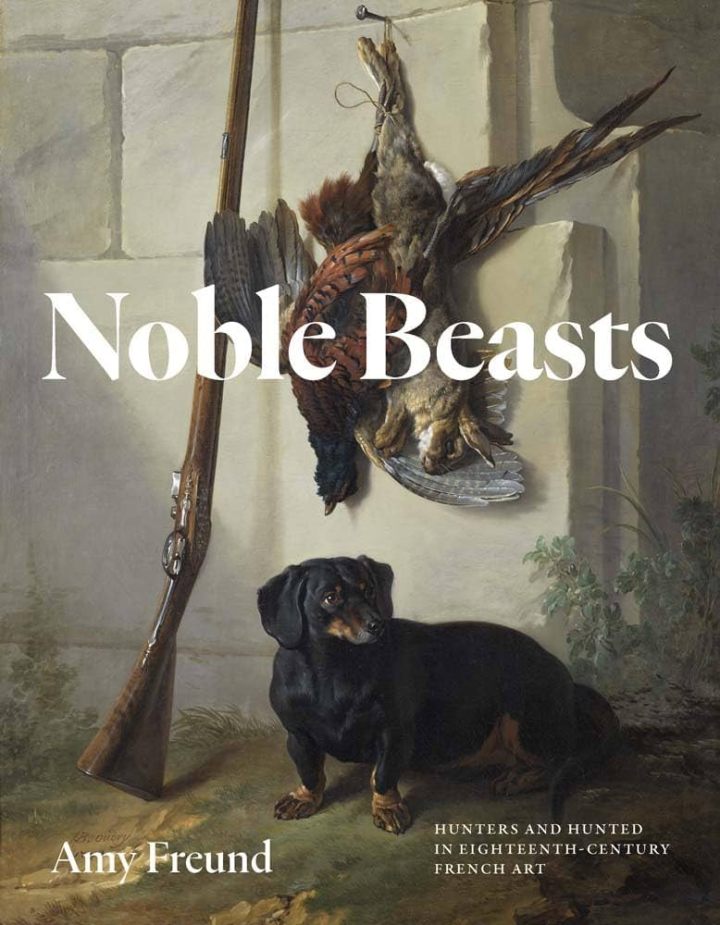 How visual fantasies of violence, animality, and political agency offered an alternative image of masculinity during the Enlightenment.
Centering on animal bodies and assertive masculinity, the visual strategies of hunting art may appear incongruent with our understanding of Rococo aesthetics and the early Enlightenment. But these themes, embraced with enthusiasm by artists and patrons, inspired artworks in every genre and medium in eighteenth-century France. As the country expanded its colonial empire, the absolute monarchy existed in tension with ambitious elites, and the Enlightenment eroded old certainties about selfhood and society, hunting art provided a visual language of personal and national sovereignty written with bodies of men and animals. Amy Freund revises our received notions of eighteenth-century French art and culture, confronting us with a visual culture of animality, violence, and death: a Rococo of dogs and guns.
Noble Beasts highlights the work of François Desportes, Jean-Baptiste Oudry, and others who, operating from the heart of institutions such as the Royal Academy and the Gobelins manufactory, produced an astonishing volume of highly accomplished work. The book draws on the critical frameworks of human-animal studies and on Enlightenment philosophical debates to explore how and why hunting art’s aesthetic and political claims blurred the lines between human and animal.
Amy Freund is associate professor and Kleinheinz Family Endowment for the Arts and Education Endowed Chair in Art History at Southern Methodist University.
Cambridge Material Culture Workshop, Lent 2026
The Material Culture Workshop schedule for the current term:
Cambridge Material Culture Workshop, Lent 2026
We’re delighted to share our Lent 2026 term card. Each of the four sessions will meet online and in-person at St. John’s, Cambridge, starting at 5pm. For more information, please contact Tomas Brown (tbnb2@cam.ac.uk) or Sophia Feist (stcf2@cam.ac.uk). In addition to our talks this term, the Material Culture Workshop is hosting an exhibition tour of Tudor Contemporary at the Heong Gallery, Downing College, on Friday, 13 March, led by curator Dr. Christina Faraday and artist and academic Dr. Jane Partner. This is sign-up only, so send us an email if you’d like to attend.
Monday, 9 February
• Jordan Mitchell-King (De Montfort), The Significance of Getting Dressed for Elite Women in the 18th Century
• Charlotte Stobart (Cambridge), Technological Embodiment: Examining Experiences of Calliper Usage among British Polio-disabled Individuals, 1950–2025
Friday, 20 February
• Laura Granda-Mateu (Edge Hill), Binding Worlds: Women’s Albums and Transnational Material Practices
• Ella Gaskell (York), Sanctified Materiality and the Dormition Icon in Post-Iconoclastic Byzantium
Monday, 9 March
• Joe Clarke (Cambridge), Sa(l)vage Anthropology: Wynfrid Duckworth and the Lost Cambridge Anatomy Museum
• Charlotte Wood (Cambridge), Natural Objects of Affection: Emotion, Materiality, and the Care of Museum Specimens in the Making of Wildlife Conservation Mentalities in Colonial East Africa
Friday, 20 March
• Cecilia Eure (Cambridge), Alternative Means of Decorating in Poor and Labouring-Class British Homes, 1600–1800
• Emma Piercy-Wright (Exeter), Small Trifles, Big Ideas: Mother-of-Pearl Trinkets as Enlightenment Transcripts
Exhibition | Stubbs: Portrait of a Horse
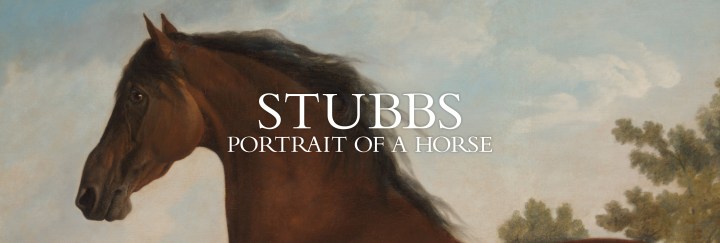
George Stubbs, Scrub, a Bay Horse Belonging to the Marquess of Rockingham, ca. 1762 (Private Collection).
◊ ◊ ◊ ◊ ◊
On view this spring at the National Gallery:
Stubbs: Portrait of a Horse
National Gallery, London, 12 March — 31 May 2026
Step into the world of George Stubbs, the visionary British painter, and marvel at his monumental portrait of a rearing racehorse, Scrub.
In the 1750s, Stubbs spent eighteen months in a remote barn in Horkstow, Lincolnshire. Hidden away, he devoted his time to studying and drawing the anatomy of horses. What resulted was the most thorough study on the subject for almost a hundred years. Incredibly, Stubbs’s pictures of horses are still some of the most accurate ever painted, all while capturing their unique characters.
In this exhibition, viewers will meet one of these horses, Scrub, painted around 1762. Scrub rears in a landscape backdrop—notably without a rider. In a nearby room hangs another monumental horse painting by Stubbs, a depiction of Scrub’s now famous contemporary, Whistlejacket. Painted around the same time, these would be the first life-size portraits to depict horses without a rider in British history. The two paintings changed the spirit of equine art forever. Stubbs: Portrait of a Horse focuses on the creation of this portrait of Scrub, while presenting other paintings and drawings by the artist. Join us for a closer look at this groundbreaking work.
New Book | The Anatomy of the Horse
The paperback edition appeared in 2024; the hardback is scheduled for publication in April:
George Stubbs, The Anatomy of the Horse (London: Pallas Athene, 2024), 76 pages, ISBN: 978-1843682479 (paperback) / ISBN: 978-1843682486 (hardback), $30. With essays by Constance-Anne Parker and Oliver Kase.
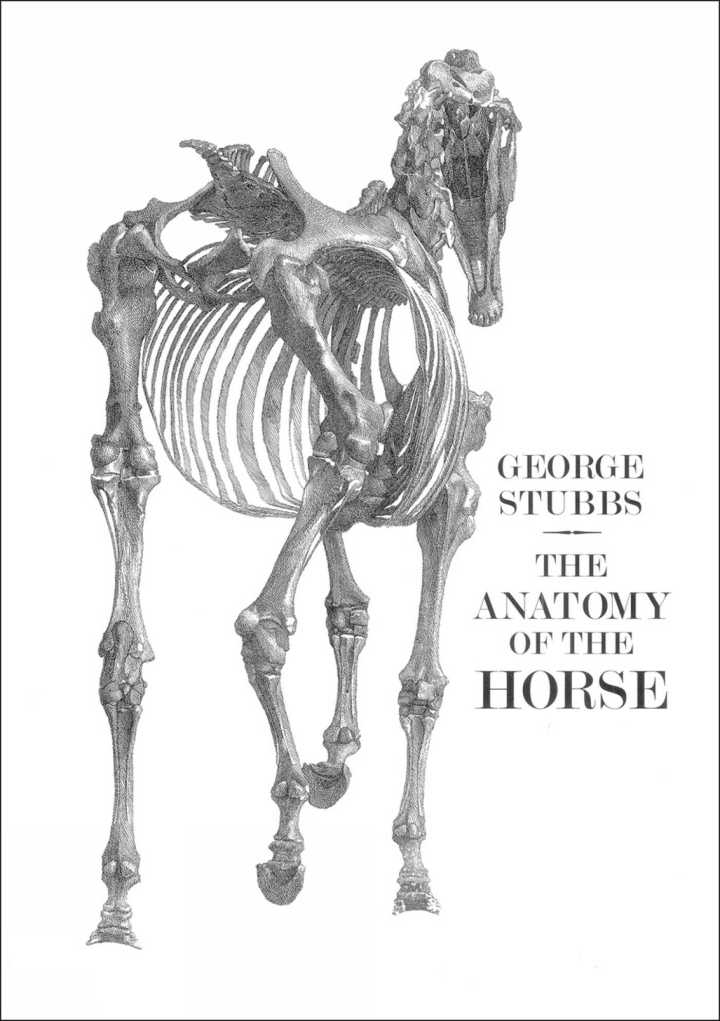 George Stubbs (1724–1806) was one of the most original artists Britain has produced, and it is easy to forget how much his success was based on rigorous scientific observation. In 1756 he rented a farmhouse where he erected scaffolding to hold the cadavers of horses as he dissected and drew. After eighteen months, Stubbs produced the drawings for The Anatomy of the Horse, which he later etched. The result was sensational. Scientists from all over Europe sent their congratulations, amazed at the perfection of the work. The Anatomy remained a textbook for artists and scientists for over a century, and its strange, spare beauty continues to fascinate. This edition is taken from the 1853 printing, the last to use Stubbs’s original plates. The artist’s full commentary is included for the veterinarially minded. Essays by Constance-Anne Parker and Oliver Kase place Stubbs’s work in the context of his life and times, and of 18th-century medical science.
Constance-Anne Parker (1921–2016), a distinguished sculptor and painter, was the Librarian and Archivist of the Royal Academy, where she also lectured. She was the author of Mr. Stubbs, the Horse Painter (1971) and George Stubbs: Art, Animals, and Anatomy (1984).
Oliver Kase is Director of Collections at the Pinakothek der Moderne in Munich where he oversees the Max Beckmann Archive. In 2011–12 he was assistant curator for The Art of Enlightenment, a major international exhibition organized between Germany and China. He lectures at the Ludwig-Maximilians-Universität München and is the author of numerous publications on the art of the 18th to 21st centuries.
New Book | Animal Modernities
From Leuven University Press, with distribution by Cornell UP:
Daniel Harkett and Katie Hornstein, eds., Animal Modernities: Images, Objects, Histories (Leuven: Leuven University Press, 2025), 320 pages, ISBN: 978-9462704589, €60 / $69.
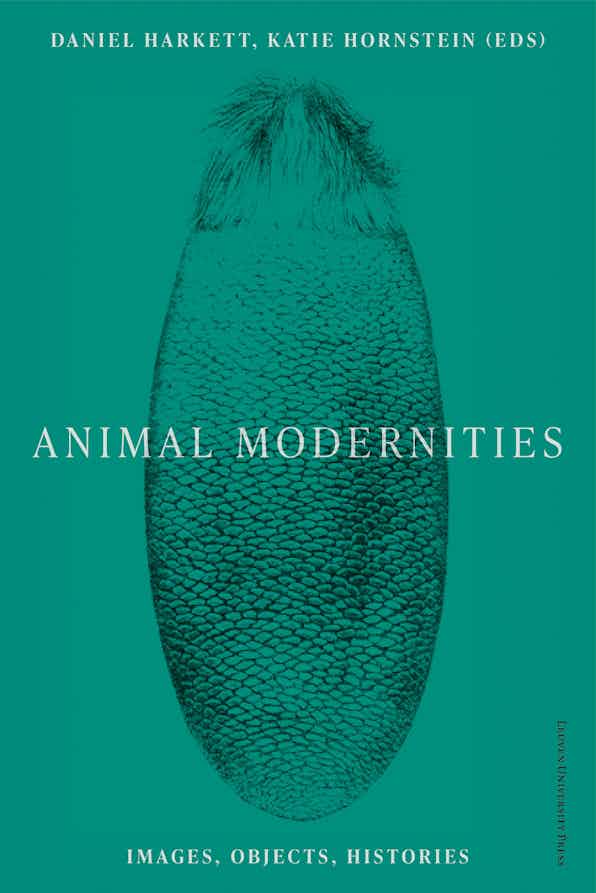 Animal Modernities challenges the traditional human-centered focus of art history and explores how modern art, visual culture, and modernity itself emerge from relationships between humans and animals. The essays in this volume reveal histories of exploitation and domination, as well as confusion and ambivalence, and occasional moments when affinities between humans and animals have been embraced, and animal agency asserted and acknowledged. The authors collectively point to the importance of thinking about animal–human relations for addressing today’s ecological challenges.
This book will be made open access within three years of publication thanks to Path to Open, a program developed in partnership between JSTOR, the American Council of Learned Societies (ACLS), University of Michigan Press, and The University of North Carolina Press to bring about equitable access and impact for the entire scholarly community, including authors, researchers, libraries, and university presses around the world. Learn more here.
Daniel Harkett is associate professor in the Department of Art at Colby College.
Katie Hornstein is professor in the Department of Art History at Dartmouth College.
c o n t e n t s
List of Illustrations
Acknowledgments
Introduction — Daniel Harkett and Katie Hornstein
1 Rethinking the Animal in Art History: Charles Darwin, Karl Woermann, and the Bowerbird — Nina Amstutz
2 Photography Needs Animals: Materials, Processes, and the Colonial Supply Chains of Gelatine Dry Plates — Rosalind Hayes
3 Shooting Elephants and the Performance of Imperial Power — Niharika Dinkar
4 A Tale of Two Serpents — Laura Nüffer
5 Mourning across Species: Ivory Miniatures and Elephant Death — Katherine Fein
6 War Horses, Commemoration, and Mutilation: Copenhagen (1808–1836) and Marengo (ca. 1793–1831) — Katie Hornstein
7 To Fool a Fish: Exploring Interspecies Aesthetics in Nineteenth-Century Fly-Fishing — Emily Gephart
8 Feline Creativity on the Eve of Modernity — Amy Freund and Michael Yonan
9 The Bird that Cuts the Airy Way: William Blake’s Avian Modernity — Alysia Garrison
10 Bovine Ubiquity — Maura Coughlin
11 Against the Visual: Seals, Indigenous-Settler Relations, and the Material Culture of Sealing since 1697 — Catherine Girard
12 Mr. Crowley’s Signature: Race, Resistance, and the Queerness of American Animal Portraiture — Annie Ronan
13 Memory and Materiality: Commemorating Canine Companions in Eighteenth-Century Britain — Sean Weiss
14 Herd Mentality: Animal Relationality and QueerKinships in the Life and Work of Anton Braith — Stephanie Triplett
Selected Bibliography
Contributors
Index
Call for Papers | Love’s Matter: The Material Culture and Art of Affection
From the Call for Papers:
Love’s Matter: The Material Culture and Art of Affection, 1700–1900
9th Edition of the Entretiens de la Fondation Maison Borel
University of Neuchâtel and Maison Borel, Switzerland, 12–13 November 2026
Organized by Henriette Marsden and Lara Pitteloud
Proposals due by 20 March 2026
International Workshop for PhD Students and Early Career Researchers
From the early 18th century onwards, the material qualities of love were explored as a cultural technique and an artistic practice transformed by the onset of modernity. Young lovers courted their sweethearts by sending mass-produced valentine cards, friends filled each other’s albums with carte de visite photographs and industrially made paper scraps, husbands romanced their wives through the gifting of colonial luxuries, and sisters used embroidery patterns circulated through the periodical press to stitch presents with and for one another. Evidently, love, as a practice of affection between family members, romantic partners and friends, became deeply embroiled in the material conditions of global trade, colonial expansion, nation-building, and the advance of industrialised commerce.
This workshop will explore how the affective properties of love shaped and were shaped by the material conditions of modernity from the early 18th to the end of the 19th century. It takes as a starting point the claim that modernity is characterised by a shift away from older understandings of transcendental love and toward a notion of love that is qualified by immanent, sensorial, and interpersonal experiences (Hanley, 4–5). Building on the conceptual framework of the “co-constitutive nature of things and emotions,” as demonstrated in recent scholarship (Downes/Holloway/Randles, 9), we invite doctoral and postdoctoral researchers to examine not only the use of objects and artworks in the performance of love but also how their materiality (size, shape, material construction, other sensorial qualities) impacted the experience of love. By investigating how love’s affective potential was navigated in the particular aesthetic constitution of objects, this workshop will explore different facets of love, such as the feeling of romantic desire, a wish for amicable companionship, a charitable responsibility, etc.
We invite papers by doctoral students and early career researchers that examine this diversity of love in the breadth of its aesthetic functioning as material culture, as art, and as cultural performance. The workshop also encourages comparative and cross-cultural perspectives, looking beyond Western Europe to consider how love was materially performed in the modern contexts of empire, global trade, and colonialism. The workshop is committed to fostering an open discussion between researchers at any stage of their project. We welcome submissions for papers covering both early-stage work and substantive original research on the art and material culture of love, as well as theoretical and methodological discussions problematising the state of love studies within art history.
Topics might include, but are not confined to
• personal gifts as expressions of hetero- and homo-romantic, familial, and amicable love
• material culture of heartbreak, loss, and/or separation
• commercialisation of love tokens; affection and consumer culture
• collaborative artistic production amongst friends
• material bonds between parents and children
• sexual self-identification and pictorial self-representation
• art as an affective instrument for nation-building and colonial expansion
• materiality of divine love in ecclesiastical, missionary, and charitable contexts
The workshop is organised in the context of the 9th edition of the Entretiens de la Fondation Maison Borel, held by the Institute of Art History and Museology at the University of Neuchâtel. These study days aim to foster the exchange of ideas and perspectives on methodological issues across the various disciplines of the Humanities and Social Sciences. As in previous editions, the workshop will take place in the historic 17th-century Maison Borel near Neuchâtel (Auvernier), a setting that offers an informal yet stimulating environment for scholarly exchange. The workshop may result in a publication. Accommodation, and, where possible, full coverage of travel costs will be provided by the organisers.
Please send a 300-word abstract, in English for 20-minute presentations, as well as a 100-word CV to Henriette Marsden (hm772@cam.ac.uk) and Lara Pitteloud (lara.pitteloud@unine.ch) by 20 March 2026. We look forward to reading your proposals.
–Henriette Marsden (University of Cambridge) and Lara Pitteloud (University of Neuchâtel)
s e l e c t i v e b i b l i o g r a p h y
Barclay, Katie and Sally Holloway, eds. A Cultural History of Love in the Age of Enlightenment. Bloomsbury Academic, 2025.
Dolan, Alice and Sally Holloway. “Emotional Textiles: An Introduction.” Textile: Cloth and Culture 14.2 (2016): 152–59.
Downes, Stephanie, Sally Holloway, and Sarah Randles, eds. Feelings Things: Objects and Emotions through History. Oxford University Press, 2018.
Hanley, Ryan Patrick, ed. Love: A History. Oxford University Press, 2024.
Holloway Sally, ed. The Game of Love in Georgian England: Courtship, Emotions, and Material Culture. Oxford University Press, 2019.
Labanyi, Jo. “Doing Things: Emotion, Affect, and Materiality.” Journal of Spanish Cultural Studies 11 (2010): 223–44.
Lipsett-Rivera, Sonya. A Cultural History of Love in the Age of Empire. Bloomsbury Academic, 2025.
Moran, Anna and Sorcha O’Brien, eds. Love Objects: Emotion, Design, and Material Culture. Bloomsbury, 2014.
Pellegry, Florence, Sandra Saayman, and Françoise Sylvos, eds. Gages d’affection, culture matérielle et domaine de l’intime dans les sociétés d’Europe et de l’océan Indien. Presses Universitaires
Indianocéaniques, 2020.
Staremberg, Nicole, ed. Et plus si affinités … Amour et sexualité au XVIIIe siècle. Musée national suisse, Antipodes, 2020.
Sheer, Monique, “Are Emotions a Kind of Practice (and Is That What Makes Them Have a History)? A Bourdieuian Approach to Understanding Emotion.” History and Theory 51 (2010): 193–220.
New Book | Pictures of Cotton in Eighteenth-Century China
From Routledge:
Roslyn Lee Hammers, Pictures of Cotton in Eighteenth-Century China (New York: Routledge, 2025), 170 pages, ISBN: 978-1032888019, $160. Also available as an ebook.
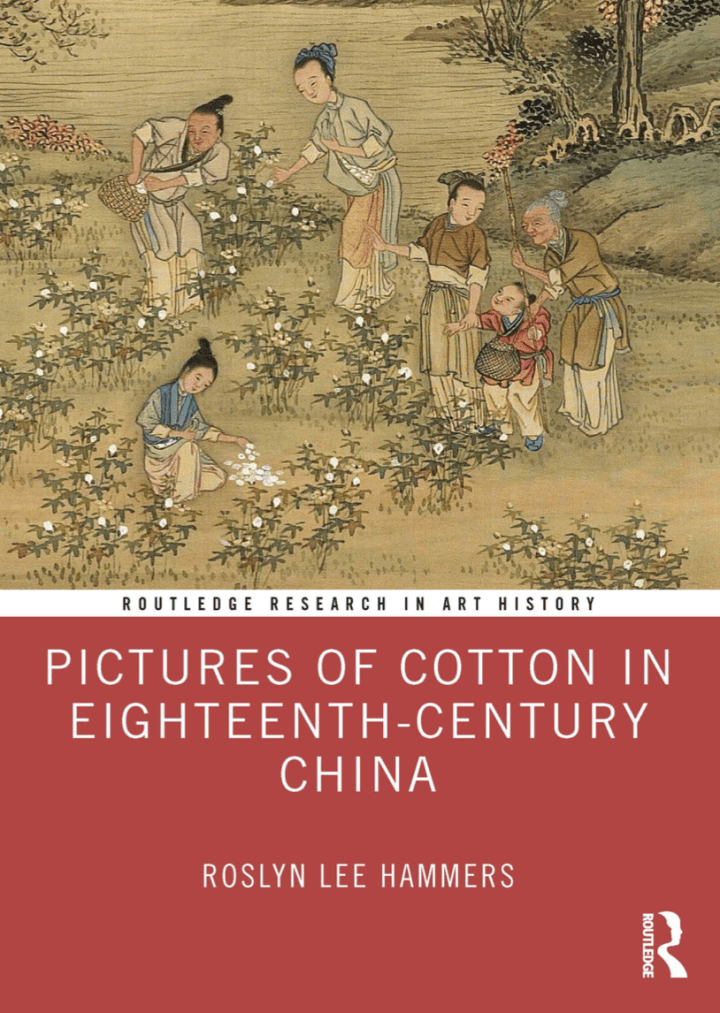 Pictures of Cotton in Eighteenth-Century China narrates cotton’s journey from a little understand material to a cherished commodity ennobled by associations with the classical heritage of China. In the 12th century, cotton, an imported crop, was plucked from the fields and entered the margins of agricultural treatises. The material was eventually ‘acknowledged’ as cotton, an object distinct from silk, worthy of representation. By the late 16th century, representations of the plant and of the labor used to process it were incorporated into agricultural publications. During the 18th century, cotton imagery and discussions were situated in imperial encyclopaedias, further consolidating its classical legacy. Governor-general Fang Guancheng (1696/8–1768) deemed cotton a worthy subject for ambitious painting. In 1765, he designed the Pictures of Cotton, a series of sixteen paintings complete with commentary that delineated the processes of growing cotton and manufacturing fabric. He presented the Pictures of Cotton to the Qianlong emperor (r. 1735–1796) who inscribed his imperial verse on each scene. Knowledge about the fiber became a means to collaborate at the highest level of the court and bureaucracy. Fang replicated the series, complete with imperial verses into carved stone to enable replication. The Jiaqing emperor (r.1796–1821) likewise published the series as woodblock prints. Upon domestication, cotton advanced political legitimacy, becoming a commodity that attained canonical status. Cotton was represented in a scopic regime formulated by the Qing imperium, and in the process, the Imperially Inscribed Pictures of Cotton became the authoritative vision of cotton.
Roslyn Lee Hammers is Associate Professor at the University of Hong Kong.
c o n t e n t s
List of Figures
Acknowledgements
Introduction: Coming to Terms with Cotton in Chinese Visual Culture and Literature
1 Bringing Cotton into the Fold of Ming-dynasty Visual Culture
2 The Qing Imperium and the Classified Production of Knowledge
3 Presenting the Pictures of Cotton
4 Recasting the Qing Reign: Imagining Cotton in a Scopic Regime
Coda to the Imperially Inscribed Pictures of Cotton: Speculations on Visualizing Cotton
Appendix: Texts and Poems of the Yu Ti Mian Hua Tu (Imperially Inscribed Pictures of Cotton) and of the Qin Ding Shou Yi Guang Xun (Imperially Approved Magisterial Guidance on the Bestowing of Clothes)
Selected Bibliography
Index
Lecture | Laura Beltrán-Rubio on Fashion in the Colonial Andes
In March at BGC:
Laura Beltrán-Rubio | Indigenizing Fashion in the Colonial Andes
Bard Graduate Center, New York, 25 March 2026, 6.00pm
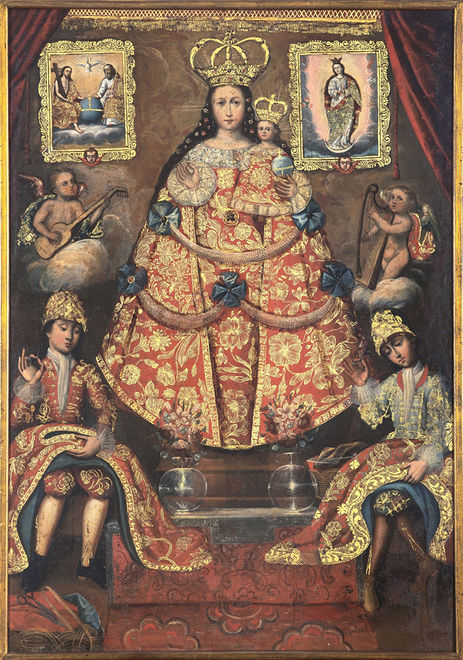
Unidentified artist from Cusco, The Virgin with Tailors, ca. 1750, oil and gold on canvas, 58 × 40 inches (Lima: Museo Pedro de Osma).
Textiles have been central to the material culture of the Andes since time immemorial. With the Spanish colonization of the Americas, the textile primacy of the Andes adapted: rather than a straightforward imposition of European trends, Indigenous fashion and textile practices have undergone complex processes of ‘cultural authentication’ and ‘survivance’. This lecture unravels evidence from archival and pictorial sources from the sixteenth through the eighteenth century to recenter the Indigenous agents, materialities, techniques, technologies, and systems of knowledge that have shaped Indigenous fashion practices in the Andes. It thus offers a reevaluation of the history of fashion and textiles in the colonial Andes to demonstrate that Native American and Euro-American histories of fashion and textiles are inevitably intertwined, complex, and mutually influential.
Registration is available here»
Laura Beltrán-Rubio is a researcher, curator, and educator, specializing in the history of art and fashion. Her research explores the construction and performance of identities through artistic expression, with a broad interest in Native American and Indigenous fashion and textiles. Her first book, Empire of Fashion: Luxury, Consumption and Identity in the Viceroyalty of New Granada, is under contract with the University of Texas Press. Beltrán-Rubio completed her PhD at the College of William and Mary (Williamsburg, VA) and holds an MA in Fashion Studies from Parsons School of Design (New York). She has previously taught at Parsons, William and Mary, Universidad de los Andes (Bogotá, Colombia), and De Montfort University (Leicester, UK). She is senior researcher and managing editor at the Fashion and Race Database and hosts the podcast Redressing Fashion. As a public-facing scholar, her mission is to expand the narratives of fashion to create more diverse, equitable, and socially just societies.
Call for Papers | Views of their Own: The Work of Women Artists
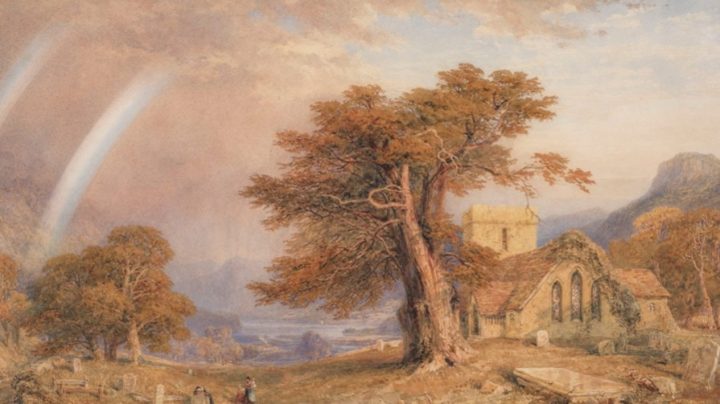
Fanny Blake, A Rainbow over Patterdale Churchyard, Cumbria, 1849, watercolour and opaque watercolour over graphite, with scratching out, on wove paper (Jointly owned by the Samuel Courtauld Trust and The Wordsworth Trust, Gift from a private collection in memory of W. W. Spooner, 2025).
◊ ◊ ◊ ◊ ◊
From The Courtauld:
Views of Their Own: Rediscovering and Re-presenting the Work of Women Artists
The Courtauld Institute of Art, London, 13 March 2026
Organized by Rachel Sloan
Proposals due by 6 February 2026
Timed to coincide with the Courtauld Gallery’s current exhibition, A View of One’s Own: Landscapes by British Women Artists, 1760–1860, this conference aims to investigate the challenges and opportunities presented by the recovery and re-presentation of historic women artists whose work and reputations have fallen out of art historical narratives.
Bringing together art historians and curators, this conference will explore various approaches to the complexities of bringing to light artists long overlooked by art history, whether via exhibition (permanent or temporary) or through the written word. Although the exhibition focuses on British artists, working both at home and abroad, from the mid-18th to the mid-19th centuries, we welcome papers that move beyond these chronological and geographical boundaries. The conference seeks to examine how attitudes and approaches to restoring to view the lives and work of women lost to art history have evolved, and continue to evolve, over recent decades, and the complexities, discoveries and rewards of charting overlooked artists and their work.
We would particularly welcome submissions in the following areas:
• Negotiating the grey area between the categories of ‘amateur’ and ‘professional’ in women artists’ careers
• The presentation of women artists’ work in settings other than temporary exhibitions
• Institutions and networks that fostered and supported the work of women artists
• Women artists’ strategies for publicising their work
Please submit an abstract of 300–500 words for a 20-minute paper, with a title, your affiliation (if any), and a short biographical summary to Rachel.Sloan@courtauld.ac.uk by 6 February 2026. Selected papers will be confirmed by 10 February.
Organised by The Manton Centre for British Art, The Courtauld Institute of Art.
Call for Papers | Women Conservators in Europe, 1750–1970
From ArtHist.net:
Women Conservators between Europe and Italy, 1750–1970
Sapienza University of Rome, 14–15 May 2026
Proposals due by 15 February 2026
In recent years, gender studies have profoundly reshaped the historiography of art and heritage preservation, bringing renewed attention to the role of women as key protagonists in the culture of heritage and expanding scholarly perspectives beyond the limits imposed by traditional narratives. The contribution of women to the history of conservation and restoration, however, remains largely understudied and only fragmentarily documented.
The earliest women active in collecting, museum, and private contexts can be traced back to the eighteenth century in Italy and across Europe. Figures now better known, such as Margherita Bernini, documented in Rome in the service of major aristocratic families, or Marie-Éléonore Godefroid, involved in the restoration of paintings for the collections of the Musée du Louvre and other Parisian institutions, stand alongside many other professionals whose work is only now being brought to light by recent research. In many cases, their activity emerges in connection with that of their husbands, whom they often succeeded in the management of workshops and restoration sites, assuming significant technical and administrative responsibilities that nevertheless remained largely invisible in historical sources. During the twentieth century, women’s presence became increasingly established within public institutions responsible for heritage protection, contributing substantially to the definition of the professional identity of the conservator at a time of profound transformation in the discipline. In this period, restoration gradually developed into a critically structured practice, grounded in technical, methodological, and historical expertise and embedded within an increasingly complex institutional framework, in which women played a far from marginal role.
This conference aims to offer a first systematic survey of women active in the field of heritage conservation and restoration between the mid-eighteenth century and the second half of the twentieth century, not only from the perspective of gender studies, but more broadly within the history of preservation and conservation in Italy and Europe.
The conference will explore the relationships between:
• restoration practices and techniques in different European contexts
• institutional transformations (museums, heritage authorities, conservation bodies)
• individual and collective careers, professional networks, and regional contexts
• diverse geographies and chronologies of restoration
• relationships between theory, practice, and training
• phenomena of family continuity and ‘professional inheritance’
• material, documentary, and photographic sources relevant to reconstructing women’s professional profiles
We invite proposals addressing, but not limited to, the following topics:
• studies on women conservators active in Italy or Europe between 1750 and 1970
• workshops, laboratories, restoration sites, museums, or archival institutions where women conservators worked
• restoration of paintings, works on paper, textiles, decorative arts, frescoes, sculpture, and architectural heritage
• patronage networks, professional collaborations, and working relationships with senior figures within state heritage institutions
• conservation methodologies, diagnostic practices, and operational protocols
• family-based transmission of skills and professional knowledge, continuity of practice, and workshop inheritance
• comparative and transnational perspectives.
Submission Guidelines
Abstract: maximum of 300 words
Short bio: maximum of 150 words
Languages: Italian and English
Submission address: convegnorestauratrici@gmail.com
Deadline: 15 February 2026
Notification of acceptance: 10 March 2026
Conference dates: 14–15 May 2026
Conference papers will be published. Further information regarding editorial arrangements and publication timelines will be provided in due course. Speakers selected through the call are kindly asked to note that the conference organization will not be able to cover travel and accommodation expenses.
Scientific Committee
Eliana Billi (Sapienza University of Rome)
Giuseppina Perusini (formerly University of Udine)
Simona Rinaldi (University of Tuscia)
Martina Visentin (University of Udine)
Organising Secretariat
Laura D’Angelo (University of Arkansas, Rome Center)










 Enfilade
leave a comment